
REVIEW · KIMONO & CULTURE EXPERIENCES
Kyoto: Samurai Ninja Museum guided tour
Kyoto’s Samurai Ninja Museum turns a history lesson into a one-hour activity you can feel in your hands. You’ll see samurai armor and weapons, wear a samurai costume and real helmet, hold a replica katana, and finish with a shuriken throwing session.
I like the English-speaking guides, who make the material easy to follow and keep the group involved with questions. I also like the balance between explanation and play, especially for children and teenagers who may not last long in a traditional museum.
The main caution is value. At $28 per person, this is a short, theatrical museum experience rather than a major historical collection. One recent booking felt the price was high for a museum ticket and basic guided visit, so book it for the activities and guide, not for hours of quiet museum study.
In This Review
- Key points to know before booking
- A quick history lesson with a theatrical edge
- What happens during the one-hour visit
- Samurai armor, costume, and the photo stop
- The shuriken throwing finale
- Why the guide makes such a difference
- Is $28 good value for one hour?
- Who will enjoy this most?
- Group size and the feel of the visit
- Booking flexibility and practical planning
- My verdict: book it for participation, not a major museum visit
- FAQ
- How long does the Samurai Ninja Museum tour last?
- What is included in the ticket price?
- Does the tour include an English-speaking guide?
- Can I dress as a samurai?
- Can I throw ninja stars?
- Is the sword real?
- Is transportation included?
- Is the museum wheelchair accessible?
- How many people can join the group?
- Can I cancel for a full refund?
Key points to know before booking
- A one-hour introduction: You get a compact look at samurai and ninja culture, useful when your Kyoto schedule is tight.
- Hands-on costume time: You can dress as a samurai, wear a real helmet, and hold a replica sword for photographs.
- Shuriken practice included: Ninja star throwing is part of the experience, not an optional add-on.
- Guide quality matters: Guides including Miu, Akiko, Ko, Sayo, Aya, and Jukia have been praised for clear English and lively explanations.
- Good for families: The interactive format helps keep children and teenagers involved.
- Small-group format: The activity is advertised as limited to 10 participants, though the important information also gives a maximum of 30 travelers, so check the booking details for your chosen time.
A quick history lesson with a theatrical edge
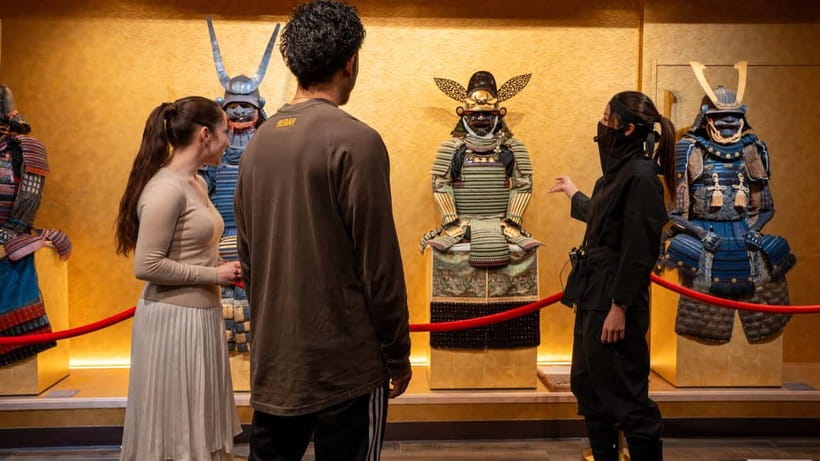
Samurai and Kyoto are closely linked in Japan’s public imagination. Kyoto was the imperial capital for centuries, and samurai power shaped the city’s politics and wider culture from the Heian period through the Tokugawa shogunate and its collapse.
This museum experience uses that broad story as its starting point. You’ll learn about samurai and ninja, look at armor and weapons, and hear explanations about how these warriors fit into Japanese history.
I would set your expectations correctly. This is not a castle, battlefield, or large national museum. It is a compact attraction built around displays, costumes, demonstrations, and participation. The experience works best if you want an accessible introduction rather than a detailed academic account.
That lighter approach is also its strength. You do not need prior knowledge of Japanese history, and you do not need to spend half a day reading labels. A good guide can give you the main ideas, explain the equipment, and connect the objects to the people who used them.
More Kimono & Culture Experiences in Kyoto
- Kyoto Geisha Walking Tour: Gion District & Hidden Gems
★ 4.7 · 3,273 reviews - Kyoto: Gion Magical Night Walking Tour with Geisha Trivia
★ 4.9 · 2,393 reviews - Kyoto: Gion Geisha District Walking Tour – Stories of Geisha
★ 4.7 · 2,187 reviews
What happens during the one-hour visit
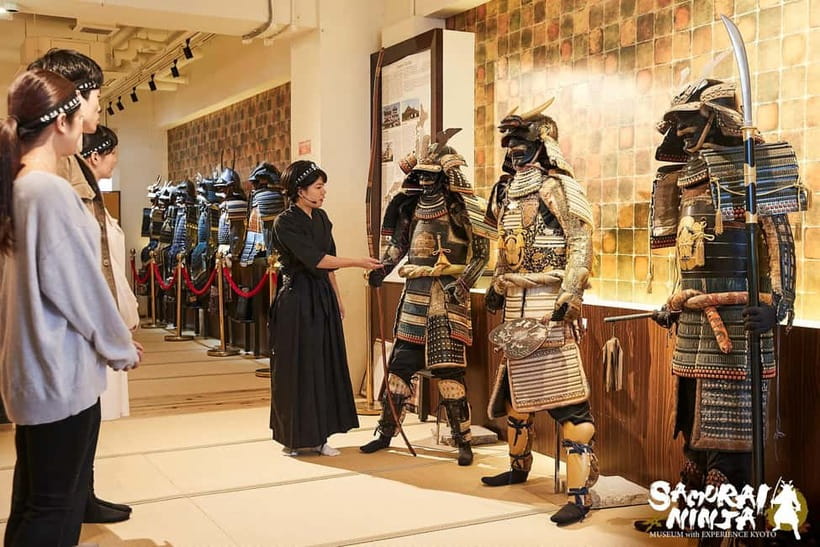
The tour begins with the museum visit and a live explanation in English. The exact order may vary, but you can expect the guide to lead you through samurai and ninja displays, explain the purpose of the weapons and armor, and answer questions as the group moves along.
The guides are a major part of the experience. Recent sessions have featured Mami, Miu, Aya, Sayo, Akiko, Ko, Jukia, Taku, and others. The strongest feedback has focused on guides who speak clearly, invite questions, and use humor or direct questions to keep the group involved.
That matters in a small museum. Displays can feel flat if you simply walk past them. When the guide explains the craftsmanship of armor or the role of a particular weapon, you have a reason to look closely.
The tour has received especially strong praise for clear explanations of samurai history and culture. One guide, Miu, was singled out for showing the history and craftsmanship connected with the ninja period. Akiko was praised for detailed explanations and good photographs, while Ko was noted for easy-to-understand English and an engaging manner.
You should not assume you will receive a particular guide. Names can change by schedule, but the pattern is clear: the guide can make the difference between a fun, memorable hour and a fairly ordinary museum visit.
Samurai armor, costume, and the photo stop
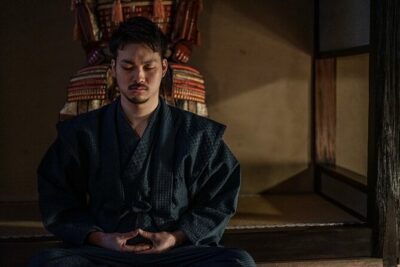
The costume portion gives the tour its most obvious family appeal. You can dress like a samurai, wear a real samurai helmet, and hold a replica sword. The museum also includes a samurai costume as part of the activity.
This is not a minor extra. For many people, especially children and teenagers, putting on the gear makes the subject easier to understand. Armor stops being a distant object behind glass and becomes something connected to weight, shape, and movement.
It also gives you a natural chance to take photographs. Several visitors praised the photo opportunities, and the costume is useful if you want a memorable Kyoto picture that is different from the usual temple and shrine scenes.
Keep the distinction between real and replica items in mind. The experience lets you wear a real helmet and hold a replica sword. That creates a vivid visual moment, but it is not a weapons-handling course or a chance to use an original katana.
The supplied description also refers to a hands-on armor experience and a katana lesson. The included details specifically confirm the samurai costume, replica sword, and ninja star throwing. Ask your guide what level of handling or instruction is included during your session rather than expecting a formal sword class.
The shuriken throwing finale
The ninja star throwing session is the most consistently praised activity. You will have the chance to throw shuriken, also called ninja stars, under the guide’s direction.
It is best understood as a supervised target activity, not martial arts training. The appeal is simple: you learn a little about a famous ninja weapon, then try it yourself. The session adds a physical challenge to the earlier explanation and gives the hour a clear finish.
Several families found this part particularly effective. Teenage boys enjoyed the ninja and dress-up activities, and children stayed interested during a throwing competition. Adults also described the competition as a fun part of the tour.
I like that the activity is included in the $28 price. You are not paying an entry fee and then facing a string of extra charges for the parts that make the visit memorable.
The exact format can depend on the group and guide. You might find a friendly competition, simple instruction, or a short turn at the target. If you are hoping for an extended lesson, keep expectations modest. The total tour lasts only one hour, and the throwing is one part of a wider museum visit.
The description also mentions a ninja fukiya, or blowgun, as part of the hands-on experience. The included section specifically lists ninja star throwing, so confirm with the guide whether the fukiya activity is available during your time slot.
Same city, a completely different kind of day:
- PERFECT KYOTO 1-Day Bus Tour
★ 5.0 · 13,518 reviews - Kyoto: Fushimi Inari, Kinkakuji, Bamboo Grove 1 Day Bus Tour
★ 4.8 · 4,316 reviews - Kyoto: Tea Ceremony in a Traditional Tea House in Kiyomizu
★ 4.9 · 3,519 reviews - Kyoto: Tea Ceremony Ju-An at Jotokuji Temple
★ 4.9 · 3,207 reviews
Why the guide makes such a difference
The best part of this attraction is not the number of objects on display. It is the person explaining them.
A guide such as Mami, Miu, Akiko, Ko, Aya, Sayo, or Jukia can turn a costume and weapon display into a short lesson about Japanese society, craftsmanship, and warfare. You will get more from the exhibits if you listen for the connection between the object and its use.
English ability is important here, and the activity is designed for an English-speaking audience. Several sessions were praised for clear, easy-to-follow English, while guides were also described as friendly, helpful, and good at answering questions.
The format is interactive rather than formal. Your guide may ask questions, invite reactions, and bring different members of the group into the conversation. That style helps families, but it also means the amount of detail can vary with the guide and the group’s interest.
I would book this as a guided introduction, not as a guaranteed specialist lecture. If you already know a great deal about samurai warfare or ninja history, you may find the material basic. If you are arriving in Japan with only a general idea of samurai and ninja, the tour gives you useful context without demanding much time.
Is $28 good value for one hour?
At $28, the price is reasonable for the right kind of visit. You receive museum entry, a professional English-speaking guide, a samurai costume, and ninja star throwing. The skip-the-line benefit also matters if the museum is busy, though it does not make the activity longer.
Think of the cost as payment for a guided, participatory experience rather than a standard museum ticket. The guide, costume, and throwing session are what separate it from simply looking at displays.
The short duration keeps the commitment low. You can fit it into a day of temples, shopping, and food without giving up a large block of time. It also works well on a rainy day or when younger members of your group need something more active.
Still, one four-star assessment considered the price an unnecessary upcharge for a museum ticket and regular guide. That criticism is worth taking seriously. If you only want to see armor and weapons, you may not feel you received enough for $28.
I see the value more clearly for families and first-time visitors. The costume and shuriken throwing are included, and a good guide adds structure and context. For a couple seeking a quiet, serious museum, the same price may feel less attractive.
Who will enjoy this most?
I would recommend the tour to families with children, visitors with teenagers, and first-time visitors to Japan who want a simple introduction to samurai and ninja culture. The mix of short explanations, equipment, dressing up, and target throwing gives different ages something to do.
It also suits adults who enjoy Japanese history but do not want a full-day specialist program. You can learn the basic story, see armor and weapons, and leave with a few photographs and a memorable activity.
The tour is especially useful if your itinerary is already crowded. One hour is long enough to feel like a proper experience but short enough to place between other Kyoto plans.
I would be more cautious if you want original artifacts, extensive written interpretation, or a long technical discussion of sword-making. The information provided describes displays, props, costumes, replica swords, and activities. It does not promise a large collection of museum-grade historical objects.
The attraction is listed as wheelchair accessible. Transportation to and from the museum is not included, so you must make your own way there. Starting times vary, and you should check availability before booking.
Group size and the feel of the visit
The activity is presented as a small-group tour limited to 10 participants. That is a useful size for questions, costume assistance, and making sure everyone gets a turn with the activity.
One important note is that the information also gives a maximum of 30 travelers. Those figures do not match perfectly, so I would check the specific departure details if group size is a major concern.
A smaller group should give you more time to interact with the guide and less waiting during the shuriken session. A larger group could make the costume and throwing portions feel more like a rotation, though the one-hour structure keeps the visit moving.
The interactive design has worked well for mixed-age groups. Guides have been praised for engaging the whole audience, and the activity has kept children interested when a purely spoken tour might not.
Booking flexibility and practical planning
You can cancel up to 24 hours before the activity for a full refund. The reserve-now, pay-later option lets you hold a place without paying immediately, which is useful when you are still arranging a Kyoto schedule.
You should allow time to reach the attraction on your own because transportation is not included. Check the meeting point and starting time carefully, especially if you are moving between districts.
The experience is in English. If you want a tour in another language, the supplied information does not list one, so you should not assume that option is available.
Wear something that allows easy movement and works well with a costume. The provided information does not set a dress code, but comfortable clothing is sensible when you are trying on samurai gear and taking part in an activity.
My verdict: book it for participation, not a major museum visit
I would book the Kyoto Samurai Ninja Museum guided tour if you want a lively one-hour introduction with a strong hands-on element. The English-speaking guides, costume photographs, replica sword, and included shuriken throwing give you more to do than a basic walk through exhibits.
The clearest reason to choose it is the balance of learning and play. Guides such as Miu, Akiko, Ko, Sayo, Aya, and Jukia have been praised for clear explanations and warm interaction, and that personal touch appears to be central to the experience.
I would skip it if your main goal is an extensive collection of original objects or a specialist account of samurai warfare. At $28, the visit is best value when you will take part in the costume and throwing activities and appreciate a guide who makes the subject approachable.
For families, first-time Japan visitors, and anyone who wants a memorable break from temple sightseeing, this is a sensible Kyoto add-on. Just keep the one-hour length and entertainment-focused museum format in mind.
FAQ
How long does the Samurai Ninja Museum tour last?
The tour lasts one hour.
What is included in the ticket price?
The price includes museum entry, a professional English-speaking guided tour, a samurai costume, and ninja star throwing.
Does the tour include an English-speaking guide?
Yes. The activity includes a live English-speaking guide.
Can I dress as a samurai?
Yes. A samurai costume is included, and you can wear a real samurai helmet and hold a replica sword.
Can I throw ninja stars?
Yes. Ninja star throwing, also called shuriken throwing, is included in the tour.
Is the sword real?
The sword you hold is a replica. The experience also includes wearing a real samurai helmet.
Is transportation included?
No. You are responsible for transportation to and from the attraction.
Is the museum wheelchair accessible?
Yes. The activity is listed as wheelchair accessible.
How many people can join the group?
The activity is described as a small group limited to 10 participants. The important information also lists a maximum of 30 travelers, so check the details for your selected departure.
Can I cancel for a full refund?
Yes. You can cancel up to 24 hours in advance for a full refund.
More Museums in Kyoto
- Kyoto: Tea Museum Tickets and Matcha Grinding Experience
★ 4.9 · 739 reviews - Skip the lines Basic Ticket at SAMURAI NINJA MUSEUM KYOTO
★ 4.5 · 632 reviews - Kyoto : Geiko Maiko Dance of Kyoto & Visits of Gion Museum
★ 4.6 · 415 reviews - Kyoto Railway Museum Admission Ticket
★ 4.3 · 23 reviews
Just added around Kyoto
- Taste of Nishiki Market Walking Food Tour with Local guide★ 5.0 · 17 reviews
- Kyoto: Sushi Making Class with Sushi Chef★ 4.8 · 64 reviews
- Kyoto: City Secrets eBike Tour★ 4.9 · 196 reviews
- Sacred Pathways: Discover the Philosopher’s Path of Kyoto★ 4.9 · 20 reviews
- Private Tour to Monkey Park and Arashiyama Highlights★ 5.0 · 22 reviews
- Private Nara Tour from Osaka – Meet at Your Hotel★ 5.0 · 22 reviews
- Private Sake Tasting in Central Kyoto with Sake Sommelier★ 5.0 · 13 reviews
- Kyoto : Private Custom Walking Tour With A Local Guide★ 4.6 · 144 reviews
Kimono & Culture Experiences, compared.
Kyoto Geisha Walking Tour: Gion District & Hidden Gems
Read our review →
Gion Magical Night Walking Tour with Geisha Trivia
Read our review →
Gion Geisha District Walking Tour – Stories of Geisha
Read our review →
Best of Kyoto: Gion, Geisha, Pagodas & Cobblestones
Read our review →
Kyoto Gion Geisha District Walking Tour – The Stories of Geisha
Read our review →
Browse the lists this tour appears in