
REVIEW · GARDEN & PALACE TOURS
Osaka: teamLab Botanical Garden Entry Ticket
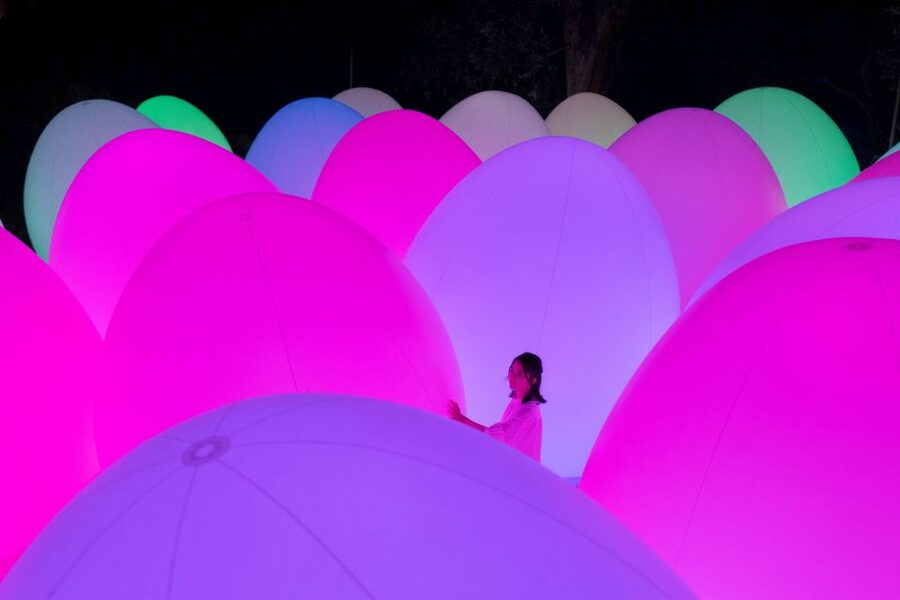
At night, Osaka’s Nagai Botanical Garden turns into an open-air artwork. TeamLab uses light, sound, projections, and glowing forms among the trees and pond, so you are not simply looking at art. Your movement and presence can become part of it. I like the natural setting and the chance to wander at your own pace. I also like the modest $11 price, which makes this an easy evening add-on rather than a major splurge.
The main consideration is that this is outdoors, dark, and spread across a large 240,000-square-meter garden. You’ll walk quite a bit, and the route can include exposed roots and unlit edges. Bring long pants, a long-sleeved shirt, comfortable shoes, and insect repellent. Also plan your journey home, since the nearest station is about a 15-minute walk and taxis may be hard to find after the event.
In This Review
- Key points to know before you go
- A garden that changes after sunset
- Start with Nagai Botanical Garden’s plants
- The central pond is the natural heart of the route
- TeamLab’s lights respond to people and nature
- How long to allow and when to arrive
- Getting there and getting home
- Weather, clothing, and accessibility
- Is the $11 ticket good value?
- Who will enjoy this nighttime garden most?
- My verdict on teamLab Botanical Garden Osaka
- FAQ
- Where is teamLab Botanical Garden Osaka located?
- How much does admission cost?
- How long is the ticket valid?
- Is this a guided tour?
- Can I take photographs inside?
- Are food and drinks available at the venue?
- Can wheelchair users and children in strollers enter?
Key points to know before you go
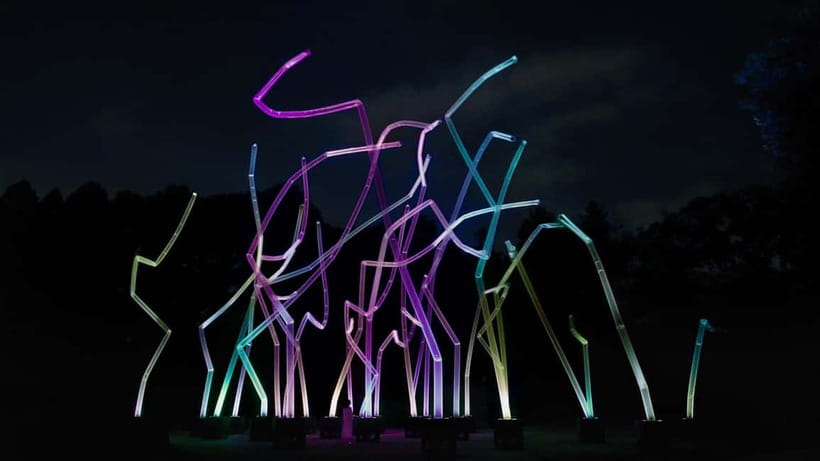
- The garden is the artwork’s setting: TeamLab’s lights work with trees, water, flowers, animals, and people rather than sitting inside a conventional gallery.
- About 1,200 plant species fill the grounds: Take time to appreciate Nagai Botanical Garden before focusing on the digital displays.
- The central pond is a calm highlight: Reflections, music, and light make this one of the best places to slow down.
- The glowing egg-shaped forms are playful: Children can interact with them, while adults often find the same installations surprisingly atmospheric.
- Arrive before the final entry time: Late arrival means denied entry, and re-entry is not permitted.
- This is not the same as teamLab Borderless in Tokyo: It is smaller in scope and outdoors, with a quieter, more open-air mood.
A garden that changes after sunset

TeamLab Botanical Garden Osaka is a hybrid of public garden and nighttime art project. During the day, Nagai Botanical Garden is a large green space with roughly 1,200 species of plants. As darkness arrives, teamLab’s installations begin to alter how you see the same paths, trees, pond, and planted areas.
The idea is simple but effective: digital light can make nature appear like art without physically changing or damaging the plants. That matters here. You are not walking through a decorated hall with a few potted trees. You are moving through an actual botanical garden, where the plants remain the main structure and the lights change your attention.
I like this approach because it gives the evening some breathing room. You can stop and look at a tree, watch a projection move across the water, or walk toward a glowing form without being pushed from one room to the next. The experience feels more like a slow night walk than a standard museum visit.
It is also worth setting expectations. This is not a giant indoor teamLab complex with endless rooms and large-scale digital walls. A few installations may seem quiet at first, especially when you encounter simple bubbles of light or small effects. Give the route time to build. The later sections are often more affecting because the technology, music, and natural surroundings begin to work together.
More garden & palace tours in Japan:
- Osaka Castle: Museum and Tower Entry Ticket
★ 4.5 · 2,380 reviews - Tokyo: Imperial Palace and Shogun Historical Walking Tour
★ 5.0 · 2,251 reviews - Tokyo Castle & Imperial PalaceーShogun Walking Tour
★ 4.7 · 1,068 reviews
Start with Nagai Botanical Garden’s plants
The garden covers about 240,000 square meters, so the first thing you notice is space. This is not a quick walk between a ticket gate and a single display. You’ll pass planted areas, trees, paths, and open stretches where the darkness becomes part of the design.
The garden’s collection of approximately 1,200 plant species gives the displays a useful sense of place. TeamLab does not need to create every visual effect from scratch. A tree with twisting roots, a broad canopy, or a pond edge already has shape and texture. Light simply brings out details that would be easy to miss in daylight.
If you arrive with enough time, begin by getting your bearings. Look at the garden as a botanical site before the art takes over your attention. The contrast is part of the experience. You see the same plants first as living specimens, then later as forms altered by color, shadow, projection, and sound.
The garden also has an educational purpose. It cultivates and protects its plant species, so the setting is more than a backdrop for photographs. You may find the botanical side especially rewarding if you enjoy trees, seasonal plants, or quiet public gardens. If you only want rapid-fire visual effects, some stretches may feel slower than expected.
The central pond is the natural heart of the route
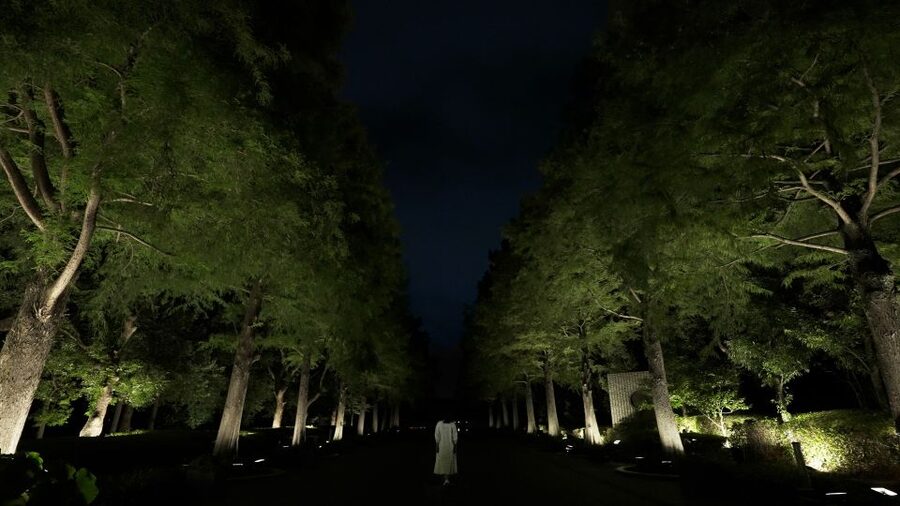
The central pond is one of the most peaceful places to pause. Water gives the light somewhere to travel and reflect, while the surrounding plants keep the display from feeling overly artificial.
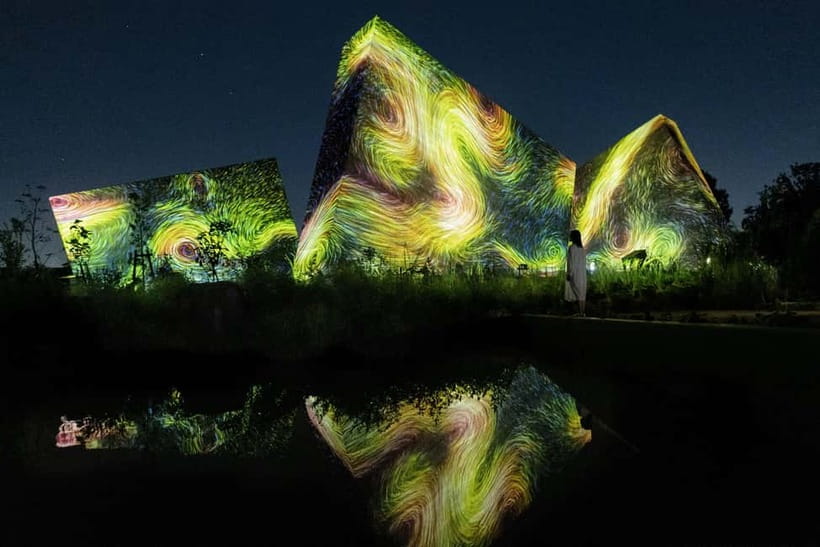
This is a good spot to resist the urge to take a quick photograph and move on. Stand still for a moment. Watch how the colors shift across the water and how sound changes the mood. The pond can feel serene one minute and mysterious the next, depending on the installation and the surrounding light.
The pond also shows why this experience works best as an evening walk. In daylight, you would mainly see the garden’s water and plant life. After dark, reflections create a second image beneath the surface. The effect is not just a bright light show. It asks you to look at familiar natural features differently.
Some practical caution is needed. The route is dark, and the garden’s roots and borders are not always easy to see. Walk at a sensible pace, especially if you are with children or anyone who has difficulty on uneven ground. Comfortable shoes are not optional advice here.
TeamLab’s lights respond to people and nature
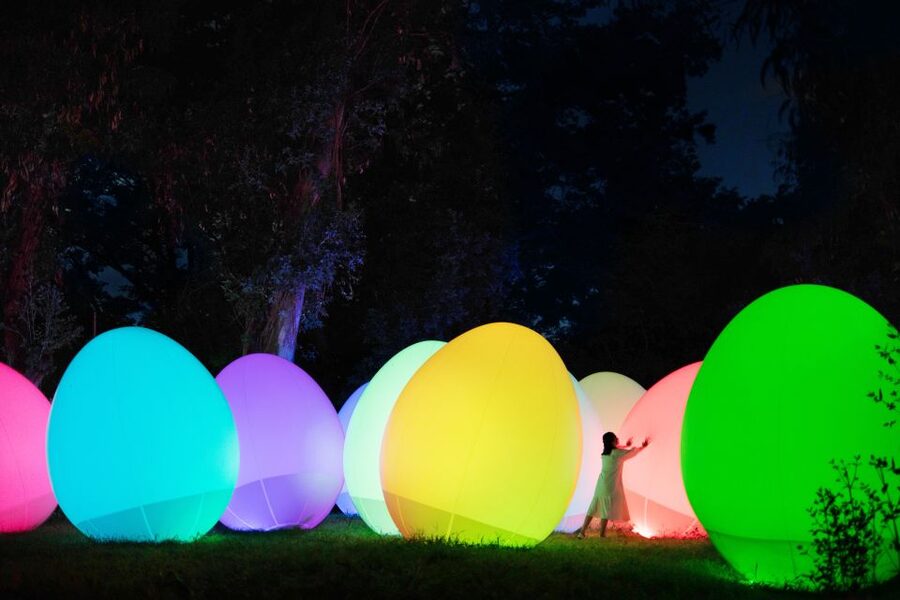
The most interesting feature is the way the installations interact with their surroundings. Light may shift in response to visitors, appear to pass through trees, or react to natural elements. Your body becomes part of the scene without you needing to operate a screen or follow a set activity.
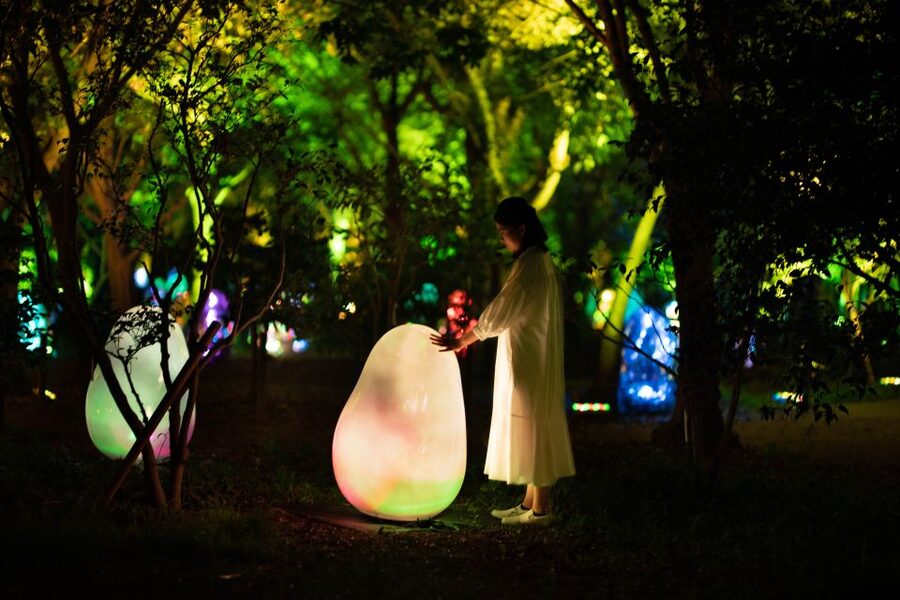
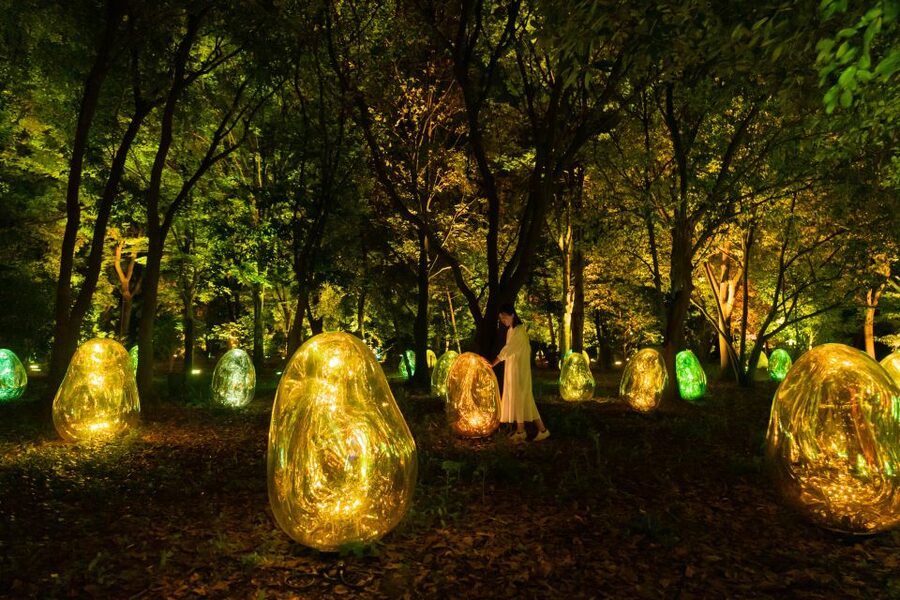
That interaction makes the visit feel personal, but it can also be subtle. Some effects are immediately obvious, while others reveal themselves after you pause or move closer. Children may enjoy testing the displays by walking around them or jumping over the large egg-shaped lights. Adults may prefer the quieter works, where music and projection create a more reflective mood.
The glowing eggs are among the most playful features. They turn the walking route into something physical and social, particularly for families. They are also photogenic, but the displays are better experienced with your eyes than through your phone screen.
Music is an important part of the evening. Several visitors found the combination of classical instruments, Japanese drums, electronic sound, and audience interaction especially memorable, though the exact program may vary. In the garden, music carries differently than it would indoors. It blends with footsteps, insects, wind, and the sounds of other people.
The best approach is to slow down. This is not a place to race through each installation for a checklist of photographs. The art becomes more rewarding when you watch how it changes around you.
More theme park tickets in Japan:
- Tokyo: teamLab Planets TOKYO Digital Art Museum Entry Ticket
★ 4.6 · 9,779 reviews - Osaka: Universal Studios Japan E-Ticket
★ 4.4 · 958 reviews - Osaka: Universal Studios Japan Express Pass Only
★ 3.2 · 93 reviews
How long to allow and when to arrive
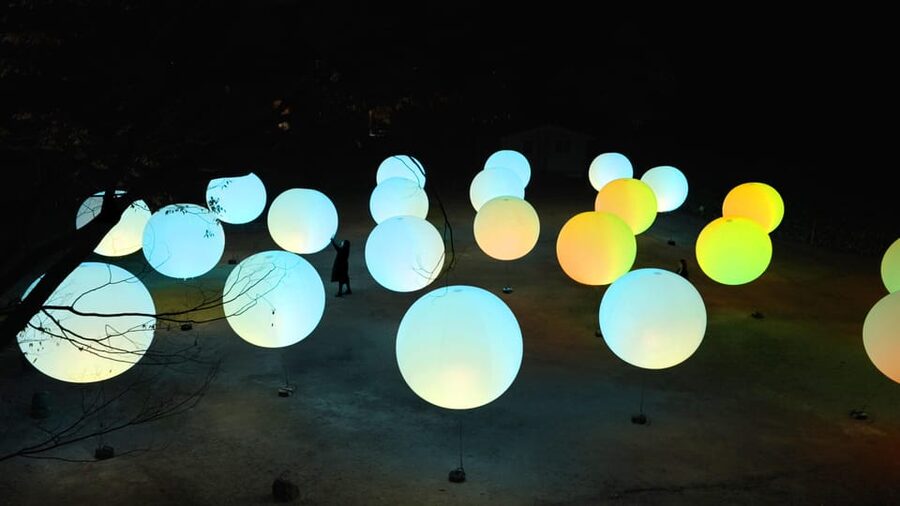
The ticket is valid for one day, with starting times available according to the date you choose. The important point is that the experience depends on darkness. Arriving too early gives you time to see the botanical garden, but the full effect of the installations comes later in the evening.
A practical plan is to arrive before the final entry time, walk through the garden as the light fades, and stay after dark. One useful timing tip is to go early in the evening, since the park can fill up. Around 6 p.m. may be dark enough on some dates, but sunset changes with the season, so check the schedule and daylight conditions before booking.
Do not cut it close. If you arrive after the final entry time, you can be turned away. Re-entry is also not allowed, so once you leave, you cannot return to catch a missed section.
There is no fixed one-day itinerary or guided route described for this ticket. You wander through the grounds and installations at your own speed. That freedom is a strength, especially if you want to linger by the pond or repeat a favorite display. It also means you should allow enough time rather than treating the visit as a quick stop.
Getting there and getting home
The venue is in Osaka’s Nagai Botanical Garden, away from the city’s most famous central sights. The walk from the nearest subway station takes about 15 minutes, so wear shoes suitable for both the journey and the garden itself.
Finding the venue is generally manageable, but the return trip deserves more thought. After the event, taxis may be scarce in this part of the city, and you may need to walk back to the station. If you are tired, traveling with young children, or visiting in bad weather, check the route in advance and keep your phone charged.
There are no restaurants or cafes on site. You may find vending machines inside, but you cannot bring food into the venue. Eat before entering, and do not count on buying a full meal during the visit.
The no-luggage rule is also worth noting. Large bags and luggage are not allowed, and the venue prohibits pets, smoking, alcohol, drugs, drones, selfie sticks, tripods, flashlights, and flash photography. You can take photographs, but the restrictions are designed to protect the plants, the installations, and the experience for everyone around you.
Weather, clothing, and accessibility
This is an outdoor activity, so weather matters. Rain, heat, humidity, and insects can change the mood of the night. Check the forecast before booking because the ticket is non-refundable.
Long pants and a long-sleeved shirt are sensible, especially in warmer months. Insect repellent is specifically recommended. Comfortable shoes matter in every season because the garden is large and the route can include roots, dark borders, and uneven areas.
Wheelchair users and children in strollers may enter, but some artworks may not be accessible. If access is important for your group, contact the venue by phone before visiting for current information. Children must be accompanied by an adult aged 18 or older, with one accompanying adult required for every three children.
The dark setting is part of the artistic effect, but it can be challenging for anyone who needs strong, even lighting. Move carefully and give yourself extra time.
Is the $11 ticket good value?
At $11 per person, this is one of Osaka’s easier cultural purchases to justify. You get access to a large botanical garden, an evening art route, music, interactive lighting, and the chance to spend as much time as you like within the valid visit period. It is not a guided tour, so the low price does not include a guide, transport, meals, or special access.
The value depends on what you want. If you enjoy outdoor art, photography, gardens, music, or unusual evening activities, the ticket offers a lot for the money. It also works well as a gentle first-night activity because you can walk, pause, and settle into Osaka without committing to a long formal program.
If you are comparing it with teamLab’s indoor attractions in Tokyo, keep your expectations in check. This Osaka experience is smaller and less packed with large digital rooms. Its appeal is the combination of living plants, open air, darkness, and changing light. Someone expecting a nonstop indoor spectacle may find the opening sections modest.
I see the price as fair precisely because the experience is not trying to be an enormous theme park. You are paying for access to a carefully changed garden, not a full-day attraction with rides or extensive facilities.
Who will enjoy this nighttime garden most?
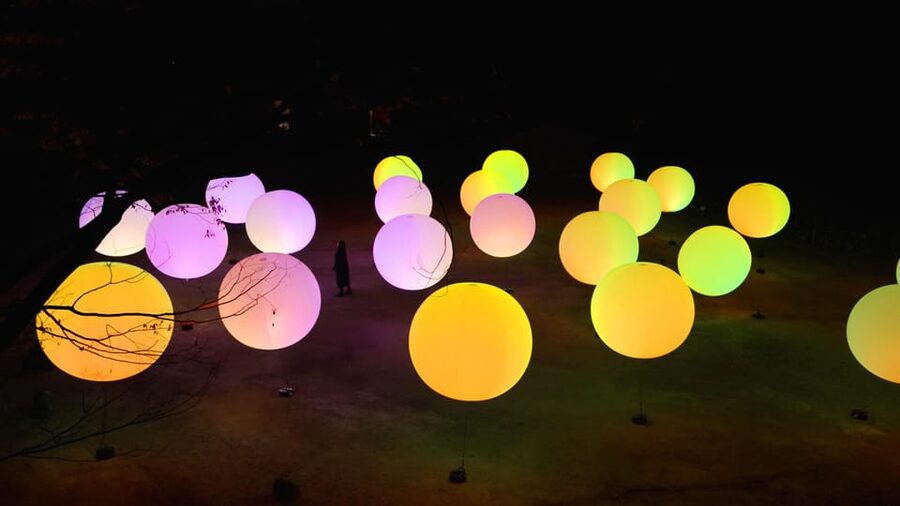
Couples will appreciate the calm paths, music, reflections, and soft lighting. Several visitors found the experience romantic and relaxing, particularly when the moon or seasonal flowers added another layer to the night.
Families can enjoy the glowing egg-shaped installations and the freedom to walk rather than sit through a performance. Keep children close, though, since roots and dark garden borders can be difficult to see.
Art lovers and photographers will find plenty to study, but this is not only a photo stop. The strongest moments often come when you put your phone away and watch an installation respond to movement or sound.
The experience also suits anyone who has had enough of Osaka’s busy shopping streets for the day. It offers a quieter change of pace without being dull. On the other hand, visitors who dislike outdoor walking, insects, uncertain weather, or subtle installations may want to choose an indoor attraction instead.
My verdict on teamLab Botanical Garden Osaka
I would book this if I wanted a reasonably priced evening that combines nature and technology without feeling like another indoor show. The central pond, seasonal plants, music, and glowing forms give the visit a distinct character, and the freedom to wander makes it easy to enjoy at your own speed.
Go early enough to enter comfortably, stay until it is properly dark, and wear practical clothing. Plan the return journey before you arrive. If you do that, the $11 ticket offers a beautiful and unusual way to see Osaka after sunset.
FAQ
Where is teamLab Botanical Garden Osaka located?
It is located in Nagai Botanical Garden in Osaka, on Honshu, Japan.
How much does admission cost?
The listed price is $11 per person.
How long is the ticket valid?
The ticket is valid for one day. Starting times depend on availability for your chosen date.
Is this a guided tour?
The activity provides an entry ticket to teamLab Botanical Garden Osaka. It is not described as a guided tour. One booking references a guide named Tomoko Matsukiyo, but a guide is not listed as an inclusion.
Can I take photographs inside?
Yes, photography is allowed. Flash photography, drones, tripods, selfie sticks, and flashlights are not allowed.
Are food and drinks available at the venue?
There are no restaurants or cafes on site. Vending machines may be available, but food cannot be brought into the venue.
Can wheelchair users and children in strollers enter?
Yes, wheelchair users and children in strollers may enter, but some artworks may not be accessible. You should contact the venue by phone for more information.
Just added around Japan
- Tokyo: Customizable Private Guided Walking Tour★ 4.5 · 129 reviews
- Private Harajuku Omotesando Architecture Tour★ 4.9 · 18 reviews
- Tokyo: Guided Helicopter Ride★ 4.9 · 24 reviews
- Tokyo: Guided Walking Tour of Tsukiji Market with Lunch★ 4.4 · 24 reviews
- Tokyo: Private Personalized Local Food Tour★ 4.5 · 101 reviews
- Tokyo GINZA: KONPARU Japanese Cabaret Show with Drink★ 4.8 · 38 reviews
- Tokyo: Guided Walking Tour of Tsukiji Market with Breakfast★ 4.4 · 134 reviews
- Tokyo: Gotokuji Cat Temple, Shinjuku Cat Cafe & 3D Cat Tour★ 4.9 · 38 reviews
Garden & Palace Tours, compared.

Imperial Palace and Shogun Historical Walking Tour
Read our review →
Tokyo Castle & Imperial PalaceーShogun Walking Tour
Read our review →
Nijo-jo Castle and Ninomaru Palace Guided Tour
Read our review →

Ultimate Osaka Walking Tour: Castle, Dotonbori & Hidden Gems
Read our review →Tokyo Castle & Imperial PalaceーShogun Walking Tour
Read our review →
Nijo Castle, Kiyomizu & Fushimi Inari Guided Tour
Read our review →Browse the lists this tour appears in