
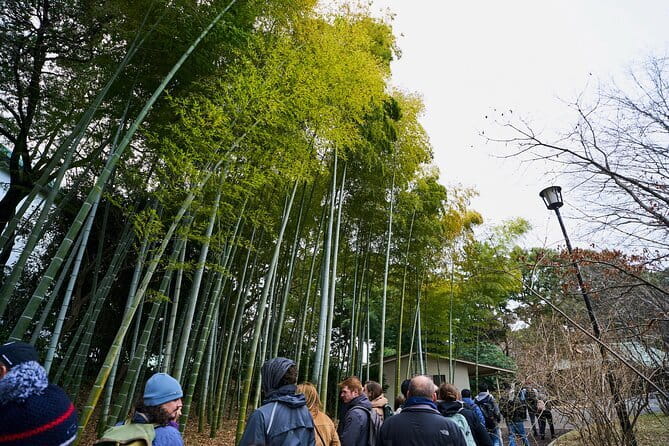
REVIEW · GARDEN & PALACE TOURS
Tokyo Castle & Imperial PalaceーShogun Walking Tour
Edo Castle was designed to make an attack painfully difficult, and this two-hour walk shows you how. You’ll pass old gates, thick stone walls, guardhouses, and watchtowers before reaching gardens that soften the military story. The castle is gone, but its defenses still shape the visit.
I like the small-group format, advertised for up to 10 people, and the way the guides turn bare stones into understandable stories. I also like the price, $23.88, which is fair for a focused English tour with stops across the former castle grounds. The main drawback is that you see the Imperial Palace from public areas only. The Emperor’s residence is not open to the public, and the route includes steep slopes and stairs.
In This Review
- Key points about the Tokyo Castle walk
- Why Edo Castle makes a better history lesson than an empty palace
- Starting at Wadakura Fountain Park
- Sakurada Tatsumi Yagura and the first look at palace defenses
- Otemon Gate and the careful art of slowing an enemy
- Three guardhouses, three levels of samurai duty
- Fujimi-yagura and the watchtower view
- A scale model at Kokyo Sannomaru Shozokan
- The lost main tower and the reality of the palace grounds
- Ninomaru Garden brings the quiet side of Edo
- Finishing near Tokyo Station
- What the $23.88 price really buys you
- Heat, stairs, and what to bring
- Who will get the most from this tour
- Should you book the Tokyo Castle and Imperial Palace walk?
- FAQ
- How long is the Tokyo Castle and Imperial Palace tour?
- What language is the tour conducted in?
- How much does the tour cost?
- Where does the tour begin?
- Where does the tour end?
- Is the Emperor’s residence open to the public?
- Is there a security check?
- How large is the tour group?
- Does the tour involve stairs and steep slopes?
- Can I cancel for a full refund?
Key points about the Tokyo Castle walk
- Edo Castle’s defenses: Learn how gates, angled approaches, guardhouses, and watchtowers helped protect the shogun.
- Samurai at work: The Constable, Hyakunin Bansho, and Obansho guardhouses reveal the castle’s layered security system.
- Imperial history in context: The guide connects the Edo period and shogunate with Japan’s long imperial system.
- Peaceful gardens: Ninomaru Garden offers koi, seasonal plants, and a welcome change from military architecture.
- Useful two-hour length: The route gives you a strong introduction without taking up a full morning or afternoon.
- English only: Japanese-language support is not available, so clear English matters.
Why Edo Castle makes a better history lesson than an empty palace
Many people arrive at the Imperial Palace expecting grand interiors. That is not what this tour offers. The Emperor’s residence is closed to the public, and much of the former Edo Castle has disappeared.
What remains, however, is enough to make the place readable. A turret here, a stone wall there, and a guardhouse tucked beside an inner gate begin to show how this huge fortress worked. Your guide supplies the missing pieces with explanations of samurai rank, shogunal power, and the castle’s defensive design.
That human guidance matters. Without it, you might see a handsome garden and a few old structures, then move on. With the story, you understand why the gates are arranged as they are and why certain guardhouses mattered more than others.
The tour also covers Japan’s roughly 2,600-year imperial system. That broad subject can become confusing, especially if you are new to Japanese history. The best guides, including K, Keiko, Ai, Tomo, Shin, Yuki, Nana, and Mayuko, have been praised for making the subject clear, lively, and easy to follow. Guide assignments can change, so treat those names as examples rather than a promise.
More Garden & Palace Tours in Tokyo
- Tokyo: Imperial Palace and Shogun Historical Walking Tour
★ 5.0 · 2,251 reviews - Tokyo Castle & Imperial PalaceーShogun Walking Tour
★ 4.7 · 1,068 reviews - Tokyo: Imperial Palace Japanese History Walking Tour
★ 4.9 · 987 reviews
Starting at Wadakura Fountain Park
The meeting point is the Starbucks Coffee at Kokyo Gaien Wadakura Fountain Park, 3-1 Kōkyogaien, Chiyoda City. This is a practical place to begin, near public transportation and close to the Imperial Palace’s outer grounds.
Arrive ready to walk. The tour lasts about two hours, and the route is outdoors. A security check is required to enter the Imperial Palace grounds, so do not bring knives or alcohol.
The group is advertised as a maximum of 10 people for the small-group experience. The activity information also gives a maximum capacity of 60 travelers, which likely refers to the provider’s overall operating limit rather than the promised walking group. If group size is central to your decision, confirm it when booking.
Sakurada Tatsumi Yagura and the first look at palace defenses
The first stop is Sakurada Tatsumi Yagura, a surviving turret from the Edo period. It gives you an early look at the castle’s defensive thinking and at the structures that still protect the palace area today.
A turret was more than a pretty old building. It gave guards a high point from which to watch approaches and defend the walls. The stop lasts about 20 minutes, making it one of the longer early explanations.
This is a good place to listen closely rather than rush for photographs. The guide’s explanation helps you see the Imperial Palace as a fortified political center, not simply a park in central Tokyo.
Otemon Gate and the careful art of slowing an enemy
At Kokyo Otemon Gate, you see two massive gates and original stone walls. The route uses this stop to explain how the entrance was designed to make an attacker’s progress slow, exposed, and confusing.
That detail is one of the tour’s strongest ideas. Edo Castle was never breached, and the reason was not simply its size. Gates, walls, turns, controlled access, and stationed guards worked together.
The stop is only about 10 minutes, so the guide must keep the explanation tight. If you enjoy military design or old fortifications, this may be one of the most memorable parts of the walk.
More Walking Tours in Tokyo
- Tokyo Tsukiji Fish Market Food and Culture Walking Tour
★ 5.0 · 3,184 reviews - Tokyo: Shinjuku Local Bar and Izakaya Guided Walking Tour
★ 4.9 · 1,794 reviews - Tokyo: Tsukiji Fish Market Food and Walking tour
★ 5.0 · 1,724 reviews - Tokyo: Asakusa Walking Tour with Sensoji Temple Visit
★ 4.8 · 1,583 reviews
Three guardhouses, three levels of samurai duty
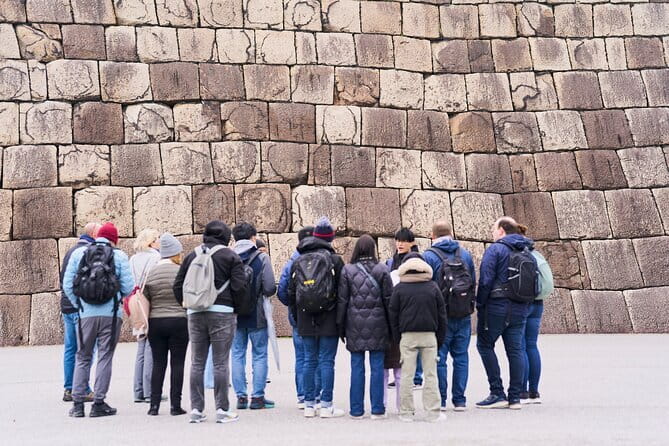
The Constable Guardhouse is a small structure once used by lower-ranking samurai. Here you learn who these men were and why their position near the castle entrance mattered.
Next comes Hyakunin Bansho Guardhouse, a larger facility where many samurai were stationed. Its scale helps you picture the daily manpower needed to protect the shogun and regulate movement inside the castle.
The Obansho Guardhouse was near the inner gate and associated with higher-ranking samurai. The discussion shifts from numbers to status, duties, and the different layers of authority within the castle.
Each stop takes about 10 minutes. On paper, three guardhouses can sound repetitive. In practice, their value comes from comparison. You see how rank and responsibility were reflected in where samurai served and how close they were to the castle’s most protected areas.
Guides have used laminated pictures of old castle layouts, guard towers, and members of the imperial family to make these explanations easier to grasp. If your guide brings visual aids, take advantage of them. They can turn a lost building plan into something you can follow.
Fujimi-yagura and the watchtower view

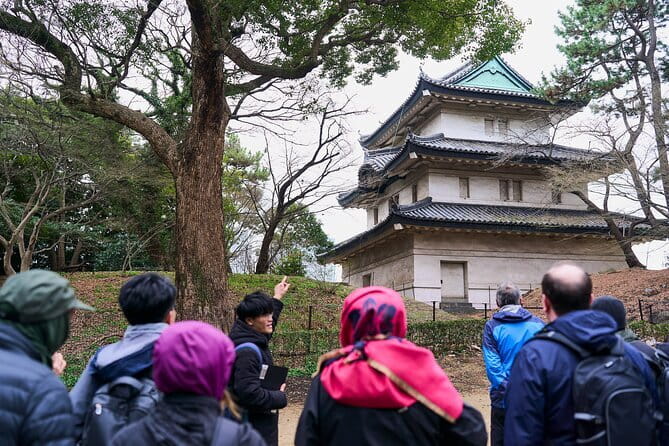
Fujimi-yagura is an old watchtower overlooking the grounds. The guide explains its past role and what made it important.
This stop adds height and perspective to the earlier discussion of walls and guardhouses. After hearing how the castle protected its inner areas, you can better understand the value of a watchtower and a clear view across the grounds.
The route is still a walking tour, not a climb through an open tower. Expect to examine the structure from outside and hear how it fit into the wider defense system.
A scale model at Kokyo Sannomaru Shozokan
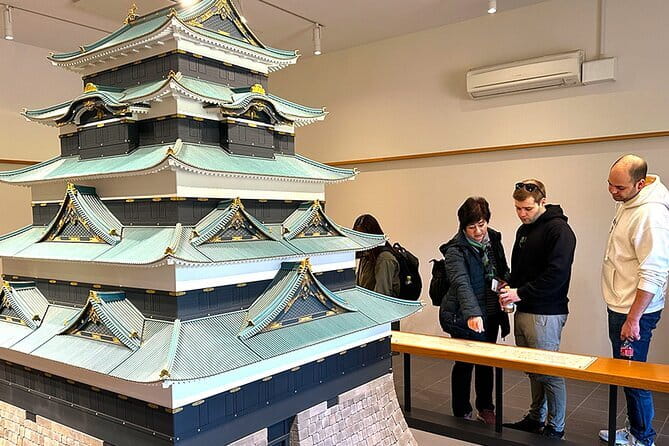
At Kokyo Sannomaru Shozokan, you can see a scale model of the former Edo Castle. There is also a souvenir shop with palace-related goods.
The model is especially useful because the present-day grounds do not show the full size and complexity of the old castle. A physical model helps connect the scattered walls, gates, and guardhouses you have already seen.
This stop lasts about 10 minutes, so it is a quick visual pause rather than a long museum visit. If you like shopping, the souvenir stop offers a chance to browse, but the tour’s main value remains the outdoor storytelling.
The lost main tower and the reality of the palace grounds
The East Gardens of the Imperial Palace include the former site of Edo Castle’s main tower. The tower no longer stands, and the guide explains why and what survives.
This is an important moment in the tour because it deals with absence. You are not looking at a restored palace interior or a complete medieval fortress. You are standing on a former center of power and using the remaining foundations, open space, and guide’s account to picture what once occupied it.
The East Gardens also provide a welcome change in pace. After the gates and military structures, the open grounds let you pause and take in the scale of the site.
Ninomaru Garden brings the quiet side of Edo
Ninomaru Garden is the most relaxing stop. It includes seasonal plants and a pond with koi, and the tour uses it to show the gentler side of the former castle grounds.
I like this contrast. The tour does not present Edo Castle only as a place of guards, ranks, and controlled movement. The garden shows how formal power could exist beside carefully shaped natural spaces.
The visit lasts about 15 minutes. That is enough time to enjoy the pond and trees, though it may feel brief if you want a slow garden visit or extensive photographs.
Several people have found the gardens especially enjoyable, but the route is not a dedicated garden tour. If plants, ponds, and landscape design are your main interest, you may want additional time in the East Gardens after the walk.
Finishing near Tokyo Station
The route is described as concluding in front of the ginkgo-lined avenue stretching toward Tokyo Station. The practical activity details also say the tour ends back at the meeting point, so confirm the exact finish location before setting a tight afternoon plan.
Either way, the area is well placed for continuing into central Tokyo. The ginkgo avenue provides a strong final view and a natural transition from the palace grounds to the city’s office towers, station district, and nearby sightseeing areas.
What the $23.88 price really buys you
At $23.88 per person, this is not an expensive Tokyo activity. The price is particularly reasonable if you want a quick introduction to the palace grounds and do not want to spend hours preparing the history yourself.
You are paying mainly for interpretation, not admission. Every listed stop has free entry, and much of the appeal comes from seeing public areas that you could visit independently.
That creates the key value question: do you need a guide? If you only want a quiet walk through gardens, probably not. If you want to understand shoguns, samurai ranks, castle defenses, and the relationship between Edo and imperial Japan, the guide earns the fee.
The experience has received a 4.9 rating from 725 reviews, with 99 percent recommending it. The praise is especially consistent around guide enthusiasm, clear explanations, humor, and the ability to answer questions. One person left early after finding the English difficult and feeling a guide was unnecessary. That is a fair warning: your experience depends heavily on the individual guide and on how much historical explanation you want.
Heat, stairs, and what to bring
The route is outdoors, and much of it is exposed to the sun. On hot days, bring water and wear a hat or carry an umbrella. Comfortable shoes are essential.
You will need to walk up steep slopes and stairs. There are no stated health restrictions, and most people can participate, but the tour is not a flat, indoor sightseeing experience.
A comfort break has been included during at least some tours, but do not expect frequent stops. Plan for steady walking over two hours.
The mobile ticket is convenient, and confirmation is provided when you book. Free cancellation is available if you cancel at least 24 hours before the local start time. Changes or cancellations inside that window are not refunded.
Who will get the most from this tour
I would choose this walk for a first visit to Tokyo, especially early in your stay. It gives you a basic framework for the Edo period, the shogun, the samurai, and the imperial system. Later visits to museums, temples, and historic districts will make more sense.
It also suits families and mixed-age groups who want history in manageable portions. Guides such as Nana have been praised for patience and for answering questions, while K and Keiko have been singled out for clear, energetic presentations.
This may not suit you if you want to enter palace buildings, see the Emperor’s residence, or spend most of your time in a garden. It is also not ideal if you dislike walking in heat or need a route without slopes and stairs.
Should you book the Tokyo Castle and Imperial Palace walk?
Book it if you want the Imperial Palace grounds to mean more than gates, lawns, and attractive stonework. The guide-led explanations are the point, and the two-hour format gives you a useful dose of history without swallowing your day.
I especially recommend it for first-time Tokyo visitors, history fans, and anyone curious about how the shogun’s castle operated. The $23.88 cost is easy to justify when the guide is as clear and lively as K, Shin, Keiko, Ai, Tomo, or the other well-regarded guides named in the tour feedback.
Skip it if you prefer exploring alone, care mainly about gardens, or expect palace interiors. Bring water, sun protection, and good shoes, then confirm the group size and final meeting location before booking.
FAQ
How long is the Tokyo Castle and Imperial Palace tour?
The tour lasts approximately two hours.
What language is the tour conducted in?
The tour is conducted in English only. Japanese-language support is not available.
How much does the tour cost?
The listed price is $23.88 per person.
Where does the tour begin?
It begins at Starbucks Coffee in Kokyo Gaien Wadakura Fountain Park, 3-1 Kōkyogaien, Chiyoda City, Tokyo 100-0002, Japan.
Where does the tour end?
The activity details say it ends back at the meeting point. The route description says it concludes near the ginkgo-lined avenue leading toward Tokyo Station, so confirm the exact ending point when booking.
Is the Emperor’s residence open to the public?
No. The Emperor’s residence is not open to the public on this experience.
Is there a security check?
Yes. You must pass a security check to enter the Imperial Palace grounds. Knives and alcohol are not permitted.
How large is the tour group?
The experience is advertised as a small group of up to 10 people. The activity information also lists a maximum capacity of 60 travelers, so confirm the group size if this matters to you.
Does the tour involve stairs and steep slopes?
Yes. You need to walk up steep slopes and stairs.
Can I cancel for a full refund?
Yes, if you cancel at least 24 hours before the experience start time. Cancellations or changes made less than 24 hours before the start are not refunded.
Just added around Tokyo
- Tokyo: Customizable Private Guided Walking Tour★ 4.5 · 129 reviews
- Private Harajuku Omotesando Architecture Tour★ 4.9 · 18 reviews
- Tokyo: Guided Helicopter Ride★ 4.9 · 24 reviews
- Tokyo: Guided Walking Tour of Tsukiji Market with Lunch★ 4.4 · 24 reviews
- Tokyo: Private Personalized Local Food Tour★ 4.5 · 101 reviews
- Tokyo GINZA: KONPARU Japanese Cabaret Show with Drink★ 4.8 · 38 reviews
- Tokyo: Guided Walking Tour of Tsukiji Market with Breakfast★ 4.4 · 134 reviews
- Tokyo: Gotokuji Cat Temple, Shinjuku Cat Cafe & 3D Cat Tour★ 4.9 · 38 reviews
Garden & Palace Tours, compared.

Imperial Palace and Shogun Historical Walking Tour
Read our review →
Tokyo Castle & Imperial PalaceーShogun Walking Tour
Read our review →
Nijo-jo Castle and Ninomaru Palace Guided Tour
Read our review →

Ultimate Osaka Walking Tour: Castle, Dotonbori & Hidden Gems
Read our review →
Nijo Castle, Kiyomizu & Fushimi Inari Guided Tour
Read our review →Browse the lists this tour appears in