
REVIEW · GARDEN & PALACE TOURS
Ultimate Osaka Walking Tour: Castle, Dotonbori & Hidden Gems
Osaka is easiest to understand when you connect its grand samurai-era castle with its food stalls, shopping arcades, neon streets, and old temple lanes. This 5 to 7-hour walking tour does just that, moving from Osaka Castle to Kuromon Market, Dotonbori, Hozenji, and Shinsekai.
I like the broad mix of history and everyday Osaka, and I like the chance to eat Osaka-style street food with a drink at a local restaurant. The main drawback is the distance: you may walk 5 to 6 miles, or about 15,000 steps, so comfortable shoes are essential.
In This Review
- Key things to know before booking
- Why this tour gives you a useful first look at Osaka
- Osaka Castle grounds and the story of samurai Japan
- Amerika-mura and Osaka’s younger side
- Shinsaibashi-suji, a 400-year shopping corridor
- Dotonbori’s neon, canal, and street food
- Hozenji Yokocho and the small Hozenji Temple
- Kuromon Market, Osaka’s food center
- Shinsekai and the retro finish
- How demanding is the walking?
- Group tours, private tours, and the guide factor
- What is included, and what you still pay for
- Who should book this Osaka walking tour?
- Should you book it?
- FAQ
- How long does the Osaka walking tour last?
- Where does the tour begin?
- Does the tour enter Osaka Castle?
- Is lunch included?
- Can the lunch accommodate vegan or gluten-free diets?
- Are train fares included?
- How large is the group?
- Can I cancel for a full refund?
Key things to know before booking
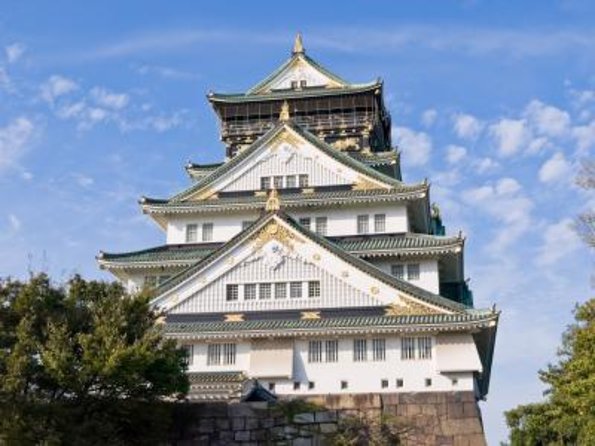
- Osaka Castle is viewed from the grounds only: the tour does not enter the castle, and admission is not included.
- The route links very different sides of Osaka: samurai history, youth fashion, shopping, food markets, temples, and retro neighborhoods all appear in one day.
- Expect a genuine walking day: two short train rides help connect the route, but the tour remains mainly on foot.
- Lunch is built in: you receive Osaka-style street food and a drink at a local restaurant, but vegan and gluten-free meals cannot be catered for at lunch.
- The small group has a limit of 11 people: private tours are also available if you want a flexible pace and more personal attention.
- Guide quality is a major part of the experience: Tim, Scott, Kenzo, Daniel, Adam, Andy, and Alex are among the guides praised for their history, cultural insight, humor, and friendly manner.
Why this tour gives you a useful first look at Osaka
Many city tours string together famous sights without showing how they fit into local life. This route has a clearer story. You begin with Osaka Castle and the political struggles of sixteenth-century Japan, then move through places shaped by shopping, food, youth culture, religion, and postwar nostalgia.
I especially like the way the day shifts in mood. The castle grounds offer space and grand views. The downtown stops are noisy and crowded. Hozenji Yokocho feels tucked away and traditional. Shinsekai finishes the route with an older, slightly quirky Osaka atmosphere.
The tour also gives you practical orientation. You learn where Dotonbori sits in relation to Shinsaibashi, Kuromon Market, and Shinsekai, while your guide can offer suggestions for food and further sightseeing. Guides such as Tim and Scott are praised for explaining not only Japanese history, but also food, daily life, and modern culture. Kenzo is repeatedly singled out for his warmth, humor, and passion for Osaka.
The price is $73.29 per person. That is fair if you want a full half-day or longer with a guide, lunch, local context, and a carefully linked route. It is less attractive if you prefer to sightsee slowly, dislike long walks, or plan to enter Osaka Castle and other attractions on your own. The value comes from the amount of ground covered and the explanations along the way, not from included admission tickets.
More Garden & Palace Tours in Osaka
- Osaka Castle: Museum and Tower Entry Ticket
★ 4.5 · 2,380 reviews - Osaka Castle Walking Tour and Castle Tower Admission
★ 5.0 · 561 reviews - From Osaka: Himeji Castle, Arima Onsen & Mt. Rokko Day Tour
★ 4.6 · 339 reviews
Osaka Castle grounds and the story of samurai Japan
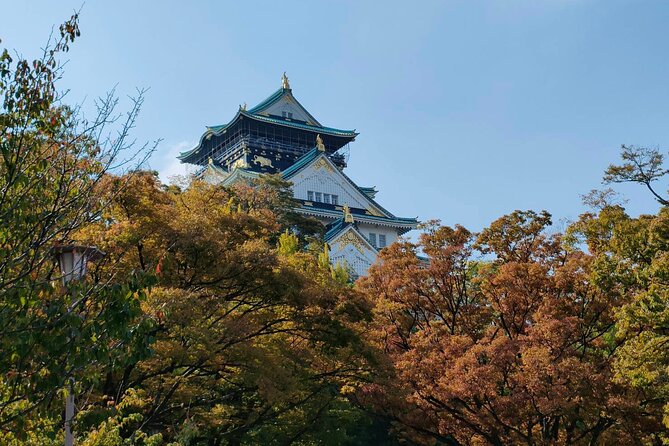
The tour starts at Ōsakajōkōen Station, at 3 Osakajo in Chuo Ward. Osaka Castle receives about 90 minutes, making it the longest stop of the day. That extra time matters because the castle is more than a quick photo stop. It was central to the unification of Japan during the samurai era and remains one of Osaka’s defining symbols.
Your guide explains the castle’s role and points out good locations for photographs. Daniel and Adam are especially praised for their explanations of the castle and its surroundings. A private tour can give you more room to ask questions or adjust the pace here.
There is one important limitation: you do not enter Osaka Castle. The admission ticket is not included, and the itinerary keeps you outside. If the interior museum and observation areas are high on your list, you will need to arrange that separately, perhaps on another visit or after the tour if your schedule allows.
Still, the grounds make a strong opening. The setting gives your guide room to explain Osaka’s place in Japanese history before the route shifts to busy commercial districts. It also lets you start the day at a gentler pace before tackling the long urban walk.
Amerika-mura and Osaka’s younger side
Amerika-mura, often shortened to Amemura, takes about 30 minutes. Its narrow streets are linked to youth culture, urban clothing, hip-hop fashion, and independent shops. The stop helps correct the idea that Osaka is only about temples, castles, and traditional food.
You may find this section more interesting if you enjoy street style and modern city culture. The tour does not treat Osaka as a preserved museum. Instead, it shows how old traditions share space with current fashion and music scenes.
Thirty minutes is enough for an introduction, but not enough for serious shopping. Think of this as a guided orientation rather than a dedicated retail visit. If you spot a shop you like, you may need to return later.
Shinsaibashi-suji, a 400-year shopping corridor
The walk continues along Shinsaibashi-suji Shopping Street, a covered arcade about 600 meters long. Osaka’s major shopping activity has centered here for roughly 400 years, and the arcade offers a useful look at Japan’s love of retail.
This stop is free and lasts about 30 minutes. The covered roof is practical in uncertain weather, though the tour itself may be canceled for poor conditions. You pass hundreds of shops, making this an easy place to observe daily city life without needing to buy anything.
I like this part because it connects history with ordinary habits. You are not only seeing monuments. You are watching how people shop, eat, move through the city, and use a commercial street that has served Osaka for generations.
Again, the short timing means you should not expect a leisurely shopping session. The route is designed to keep moving toward Dotonbori and the other downtown stops.
More Walking Tours in Osaka
- Osaka Kickstart: Hotspots & Hidden Gems Tour
★ 5.0 · 1,306 reviews - Osaka: Hotspots & Hidden Gems Walking Tour Private or Group
★ 4.9 · 1,300 reviews - Osaka Local Foodie Walking Tour in Dotonbori and Shinsekai
★ 5.0 · 985 reviews - Osaka Bar Hopping Night Walking Tour in Namba (3 bars, 6 tastes)
★ 5.0 · 958 reviews
Dotonbori’s neon, canal, and street food
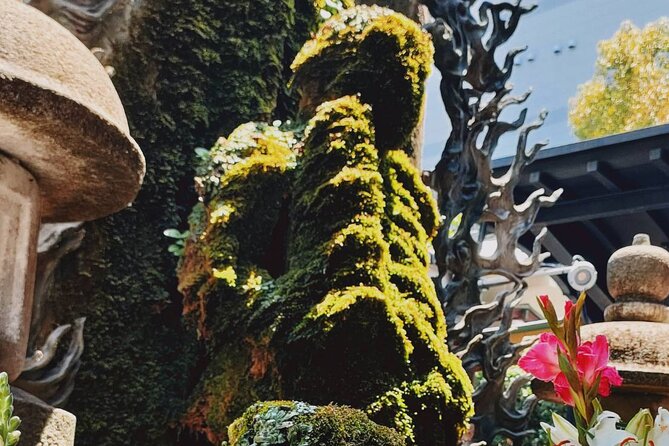
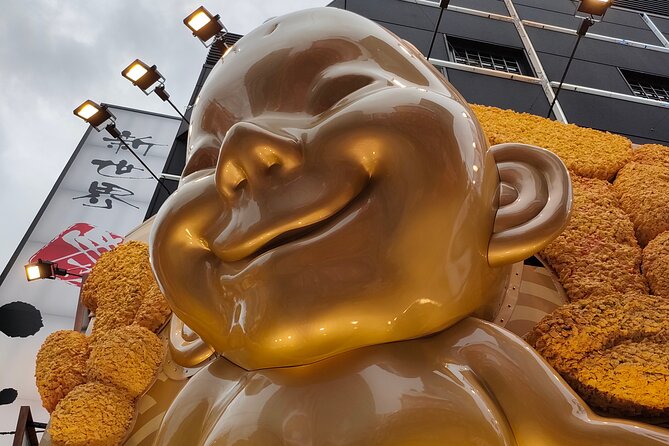
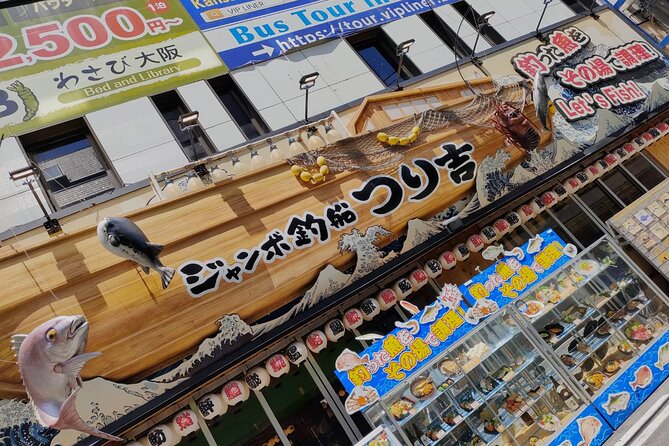
Dotonbori is one of Osaka’s most famous areas, built around the canal and known for nightlife, neon signs, food, and retro touches. The tour spends about 30 minutes here, enough to see the central atmosphere and hear how the district fits into Osaka’s food culture.
This is one of the places where a guide adds real value. Dotonbori can feel like a wall of signs and crowds when you first arrive. A guide helps you notice the details and understand why this area has become such a strong symbol of Osaka.
The stop may be lively, especially at busy times, so keep your group in sight and expect frequent pauses. You will have opportunities to see famous food displays and street stalls, but the included lunch is described separately as Osaka-style street food with a drink at a local restaurant.
Dotonbori is also a useful point for recommendations. Ask your guide what to eat later, which districts suit your evening, and how to return to places you want to explore more slowly.
Hozenji Yokocho and the small Hozenji Temple
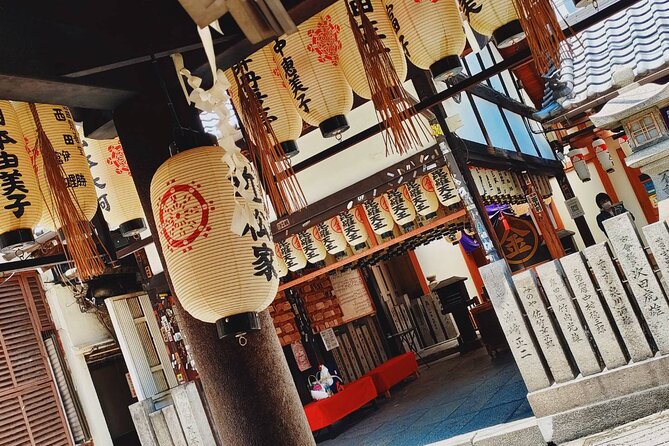
Just off Dotonbori, Hozenji Yokocho offers a sharp change of pace. This narrow alley has cobblestone paths and traditional lanterns, preserving a feel associated with older Japan. It is the kind of place you might pass without noticing if you were exploring only by main roads.
The tour allows about 30 minutes for the alley, followed by another 30 minutes at Hozenji Temple. The temple was built in the seventeenth century and is dedicated to Fudo Myoo, one of the five wisdom kings in Buddhism.
These stops are small, but they are among the most rewarding parts of the route. You get a short pause from Osaka’s commercial noise and a look at how a modest religious site remains part of the modern downtown.
Do not expect a huge temple complex. Hozenji is valued for its atmosphere, setting, and connection to local tradition rather than scale. A guide can give the visit meaning that would be easy to miss if you simply snapped a photograph and walked on.
Kuromon Market, Osaka’s food center
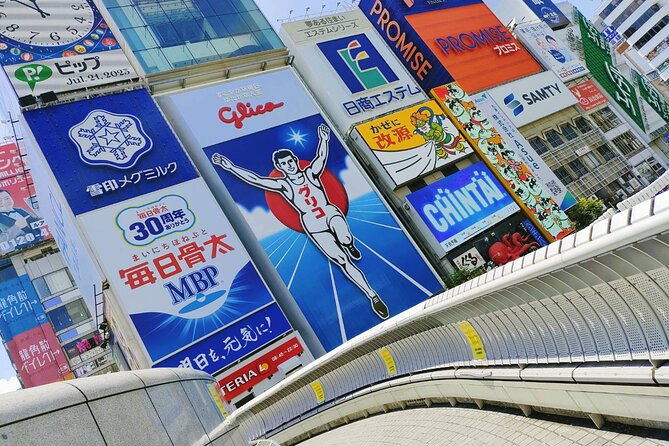
Kuromon Market has operated for more than 200 years and is widely known as Osaka’s Kitchen. The covered market is associated with fresh seafood and food-focused shopping, making it a natural place to include on a tour built around Osaka’s eating culture.
The planned stop is about 30 minutes, and the tour includes a complimentary lunch of Osaka-style street food with a drink at a local restaurant. This is a useful arrangement because you get a taste of the city without having to guess which stall or dish to choose.
The half-hour stop is brief for a market. You will get a sample of its character, but you should not expect to inspect every aisle or eat your way through the entire market. If Kuromon becomes a favorite, return later with more time.
There is an important booking detail here. Kuromon Market is listed for day and private tours only. If you are choosing a group format or a shorter option, confirm exactly what your version includes before paying.
Lunch cannot cater for vegan and gluten-free diets. If that applies to you, ask about the meal before booking rather than hoping to solve it on the day. The provided information also does not promise other dietary substitutions.
Shinsekai and the retro finish
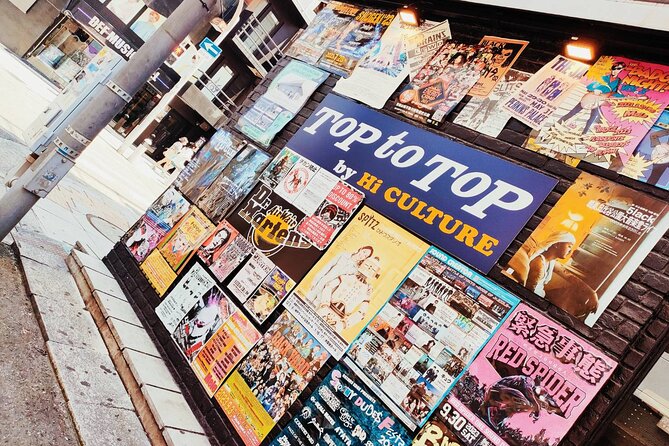
Shinsekai was developed before the Second World War and is associated with Tsutenkaku Tower. Its nostalgic signs and older urban character offer a different view of Osaka from the polished shopping streets and canal lights downtown.
The tour spends about 30 minutes here. That is enough for a guided walk and an introduction to the district, but not a full exploration of every side street or attraction. The area works well as the final stop because it leaves you with an impression of Osaka’s older popular culture and its changing city life.
The route’s variety is strongest here. In one day, you move from the castle’s samurai-era story to youth fashion, a historic shopping arcade, food markets, a Buddhist temple, and a prewar district. The stops are not all equally grand, but together they explain why Osaka feels less formal and more street-oriented than many first-time visitors expect.
How demanding is the walking?
Take the word walking seriously. The tour requires a moderate level of physical fitness, and several people describe the full route as about 5 to 6 miles or roughly 15,000 steps. A leisurely pace helps, but the distance still adds up.
Wear comfortable shoes with good support. Bring water, especially in warm weather, and avoid scheduling a demanding activity immediately afterward. There are two short train rides, but they are simply there to connect parts of the route. Their fares are not included, listed as ¥240 and ¥190.
The 5-hour version gives you a compact introduction. The 6-hour and 7-hour choices allow more time overall, though the exact balance between walking, explanations, food, and stops may vary. If you want flexibility, the private format is the better choice. Adam is praised for adjusting speed, making photo suggestions, and creating an easygoing experience for his group.
Group tours, private tours, and the guide factor
The group size is capped at 11 people, which is small enough for questions without guaranteeing a fully private feel. Hotel pickup is not offered for group tours, so you should plan to reach the Osaka Castle meeting point at Ōsakajōkōen Station yourself.
Pickup is offered as a tour feature, but the supplied details specifically exclude hotel pickup for group tours. If door-to-door collection matters to you, check the conditions for the private option.
The guide can shape the whole day. Tim is repeatedly praised for clear explanations of Japanese and Osaka history, along with humor and an approachable manner. Scott receives strong marks for cultural and social insight, as well as for making space for questions.
Kenzo is a good match if you want a friendly, relaxed guide with strong local stories. Daniel is praised for using time well, keeping the group moving without rushing, and making the day fun. Adam is a strong private-tour choice if you want flexible pacing and photo help.
These names are useful preferences, but a specific guide cannot be guaranteed from the information provided. If one guide matters to you, request that person when booking, then confirm availability.
What is included, and what you still pay for
At $73.29, the tour includes the guide, the walking route, two short train rides, and a street-food lunch with a drink. Group discounts may improve the price for families or larger parties.
You still pay the two train fares, listed as ¥240 and ¥190. Attraction tickets are not included, and the Osaka Castle visit remains outside only. That keeps the base price clear, but you should budget for any castle admission or other paid sights you choose to visit separately.
For a first day in Osaka, I think the price works best when you value explanation and orientation. You are paying to connect distant areas efficiently and to understand what you are seeing. If you are already comfortable navigating Osaka and mainly want food, you could likely spend less by exploring independently.
Who should book this Osaka walking tour?
I would choose this tour for a first visit, a short stay, a solo visit, or a day trip from Kyoto. It covers enough ground to give you a working map of Osaka, and the group setting can make solo sightseeing feel more comfortable.
Families with older children and teenagers should also find the mix appealing. The route includes history, food, shopping, youth culture, neon streets, and retro neighborhoods rather than a long run of temples.
The tour is less suitable if you have limited mobility, dislike city walking, need vegan or gluten-free lunch, or want extended time inside Osaka Castle. It is also not the right pick if you prefer a slow photography walk with long breaks at each stop.
Free cancellation is available up to 24 hours before the start time for a full refund. Changes or cancellations inside that window are not accepted, and poor weather may lead to a new date or full refund. The tour requires good weather, so check the forecast before setting aside the day.
Should you book it?
Book this tour if you want a broad, active introduction to Osaka with history, food, shopping, and local districts in one organized day. Its strongest points are the range of neighborhoods, the included street-food lunch, and guides who explain both historic events and present-day Japanese life.
Skip it if you need castle entry, a short and easy outing, or strict dietary flexibility. For most first-time visitors who can handle a long walk, the route gives you a useful base for the rest of your Osaka stay, especially if you note the places you want to revisit at your own pace.
FAQ
How long does the Osaka walking tour last?
You can choose a tour lasting approximately 5, 6, or 7 hours.
Where does the tour begin?
The meeting point is Ōsakajōkōen Station, at 3 Osakajo, Chuo Ward, Osaka, 540-0002, Japan.
Does the tour enter Osaka Castle?
No. The tour visits the Osaka Castle grounds and does not enter the castle. Admission is not included.
Is lunch included?
Yes. The tour includes complimentary Osaka-style street food and a drink at a local restaurant.
Can the lunch accommodate vegan or gluten-free diets?
No. Vegan and gluten-free meals cannot be catered for at lunch.
Are train fares included?
No. Two short train rides are required, and the listed fares are ¥240 and ¥190.
How large is the group?
The activity has a maximum of 11 travelers.
Can I cancel for a full refund?
Yes. You can cancel at least 24 hours before the experience start time for a full refund. Cancellations or changes made less than 24 hours before the start time are not accepted.
Just added around Osaka
- (Ticket Included) Explore Osaka Castle & Museum of History★ 4.8 · 21 reviews
- Hidden Osaka – Yukaku Red Light Tour & Culinary Adventure★ 4.8 · 96 reviews
- Osaka: Walking Tour and Top Highlights★ 4.8 · 104 reviews
- Osaka: Private Ceramic Painting Workshop★ 5.0 · 13 reviews
- Pickleball in Osaka, Kobe & Kyoto with Locals!★ 4.7 · 80 reviews
- Eat Like a Local in Osaka – Private Custom Street Food Tour★ 4.3 · 33 reviews
- Osaka:SUMO BEATS SHOWCASE: Taiko Drum and Wagyu burger!★ 4.2 · 37 reviews
- Kimono photoshoot-Includes 100 photo data★ 5.0 · 21 reviews
Garden & Palace Tours, compared.

Imperial Palace and Shogun Historical Walking Tour
Read our review →
Tokyo Castle & Imperial PalaceーShogun Walking Tour
Read our review →
Nijo-jo Castle and Ninomaru Palace Guided Tour
Read our review →

Tokyo Castle & Imperial PalaceーShogun Walking Tour
Read our review →
Nijo Castle, Kiyomizu & Fushimi Inari Guided Tour
Read our review →Browse the lists this tour appears in