
REVIEW · GARDEN & PALACE TOURS
Tokyo Castle & Imperial PalaceーShogun Walking Tour
Tokyo’s Imperial Palace can look like a grand park with a few stone walls until someone explains what you are seeing. This tour brings the lost Edo Castle into focus, from its layered defenses and massive gates to the garden paths once used by shoguns and retainers. It also connects that military world to Japan’s continuing imperial system.
I like the small group of up to 10 and the tour’s sensible two-hour length. I also like that guides such as Anju, Fuma, Yuka, Tomo, Keiko, and Kosei have been praised for clear explanations, good questions, and a friendly pace. The main consideration is that this is an outdoor walking tour in English, and the palace grounds are broad enough to make weather and comfortable shoes matter.
In This Review
- Key points at a glance
- Why Edo Castle is the real subject
- Starting at Wadakura Fountain Park Starbucks
- Sakurada Tatsumi Yagura and the first castle clues
- Ote-Mon Gate and the logic of layered defenses
- Tokyo Imperial Palace and the imperial story
- Ninomaru Garden, koi, and Japan in miniature
- Edo Castle ruins and the palace you cannot see
- Imperial Palace East Gardens and a calm finish
- The guide makes the difference
- Is $23 a fair price?
- Practical advice before you go
- Should you book the Tokyo Castle and Imperial Palace Shogun Walking Tour?
- FAQ
- How long is the Tokyo Castle and Imperial Palace Shogun Walking Tour?
- How much does the tour cost?
- Where does the tour meet?
- How do I identify the guide?
- What language is the tour conducted in?
- How many people can join the tour?
- What places are included in the route?
- Can I take photographs?
- Is there a security check?
- Can wheelchair users join the tour?
Key points at a glance
- Edo Castle survives in pieces: Moats, gates, stone walls, towers, and ruins help you picture Japan’s largest castle.
- The route links samurai and emperors: You learn how the shogun’s military government relates to the imperial family’s much older tradition.
- A small group keeps questions easy: With no more than 10 people, you can usually hear the guide and ask about details you might otherwise miss.
- Ninomaru Garden adds a quieter side of Tokyo: Trees from across Japan, special koi, seasonal plantings, and careful design give the tour a welcome change of pace.
- The English commentary is the main value: The gardens can be visited without a guide, but the stories explain why the walls, gates, and views matter.
- Outdoor conditions shape the experience: There is a security check, no knives or alcohol are allowed, and much of the route is outside.
Why Edo Castle is the real subject
The name says Tokyo Castle and Imperial Palace, but the most interesting subject is the castle that is no longer fully there. Edo Castle was once Japan’s largest castle, and the present palace grounds still contain pieces of its defensive system. Your guide helps you read the site as a fortress rather than simply a pleasant green space.
That change in viewpoint is important. A moat is not just a strip of water. A stone wall is not just a good photo background. Gates, slopes, moats, and controlled approaches worked together to protect the shogun and his government.
The tour also tackles a subject that can be confusing on a first visit to Japan: the difference between the emperor and the shogun. The imperial tradition is presented as extending back 2,600 years, while the Edo period is tied to the shogun’s political and military rule. You get a useful framework for understanding how those two institutions could exist in the same country.
The tour does not promise entry into private palace rooms or a visit with the imperial family. Its strength is the public grounds, the surviving castle remains, and the guide’s explanation of what once occupied this enormous site.
More Garden & Palace Tours in Tokyo
- Tokyo: Imperial Palace and Shogun Historical Walking Tour
★ 5.0 · 2,251 reviews - Tokyo: Imperial Palace Japanese History Walking Tour
★ 4.9 · 987 reviews - Tokyo: Imperial Palace and Shogun Walking Tour
★ 4.9 · 935 reviews
Starting at Wadakura Fountain Park Starbucks
The meeting point is in front of Starbucks Coffee Kōkyo Gaien Wadakura Fountain Park Store at 3-1 Kōkyo Gaien, Chiyoda City, Tokyo. Look for a guide holding a Local Guide Stars sign.
This is a practical meeting place because it gives you an identifiable landmark near the palace grounds. Still, I would arrive with enough time to find the exact storefront and settle in before the walking begins. The activity returns to the same Starbucks, so you do not need to arrange a separate pickup at the end.
Because this is a small group, the guide can keep the opening simple and personal. Guides named in the feedback include Anju, Fuma, Yuka, Tomo, Ai, Keiko, Koyo, Nana, Kazuki, Mai, and Kosei. The individual style may vary, but the consistent pattern is a warm, conversational tour with plenty of historical explanation.
The experience is conducted in English only. Japanese language support is not available, so you should be comfortable following spoken English for two hours.
Sakurada Tatsumi Yagura and the first castle clues
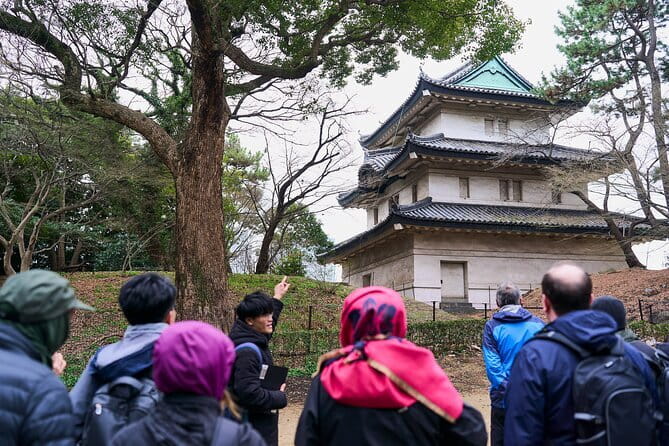
The first stop is Sakurada Tatsumi Yagura, a traditional corner turret. It is listed as a five-minute visit, mainly for photographs and an introduction to the castle’s defensive layout.
This is a short stop, but it gives the tour an early visual anchor. A turret helped protect the edges of the castle complex, and its position makes more sense once the guide explains how guards watched approaches from the water and land.
You will not spend long here. That is useful on a two-hour tour, since the route has several larger stops ahead. It also means the experience favors a broad understanding of Edo Castle over a slow architectural study of one structure.
Ote-Mon Gate and the logic of layered defenses
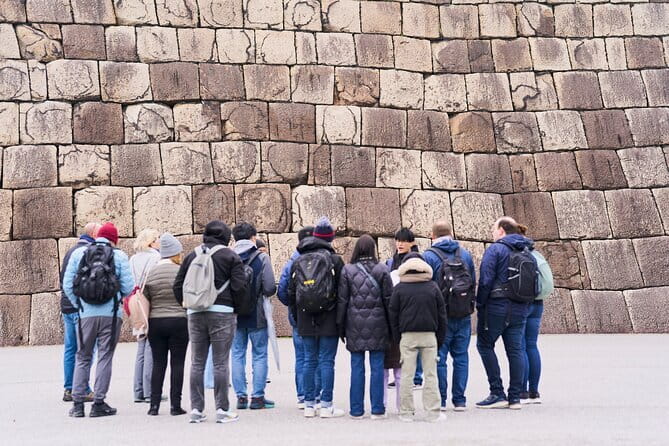
Ote-Mon Gate receives about 15 minutes, giving your guide more time to explain how people entered the castle. The gate was part of a carefully controlled route, and the surrounding walls and approaches show why Edo Castle was considered difficult to attack.
I especially like this part for visitors who enjoy seeing practical history. The guide can point out how defenses were layered instead of relying on one giant wall. That makes the castle feel like a working system, with movement controlled at each stage.
This is also where the tour’s samurai focus becomes concrete. You can imagine retainers, officials, and visitors approaching a powerful political center under strict control. The site is not presented as a movie set. It is a place where military authority, administration, and ceremony overlapped.
Several guides have been praised for explaining details that are easy to pass without a second glance. That is the point of having a guide here. Without context, you may see an impressive gate. With context, you begin to understand how it managed people and protected power.
More Walking Tours in Tokyo
- Tokyo Tsukiji Fish Market Food and Culture Walking Tour
★ 5.0 · 3,184 reviews - Tokyo: Shinjuku Local Bar and Izakaya Guided Walking Tour
★ 4.9 · 1,794 reviews - Tokyo: Tsukiji Fish Market Food and Walking tour
★ 5.0 · 1,724 reviews - Tokyo: Asakusa Walking Tour with Sensoji Temple Visit
★ 4.8 · 1,583 reviews
Tokyo Imperial Palace and the imperial story

The Tokyo Imperial Palace stop lasts about 20 minutes. Here, the focus shifts from the shogun’s castle to the present imperial residence and the long tradition of Japan’s emperors.
The palace grounds help you connect several eras in one walk. Edo Castle was the center of the shogun’s rule during the peaceful samurai era that lasted 260 years. Today, the site serves as the Imperial Palace, associated with an imperial system described on the tour as 2,600 years old.
That does not mean every building from every era remains intact. You are mainly seeing grounds, walls, gates, gardens, and selected structures. The guide’s job is to explain how the site changed from the seat of the shogun to the modern imperial center.
This historical bridge is one of the tour’s best features. If you have watched a samurai drama such as Shōgun, you may arrive with questions about the Edo period. The tour places that world beside the present-day palace, helping you separate drama from the wider political and cultural story.
Photography is encouraged, and there are broad views, old stonework, and formal structures to frame. The palace itself is not an indoor museum experience, so your enjoyment depends on being interested in the grounds and the stories attached to them.
Ninomaru Garden, koi, and Japan in miniature
Ninomaru Garden receives about 15 minutes, though the overall route includes more garden time at the East Gardens. This section offers a gentler contrast to the gates and fortifications.
Expect carefully arranged plantings, old trees, and seasonal color. You may also encounter special koi and trees gathered from different parts of Japan. These details give the garden a national dimension. It is not only a pleasant place to stroll, but also a small display of Japanese natural variety.
The garden is a good place to slow down and take photographs. Some tours rush from one historical point to another. This one allows room for the visual side of the palace grounds, which matters if you want a break from dates and political explanations.
A guide can also explain how the garden relates to the people who used the castle. The shogun’s residence was not only a defensive headquarters. It was also a place of ceremony, daily life, status, and carefully managed beauty.
The paths and slopes mean you should not treat the route as perfectly flat. Wheelchairs can be used within the Imperial Palace grounds, but some slopes and sections require walking or going down on foot. If mobility is a concern, ask about the route before booking.
Edo Castle ruins and the palace you cannot see
The Edo Castle Ruins stop lasts about 10 minutes. This is where the absence of the old castle becomes part of the experience.
Rather than walking through a complete fortress, you see traces of what was once a huge complex. The remains encourage you to picture the scale of Edo Castle, while the guide fills in the missing pieces with explanations of its walls, towers, and defenses.
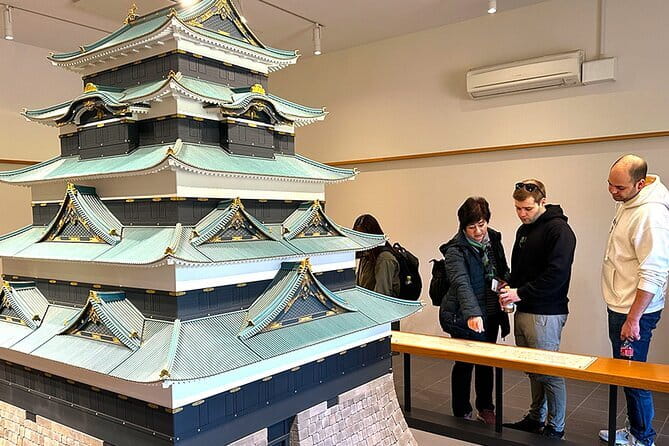
The tour also includes a view of a miniature structure showing what the former palace looked like. That model is especially useful because the surviving ruins alone cannot show the full shape of the lost buildings. It gives you a clearer sense of how the former palace might have fitted into the wider castle grounds.
I would keep expectations realistic here. This is not a preserved castle interior with rooms full of original furnishings. It is an outdoor historical site where fragments and interpretation do the work. If you enjoy ruins, maps, and reconstruction, you will get a lot from it. If you need complete buildings to make a place feel real, the experience may feel more restrained.
Imperial Palace East Gardens and a calm finish
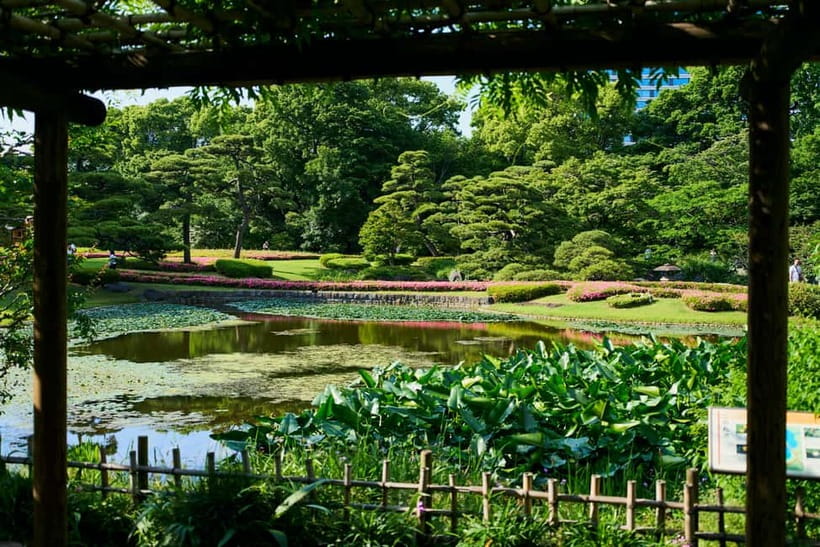
The final major stop is the Imperial Palace East Gardens, with about 20 minutes of guided sightseeing. This is the longest single garden stop and a fitting end to a tour that begins with military power.
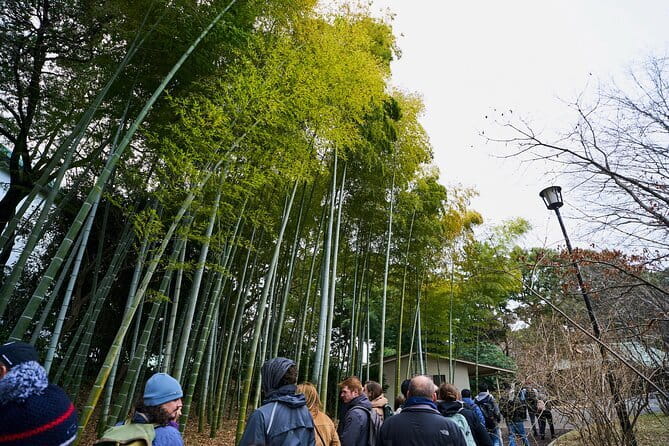
The East Gardens show the calmer face of the former castle site. You can photograph trees, seasonal plants, old stonework, ponds, and koi while hearing how the grounds connect to the castle and palace.
I like ending here because the route does not leave you with only battle stories and defensive walls. You finish with the living parts of the site: plants, water, paths, and views that change through the year. The gardens also make clear how much open space exists in central Tokyo.
The walk then returns to the Starbucks meeting point. Since the tour lasts two hours, the pace needs to stay steady. Several guides, including Anju, Fuma, Koyo, and Yuki, have been praised for keeping the walk relaxed while still covering plenty of information. Some guides may spend extra time answering questions, but you should plan around the stated two-hour duration.
The guide makes the difference
The strongest part of this activity is not a special ticket or a rare access point. It is the explanation.
Anju has been praised for cheerful storytelling, patience, and her ability to connect the Edo period with the present. Fuma is noted for fun facts, passion, and useful recommendations for the rest of a Tokyo visit. Yuka and Tomo are described as clear, friendly, and ready to answer questions.
Other named guides receive similar praise. Keiko is noted for patience and detail. Kosei has been appreciated for comparing Japanese and international culture after living abroad. Koyo is described as professional, courteous, and fun, while Nana is praised for staying friendly even in poor weather.
You cannot choose which guide will lead your departure unless the booking system says otherwise. Still, the repeated pattern is helpful: the guides tend to be young, friendly, engaged, and comfortable making the tour interactive. Some use little quizzes or invite questions, which can keep the history from becoming a lecture.
The English level is another practical point. The tour is designed for English speakers, and the feedback repeatedly highlights clear explanations. If you have trouble following spoken English, the large amount of historical material may be hard to absorb.
Is $23 a fair price?
At $23 per person, this is a low-cost way to add structure to a palace visit. The Imperial Palace East Gardens themselves are not presented as an expensive attraction, so you are paying mainly for the guide’s time, the small-group format, and the historical interpretation.
That value depends on your interests. If you are happy to walk through gardens, take photographs, and read signs at your own pace, you may prefer a self-guided visit. If you want to understand the defenses, the connection between shogun and emperor, and the former palace layout, the fee is easier to justify.
A group limit of 10 is important here. A large group can make it hard to hear a guide beside a moat or gate. A small group also gives you a better chance to ask why a particular wall, turret, or garden feature matters.
Free cancellation up to 24 hours before the activity and a reserve-now, pay-later option add useful flexibility. Check the available starting times when you book, since the tour schedule can vary.
Practical advice before you go
Most of the two hours take place outdoors. Wear shoes suited to walking and dress for the day’s weather. Tokyo can be hot, rainy, or cold depending on the season, and there is little point trying to enjoy the gardens while worrying about wet clothes or uncomfortable feet.
There is a security check when entering the Imperial Palace grounds. Do not bring knives or alcohol. Bring a camera or phone because photography is encouraged and the route includes many useful photo stops.
The tour is suitable for history enthusiasts, culture lovers, first-time Tokyo visitors, and anyone curious about samurai life. It also works well early in a Japan trip, since the guide may help you understand later visits to temples, castles, museums, and historic districts.
Families may appreciate the short format and the visual variety, though the history works best for children who can follow an English walking explanation. The route is not ideal for someone seeking an indoor activity or a fully accessible, flat path.
Should you book the Tokyo Castle and Imperial Palace Shogun Walking Tour?
I would book this tour if you want the Imperial Palace grounds to mean more than clipped gardens and impressive walls. For $23, you get a two-hour introduction to Edo Castle, samurai government, imperial tradition, and the growth of Tokyo, with a small group and an English-speaking guide.
I would skip it if you want to enter palace interiors, see a complete original castle, or spend a leisurely half-day in one garden. The experience is a brisk outdoor overview, not an exhaustive archaeological visit.
For most visitors, the best reason to go is simple: Edo Castle is easy to overlook because so much of it has disappeared. A guide such as Anju, Fuma, Yuka, or Tomo can help you see the missing castle in the walls, gates, moats, ruins, and garden paths that remain.
FAQ
How long is the Tokyo Castle and Imperial Palace Shogun Walking Tour?
The tour lasts two hours and returns to the Starbucks meeting point at Wadakura Fountain Park.
How much does the tour cost?
The listed price is $23 per person.
Where does the tour meet?
Meet in front of Starbucks Coffee Kōkyo Gaien Wadakura Fountain Park Store at 3-1 Kōkyo Gaien, Chiyoda City, Tokyo.
How do I identify the guide?
The guide will be holding a sign that says Local Guide Stars.
What language is the tour conducted in?
The tour is conducted in English only. Japanese language support is not available.
How many people can join the tour?
The group is limited to 10 participants.
What places are included in the route?
The route includes Sakurada Tatsumi Yagura, Ote-Mon Gate, Tokyo Imperial Palace, Ninomaru Garden, Edo Castle Ruins, and the Imperial Palace East Gardens.
Can I take photographs?
Yes. Photography is encouraged throughout the scenic parts of the tour.
Is there a security check?
Yes. There is a security check when entering the Imperial Palace grounds. Knives and alcohol are not allowed.
Can wheelchair users join the tour?
Wheelchairs are available and can be used within the Imperial Palace grounds. Some slopes and sections require walking or going down on foot, so the route may not be fully suitable for every mobility need.
Just added around Tokyo
- Tokyo: Customizable Private Guided Walking Tour★ 4.5 · 129 reviews
- Private Harajuku Omotesando Architecture Tour★ 4.9 · 18 reviews
- Tokyo: Guided Helicopter Ride★ 4.9 · 24 reviews
- Tokyo: Guided Walking Tour of Tsukiji Market with Lunch★ 4.4 · 24 reviews
- Tokyo: Private Personalized Local Food Tour★ 4.5 · 101 reviews
- Tokyo GINZA: KONPARU Japanese Cabaret Show with Drink★ 4.8 · 38 reviews
- Tokyo: Guided Walking Tour of Tsukiji Market with Breakfast★ 4.4 · 134 reviews
- Tokyo: Gotokuji Cat Temple, Shinjuku Cat Cafe & 3D Cat Tour★ 4.9 · 38 reviews
Garden & Palace Tours, compared.

Imperial Palace and Shogun Historical Walking Tour
Read our review →
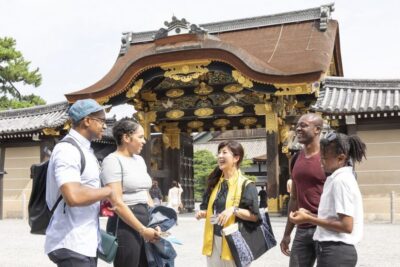
Nijo-jo Castle and Ninomaru Palace Guided Tour
Read our review →

Ultimate Osaka Walking Tour: Castle, Dotonbori & Hidden Gems
Read our review →
Tokyo Castle & Imperial PalaceーShogun Walking Tour
Read our review →
Nijo Castle, Kiyomizu & Fushimi Inari Guided Tour
Read our review →Browse the lists this tour appears in