
REVIEW · GARDEN & PALACE TOURS
Tokyo: Imperial Palace Japanese History Walking Tour
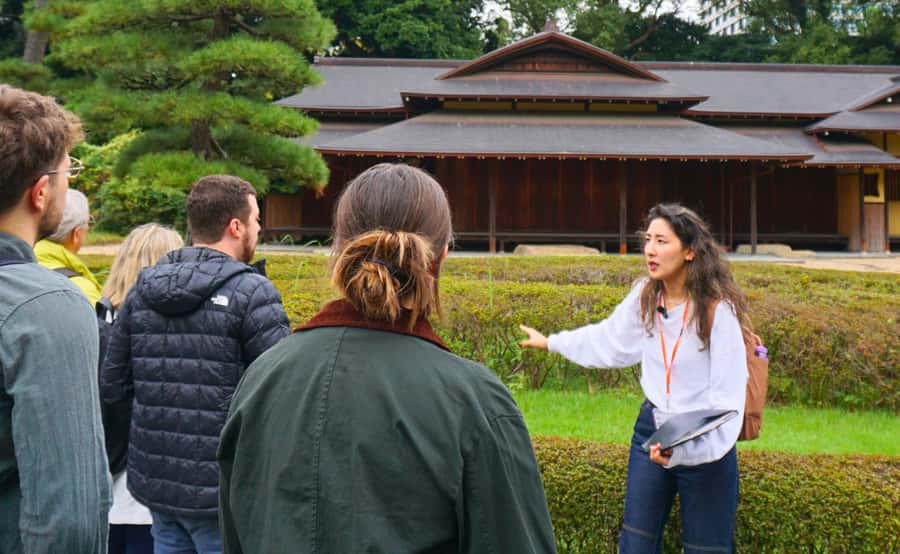
The most surprising part of this tour is how clearly it connects Edo Castle with modern Tokyo. You are not simply looking at palace walls and gardens. You are following the rise of the shogun, the old farmer-to-samurai-to-daimyo-to-shogun ranking system, and the change from military castle to imperial residence.
I like the friendly, interactive guiding, especially when hosts such as Mika, Natsumi, Lakki, and Alexandre turn dates and rulers into stories you can follow. I also like the mix of castle ruins, a miniature model, bamboo, old samurai houses, and royal koi. The main consideration is comfort: this is an outdoor walk in all weather, and Tokyo’s summer heat can make the two-hour route tiring.
- See where Edo Castle once stood: Walk through the former seat of shogun power and view a model of the castle as it appeared in the past.
- Learn the social order: Your guide explains the roles of farmers, samurai, daimyo, and shogun in plain English.
- Enter through Otemon Gate: The grand gate gives the walk a clear historical beginning.
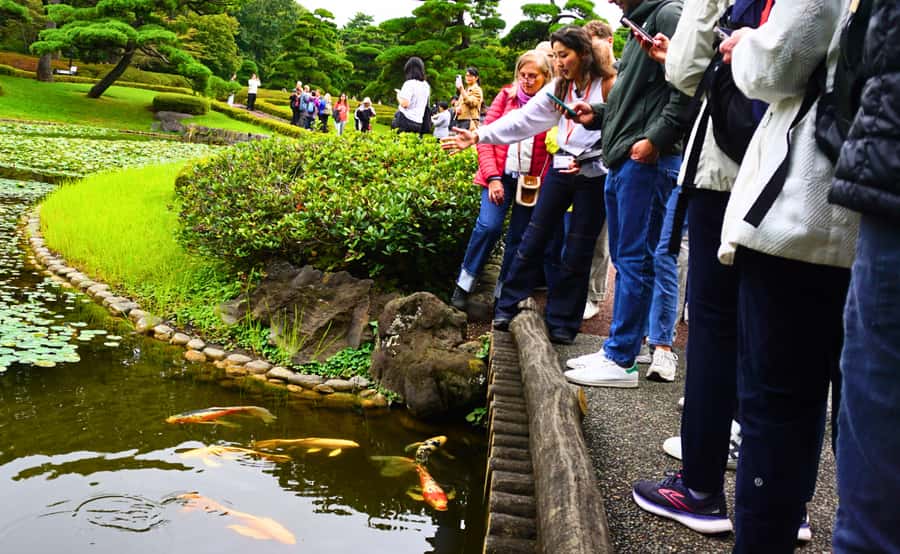
- Find quiet garden details: Look for bamboo, seasonal trees gifted to the emperor, old samurai residences, and royal koi.
- Get useful Tokyo advice: Guides often help with restaurant ideas, cultural customs, etiquette, and places to visit after the tour.
- Know the limits: The inner palace is not open to the public and is not part of this experience.
In This Review
- Why Edo Castle Makes a Good Introduction to Tokyo
- Meeting at Wadakuramon Fountain Park
- Otemon Gate and the First History Lesson
- Rebuilding the Lost Castle with a Miniature Model
- Castle Ruins, Samurai Connections, and Old Residences
- Bamboo, Gifted Trees, and Royal Koi
- The Guides Make the Difference
- How Much Walking and Heat to Expect
- What $32 Buys You
- Who Should Book This Walk
- Should You Book the Imperial Palace History Tour?
- FAQ
- Where does the Imperial Palace walking tour start?
- How will I recognize the guide?
- Where does the tour finish?
- How long does the walking tour last?
- Which languages are available?
- Does the tour enter the inner palace?
- Will I see the original Edo Castle?
- What will I see in the gardens?
- Does the tour run in bad weather?
- Who should avoid this tour?
Why Edo Castle Makes a Good Introduction to Tokyo
Tokyo can feel like a city of trains, towers, bright signs, and packed streets. The Imperial Palace East Gardens offer a different starting point. Here, stone walls and broad grounds show you where political power once gathered long before the modern capital took shape.
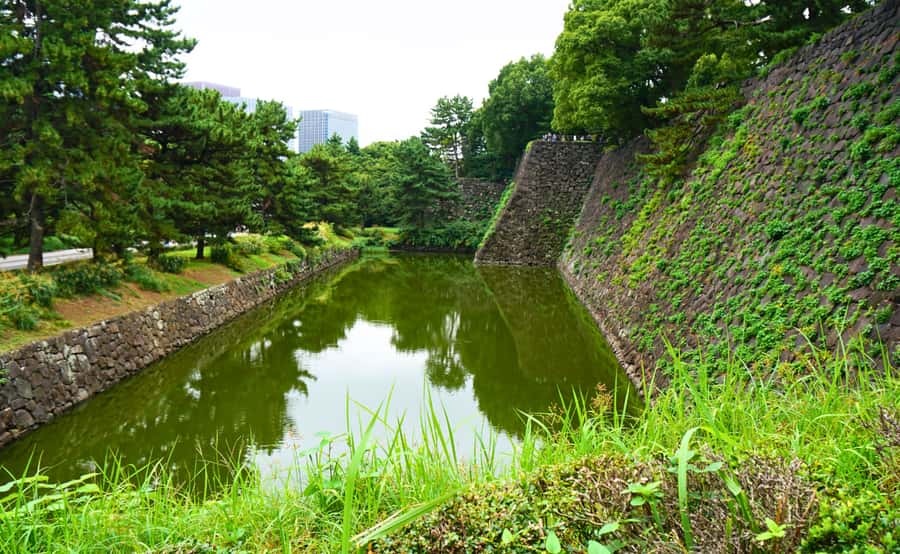
The walk focuses on the former Edo Castle site. The original castle buildings are gone, but that absence becomes part of the lesson. Your guide explains what happened to the castle and uses a miniature model to help you picture the complex that once occupied the grounds.
I find this approach more useful than a standard garden stroll. The stones, gates, and open spaces make better sense when you understand who controlled them and why the castle mattered. The tour gives you a framework for later visits to temples, museums, and historic neighborhoods across Japan.
The route also explains the shift from shogun rule to the emperor’s palace. That change is one of the key turning points in Japanese history, and the guide connects it to the country you see today.
Meeting at Wadakuramon Fountain Park
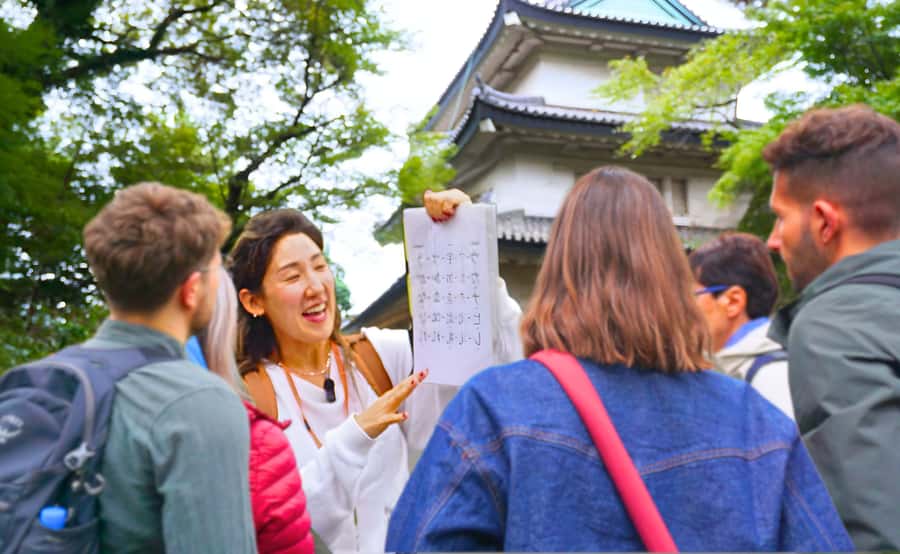
The tour begins near Tokyo Station or Otemachi Station. From either station, allow about five to ten minutes to walk to Wadakuramon Fountain Park. Your guide waits near the Starbucks by the fountain, holding a Sunrise Adventure sign.
This meeting point is practical, but Tokyo Station has many exits and large underground passages. Give yourself extra time rather than arriving at the last moment. Finding the fountain park is easier when you are above ground and using the station exit directions carefully.
The guide’s sign should make the final meeting simple. Several guides have also been praised for making themselves easy to spot and for helping with photographs once the walk begins.
Once the group gathers, you walk together toward Otemon Gate. The route from the fountain to the gate works as a gentle transition from present-day Tokyo into the old castle grounds.
More Garden & Palace Tours in Tokyo
- Tokyo: Imperial Palace and Shogun Historical Walking Tour
★ 5.0 · 2,251 reviews - Tokyo Castle & Imperial PalaceーShogun Walking Tour
★ 4.7 · 1,068 reviews - Tokyo: Imperial Palace and Shogun Walking Tour
★ 4.9 · 935 reviews
Otemon Gate and the First History Lesson
Otemon Gate is a fitting entrance. It is grand enough to suggest the power of Edo Castle, yet it also gives the guide a natural place to explain how the castle complex was organized.
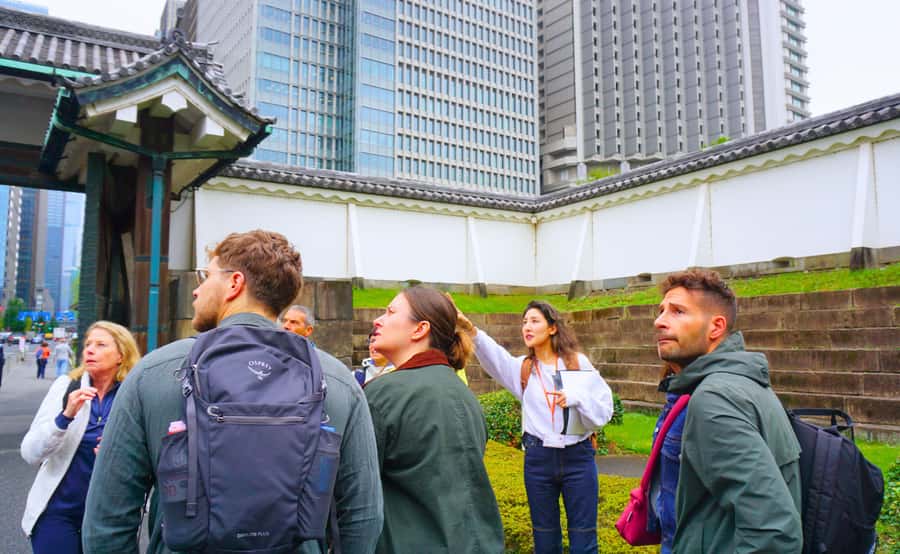
As you pass through, expect the tour to become a moving history lesson rather than a series of quick photo stops. Guides ask questions, invite conversation, and adjust their explanations to the group. That interactive style is especially helpful if you are traveling with children or if Japanese history is new to you.
The central subject is the shogun. Your guide explains how the shogun’s military government shaped Edo, the former name of Tokyo, and how power was arranged under the old social system. Farmers, samurai, daimyo, and shogun each had a defined place, with duties and status attached to it.
You will not get an academic lecture packed with names alone. The aim is to understand how authority worked and why the castle was the center of that system. Guides such as Natsumi and Lakki have been singled out for clear storytelling, humor, and patient answers to questions.
Rebuilding the Lost Castle with a Miniature Model
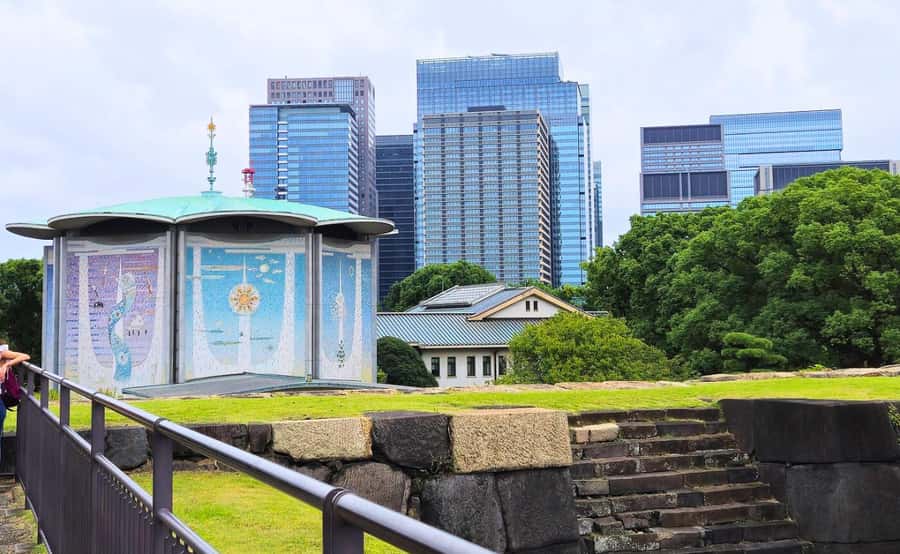
The original castle is no longer standing, so the model is an important part of the experience. It helps you see the scale and layout of the old complex instead of asking you to imagine everything from scattered foundations.
This is one of the tour’s strongest teaching tools. A stone base or gate can be hard to interpret on its own. With the model and the guide’s explanation, you can connect the remaining structures to the larger castle that once occupied the site.
The vanished buildings also give the tour a useful sense of change. You see how a military stronghold became associated with the emperor, and how the political center of Japan changed over time. That story prevents the gardens from feeling like a pretty but disconnected stop.
Take a few minutes here to listen before rushing to photographs. The model provides context for the rest of the walk, and the later ruins will mean more once you understand what stood around them.
Castle Ruins, Samurai Connections, and Old Residences
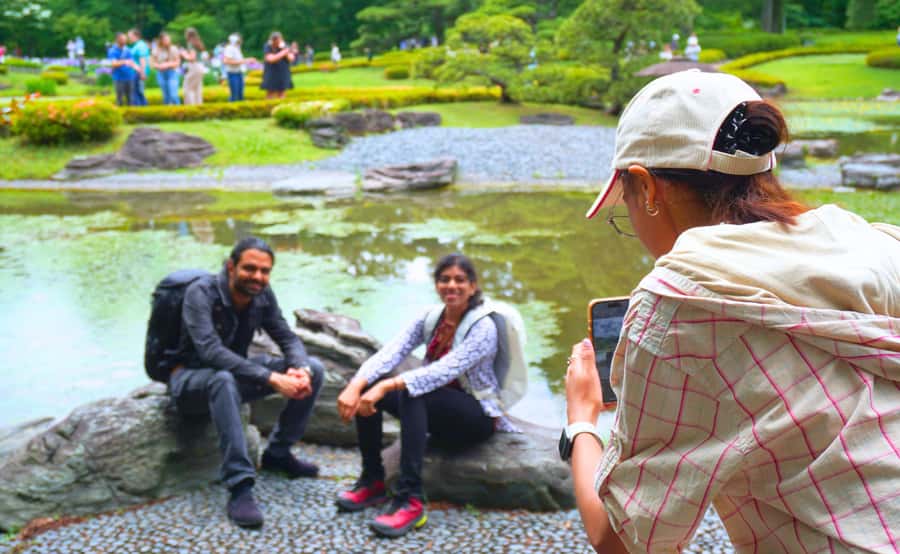
The East Gardens include traces of the former castle, along with old samurai houses and other reminders of the site’s earlier role. Your guide points out what remains and explains how these pieces fit into life at Edo Castle.
I like this part because it puts people into the story. The tour is not only about rulers. It also deals with the samurai class, their responsibilities, and the rank system that organized Japanese society.
The phrase samurai can easily become a vague tourist label. A good guide gives it more shape by explaining the relationship between samurai, daimyo, and the shogun. You come away with a clearer idea of how military service, loyalty, rank, and government connected.
The old residences add another layer. They help you think about who lived and worked within the castle grounds, not just who held the highest title. Details can vary with the guide, but the route consistently focuses on Edo-period life and the move toward the Meiji era.
Several guides are also happy to answer questions beyond the prepared explanation. If you want to understand how the palace connects to Japanese customs or present-day Tokyo, ask. The best use of this tour is an active conversation, not simply standing beside the guide.
More Walking Tours in Tokyo
- Tokyo Tsukiji Fish Market Food and Culture Walking Tour
★ 5.0 · 3,184 reviews - Tokyo: Shinjuku Local Bar and Izakaya Guided Walking Tour
★ 4.9 · 1,794 reviews - Tokyo: Tsukiji Fish Market Food and Walking tour
★ 5.0 · 1,724 reviews - Tokyo: Asakusa Walking Tour with Sensoji Temple Visit
★ 4.8 · 1,583 reviews
Bamboo, Gifted Trees, and Royal Koi
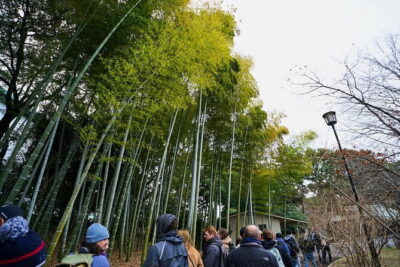
The gardens keep the walk from becoming a nonstop history lecture. Bamboo, trees from different parts of Japan, and carefully maintained paths bring a quieter mood to the route.
The trees have a story of their own. Some were given to the emperor from different parts of Japan, making them more than ordinary garden decoration. Your guide can use them to explain the relationship between the imperial household and the wider country.
The bamboo area is a natural pause and a good photo location. It also offers some relief from the city’s hard surfaces, though you should not count on full shade throughout the tour. Summer sun can be intense, and one tour account specifically noted how much shaded stops helped.
The royal koi fish are another small but memorable feature. They are not the main reason to book the walk, but they add a bit of life and color to the garden section. Guides have also helped with photos, which is useful when you want a group picture without handing your phone to a stranger.
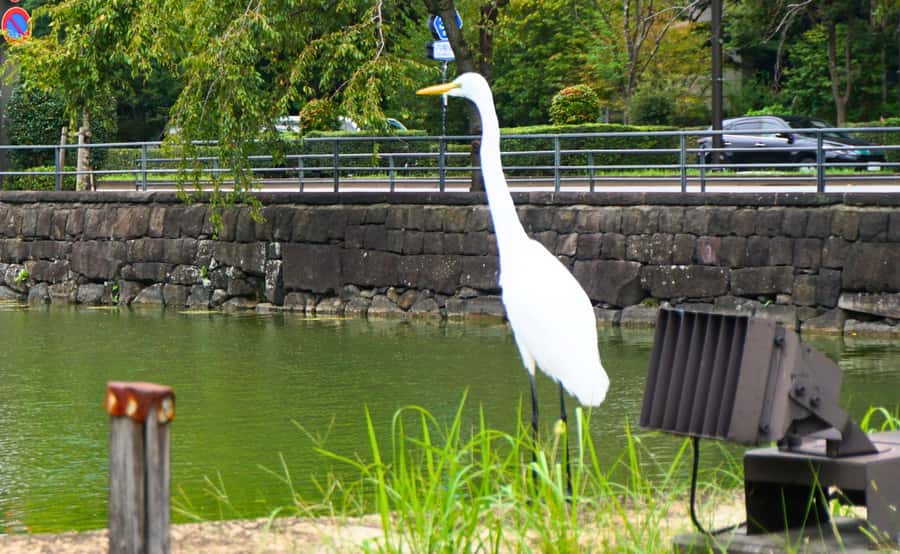
Mosquitoes can be present because the palace grounds contain so much greenery and water. One guide supplied mosquito spray, but I would still bring your own repellent, especially in warm months.
The Guides Make the Difference

The tour is sold as an English-speaking experience, with French also available. The guide is the main reason this walk works. The site provides the setting, but the guide supplies the timeline, explanations, humor, and local suggestions.
Mika has been praised for clear English, strong historical explanations, and careful attention to group comfort. She has also helped with photographs and answered a long list of questions without making the walk feel rushed.
Natsumi is another frequently requested guide. Her strengths are storytelling, a well-paced route, and useful recommendations for lunch and other Tokyo stops. She has been especially appreciated for explaining the Edo period, castle design, and the transition toward modern Japan.
Lakki, also referred to as Lucky in some feedback, brings a warm and lively style. He has been praised for making the tour interactive and for keeping children interested while explaining the Edo and Meiji eras.
Alexandre guides in French and English. He has been appreciated for giving extra time, answering questions, and adding food, etiquette, and cultural advice. Nico has also been praised for friendly guiding and for offering an optional private tour with a tea ceremony.
Your exact guide will affect the tone, but the pattern is clear: the hosts are approachable, willing to answer questions, and interested in helping you plan the rest of your Tokyo visit. The experience is at its best when you ask about what you are seeing instead of staying silent at the back of the group.
How Much Walking and Heat to Expect
The route lasts about two hours and takes place outdoors. It is not described as suitable for people with mobility impairments, wheelchair users, low fitness levels, recent surgery, back problems, heart problems, or pregnancy.
That does not mean you need to be an athlete. It does mean you should be comfortable walking through garden grounds for a sustained period. Paths, stops, and pace may feel manageable for many people, but the heat can be the real challenge.
Wear weather-appropriate clothing and assume the tour runs rain or shine. Bring water, sun protection, and comfortable shoes. In hot weather, a hat and small towel will make a noticeable difference. The guides do try to use shade when available, but you should not expect air-conditioned breaks.
Rain can also change the mood of the gardens. The tour continues in wet weather, so a compact rain jacket or umbrella is sensible. Avoid bringing prohibited items such as weapons, sharp objects, drones, alcohol, drugs, skateboards, or anything used to make a fire. Smoking is not allowed.
What $32 Buys You

At $32 per person, this is a modestly priced guided introduction to one of Tokyo’s most important historic sites. You are paying for roughly two hours of explanation, route-finding, photo help, and cultural context rather than for entry to a special interior.
The value depends on how you use the guide. If you only want to stroll through the gardens and read signs at your own speed, you may prefer to visit independently. If you want to understand the vanished castle, the shogun’s power, and the change to imperial rule, the fee is easier to justify.
The guide’s extra Tokyo advice adds value at the start of a trip. Restaurant suggestions, etiquette tips, and ideas for what to see next can help you make better use of the following days. That is particularly handy if you book this as one of your first activities in the city.
The price does not include access to the inner palace. That area is not open to the public, so this is not a behind-the-scenes palace visit. It is a tour of the accessible East Gardens and former Edo Castle grounds.
You can reserve now and pay later, and cancellation is allowed up to 24 hours before the activity for a full refund. Those terms are useful if your Tokyo plans are still shifting.
Who Should Book This Walk
I would choose this tour if you want a readable introduction to Japanese history without committing to a full-day museum visit. It suits first-time Tokyo visitors, families who enjoy interactive explanations, and anyone who wants the city’s modern appearance placed in historical context.
It is also a good choice for people who like asking questions. The guides are not limited to a fixed speech. They can explain the castle, customs, food, etiquette, and other Tokyo topics as the conversation develops.
You may want to skip it if you dislike group walking tours, prefer to explore silently, or have difficulty walking outdoors for two hours. The heat, rain, garden paths, and lack of inner-palace access are not minor details.
For families, the model, koi, gates, and interactive questions provide variety. Children may not remember every political detail, but the physical remains and stories about samurai and shoguns give them something concrete to follow.
Should You Book the Imperial Palace History Tour?
Book it if you want more than attractive gardens. The strongest reason to go is the guide’s ability to explain how Edo Castle, samurai society, shogun rule, and the imperial palace fit together.
I would especially recommend it early in your Tokyo stay. The historical overview can help you make sense of later temple visits, museums, food traditions, and neighborhoods. At $32, it is a sensible price for that foundation.
Go prepared for weather, mosquitoes, and a fair amount of walking. If you accept those limits and understand that the inner palace is not included, this is a friendly, focused way to meet Tokyo’s past.
FAQ
Where does the Imperial Palace walking tour start?
Meet your guide near the Starbucks by the fountain in Wadakuramon Fountain Park. The park is about a five to ten-minute walk from Tokyo Station or Otemachi Station.
How will I recognize the guide?
The guide will be near the fountain and will hold a sign with the Sunrise Adventure logo.
Where does the tour finish?
The activity ends back at the original meeting point.
How long does the walking tour last?
The tour lasts about two hours.
Which languages are available?
The tour is available in English and French.
Does the tour enter the inner palace?
No. The inner palace is not open to the public and is not included.
Will I see the original Edo Castle?
The original castle buildings are no longer there. You will see remaining castle features and a miniature model showing how the castle looked in the past.
What will I see in the gardens?
The route includes castle ruins, old samurai houses, bamboo, trees gifted to the emperor from around Japan, and royal koi fish.
Does the tour run in bad weather?
Yes. The walk takes place rain or shine, so wear clothing suited to the forecast.
Who should avoid this tour?
It is not suitable for pregnant women, people with back, heart, or mobility problems, wheelchair users, people with recent surgeries, or people with a low level of fitness.
More Historical Tours in Tokyo
- Tokyo: Shinjuku Historical Walking Tour & Secret Backstreets
★ 5.0 · 530 reviews - Yanaka Walking Tour: Historic and Traditional District of Tokyo
★ 5.0 · 530 reviews - Mt. Fuji Heritage Tour: Traditional Villages, Lakes & Shrine
★ 4.5 · 509 reviews - From Tokyo: Nikko World Heritage Site Private Full-Day Trip
★ 4.9 · 243 reviews
Just added around Tokyo
- Tokyo: Customizable Private Guided Walking Tour★ 4.5 · 129 reviews
- Private Harajuku Omotesando Architecture Tour★ 4.9 · 18 reviews
- Tokyo: Guided Helicopter Ride★ 4.9 · 24 reviews
- Tokyo: Guided Walking Tour of Tsukiji Market with Lunch★ 4.4 · 24 reviews
- Tokyo: Private Personalized Local Food Tour★ 4.5 · 101 reviews
- Tokyo GINZA: KONPARU Japanese Cabaret Show with Drink★ 4.8 · 38 reviews
- Tokyo: Guided Walking Tour of Tsukiji Market with Breakfast★ 4.4 · 134 reviews
- Tokyo: Gotokuji Cat Temple, Shinjuku Cat Cafe & 3D Cat Tour★ 4.9 · 38 reviews
Garden & Palace Tours, compared.

Imperial Palace and Shogun Historical Walking Tour
Read our review →
Tokyo Castle & Imperial PalaceーShogun Walking Tour
Read our review →
Nijo-jo Castle and Ninomaru Palace Guided Tour
Read our review →
Ultimate Osaka Walking Tour: Castle, Dotonbori & Hidden Gems
Read our review →Tokyo Castle & Imperial PalaceーShogun Walking Tour
Read our review →
Nijo Castle, Kiyomizu & Fushimi Inari Guided Tour
Read our review →Browse the lists this tour appears in