
REVIEW · WALKING TOURS
Tokyo: Shinjuku Historical Walking Tour & Secret Backstreets
Shinjuku changes character every few steps. One minute you are under giant neon signs in Kabukicho, and the next you are in a narrow lane of tiny bars or standing before a quiet shrine. This 90-minute night walk gives you a local guide for that shift, with stops at Omoide Yokocho, Kabukicho, Tokyu Kabukicho Tower, Golden Gai, and Hanazono Shrine.
I like two things here: you get practical food and drink advice from guides such as Mao, Ai, Ren, and Naoto, and the route finishes at a peaceful shrine instead of ending in the middle of the nightlife district. The main consideration is that this is a walking and explanation tour, not a food crawl. Your vending-machine drink is included, but meals, bar visits, shrine offerings, and omikuji cost extra.
In This Review
- Key points at a glance
- Why this Shinjuku walk works after dark
- Meeting at Shinjuku East Exit
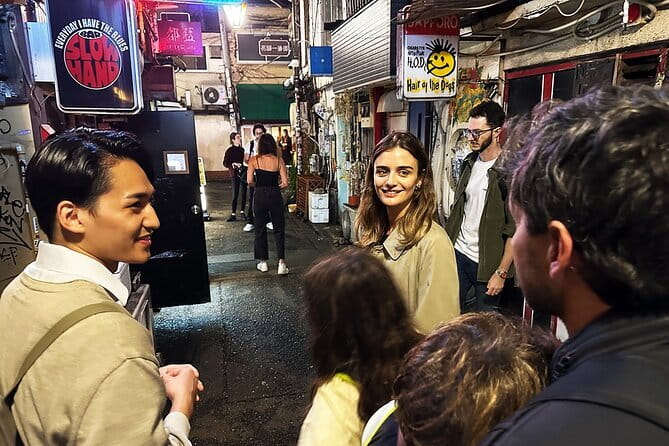
- Omoide Yokocho and the feel of old Shinjuku
- Kabukicho under the neon signs
- Tokyu Kabukicho Tower adds a modern pause
- Golden Gai and its tiny drinking lanes
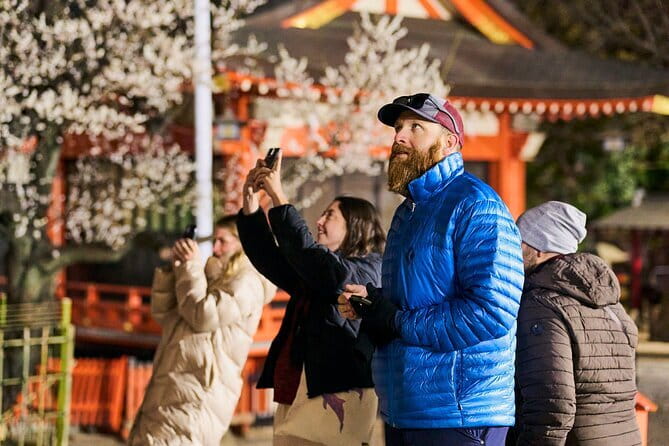
- Hanazono Shrine brings the evening down to earth
- What your guide adds to the experience
- Is $25.20 good value?
- Who should book this walk?
- Practical details before you go
- Should you book the Shinjuku Historical Walking Tour?
- FAQ
- How long does the Shinjuku walking tour last?
- What places does the route visit?
- Where does the tour begin?
- Where does the tour finish?
- Is food included?
- Are shrine offerings and omikuji included?
- Is the tour private?
- Can I cancel for a full refund?
- What happens if bad weather cancels the tour?
Key points at a glance
- Omoide Yokocho begins the evening with old Tokyo atmosphere: Tiny eating places and narrow lanes offer a sharp contrast to Shinjuku’s modern towers.
- Kabukicho supplies the neon and energy: You see the famous entertainment district without having to navigate its busy streets alone.
- Tokyu Kabukicho Tower adds a modern counterpoint: The stop lasts about 25 minutes and gives you time to take in one of the area’s newest landmarks.
- Golden Gai reveals a very different nightlife scene: Its cramped lanes and small bars are best understood with local guidance, even if you do not go inside.
- Hanazono Shrine provides a calm finish: You learn basic shrine customs and have a quieter place for photos and reflection.
- The price is modest for a private introduction: At $25.20 per person, the value lies in orientation, local advice, and saving time, not included food or admission.
Why this Shinjuku walk works after dark
Shinjuku can be hard to read on your first visit. The station is huge, the streets branch in every direction, and the best-known areas sit close together but feel completely different. A guide gives the evening a simple shape: meet near the East Exit police box, walk through several parts of the district, and return to the same meeting point.
That structure matters. You do not need to keep checking a map while trying to watch the signs, traffic, and crowds. Your guide can point out the lanes worth remembering, explain what you are seeing, and suggest places to eat later.
The experience is also flexible in one useful way: several start times are available. You can fit it around dinner, shopping, or a day trip. The tour lasts about an hour and a half, so it works well on your first night in Tokyo when you want an introduction without giving up the whole evening.
The activity is described as private, meaning only your group should participate. Some past bookings have involved groups of about 15, so I would confirm the group arrangement if a small private walk is important to you. Either way, the guide-led format helps you stay together in a district where it is easy to lose your bearings.
More Walking Tours in Tokyo
- Tokyo Tsukiji Fish Market Food and Culture Walking Tour
★ 5.0 · 3,184 reviews - Tokyo: Imperial Palace and Shogun Historical Walking Tour
★ 5.0 · 2,251 reviews - Tokyo: Shinjuku Local Bar and Izakaya Guided Walking Tour
★ 4.9 · 1,794 reviews
Meeting at Shinjuku East Exit
The meeting point is the police box by Shinjuku Station’s East Exit, at 3-chōme-38-1 Shinjuku. This is a sensible starting place because the station has many exits and a first-time visitor can easily emerge on the wrong side.
Allow extra time to reach the East Exit. Tokyo’s rail stations are efficient but large, and finding the correct passage can take longer than expected. Keep the mobile ticket ready on your phone, and make sure your phone has enough battery for the meeting details and any photographs.
The tour ends back at the meeting point. That is handy if you are staying nearby or need to continue by train, but it also means the walk is a loop rather than a convenient transfer to another neighborhood.
Your guide may offer a vending-machine drink during the walk or recommend one as part of the experience. It is a small inclusion, but it fits the rhythm of a Tokyo evening. Do not expect a full refreshment stop.
Omoide Yokocho and the feel of old Shinjuku
Omoide Yokocho, or Memory Lane, is one of the most atmospheric parts of the route. This tucked-away pocket near the station is known for narrow lanes and small eating places. Its scale makes a useful first lesson in Shinjuku: the district is not only giant screens and tall buildings.
The charm comes from the contrast. You leave the broad station area and enter a more intimate setting where the restaurants sit close together. Your guide can explain what makes the area distinctive and point out places you might consider for a later meal.
This is mainly a viewing and orientation stop. The tour fee does not include food, so you should not assume that you will sit down to eat. If you want to return for dinner, ask your guide about suitable places and any practical details before the walk ends.
Omoide Yokocho can feel cramped, especially at night. That is part of its appeal, but it may be less comfortable for anyone who dislikes tight spaces or prefers a slow, quiet stroll. Keep your belongings close and be ready to pause when the group stops for an explanation.
Kabukicho under the neon signs
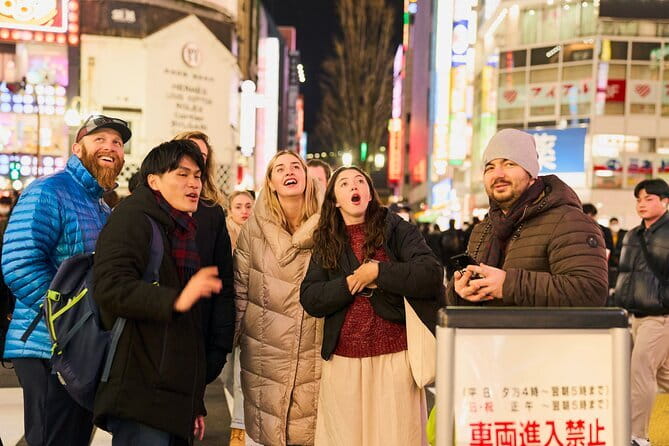
Kabukicho is often called Sleepless Town, and it is the portion of the route most visitors picture when they think of nighttime Shinjuku. Neon signs, entertainment venues, large advertisements, and constant movement make it a memorable place for photographs.
A guide is useful here because the district can feel confusing and intimidating on your own. You can focus on the streets and signs while the guide explains the area and helps the group move through it. Past guides have included Ayaka, Aki, Cherry, and others, with the exact guide depending on the booking.
Do not expect the tour to turn Kabukicho into a simple sightseeing set. It is an active entertainment district, and the guide can explain what you are looking at without every venue being part of the tour. The experience is about seeing the area and understanding its character, not arranging entry to bars or clubs.
This is also where the night setting earns its keep. During daylight, many signs and displays lose some of their effect. At night, the district becomes a strong photo stop, though you should follow your guide’s advice about where to stand and when to keep moving.
Same city, a completely different kind of day:
- Mt Fuji and Hakone 1-Day Bus Tour Return by Bullet Train
★ 5.0 · 26,383 reviews - 1-Day Tokyo Bus Tour
★ 5.0 · 14,250 reviews - Tokyo: TOKYO SKYTREE® Admission ticket
★ 4.5 · 11,192 reviews - Tokyo: teamLab Planets TOKYO Digital Art Museum Entry Ticket
★ 4.6 · 9,779 reviews
Tokyu Kabukicho Tower adds a modern pause
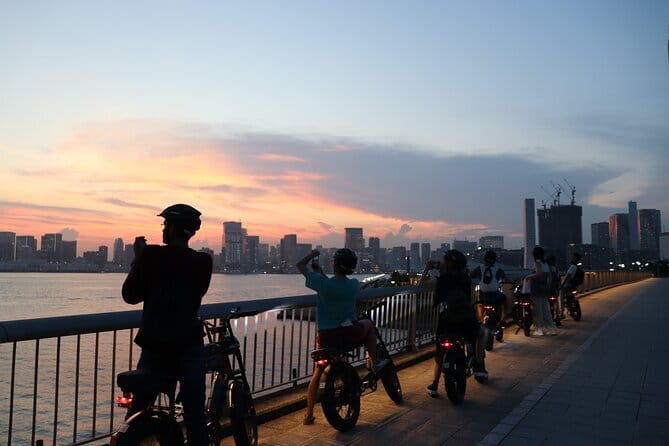
The route spends about 25 minutes at Tokyu Kabukicho Tower, the longest listed stop. This newer complex gives the walk a different pace after the older lanes and crowded streets.
The tower is more than a photo backdrop. It shows how the Kabukicho area is changing, with modern attractions and food or entertainment spaces gathered in one large development. Your guide can help you place the building within the surrounding district rather than treating it as an isolated landmark.
Admission is listed as free for the stop, but that does not mean every attraction inside the tower is included. You should think of this as an exterior and area visit unless your guide says otherwise. Any paid food, drinks, or attractions would be your responsibility.
The longer stop makes sense for photographs and explanations. It also gives you a breather before the narrower lanes of Golden Gai. If modern architecture and city lights interest you, this may be one of the more useful parts of the walk. If you mainly want old Tokyo, it will feel less distinctive than Omoide Yokocho or Hanazono Shrine.
Golden Gai and its tiny drinking lanes
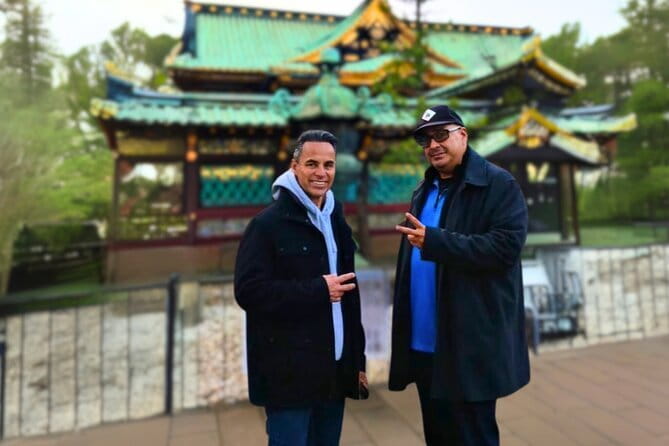
Golden Gai is a compact maze of narrow alleyways lined with small bars. It has a very different scale from Tokyu Kabukicho Tower, and seeing both on the same route helps you understand Shinjuku’s range.
The area is best approached with respect. The tiny bars often have limited space, and this walking tour does not include a bar visit or drink. Your guide can explain the area, identify places that may suit your interests, and help you avoid wandering into a space without understanding how it operates.
Allow your guide’s advice to shape your plans. Some people will enjoy returning later for a drink, while others will be satisfied with the photographs and atmosphere. The point of the stop is not to collect as many venues as possible. It is to see a distinctive part of Shinjuku and learn how it fits into the neighborhood.
The listed visit lasts about 15 minutes, so do not expect an extended nightlife session. That short timing is useful if you want a broad introduction, but it will not satisfy someone hoping for a long evening of bar-hopping.
Hanazono Shrine brings the evening down to earth
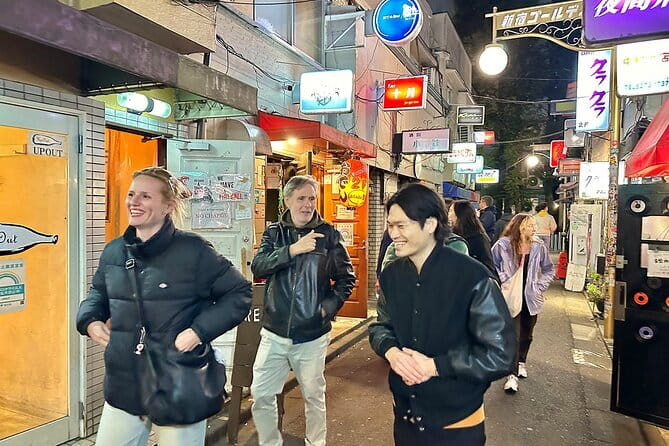
Hanazono Shrine is the emotional change of pace. After neon streets, signs, and narrow bar lanes, you reach a quieter religious site in the middle of the city.
This is where a local guide can add real value. You can learn how to approach a shrine, what the customary gestures mean, and why the site matters to people who live in the area. Small change for an offering and omikuji, the written fortunes, are not included, so bring some yen if you want to take part.
The stop lasts about 20 minutes. That is enough time for an explanation, photographs, and a quiet look around without turning the visit into a formal religious tour. Be considerate here. Keep voices low, follow the guide’s instructions, and remember that the shrine is a place of worship as well as a sightseeing stop.
I especially like that the route ends with Hanazono Shrine. It gives you a more complete picture of Shinjuku than a circuit of bright signs alone. You see the entertainment district, but you also see a traditional place that has kept its presence among the towers and shops.
What your guide adds to the experience
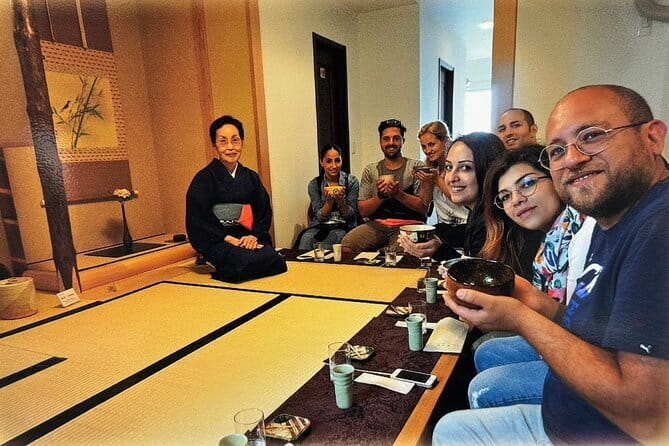
The strongest reason to book this walk is the human guidance. A map can show you Golden Gai, Kabukicho, and Hanazono Shrine. It cannot easily explain how the places connect, which lanes are worth remembering, or where to look for food after the tour.
The guides have different names and personalities, but the best use of their time is practical. Tell your guide what interests you at the start. Mao, for example, has been praised for asking about personal interests and shaping the walk around them. That is a useful reminder to speak up if you care more about food, history, architecture, photography, or nightlife.
Ai, Aki, Naoto, Ren, Cherry, Glenda, Akari, Hannah, Nana, Maya, and Ayaka have all led versions of this experience. You cannot choose a particular guide from the information provided, but you can expect the experience to depend partly on who leads it and how clearly you explain what you want.
Several guides have also helped people find calmer spots for explanations. That matters in Shinjuku, where noise and foot traffic can make a long speech hard to follow. If the group is larger, staying close and asking questions early will help you get more from the walk.
Is $25.20 good value?
At $25.20 per person, this is a reasonably priced introduction to one of Tokyo’s most confusing districts. You are paying for about 90 minutes of local orientation, a mobile ticket, a guide, and one recommended vending-machine drink.
The value is strongest on a first visit. If you are staying in Shinjuku, the walk can help you decide where to return for dinner or drinks. It can also save time by showing you places you might otherwise pass without noticing.
The value is weaker if you already know Shinjuku well or simply want a meal. No food tasting, bar drink, or paid attraction is included. One person found the walk too easy to complete independently and wanted more direct interaction with local businesses or food. That is a fair criticism.
I would treat this as a neighborhood orientation, not a full cultural workshop. You get explanations, recommendations, and access to a well-planned route. You do not get hands-on activities or a meal.
Who should book this walk?
This suits you best if you are visiting Shinjuku for the first time, prefer a short evening activity, or feel unsure about navigating nightlife districts alone. Solo visitors may particularly appreciate having a guide through areas they might not otherwise enter.
It also works well for couples and families who want to see the city at night without committing to a long food tour. The route offers a useful mix of photographs, local atmosphere, modern architecture, and traditional culture.
You should consider another activity if you want a serious food experience, extended bar time, or a long historical lecture. The walk moves through several stops in 90 minutes, so each place receives an introduction rather than a deep treatment.
Good walking shoes will help. The route includes busy streets and narrow backstreets, and Tokyo weather can change. The experience requires good weather, so a cancellation caused by poor conditions leads to another date or a full refund.
Practical details before you go
Book this for a night when you still have energy for walking. The route is short, but Shinjuku’s crowds, signs, and constant activity can be tiring.
You can cancel for a full refund up to 24 hours before the start time. Changes made less than 24 hours before departure are not accepted, and late cancellations are not refunded. The cut-off follows local Tokyo time.
Most people can participate, and the meeting point is close to public transportation. Since the walk returns to the East Exit police box, you can plan your next stop from the same part of Shinjuku.
I would bring a small amount of yen for a shrine offering or omikuji, though both are optional. Keep your phone charged for the mobile ticket, and ask your guide for restaurant suggestions before saying goodbye.
Should you book the Shinjuku Historical Walking Tour?
Book it if you want a well-shaped first look at Shinjuku, especially after dark. The mix of Omoide Yokocho, Kabukicho, Tokyu Kabukicho Tower, Golden Gai, and Hanazono Shrine gives you more range than a simple neon-sign walk.
At $25.20, it is a fair buy for local orientation and practical advice. Just set your expectations correctly: this is not a tasting tour, a bar crawl, or a hands-on cultural class. You are paying for a guide who helps you read the district, find worthwhile lanes, and finish with a calm shrine visit.
If you are new to Tokyo, I would book it early in your stay. Then you can use the guide’s restaurant, bar, shopping, and sightseeing suggestions for the rest of your time in Shinjuku.
FAQ
How long does the Shinjuku walking tour last?
The tour lasts approximately 1 hour and 30 minutes.
What places does the route visit?
The route includes Omoide Yokocho, Kabukicho, Tokyu Kabukicho Tower, Shinjuku Golden Gai, and Hanazono Shrine.
Where does the tour begin?
It begins at the police box by Shinjuku Station’s East Exit, at 3-chōme-38-1 Shinjuku, Shinjuku City, Tokyo 160-0022.
Where does the tour finish?
The activity ends back at the meeting point near the Shinjuku Station East Exit police box.
Is food included?
Food is not included. The experience includes one vending-machine drink recommended by the guide, but meals and drinks purchased elsewhere cost extra.
Are shrine offerings and omikuji included?
No. Small change for shrine offerings and the purchase of omikuji are not included in the tour fee.
Is the tour private?
The activity is described as private, with only your group participating. Some past bookings have involved groups of about 15, so confirm the group arrangement if this matters to you.
Can I cancel for a full refund?
Yes. You can cancel at least 24 hours before the start time for a full refund. Cancellations or changes made less than 24 hours before the start time are not accepted for a refund.
What happens if bad weather cancels the tour?
If poor weather causes a cancellation, you are offered a different date or a full refund.
More Historical Tours in Tokyo
- Tokyo: Imperial Palace Japanese History Walking Tour
★ 4.9 · 987 reviews - Yanaka Walking Tour: Historic and Traditional District of Tokyo
★ 5.0 · 530 reviews - Mt. Fuji Heritage Tour: Traditional Villages, Lakes & Shrine
★ 4.5 · 509 reviews - From Tokyo: Nikko World Heritage Site Private Full-Day Trip
★ 4.9 · 243 reviews
Just added around Tokyo
- Tokyo: Customizable Private Guided Walking Tour★ 4.5 · 129 reviews
- Private Harajuku Omotesando Architecture Tour★ 4.9 · 18 reviews
- Tokyo: Guided Helicopter Ride★ 4.9 · 24 reviews
- Tokyo: Guided Walking Tour of Tsukiji Market with Lunch★ 4.4 · 24 reviews
- Tokyo: Private Personalized Local Food Tour★ 4.5 · 101 reviews
- Tokyo GINZA: KONPARU Japanese Cabaret Show with Drink★ 4.8 · 38 reviews
- Tokyo: Guided Walking Tour of Tsukiji Market with Breakfast★ 4.4 · 134 reviews
- Tokyo: Gotokuji Cat Temple, Shinjuku Cat Cafe & 3D Cat Tour★ 4.9 · 38 reviews
Walking Tours, compared.
Kyoto Geisha Walking Tour: Gion District & Hidden Gems
Read our review →
Tokyo Tsukiji Fish Market Food and Culture Walking Tour
Read our review →
Gion Magical Night Walking Tour with Geisha Trivia
Read our review →
Imperial Palace and Shogun Historical Walking Tour
Read our review →
Gion Geisha District Walking Tour – Stories of Geisha
Read our review →
Asakusa Walking Tour with Sensoji Temple Visit
Read our review →
Kyoto Gion Geisha District Walking Tour – The Stories of Geisha
Read our review →Browse the lists this tour appears in