
REVIEW · WALKING TOURS
Yanaka Walking Tour: Historic and Traditional District of Tokyo
Yanaka gives you a side of Tokyo that the city’s towers and neon signs can easily hide. On this three-and-a-half-hour walking tour, you pass temple gardens, wooden homes, an enormous cemetery, small art spaces, and Yanaka Ginza, one of Tokyo’s most appealing old-style shopping streets.
I like the tour’s local pace and its mix of culture with ordinary neighborhood life. I also like that guides such as Charlotte, Michiko, Keita, Kiyo, and Mana have been praised for clear English, personal stories, flexible pacing, and help with customs at temples and shrines. The main caution is simple: you walk a lot, and the cemetery section may feel long if you prefer a faster, shop-focused outing.
In This Review
- Key points to know before you book
- Why Yanaka feels different from central Tokyo
- Starting at Nippori Station
- Tennoji Temple and the first look at old Tokyo
- Yanaka Cemetery, a serious but worthwhile stop
- Optional tea, museums, and old neighborhood crafts
- A shrine among trees and ponds
- Yanaka Ginza, the best finish for food and browsing
- Guides make the biggest difference
- Is $72.96 a fair price?
- Weather, pace, and cancellation details
- Who should book the Yanaka walk?
- Should you book the Yanaka Walking Tour?
- FAQ
- How long does the Yanaka Walking Tour last?
- Where does the tour start?
- What start times are available?
- Is food included?
- Does the tour include a tea ceremony?
- What is the cancellation policy?
Key points to know before you book
- Yanaka Cemetery covers about 100,000 square meters, with more than 7,000 graves and links to Tokyo’s past.
- Morning and afternoon departures begin at 9:00 am or 2:00 pm, with the afternoon route adding several art and cultural stops.
- Yanaka Ginza ends the walk, giving you time to browse local shops and try Japanese snacks.
- Small groups make conversation easier, with a stated maximum of eight people for the activity.
- Optional experiences cost extra, including a tatami tea ceremony at Gallery Okubo for ¥1,000.
- The tour suits curious walkers, but hot, humid, rainy, or windy weather can make the long route harder.
Why Yanaka feels different from central Tokyo
Tokyo is often presented through Shibuya crossings, department stores, sleek train stations, and high-rise views. Yanaka offers a quieter counterpoint. Its streets retain a low-rise feel, and Buddhist temples sit close to homes, workshops, shops, and burial grounds.
The area is associated with Tokyo’s Edo-period past, covering the centuries from the 1600s through the 1800s. The tour also touches on the Meiji era, Japanese religion, local customs, architecture, and the role of the last shogun and last samurai in the area’s story.
I would use this walk as a mini-retreat during a busy Tokyo trip. You are still in the capital, but the pace changes. Instead of rushing between major sights, you spend time noticing wooden gates, small gardens, old buildings, stone markers, and the way daily life fits around historic places.
The group limit matters here. With no more than eight people, you can ask questions without shouting over a crowd. Several guides have also adjusted walking speed, added short rests, paused for refreshments, or made room for shopping when time allowed.
More Walking Tours in Tokyo
- Tokyo Tsukiji Fish Market Food and Culture Walking Tour
★ 5.0 · 3,184 reviews - Tokyo: Imperial Palace and Shogun Historical Walking Tour
★ 5.0 · 2,251 reviews - Tokyo: Shinjuku Local Bar and Izakaya Guided Walking Tour
★ 4.9 · 1,794 reviews
Starting at Nippori Station
The meeting point is Nippori Station at 2 Chome-19 Nishinippori, in Arakawa City. The route ends back at the same meeting point, so you do not need to figure out a new station after the walk.
Your exact start time must be provided when booking. The available start times are 9:00 am and 2:00 pm. The morning option gives you a quieter start and leaves the rest of the day open. The afternoon option is useful if you want to visit another Tokyo sight in the morning, though some afternoon-only stops are included in that version.
Wear comfortable walking shoes. The route involves several hours on foot, with time spent outdoors and on cemetery and neighborhood paths. The physical demand is moderate rather than strenuous, but the heat and humidity of summer can make it feel tougher. One guide supplied cooling spray and bug spray on a very hot day, but you should still bring water and plan for the weather.
Tennoji Temple and the first look at old Tokyo
Tennoji Temple sits beside Yanaka Cemetery and dates to 1274. You enter through an old wooden gate and find a pleasant garden with a bronze Buddhist statue said to date from the Edo period.
This is a useful early stop because it gives you a clear introduction to the difference between a Tokyo temple and shrine. Guides explain customs and courtesies as you go, which is especially helpful if this is your first day in Japan.
Do not expect a giant landmark with a grand procession of visitors. The appeal is quieter. You are looking at the arrangement of the grounds, the gate, the garden, and the religious objects while learning how these places fit into Japanese life.
A good guide can make a modest temple feel meaningful without turning it into a lecture. Charlotte, Michiko, Mutsuko, and Fumiko were singled out for clear explanations and engaging conversation, while other guides helped guests understand local ways and the difference between Buddhist and Shinto sites.
Yanaka Cemetery, a serious but worthwhile stop
Yanaka Cemetery is the most distinctive part of the route, and also the part most likely to divide opinion. It covers roughly 100,000 square meters and contains more than 7,000 graves. The tour allows about 40 minutes here, which is substantial for a cemetery visit.
I appreciate the space because it shows how closely old Tokyo’s religious sites and residential streets can sit together. The cemetery is not treated as a quick photo stop. You have time to see its lanes, understand its place in the district, and hear about people connected with Tokyo’s past, including the family grave site of the last shogun.
Still, you should know what you are signing up for. One participant felt the cemetery portion ran long, especially compared with the temples, shops, and cultural stops later in the walk. If you would rather spend your time eating and browsing, this may be the least exciting section.
The setting also calls for respectful behavior. Keep voices low, stay on the paths, and follow the guide’s lead around graves. This is a place of remembrance, not simply an unusual sightseeing backdrop.
Same city, a completely different kind of day:
- Mt Fuji and Hakone 1-Day Bus Tour Return by Bullet Train
★ 5.0 · 26,383 reviews - 1-Day Tokyo Bus Tour
★ 5.0 · 14,250 reviews - Tokyo: TOKYO SKYTREE® Admission ticket
★ 4.5 · 11,192 reviews - Tokyo: teamLab Planets TOKYO Digital Art Museum Entry Ticket
★ 4.6 · 9,779 reviews
Optional tea, museums, and old neighborhood crafts
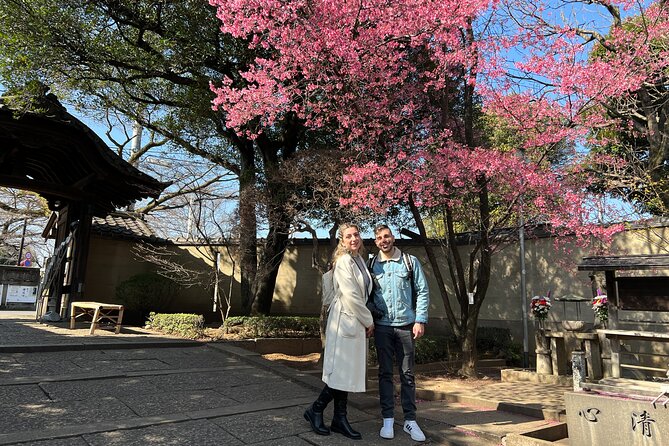
The middle of the tour can change depending on timing, availability, and the route your guide chooses. Gallery Okubo offers an optional tea ceremony on tatami mats. The tea costs ¥1,000 and is not included in the tour price.
That add-on could be worthwhile if you want a hands-on introduction to Japanese tea customs. It is not essential to understanding Yanaka, and the extra cost is modest, but you should not assume it is part of the base price.
The Shitamachi Customs Museum and Exhibit Hall focuses on the culture of old Tokyo’s downtown neighborhoods. Its displays use objects from everyday life, making it a useful counterpoint to temples and graves. One past suggestion was to replace one shrine visit with a museum stop, so this is the kind of addition to request if you prefer social history to repeated religious sites.
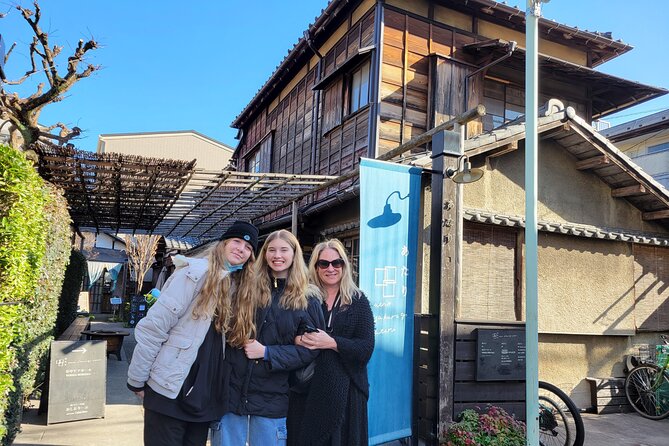
The afternoon route may include SCAI The Bathhouse, a contemporary art gallery in a former public bath. The building keeps the feel of old Tokyo while housing modern art, making it one of the more unusual stops. Edokoro Alan West is another afternoon-only visit. The studio once operated as an auto body garage and now houses a traditional art practice.
These stops help prevent the route from becoming a string of temples. They show Yanaka as a living neighborhood where old buildings can serve new purposes.
A shrine among trees and ponds

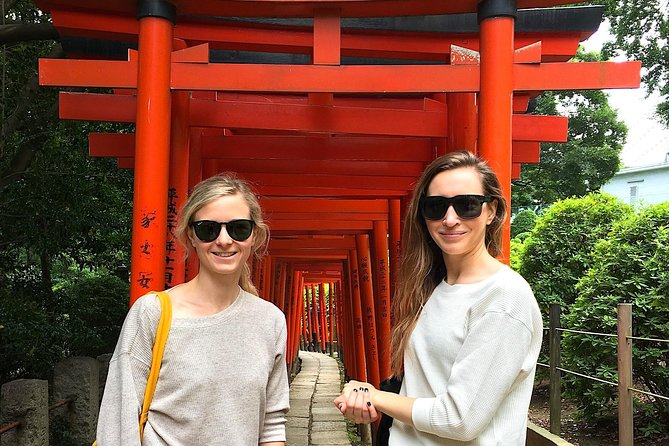
The route also includes one of Japan’s oldest and most striking shrines, identified in the experience details and guide accounts as Nezu Jingu. It is set among large trees, ponds, azalea shrubs, pathways, and colored wooden structures.
This is a good place to learn about Shinto practice and compare it with the Buddhist temples visited earlier. Your guide can explain what you are seeing and how to behave respectfully, rather than leaving you to guess at the customs.
The shrine adds visual variety after the cemetery and temple grounds. In spring, the azaleas and cherry blossoms can make the walk especially attractive, though the experience is not limited to blossom season.
The tradeoff is time. Yanaka has enough temples and shrines to fill a day, but a three-and-a-half-hour tour cannot explore each one at length. If you already plan several detailed temple and shrine visits elsewhere in Tokyo, tell your guide. The route can sometimes be adapted when the group has time and shared interests.
Yanaka Ginza, the best finish for food and browsing
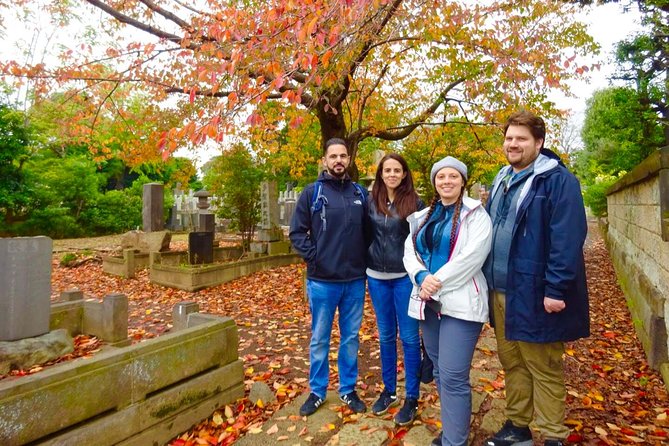
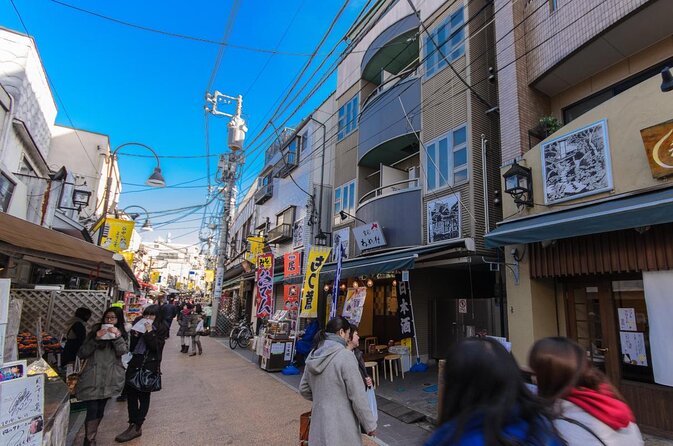
Yanaka Ginza Shopping Street is the practical, lively finish to the walk. It keeps a strong Shitamachi, or old downtown, atmosphere, with small shops and local snacks.
This is where the tour shifts from history to daily life. You can browse food stalls, look at neighborhood shops, and try sweets or other local treats. Guides have introduced participants to typical Japanese sweets, bakeries, rice cake shops, sake, clothing made with geisha fabric, and cafes in old buildings.
Food and drinks are not included, so bring some yen if you want to taste things along the way. That is a fair arrangement for a walking tour because you choose what interests you and how much you spend.
The street is also a useful place to end because you leave with more than dates and names. You have seen how people shop, eat, work, and move through a historic district. That makes Yanaka feel less like a preserved display and more like a real part of Tokyo.
Guides make the biggest difference
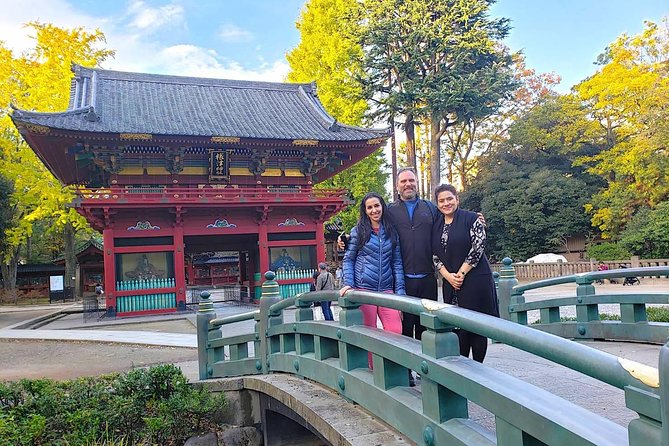
The strongest feature of this experience is the guide. The walk covers a wide range of subjects, and the quality of the explanations determines whether the route feels connected or scattered.
Charlotte has been praised for her clear English, historical background, safety awareness, and ability to answer questions. Michiko has been described as warm, familiar with the neighborhood, and helpful with train stations and local navigation. Keita, Kiyo, Mutsuko, Kaori, Mana, Masa, Toshi, Ken, Fumiko, and others have also led walks noted for personal attention and strong local knowledge.
You may not receive a particular guide unless you arrange that directly, so book this experience for the format and subject rather than one named person. The good news is that the guide style appears to be personal rather than scripted. Guides have taken photos for participants, explained local etiquette, interpreted conversations in old buildings, and adjusted the route when time allowed.
The photo service is included. That is a small but useful touch, especially for solo visitors or couples who want pictures with both people in the frame.
Is $72.96 a fair price?
At $72.96 per person, this is not the cheapest way to stroll through Yanaka. You can walk the neighborhood on your own for the cost of transportation and anything you buy.
The value comes from interpretation and structure. A guide connects the cemetery to Tokyo’s past, explains religious customs, points out old architecture, introduces local food, and helps you find places you might otherwise pass without noticing. The small group also gives you a better chance to ask questions than a large bus tour.
For a first day in Japan, the price can be easier to justify. The walk helps you learn basic customs while giving you a gentle introduction to the city. If you already know Tokyo well and enjoy independent wandering, you may prefer to spend the money on food or a museum ticket.
Group discounts are available, and all listed fees and taxes are included. The tea ceremony at Gallery Okubo costs extra, as do food and drinks. Hotel pickup and drop-off are not included, though they can be arranged for an additional fee.
Weather, pace, and cancellation details
The experience runs in rain and can still be enjoyable, but poor weather changes the character of the walk. High winds and heavy rain can make the cemetery, temple lanes, and open streets hard to appreciate. One booking dispute followed a stormy day when a date change was not accepted, so do not assume bad weather will let you move the reservation.
Free cancellation is available up to 24 hours before the start time for a full refund. Changes made inside that 24-hour window are not accepted, and the amount paid is not refunded for a late cancellation.
You can also extend the tour for ¥3,000 per group, per hour, payable in cash. This could help if you want more time for shopping, a museum, tea, or questions, but confirm the arrangement with the guide.
Who should book the Yanaka walk?
I would choose this for a first or second day in Tokyo, especially if you want history without spending the whole day inside major museums. It is also a good fit for anyone who likes neighborhoods, small shops, temples, cemeteries, architecture, and conversation with a local guide.
Families with older children, couples, solo visitors, and culturally curious adults should find the format approachable. The small group and flexible guide style are useful if you have questions or need a slower pace.
I would hesitate if you dislike long walks, want a food tour above all else, or expect grand attractions at every stop. The cemetery receives a large share of the time, and several religious sites can feel repetitive if you have already visited many temples and shrines.
Should you book the Yanaka Walking Tour?
Book it if you want to see old Tokyo as a lived-in neighborhood, not just as a collection of famous sights. The best parts are the guide’s explanations, the calm streets, the cemetery’s connection to Japanese history, the old bathhouse gallery, and the final stroll through Yanaka Ginza.
Skip it if you want a short, tightly packed highlights tour or cannot comfortably walk for three and a half hours. For everyone else, this is a thoughtful way to slow down in Tokyo. Bring good shoes, water, a little cash for snacks, and an open mind about cemeteries. Yanaka rewards patience.
FAQ
How long does the Yanaka Walking Tour last?
The tour lasts approximately 3 hours and 30 minutes. It begins and ends at Nippori Station.
Where does the tour start?
The meeting point is Nippori Station, at 2 Chome-19 Nishinippori, Arakawa City, Tokyo 116-0013, Japan.
What start times are available?
The tour starts at either 9:00 am or 2:00 pm. You must provide your preferred start time when booking.
Is food included?
No. Food and drinks are not included. You can buy local snacks and other items during the stop at Yanaka Ginza Shopping Street.
Does the tour include a tea ceremony?
The tea ceremony at Gallery Okubo is optional. It costs ¥1,000 and is not included in the tour price.
What is the cancellation policy?
You can cancel up to 24 hours before the start time for a full refund. Cancellations or changes made less than 24 hours before the tour are not accepted for a refund.
More Historical Tours in Tokyo
- Tokyo: Imperial Palace Japanese History Walking Tour
★ 4.9 · 987 reviews - Tokyo: Shinjuku Historical Walking Tour & Secret Backstreets
★ 5.0 · 530 reviews - Mt. Fuji Heritage Tour: Traditional Villages, Lakes & Shrine
★ 4.5 · 509 reviews - From Tokyo: Nikko World Heritage Site Private Full-Day Trip
★ 4.9 · 243 reviews
Just added around Tokyo
- Tokyo: Customizable Private Guided Walking Tour★ 4.5 · 129 reviews
- Private Harajuku Omotesando Architecture Tour★ 4.9 · 18 reviews
- Tokyo: Guided Walking Tour of Tsukiji Market with Lunch★ 4.4 · 24 reviews
- Tokyo: Private Personalized Local Food Tour★ 4.5 · 101 reviews
- Tokyo: Guided Helicopter Ride★ 4.9 · 24 reviews
- Tokyo GINZA: KONPARU Japanese Cabaret Show with Drink★ 4.8 · 38 reviews
- Tokyo: Guided Walking Tour of Tsukiji Market with Breakfast★ 4.4 · 134 reviews
- Tokyo: Gotokuji Cat Temple, Shinjuku Cat Cafe & 3D Cat Tour★ 4.9 · 38 reviews
Walking Tours, compared.
Kyoto Geisha Walking Tour: Gion District & Hidden Gems
Read our review →
Tokyo Tsukiji Fish Market Food and Culture Walking Tour
Read our review →
Gion Magical Night Walking Tour with Geisha Trivia
Read our review →
Imperial Palace and Shogun Historical Walking Tour
Read our review →
Gion Geisha District Walking Tour – Stories of Geisha
Read our review →
Asakusa Walking Tour with Sensoji Temple Visit
Read our review →
Kyoto Gion Geisha District Walking Tour – The Stories of Geisha
Read our review →Browse the lists this tour appears in