
REVIEW · JAPANESE COOKING CLASSES
Tokyo Washoku 4-hour Cooking Class: From Market to Table
A supermarket visit is the clever part of this Tokyo cooking class. Instead of starting with premeasured ingredients, you learn how Japanese shoppers choose vegetables, meat, seasonings, and other everyday foods. I like that practical beginning, and I like that the cooking is genuinely hands-on, from knife work to rolling sushi and shaping omelets.
The class also gives you recipes to take home, so the experience does not end when the meal is over. Guides including April, Yuri, Masai, Alice, and Mihori have been praised for patient instruction and friendly conversation. The main caution is timing: arrive early, since being more than five minutes late without contacting the operator can mean losing your place and your payment.
In This Review
- Key points to know before booking
- Starting at a local supermarket near Iriya Station
- Walking from shopping to the cooking studio
- Four dishes that teach real Japanese techniques
- Makisushi
- Miso soup
- Dashimaki tamago
- Nasu dengaku
- Learning knife skills instead of only watching
- Eating together with sake or beer
- Recipes make the $79.59 price easier to justify
- Dietary needs, weather, and practical planning
- What to do after the cooking class
- Who should book this Tokyo cooking class
- Should you book From Market to Table?
- FAQ
- Where does the Tokyo cooking class start?
- What time does the activity begin?
- How long does the cooking experience last?
- What dishes will I prepare?
- Are vegetarian and vegan participants welcome?
- Can the class accommodate food allergies?
- How many people can join the class?
- Is sake or beer included?
- What happens if I arrive late?
Key points to know before booking
- The supermarket visit comes first: Learn how to select Japanese ingredients with your guide before cooking.
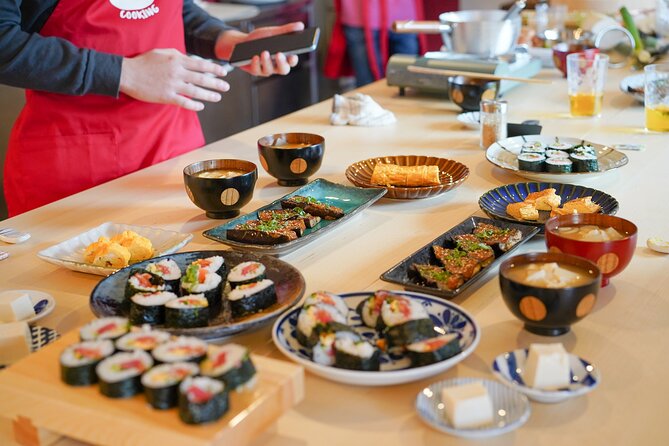
- Four classic dishes are prepared: Make makisushi, miso soup, dashimaki tamago, and nasu dengaku from scratch.
- Small groups keep it personal: The maximum group size is seven people.
- You get recipes for home: The class is useful for cooks who want to repeat the meal after returning home.
- Drinks add a social touch: Sake or beer tasting may accompany the meal.
- Dietary requests need advance notice: Vegetarian and vegan arrangements are possible, but allergy-free preparation cannot be guaranteed.
Starting at a local supermarket near Iriya Station
The meeting point is the FamilyMart at 2-chome-1-10 Shitaya in Taito City, near Iriya Station. The class starts at 10:00 am, and you should treat that time as firm rather than approximate.
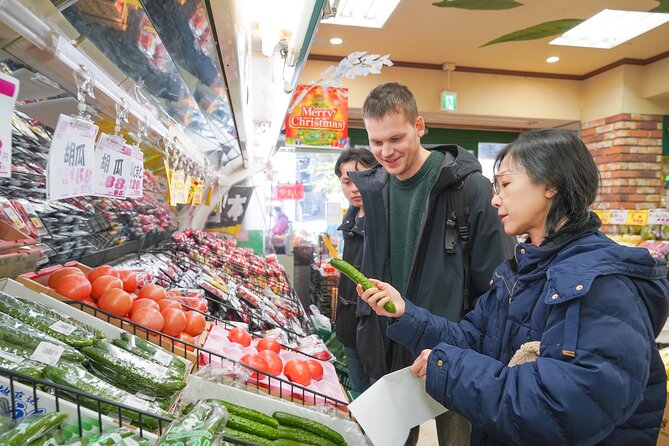
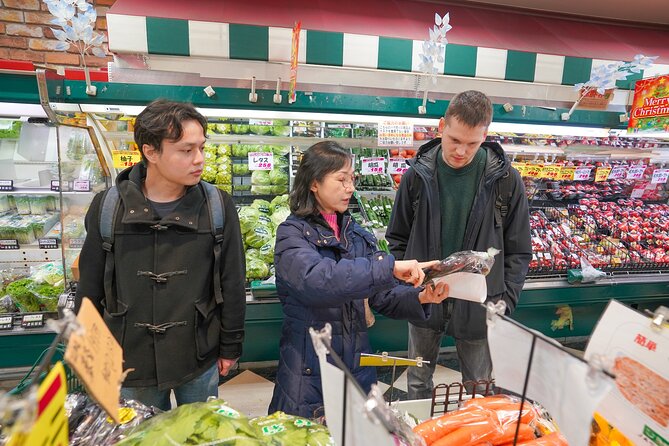
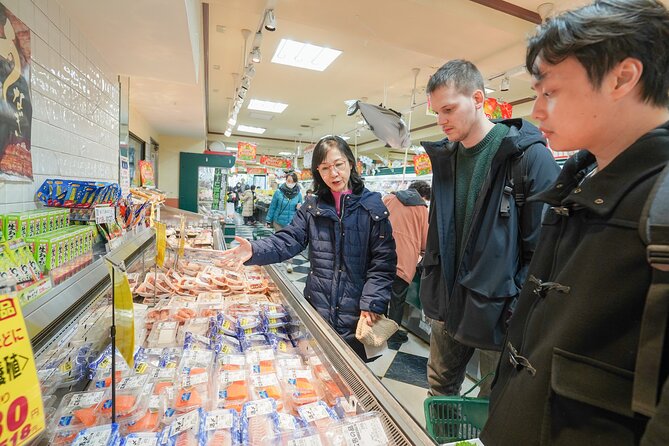
The first part takes place in a nearby supermarket with your guide. This is more useful than a quick stop for supplies because you learn how ingredients fit into Japanese home cooking. Your guide explains what to look for and helps you understand unfamiliar vegetables, meat, seasonings, and packaged foods.
I especially like this format because a supermarket shows you ordinary Japanese food culture. A restaurant can teach you what a finished dish tastes like. A market can show you what people buy, how ingredients are presented, and which foods are common in a home kitchen.
The supermarket portion also gives you a chance to ask questions before the cooking begins. Guides such as Mihori and Taka have been praised for explaining ingredients clearly, while other instructors have helped participants compare Japanese foods with ingredients they know from home.
Do not expect a long market tour. The purpose is to shop for the class, not to spend the morning browsing every aisle. Still, this opening gives the experience a useful local angle and helps you understand the meal before you make it.
More Japanese Cooking Classes in Tokyo
- Sushi Making Tokyo Roll and Authentic Japanese Sushi Class
★ 5.0 · 3,971 reviews - Tokyo: Roll and Authentic Sushi Making Class in Asakusa
★ 4.9 · 1,957 reviews - Tokyo: Sushi Making Class in a Happi Coat near a Famous Spot
★ 4.9 · 1,377 reviews
Walking from shopping to the cooking studio
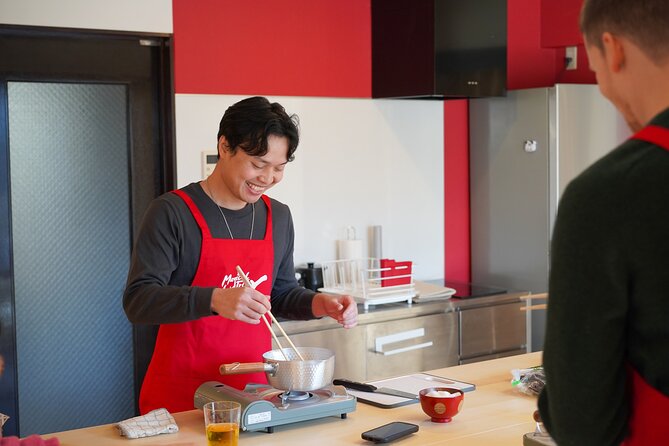
After shopping, you walk to a dedicated cooking studio. The studio has been described as spacious and well set up, which matters when several people are chopping, stirring, rolling, and moving around the work area.
The group can include people from different countries, and the maximum is seven participants. That is a good size for a class built around personal instruction. You are not simply watching a demonstration at the front of a room. You should expect to take part in the preparation, ask questions, and receive help with each stage.
The small group also makes the social side of the class work well. Several instructors have been praised for light conversation, humor, and patience. Suzy, Alice, April, Yuri, Masai, Minnie, Nigiri, and Mihori are among the guides named in the feedback, although your instructor depends on the date.
English support is part of the experience, but the level may vary by guide. Suzy’s English was specifically praised, and the other guide comments point to clear explanations and patient demonstrations. If you have a technical cooking question, ask it as you go rather than waiting until the end.
Four dishes that teach real Japanese techniques
The main cooking session centers on four Japanese dishes:
- Makisushi, or rolled sushi
- Miso soup
- Dashimaki tamago, a Japanese rolled omelet
- Nasu dengaku, grilled eggplant with a savory miso topping
This is a well-chosen menu for a four-hour class. You get a balance of knife work, rolling, simmering, grilling, and seasoning. The food is familiar enough to enjoy right away, but each dish introduces a different technique.
Makisushi
Rolling sushi is often the dish people most want to try, but it can be awkward at first. The value here is that you learn the process rather than receiving a finished roll. Your guide can show you how to arrange the filling, control the pressure, and cut the roll into pieces.
The class is about makisushi, not a full professional sushi apprenticeship. You will not leave ready to work behind a sushi counter. You will, however, have a practical method you can repeat at home.
Same city, a completely different kind of day:
- Mt Fuji and Hakone 1-Day Bus Tour Return by Bullet Train
★ 5.0 · 26,383 reviews - 1-Day Tokyo Bus Tour
★ 5.0 · 14,250 reviews - Tokyo: TOKYO SKYTREE® Admission ticket
★ 4.5 · 11,192 reviews - Tokyo: teamLab Planets TOKYO Digital Art Museum Entry Ticket
★ 4.6 · 9,779 reviews
Miso soup
Miso soup may seem simple, but it is a good lesson in Japanese stock and seasoning. The class lets you see how the soup fits into a complete home-style meal rather than treating it as a restaurant side dish.
One participant described the finished miso soup as the best they had eaten. That is subjective, of course, but it points to a useful feature of the class: you can taste how fresh preparation and careful seasoning change a dish many people already know.
Dashimaki tamago
The rolled omelet is likely to be one of the trickier tasks. Dashimaki tamago is not just scrambled egg folded into a block. It requires timing, a steady hand, and repeated rolling.
Your guide demonstrates the technique, then lets you practice. This is exactly the sort of cooking lesson that benefits from an instructor beside you. A recipe can list ingredients, but it cannot easily show when the egg is ready to fold or how tightly to roll it.
If you cannot eat eggs, the food selection drops from four dishes to three. Tell the operator at least one day before the class, since same-day changes cannot be accommodated.
Nasu dengaku
Nasu dengaku brings eggplant and miso together in a dish with strong, savory flavor. It also broadens the menu beyond sushi and soup, giving you a vegetable preparation you may be able to use in ordinary meals at home.
The dishes are traditional in character but not presented as an advanced chef course. That makes the class suitable for curious beginners and home cooks who want recipes they can actually attempt later.
Learning knife skills instead of only watching
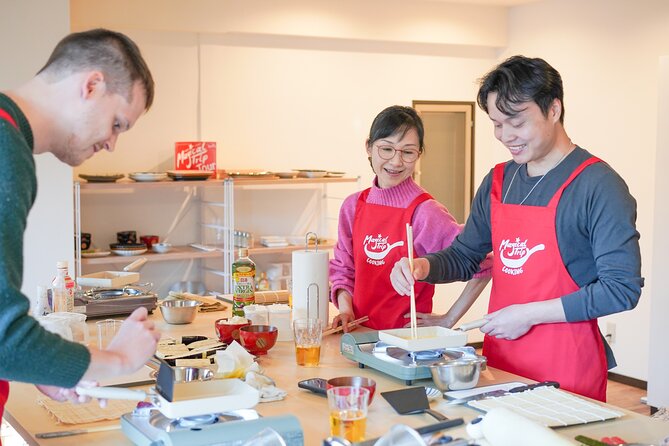
The class includes traditional Japanese knife and cooking techniques, with your guide showing you how to cut ingredients and handle the cooking steps. The exact amount of practice can depend on the group, but the format is designed for participation.
I like this because knife work is one of the hardest things to learn from a recipe card. The shape and size of a cut affect cooking time, texture, and presentation. Your guide can correct your method in the moment and explain why a particular cut is useful.
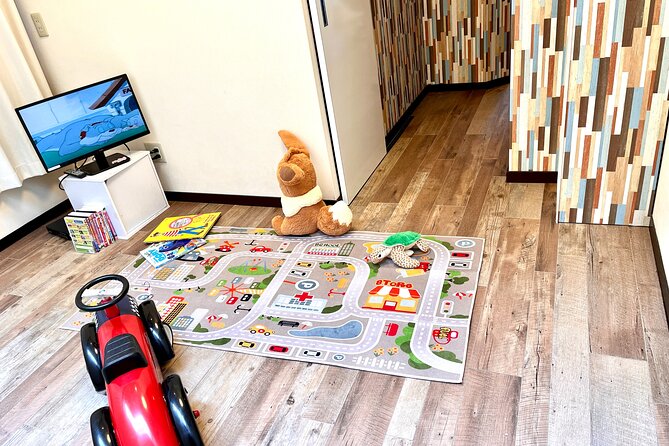
The class is also a good choice for families with older children. Two teenagers were said to enjoy the combination of shopping, cooking, and eating, and the activities give young cooks clear jobs to perform. Parents should still consider the usual kitchen risks around knives and hot surfaces.
You should not book this expecting a quiet, private lesson unless your group fills the booking. Other participants may join, and the class works partly through shared preparation and conversation.
Eating together with sake or beer
Once the food is ready, you sit down and eat what you made. The meal is the payoff, but it is also part of the lesson. You can taste the dishes together, compare results, and ask follow-up questions while the techniques are still fresh.
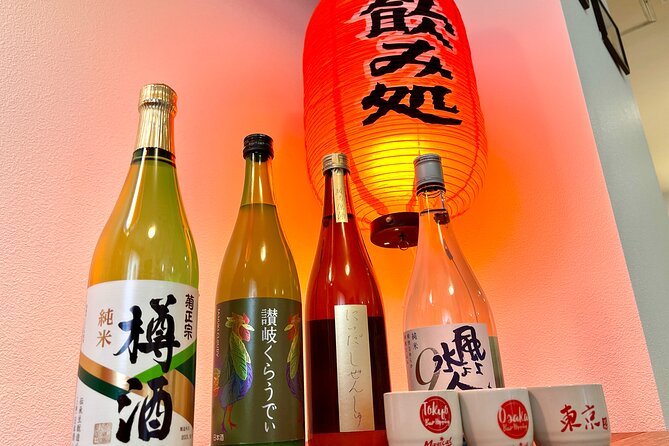
Sake or beer tasting may be included during the cooking and dining portion. This adds a pleasant social note, especially for adults who want to connect Japanese food with Japanese drinks. It is not the central purpose of the class, and you should not book it as a dedicated sake tasting.
The meal can also feel like a gentle introduction to Japanese dining. You are eating dishes that you helped prepare, with an instructor who can explain ingredients and answer questions about everyday life in Tokyo.
The class has received a 5 out of 5 rating from 253 reviews, with 100 percent recommending it. Those figures suggest a very consistent experience, but your enjoyment will still depend on how much you like group cooking, hands-on work, and a fairly structured four-hour schedule.
Recipes make the $79.59 price easier to justify
At $79.59 per person, the price is reasonable for a four-hour activity that includes guided supermarket shopping, instruction, a full meal, and recipes to take home. I would value it most as a food lesson and cultural activity, not simply as a way to buy lunch.
A restaurant meal could cost less, especially if you choose a casual place. But it would not teach you how to select ingredients, roll sushi, prepare miso soup, or make dashimaki tamago. The recipes add lasting value because you can try the dishes again after your trip.
The price makes particular sense if you are staying in Tokyo for several days and want a break from sightseeing. It is also a useful choice early in a Japan trip, since the supermarket visit may help you recognize ingredients and packaged foods later.
The value is lower if you dislike cooking or want a private lesson. You should also factor in the strict late-arrival rule. A missed class cannot be joined later, rescheduled, or refunded if you arrive too late.
Dietary needs, weather, and practical planning
Vegetarian and vegan participants are welcome, and the operator can arrange ingredients and cooking steps for those diets. You must provide dietary requests or allergy information at least one day before the class.
There is an important limitation: the operator cannot promise an allergy-free environment because the food is prepared in kitchens that do not belong to MagicalTrip. Substitutions may not be possible at every point, although the operator says it will try to make adjustments elsewhere. People with serious allergies should weigh this carefully before booking.
The class is near public transportation, but you still need to allow time to find the FamilyMart meeting point. I would arrive at least 10 to 15 minutes early, especially if you are coming from another part of Tokyo.
Tokyo weather can be extreme. Summer temperatures may reach 40°C, while winter temperatures can fall to -5°C. Dress for the conditions during the supermarket walk, even though much of the activity takes place indoors.
The activity requires good weather. If poor weather causes a cancellation, you will be offered another date or a full refund. You can also cancel for a full refund up to 24 hours before the 10:00 am start time. Changes are free until that same 24-hour cutoff.
What to do after the cooking class
The class ends at the cooking studio, and the meeting details identify the meeting point as the end point as well. You can continue independently afterward to Kappabashi Dougu Street.
Kappabashi is a natural follow-up for anyone interested in Japanese cooking. The class gives you techniques and recipes. A visit to the cookware street lets you browse the knives, utensils, dishes, and kitchen goods that make Japanese food preparation so distinctive.
That visit is not part of the guided activity, so plan it as your own extra stop. The cooking class itself is complete once you have eaten and received the recipes.
Who should book this Tokyo cooking class
I would recommend this class to you if you want more than a restaurant meal and prefer learning by doing. It suits first-time visitors, home cooks, families with teenagers, couples, and solo visitors who enjoy meeting a small group.
It is especially helpful if you are curious about Japanese ingredients but do not know where to start. The supermarket lesson removes some of the mystery, while the recipes give you a way to continue cooking at home.
You may want a different activity if you need guaranteed allergy-free food, cannot arrive early, or prefer a private chef-led experience. It is also not the best pick if your main interest is advanced sushi technique or a formal sake seminar.
Should you book From Market to Table?
Book it if you want a friendly, practical introduction to Japanese home cooking. The supermarket visit, hands-on knife work, four-dish meal, recipes, and small group make the $79.59 cost fair, especially for anyone who plans to cook after returning home.
Make sure you can commit to the 10:00 am start and disclose dietary needs at least a day ahead. If those conditions work for you, this is one of the more useful food activities in Tokyo because you learn how the meal begins, not just how it tastes at the table.
FAQ
Where does the Tokyo cooking class start?
It starts at the FamilyMart at 2-chome-1-10 Shitaya, Taito City, Tokyo 110-0004, near Iriya Station.
What time does the activity begin?
The start time is 10:00 am.
How long does the cooking experience last?
The activity lasts approximately four hours.
What dishes will I prepare?
You will prepare makisushi, miso soup, dashimaki tamago, and nasu dengaku.
Are vegetarian and vegan participants welcome?
Yes. Vegetarian and vegan arrangements are available if you provide the request at least one day before the class.
Can the class accommodate food allergies?
Allergy-free preparation cannot be guaranteed. You must report allergies at least one day in advance, and substitutions may not be possible at every stage.
How many people can join the class?
The activity has a maximum of seven participants.
Is sake or beer included?
The experience may include sake or beer tasting while you cook and eat.
What happens if I arrive late?
The class starts on time. If you are more than five minutes late without contacting the operator, it may be treated as a cancellation, with no refund or rescheduling.
More Markets in Tokyo
- Tokyo Tsukiji Fish Market Food and Culture Walking Tour
★ 5.0 · 3,184 reviews - Tokyo: Tsukiji Fish Market Food and Walking tour
★ 5.0 · 1,724 reviews - Tokyo: Tsukiji Fish Market Guided Walking Tour
★ 4.9 · 1,397 reviews - Tsukiji Fish Market Guided Tour and Sushi Making with Pro Chef
★ 5.0 · 775 reviews
More Cooking Classes in Tokyo
- Ramen & Gyoza Cooking Class in Tokyo with Local Supermarket Visit
★ 5.0 · 823 reviews - Tokyo: Easy Ramen Cooking Experience in Kabukicho, Shinjuku
★ 4.6 · 321 reviews - Ramen and Sushi Cooking Class with Sake Pairing Set in Tokyo
★ 5.0 · 291 reviews - Tokyo: Wagyu and 7 Japanese Dishes Cooking Class
★ 4.9 · 273 reviews
Just added around Tokyo
- Tokyo: Customizable Private Guided Walking Tour★ 4.5 · 129 reviews
- Private Harajuku Omotesando Architecture Tour★ 4.9 · 18 reviews
- Tokyo: Guided Helicopter Ride★ 4.9 · 24 reviews
- Tokyo: Guided Walking Tour of Tsukiji Market with Lunch★ 4.4 · 24 reviews
- Tokyo: Private Personalized Local Food Tour★ 4.5 · 101 reviews
- Tokyo GINZA: KONPARU Japanese Cabaret Show with Drink★ 4.8 · 38 reviews
- Tokyo: Guided Walking Tour of Tsukiji Market with Breakfast★ 4.4 · 134 reviews
- Tokyo: Gotokuji Cat Temple, Shinjuku Cat Cafe & 3D Cat Tour★ 4.9 · 38 reviews
Japanese Cooking Classes, compared.
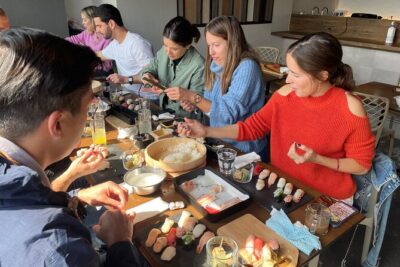
Sushi Making Tokyo Roll and Authentic Japanese Sushi Class
Read our review →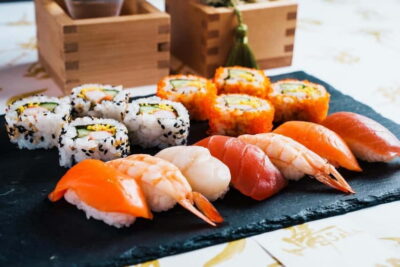
Roll and Authentic Sushi Making Class in Asakusa
Read our review →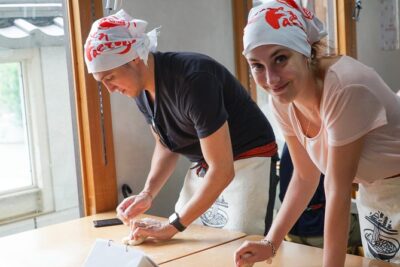
Ramen Cooking Class at Ramen Factory in Kyoto
Read our review →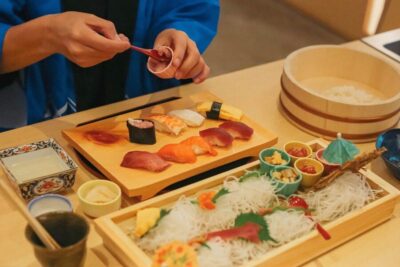
Sushi Making Class in a Happi Coat near a Famous Spot
Read our review →
Sushi Making Osaka Roll and Authentic Japanese Sushi Class
Read our review →
Tokyo Sushi Making Class in Tsukiji with Professional Chef
Read our review →
Ramen & Gyoza Cooking Class in Tokyo with Local Supermarket Visit
Read our review →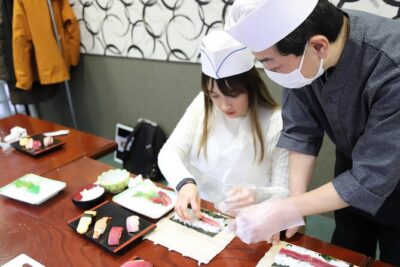
Tsukiji Fish Market Guided Tour and Sushi Making with Pro Chef
Read our review →Browse the lists this tour appears in