
REVIEW · JAPANESE COOKING CLASSES
Kyoto: Ramen Cooking Class at a Ramen Factory with Souvenir
Making ramen from a bag of noodles is easy. Making it from flour, with dough folded more than 100 times, is a different sort of lunch. At Kyoto’s Ramen Factory, you work through the full process, then sit down to eat the bowl you created.
I like the hands-on noodle making, which turns a familiar Japanese dish into a real skill. I also like the choice of miso, salt, and soy flavors, plus the recipe sent by email so you can try again at home. The main consideration is price: at $127 per person, this is far more than a casual bowl of ramen, though it includes instruction, food, a souvenir, and a well-organized 90-minute activity.
In This Review
- Key points to know before booking
- Making ramen from flour at Ramen Factory Kyoto
- Why the noodle-making matters
- Choosing between miso, salt, and soy
- Building your bowl and sitting down to eat
- What makes the staff helpful
- Dietary needs and ingredient questions
- A useful side trip from central Kyoto
- Is $127 per person good value?
- Who will enjoy this Kyoto ramen class
- Practical details that affect your visit
- Should you book Ramen Factory Kyoto?
- FAQ
- How long does the ramen cooking class last?
- How much does the experience cost?
- Where is Ramen Factory Kyoto located?
- How do I find the entrance?
- Which languages are available?
- What types of ramen sauce can I choose?
- Do I make the noodles from scratch?
- Is food included?
- Is a souvenir included?
- Can dietary needs be accommodated?
Key points to know before booking
- Make noodles from flour: Mix, punch, knead, drain, and shake the dough into finished noodles.
- Choose your own ramen profile: Combine miso, salt, or soy flavors with soup, oils, toppings, egg, and condiments.
- A lively 90-minute class: Instructors such as Sakura, Fuku, Moeka, and Akemi keep the pace clear and upbeat.
- Useful for families and beginners: The process is explained step by step, with staff helping when the dough proves stubborn.
- A practical Kyoto location: The factory is about five minutes from Demachiyanagi Keihan-line station, on a basement floor.
- More than lunch: You take home a selected souvenir and receive the complete recipe by email.
Making ramen from flour at Ramen Factory Kyoto
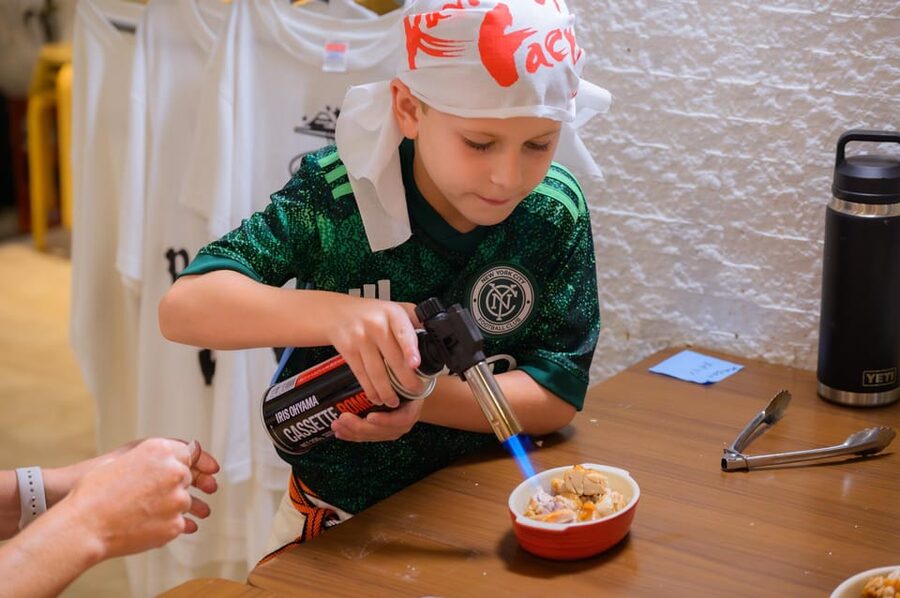
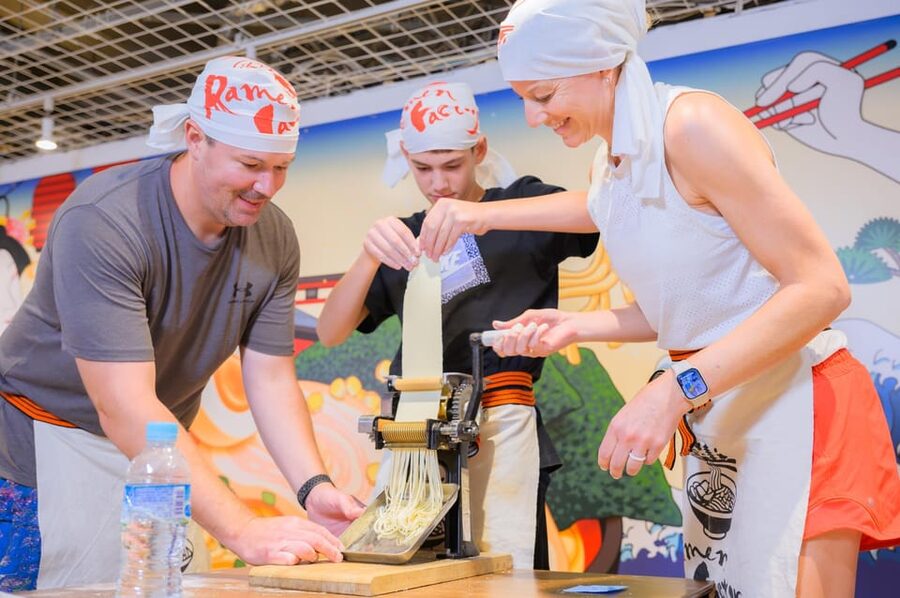
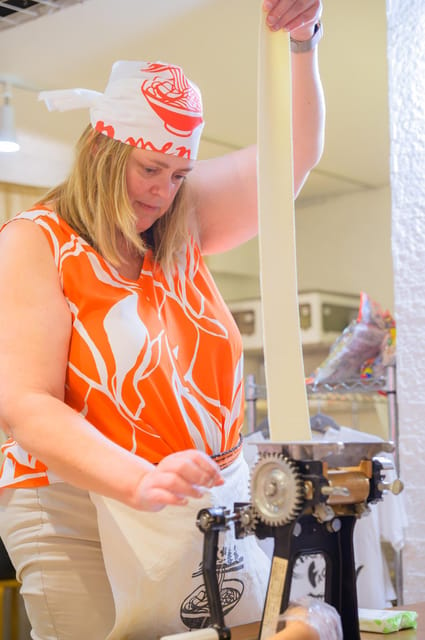
The Ramen Factory was established by Menbaka Fire Ramen, one of Kyoto’s best-known ramen houses. This is not a restaurant demonstration where you watch a cook do all the work. You put on a ramen apron and headscarf, follow the instructions, and handle the main stages yourself.
The class begins with an overview video. It gives you the basic order of the work before you start, which matters because ramen has several parts moving at once: noodles, chicken, soup, sauces, toppings, and presentation.
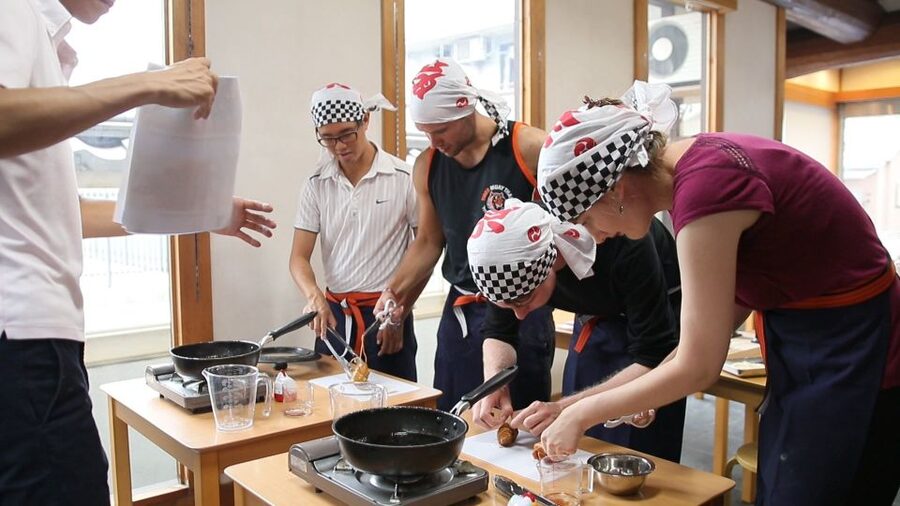
You then prepare chicken with seasonings. The chicken chasui is a practical choice for a short class, since traditional ramen preparations can take much longer. Here, the meat is ready within the activity period, and you still get to season and prepare it yourself.
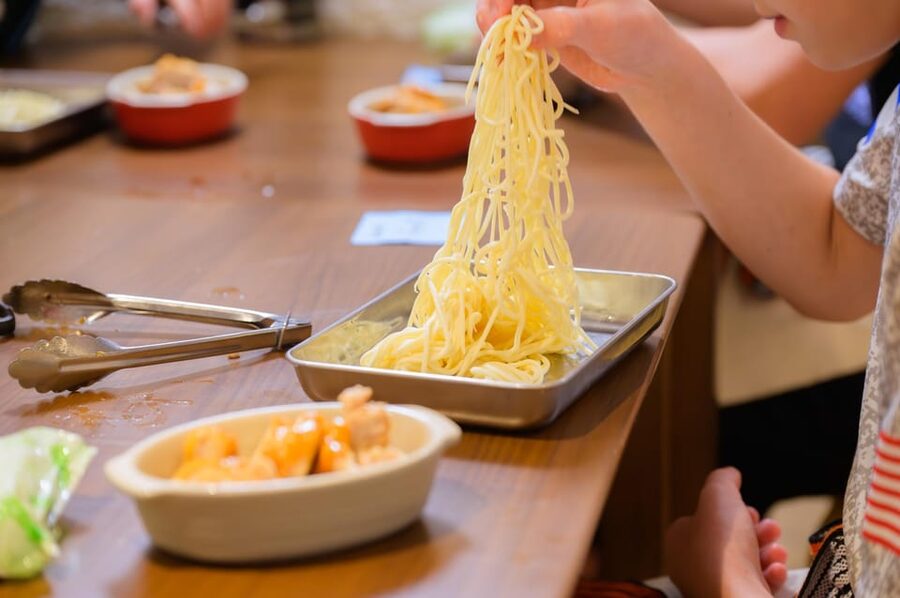
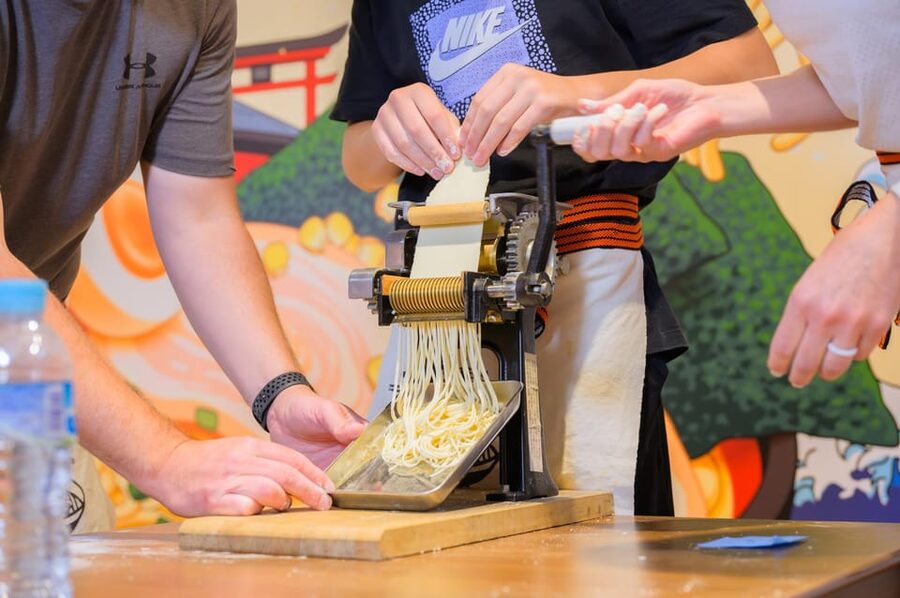
The most memorable part is the noodle work. You mix the flour into dough, then punch and knead it. The dough is folded more than 100 times, a small detail that makes the process feel less like assembling lunch and more like learning a craft.
You will also drain and shake the noodles before they go into the bowl. The motions are simple enough for beginners, but they require attention. Children and first-time cooks can take part, though younger participants may need help with the more physical steps.
More Japanese Cooking Classes in Kyoto
- Ramen Cooking Class at Ramen Factory in Kyoto
★ 5.0 · 1,937 reviews - Sushi Making in Kyoto! Same-day bookings welcome!
★ 5.0 · 713 reviews - Kyoto: Ramen, Gyoza, and Onigiri Cooking Class
★ 5.0 · 445 reviews
Why the noodle-making matters
A ramen class could easily become a dressed-up meal with a few token cooking tasks. This one gives the noodles a proper role. You see the change from flour to dough to finished noodles, and that gives you a better sense of why texture matters so much in ramen.
I especially like this part because it offers something you cannot get from simply ordering a bowl. You learn that ramen is not one fixed recipe. The noodle texture, soup, sauce, oil, protein, and toppings all affect the final result.
The class does not ask you to make a stock that has simmered for days. That would not fit into 90 minutes. Instead, it focuses on the parts you can realistically repeat at home, while the longer-prepared elements are handled in advance.
That is a sensible trade. You get the fun of real preparation without spending half your Kyoto day waiting for broth.
Choosing between miso, salt, and soy
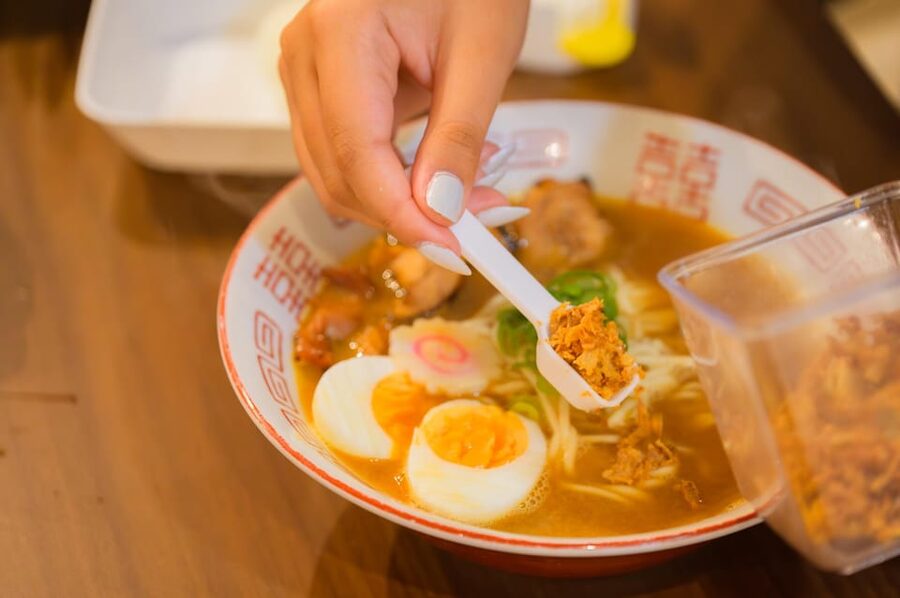
Once the noodles and chicken are ready, you choose the soup and sauce combination for your bowl. The featured sauce choices are miso, salt, and soy, with oils and extra condiments available to adjust the taste.
This customization is one of the best parts of the experience. You are not handed an identical bowl to everyone else. You can create something saltier, more savory, or more strongly flavored, depending on your preference.
The staff explain the ingredients and help you make decisions. Guides named Sakura, Fuku, Moeka, Akemi, Haruka, and others are highlighted in the class feedback, but the instructor working with you will depend on the day.
The teaching style appears energetic rather than formal. Expect jokes, encouragement, and a lively pace. That works well for a social activity, though anyone seeking a quiet, technical cooking lesson may find the presentation a little high-energy.
Building your bowl and sitting down to eat
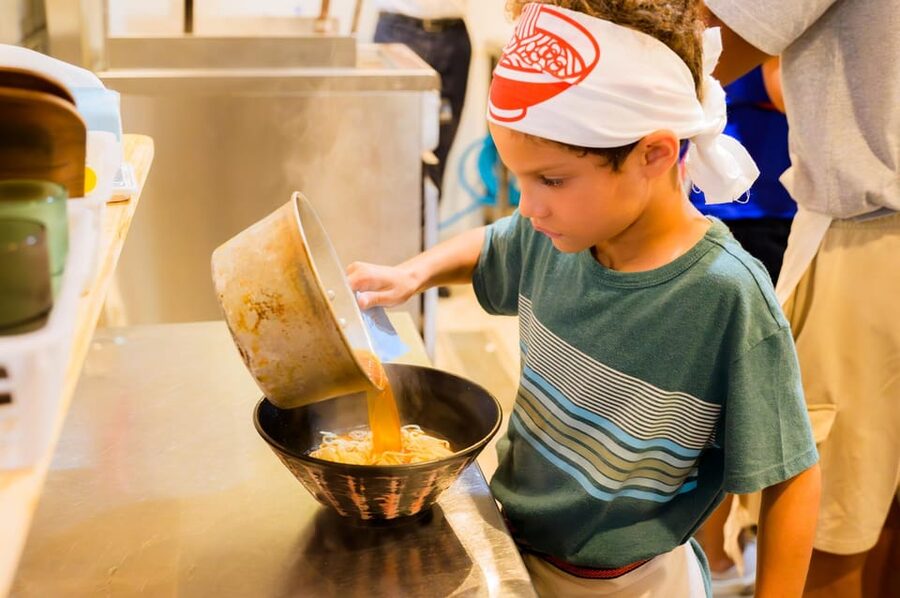
After the cooking work, you assemble the bowl. You choose how to arrange the noodles, chicken, egg, toppings, and condiments, then present the finished ramen before eating it.
This presentation step may sound minor, but it makes the meal feel like the end of a project. Staff also help take photos and videos, which is useful if you are traveling alone or want a record of the process without asking another participant to handle your phone.
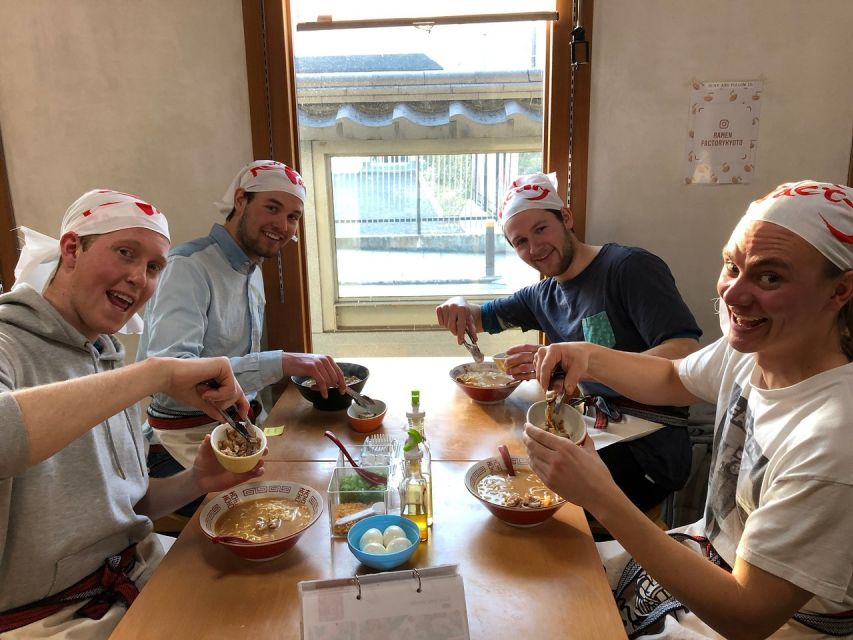
The final bowl is the payoff. You eat the ramen you made while looking back at the preparation. The timing is good: you are still thinking about the dough, the sauce choice, and the toppings when you taste the result.
The food is not just a prop for the class. The strong response to the finished ramen is a repeated theme, with particular praise for the noodles, chicken chasui, and ability to customize the bowl.
Same city, a completely different kind of day:
- PERFECT KYOTO 1-Day Bus Tour
★ 5.0 · 13,518 reviews - Kyoto: Fushimi Inari, Kinkakuji, Bamboo Grove 1 Day Bus Tour
★ 4.8 · 4,316 reviews - Kyoto: Tea Ceremony in a Traditional Tea House in Kiyomizu
★ 4.9 · 3,519 reviews - Kyoto Geisha Walking Tour: Gion District & Hidden Gems
★ 4.7 · 3,273 reviews
What makes the staff helpful
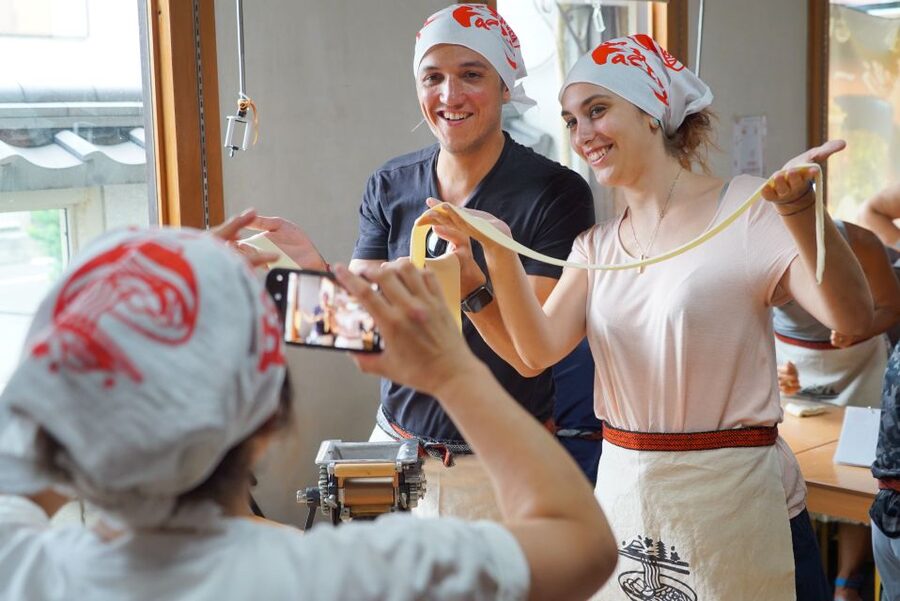
The class depends on clear instructions. Dough can be awkward, seasoning choices can be unfamiliar, and the whole process has to fit into 90 minutes. The instructors guide each stage and keep the activity moving without making it feel like a race.
Solo participants can fit in well. One person taking the class alone received a private lesson and found the instruction clear and supportive. That does not mean every solo booking will be private, but the format can work for an individual as well as a couple or family.
The staff also help with photos and videos. That service comes up often enough to matter. You can focus on kneading and assembling rather than trying to document every step yourself.
Several instructors are praised for humor and warmth, including Sakura, Fuku, Moeka, and Akemi. The names may change, but the useful point is that the class relies on an approachable teaching style rather than demanding prior cooking ability.
Dietary needs and ingredient questions
If you need a dietary option, contact the local supplier after booking. Do not wait until you arrive, since the kitchen needs notice.
The supplied information includes examples of individual accommodations. A pescatarian participant received tofu and fish broth, and other accounts describe vegan and meat-free adjustments. Allergy concerns were also confirmed and handled when communicated in advance.
Still, you should treat this as a request, not a guarantee of a particular menu. Ask specifically about your restrictions before the class, especially if you avoid several ingredients.
Drinks are not included. You can purchase or arrange those separately, but the activity itself provides the ramen meal and cooking experience.
A useful side trip from central Kyoto
The Ramen Factory is about a five-minute walk from Demachiyanagi Keihan-line station. That makes it an easy add-on to sightseeing in the area, rather than a full-day commitment.
The factory is on the basement floor. Finding the entrance can be the trickiest part. The directions say to take the staircase to the right of the supermarket and go down, while one practical warning places the street-side stairs behind the bus stop. The entrance is not necessarily the same point shown by Google Maps, so look for the stairs rather than relying only on the map pin.
Allow a few extra minutes to locate the entrance. Once inside, the 90-minute duration is compact enough to fit before or after other Kyoto plans.
The class is especially useful on a rainy day, during a lunch gap, or when your group wants a break from temples and walking. It gives you a seated meal and an activity without requiring a long journey across the city.
Is $127 per person good value?
The price is the biggest question. At $127 per person, the class costs much more than eating ramen at a standard restaurant. If your only aim is to have lunch, book a restaurant instead.
The value improves when you count what is included: a 90-minute chef course, hands-on preparation, a meal, a selected souvenir, staff photography help, and a recipe sent by email. You are paying for instruction and participation, not just food.
The souvenir also adds a lasting element. Four souvenir types are available, though the exact choices are not specified in the supplied details. The class may also include a printed photo, a certificate, or a kept headscarf according to the experience format described by participants, but you should confirm what is included on your date.
For a family, couple, ramen fan, or first-time visitor looking for a food activity, the price can make sense. For a budget-conscious solo diner, it is harder to justify unless the cooking lesson and keepsake are central to your plans.
Who will enjoy this Kyoto ramen class
I would recommend this to you if you want to do more than look at food. It suits people who like making things, families with children, couples seeking a shared activity, and anyone curious about Japanese cooking.
It is also a strong option for a short cultural experience. You learn about ramen ingredients and preparation, hear some background about the dish, and leave with a recipe you can use at home.
The class is beginner-friendly. You do not need to be a chef, and staff help with the steps that are less familiar. The physical noodle work is part of the fun, but it can be tiring for small children or anyone with limited hand strength.
Ramen enthusiasts should know that this is an accessible introduction, not advanced culinary training. You will learn the structure of a bowl and the basics of fresh noodle preparation, but the session cannot cover every regional style or the long process behind traditional broth.
Practical details that affect your visit
The activity lasts 90 minutes, with starting times available according to the booking calendar. English and Japanese instruction is offered.
Transportation is not included, so you make your own way to Demachiyanagi. The location is close to the Keihan-line station, but plan a little time to find the basement entrance.
Cancellation is free up to 24 hours in advance for a full refund. You can also reserve and pay later, which helps if your Kyoto schedule is still changing.
You may be filmed or photographed during the visit. Professional video, photography, or 360-degree recordings can take place, and the material may be used for media coverage, the company website, advertising, or promotion worldwide. If that concerns you, ask the supplier before booking.
Should you book Ramen Factory Kyoto?
Book it if you want a memorable food activity, not simply a cheap meal. The noodle-making is the strongest reason to go, and the combination of clear instruction, personal flavor choices, a finished bowl, recipe, and souvenir gives the session more substance than a restaurant stop.
I would be more cautious if you are watching every yen, want a quiet class, or have strict dietary needs that you have not discussed in advance. For everyone else, this is a practical, filling, and good-humored way to spend 90 minutes near Demachiyanagi.
FAQ
How long does the ramen cooking class last?
The class lasts 90 minutes.
How much does the experience cost?
The listed price is $127 per person.
Where is Ramen Factory Kyoto located?
It is on the basement floor, about a five-minute walk from Demachiyanagi Keihan-line station.
How do I find the entrance?
Take the staircase to the right of the supermarket and go down to the basement. The entrance may not match the Google Maps location exactly, and the stairs are described as being on the street side behind the bus stop.
Which languages are available?
Instruction is available in English and Japanese.
What types of ramen sauce can I choose?
You can taste and mix three featured sauce types: miso, salt, and soy.
Do I make the noodles from scratch?
Yes. You work with flour and dough, then mix, punch, knead, drain, and shake the dough to make the noodles.
Is food included?
Yes. You eat the ramen you prepare during the class. Drinks are not included.
Is a souvenir included?
Yes. Each participant can select a souvenir from four different types.
Can dietary needs be accommodated?
You should contact the local supplier after booking to request a dietary option. Examples provided include tofu and fish broth for a pescatarian participant, along with other meat-free and vegan accommodations.
More Workshops in Kyoto
- Kyoto: 45-Minute Tea Ceremony Lesson Experience
★ 4.3 · 2,378 reviews - Kyoto : Chopsticks Making Workshop in Gion with Engraving Option
★ 5.0 · 958 reviews - Kyoto: Samurai Sword Class by Experts in Traditional Arts
★ 4.9 · 657 reviews - Ninja 1-hour Hands-on Lesson by Japanese master in Kyoto -Entry
★ 5.0 · 489 reviews
More Cooking Classes in Kyoto
- Kyoto: Japanese Washoku Bento Small Group Cooking Class
★ 5.0 · 380 reviews - Kyoto Ramen and Gyoza Cooking Class with Professional Chefs
★ 5.0 · 282 reviews - Kyoto: Afternoon Japanese Izakaya Cooking Class
★ 4.9 · 241 reviews - Izakaya Style Cooking Class
★ 5.0 · 219 reviews
Just added around Kyoto
- Taste of Nishiki Market Walking Food Tour with Local guide★ 5.0 · 17 reviews
- Kyoto: Sushi Making Class with Sushi Chef★ 4.8 · 64 reviews
- Kyoto: City Secrets eBike Tour★ 4.9 · 196 reviews
- Sacred Pathways: Discover the Philosopher’s Path of Kyoto★ 4.9 · 20 reviews
- Private Tour to Monkey Park and Arashiyama Highlights★ 5.0 · 22 reviews
- Private Nara Tour from Osaka – Meet at Your Hotel★ 5.0 · 22 reviews
- Private Sake Tasting in Central Kyoto with Sake Sommelier★ 5.0 · 13 reviews
- Kyoto : Private Custom Walking Tour With A Local Guide★ 4.6 · 144 reviews
Japanese Cooking Classes, compared.
Sushi Making Tokyo Roll and Authentic Japanese Sushi Class
Read our review →
Roll and Authentic Sushi Making Class in Asakusa
Read our review →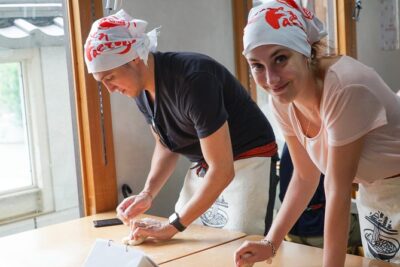
Ramen Cooking Class at Ramen Factory in Kyoto
Read our review →
Sushi Making Class in a Happi Coat near a Famous Spot
Read our review →
Sushi Making Osaka Roll and Authentic Japanese Sushi Class
Read our review →
Tokyo Sushi Making Class in Tsukiji with Professional Chef
Read our review →
Ramen & Gyoza Cooking Class in Tokyo with Local Supermarket Visit
Read our review →
Tsukiji Fish Market Guided Tour and Sushi Making with Pro Chef
Read our review →Browse the lists this tour appears in