REVIEW · JAPANESE COOKING CLASSES
Izakaya Style Cooking Class
Kyoto’s Izakaya Style Cooking Class gives you more than a meal. You learn the building blocks behind Japanese home cooking, from dashi stock to seasoning sauces, then use them to prepare several small dishes before sitting down to eat. I like the hands-on format and the chance to make food you can repeat at home, rather than watching a chef do all the work.
I also like the friendly, well-run teaching team, led by Keiko and her instructors. They keep ingredients moving, answer questions, and help cooks of different ages and skill levels. The main thing to watch is the changing menu: you may cook six dishes, but the exact recipes depend on seasonal ingredients, and the class may include a Western-style dish such as pasta alongside Japanese favorites.
In This Review
- Key points to know before booking
- Why this Kyoto cooking class is worth your afternoon
- Starting at 2pm in a Kyoto wooden house
- Learning the seasonings behind Japanese cooking
- The hands-on cooking session
- Sitting down for dinner together
- The instructors and level of personal help
- What you take home besides a full stomach
- Timing, group size, and practical details
- Who should book the Izakaya Style Cooking Class
- Should you book it?
- FAQ
- Where does the cooking class take place?
- What time does the activity begin?
- How long does the class last?
- Is dinner included?
- Is the class taught in English?
- How many people can join?
- Can dietary requirements be accommodated?
- What is the cancellation policy?
Key points to know before booking
- You learn dashi from scratch: This basic Japanese stock helps explain why many Japanese dishes taste so layered despite simple ingredients.
- The class usually covers several dishes: Past menus have included spinach with sesame sauce, yellowtail teriyaki, vegetable chowder, mushroom tempura, vegetable rice, salads, soup, pasta, and mochi.
- You eat what you prepare: Dinner is included, so arrive ready for a substantial meal rather than a small tasting.
- The class is capped at eight people: That allows for personal help while keeping the session social.
- Dietary needs can be accommodated: Tell Cooking Sun about allergies, vegetarian needs, or other requirements when booking.
- The price includes practical extras: For $71.63 per person, you get ingredients, an English-speaking instructor, an apron, dinner, and the recipes to take home.
Why this Kyoto cooking class is worth your afternoon
I see this class as a useful bridge between eating Japanese food and understanding it. In a restaurant, you can enjoy a bowl of soup or a glazed piece of fish without knowing why it tastes the way it does. Here, you learn how stock, soy sauce, seasonings, texture, and timing work together.
I especially like the focus on everyday food. Izakaya cooking is not limited to sushi or the teriyaki dishes familiar to many visitors. It is the sort of food served in casual restaurants and homes: small plates, vegetables, grilled or glazed fish, rice, soup, and snacks meant to be shared.
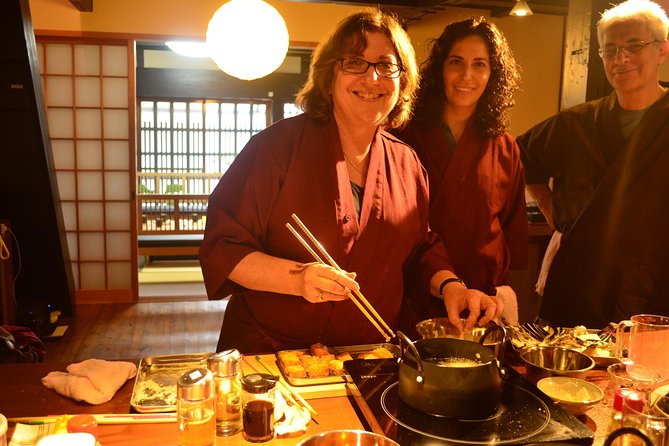
The class also gives you a social afternoon in Kyoto. You cook beside other participants, share a meal at the end, and have time to ask the instructors about ingredients and techniques. The group size of no more than eight is small enough for help with knife work and cooking steps, but large enough to make the dinner feel communal.
At $71.63, the value is fairly strong for a three-hour activity. The price covers the food, instruction, apron, and dinner, and you leave with recipes rather than only a pleasant memory. You are paying for teaching as well as eating, which makes this a better choice than a standard meal if you want something useful to take home.
More Japanese Cooking Classes in Kyoto
- Ramen Cooking Class at Ramen Factory in Kyoto
★ 5.0 · 1,937 reviews - Sushi Making in Kyoto! Same-day bookings welcome!
★ 5.0 · 713 reviews - Kyoto: Ramen Cooking Class at a Ramen Factory with Souvenir
★ 4.9 · 532 reviews
Starting at 2pm in a Kyoto wooden house
The session starts at 2pm at Cooking Sun Kyoto, located at 679 Funayacho in Shimogyo Ward. The class takes place in a traditional wooden house, an appealing setting for a lesson about Japanese home cooking.
You arrange your own way to the meeting point. Hotel pickup and drop-off are not included, but the location is near public transportation. Check the exact meeting details after booking, since the activity information also refers to the cooking studio location being provided at booking.
The afternoon start works well in a Kyoto sightseeing plan. You can visit a temple, market, or neighborhood in the morning, then head to class without rushing through breakfast. It also means you should avoid booking a large late lunch. The food served at the end can be generous, especially when several courses or six separate dishes are prepared.
Once you arrive, expect an introduction to izakaya culture and the role these casual food-and-drink places play in Japan. The class explains how the tradition developed from sake shops that began serving food, eventually becoming affordable places for small gatherings.
That background matters because it explains the style of the meal. Izakaya dishes are designed to be shared, and the point is variety. You are not preparing one large entrée and going home. You are working through a table of different tastes and textures.
Learning the seasonings behind Japanese cooking
The strongest part of the class is its attention to seasoning. Japanese cooking can look simple, but small changes in stock, sauce, vinegar, sesame, or soy can make a big difference. The instructors introduce the ingredients and show you how they are used before you begin your own preparation.
Dashi is a key lesson. This Japanese soup stock forms the base for many soups and sauces, and learning to prepare it gives you a better sense of Japanese flavor than simply memorizing a recipe. The session also covers different sauces and condiments, with explanations of how their flavors differ and where they fit into a dish.
You do not need advanced cooking skills. The instructions are presented for a range of abilities, and the recipes are intended to be manageable at home. At the same time, the class is not only for beginners. An experienced home cook can pick up new flavor combinations, Japanese utensils, and methods for handling familiar ingredients in a different way.
The teaching style appears structured rather than loose. Ingredients are prepared in advance where possible, allowing the group to make more dishes during the three-hour session. That preparation saves time, though it also means you may not perform every step from raw ingredient to finished plate.
The hands-on cooking session
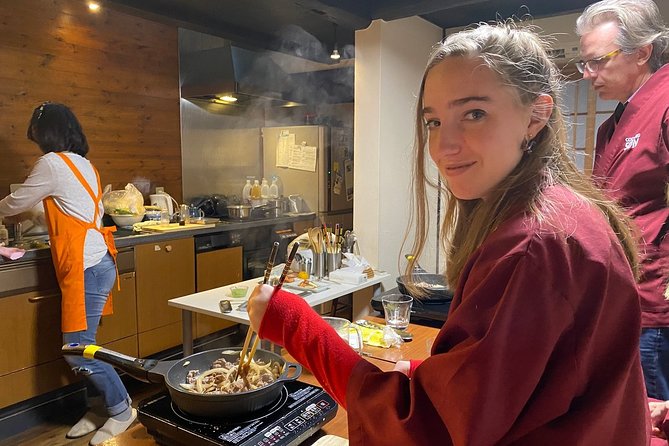
After the demonstration, you pick up a knife and begin preparing the dishes. The instructors guide you through the work and help as needed, while the team keeps the stations supplied and the cooking area tidy.
This is where the class earns its value. You are not simply standing at the back of a kitchen. You take part in mixing, chopping, seasoning, cooking, and plating. The instructors also explain the gadgets and tools used in Japanese cookery, which can be as useful as the recipes themselves.
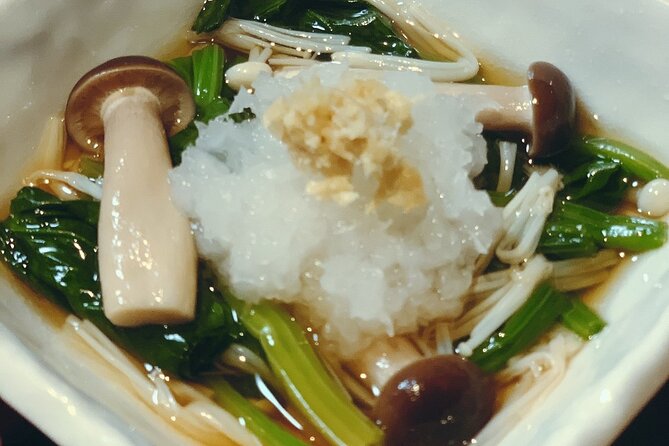
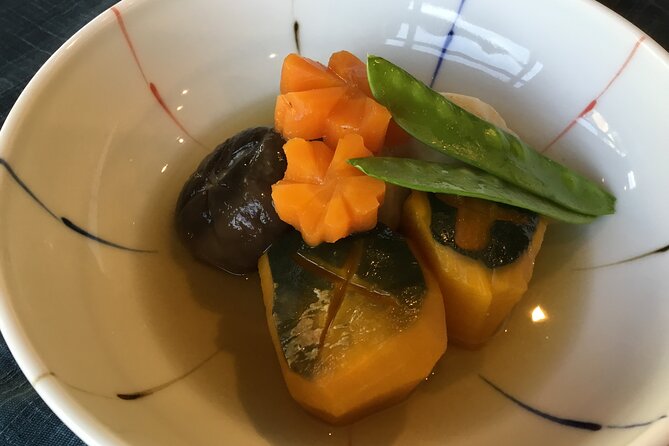
Past menus have included spinach with sesame sauce, teriyaki yellowtail, vegetable chowder, mushroom tempura, and rice with vegetables. Other dishes prepared in different sessions have included cucumber salad, pumpkin soup, Japanese-style pasta, and mochi dessert.
The menu changes with the availability of seasonal ingredients. That is good for freshness and variety, but you should not book this class expecting one fixed menu. If a particular dish matters to you, ask Cooking Sun before booking rather than assuming it will be served.
One useful feature is the amount of food produced. Several classes have prepared around six dishes, creating a full meal rather than a single demonstration recipe. The range may include vegetables, fish, soup, rice, and dessert. This gives you a broad sample of Japanese home cooking in one afternoon.
More Sake & Bar Hopping Tours in Kyoto
- Kyoto Night Foodie Tour in Gion (9+ dishes + 6 Sake tastings)
★ 5.0 · 1,762 reviews - 3-Hour Kyoto Insider Sake Brewery Tour with Tastings & Pairings
★ 5.0 · 917 reviews - Arashiyama Bamboo, Temple, Monkeys, or Secret Sake Brewery
★ 4.8 · 886 reviews - Kyoto: Izakaya Bars Guided Walking Tour
★ 4.9 · 815 reviews
Sitting down for dinner together
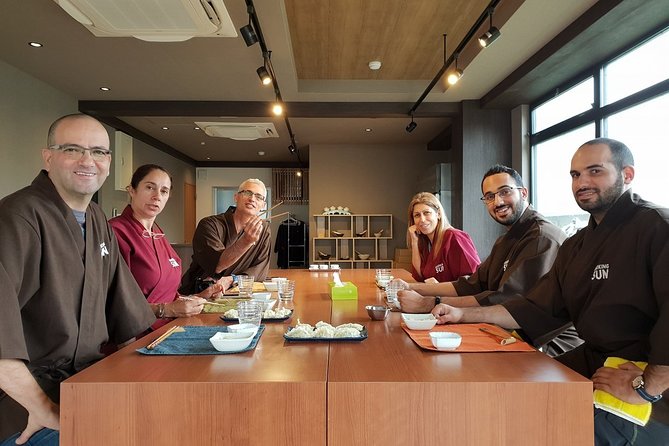
At the end, you sit with the other participants and eat the dishes you made. Dinner is included in the listed price, along with the ingredients and instruction.
The meal is more satisfying because you know what went into it. You can compare the dishes, ask final questions, and see how the separate preparations work together as a Japanese-style spread. For families, this shared meal adds a simple reward at the end of the lesson, and children can take part at a level suited to their cooking ability.
The class can also work well for vegetarians and people with allergies, provided you give advance notice. Specific dietary requirements should be stated when booking. One important practical point: food and drinks are not included unless specified, even though dinner is included. A sake offering may carry a separate charge, so ask the price before accepting it.
The food is intended to be healthy and balanced, with vegetables playing a meaningful role. Still, the exact meal depends on the day’s menu, so anyone with strict dietary limits should confirm the arrangements directly.
The instructors and level of personal help
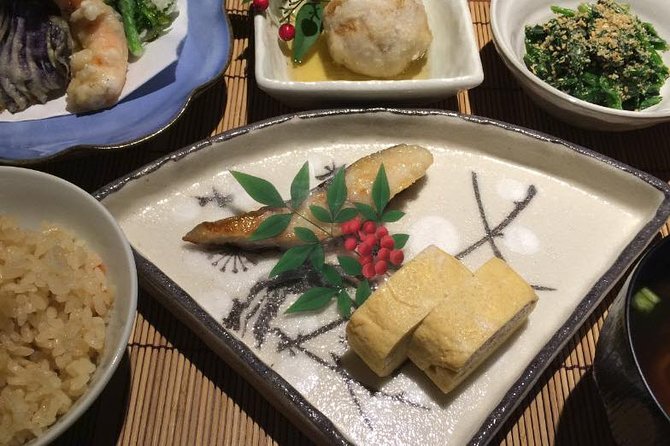
Keiko and the Cooking Sun team receive the strongest praise for being organized, patient, and easy to communicate with. The instructors work together, moving ingredients into place, cleaning between recipes, and helping people who need extra guidance.
That teamwork matters in a cooking class. If one person is chopping while another is stirring and a third is asking about a sauce, a single instructor can quickly become stretched. A coordinated team keeps the class moving without making you feel hurried.
English instruction is included. You can ask questions about ingredients, techniques, Japanese food customs, and places to eat after the class. The guide is also available for tips and recommendations for the rest of your Kyoto stay.
The personal attention seems strongest when the group is smaller. The maximum is eight people per booking and eight participants for the activity. If your party has children, older family members, or mixed cooking experience, the instructors can help keep everyone involved.
Families are a good match for this activity. Children as young as 10 and 12 have taken part successfully, and the instruction is explained in a way that works for different skill levels. You should still decide how comfortable your own children are with knives, hot pans, and group cooking.
What you take home besides a full stomach
The recipes are provided after the session, which changes the value of the class. You can try the dishes again for friends and family, and the lessons on dashi and seasonings give you a foundation for adapting them.
I would not expect every Japanese ingredient to be easy to find at home. Some items may require a Japanese or Asian grocery store, depending on where you live. Even so, the recipes can help you recognize ingredients in shops and understand how to use them once you find them.
The best take-home lessons are the simple ones: how to build a stock, balance a sauce, prepare vegetables, and combine several small dishes into one meal. These techniques are more flexible than a single restaurant recipe.
You also gain a clearer idea of what to order at an izakaya. After learning how these dishes are assembled, you will have more confidence choosing unfamiliar items from a menu instead of defaulting to sushi or teriyaki.
Timing, group size, and practical details
Plan on about three hours. The class begins at 2pm and ends back at the cooking studio meeting point. Since you arrange your own transportation, allow enough time to reach 679 Funayacho in Shimogyo Ward.
The activity is near public transportation, and mobile tickets are accepted. Confirmation is received at booking. An apron is supplied, and all cooking ingredients are included.
Service animals are allowed. If you have food allergies, follow up with the provider when you book and repeat the details when you arrive. Clear communication is especially important in a class where sauces, stocks, and shared preparation areas are involved.
Free cancellation is available if you cancel at least 24 hours before the local start time. Within 24 hours, the payment is not refunded, and late changes are not accepted. That deadline matters because a 2pm class requires action by 2pm the previous day.
Who should book the Izakaya Style Cooking Class
This is a strong choice for you if you like to understand a place through food, enjoy practical activities, or want a break from temples and sightseeing. It suits first-time cooks, confident home cooks, couples, families, and solo visitors who like meeting people over a shared meal.
It is especially useful if you want to recreate Japanese dishes at home. The recipe handouts, seasoning lessons, and dashi preparation offer more lasting value than a meal alone.
You may want a different activity if you dislike group settings, want a fixed menu, or prefer to spend your afternoon at a quiet restaurant. The class has a social structure, and some ingredient preparation is done in advance so the group can cover more recipes.
The rating is 4.9 from 219 ratings, with 99 percent recommending it. Those figures match the main strengths I would look for: clear instruction, good organization, tasty food, and genuine participation. The isolated concern about an unannounced sake charge is easy to avoid by asking about drink prices before ordering.
Should you book it?
I would book this class if you want a useful, friendly Kyoto activity that ends with dinner. The combination of dashi instruction, several small dishes, English guidance, and take-home recipes gives you plenty for the $71.63 price.
Choose it with an open mind about the menu. You may prepare yellowtail, mushroom tempura, soup, rice, salad, dessert, or even pasta, depending on the season. If that variety sounds appealing, Cooking Sun’s Izakaya Style Cooking Class is a practical way to spend three hours learning how Japanese home food works.
FAQ
Where does the cooking class take place?
The class takes place at Cooking Sun Kyoto, 679 Funayacho, Shimogyo Ward, Kyoto, 600-8466, Japan, in a traditional wooden house.
What time does the activity begin?
The cooking session starts at 2pm.
How long does the class last?
The class lasts approximately three hours.
Is dinner included?
Yes. Dinner and all ingredients used for the cooking session are included.
Is the class taught in English?
Yes. An English-speaking cooking instructor leads the session.
How many people can join?
The activity has a maximum of eight participants, and a single booking can include up to eight people.
Can dietary requirements be accommodated?
Yes, but you should advise Cooking Sun of specific dietary requirements when booking.
What is the cancellation policy?
You can cancel at least 24 hours before the local start time for a full refund. Cancellations or changes made within 24 hours are not accepted for a refund.
More Drinking Tours in Kyoto
- Kyoto: Insider Sake Brewery Tour with Sake and Food Pairing
★ 5.0 · 704 reviews - Kyoto Sake Brewery & Tasting Walking Tour
★ 5.0 · 623 reviews - Kyoto Bar Hopping Night Tour
★ 5.0 · 613 reviews - Kyoto Local Bar Crawl in Kawaramachi Area
★ 5.0 · 378 reviews
More Cooking Classes in Kyoto
- Kyoto: Ramen, Gyoza, and Onigiri Cooking Class
★ 5.0 · 445 reviews - Kyoto: Japanese Washoku Bento Small Group Cooking Class
★ 5.0 · 380 reviews - Kyoto Ramen and Gyoza Cooking Class with Professional Chefs
★ 5.0 · 282 reviews - Kyoto: Afternoon Japanese Izakaya Cooking Class
★ 4.9 · 241 reviews
Just added around Kyoto
- Taste of Nishiki Market Walking Food Tour with Local guide★ 5.0 · 17 reviews
- Kyoto: Sushi Making Class with Sushi Chef★ 4.8 · 64 reviews
- Kyoto: City Secrets eBike Tour★ 4.9 · 196 reviews
- Sacred Pathways: Discover the Philosopher’s Path of Kyoto★ 4.9 · 20 reviews
- Private Tour to Monkey Park and Arashiyama Highlights★ 5.0 · 22 reviews
- Private Nara Tour from Osaka – Meet at Your Hotel★ 5.0 · 22 reviews
- Private Sake Tasting in Central Kyoto with Sake Sommelier★ 5.0 · 13 reviews
- Kyoto : Private Custom Walking Tour With A Local Guide★ 4.6 · 144 reviews
Japanese Cooking Classes, compared.
Sushi Making Tokyo Roll and Authentic Japanese Sushi Class
Read our review →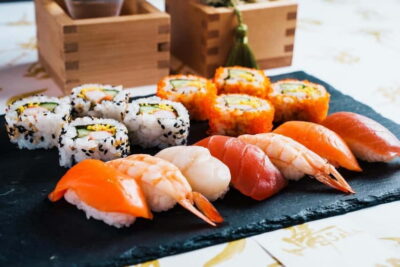
Roll and Authentic Sushi Making Class in Asakusa
Read our review →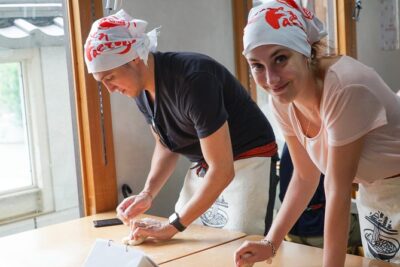
Ramen Cooking Class at Ramen Factory in Kyoto
Read our review →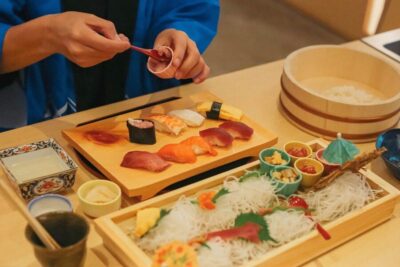
Sushi Making Class in a Happi Coat near a Famous Spot
Read our review →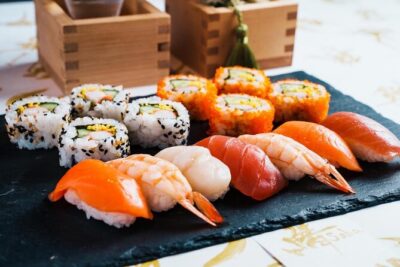
Sushi Making Osaka Roll and Authentic Japanese Sushi Class
Read our review →
Tokyo Sushi Making Class in Tsukiji with Professional Chef
Read our review →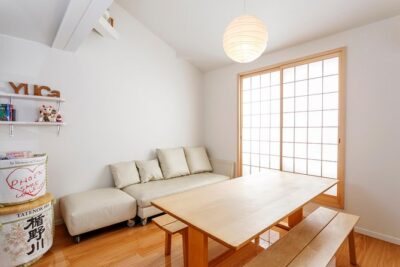
Ramen & Gyoza Cooking Class in Tokyo with Local Supermarket Visit
Read our review →