
REVIEW · JAPANESE COOKING CLASSES
Kyoto Ramen and Gyoza Cooking Class with Professional Chefs
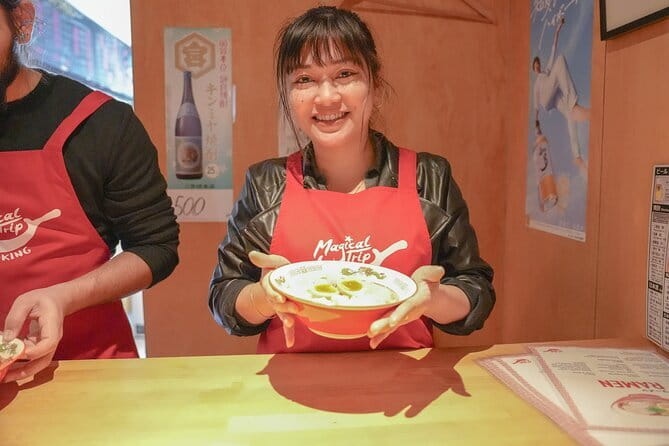
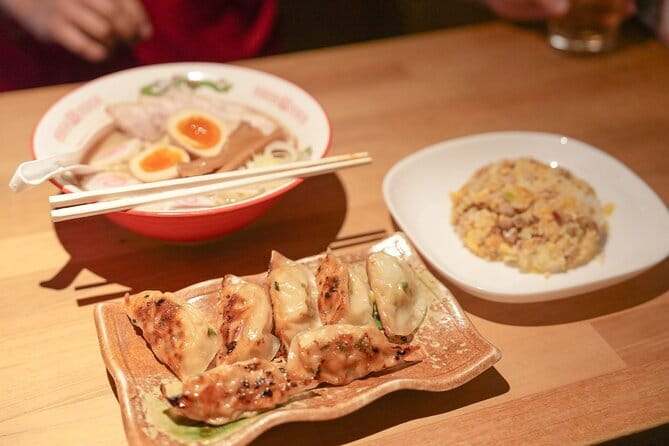
Fresh noodles, folded gyoza, fried rice, and a bowl of ramen make this hands-on Kyoto class more than a simple cooking demonstration. You knead and cut the noodles, shape the dumplings, and then sit down to eat the full meal with two drinks. Guides such as Yuki, Ayuri, Rina, and Emi translate the chef’s instructions and add context about Japanese food and culture.
I like the small maximum of eight people, which gives the class a friendly, relaxed feel, and I like that you leave with recipes rather than just photographs. The main drawback is the limited menu flexibility: the ramen broth contains pork, and vegetarian, vegan, gluten-free, and allergy-free meals cannot be guaranteed.
In This Review
- Key points to know before booking
- Why this Kyoto cooking class works
- Kneading and cutting your ramen noodles
- Folding gyoza with a drink in hand
- Fried rice turns the lesson into lunch
- A former restaurant with a practical feel
- Guides add more than translation
- What the recipes are really worth
- Timing, price, and who gets the most value
- Should you book the ramen and gyoza class?
- FAQ
- How long does the Kyoto ramen and gyoza class last?
- Where does the cooking class meet?
- What food will I make?
- Are drinks included?
- Can vegetarians, vegans, or people avoiding gluten join?
- What is the cancellation policy?
Key points to know before booking
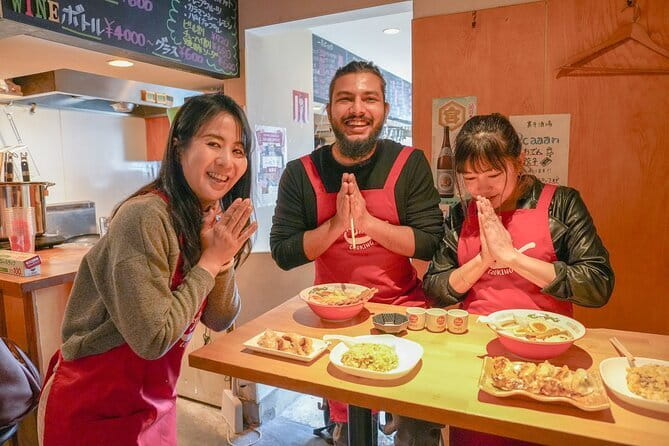
- You make three substantial dishes: ramen, gyoza, and fried rice are served as a full meal.
- The noodles are made from scratch: you knead, cut, and top them before eating.
- A guide bridges the language gap: Yuki, Ayuri, Rina, Emi, Miu, and others have helped explain the chef’s instructions.
- The group is capped at eight people: weekday sessions may be smaller, sometimes with only a few participants.
- Two drinks are included: beer or sake can be paired with your gyoza and ramen.
- Dietary limits matter: the broth uses pork, and the class cannot promise vegetarian, vegan, gluten-free, or allergy-free cooking.
Why this Kyoto cooking class works
Kyoto has no shortage of ramen shops, but ordering a bowl tells you little about how it comes together. This class lets you handle the food at each important stage, from dough to dinner. You are not simply watching a chef prepare a polished dish. You are learning the basic movements that make ramen and gyoza familiar Japanese comfort food.
The class lasts about two and a half hours. That is long enough to include preparation, cooking, explanation, and a proper meal without turning the activity into an all-day commitment. I see it fitting neatly into a Kyoto schedule, especially on a rainy afternoon or during a break from temples and shopping.
The setting is in Kyoto’s Shimogyo Ward, at 「北緯35物語」木村光佑 in Shincho. The activity begins and ends at the same meeting point, which keeps the plan simple. It is near public transportation, but you should still allow enough time to find the entrance and arrive early. The class starts on time, and a late arrival means no participation, rescheduling, or refund.
More Japanese Cooking Classes in Kyoto
- Ramen Cooking Class at Ramen Factory in Kyoto
★ 5.0 · 1,937 reviews - Sushi Making in Kyoto! Same-day bookings welcome!
★ 5.0 · 713 reviews - Kyoto: Ramen Cooking Class at a Ramen Factory with Souvenir
★ 4.9 · 532 reviews
Kneading and cutting your ramen noodles
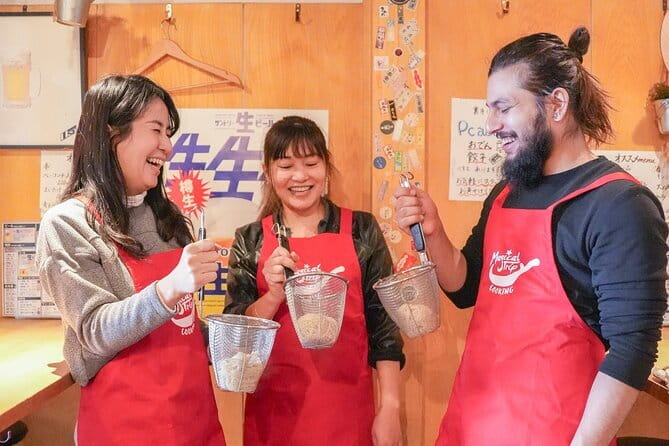
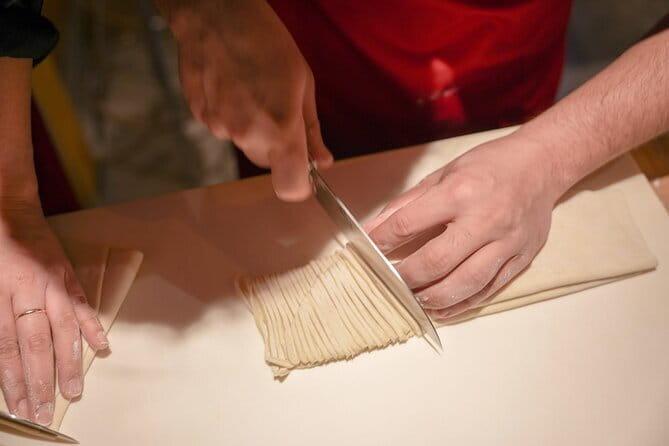
The most distinctive part of the class is making the ramen noodles yourself. You knead the dough, cut it, and prepare it for the bowl. That process gives you a better feel for ramen than a quick lecture ever could. The work is approachable for beginners, and all cooking levels are welcome.
You also get to top the noodles and see the final bowl take shape. The professional chef leads the cooking, while the English-speaking guide helps explain each step. Depending on the session, that guide may be Yuki, Ayuri, Rina, Emi, Miu, Shun, or another member of the team.
The language support is important. Several guides have been praised for translating clearly while adding useful information about Kyoto and Japanese food customs. Ayuri, Yuki, and Rina in particular have been singled out for their warm hosting and helpful explanations. The chef handles the technical side, while the guide keeps the class understandable and social.
One point deserves a clear warning. The ramen broth is made with pork. Even if your bowl does not include meat toppings, it is not vegetarian. The class also cannot accommodate vegetarian, vegan, or gluten-free requests, and it cannot guarantee an allergy-free meal because food preparation takes place in kitchens that are not dedicated allergy-free facilities.
Folding gyoza with a drink in hand
Gyoza are a good class dish because the method is simple enough to learn but tricky enough to make you pay attention. You wrap your own dumplings, then cook them before sitting down to eat. The shape may not be perfect on your first try, but that is part of the fun.
The class includes two drinks, with beer or sake available as a pairing. This shifts the mood from a formal lesson toward a shared meal. You can compare your dumpling folds with the people beside you, talk with the guide, and enjoy the food soon after making it.
The group size helps here. With a maximum of eight participants, the chef can keep an eye on the cooking while the guide translates. Some sessions may be even smaller. A few people have found themselves in groups of three or four, creating a near-private feel without paying for a private booking.
That small-group format suits couples, families, and solo visitors who want some conversation during the activity. It also makes the class less intimidating for beginners. You are not expected to arrive with serious kitchen skills.
Fried rice turns the lesson into lunch
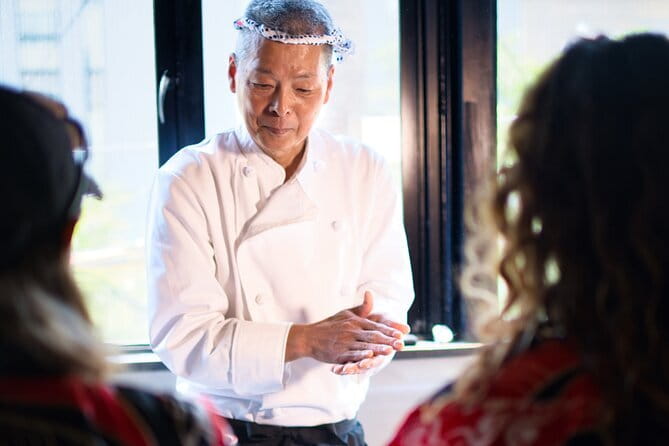
Ramen and gyoza would already make a satisfying meal, but fried rice is included as well. The result is a generous spread rather than a small tasting portion. You should plan what you eat beforehand, since the class provides a full meal and you will want room to enjoy what you prepared.
This is one of the stronger points of the experience for the price. At $86.22 per person, you are paying for instruction, ingredients, a professional chef, an English-speaking guide, two drinks, and a substantial lunch or dinner. It is not the cheapest way to eat ramen in Kyoto, but a restaurant meal alone would not give you the skills, explanations, or recipes.
The meal also gives the class a satisfying ending. You do the work first, then sit down to taste the results. Several descriptions of the experience praise the food as delicious, with some people calling it one of the best meals of their Japan visit. That kind of praise should be read with a little caution, since cooking your own meal naturally adds to the enjoyment, but the consistent approval of the chef, hosts, and food is encouraging.
Same city, a completely different kind of day:
- PERFECT KYOTO 1-Day Bus Tour
★ 5.0 · 13,518 reviews - Kyoto: Fushimi Inari, Kinkakuji, Bamboo Grove 1 Day Bus Tour
★ 4.8 · 4,316 reviews - Kyoto: Tea Ceremony in a Traditional Tea House in Kiyomizu
★ 4.9 · 3,519 reviews - Kyoto Geisha Walking Tour: Gion District & Hidden Gems
★ 4.7 · 3,273 reviews
A former restaurant with a practical feel

The cooking takes place in an authentic former restaurant space, rather than a polished cooking school built only for demonstrations. That can make the experience feel more connected to ordinary Japanese food culture. You are working in a real food setting, with a chef showing you how the dishes are prepared and served.
The tradeoff is that the space has several levels and is mostly upstairs. One person specifically noted the need to watch your step. The activity is not recommended for people with mobility issues, and anyone needing special accommodations is advised to book a private tour instead.
Children aged six and above may join. Adults must supervise children when knives are involved or when they are taking part in potentially dangerous cooking steps. For families, this can be a good shared activity, but it is not a hands-off children’s program. You will need to stay involved.
The class is a group experience, not a guaranteed private lesson. That matters if you want uninterrupted time with the chef. On the other hand, the shared format can be part of the appeal. You may end up cooking alongside people from different countries, and the class naturally creates conversation while everyone waits for the noodles and gyoza.
Guides add more than translation
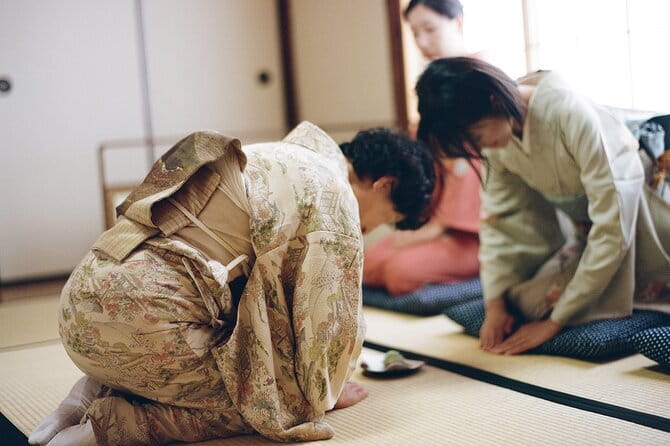
The chef is the central instructor, but the guide often shapes the quality of the experience. Clear translation makes the cooking steps easier to follow, and the guides also explain the background of ramen, gyoza, and other Japanese dishes.
Yuki has been praised for translating the chef’s instructions and sharing information about Kyoto and Japan. Ayuri has been noted for her cultural knowledge and relaxed approach. Rina has helped keep small groups attentive and has offered local restaurant suggestions. Other hosts, including Emi, Miu, Shun, and Eri, have also been described as friendly and easy to understand.
The exact guide is not guaranteed, so you should not book solely to meet a particular person. Still, the repeated pattern is useful: the guide is not merely there to point out ingredients. You can expect help with directions, cooking instructions, cultural questions, and sometimes ideas for places to eat afterward.
The class also works well for mixed-age groups. One family group ranged from 14 to 55, while other families brought younger children. Couples and solo participants can enjoy it too, especially if they like food activities with a social side.
What the recipes are really worth
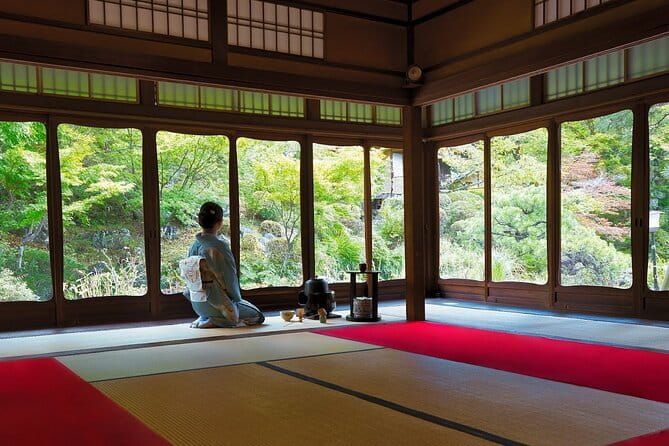
A recipe guide is included, so you can try the dishes again at home. This adds lasting value, but you should keep your expectations realistic. One experienced home cook found the recipes simpler than expected and wished the cooking had been more hands-on.
That criticism is fair. The class is designed for a broad range of cooking abilities, not for advanced cooks seeking restaurant-level technique. The chef prepares or controls some elements so that the group can stay on schedule and the meal turns out well. If you already make ramen and dumplings regularly, you may want a more technical workshop.
For most visitors, the simpler recipes are a benefit. You can remember the method, find the ingredients, and repeat the dishes without needing a professional kitchen. The class gives you a practical introduction rather than an intensive culinary qualification.
There is also a useful distinction between homemade elements and prepared components. One person was disappointed that the broth was made from a paste and water instead of a traditional broth cooked from scratch. If your main goal is learning a long-simmered ramen stock, this class may not meet it. Its strongest focus is the fresh noodles, gyoza wrapping, meal assembly, and the social experience of cooking with a chef.
Timing, price, and who gets the most value
The two-and-a-half-hour length is well judged for most schedules. You get a proper activity without sacrificing an entire day in Kyoto. Since the class ends where it begins, you can return to nearby sightseeing or continue to dinner without arranging another transfer.
At $86.22 per person, the value depends on what you want from the outing. A bowl of ramen costs far less at a casual restaurant, but this booking includes a lesson, ingredients, three dishes, two drinks, a chef, a translator or guide, and recipes. I consider it fair for a small-group food experience, especially for families who want a shared activity rather than another restaurant meal.
You should book it if you enjoy making food, want a break from sightseeing, or like meeting other people during a trip. It is particularly suitable for first-time cooks, families with older children, couples, and anyone curious about everyday Japanese dishes.
You should think twice if you need strict dietary control, have mobility limitations, dislike group activities, or want advanced instruction. The pork broth and limited substitutions are not minor details. They can decide the booking for you.
Free cancellation is available up to 24 hours before the start time. After that point, the payment is not refunded, and changes are not accepted. Unsafe weather can also lead to cancellation by the operator.
Should you book the ramen and gyoza class?
I would book this class for a practical, social afternoon in Kyoto, especially if you want to learn enough to repeat the dishes at home. The strongest features are the fresh noodle work, the gyoza folding, the generous meal, the small group limit, and the guides who make the chef’s instructions easy to follow.
I would not choose it for a vegetarian or vegan meal, an allergy-sensitive kitchen, or a serious study of traditional ramen broth. For everyone else, the combination of cooking, cultural context, two drinks, and a full lunch makes the $86.22 fee reasonable. Arrive early, come hungry, and treat the imperfect dumpling shapes as part of the lesson.
FAQ
How long does the Kyoto ramen and gyoza class last?
The activity lasts approximately two hours and 30 minutes.
Where does the cooking class meet?
The meeting point is 「北緯35物語」木村光佑 in Shincho, Shimogyo Ward, Kyoto, 600-8001, Japan. The activity ends back at the same meeting point.
What food will I make?
You will make ramen from scratch, including kneading and cutting the noodles, along with gyoza and fried rice. The dishes make up a full meal.
Are drinks included?
Yes. Two drinks are included. Beer or sake can be paired with the gyoza and ramen.
Can vegetarians, vegans, or people avoiding gluten join?
The class cannot accommodate vegetarian, vegan, or gluten-free requests. The ramen broth contains pork, even when meat toppings are not used.
What is the cancellation policy?
You can cancel up to 24 hours before the local start time for a full refund. Cancellations or changes made less than 24 hours in advance are not accepted for a refund.
More Workshops in Kyoto
- Kyoto: 45-Minute Tea Ceremony Lesson Experience
★ 4.3 · 2,378 reviews - Kyoto : Chopsticks Making Workshop in Gion with Engraving Option
★ 5.0 · 958 reviews - Kyoto: Samurai Sword Class by Experts in Traditional Arts
★ 4.9 · 657 reviews - Ninja 1-hour Hands-on Lesson by Japanese master in Kyoto -Entry
★ 5.0 · 489 reviews
More Cooking Classes in Kyoto
- Kyoto: Ramen, Gyoza, and Onigiri Cooking Class
★ 5.0 · 445 reviews - Kyoto: Japanese Washoku Bento Small Group Cooking Class
★ 5.0 · 380 reviews - Kyoto: Afternoon Japanese Izakaya Cooking Class
★ 4.9 · 241 reviews - Izakaya Style Cooking Class
★ 5.0 · 219 reviews
Just added around Kyoto
- Taste of Nishiki Market Walking Food Tour with Local guide★ 5.0 · 17 reviews
- Kyoto: Sushi Making Class with Sushi Chef★ 4.8 · 64 reviews
- Kyoto: City Secrets eBike Tour★ 4.9 · 196 reviews
- Sacred Pathways: Discover the Philosopher’s Path of Kyoto★ 4.9 · 20 reviews
- Private Tour to Monkey Park and Arashiyama Highlights★ 5.0 · 22 reviews
- Private Nara Tour from Osaka – Meet at Your Hotel★ 5.0 · 22 reviews
- Private Sake Tasting in Central Kyoto with Sake Sommelier★ 5.0 · 13 reviews
- Kyoto : Private Custom Walking Tour With A Local Guide★ 4.6 · 144 reviews
Japanese Cooking Classes, compared.
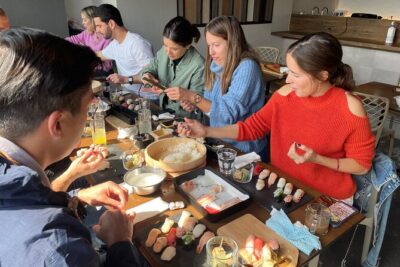
Sushi Making Tokyo Roll and Authentic Japanese Sushi Class
Read our review →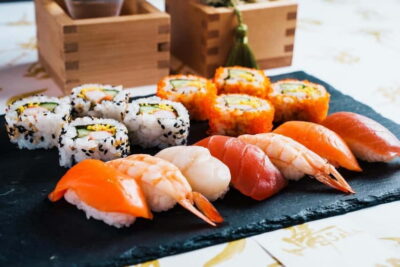
Roll and Authentic Sushi Making Class in Asakusa
Read our review →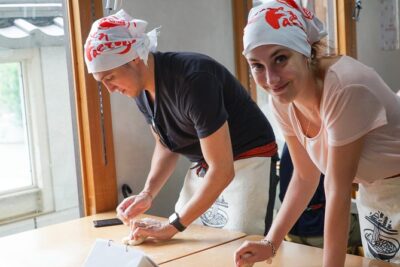
Ramen Cooking Class at Ramen Factory in Kyoto
Read our review →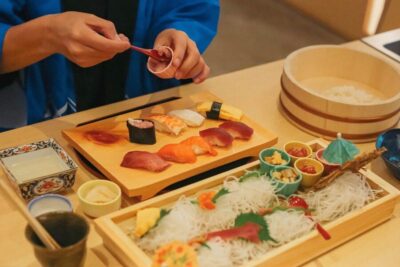
Sushi Making Class in a Happi Coat near a Famous Spot
Read our review →
Sushi Making Osaka Roll and Authentic Japanese Sushi Class
Read our review →
Tokyo Sushi Making Class in Tsukiji with Professional Chef
Read our review →
Ramen & Gyoza Cooking Class in Tokyo with Local Supermarket Visit
Read our review →
Tsukiji Fish Market Guided Tour and Sushi Making with Pro Chef
Read our review →Browse the lists this tour appears in