
REVIEW · KIMONO & CULTURE EXPERIENCES
Kyoto: Samurai Sword Class by Experts in Traditional Arts
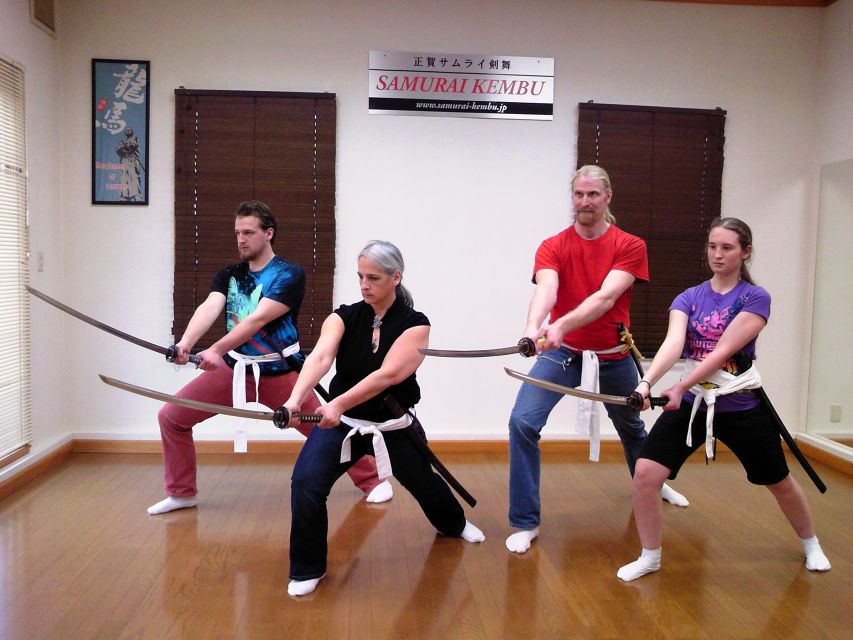
A samurai sword class in Kyoto gives you more than a costume photo. You learn the careful bow, the controlled sword draw, and the stylized strikes of Kenbu, a traditional sword dance that treats movement as art rather than rough combat. The class is led in English or Japanese by instructors such as Kazu, Hoga, Kashin, and Hisyo Sensei.
I like the mix of hands-on practice and a proper performance, since you first learn simple movements and then see what trained performers can do with them. I also like the small group limit of 10, which gives the instructor room to correct your stance and make sure you get photos. The main drawback is that this is an indoor, choreographed introduction, not a serious martial arts lesson or full samurai history course.
In This Review
- Key points
- What this Kyoto sword class really teaches
- Finding the Samurai Kembu Theater in Higashiyama
- The opening film and first bow
- Learning the basic sword movements
- Costume, photos, and the practical payoff
- The Kenbu performance puts the lesson in context
- Is 64 dollars a fair price?
- Who should book this experience?
- What to know before you arrive
- Should you book the Kyoto Samurai Sword Class?
- FAQ
- Where does the samurai sword class take place?
- How long does the activity last?
- Is the class taught in English?
- How many people are in each group?
- What will I learn?
- Is the costume included?
- Are children allowed to participate?
- What is included in the booking?
Key points
- Learn the ritual first: Bow to your sword, draw it correctly, practice strikes, and return it to its scabbard.
- Wear traditional costume: Choose your samurai outfit before the photo session, with a tenugui towel included as a souvenir.
- See Kenbu performed properly: Depending on your booking, watch a 10-minute or 30-minute sword dance performance with commentary.
- Small class setting: Groups are limited to 10, and some time slots may provide nearly one-to-one instruction.
- Suitable for families: Children aged 5 to 10 can participate, but the lesson is taught alongside adults. Children under 4 are not allowed.
- Easy Kyoto location: The class takes place at Samurai Kembu Theater in Higashiyama, near Sanjo-hanamikoji.
What this Kyoto sword class really teaches
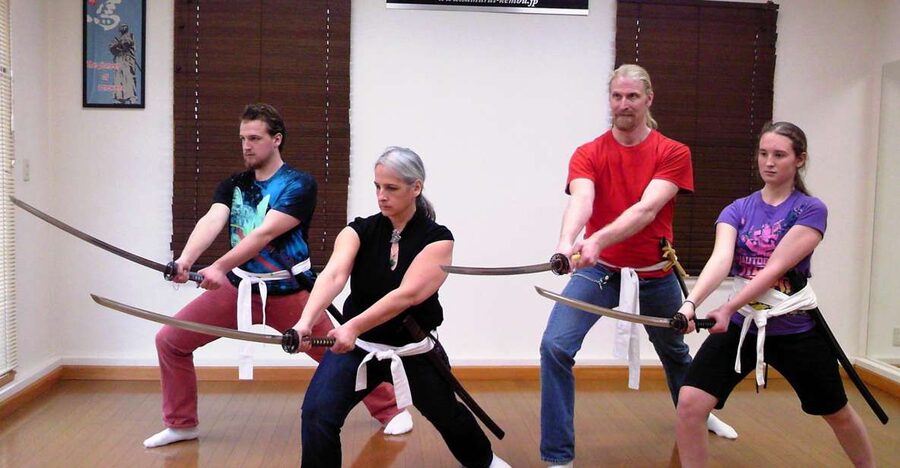
The word samurai can bring to mind battlefield combat, dramatic film fights, and sharp blades. This class presents a different side of the tradition. You study Kenbu, often translated as sword dance, where a sword, fan, posture, footwork, and timing work together in a set performance.
That distinction matters. You are not being trained to fight another person, and you will not be swinging a live weapon at a target. The movements are controlled and stylized. You learn respect, balance, precision, and the formal behavior that surrounds the sword.
The class begins with a short four-minute film about the basics of the samurai. It is a quick introduction rather than a long lecture, which is useful in a 90-minute to two-hour program. You get enough context to understand why the bow and sword handling matter before moving into the practical part.
If you want a detailed account of Japanese military history, this class may feel light. If you want a clear and active introduction that connects costume, ritual, movement, and performance, the format works well.
More Kimono & Culture Experiences in Kyoto
- Kyoto Geisha Walking Tour: Gion District & Hidden Gems
★ 4.7 · 3,273 reviews - Kyoto: Gion Magical Night Walking Tour with Geisha Trivia
★ 4.9 · 2,393 reviews - Kyoto: Gion Geisha District Walking Tour – Stories of Geisha
★ 4.7 · 2,187 reviews
Finding the Samurai Kembu Theater in Higashiyama
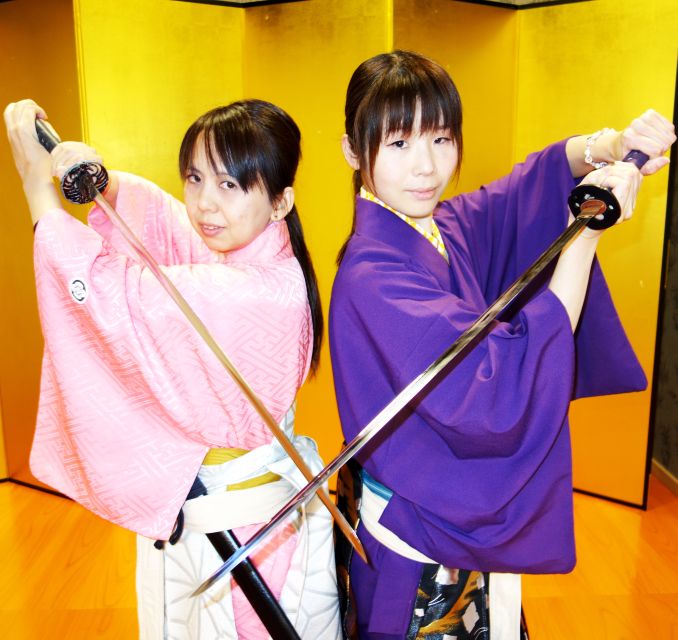
The meeting point is Samurai Kembu Theater, at 35-7 Sanchome, Higashi-iru, Sanjo-hanamikoji, Higashiyama-ku. The dojo is in the basement of the Gozan Building, at B1F.
Put the full address into your map rather than relying only on the theater name. The entrance is not a large outdoor training yard, and the basement location can be easy to miss if you are hurrying through Kyoto’s busy Higashiyama area.
There is no waiting room, and people without appointments cannot wait inside the training room. Large luggage and travel bags also have no place here. Plan to arrive with only what you need for the class.
The central location makes this a useful indoor activity during a sightseeing day in Higashiyama. Still, allow time to find the building and change your pace before the lesson begins. You need to be ready to follow instructions from the start.
The opening film and first bow
Once the session begins, the short film gives you the basic setting. Then you change into a traditional samurai costume and prepare to handle the sword.
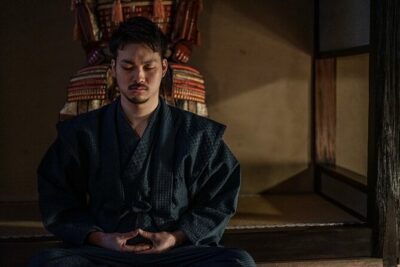
The first lesson is not a flashy strike. It is the bow. You learn how to show respect before training, how to hold yourself, and how to approach the sword with care. This may seem formal if you are expecting an action class, but it is one of the details that gives the activity a stronger sense of purpose.
The instructor explains how the sword is held and how it is drawn. You also practice placing it back into its protective scabbard. These actions are taught slowly, since the point is control rather than speed.
You should wear clothing that allows easy movement. A single hoodie or tights are not suitable for changing into the costume, so choose practical clothes with enough layers and flexibility. Food, drinks, alcohol, pets, weapons, sharp objects, and large bags are not allowed in the class area.
Learning the basic sword movements
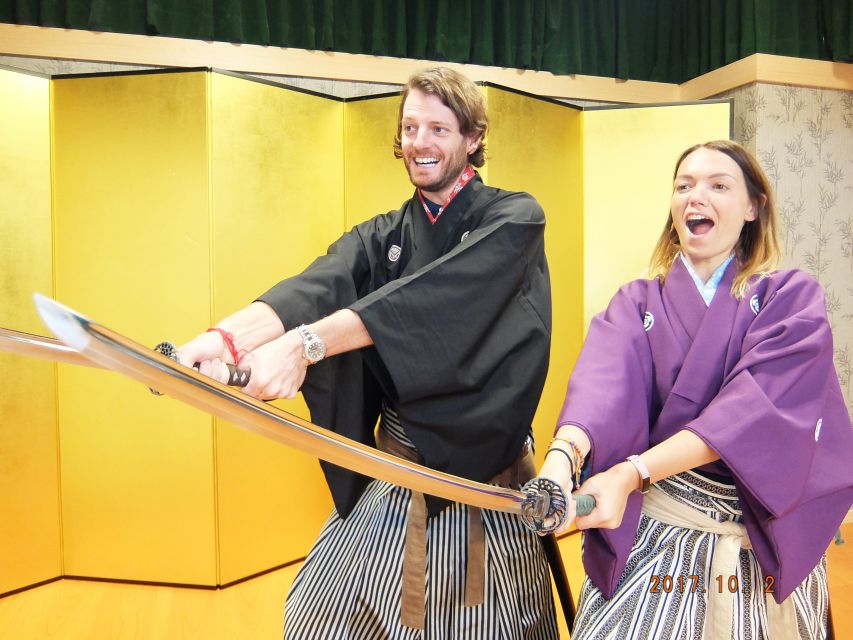
After the formal opening, you practice a short sequence of sword movements. The instructor demonstrates, then breaks the actions into manageable pieces for you to repeat.
Expect basic katana handling, stylized strikes, footwork, and a short choreographed routine. You may also learn how to face an opponent respectfully with the sword. The lesson is physical, but it is not presented as a hard workout. You need enough coordination to copy the sequence and enough attention to remember the order.
This is where the quality of the teaching matters most. Instructors such as Kazu and Hoga Sensei are praised for clear demonstrations, patience, humor, and individual corrections. Hoga has also been described as a highly skilled Kenbu performer, while Hisyo has competed at national level. Names and instructors can vary by session, but the format puts a trained practitioner in front of you, not a generic costume host.
The class has a good balance of seriousness and fun. You may feel a little awkward at first, especially when trying to coordinate a bow, a turn, and a sword position at once. That is normal. The instructor keeps the sequence simple enough for beginners while giving you a real taste of the discipline.
Some time slots can be especially small. A quiet booking has even resulted in a one-to-one lesson, allowing the instructor to refine every stage of the technique. You should not count on having a private class, but the maximum group size of 10 is still helpful.
Same city, a completely different kind of day:
- PERFECT KYOTO 1-Day Bus Tour
★ 5.0 · 13,518 reviews - Kyoto: Fushimi Inari, Kinkakuji, Bamboo Grove 1 Day Bus Tour
★ 4.8 · 4,316 reviews - Kyoto: Tea Ceremony in a Traditional Tea House in Kiyomizu
★ 4.9 · 3,519 reviews - Kyoto: Tea Ceremony Ju-An at Jotokuji Temple
★ 4.9 · 3,207 reviews
Costume, photos, and the practical payoff
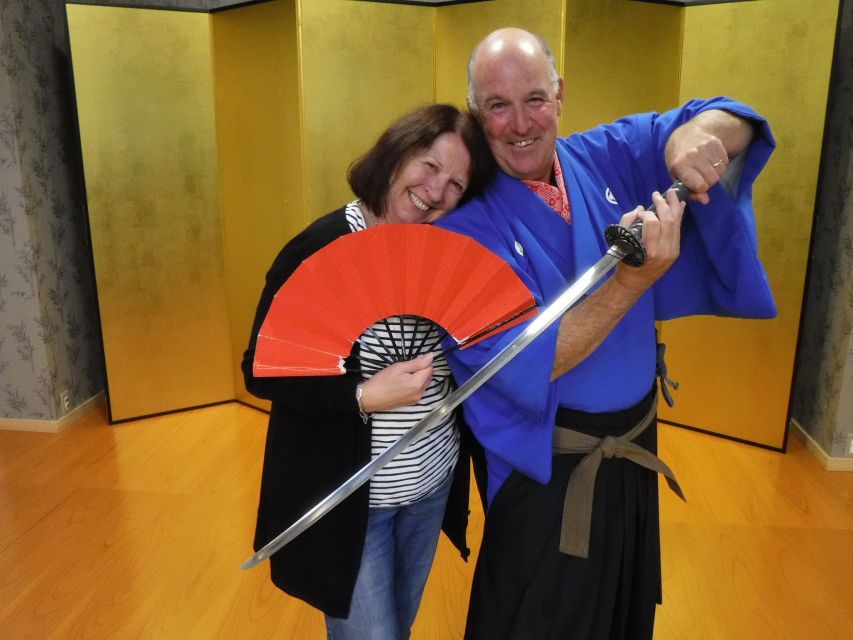
Changing into the samurai clothing is one of the most popular parts of the session. You get to choose an outfit, and the clothing gives the sword work a different feel. A basic movement becomes more memorable when you see the full posture in a mirror or photograph.
The costume also helps you understand that this is not simply a modern stage routine. The clothing, bowing, fan work, sword positions, and measured steps belong to a larger performance tradition.
A short photo session follows. Staff help take photos and make sure each individual or group gets time with the sword and costume. You should have enough time to pose and record a few videos, but this is not a professional studio shoot with an unlimited number of setups.
Bring a phone if you want your own video, but keep your belongings minimal because there is no room for large bags. The activity includes a traditional Japanese tenugui towel, which gives you a small, useful souvenir rather than only a digital memory. A completion certificate is also presented at the end.
The photos are a major part of the value for families, couples, and friends. You get a physical activity, a cultural introduction, and a keepsake in one booking. If you dislike dressing up or staged photos, the costume portion may feel less appealing, but you can still focus on the sword movements and performance.
The Kenbu performance puts the lesson in context
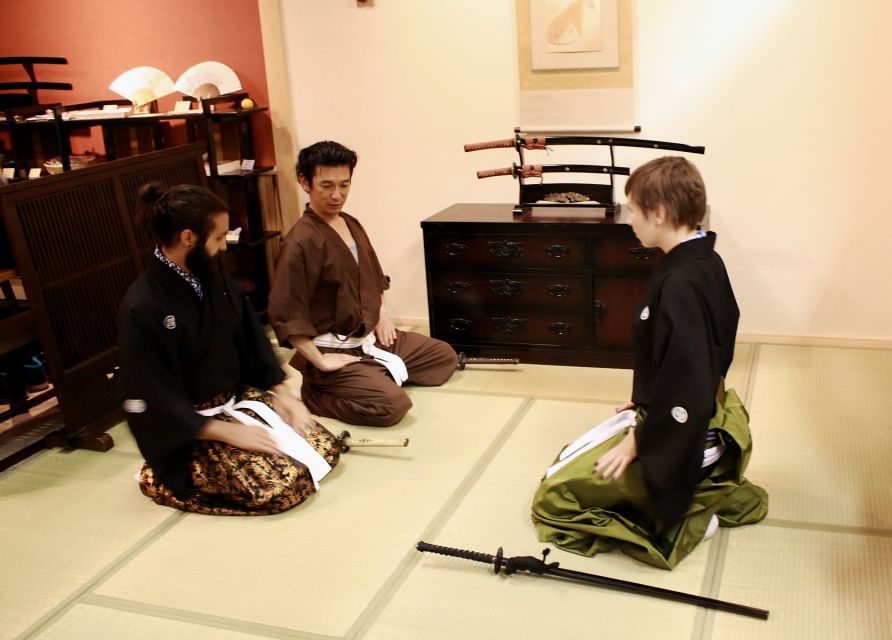
The performance is the best way to understand what the basic drills are building toward. Depending on the option you book, you watch either a 10-minute or 30-minute performance, with commentary from a sword dance instructor.
The performers use controlled sword movements, fans, posture, and timing to create a story or visual sequence. The effect is quite different from a combat demonstration. The blade is part of a disciplined dance, and the pauses and gestures matter as much as the strikes.
Many people find the show more impressive after taking the class. You have just struggled to remember a few movements, so you can appreciate the skill needed to make the full routine look calm and effortless.
The performance may take place before or after the hands-on class, depending on the option selected. Check the exact duration when you choose your time. The 30-minute version offers a fuller look at Kenbu, while the 10-minute version may suit you better if your Kyoto schedule is tight.
The show also corrects a common misunderstanding. This art is not simply sword fighting in costume. It combines respect, control, dramatic movement, and traditional performance. If your interest is Japanese culture rather than weapons alone, this section adds real value.
Is 64 dollars a fair price?
At 64 dollars per person, this is not the cheapest short activity in Kyoto. It is also more than the cost of simply visiting a temple or watching a brief cultural show. The price makes better sense when you count the full package: instruction, costume use, sword practice, photos, tenugui towel, certificate, and a Kenbu performance.
You are paying for access to trained instructors and a structured activity, not just a photo opportunity. The small group limit helps justify the cost because the lesson requires staff to dress you, demonstrate movements, supervise sword handling, and take pictures.
The value is strongest if you would otherwise book several separate activities. Here, you receive a short history introduction, a practical lesson, and a performance in one indoor visit. Families may also find it useful because different ages can take part together.
The value is weaker if you want serious martial arts training. Ninety minutes to two hours is enough for a memorable introduction, but not enough to develop advanced technique. You also should not expect a long lecture on the samurai period, a live blade demonstration at close range, or unscripted combat practice.
The high rating of 4.9 from 657 reviews reflects consistent satisfaction with the teaching, costumes, show, and organization. I would still judge the booking by your expectations. Think of it as a cultural workshop with a performance, not a certification course in swordsmanship.
Who should book this experience?
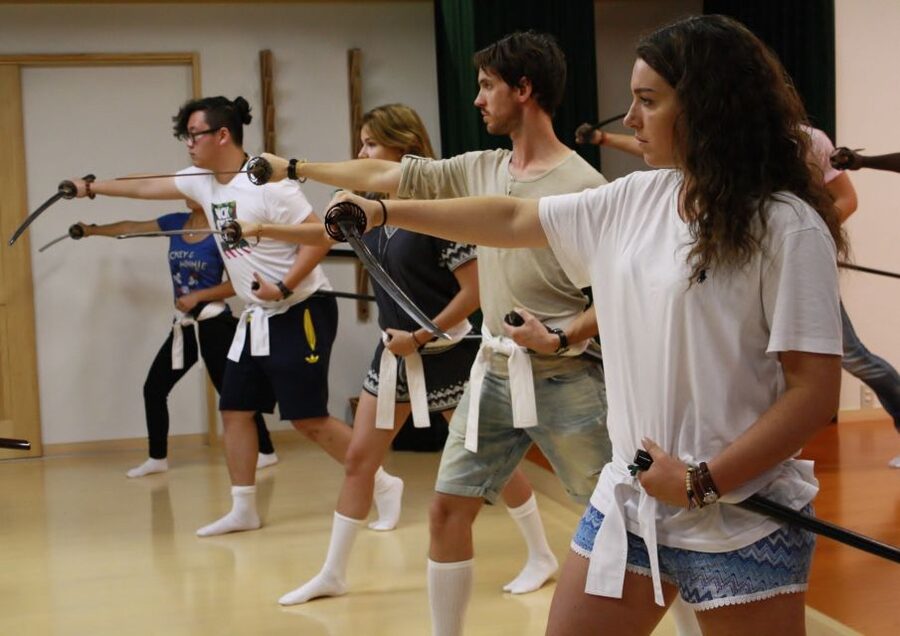
I would recommend it to first-time visitors who want an activity that feels distinctly Japanese and does not require a full day. It suits couples, families, solo visitors, and groups of friends. The activity has enough history and ritual for adults, but enough dressing up and movement to keep many children and teenagers interested.
Families with an 11-year-old or older child should find the format especially workable. Children aged 5 to 10 may participate, but the lesson is conducted with adults, so a younger child should already have some experience with a martial arts class or structured instruction.
You do not need to be athletic. You do need to listen carefully, move around in costume, and follow safety directions. If you have limited mobility or do not want to handle a sword, the activity may not be a good fit, since observation only is not allowed.
This is also a good rainy-day choice. The class is indoors and has a fixed duration, so it can fill a gap between temple visits, shopping, and meals in Higashiyama.
What to know before you arrive
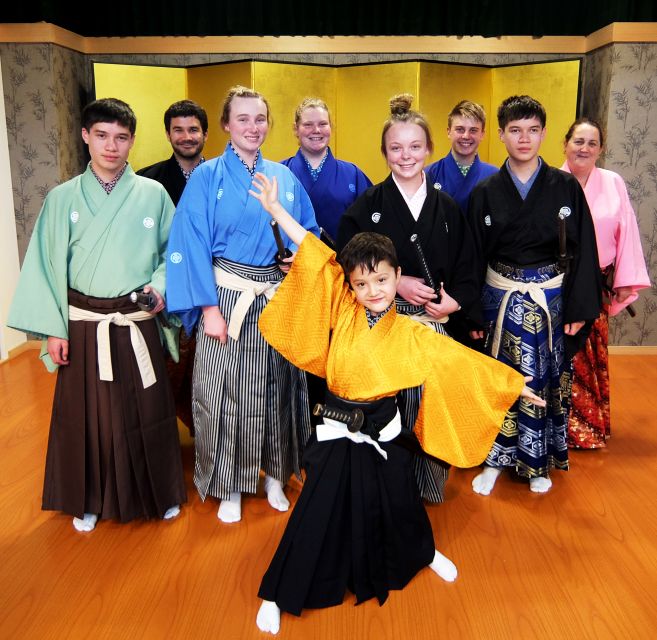
Wear exercise-friendly clothing that is easy to change out of. Avoid arriving in only a hoodie or tights, since the costume change requires suitable clothes underneath.
Leave large luggage at your accommodation. The theater has no room for travel bags, and there is no waiting room for people who are not booked. Extra chaperones also cannot simply appear on the day. If you need another person to attend, contact the provider in advance.
Arrive sober and ready to follow the instructor’s safety directions. Alcohol and drugs are not allowed, and the class does not permit weapons, sharp objects, fireworks, explosives, smoking, food, or drinks.
Make sure the participant name matches the reservation. If it will be different on the day, notify the provider beforehand. Cancellations must be made by you through GetYourGuide, and free cancellation is available up to 24 hours before the activity for a full refund. You can also reserve now and pay later, which helps if your Kyoto schedule is still shifting.
Should you book the Kyoto Samurai Sword Class?
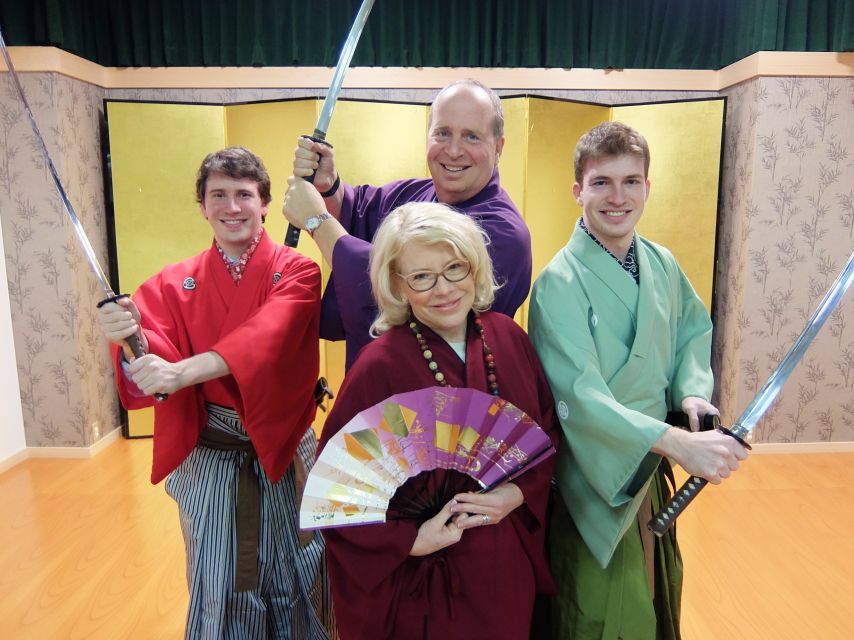
Book it if you want a lively introduction to samurai culture, a chance to wear traditional clothing, and a short Kenbu performance led by trained instructors. The strongest parts are the respectful sword ritual, patient coaching, individual photo time, and the chance to see the polished performance after trying the movements yourself.
Skip it if you want unchoreographed combat, advanced martial arts training, or a long academic lecture. For most visitors, though, the 64-dollar price is reasonable because the session combines several activities and gives you both photos and a certificate to take home.
I would place this high on a Kyoto list for families, first-time visitors, and anyone who wants more than passive sightseeing. Come prepared to move, listen, laugh at your first awkward sword turn, and treat the art with respect.
FAQ
Where does the samurai sword class take place?
The class takes place at Samurai Kembu Theater, 35-7 Sanchome, Higashi-iru, Sanjo-hanamikoji, Higashiyama-ku, Kyoto 605-0005. The dojo is on the basement level of the Gozan Building.
How long does the activity last?
The activity lasts between 90 minutes and two hours. Starting times vary, and the performance length depends on the option selected.
Is the class taught in English?
Yes. The available languages are English and Japanese, and an English-speaking instructor is included.
How many people are in each group?
The activity is limited to 10 participants, making it a small-group class.
What will I learn?
You will learn how to bow before training, hold and draw a sword, return it to its scabbard, perform stylized strikes, and show respect to an opponent. You will also learn about Kenbu, the traditional sword dance.
Is the costume included?
Yes. You will wear a traditional samurai costume during the class and photo session.
Are children allowed to participate?
Children under 4 are not allowed. Children aged 5 to 10 may participate, but they attend a lesson taught alongside adults, and some prior martial arts or structured learning experience is desirable.
What is included in the booking?
The booking includes an English-speaking instructor, a photo session, a traditional Japanese tenugui towel, and a completion certificate. Food, drinks, and hotel transportation are not included.
More Workshops in Kyoto
- Kyoto: 45-Minute Tea Ceremony Lesson Experience
★ 4.3 · 2,378 reviews - Ramen Cooking Class at Ramen Factory in Kyoto
★ 5.0 · 1,937 reviews - Kyoto : Chopsticks Making Workshop in Gion with Engraving Option
★ 5.0 · 958 reviews - Kyoto: Ramen Cooking Class at a Ramen Factory with Souvenir
★ 4.9 · 532 reviews
Just added around Kyoto
- Taste of Nishiki Market Walking Food Tour with Local guide★ 5.0 · 17 reviews
- Kyoto: Sushi Making Class with Sushi Chef★ 4.8 · 64 reviews
- Kyoto: City Secrets eBike Tour★ 4.9 · 196 reviews
- Sacred Pathways: Discover the Philosopher’s Path of Kyoto★ 4.9 · 20 reviews
- Private Tour to Monkey Park and Arashiyama Highlights★ 5.0 · 22 reviews
- Private Nara Tour from Osaka – Meet at Your Hotel★ 5.0 · 22 reviews
- Private Sake Tasting in Central Kyoto with Sake Sommelier★ 5.0 · 13 reviews
- Kyoto : Private Custom Walking Tour With A Local Guide★ 4.6 · 144 reviews
Kimono & Culture Experiences, compared.
Kyoto Geisha Walking Tour: Gion District & Hidden Gems
Read our review →
Gion Magical Night Walking Tour with Geisha Trivia
Read our review →
Gion Geisha District Walking Tour – Stories of Geisha
Read our review →
Best of Kyoto: Gion, Geisha, Pagodas & Cobblestones
Read our review →
Kyoto Gion Geisha District Walking Tour – The Stories of Geisha
Read our review →
Browse the lists this tour appears in