REVIEW · JAPANESE COOKING CLASSES
Kyoto: Afternoon Japanese Izakaya Cooking Class
The best part of this Kyoto class is that it skips the usual sushi lesson and shows you the food people make for a casual Japanese meal. You cook in two rounds, eating between them, while talking with your English-speaking chef much as you would across an izakaya counter.
I like the simple, repeatable recipes and the friendly, patient teaching. You get your own apron and utensils, and the dishes are explained step by step. The main consideration is pace: fitting five or six dishes into three hours means the class keeps moving, so it may feel brisk if you prefer a slow, leisurely lesson.
In This Review
- Key points to know
- What this Kyoto izakaya class really teaches
- The first cooking round: start with the basics
- The second round: more dishes, more practice
- Eating what you cook
- The instructors and the English teaching
- What you take home besides a full stomach
- Is $67 a fair price?
- How to plan the afternoon
- Who should book this experience?
- The main strengths and the one real caution
- FAQ
- Where does the cooking class meet?
- How long does the class last?
- How much does it cost?
- What kind of food will I learn to cook?
- How many dishes will I make?
- Is the class taught in English?
- Are ingredients included?
- Do I receive recipes?
- Can I request dietary accommodations?
- Is the activity wheelchair accessible?
- Should you book the Kyoto izakaya class?
Key points to know
- Two cooking rounds: Prepare two or three dishes, eat them, then return to the kitchen for another set.
- Everyday Japanese food: Expect izakaya-style dishes rather than a narrow focus on sushi.
- Recipes to take home: The clear recipe sheets help you recreate the meal after Japan.
- English instruction: Guides explain techniques, ingredients, and tasks in English.
- Hands-on setup: Ingredients, apron, cookware, utensils, and cooking class fees are included.
- Accessible Kyoto activity: The class lasts three hours, costs $67 per person, and is wheelchair accessible.
What this Kyoto izakaya class really teaches
Izakaya cooking is a good window into ordinary Japanese dining. An izakaya is a relaxed restaurant built around small plates, drinks, and conversation. The food is often savory, practical, and meant to be shared. This class uses that format to teach dishes you can understand and make again, rather than presenting food as something too elaborate for a home kitchen.
That distinction matters. A sushi class can be fun, but it may leave you with one specialized skill. Here, you work with the basic flavors and methods behind a wider Japanese meal. Several dishes are prepared in one afternoon, and the recipes are designed to be manageable once you return home.
The class is held at Cooking Sun, at Funayacho in Kyoto’s Shimogyo Ward. Your meeting point is:
Cooking Sun
Funayacho, Shimogyo Ward
Kyoto, Kyoto 600-8466
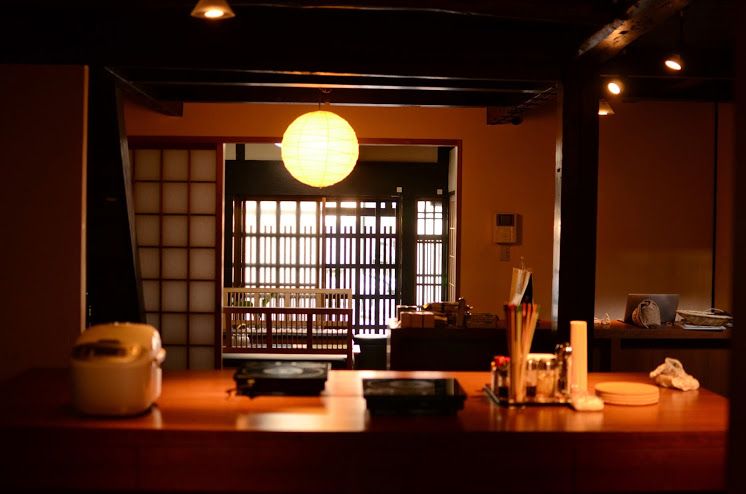
The supplied details do not give a full room layout or exact group size. Still, the class setup includes individual equipment, ingredients, an apron, and utensils. That makes the lesson more hands-on than a demonstration where you simply watch a chef work.
More Japanese Cooking Classes in Kyoto
- Ramen Cooking Class at Ramen Factory in Kyoto
★ 5.0 · 1,937 reviews - Sushi Making in Kyoto! Same-day bookings welcome!
★ 5.0 · 713 reviews - Kyoto: Ramen Cooking Class at a Ramen Factory with Souvenir
★ 4.9 · 532 reviews
The first cooking round: start with the basics
The afternoon begins in the kitchen, where you cook two or three dishes with the chef. This first stage gets you working quickly. You are not simply listening to a lecture about Japanese food. You handle ingredients, follow instructions, and learn how the parts of the dishes come together.
The teaching is aimed at mixed ability levels. Beginners can follow the clear steps, while more experienced cooks can pay attention to technique and ingredients. One participant with decades of professional cooking experience still found useful lessons in the class, while people who rarely cook also found the tasks manageable.
That is a strong sign of good instruction. You do not need to arrive with knife skills or a long list of Japanese recipes. The cooking staff demonstrate each task and explain what to do next. If you are cooking with a partner or family member, the format also gives noncooks a real role instead of leaving one person to do everything.
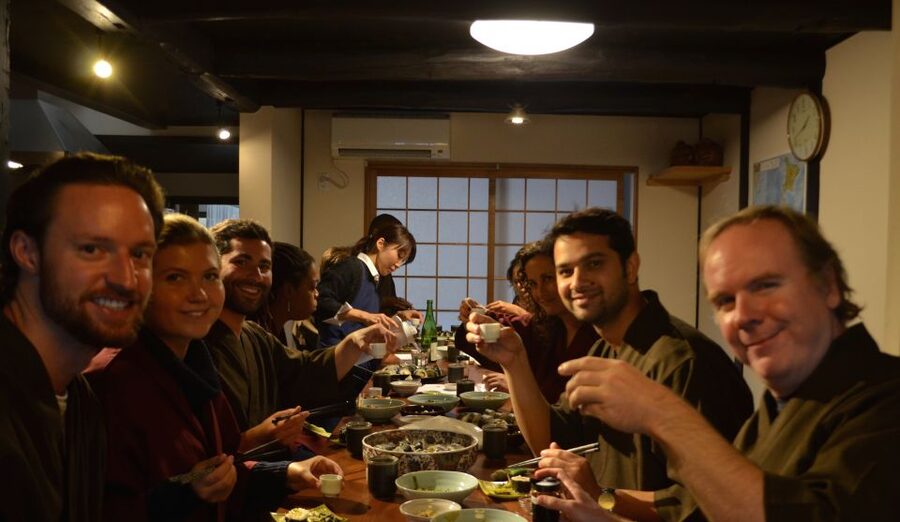
Once the first dishes are ready, you sit down and eat them. This break is part of the design, not a delay. Izakaya food is social, and the class encourages conversation with the chef while you eat. You get a chance to ask about ingredients, serving customs, and the place of each dish in Japanese food culture.
The second round: more dishes, more practice
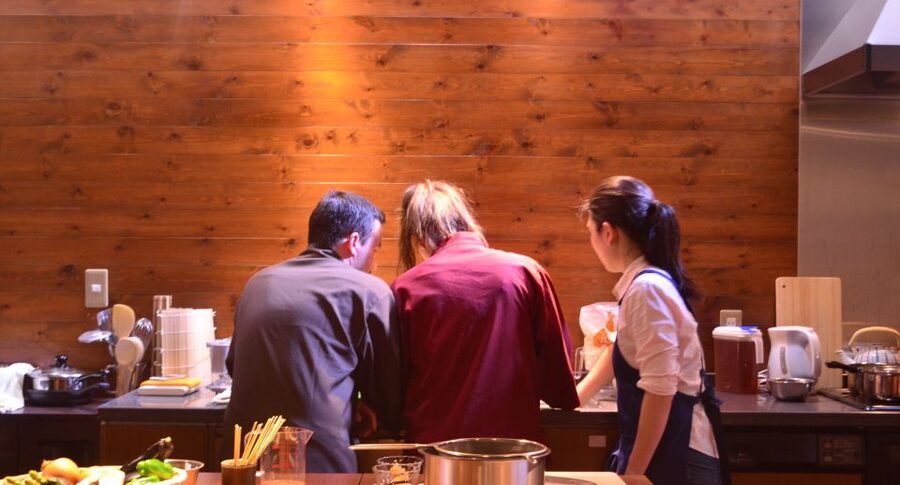
After eating the first set, you return to the kitchen for another two or three dishes. This second round gives the afternoon a useful rhythm: cook, eat, cook again, then enjoy the complete spread.
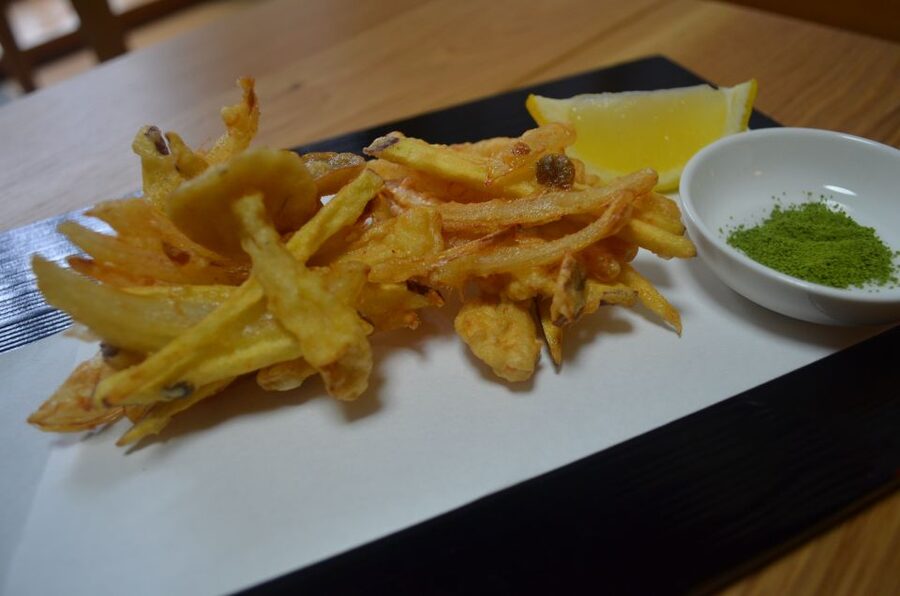
The exact menu can vary, but the class has produced five savory dishes and a dessert in some sessions, and six traditional Japanese dishes in others. The important point is the variety. You are likely to work through several small plates instead of spending the entire session on one recipe.
Past menus have included okonomiyaki, which one participant called the best they had eaten, as well as less familiar Japanese foods that are not always easy to find on a standard sightseeing schedule. The class also covers fundamentals such as dashi broth, the base used in many Japanese dishes. Learning to make dashi helps you understand why Japanese food can taste full and savory without relying on heavy sauces.
You should expect the pace to pick up during this part. The goal is to complete several dishes within three hours, so instructions are practical and focused. I would not choose this class if you want a long, meditative cooking session with plenty of free time between each step. I would choose it if you want a lot of useful food knowledge in a compact afternoon.
Eating what you cook
The meal is the reward, but it is also a lesson. Eating the dishes immediately helps you see how they should look, taste, and be served. You can compare the different flavors while the preparation is still fresh in your mind.
This is also where the izakaya idea comes through most clearly. You are encouraged to talk with the chef while cooking and eating, rather than treating the kitchen and table as separate worlds. The mood is informal and social, with the food providing an easy subject for conversation.
The meal can be especially helpful if you have dietary requirements, but you must tell the local supplier when booking. A vegetarian participant was accommodated with separate cooking utensils and pans, showing that adjustments may be possible. Do not wait until you arrive, since the advance notice is part of the stated requirements.
More Sake & Bar Hopping Tours in Kyoto
- Kyoto Night Foodie Tour in Gion (9+ dishes + 6 Sake tastings)
★ 5.0 · 1,762 reviews - 3-Hour Kyoto Insider Sake Brewery Tour with Tastings & Pairings
★ 5.0 · 917 reviews - Arashiyama Bamboo, Temple, Monkeys, or Secret Sake Brewery
★ 4.8 · 886 reviews - Kyoto: Izakaya Bars Guided Walking Tour
★ 4.9 · 815 reviews
The instructors and the English teaching
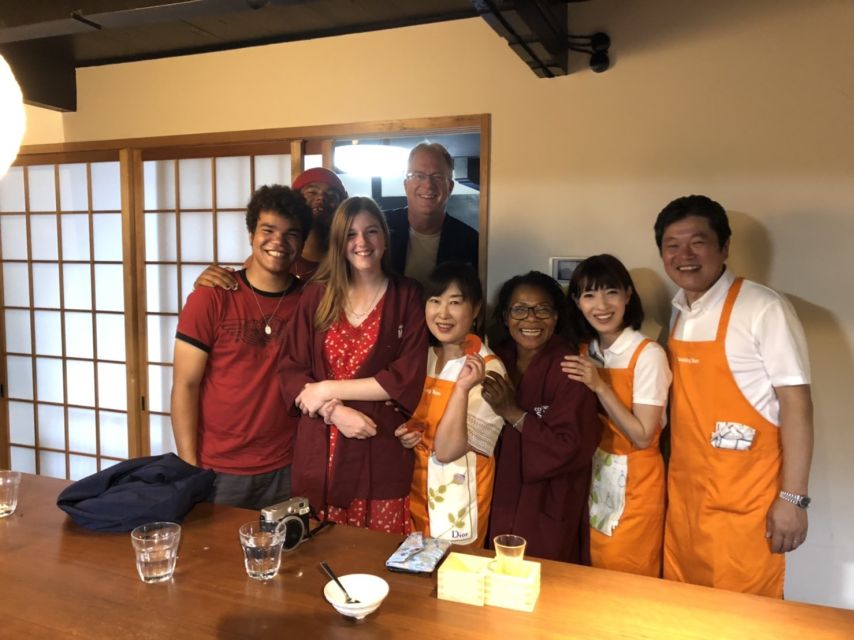
English is the teaching language. Names that appear in the class team include Yumi and Yumiko, both described as warm, helpful, and entertaining. Other sessions have had different instructors, so you should not assume a particular person will lead your class.
The strongest feature of the teaching is clarity. The chefs demonstrate tasks, use straightforward explanations, and keep an eye on the class as people cook. You get help without needing to feel embarrassed about asking basic questions.
The format also makes room for cultural context. You can ask about Japanese ingredients, cooking methods, and izakaya dining while the food is in front of you. That is more useful than memorizing a list of facts in a formal talk, because each explanation connects to something you are chopping, mixing, or tasting.
The atmosphere is friendly rather than formal. Families with teenagers have enjoyed the lesson, and people who joined relatives with little interest in cooking still found it enjoyable. If you are traveling alone, the shared kitchen and meal give you a natural way to meet people from different countries.
What you take home besides a full stomach
The recipe set is one of the best practical features. Instructions are described as detailed, clear, and easy to follow, with some participants saying they planned to cook the dishes soon after returning home.
That gives the $67 price more weight. You are not paying only for a meal and three hours of entertainment. You receive ingredients, instruction, equipment during the class, and a set of recipes that can keep the experience useful after your trip.
The recipes also help with the less familiar parts of Japanese cooking. You may leave wanting mirin and dashi in your own cupboard, but the recipe sheets give you a starting point rather than relying on memory. If you live somewhere with Japanese or Asian grocery stores, the class can make those ingredients feel less mysterious.
There is a limit, of course. The class cannot send every ingredient or cooking tool home with you, and the information provided does not promise that all ingredients will be easy to find in your country. Still, the focus on basic, repeatable dishes is more useful than a showpiece recipe you are unlikely to make again.
Is $67 a fair price?
At $67 per person, this is not the cheapest way to eat lunch in Kyoto. It is a fair price if you value instruction, a substantial meal, and practical recipes as part of the same afternoon.
The class lasts three hours and includes two cooking sessions, several dishes, ingredients, an apron, and utensils. Some sessions have produced around six dishes including dessert. If you paid separately for a meal, a cooking demonstration, and a private-style lesson, the combined cost would likely be higher, though the supplied information does not give comparison prices.
The value is strongest for people who enjoy food and want a skill to remember the trip by. It is also a sensible indoor option during poor weather or when you need a break from temples and walking. You are still doing something distinctly connected to Kyoto, rather than filling an afternoon with a generic activity.
For a child who dislikes cooking, three hours may be too long. For a teenager, a food-focused couple, or a family that likes doing things together, the hands-on format should work better. The activity is wheelchair accessible, which makes it a practical choice for many visitors, though you should still confirm any personal access needs when booking.
How to plan the afternoon
Allow the full three hours. The class is not just a quick recipe lesson followed by a snack. You cook, eat, return to the kitchen, and eat again, so rushing away for another appointment could spoil the relaxed part of the experience.
Check the available starting time when you book. The supplied details do not give one fixed daily start time, and availability determines the session time.
Wear something comfortable for kitchen work. An apron is included, but you are still preparing food and moving between cooking and dining areas. If you have allergies, vegetarian requirements, or another dietary need, notify the supplier at the time of booking.
The class is taught in English, making it suitable for visitors who want explanations without translation. You do not need to speak Japanese to take part.
Cancellation is flexible enough for a changing itinerary: you can cancel up to 24 hours in advance for a full refund. You can also reserve now and pay later, which is useful if you are arranging several Kyoto activities before your travel dates.
Who should book this experience?
I would recommend it most strongly to you if you fit one of these descriptions:
- You want to learn Japanese dishes beyond sushi and ramen.
- You like cooking but do not need an advanced professional lesson.
- You want recipes you can make for friends after returning home.
- You are traveling with family members or teenagers and want a shared activity.
- You need a three-hour indoor plan away from Kyoto’s sightseeing crowds.
- You enjoy meeting local instructors through food and conversation.
It is less suitable if you dislike group activities, want a very slow pace, or only want to observe. This is a hands-on lesson, and you will be expected to take part.
The class also suits serious cooks better than you might expect. The basic presentation keeps beginners comfortable, but the attention to dashi, ingredients, and Japanese cooking fundamentals offers useful material for people who already cook regularly.
The main strengths and the one real caution
The teaching is the biggest strength. The instructors are patient, positive, and easy to follow in English. They keep the mood light while still giving enough detail for you to reproduce the food later.
The food itself is another strong point. The dishes are described as authentic, tasty, and simple enough to prepare at home. That combination is harder to achieve than it sounds. Some cooking classes produce impressive food only because the chef does most of the difficult work. Here, the emphasis is on letting you complete the tasks.
The recipe sheets add lasting value. You can look back at the techniques, ingredients, and measurements once the details of your Japan trip begin to blur.
The caution is time. Five or six dishes in three hours requires organization and a fairly brisk pace. You may not have long to experiment or ask a question before the class moves to the next step. If you like active lessons, that energy is a plus. If you want extended one-to-one coaching, it may feel compressed.
FAQ
Where does the cooking class meet?
The meeting point is Cooking Sun, Funayacho, Shimogyo Ward, Kyoto, Kyoto 600-8466.
How long does the class last?
The class lasts three hours.
How much does it cost?
The listed price is $67 per person.
What kind of food will I learn to cook?
You will learn Japanese home dishes and izakaya-style foods eaten at home and in local restaurants. The class is not limited to sushi.
How many dishes will I make?
The class is planned in two rounds of two or three dishes each. Sessions described in the supplied information have included five savory dishes and dessert, or six traditional Japanese dishes.
Is the class taught in English?
Yes. English is the listed teaching language.
Are ingredients included?
Yes. The cooking class, ingredients, apron, and utensils are included.
Do I receive recipes?
Yes. Recipe sheets are provided so you can try making the dishes at home.
Can I request dietary accommodations?
You must tell the local supplier about dietary requirements when booking. Vegetarian accommodations, including separate utensils and pans, have been provided in at least one session.
Is the activity wheelchair accessible?
Yes. The activity is listed as wheelchair accessible.
Should you book the Kyoto izakaya class?
Book it if you want more than a meal and less than a professional culinary course. In three hours, you learn several everyday Japanese dishes, eat what you prepare, talk with English-speaking chefs, and take home recipes that can keep the memory useful.
The best reason to choose this class over a generic sushi lesson is its range. You work with the flavors of ordinary Japanese cooking, including dashi and izakaya-style small plates, and you get a better sense of how food fits into social life.
I would skip it only if your schedule cannot spare three hours or if you prefer a slow, quiet class with one carefully developed dish. For most food lovers, families, couples, and curious first-time cooks, $67 buys a friendly, practical afternoon in Kyoto with something better than a souvenir: the ability to make part of Japan’s table at home.
More Drinking Tours in Kyoto
- Kyoto: Insider Sake Brewery Tour with Sake and Food Pairing
★ 5.0 · 704 reviews - Kyoto Sake Brewery & Tasting Walking Tour
★ 5.0 · 623 reviews - Kyoto Bar Hopping Night Tour
★ 5.0 · 613 reviews - Kyoto Local Bar Crawl in Kawaramachi Area
★ 5.0 · 378 reviews
More Cooking Classes in Kyoto
- Kyoto: Ramen, Gyoza, and Onigiri Cooking Class
★ 5.0 · 445 reviews - Kyoto: Japanese Washoku Bento Small Group Cooking Class
★ 5.0 · 380 reviews - Kyoto Ramen and Gyoza Cooking Class with Professional Chefs
★ 5.0 · 282 reviews - Izakaya Style Cooking Class
★ 5.0 · 219 reviews
Just added around Kyoto
- Taste of Nishiki Market Walking Food Tour with Local guide★ 5.0 · 17 reviews
- Kyoto: Sushi Making Class with Sushi Chef★ 4.8 · 64 reviews
- Kyoto: City Secrets eBike Tour★ 4.9 · 196 reviews
- Sacred Pathways: Discover the Philosopher’s Path of Kyoto★ 4.9 · 20 reviews
- Private Tour to Monkey Park and Arashiyama Highlights★ 5.0 · 22 reviews
- Private Nara Tour from Osaka – Meet at Your Hotel★ 5.0 · 22 reviews
- Private Sake Tasting in Central Kyoto with Sake Sommelier★ 5.0 · 13 reviews
- Kyoto : Private Custom Walking Tour With A Local Guide★ 4.6 · 144 reviews
Japanese Cooking Classes, compared.
Sushi Making Tokyo Roll and Authentic Japanese Sushi Class
Read our review →
Roll and Authentic Sushi Making Class in Asakusa
Read our review →
Ramen Cooking Class at Ramen Factory in Kyoto
Read our review →
Sushi Making Class in a Happi Coat near a Famous Spot
Read our review →
Sushi Making Osaka Roll and Authentic Japanese Sushi Class
Read our review →
Tokyo Sushi Making Class in Tsukiji with Professional Chef
Read our review →
Ramen & Gyoza Cooking Class in Tokyo with Local Supermarket Visit
Read our review →