
REVIEW · TEMPLE & SHRINE TOURS
Fushimi Inari Hidden Hiking Tour (Private Option Available)
The best part of this Kyoto walk is the approach: instead of marching straight into Fushimi Inari’s famous orange torii gates with the main crowd, you enter by a quiet mountain trail. The route passes through woodland, a natural bamboo forest, and a small shrine most people miss.
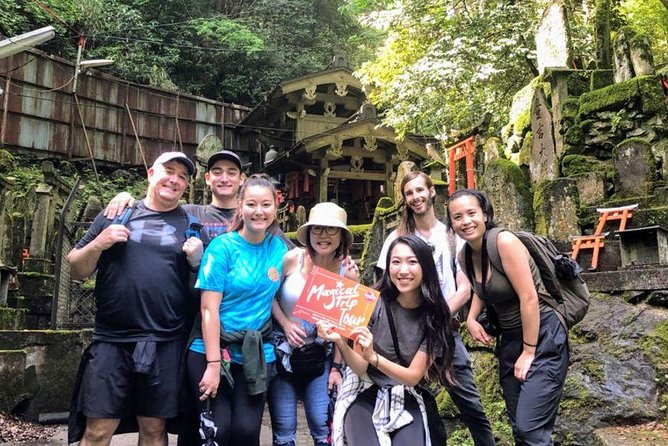
I like the small group size, capped at seven, and the way a guide handles the route through paths that would be easy to miss alone. I also like the human touches: guides such as Naru and Shin have explained shrine customs, while guides including Matt and Yuko have adjusted the pace and helped with water or mosquito spray.
The catch is simple: this is a hike, not a gentle sightseeing stroll. The roughly 7-kilometer route includes uphill sections, stairs, slippery ground, heat, humidity, and insects. You’ll need shoes with good grip and a reasonable level of fitness.
In This Review
- Key points at a glance
- Why the back way to Fushimi Inari works
- Starting near Tofukuji
- The forest trail and bamboo grove
- The small shrine most people miss
- Reaching Fushimi Inari-taisha by the quieter side
- The view toward Fushimi-Momoyama Castle
- How hard is the 7-kilometer route?
- Weather, clothing, and what to carry
- The value of a small group and a private option
- What the guides add
- Who should book this Kyoto hike?
- Should you book the Fushimi Inari Hidden Hiking Tour?
- FAQ
- How long does the Fushimi Inari Hidden Hiking Tour last?
- How far do you walk?
- Where does the tour begin?
- Where does the tour end?
- Is admission to Fushimi Inari-taisha included?
- Are food and drinks included?
- How large is the group?
- What footwear should I wear?
- Can I cancel for a full refund?
Key points at a glance
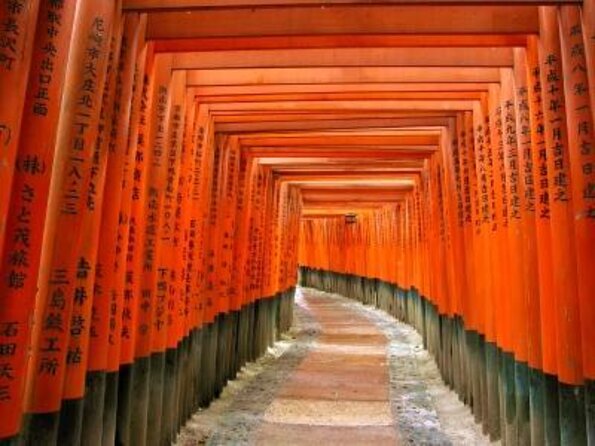
- Approach Fushimi Inari from the back: Reach the famous torii gates after walking quieter paths, rather than beginning at the busiest entrance.
- Walk through a natural bamboo forest: This peaceful section adds a woodland experience beyond the usual shrine photographs.
- Visit a small shrine away from the main route: Your guide points out a religious site that is easy to miss when exploring alone.
- See Fushimi-Momoyama Castle from the mountain: The route includes a distant castle view from higher ground.
- Keep the group personal: A maximum of seven people gives you room to ask questions and set a manageable pace.
- Prepare for a real hike: Good grip, water, sun protection, and long clothing are practical essentials.
Why the back way to Fushimi Inari works
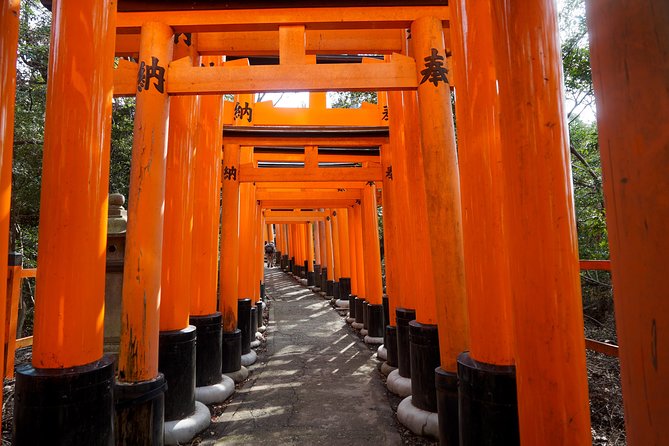
Fushimi Inari-taisha is famous for its seemingly endless rows of orange torii gates. The shrine’s main entrance is easy to reach, but it can also be the least peaceful part of the experience. This tour takes a different tack, beginning near Tofukuji and using a narrow mountain route before bringing you to the shrine.
That change matters. You get the famous gates, but they are only one part of the outing. The first stretch gives you forest, hills, bamboo, and small religious sites before you meet the most recognizable part of Fushimi Inari.
The route also helps you avoid the common problem of spending your whole visit following the same paved path as everyone else. You still encounter more people near the main shrine and lower gates, but the upper sections and woodland approach can feel much calmer.
Several guides have reversed the usual order, taking people toward the upper or rear sections first and finishing near the main entrance. That tactic can be especially useful on a busy day, since the crowds often feel strongest around the lower shrine area.
More Temple & Shrine Tours in Kyoto
- Kyoto: Fushimi Inari, Kinkakuji, Bamboo Grove 1 Day Bus Tour
★ 4.8 · 4,316 reviews - Kyoto: Tea Ceremony in a Traditional Tea House in Kiyomizu
★ 4.9 · 3,519 reviews - Kyoto: Tea Ceremony Ju-An at Jotokuji Temple
★ 4.9 · 3,207 reviews
Starting near Tofukuji
The meeting point is outside FamilyMart Nakai Tofukuji at 12-chōme-232 Honmachi, in Kyoto’s Higashiyama Ward. From there, the walk heads toward Fushimi Inari-taisha, passing through the Tofukuji area.
This beginning gives the tour a more ordinary Kyoto setting before the mountain paths take over. You are not simply being dropped at the shrine gate and told to look around. The guide leads the transition from neighborhood streets to woodland trails and keeps you from having to puzzle out the route.
The exact pace depends on the group. Guides have been praised for slowing down when needed, adding stops, and offering route choices based on energy levels. That flexibility is valuable, but it does not turn the walk into an easy one. You should arrive ready to walk uphill for a sustained period.
The forest trail and bamboo grove
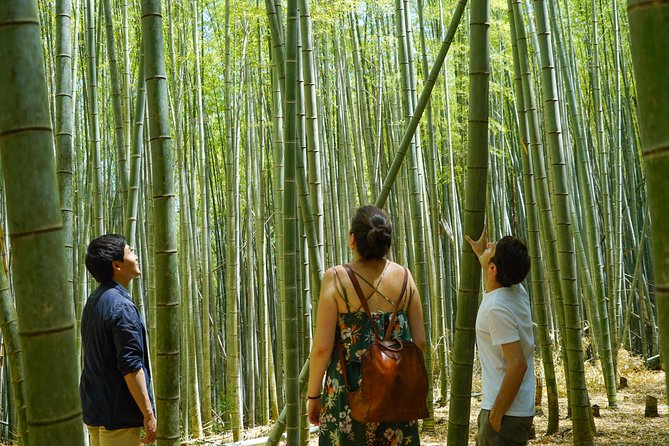
The most distinctive part of the tour comes before the main shrine. You cross a narrow mountain path and enter a natural bamboo forest. This is not the same experience as a quick photograph at a well-known bamboo attraction. Here, bamboo is part of a broader forest walk with uneven ground and changing slopes.
The quiet is part of the appeal. You may find stretches where the group has the path largely to itself, especially compared with the lower shrine approach. The forest also gives you a better sense of the wooded mountain behind the shrine, rather than reducing Fushimi Inari to a line of photogenic gates.
This section does require care. The ground can be slippery, and some parts are described as partially technical. That does not mean a climbing expedition, but you should expect roots, uneven surfaces, and sections where balance matters. Shoes with good grip are essential.
Long trousers and sleeves are also sensible. The route enters a mountain setting where mosquitoes and other insects may be present. Bring repellent if you have it. One guide, Yuko, carried mosquito repellent on a hot day, but you should not depend on that as part of the standard inclusions.
The small shrine most people miss
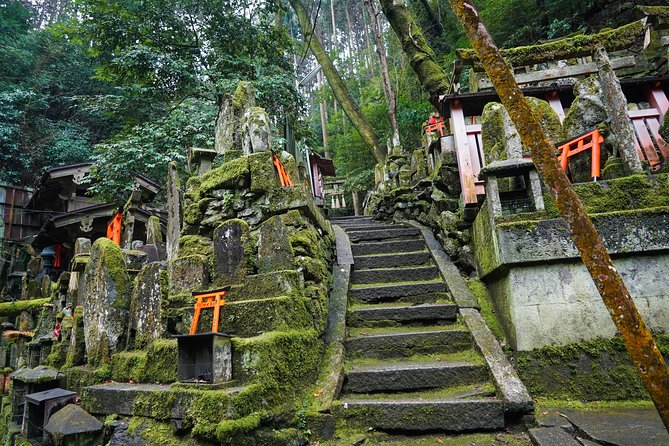
Along the forest route, the guide shows you a small Inari shrine away from the main tourist path. This is one of the strongest reasons to choose a guided walk instead of simply following a map to the famous gates.
Small shrines can be easy to pass without understanding what you are seeing. A good guide can explain the fox imagery, the meaning of the torii donations, and the customs connected with the site. Guides such as Naru have also read inscriptions along the route, giving the symbols and names more meaning than they would have in a quick glance.
The cultural explanation is not separate from the walk. It is tied to what you see: the shrine buildings, the fox figures, the gates, and the smaller religious markers scattered through the woods. You can ask questions as they arise, which is much more useful than trying to absorb a long speech at one fixed stop.
Same city, a completely different kind of day:
- PERFECT KYOTO 1-Day Bus Tour
★ 5.0 · 13,518 reviews - Kyoto Geisha Walking Tour: Gion District & Hidden Gems
★ 4.7 · 3,273 reviews - Kyoto: Gion Magical Night Walking Tour with Geisha Trivia
★ 4.9 · 2,393 reviews - Kyoto: 45-Minute Tea Ceremony Lesson Experience
★ 4.3 · 2,378 reviews
Reaching Fushimi Inari-taisha by the quieter side
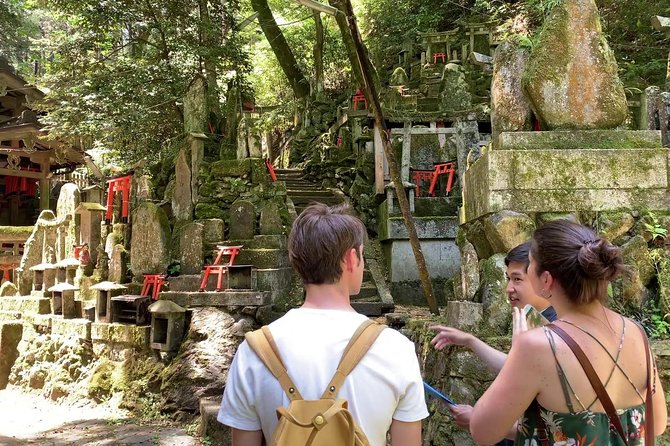
The route eventually connects with Fushimi Inari-taisha, Kyoto’s magnificent Shinto shrine. The reward is not just arriving at the gates. It is seeing them after the quiet forest approach, when the contrast becomes clear.
The torii gates are donated by individuals and businesses, and the repeated orange frames create one of Kyoto’s most recognizable sights. The tour gives your guide time to explain the religious and cultural setting instead of treating the gates as a backdrop for photographs.
You will likely find more people as you get closer to the lower and main shrine areas. This is an important limit to the crowd-avoidance promise. The tour avoids many busy stretches, but it cannot make one of Kyoto’s best-known attractions empty.
The route from the rear or upper sections can make the shrine feel more gradual and personal. You get the quieter setting first, then the famous view. That order is a smart fit for anyone who wants more than a quick stop at the main entrance.
The view toward Fushimi-Momoyama Castle
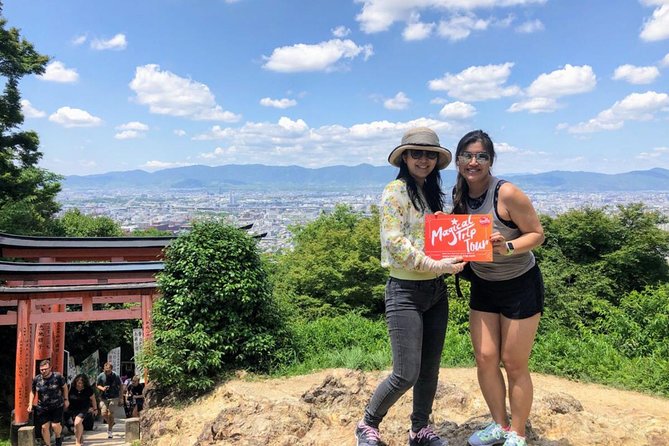
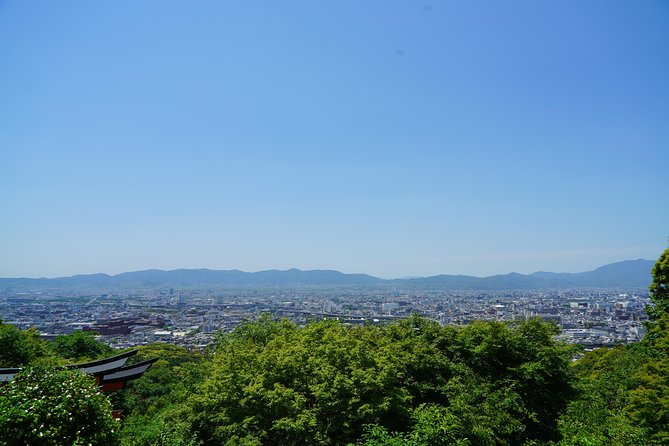
After reaching higher ground, the tour includes a view toward Fushimi-Momoyama Castle. The castle was associated with Hideyoshi and later rebuilt under Ieyasu, and the guide can provide context about the area’s past.
The view is a welcome change after the enclosed forest and repeated torii gates. It also reminds you that Fushimi is more than a single shrine. The area has connections to Kyoto’s political and religious past, and the guide can help link the castle, mountain, and shrine together.
Do not book this tour solely for a grand panoramic lookout. The supplied details describe a castle view, not a guaranteed sweeping city vista. Think of it as one attractive reward along a varied hike.
How hard is the 7-kilometer route?
The tour lasts about three hours and covers approximately 7 kilometers, or close to four miles. Some descriptions call it moderate or semi-strenuous, while others found it manageable. Both can be true, since fitness, weather, and group pace make a large difference.
You will face uphill walking and stairs. Going down from the shrine can also be tiring, and wet conditions add another challenge. Regular stops are built into the walk, and guides can make extra stops if the group needs them.
I would rate this as a reasonable choice for someone who walks regularly, but not for someone who has trouble walking or is out of condition. Families with adults and older children may find it suitable if everyone is prepared for a proper hike. A relaxed stroll through a shrine district is a different product.
Rain does not necessarily ruin the experience, but it changes the footing. One tour took place in rain from beginning to end and was still considered worthwhile, yet slippery paths are a real concern. The operator requires good weather for the activity and offers another date or a full refund if poor weather causes cancellation.
Weather, clothing, and what to carry
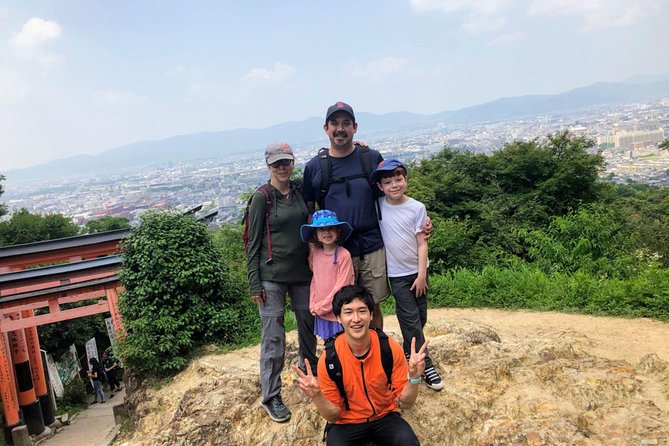
Kyoto summers can be very hot and humid, and the forest does not remove that problem. Bring water, wear a hat, and take heat seriously. The tour includes guide services and photographs, but food and drinks are not included.
Your basic packing list should include:
- Shoes with firm grip
- Plenty of water
- A hat for sun protection
- Long trousers and a long-sleeve shirt
- Mosquito repellent
- Rain protection if the forecast looks uncertain
The clothing advice is practical rather than fussy. Forest insects, wet ground, and summer heat are all part of the setting. Comfortable shoes matter more than looking dressed up for the shrine.
The value of a small group and a private option
The standard tour has a maximum of seven people. That is small enough for useful conversation and questions, while still giving you the social feel of a shared outing. It also allows the guide to watch the group more closely on narrow or uneven paths.
The guide is a major part of the value. You are paying not just for access to Fushimi Inari, which is free, but for route-finding, local interpretation, pacing, and photos taken during the walk. Guides named in past departures include Emi, Shin, Skito, Naru, Hina, Josh, Yukari, Matt, Yuko, Usuke, and Duncan.
The experience also offers a private option, though the supplied details do not specify its exact price or group arrangements. If you want more control over stops, pace, or questions, it is worth checking the private price before booking.
At $63.14 per person, the tour is not the cheapest way to see a free shrine. I think the price makes sense if you value the forest route, want to avoid navigation mistakes, and prefer a guide who can explain what you are seeing. If you only want the classic torii-gate photographs and do not enjoy hills, you can visit independently for less.
What the guides add
The strongest part of the guiding is the mix of practical help and cultural detail. Naru has been especially good at explaining fox motifs, religious customs, and inscriptions, while also taking family photographs. Shin has handled crowded holiday and foliage-season conditions well by using quieter upper paths.
Other guides have added value in smaller ways. Matt has carried extra water on a hot day and offered route choices. Yukari has helped with onward subway directions. Yuko has brought energy to the more technical sections and looked after a group in extreme heat.
Guide quality can vary by person, as it does on any scheduled tour, but the format gives you a useful point of contact. You can ask about the gates, the shrines, local customs, and the surrounding area while you are actually standing there.
Tour photographs are included. They are a nice bonus for couples and families, especially on a route where taking your own picture can be awkward. Do not treat them as a professional photo session, but expect the guide to help capture moments along the way.
Who should book this Kyoto hike?
I would choose this tour if you want to see Fushimi Inari in a less predictable way. It suits people who like walking, local stories, woodland scenery, and small group outings more than people who want a quick landmark visit.
It is also a good pick for a first Kyoto trip. You get a famous shrine, but the guide adds context and takes care of the route. Families with adults and fit older children can enjoy it, and couples may appreciate the quieter forest sections.
You should think twice if you have trouble walking, dislike stairs, or are visiting during very hot weather without a plan for water and sun protection. The tour is not super difficult, but it does take effort. That warning should be taken seriously.
The free cancellation policy allows a full refund if you cancel at least 24 hours before the start time. Changes or cancellations inside that window are not accepted, and the local weather rule applies if the operator cancels the walk.
Should you book the Fushimi Inari Hidden Hiking Tour?
Book it if your ideal Fushimi Inari visit includes a quiet bamboo forest, a lesser-seen shrine, local explanations, and an approach from the back of the mountain. The small group, included photos, and route guidance add real value at $63.14, especially on a crowded Kyoto day.
Skip it if you only want the main torii gates with minimal walking. This is a three-hour hike of roughly 7 kilometers, with uphill sections, stairs, slippery ground, insects, and weather exposure.
For most reasonably fit walkers, I think the tour offers a better sense of place than a direct visit to the shrine entrance. You see the famous sight, but you also get the wooded mountain and the quieter side of Fushimi Inari that is easy to miss.
FAQ
How long does the Fushimi Inari Hidden Hiking Tour last?
The tour lasts approximately three hours.
How far do you walk?
The route covers approximately 7 kilometers in total, which is close to four miles.
Where does the tour begin?
It begins at FamilyMart Nakai Tofukuji, located at 12-chōme-232 Honmachi, Higashiyama Ward, Kyoto.
Where does the tour end?
The tour ends in front of the main shrine of Fushimi Inari-taisha at 68 Fukakusa Yabunouchichō, Fushimi Ward, Kyoto.
Is admission to Fushimi Inari-taisha included?
The shrine admission is listed as free. The tour price includes the guided experience and tour photographs.
Are food and drinks included?
No. Food and drinks are not included, so you should bring water, particularly during Kyoto’s hot and humid summer.
How large is the group?
The activity has a maximum of seven participants.
What footwear should I wear?
Wear walking shoes with good grip because some ground may be slippery and the route includes mountain paths.
Can I cancel for a full refund?
Yes, you can cancel at least 24 hours before the experience start time for a full refund. Cancellations or changes made less than 24 hours before the start time are not accepted for a refund.
More Hiking & Trekking in Kyoto
- Kyoto: 3-Hour Fushimi Inari Shrine Hidden Hiking Tour
★ 4.9 · 270 reviews - Kyoto: Hike and Hot Springs in Kurama
★ 5.0 · 49 reviews - Hiroshima Local guided Hiking Tour&Open-air Tea Ceremony
★ 5.0 · 213 reviews - Hiking the Historic Nakasendo Trail [1 Day Tour from Nagoya]
★ 5.0 · 104 reviews
Just added around Kyoto
- Taste of Nishiki Market Walking Food Tour with Local guide★ 5.0 · 17 reviews
- Kyoto: Sushi Making Class with Sushi Chef★ 4.8 · 64 reviews
- Kyoto: City Secrets eBike Tour★ 4.9 · 196 reviews
- Sacred Pathways: Discover the Philosopher’s Path of Kyoto★ 4.9 · 20 reviews
- Private Tour to Monkey Park and Arashiyama Highlights★ 5.0 · 22 reviews
- Private Nara Tour from Osaka – Meet at Your Hotel★ 5.0 · 22 reviews
- Private Sake Tasting in Central Kyoto with Sake Sommelier★ 5.0 · 13 reviews
- Kyoto : Private Custom Walking Tour With A Local Guide★ 4.6 · 144 reviews
Temple & Shrine Tours, compared.
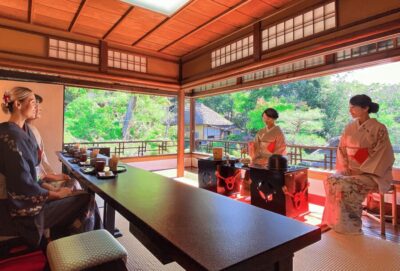
Tea Ceremony in a Traditional Tea House in Kiyomizu
Read our review →

Meiji Shrine, Asakusa, Skytree Bus Tour and Cruise
Read our review →
Asakusa Walking Tour with Sensoji Temple Visit
Read our review →
Kamakura & Enoshima Day Trip including Temple Tickets
Read our review →
Kyoto/Osaka: Nara, Fushimi Inari Taisha, Arashiyama Bus Tour
Read our review →
Nikko Toshogu Shrine and Kegon Waterfall Tour
Read our review →
Tokyo Panoramic 1 Day: Meiji Shrine, Asakusa, Odaiba and SKYTREE®
Read our review →Browse the lists this tour appears in