
REVIEW · TEMPLE & SHRINE TOURS
Kyoto: 3-Hour Fushimi Inari Shrine Hidden Hiking Tour
Fushimi Inari is famous for its endless rows of vermilion torii gates, but the best part of this tour is the route most people never see. You begin near Tofukuji, climb through quiet forest trails and bamboo, reach Mount Inari’s upper shrines, then come down into the busiest and most photographed part of the shrine.
I like the small groups of up to nine and the chance to ask questions without shouting over a crowd. I also like the practical cultural guidance, such as how to enter a torii gate and make an offering. The catch is simple: this is a real 7-kilometer mountain hike, not a gentle stroll, with stairs, rocky paths, and possible mud after rain.
In This Review
- Key points to know before booking
- Why this Fushimi Inari route feels different
- From Tofukuji Station to the mountain
- The first bamboo grove and the quiet trail
- Joining the torii gates on Mount Inari
- Reaching the summit and its small altars
- Coming down through more forest
- The famous lower shrine and street food finish
- What the $72 price gets you
- Who should book this hike
- Practical tips for a smoother morning
- My verdict on the Fushimi Inari hidden hiking tour
- FAQ
- How long is the Fushimi Inari hiking tour?
- Where does the tour meet?
- How do I reach Tofukuji Station?
- Is this a difficult hike?
- Does the tour visit the famous torii gates?
- Are bamboo groves included?
- Are food and drinks included?
- What should I wear?
- Can I cancel the booking?
Key points to know before booking
- Start from the quiet side: You approach Fushimi Inari from Tofukuji instead of joining the main entrance crowd.
- Two bamboo groves: The route includes a peaceful grove away from Kyoto’s better-known photo spots.
- About 7 kilometers: Expect hills, stairs, uneven ground, and roughly three hours on foot.
- Crowds arrive later: Most of the early route is quiet, but the famous lower shrine becomes busy as you descend.
- Cultural help matters: Guides explain Shinto customs, shrine altars, amulets, and offering rituals.
- Photos are included: Guides take pictures at scenic points, useful when you want more than quick phone snapshots.
Why this Fushimi Inari route feels different
Fushimi Inari Taisha can be one of Kyoto’s most crowded sights. The main approach often fills with people taking pictures beneath the first torii gates, while the mountain path becomes quieter as you climb. This tour changes the order of the experience.
You meet outside FamilyMart Nakai Tofukuji, next to Exit 2 of Tofukuji Station. From there, your guide leads you through a calm neighborhood toward Tofukuji Temple and the wooded slopes of Mount Inari. Instead of walking straight into the main shrine entrance, you reach the mountain from behind.
That choice is the main reason to book. You get the mountain, the gates, the small altars, the bamboo, and the main shrine, but you do not spend the first hour squeezed into the busiest entrance area.
The route also gives you a more gradual introduction to the site. You begin with local streets and small shrines, move into forest paths, and only later connect with the famous torii gate route. By then, you have already seen a quieter side of Fushimi Inari.
More Temple & Shrine Tours in Kyoto
- Kyoto: Fushimi Inari, Kinkakuji, Bamboo Grove 1 Day Bus Tour
★ 4.8 · 4,316 reviews - Kyoto: Tea Ceremony in a Traditional Tea House in Kiyomizu
★ 4.9 · 3,519 reviews - Kyoto: Tea Ceremony Ju-An at Jotokuji Temple
★ 4.9 · 3,207 reviews
From Tofukuji Station to the mountain
The meeting point is easy to identify: FamilyMart Nakai Tofukuji, outside Tofukuji Station Exit 2. You can reach the station on JR trains, including rapid and local services. The Keihan line also works, but you should use sub-express, semi-express, or local trains, not express trains.
The walk begins in an ordinary Kyoto neighborhood. That matters because the tour does not drop you straight into a polished sightseeing zone. You start among small shrines and residential streets, then gradually leave the pavement behind.
A short visit to Tofukuji Temple is part of the opening section and lasts about 10 minutes. It is not the main event, but it gives the morning some context before the uphill walking begins. Your guide can also help you understand the difference between a temple and a Shinto shrine, a useful distinction in a city where both appear at nearly every turn.
The pace includes regular stops. If you need an extra pause, the tour information says you can ask for one, but you still need a reasonable level of fitness. I would not book this as a casual activity between two dressy meals or after a long day of sightseeing.
The first bamboo grove and the quiet trail
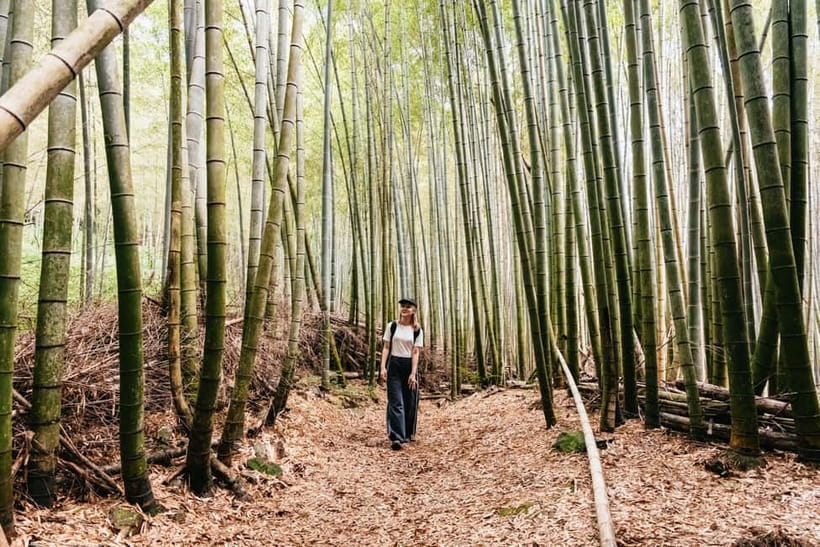
The first major reward comes when the route leaves the paved paths and enters the forest. One bamboo grove appears before you connect with the main torii gate route, and this is one of the tour’s strongest features.
You get the sound and shade of the mountain rather than a line of people waiting for the same photograph. Half of the tour takes place in forest, so you spend much of the hike out of direct sunlight. That can be welcome in Kyoto’s warmer months, though it does not remove the need for water and suitable clothing.
The trail is not presented as a technical climb, but it is not flat. Expect unpaved ground, rocks, stairs, and sections that can feel steep. Rain changes the character of the hike. One description of a wet outing noted mud, and another pointed out that some stretches can be slippery. Good shoes are more important here than stylish shoes.
You should also wear long sleeves and long pants. The mountain can have mosquitoes and other bugs, and the tour specifically recommends covering your arms and legs. Large bags and luggage are not allowed, so leave suitcases at your accommodation.
Joining the torii gates on Mount Inari
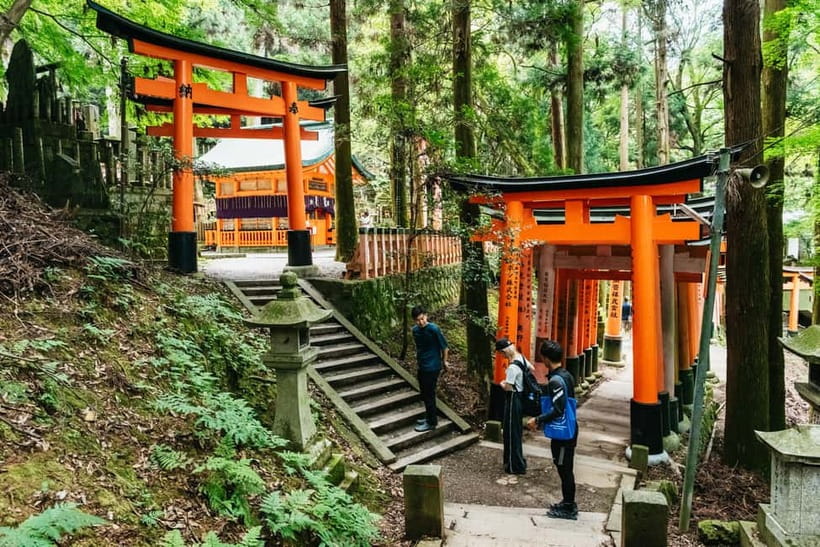
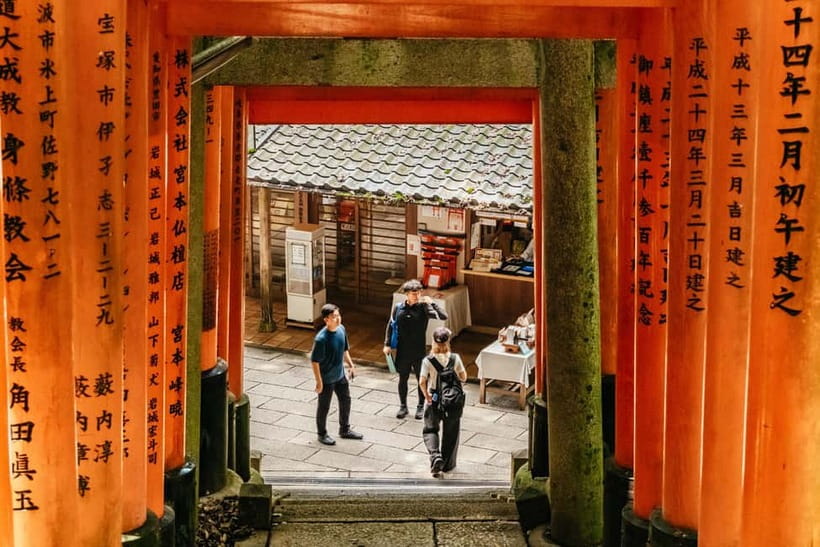
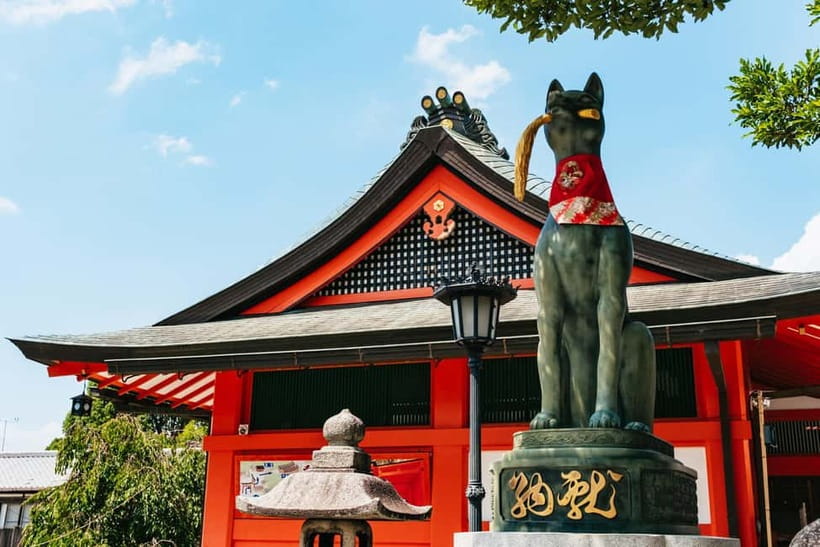
At some point, the forest trail connects with the familiar path of red-orange torii gates. Fushimi Inari is dedicated to Inari, a Shinto deity associated with rice, prosperity, and business, and fox figures appear around the shrine as messengers of Inari.
The gates are donated by individuals and businesses, which is why many carry names and dates on their reverse sides. Walking beneath so many gates can feel repetitive in the best possible way, but a guide adds meaning to details you might otherwise miss.
This is also where the tour shifts from quiet nature to the classic Fushimi Inari experience. You still have a chance to photograph the gates, but you are now sharing the path with more people. The crowd generally grows as you descend toward the main shrine, so do not expect complete solitude for all three hours.
The route’s order is clever. You see the quiet mountain first and save the iconic entrance area for later. That means the busiest part comes after you have already enjoyed the less visited trails, rather than before them.
Same city, a completely different kind of day:
- PERFECT KYOTO 1-Day Bus Tour
★ 5.0 · 13,518 reviews - Kyoto Geisha Walking Tour: Gion District & Hidden Gems
★ 4.7 · 3,273 reviews - Kyoto: Gion Magical Night Walking Tour with Geisha Trivia
★ 4.9 · 2,393 reviews - Kyoto: 45-Minute Tea Ceremony Lesson Experience
★ 4.3 · 2,378 reviews
Reaching the summit and its small altars
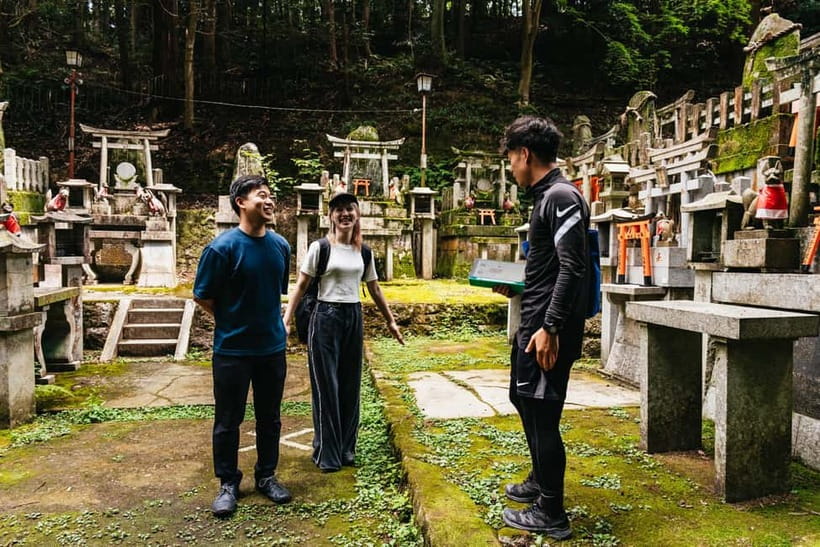
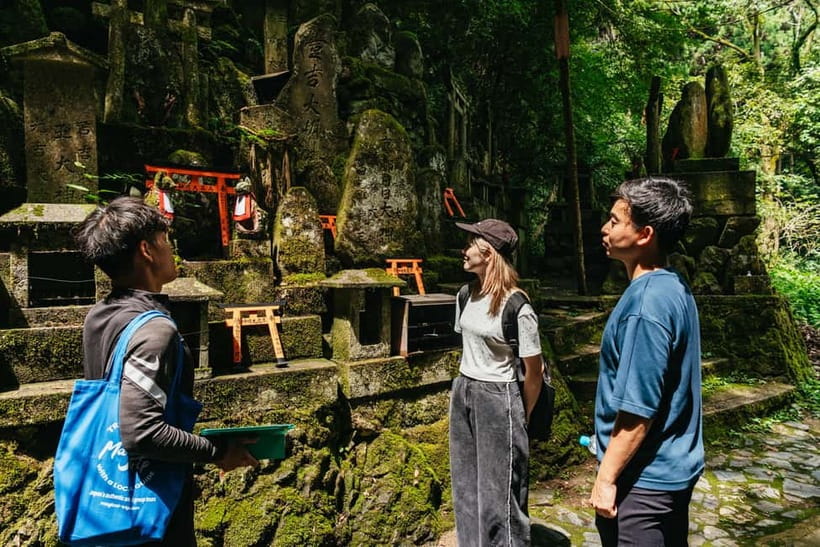
The upper part of Mount Inari is covered with smaller shrine altars, stone markers, and torii gates. The summit section gives the hike a sense of purpose. You are not simply wandering through woods, you are following a sacred mountain route with layers of religious use.
Your guide may explain how to behave at the shrine, where to bow, how to pass through torii gates respectfully, and how to make an offering. Several guides named in the feedback, including Hina, Jimmy, Naru, Shiori, and Yukari, were praised for making these customs clear and approachable. Guide assignments vary, so you should not book expecting a particular person.
This cultural help is especially useful for first-time visitors to Japan. You can ask about amulets, altar objects, wishes, and the meaning of different shrine practices as you walk. The best guides balance explanation with silence, since the mountain itself is part of the experience.
The summit section is also the most physically demanding part for many people. One participant recorded about 50 flights climbed, which gives you a better sense of the effort than the phrase moderate hike. That figure is not a promised measurement for every group, but it shows why the tour is not suitable for people with limited mobility or those who struggle with extended walking.
Coming down through more forest
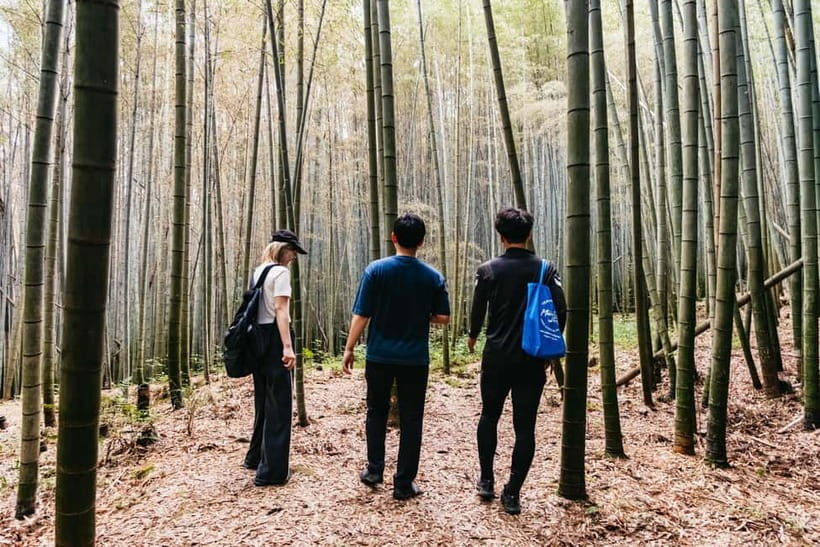
The descent follows a forested trail rather than simply retracing the main route. You visit smaller shrines and another bamboo grove before reaching the most recognizable part of Fushimi Inari.
I like this section because it keeps the walk varied. You move from torii gates to trees, from large religious spaces to small altars, and from busy paths to quiet corners. The mountain does not feel like one long staircase.
The downhill sections are not automatically easy. Uneven rocks and wet ground can be harder on your knees than the climb, and you need to watch your footing. If it has rained, allow extra care and wear shoes with a secure grip.
The guides also take photographs during the hike. This is a practical inclusion for couples, families, and solo participants who want pictures in the bamboo or beneath the gates. It does not turn the tour into a dedicated photo session, but guides have been praised for patiently taking several shots at scenic points.
The famous lower shrine and street food finish
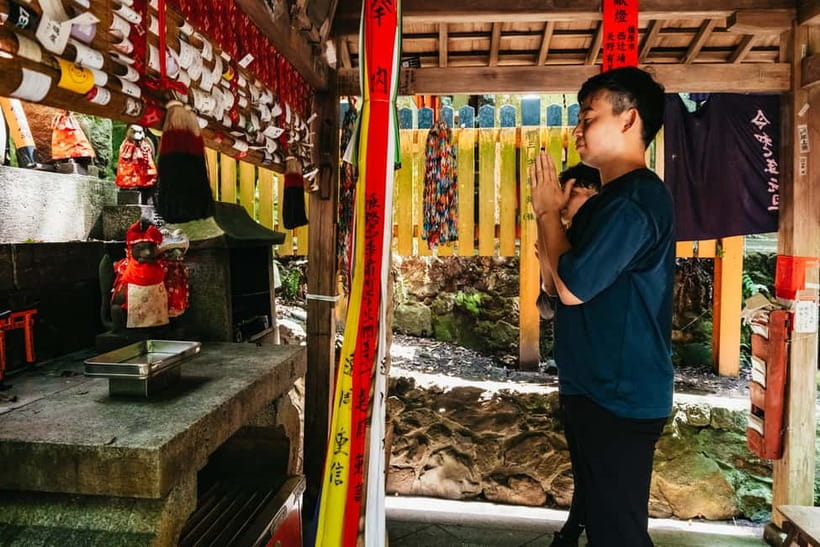
Eventually, you reach the section most people associate with Fushimi Inari. Here, the torii gates are especially photogenic, and you can take the classic pictures you came for.
This is also where the crowd becomes hard to avoid. Several descriptions of the route point out that the first half is nearly empty, while the lower, more famous section grows progressively busier. That is not a flaw in the tour. It is simply the reality of Fushimi Inari’s main entrance.
The experience finishes at the main shrine area at the base of the mountain, where you can buy local street food before continuing around Kyoto. The meeting instructions also identify FamilyMart Nakai Tofukuji as the start and return point, so check the exact end point and current route details when booking. The key point is that the tour brings you through the shrine rather than making you choose between the mountain and the main grounds.
Do not count on a full meal during the hike. Food and drinks are not included, so bring water and plan to buy food afterward if you want it.
What the $72 price gets you
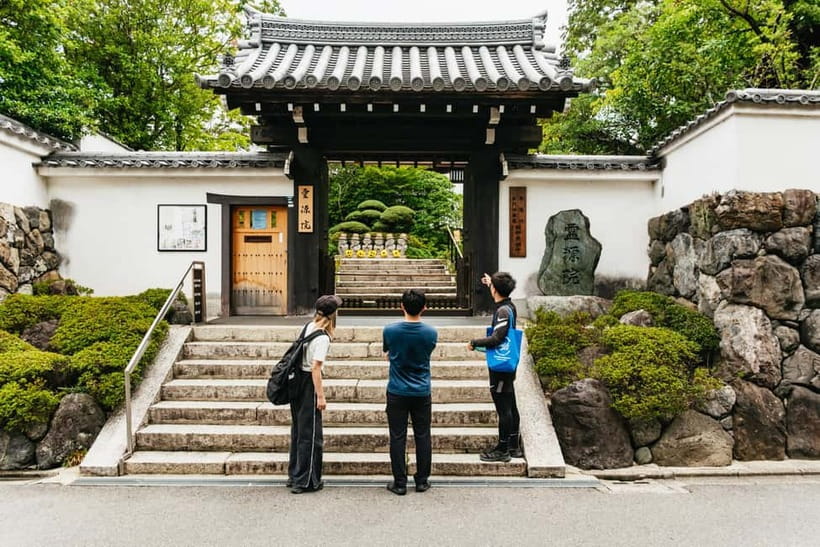
At $72 per person, this is not the cheapest way to see Fushimi Inari. You can visit the shrine on your own for the cost of local transport, and the main torii gate path is free to walk.
The value comes from access and structure. A guide leads you onto forest trails that are easy to miss, handles the route between Tofukuji and Fushimi Inari, explains religious customs, and takes photos. You also avoid spending the entire visit in the thickest crowd.
For a first Kyoto visit, I think the price is reasonable if you care about nature, local context, and a more active morning. It makes less sense if you only want a quick picture beneath the gates or if you prefer exploring at your own pace.
The small-group format helps justify the cost. With no more than nine people, the guide can usually answer questions and adjust the pace better than a large coach group. Private options are also available, though the price and availability may vary.
The booking terms add useful flexibility. You can cancel or reschedule up to 24 hours before the start time, subject to availability, and you can reserve now and pay later. Extreme weather can cancel the tour, and rain may lead you to cancel if you are not prepared.
Who should book this hike
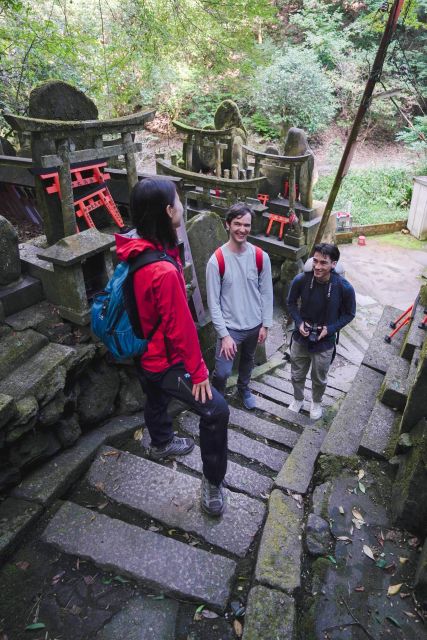
I would choose this for you if you:
- Enjoy walking in forests and do not mind hills
- Want the famous torii gates without spending the whole visit in a crowd
- Like learning about Shinto customs and Japanese shrine etiquette
- Want a guide to take photographs
- Have about three hours for an active Kyoto outing
- Can manage roughly 7 kilometers with stairs and uneven trails
Families can enjoy it, especially with older children who are used to walking. Children under 8 are not suitable, and younger than 8 requires permission from a parent or guardian before booking. A family group with children aged 10 and 13 completed the walk successfully, but your own children should be comfortable with a moderate mountain hike.
I would skip it if you have limited mobility, trouble walking, or are not in regular physical condition. I would also avoid booking it on a day when you want a slow, polished temple visit. This tour rewards effort.
Practical tips for a smoother morning
Wear long pants, a long-sleeved shirt, and sturdy walking shoes. The forest shade is helpful, but you can still work up a sweat on the climb, and bugs are possible.
Bring water in a small bag, but leave suitcases and large luggage behind. Since food and drinks are not included, carry what you need for the three-hour outing and save room for street food afterward.
Check the weather before leaving. Rain can make the rocky and unpaved sections muddy or slippery, and extreme weather may cancel the hike. If you do go in rain, expect a slower pace and less comfortable footing.
Arrive at the correct station exit. The meeting point is outside Tofukuji Station Exit 2, beside the FamilyMart. If you are using Keihan trains, avoid express services as instructed.
Finally, do not assume the tour is easy because it lasts only three hours. The short duration makes it efficient, but the route packs a substantial climb into that time.
My verdict on the Fushimi Inari hidden hiking tour
I would book this tour if Fushimi Inari is high on your Kyoto list but crowded paths sound miserable. The route gives you the iconic torii gates while adding bamboo, forest, small altars, and a proper mountain walk.
The strongest part is the balance between quiet nature and famous sights. You begin away from the main crowd, reach the upper mountain, and finish where the classic photographs are taken. Guides such as Hina, Naru, Shiori, Yukari, and Jimmy have been praised for clear cultural explanations, friendly company, and good photos, though guide quality and English depth can vary by person.
Book it for a more personal and active look at Fushimi Inari. Skip it if you want a short level walk, dislike uneven trails, or need a fully accessible route. At $72, the tour earns its price through route-finding, interpretation, and crowd avoidance, not through luxury.
FAQ
How long is the Fushimi Inari hiking tour?
The tour lasts three hours and covers approximately 7 kilometers in total.
Where does the tour meet?
Meet outside FamilyMart Nakai Tofukuji, next to Exit 2 of Tofukuji Station.
How do I reach Tofukuji Station?
You can use JR rapid or local trains. On the Keihan line, use sub-express, semi-express, or local trains, and do not use express trains.
Is this a difficult hike?
It is described as moderately challenging rather than extremely difficult. The route includes hills, stairs, rocky paths, and unpaved forest trails, so it requires reasonable fitness.
Does the tour visit the famous torii gates?
Yes. The route connects with the main torii gate path, reaches the upper mountain altars, and finishes at the well-known lower area of Fushimi Inari.
Are bamboo groves included?
Yes. The route includes a bamboo grove on the way up and another bamboo grove during the forested descent.
Are food and drinks included?
No. Additional food and drinks are not included. You can enjoy local street food near the main shrine after the hike.
What should I wear?
Wear a long-sleeved shirt and long pants. The mountain may have mosquitoes and other bugs, and these clothes also provide protection during the forest walk.
Can I cancel the booking?
You can cancel at least 24 hours before the starting time for a full refund. Free date or time changes are also available up to 24 hours before the start, depending on availability.
More 3-Hour Experiences in Kyoto
- 3-Hour Kyoto Insider Sake Brewery Tour with Tastings & Pairings
★ 5.0 · 917 reviews - Kyoto: Personalize, private tour (3h, 5h, 8h) [W/Car Option]
★ 4.9 · 24 reviews - Tokyo Top Highlights 3h Guided E-bike Tour
★ 5.0 · 714 reviews - 3h Tokyo E-Bike Tour: Hidden Gems, and Local Life with guide
★ 5.0 · 670 reviews
More Hiking & Trekking in Kyoto
- Fushimi Inari Hidden Hiking Tour (Private Option Available)
★ 5.0 · 1,750 reviews - Kyoto: Hike and Hot Springs in Kurama
★ 5.0 · 49 reviews - Hiroshima Local guided Hiking Tour&Open-air Tea Ceremony
★ 5.0 · 213 reviews - Hiking the Historic Nakasendo Trail [1 Day Tour from Nagoya]
★ 5.0 · 104 reviews
Just added around Kyoto
- Taste of Nishiki Market Walking Food Tour with Local guide★ 5.0 · 17 reviews
- Kyoto: Sushi Making Class with Sushi Chef★ 4.8 · 64 reviews
- Kyoto: City Secrets eBike Tour★ 4.9 · 196 reviews
- Sacred Pathways: Discover the Philosopher’s Path of Kyoto★ 4.9 · 20 reviews
- Private Tour to Monkey Park and Arashiyama Highlights★ 5.0 · 22 reviews
- Private Nara Tour from Osaka – Meet at Your Hotel★ 5.0 · 22 reviews
- Private Sake Tasting in Central Kyoto with Sake Sommelier★ 5.0 · 13 reviews
- Kyoto : Private Custom Walking Tour With A Local Guide★ 4.6 · 144 reviews
Temple & Shrine Tours, compared.
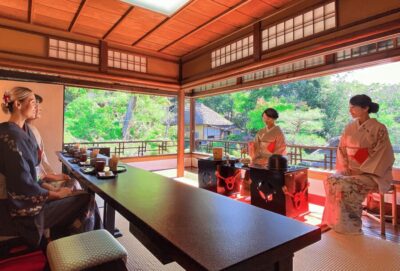
Tea Ceremony in a Traditional Tea House in Kiyomizu
Read our review →

Meiji Shrine, Asakusa, Skytree Bus Tour and Cruise
Read our review →
Asakusa Walking Tour with Sensoji Temple Visit
Read our review →
Kamakura & Enoshima Day Trip including Temple Tickets
Read our review →
Kyoto/Osaka: Nara, Fushimi Inari Taisha, Arashiyama Bus Tour
Read our review →
Nikko Toshogu Shrine and Kegon Waterfall Tour
Read our review →
Tokyo Panoramic 1 Day: Meiji Shrine, Asakusa, Odaiba and SKYTREE®
Read our review →Browse the lists this tour appears in