
REVIEW · TEA CEREMONY EXPERIENCES
Kyoto: Table-Style Tea Ceremony at a Kyo-Machiya
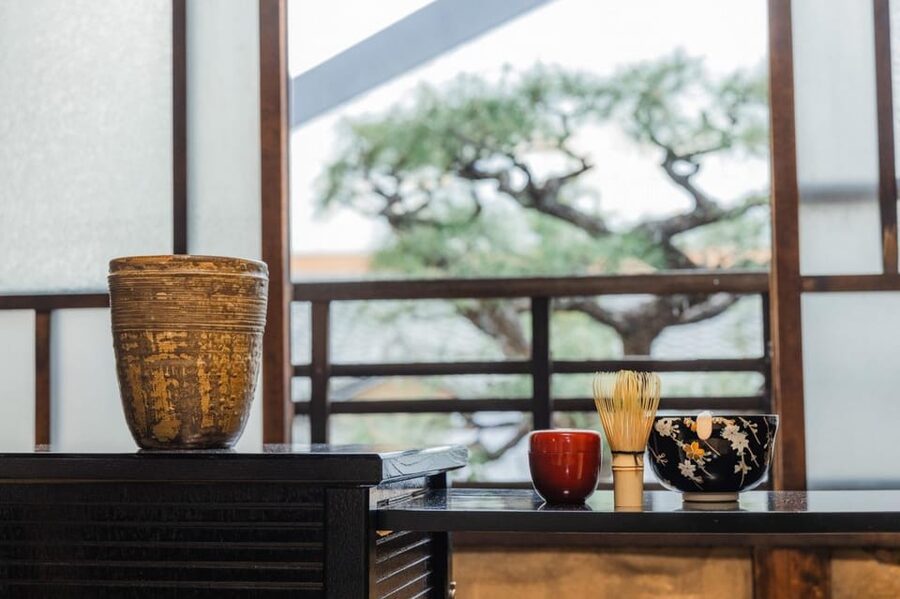
Kyoto’s tea ceremony tradition becomes much easier to enjoy in this 100-year-old Kyo-machiya, where you sit at a table rather than kneeling on the floor. The English-speaking hosts explain the customs, serve sweets and tea, and show you how to whisk your own matcha.
I especially like the friendly, patient teaching and the mix of hands-on activities: matcha making, calligraphy, and flower arranging. The main drawback is the location, about 20 to 25 minutes from central Kyoto, with stairs and no wheelchair access.
In This Review
- Key points to know before booking
- Entering a 100-year-old Kyoto machiya
- Why the chair seating matters
- The story behind tea ceremony
- Watching the host prepare tea
- Making creamy, frothy matcha
- Calligraphy and your Japanese name
- Flower arranging, garden rituals, and photo time
- What $45 includes, and what it does not
- Getting to the Fushimi neighborhood
- Who will enjoy this activity most
- Small practical details that improve the visit
- Should you book this Kyoto tea ceremony?
- FAQ
- How long does the tea ceremony activity last?
- Where is the tea ceremony held?
- Do I have to sit on the floor?
- Is the activity offered in English?
- What is included in the $45 price?
- Is kimono rental included?
- Can pregnant participants wear a kimono?
- Is hotel pickup available?
- Is the activity suitable for wheelchair users?
- Can I cancel my reservation?
Key points to know before booking
- Chair-based tea ceremony: You can take part without sitting on the floor, a welcome choice for anyone with stiff knees, back trouble, or limited comfort with traditional seating.
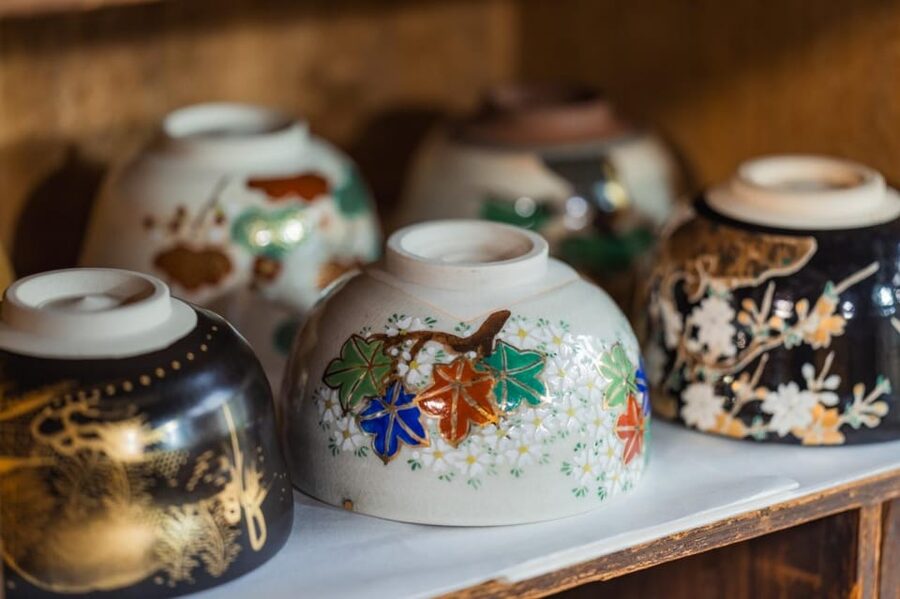
- A real old townhouse: Walk through a Kyoto home more than 100 years old, with traditional architecture, household objects, Buddhist and Shinto altars, and a garden.
- More than tea: The 90-minute session also includes sweets, a welcome drink, matcha preparation, calligraphy, and flower arranging.
- Kimono adds the visual magic: If you choose that option, arrive 30 minutes early for dressing, then use the house and garden as photo settings.
- Easy Fushimi add-on: The activity is in southern Kyoto, close to sake shops, casual restaurants, shopping arcades, Fushimi Inari, and train connections toward Uji.
- Strong value at $45: The base price covers several cultural activities, not just watching someone prepare tea.
Entering a 100-year-old Kyoto machiya
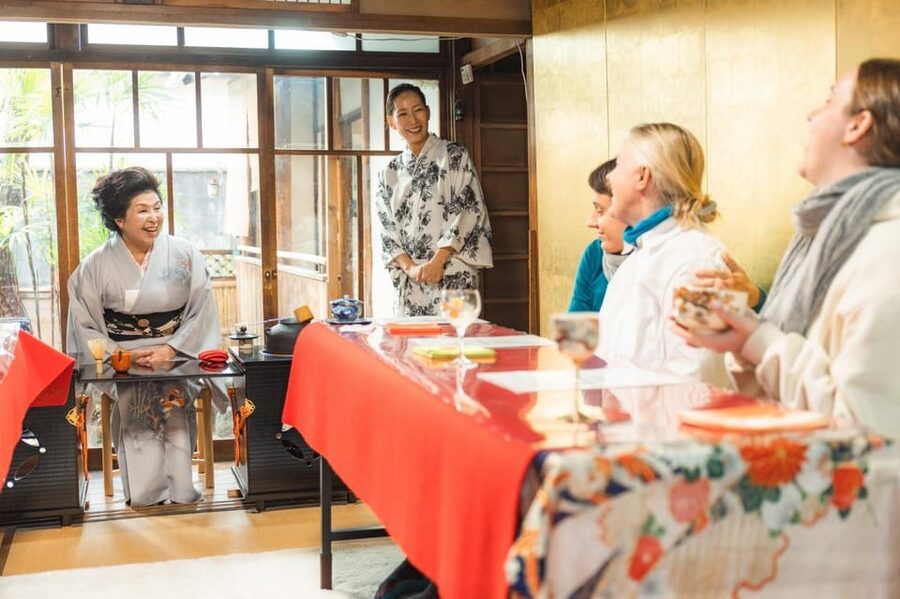
The first surprise is the setting. This is not a modern hotel room or a staged restaurant corner. The tea ceremony takes place inside an old Kyoto townhouse, known as a Kyo-machiya, with the slightly timeworn charm of an ordinary historic home.
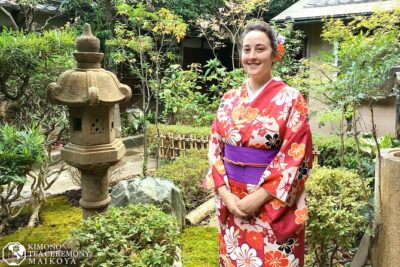
The exterior has a blue curtain, and kimono-wearing hosts wait near the entrance. Inside, you can look around the townhouse and notice details that explain how Kyoto homes worked in daily life. Old Buddhist and Shinto altars, antiques, and traditional rooms give the visit a sense of place before the tea even arrives.
I like this beginning because it slows you down. The activity is not only about memorizing tea ceremony movements. You get a small look at domestic Kyoto, the kind of setting that can disappear when a city is experienced only through major temples and crowded streets.
The house may also involve stairs, so take your time if you have an injury or difficulty moving around. One important limitation is that the activity is not suitable for wheelchair users.
More Tea Ceremony Experiences in Kyoto
- Kyoto: Tea Ceremony in a Traditional Tea House in Kiyomizu
★ 4.9 · 3,519 reviews - Kyoto: Tea Ceremony Ju-An at Jotokuji Temple
★ 4.9 · 3,207 reviews - Kyoto: 45-Minute Tea Ceremony Lesson Experience
★ 4.3 · 2,378 reviews
Why the chair seating matters
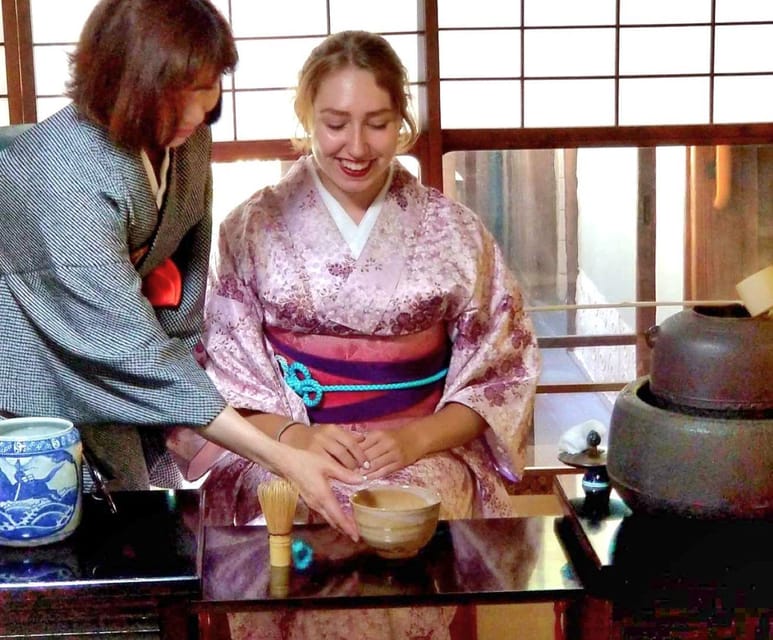
Many visitors picture a tea ceremony as a formal gathering on tatami, with everyone kneeling in seiza. That can be beautiful, but it is not comfortable for everyone. Here, the ceremony is adapted to tables and chairs, so you can focus on the gestures, utensils, and explanations instead of worrying about your knees.
This does not remove the ceremony’s manners. You still learn how to receive the bowl, how to appreciate the sweets, and how to handle the tea with care. The format simply makes the experience more welcoming to a wider range of people.
I would recommend this version to families, older adults, and anyone who wants cultural depth without a physically demanding setup. It also works well for first-time visitors who are curious about tea ceremony but unsure about the formal rules.
The chair setting is also useful for children and teenagers. They can take part in making matcha and calligraphy instead of sitting still for the entire session. The activity remains structured, but it has enough movement to hold a younger person’s attention.
The story behind tea ceremony
Part of the session explains how tea ceremony developed in Japan, along with the spirit and manners behind it. PowerPoint presentations help put the movements into context, which is useful because the gestures can seem mysterious if you see them without explanation.
You learn that the ceremony is not just about drinking powdered green tea. The order of actions, the handling of utensils, the seasonal feeling, and the way people show respect all matter. Even a simple movement, such as turning the bowl, has a reason.
The English instruction is one of the activity’s strongest practical features. The hosts speak clearly and make room for questions, so you do not have to guess what to do next. The explanations are aimed at first-time participants rather than people who already know Japanese tea schools.
That makes this a good introduction, not a full apprenticeship. In 90 minutes, you gain a working understanding of the ceremony and its values. You will not become a tea master, but you will leave with a better eye for what you see at temples, cultural events, or a formal tea gathering later in your trip.
Watching the host prepare tea
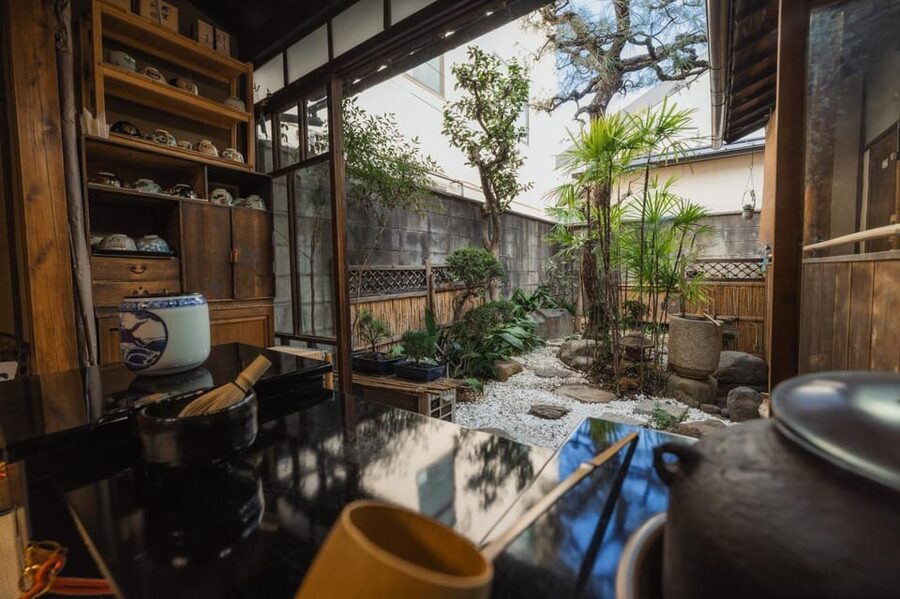
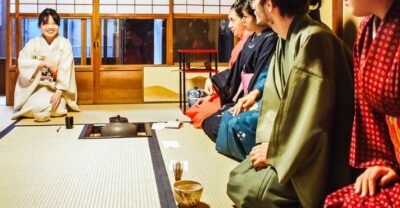
The central part of the session is watching the tea ceremony performed. Pay attention to the quiet rhythm: the careful preparation, the placement of utensils, and the deliberate way the bowl is presented.
The hosts explain the meanings behind the tools and movements rather than rushing through them. This is where the old house helps. The traditional room, hanging scrolls, flowers, and household objects make the ceremony feel connected to a lived Japanese setting.
You receive a traditional sweet with the tea. The sweet is not just a snack. In the ceremony, it balances the bitter edge of matcha and prepares your palate for the drink.
A welcome drink is also included, with sake or juice among the options, along with Japanese tea. Since the exact welcome drink can vary, check what is being served when you arrive. If you do not drink alcohol, juice is available.
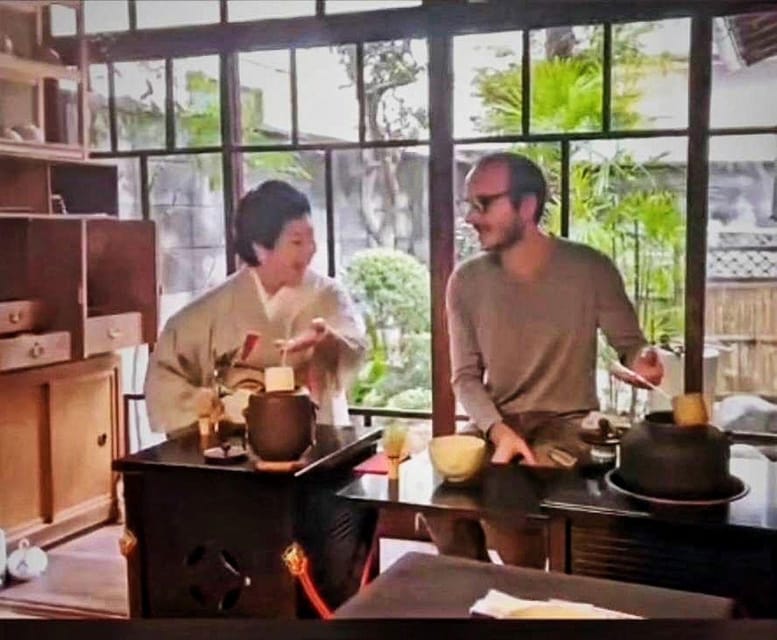
The mood is formal enough to teach proper manners, but not so strict that you should feel nervous. The hosts guide your hands and explain the sequence. Their warm approach is especially helpful if you have never used a bamboo whisk or handled a matcha bowl.
Same city, a completely different kind of day:
- PERFECT KYOTO 1-Day Bus Tour
★ 5.0 · 13,518 reviews - Kyoto: Fushimi Inari, Kinkakuji, Bamboo Grove 1 Day Bus Tour
★ 4.8 · 4,316 reviews - Kyoto Geisha Walking Tour: Gion District & Hidden Gems
★ 4.7 · 3,273 reviews - Kyoto: Gion Magical Night Walking Tour with Geisha Trivia
★ 4.9 · 2,393 reviews
Making creamy, frothy matcha
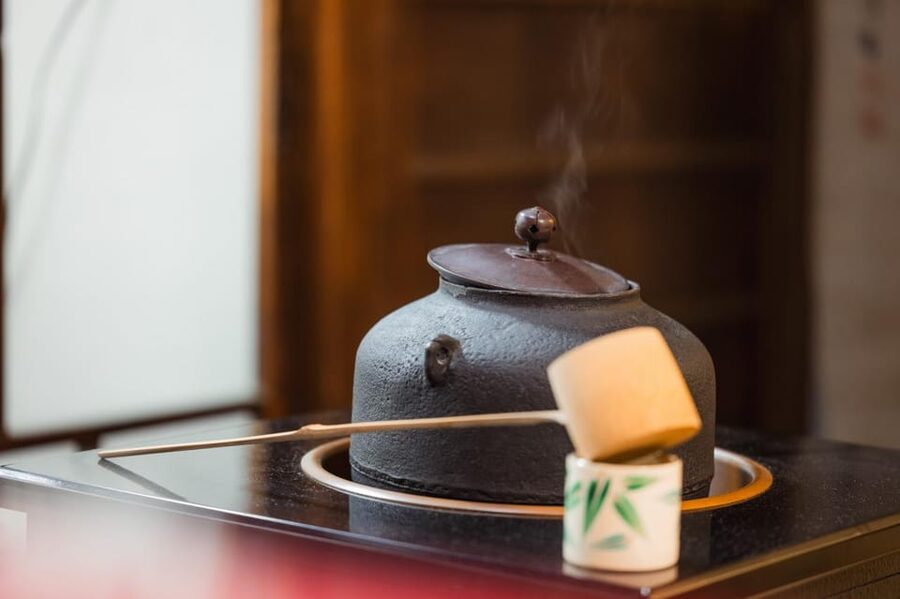
You do not only watch. You make your own matcha using a bamboo whisk.
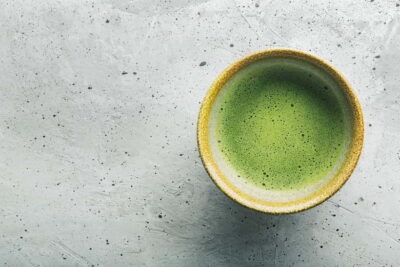
The hosts show you how to work the whisk so the tea becomes creamy and frothy. This is a small task, but it changes the way you understand the drink. Matcha is not brewed like ordinary tea. You mix powdered tea with hot water, then whisk it into a fine, foamy drink.
The first attempt can be uneven. That is part of the fun. You may create a thick foam, or you may produce a drink with less froth than the host’s. Either way, you get a better sense of the skill involved in preparing a smooth bowl.
A useful tip is to watch the wrist movement closely before you begin. The host’s pace may look simple, but the whisking requires a light, quick action. Do not press the whisk hard against the bottom of the bowl.
The activity also includes latte art using thick tea. This adds a playful touch to a tradition that can otherwise feel very formal. It is a good photo moment, though the deeper value is that you get to handle the ingredients yourself.
Calligraphy and your Japanese name
Near the end, you write your name in Japanese. Depending on the activity format, this can include kanji or hiragana, and some participants have practiced hiragana, katakana, and kanji.
The hosts help you choose or write your name, then guide you through the brush technique. You do not need to know Japanese. The point is to experience the balance, pressure, and pace of writing rather than produce perfect professional calligraphy.
A particularly nice keepsake is a hanging scroll or envelope with your name written in Japanese kanji or hiragana. This gives the afternoon a physical reminder beyond photographs and helps make the activity feel personal.
Calligraphy is also a good final activity because it quiets the pace again after the tea preparation and photo session. I would allow a little extra care when handling your paper or scroll so it stays neat for the rest of your trip.
Flower arranging, garden rituals, and photo time
Flower arranging is included as another traditional activity. The exact arrangement depends on the session, but the basic idea is to work with shape, spacing, and the natural character of the flowers rather than simply filling a vase.
You also learn how to purify yourself at a stone basin in the garden, in a manner similar to visiting a shrine. This is a useful cultural detail because purification appears in many Japanese religious settings, and the host’s explanation helps you understand the gesture rather than copy it mechanically.
The garden and townhouse provide several photo settings. Umbrellas, folding fans, and a katana sword are available as props for photos and short videos. Used with respect, these objects create memorable images without requiring a separate photo tour.
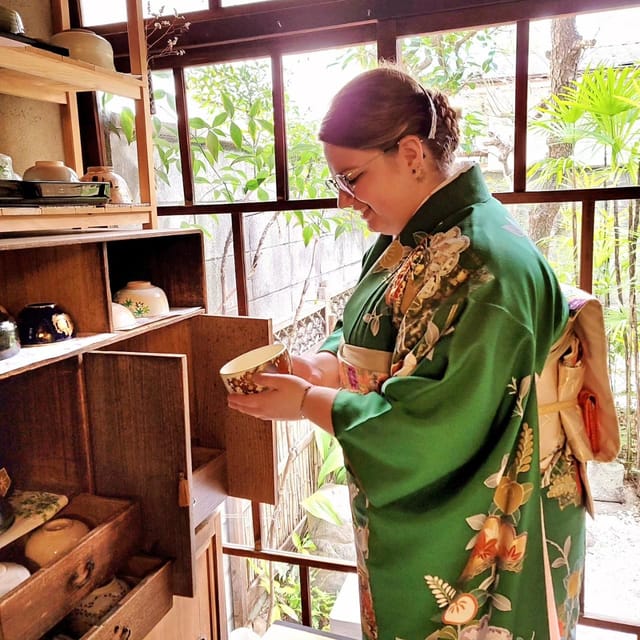
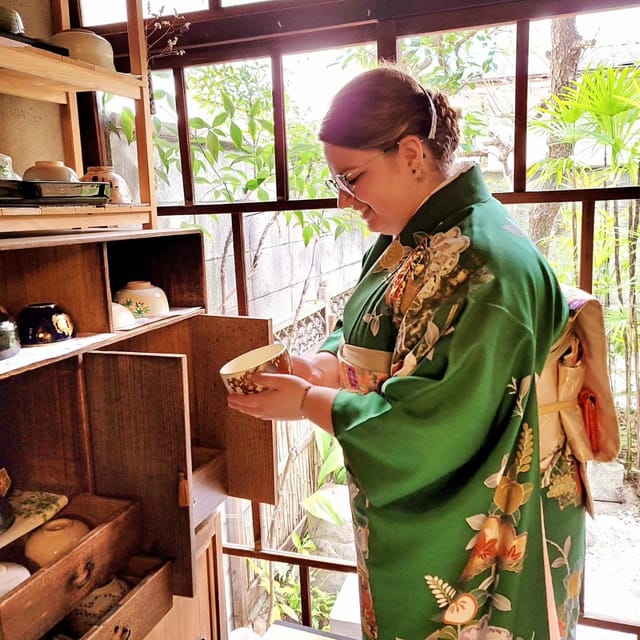
The kimono option adds a lot to this part of the visit. The hosts help you select from a variety of garments, dress you, and arrange the look before the ceremony. Several people specifically appreciated the care taken with fitting and hairstyling, and that attention matters because a kimono is not something most visitors can put on properly by themselves.
If you choose kimono rental, arrive 30 minutes before the scheduled start. Pregnant participants should not select the kimono option for health and safety reasons.
What $45 includes, and what it does not
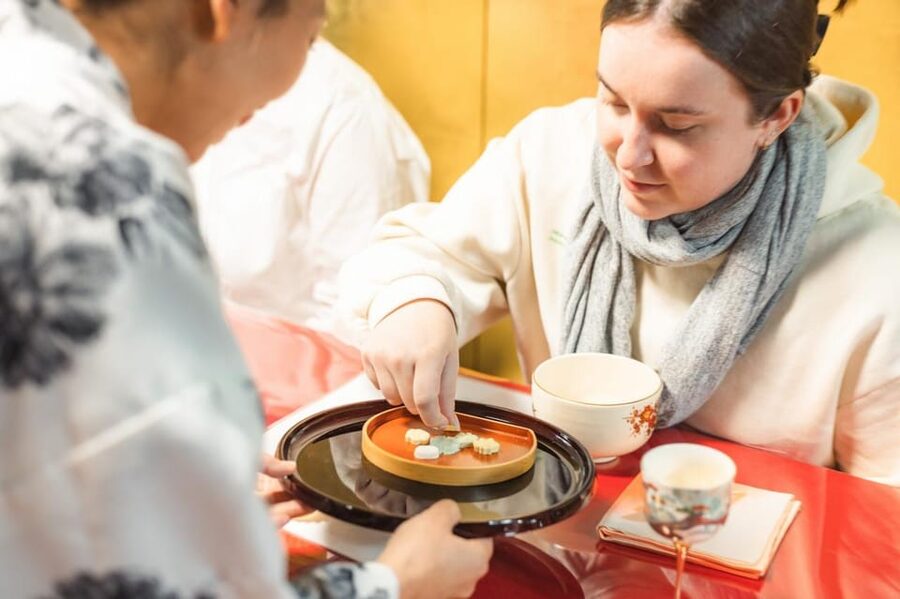
At $45 per person, the base experience is good value for a 90-minute cultural activity. You receive the tea ceremony, traditional sweets, a welcome drink, your own matcha-making practice, calligraphy, a Japanese name keepsake, and flower arranging.
That is a lot of content for less than the cost of many short private cultural sessions in Kyoto. The value is strongest if you take part in every activity rather than treating the ceremony as a quick photo stop.
Kimono rental is an optional extra, so compare the price before booking. I think it is worth considering if photographs and dressing in traditional clothing are important to you, but the tea ceremony itself remains worthwhile without it.
Hotel pickup and drop-off are not included. You need to reach the townhouse on your own, and the experience is outside central Kyoto. For independent visitors who already use trains, this is a minor inconvenience. For anyone hoping for a door-to-door tour, it is a point to keep in mind.
The activity has a 4.9 rating from 1,211 reviews, which fits the strongest pattern in the feedback: the staff’s warmth, patience, English explanations, and careful help with kimonos are praised again and again. That matters more here than flashy presentation because the quality of the teaching shapes the whole experience.
Getting to the Fushimi neighborhood
From Kintetsu Kyoto Station, take an express train for about 15 minutes to Kintetsu Momoyama-Goryo-mae Station. The total journey from central Kyoto is generally described as about 25 minutes.
From Keihan Gion-Shijo Station, take the train to Fushimi-Momoyama Station. The ride is about 20 minutes. From either station, walk west along the Otesuji shopping arcade for around three minutes, then turn right near Mizuho Bank or the Rakuten mobile shop.
From JR Momoyama Station, head northwest toward Gokogu Shrine. Continue past the shrine, reach the Otesuji Arcade, and turn right near the same bank or mobile shop. After about two minutes, look for the old townhouse with the blue curtain.
The directions are usable, but this is not a place I would try to find at the last second. Save the meeting instructions before leaving your hotel, allow extra time, and look for the kimono-clad hosts.
The area is part of Fushimi, a historic town built by Shogun Toyotomi Hideyoshi and known for sake production. You can combine the tea ceremony with lunch, shopping, or a stroll along the arcade.
It also pairs well with Fushimi Inari Shrine. Fushimi Inari is about 15 minutes by train from Keihan Fushimi Inari Station, according to the supplied transport information. Uji, known for tea, is about 20 minutes away by train. Osaka is about 40 minutes by express train, and Nara about 50 minutes.
Because the tea ceremony lasts 90 minutes, plan it as part of a southern Kyoto day rather than squeezing it between distant central Kyoto sights.
Who will enjoy this activity most
I would choose this experience if you want a clear, friendly introduction to Japanese culture rather than a highly formal tea-school lesson. It is especially suited to first-time visitors, couples, families, and small groups.
The chair seating makes it a sensible choice if kneeling is uncomfortable. The hands-on format also gives children and teenagers several ways to participate. Calligraphy and name writing can be particularly appealing to younger visitors, while adults may prefer the tea history, house architecture, or kimono photographs.
The optional kimono works well for couples and anyone planning a special photo day. It adds time before the ceremony, so do not book it if you need a rushed schedule.
You may want something else if you are looking for a long, silent, highly formal ceremony with no presentation or extra activities. This session is designed to teach and entertain. Its strength is the range of experiences packed into a short visit, not strict ritual purity.
The activity is offered in English, and private or small-group formats are available. Small groups should give you more time to ask questions and receive help with whisking, writing, or dressing.
Small practical details that improve the visit
Wear clothing that allows easy movement, especially if you select the kimono option. Arrive early if you have booked kimono rental, since the dressing begins 30 minutes before the ceremony.
Bring a phone or camera if you want photos with umbrellas, fans, the garden, or the katana prop. Ask before photographing people or household objects, and follow the hosts’ instructions inside the old house.
If you have mobility concerns, ask about the stairs before booking. Wheelchair users should not book this activity because it is listed as unsuitable for wheelchair access.
Cancellation is flexible: you can cancel up to 24 hours in advance for a full refund. You can also reserve now and pay later, which helps if your Kyoto schedule is still changing.
Should you book this Kyoto tea ceremony?
I would book it if you want to understand tea ceremony without kneeling on the floor, and if you like cultural activities where you make something, wear something, and take home a small keepsake.
The best reasons to choose it are the historic townhouse, the patient English-speaking hosts, and the unusually full 90-minute program. You watch the ceremony, prepare matcha, taste sweets, try calligraphy, arrange flowers, and learn a little about shrine-style purification. The kimono option makes the visit more memorable, but it is not essential.
The main cautions are the train ride from central Kyoto, the lack of hotel transportation, the stairs, and the separate price for kimono rental. For most visitors, those are fair trade-offs for a personal cultural visit in Fushimi rather than another crowded central Kyoto stop.
FAQ
How long does the tea ceremony activity last?
The activity lasts 90 minutes. If you select kimono rental, arrive 30 minutes before the scheduled start time for dressing.
Where is the tea ceremony held?
It is held in a more than 100-year-old traditional Kyoto townhouse in southern Kyoto, in the Fushimi area.
Do I have to sit on the floor?
No. The tea ceremony uses tables and chairs, so you do not need to sit on the floor.
Is the activity offered in English?
Yes. English-speaking instructors lead the activity.
What is included in the $45 price?
The price includes the tea ceremony, traditional sweets, a welcome drink, matcha preparation with a bamboo whisk, calligraphy, a Japanese name written in kanji or hiragana, and flower arranging.
Is kimono rental included?
Kimono rental is included only if you select the kimono option when booking. Arrive 30 minutes early if you choose it.
Can pregnant participants wear a kimono?
Pregnant participants are asked not to wear a kimono for health and safety reasons.
Is hotel pickup available?
No. Hotel pickup and drop-off are not included. You must travel to the townhouse independently.
Is the activity suitable for wheelchair users?
No. The activity is listed as unsuitable for wheelchair users.
Can I cancel my reservation?
Yes. You can cancel up to 24 hours in advance for a full refund. You can also reserve now and pay later.
Just added around Kyoto
- Taste of Nishiki Market Walking Food Tour with Local guide★ 5.0 · 17 reviews
- Kyoto: Sushi Making Class with Sushi Chef★ 4.8 · 64 reviews
- Kyoto: City Secrets eBike Tour★ 4.9 · 196 reviews
- Sacred Pathways: Discover the Philosopher’s Path of Kyoto★ 4.9 · 20 reviews
- Private Tour to Monkey Park and Arashiyama Highlights★ 5.0 · 22 reviews
- Private Nara Tour from Osaka – Meet at Your Hotel★ 5.0 · 22 reviews
- Private Sake Tasting in Central Kyoto with Sake Sommelier★ 5.0 · 13 reviews
- Kyoto : Private Custom Walking Tour With A Local Guide★ 4.6 · 144 reviews
Tea Ceremony Experiences, compared.
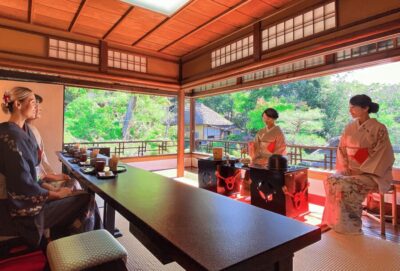
Tea Ceremony in a Traditional Tea House in Kiyomizu
Read our review →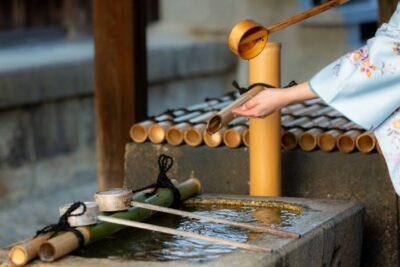
World Heritage Kyoto & Nara Uji Authentic Matcha Experience
Read our review →
Arashiyama Bamboo Forest, Monkeys, Matcha & Temple Tour
Read our review →Browse the lists this tour appears in