
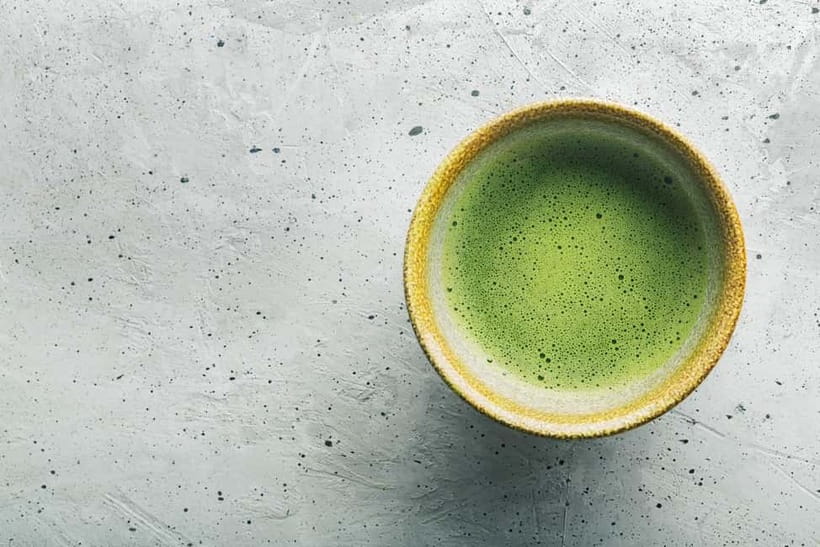
REVIEW · TEA CEREMONY EXPERIENCES
Kanazawa: Kenrokuen Tea Ceremony Experience
The most appealing part of this Kanazawa experience is its hands-on lesson in matcha etiquette. You watch a formal tea ceremony in a quiet room, learn why each gesture matters, then try whisking the tea yourself. It is a compact introduction to a tradition that can otherwise take several hours.
I like the setting inside Kenrokuen and the tasty wagashi sweets from traditional confectioners. I also like the clear English explanations, which help you follow the ritual instead of simply sitting in silence. The main catch is that Kenrokuen’s 320-yen admission is extra, and the garden itself cannot be seen from the tea room.
In This Review
- Key points to know before booking
- A one-hour window into Kanazawa tea culture
- Finding Kenrokutei inside Kenrokuen
- Entering a formal tea room
- Watching the master prepare matcha
- Making your own cup of matcha
- Wagashi, photographs, and the small details
- Sitting on the floor, or requesting a chair
- How this fits into a Kanazawa day
- Who will get the most from it
- Is $35 a good value?
- Should you book the Kenrokuen tea ceremony?
- FAQ
- Where does the tea ceremony take place?
- Where is the meeting point?
- Is Kenrokuen Garden admission included?
- How long does the experience last?
- What language is the instruction in?
- Do I get to make matcha myself?
- Are sweets included?
- Can I take photographs?
- Can I sit on a chair instead of the floor?
- Are young children allowed?
Key points to know before booking
- A proper ceremony in historic Kenrokutei: Meet at a place once used to entertain important guests of the Maeda lords.
- Watch, then make your own matcha: A tea master performs the procedure before you try it with guidance.
- Traditional wagashi are part of the experience: The sweets balance the strong, grassy flavor of matcha.
- English instruction keeps the ritual accessible: Guides explain manners, movements, history, and meaning as the ceremony unfolds.
- Kenrokuen admission is separate: Pay 320 yen to enter the garden and reach Kenrokutei.
- A calm one-hour cultural stop: It suits visitors who want a focused experience rather than a three- or four-hour full ceremony.
A one-hour window into Kanazawa tea culture
Japanese tea ceremony is not simply a lesson in preparing a drink. It is a study in attention: how you enter a room, how you receive a bowl, how you turn it, and how you treat the person who prepared it. This experience gives you that framework without asking you to spend half a day in formal ritual.
At $35 per person, the price is fair for a one-hour activity that includes the ceremony, sweets, instruction, and a photograph. You are paying for access to a formal tea room and for the guide who explains details that are easy to miss. The extra garden fee is small, but you should include it in your budget.
The setting adds real value. Kenrokutei is a historic building inside Kenrokuen, the famous garden associated with the Maeda family. Important people were entertained here in the past, so the location gives the ceremony a stronger sense of place than a modern shop or hotel room.
Still, keep your expectations precise. This is a shortened, visitor-friendly version of tea ceremony, not an extended formal sitting lasting three or four hours. That is a strength if your Kanazawa schedule is tight. If you want a complete school-level ceremony with every stage in full detail, one hour will feel brief.
More tea ceremony experiences in Kanazawa:
- Kanazawa: Samurai, Matcha, Gardens and Geisha Full-Day Tour
★ 4.9 · 75 reviews - Full-Day Tour from Kanazawa: Samurai, Matcha, Gardens and Geisha
★ 5.0 · 68 reviews - Kyoto: Tea Ceremony in a Traditional Tea House in Kiyomizu
★ 4.9 · 3,519 reviews
Finding Kenrokutei inside Kenrokuen
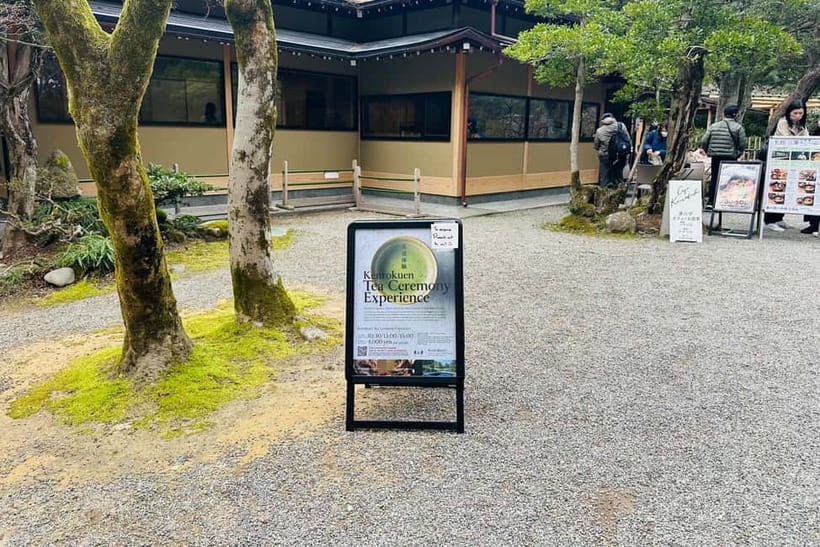
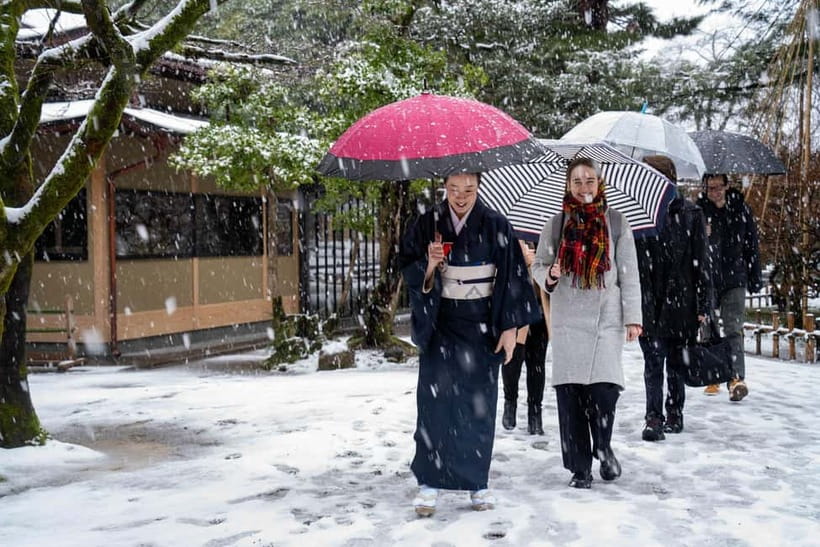
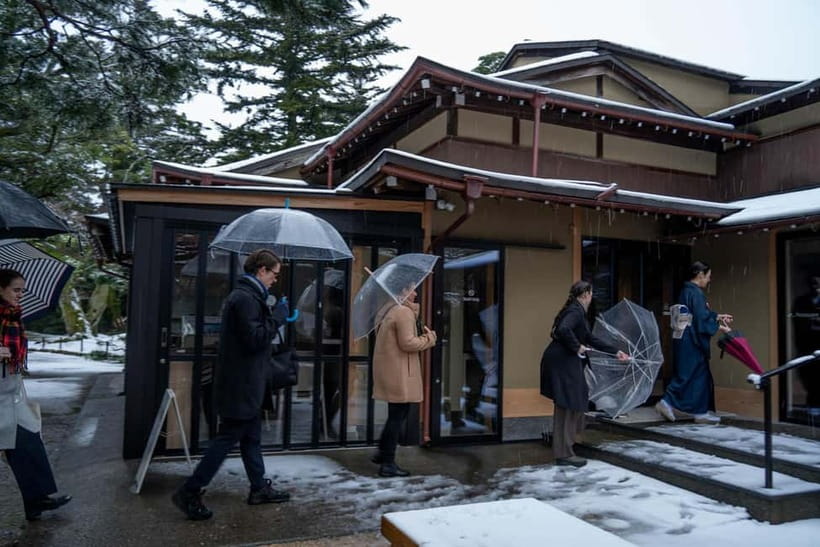
The meeting point is in front of the fountain inside Kenrokuen Garden. You must first pay the separate 320-yen garden entrance fee, then make your way to Kenrokutei. The garden ticket is useful beyond the ceremony, since you can explore Kenrokuen before or after your appointment.
Read the tea ceremony signboard near the shop for the entrance information. This matters because the meeting instructions can feel a little broad if you are hurrying through the garden. One practical suggestion is to arrive early enough to locate the fountain and Kenrokutei without cutting into your reserved hour.
The tea room does not look out onto the garden. That may surprise you if you book this mainly for views. The sensible plan is to walk through Kenrokuen first, then attend the ceremony, or attend first and stroll afterward. The garden supplies the setting, while the room supplies the quiet concentration.
Punctuality is important. Arriving more than 10 minutes after the scheduled start can lead to cancellation, so do not treat this as a flexible drop-in activity. Build in time for the garden entrance and the walk to the meeting point.
Entering a formal tea room
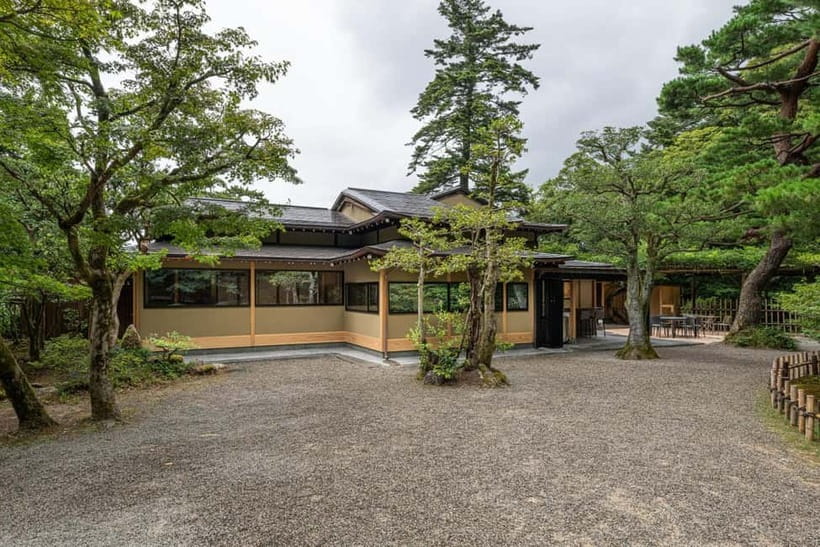
Once inside, you leave the open garden behind and enter a room arranged for the ceremony. The separation from the outside world is deliberate. You will not be watching scenery through a window, but you will have fewer distractions while the guide explains the ritual.
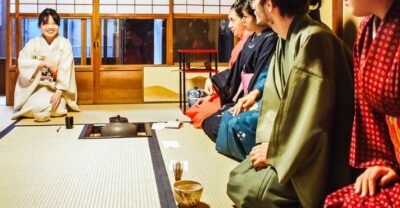
The session begins with an explanation of Kenrokutei and the local way of tea. The guide then sets out the basic manners, including how to sit, what to do with the bowl, and how to follow the host’s movements. You do not need to arrive knowing Japanese etiquette. The instructions are there so you can take part without worry.
The ceremony is performed by a master while an English-speaking guide explains what is happening. Past sessions have included guides named Nana and Océane, along with other English-speaking hosts. The guide’s role is especially useful here, since the movements are precise and the meaning may not be obvious from watching alone.
Expect a calm pace. The host handles the tea tools with care, and the guide explains the purpose behind the actions rather than rushing through a checklist. You may hear about tea culture, the Edo period, and the importance of ceremony in Japanese life.
The experience is held alongside other groups, so the room is expected to remain quiet. That shared format helps keep the price reasonable, but it also means this is not a private lesson. If you need translation from English into another language, a private booking is required by email.
Watching the master prepare matcha
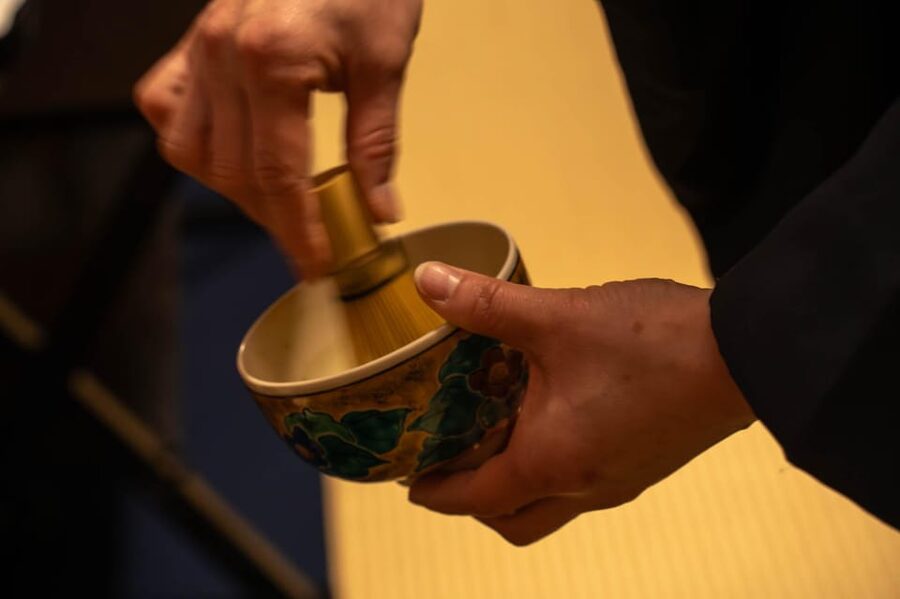
The most absorbing part is watching the tea being made. Water, powder, bowl, whisk, and movements all have a place. The ceremony gives you time to notice the rhythm of the preparation and the care given to even small gestures.
The guide explains not only what the host is doing, but why. This is where the activity becomes more than a demonstration. You learn how the ceremony expresses respect, patience, and attention to the present moment.
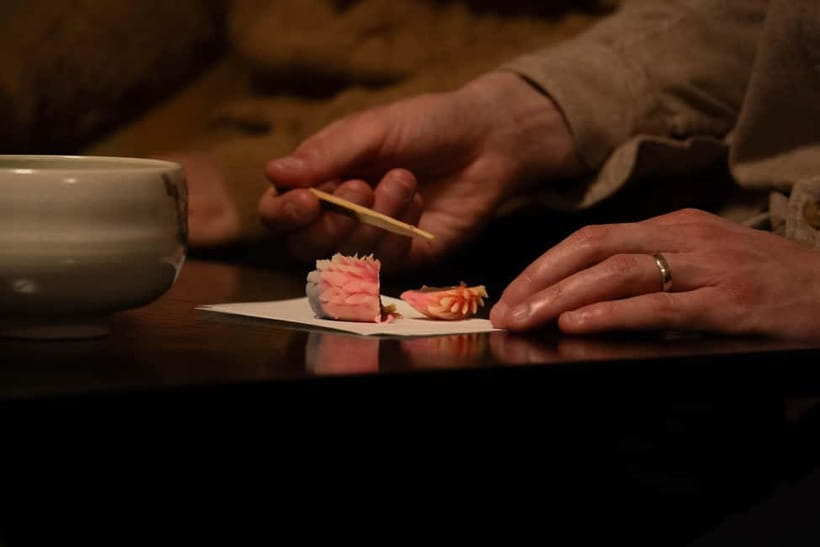
You will first receive a wagashi sweet, then drink the matcha. The order matters because the sweetness prepares your palate for the tea’s sharper flavor. Wagashi can be delicate in taste and appearance, and the sweets served here come from traditional confectionery shops.
The matcha itself may be an acquired taste if you have only tried sweetened matcha drinks. It is grassy, smooth, and concentrated. Several sessions have described the tea as especially good when paired with the sweets, and the combination is one of the small pleasures of the hour.
Do not worry about making a mistake. The guide explains how to receive the bowl and how to drink it. This is a welcoming introduction, not a test of your manners.
Same city, a completely different kind of day:
- World Heritage Shirakawa-go and Experience Tours from Kanazawa
★ 5.0 · 4,049 reviews - Kanazawa Half Day Tour (Private Guide)
★ 5.0 · 361 reviews - Kanazawa Full Day Tour (Private Guide)
★ 5.0 · 323 reviews - 1 Day Private Charter Tour to Shirakawa-go & Takayama
★ 4.5 · 253 reviews
Making your own cup of matcha
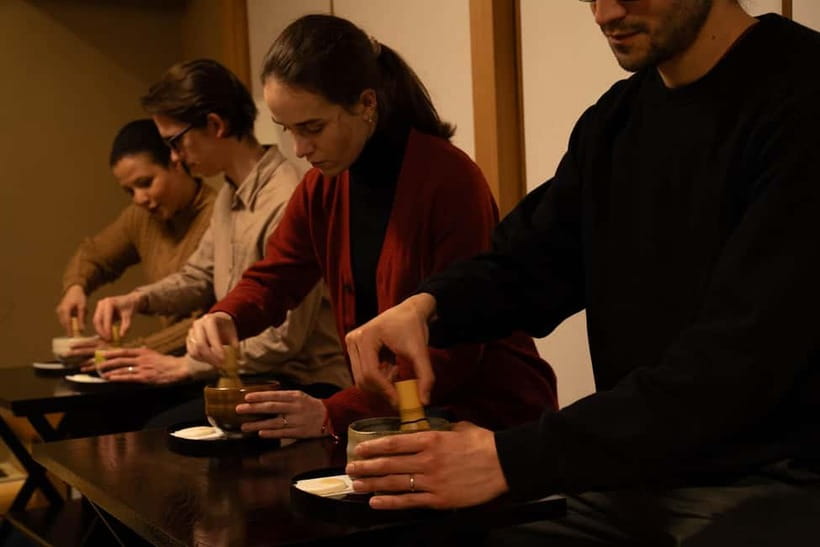
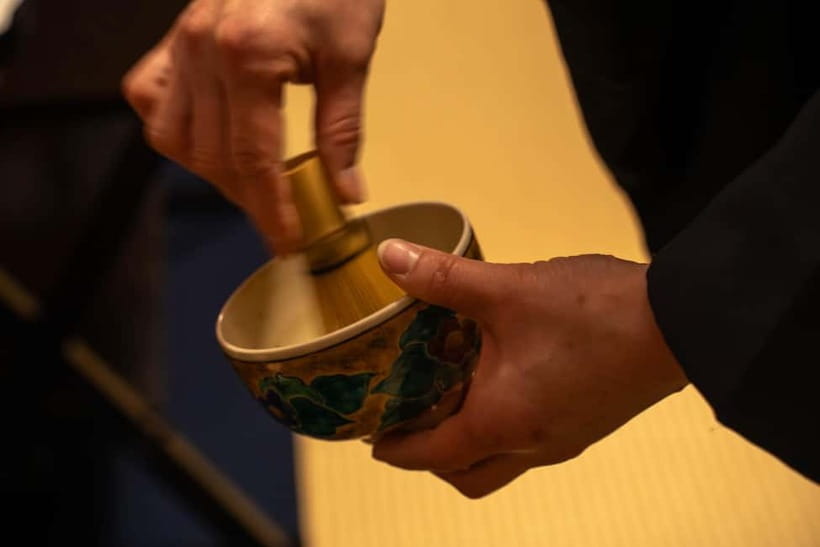
After watching the master, you get to prepare matcha yourself. With help from the guide, you add the tea and whisk it in the traditional way. This short practical stage is one of the best reasons to choose this experience over a simple tea tasting.
Whisking looks easy until you try it. You need to create a smooth layer of foam without treating the whisk like a kitchen tool. The activity gives you enough instruction to make the attempt enjoyable, and the process helps you understand the skill behind the master’s movements.
This is also where the experience becomes memorable for younger participants and first-time tea drinkers. You are not only told how the ritual works. You practice it, drink what you make, and see how preparation changes the result.
The hands-on portion does not turn the ceremony into a casual workshop. The formal atmosphere remains, but the guide encourages you and answers questions. If you have ever wondered why a bowl of matcha tastes different in a tea room than in a café, this is a useful way to begin finding out.
Wagashi, photographs, and the small details
The sweets deserve more attention than a quick mention. Traditional wagashi are not just snacks added to the ticket. They soften the matcha and give you another link to Japanese food culture. You may taste sweets from more than one traditional confectioner during the session, depending on the presentation.
Photography is allowed, so you can take pictures to remember the ceremony. A photograph is also included, though the exact way it is provided is not specified. Be respectful of the quiet room and follow the guide’s directions about when to take pictures.
Small details carry much of the charm. The formal room, the tea tools, the host’s measured movements, and the explanations about etiquette make the hour feel more substantial than a standard drink tasting. You might leave with a new appreciation for how much practice sits behind an apparently simple bowl of tea.
The room’s quiet can vary. A nearby room may occasionally create some noise, though the hosts work to keep the atmosphere peaceful. This is a shared activity in a historic building, not a sealed soundproof chamber.
Sitting on the floor, or requesting a chair
The usual arrangement involves sitting on mats. If kneeling or sitting on the floor is difficult, you can request a chair for the ceremony. Make that request in advance or when you arrive so the staff can prepare the space.
The activity is intended for children aged 7 or older in the main description, while the practical information says it is not suitable for children under 8. Because of that difference, families with a seven-year-old should confirm the age rule before booking.
The quiet format is best for people who can listen and follow instructions for an hour. Children who enjoy food, crafts, and cultural demonstrations may like the chance to whisk matcha, but very young children are not accepted.
How this fits into a Kanazawa day
I would pair the ceremony with a full visit to Kenrokuen. The garden is one of Kanazawa’s essential stops, and the tea activity gives you a reason to slow down rather than race through it for photographs.
Visit the garden before the ceremony if you want to arrive already settled. Choose the ceremony first if you prefer to finish the fixed-time appointment and then explore without watching the clock. Either way, remember that the garden is not visible from the tea room.
The one-hour duration makes this easy to fit between other sights. It is long enough to watch, learn, taste, and practice, but short enough to leave room for Kanazawa Castle, the historic districts, or another scheduled stop. Do not schedule it too tightly against another activity, since the garden entrance and walking time require a little breathing room.
The English instruction is a major practical advantage. You can ask questions and understand the significance of the movements as they occur. The guides have been praised for clear explanations, patience, and a friendly manner, with both Japanese hosts and English-speaking interpreters contributing to the experience.
Who will get the most from it
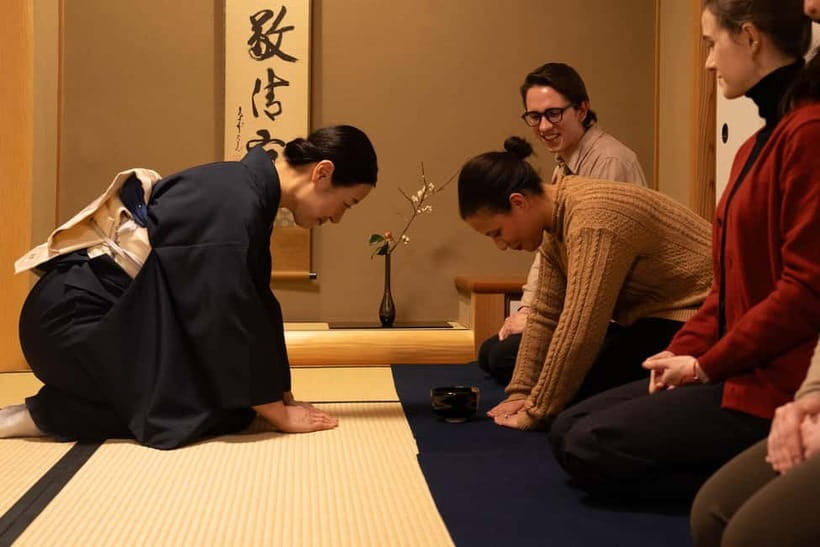
This is a strong choice for a first encounter with Japanese tea ceremony. You receive enough context to understand the basic etiquette, but you do not need prior knowledge or special clothing.
It also suits anyone who wants a quieter cultural activity. The room encourages you to slow down, and the ritual provides a welcome pause after sightseeing. If your idea of a good tour is a guide talking nonstop while you move between landmarks, this is a different kind of hour.
Families with older children can consider it, especially if the child is curious and able to remain quiet. Couples and solo visitors may appreciate the peaceful mood, while photographers should remember that the room itself does not provide garden views.
You may want to skip it if you dislike matcha, formal manners, or sitting on mats. The tea is not a sweet café drink, and the ceremony asks you to pay attention. You can request a chair, but the activity still follows a quiet, structured format.
Is $35 a good value?
The price makes sense when you consider what is included: a performed tea ceremony, English instruction, wagashi, the chance to prepare matcha, and a photograph. You also receive the setting of Kenrokutei inside Kenrokuen, though the 320-yen garden ticket is separate.
Compared with a full tea ceremony lasting several hours, this is a time-efficient introduction. You get the central ideas and a practical try without giving up half a day. The trade-off is less depth and less privacy than a private or extended ceremony.
The strongest value comes from the explanation. Without it, you might watch elegant movements and miss their purpose. With the guide’s help, the bowl, sweets, gestures, and pauses begin to make sense.
Should you book the Kenrokuen tea ceremony?
Book it if you want a short, well-explained cultural experience that fits neatly into a day of Kanazawa sightseeing. The chance to make your own matcha, taste wagashi, and learn the meaning behind the ceremony gives the hour real substance.
Plan around the extra garden admission, arrive early, and do not expect views from the tea room. If you want a private, lengthy ceremony, choose another format. For most first-time visitors, though, Kenrokutei offers a graceful and practical introduction to Japanese tea culture in a setting with genuine local character.
FAQ
Where does the tea ceremony take place?
It takes place at Kenrokutei inside Kenrokuen Garden in Kanazawa, on Honshu, Japan.
Where is the meeting point?
Meet in front of the fountain inside Kenrokuen Garden. Read the tea ceremony signboard for more information about entering the tea room.
Is Kenrokuen Garden admission included?
No. You must pay the separate 320-yen entrance fee to enter Kenrokuen Garden and reach Kenrokutei.
How long does the experience last?
The tea ceremony experience lasts one hour.
What language is the instruction in?
The activity is conducted in English, with an English-speaking guide explaining the ceremony.
Do I get to make matcha myself?
Yes. After watching the tea master prepare the tea, you can make your own matcha with help from the guide.
Are sweets included?
Yes. Traditional Japanese wagashi sweets are included.
Can I take photographs?
Yes. Participants are allowed to take pictures, and a photograph is included with the activity.
Can I sit on a chair instead of the floor?
Yes. You can request a chair if sitting on the floor is difficult.
Are young children allowed?
The activity is for participants aged 7 or older in the main information, while the additional information says it is not suitable for children under 8. Confirm the age requirement if booking for a seven-year-old.
Just added around Kanazawa
- Shirakawa-go, Gokayama & Takayama Private Tour From Kanazawa★ 4.7 · 21 reviews
- From Kanazawa/Toyama: Shirakawago and Takayama Day Tour★ 4.7 · 82 reviews
- Kanazawa:Traditional Experience -kimono rent at wargo★ 4.7 · 30 reviews
- Kanazawa: Samurai Swordsmanship Lesson at a rented temple★ 5.0 · 21 reviews
- Kanazawa: Private Tour with Local Guide★ 4.9 · 70 reviews
- Kanazawa: Private Food Tasting Walking Tour★ 4.7 · 25 reviews
- Kanazawa Historic Brewery: Fermentation Tour, Tasting, Lunch★ 4.9 · 15 reviews
- Kanazawa: Private Custom Tour with Local Guide★ 4.9 · 20 reviews
Tea Ceremony Experiences, compared.
Tea Ceremony in a Traditional Tea House in Kiyomizu
Read our review →
World Heritage Kyoto & Nara Uji Authentic Matcha Experience
Read our review →
Arashiyama Bamboo Forest, Monkeys, Matcha & Temple Tour
Read our review →Browse the lists this tour appears in