
REVIEW · TEA CEREMONY EXPERIENCES
Kanazawa: Samurai, Matcha, Gardens and Geisha Full-Day Tour
Kanazawa’s best feature is how much old Japan remains part of the living city. In one long day, you move from modest samurai homes to castle walls, a carefully shaped Edo-period garden, and wooden tea houses where the geisha tradition still has a home. The route gives you the city’s main sights without reducing them to quick photo stops.
I like the way the tour links the places together on foot, using quiet side streets and small neighborhood temples between major sights. I also like the matcha stops: one in the elegant Gyokusen-an tea house, followed by a proper visit to Shima, a preserved geisha house. The main drawback is simple: this is a very active day, often around 12 kilometers and more than 27,000 steps for some people.
In This Review
- Key points to know before booking
- Starting beneath Kanazawa Station’s sumo wrestlers
- Nagamachi and the lives of lower-ranking samurai
- Oyama Shrine, where Japan turns toward the West
- Matcha beside castle walls at Gyokusen-an
- Kanazawa Castle and the story behind the garden
- Kenroku-en, one of Japan’s great designed gardens
- Higashi-chaya and the wooden tea-house streets
- Inside Shima, a preserved geisha house
- Returning through Kazue-machi’s back streets
- What the $156 price really covers
- Who should book this Kanazawa walking tour
- Final call
- FAQ
- Where does the Kanazawa tour start?
- How do I identify the guide?
- Where does the tour end?
- Is the tour conducted in English?
- How long does the activity last?
- How much walking is involved?
- Is lunch included?
- Is the matcha experience included?
- Are entry fees included?
- What should I wear in winter?
Key points to know before booking
- Kanazawa Station is the easy meeting point: Find the guide by the four large sumo wrestlers just inside the East Entrance, near the Shinkansen ticket gates.
- The walking is the real transportation: You use city streets, back lanes, bridges, and garden paths rather than spending the day on a bus.
- Two traditional tea experiences are included: Matcha and wagashi are served at Gyokusen-an, while Shima offers a closer look at geisha-house architecture.
- The tour balances famous sights with ordinary neighborhoods: Nagamachi includes low-ranking samurai homes and local craft shops, not just grand residences.
- The guide adds much of the value: Mike, Akari, Gareth, Lee, Daniel, Mohammed, Adeline, and Devin have all led this experience, with strong praise for history, culture, flexibility, and humor.
- Weather matters: Rain, snow, ice, heat, and long outdoor stretches can change the feel of the day, so shoes and clothing deserve careful planning.
Starting beneath Kanazawa Station’s sumo wrestlers
Meet outside the Shinkansen ticket gates, in front of the information center. If you are leaving the gates, look ahead and to the right for the four large sumo wrestlers. If you enter from outside, they are immediately inside the East Entrance.
The guide wears a Snow Monkey Resorts tour tag. The group may wait nearby until the 9:00 AM start, though you should check your confirmed time when booking.
Before walking away from the station, take a moment to look at Tsuzumi-mon gate. Its sweeping wooden form refers to traditional Japanese architecture, but the gate itself is a modern symbol of Kanazawa. It makes a useful first lesson for the day: Kanazawa does not pretend to be frozen in the Edo period. Old forms and present-day city life sit side by side.
The route then leaves the station district by foot. That first 30 minutes gives you a gradual introduction rather than a sudden arrival at a monument. You pass local homes, occasional wooden temples, and quiet streets that help you see Kanazawa as a city, not simply a collection of attractions.
More Kimono & Culture Experiences in Kanazawa
- Kanazawa: Samurai Residence Remains Nomura Family admission
★ 4.4 · 111 reviews - Full-Day Tour from Kanazawa: Samurai, Matcha, Gardens and Geisha
★ 5.0 · 68 reviews - Try Mindful Calligraphy Near Kanazawa’s Ninja Temple
★ 5.0 · 50 reviews
Nagamachi and the lives of lower-ranking samurai
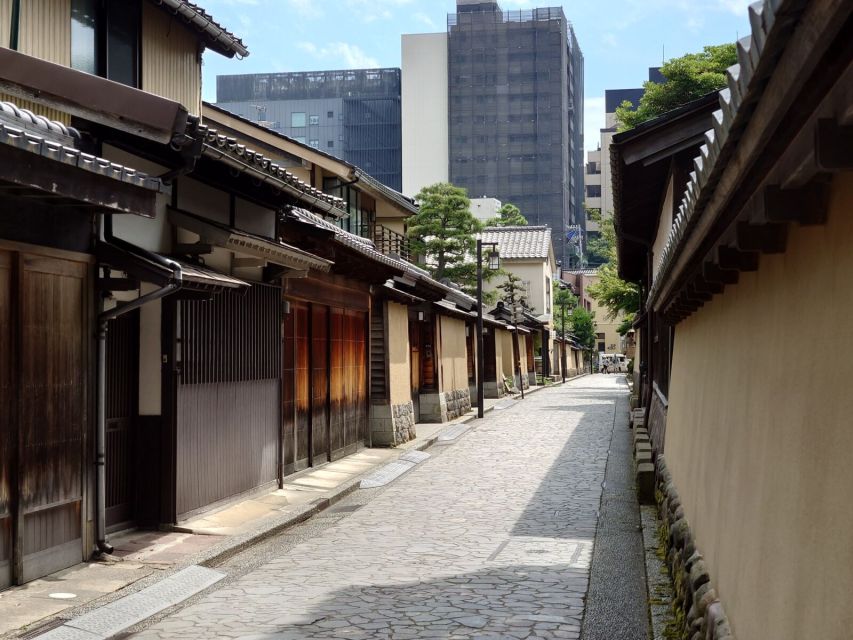
Nagamachi is often described as Kanazawa’s samurai district, but its most interesting point is that not every samurai here was a grand lord. The neighborhood included families of more modest means, and the preserved houses help explain how status did not always equal comfort.
You have time to enter some of these residences and see their compact rooms, garden spaces, and practical layout. A guide makes a big difference here. Without context, a low doorway or plain room can look like a design choice. With explanation, the house becomes a record of rank, household life, and the limits faced by samurai who served a powerful domain.
The main street has a crooked shape and a calm feel. You also get free time to look at local Kanazawa crafts and wares. This is a useful pause because the day is not just a march from one famous building to the next. You can browse, ask questions, and notice the small details in the walls, gates, and narrow lanes.
The scheduled visit lasts about 110 minutes, making it one of the longer sections of the tour. That is sensible. Nagamachi rewards patience, but it also involves standing and walking outdoors. Wear shoes that can handle uneven pavement and do not plan on carrying bulky shopping for the rest of the day.
Oyama Shrine, where Japan turns toward the West
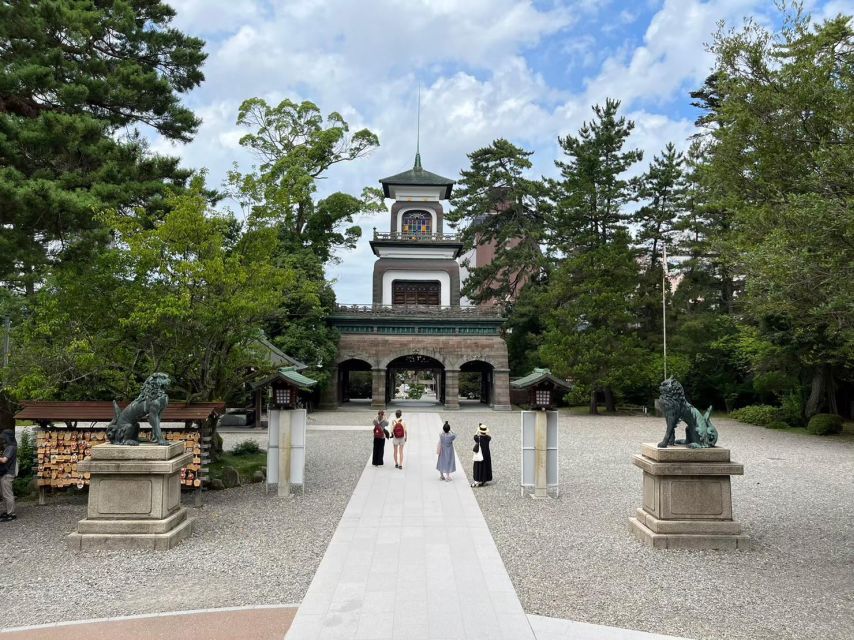
Oyama Shrine is a short visit, but it gives the tour a change of mood. Its gate combines Japanese design with Western-style stained glass, reflecting the period when Japan was adjusting to outside influence in the 19th century.
The contrast is striking. You move from samurai-era streets into a shrine whose appearance tells a later story about modernization. The guide can help connect the architecture to the broader changes taking place in Japan, rather than treating the gate as an odd decoration.
Behind the shrine, a koi pond and small garden lead toward a large wooden bridge. You cross it before passing through an impressive gate into the Kanazawa Castle grounds. This transition is one of the pleasant details of the day. The route keeps revealing the next place through gardens, bridges, and back paths instead of dropping you at a standard entrance.
The shrine visit is listed at about 10 minutes, so expect a focused explanation and a look around, not a long period of independent exploration.
Matcha beside castle walls at Gyokusen-an
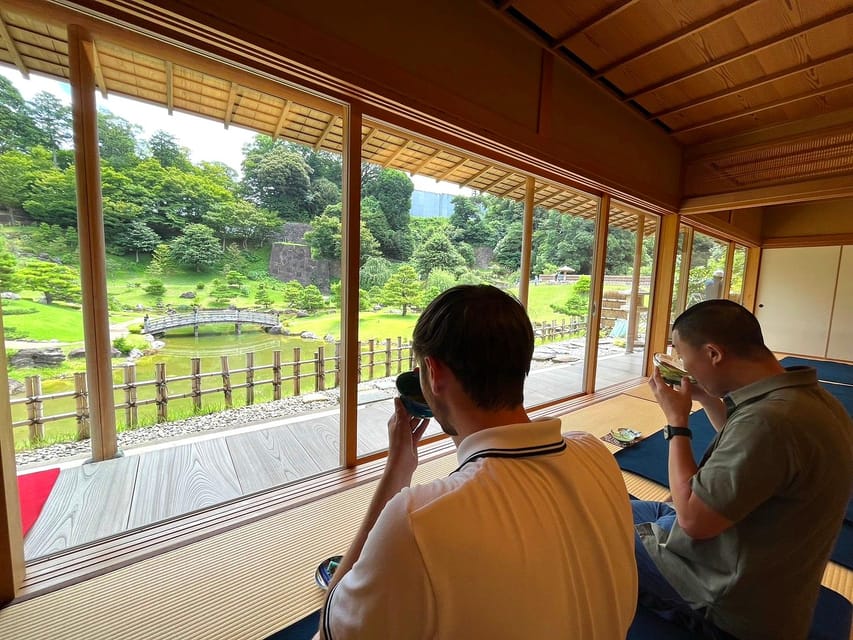
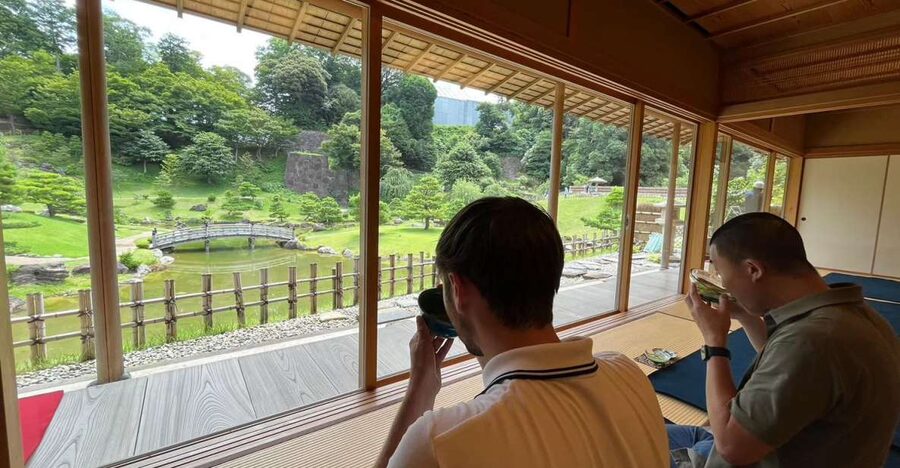
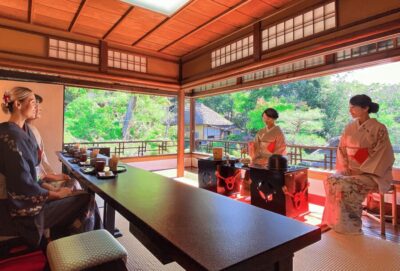
Gyokusen-an tea house provides the day’s quietest half hour. It sits by a garden at the base of large castle stone walls, with a traditional Japanese interior designed for calm and careful attention.
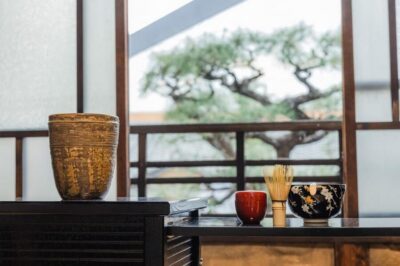
Kimono-clad staff serve matcha with artistic wagashi sweets. Your guide explains the basic way to drink the tea, so you are not left wondering which movement matters or how formal you need to be. This is not presented as a full-length formal tea ceremony. It is a friendly, guided introduction that lets you enjoy the taste, setting, and manners without turning the moment into a test.
I consider this one of the strongest inclusions in the price. You get more than a cup of green tea. The room, garden view, sweets, clothing, and instruction bring several parts of Japanese culture together in a short stop.
Special events are occasionally held at Gyokusen-an. When that happens, the matcha tasting moves to another location. The experience remains part of the day, but the setting may differ from the one described here.
After tea, you have a lunch break nearby. Lunch is not included, and the guide can recommend places. You may also use the time to visit a market or choose your own meal. Keep in mind that the schedule continues through the castle and garden, so a quick, practical lunch works better than a long restaurant stop.
More tea ceremony experiences in Kanazawa:
- Kanazawa: Kenrokuen Tea Ceremony Experience
★ 4.8 · 1,139 reviews - Kyoto: Tea Ceremony in a Traditional Tea House in Kiyomizu
★ 4.9 · 3,519 reviews - Kyoto: Tea Ceremony Ju-An at Jotokuji Temple
★ 4.9 · 3,207 reviews - Kyoto: 45-Minute Tea Ceremony Lesson Experience
★ 4.3 · 2,378 reviews
Kanazawa Castle and the story behind the garden
The tour passes through Kanazawa Castle grounds after leaving the tea house. The castle has been partially restored, and its broad grounds, gates, stonework, and wooden buildings help you picture the power once held by the lords of Kanazawa.
The value here comes from the connection between the castle and the rest of the route. The samurai district showed where many retainers lived. The castle grounds show the center of authority that shaped their lives. You are not simply looking at walls. You are following the structure of the old domain from household to ruling compound.
The route continues across the castle grounds to the entrance of Kenroku-en. This makes the garden feel like part of the castle complex, which it historically was, rather than an unrelated scenic stop.
Kenroku-en, one of Japan’s great designed gardens
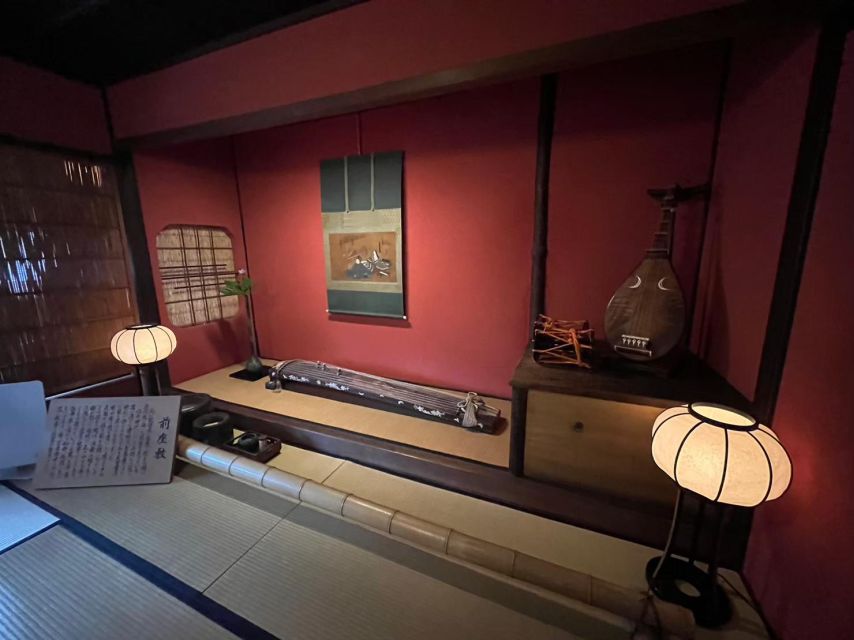
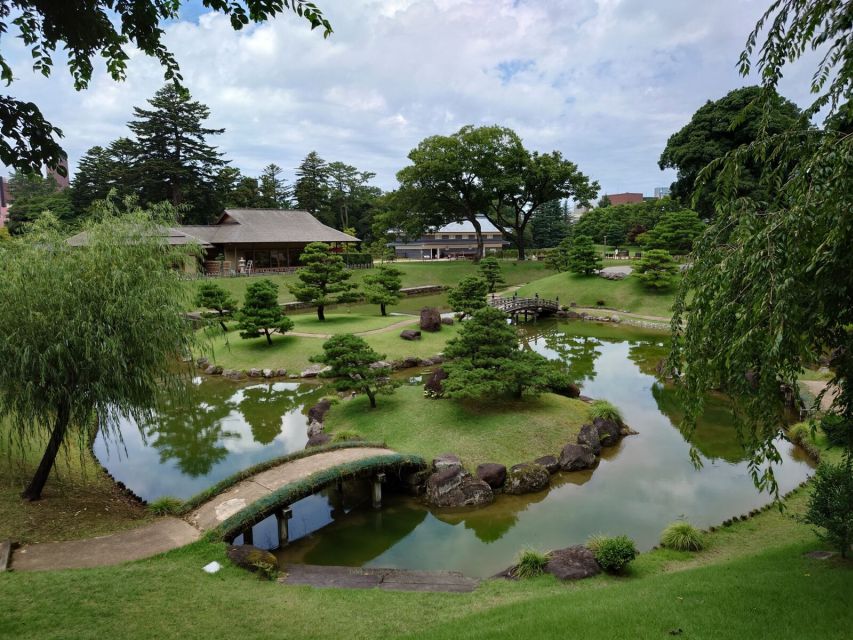
Kenroku-en receives about an hour and a half, and it deserves the time. The garden was developed over more than 200 years on the orders of the lords of Kanazawa Castle. Your guide explains how its paths, water, trees, bridges, and viewing points were planned and maintained.
The appeal is not only beauty. Kenroku-en shows how a traditional garden controls what you see and when you see it. A path opens to a pond, a bend frames a tree, and a small rise changes the view. You begin to notice that the garden is built for movement, not one fixed viewpoint.
Weather can make this stop very different from day to day. Rain may bring mist around the castle walls and make the garden feel subdued and atmospheric. Snow gives it another character. On a warm, humid day, the same 90 minutes can feel tiring, especially after the earlier walking.
This is where practical preparation matters most. Bring an umbrella or rain gear, and wear warm, non-slip shoes in winter. Temperatures can fall below 10 degrees Celsius, with mornings and evenings near or below freezing. Snow and ice may remain on roads and sidewalks.
You get some free time during the day, but listen closely for meeting instructions. The tour works because the group moves together. If you wander too far and need help, the phone number on your tour pass connects you with staff.
Higashi-chaya and the wooden tea-house streets
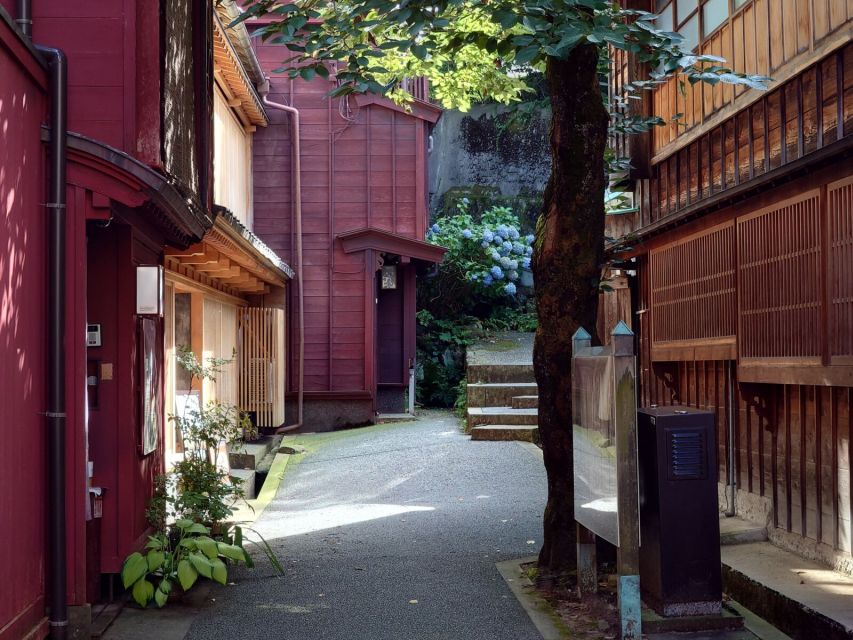
Higashi-chaya is perhaps the most instantly recognizable part of Kanazawa. Its streets are lined with tall, two-story wooden tea houses, some painted red in a style strongly associated with the city.
The district is called a tea district, but do not expect a row of ordinary cafes. These buildings belong to a refined entertainment tradition tied to geisha performance, music, conversation, and hospitality. The architecture gives you clues about that world: tall facades, narrow frontage, carefully arranged entrances, and interiors built for private gatherings.
You have around 40 minutes for guided sightseeing, free time, and shopping. That is enough to understand the district and browse, but not enough to inspect every building at length. If you are hoping for a slow afternoon of shopping, you may want to return on your own after the tour.
The guide helps you read the district instead of seeing only a photogenic street. Several people who led this tour, including Mike, Akari, Gareth, Lee, and Mohammed, are praised for explaining Japanese history and culture in an engaging way. The exact guide varies, so do not book based on one particular person. Still, the pattern is clear: the guide is a major part of what you are paying for.
Inside Shima, a preserved geisha house
The visit to Shima gives Higashi-chaya more substance. Rather than viewing tea-house facades from the street, you enter a heritage site with classic architecture and learn how the rooms were used.
Shima is scheduled for about an hour, making it one of the day’s more detailed visits. Your guide can point out features that are easy to miss, from room arrangements to the relationship between public-facing spaces and more private areas. The building offers a direct look at a part of Kanazawa’s cultural life that is difficult to understand from photographs alone.
This stop also balances the samurai section. Nagamachi focuses on warrior households and social rank. Shima presents a different world, shaped by performance, etiquette, architecture, and carefully controlled hospitality. Together, the two visits give the day a wider view of old Kanazawa.
You should keep your expectations realistic. This is a visit to a geisha-house museum and heritage site, not a promise of a live geisha performance. The value lies in the building, the explanation, and the chance to understand the setting.
Returning through Kazue-machi’s back streets
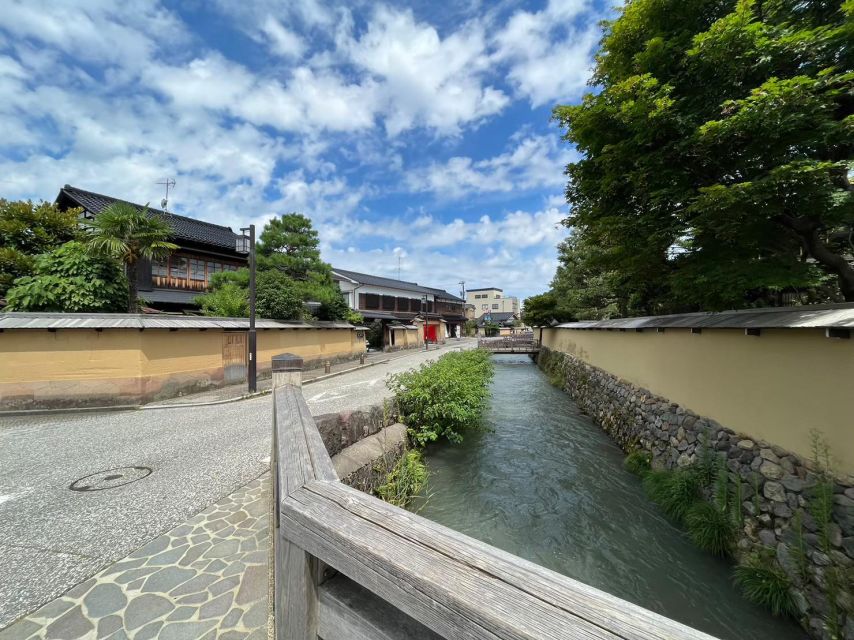
After Higashi-chaya and Shima, the route heads back toward Kanazawa Station. The return takes about 30 minutes on foot and passes through the maze-like backstreets of Kazue-machi.
This final stretch is a pleasant way to finish because it avoids simply retracing the busiest route. You continue through older streets while the guide answers questions and helps with plans for the rest of your visit. The tour ends back at the original meeting point.
Several guides have gone beyond the formal route by helping with train tickets, suggesting places to visit, or adjusting the pace for families. Lee, for example, has been noted for helping a late-arriving participant catch up, while Daniel has been praised for patience with children and family stops. These are useful qualities on a full-day walk, where small problems can otherwise become frustrating.
What the $156 price really covers
At $156 per person, this is not a cheap orientation walk. The price includes the English-speaking guide, Kenroku-en admission, entry to Shima, and the matcha experience with wagashi. Lunch, shopping, and any personal purchases are extra.
The value depends on how you like to travel. If you are comfortable researching every sight, finding each entrance, understanding the historical setting, and managing a long route alone, you can spend less by visiting independently. If you want the main historic districts linked into one clear day, the fee is easier to justify.
I see the strongest value in the explanations and route planning. Kanazawa’s sights are spread across several districts, and the walking connections are part of the experience, but they are not always obvious on a first visit. A good guide turns the day into a story instead of a checklist.
The high overall rating reflects the parts that matter most here: guides who are friendly, flexible, funny, and well prepared; a route that covers a great deal; and a matcha stop that feels more thoughtful than a quick tasting counter.
Who should book this Kanazawa walking tour
I would recommend it to first-time visitors who have one full day in Kanazawa and want to see the city’s principal historic areas. It also suits people who prefer asking questions as they go rather than reading signs or guidebooks at each stop.
Families can manage it if everyone is ready for a long day on foot. One guide has handled groups ranging from children to people in their seventies, but the distance remains real. Build in sensible footwear, water, weather protection, and a willingness to slow down when needed.
It is also a good choice for history and architecture fans. You get samurai residences, castle grounds, a shrine mixing Japanese and Western design, an Edo-era garden, tea-house streets, and a preserved geisha house in one route.
I would hesitate if you dislike group schedules, need frequent transport, or want a leisurely lunch and extended shopping time. Free time exists, but the tour still has to reach each meeting point. This is a full sightseeing day, not a relaxed afternoon stroll.
Booking can remain flexible because cancellation is free up to 24 hours in advance, and you can reserve now and pay later. Check the starting time and weather forecast before you commit to the day.
Final call
Book this tour if you want a well-explained first look at Kanazawa and can handle substantial walking. The combination of Nagamachi, Kanazawa Castle, Kenroku-en, Higashi-chaya, Shima, and two matcha-related experiences gives you a strong sense of the city in one day.
Skip it if you prefer exploring at your own speed or already know the main sights. For most first-time visitors, though, the route, admissions, tea experience, and guide support make the $156 worthwhile, especially when your time in Kanazawa is limited.
FAQ
Where does the Kanazawa tour start?
Meet outside the Shinkansen ticket gates at Kanazawa Station, in front of the information center. The meeting spot is beside four large sumo wrestlers just inside the East Entrance.
How do I identify the guide?
Look for a guide wearing a Snow Monkey Resorts tour tag.
Where does the tour end?
The tour returns to the original meeting point at Kanazawa Station.
Is the tour conducted in English?
Yes. The tour includes a live English-speaking guide.
How long does the activity last?
It is a full-day activity. Check availability for the exact starting time. The described schedule begins at 9:00 AM and returns to the station after the day’s visits.
How much walking is involved?
The tour involves several hours of outdoor walking. Some participants have recorded about 12 kilometers or more than 27,000 steps, so comfortable shoes are important.
Is lunch included?
No. Lunch is not included. You can ask the guide for nearby recommendations during the lunch break.
Is the matcha experience included?
Yes. Matcha and artistic wagashi sweets are included. The tasting is normally held at Gyokusen-an tea house, though it may move if a special event is taking place.
Are entry fees included?
Admission to Kenroku-en garden and Shima geisha house is included.
What should I wear in winter?
Wear warm clothing and footwear suited to snow and cold conditions. Temperatures may fall below 10 degrees Celsius, and snow or ice can be present on roads and sidewalks, so non-slip shoes are advised.
More Full-Day in Kanazawa
- Kanazawa Full Day Tour (Private Guide)
★ 5.0 · 323 reviews - From Tokyo: Mount Fuji Full-Day Sightseeing Trip
★ 4.5 · 4,970 reviews - Mount Fuji Full-Day Private Tour from Tokyo (Customizable)
★ 4.9 · 1,470 reviews - Hiroshima / Miyajima Full-day Private Tour with Government Licensed Guide
★ 5.0 · 1,298 reviews
Just added around Kanazawa
- Shirakawa-go, Gokayama & Takayama Private Tour From Kanazawa★ 4.7 · 21 reviews
- From Kanazawa/Toyama: Shirakawago and Takayama Day Tour★ 4.7 · 82 reviews
- Kanazawa:Traditional Experience -kimono rent at wargo★ 4.7 · 30 reviews
- Kanazawa: Samurai Swordsmanship Lesson at a rented temple★ 5.0 · 21 reviews
- Kanazawa: Private Tour with Local Guide★ 4.9 · 70 reviews
- Kanazawa: Private Food Tasting Walking Tour★ 4.7 · 25 reviews
- Kanazawa Historic Brewery: Fermentation Tour, Tasting, Lunch★ 4.9 · 15 reviews
- Kanazawa: Private Custom Tour with Local Guide★ 4.9 · 20 reviews
Tea Ceremony Experiences, compared.
Tea Ceremony in a Traditional Tea House in Kiyomizu
Read our review →
World Heritage Kyoto & Nara Uji Authentic Matcha Experience
Read our review →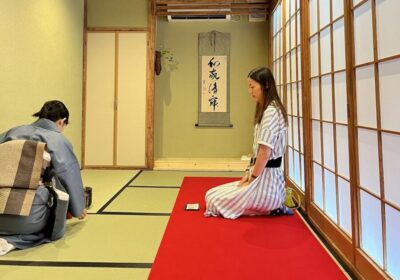

Browse the lists this tour appears in