
REVIEW · TEA CEREMONY EXPERIENCES
Full-Day Tour from Kanazawa: Samurai, Matcha, Gardens and Geisha
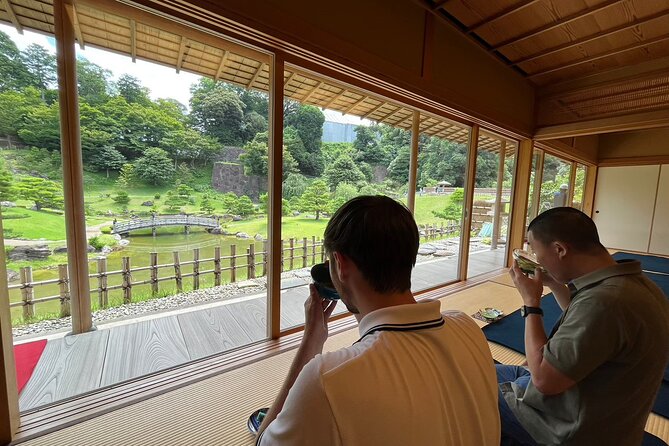
Kanazawa packs a surprising amount into one walk. This full-day route links samurai homes, castle grounds, a famous garden, and two geisha districts, with an English-speaking guide to explain what you are seeing. The matcha stop, served with wagashi sweets beside an old garden, gives the day a welcome quiet pause.
I like the small maximum of 15 people, which leaves room for questions and some adjustment in pace. I also like that the route goes by foot, from the low-ranking Ashigaru homes through Nagamachi and on to Higashi Chaya, rather than simply whisking you between headline sights.
The main catch is simple: this is a serious walking day. Plan on roughly 10 to 12 kilometers, and possibly more depending on the group and route. Several hours on your feet can be tiring, especially in heat or rain, so good shoes and water matter.
In This Review
- Key points to know before you book
- A full day that explains Kanazawa as a city
- Ashigaru homes and the quieter side of samurai life
- Nagamachi, where the old streets do the talking
- Oyama Shrine and an unusual entrance gate
- Matcha at Gyokusen-an, the day’s calmest hour
- Kanazawa Castle, seen as part of the route
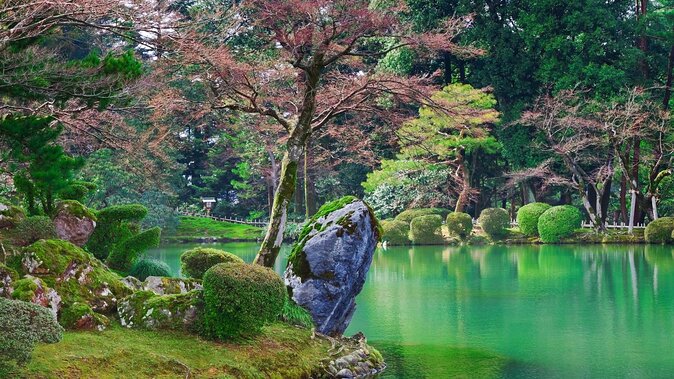
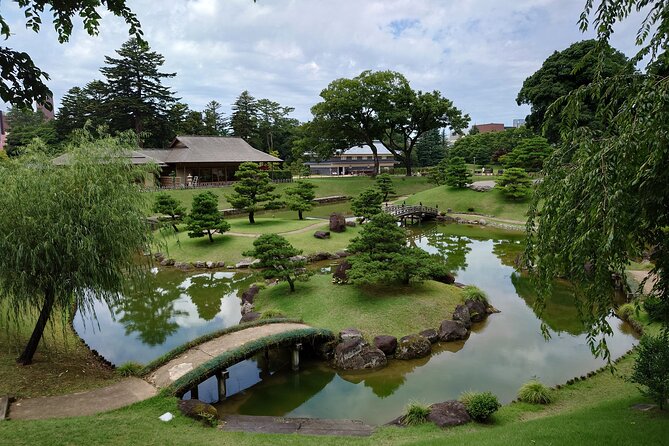
- Kenrokuen Garden deserves the longest stop
- Higashi Chaya brings the old entertainment quarter to life
- Inside Ochaya Shima, a closer look at geisha culture
- Kazuemachi offers a quieter final passage
- What the guides add to the day
- Price, pace, and practical value
- Who should book this Kanazawa walking tour?
- Should you book it?
- FAQ
- Where does the tour start?
- Where does the tour finish?
- How long does the tour last?
- Is lunch included?
- How much walking is involved?
- What is the maximum group size?
- Is an English-speaking guide included?
- Is the matcha experience included?
- Are admission fees included?
- Can I cancel for a refund?
Key points to know before you book
- Samurai life begins at the Ashigaru Museum: Enter two preserved homes once occupied by lower-ranking samurai families.
- Matcha comes with a garden view: Gyokusen-an provides tea, wagashi sweets, and a restful look over an old Japanese garden.
- Kenrokuen gets a full 90 minutes: You have time to enjoy ponds, trees, teahouses, and carefully arranged views.
- The walking is the real transport: The tour does not rely on buses between its main stops, covering a long stretch of central Kanazawa.
- Geisha culture includes an actual preserved tea house: Ochaya Shima offers a closer look at rooms, colorful details, and musical instruments.
- The guide shapes the day: Guides including Mike, Garrett, Lee, Akari, Daniel, Fadir, and Mohamed have led the tour, with pacing adjusted for the group when possible.
A full day that explains Kanazawa as a city
Kanazawa is often described as an alternative to Kyoto, and this route helps explain why. You move through former samurai quarters, the seat of the Maeda domain, formal gardens, and old entertainment districts, all within one day.
The tour begins at 9:00 a.m. at Kanazawa Station and ends back at the station area. The advertised duration is about nine hours, but one of those hours is set aside for lunch. You choose your own restaurant, with suggestions from the guide, so the day is not a continuous march.
That lunch arrangement is practical. You can select something that suits your budget and appetite rather than being tied to a fixed menu. Still, lunch is not included, so allow extra money for it.
More Kimono & Culture Experiences in Kanazawa
- Kanazawa: Samurai Residence Remains Nomura Family admission
★ 4.4 · 111 reviews - Kanazawa: Samurai, Matcha, Gardens and Geisha Full-Day Tour
★ 4.9 · 75 reviews - Try Mindful Calligraphy Near Kanazawa’s Ninja Temple
★ 5.0 · 50 reviews
Ashigaru homes and the quieter side of samurai life
The first stop is the Ashigaru Museum, where you enter two homes connected to Ashigaru families. Ashigaru were low-ranking samurai, and their houses offer a useful counterpoint to the grand image of armored warriors and castle lords.
This is one of the best openings for the day because it begins with ordinary domestic life. You get a sense of how status affected housing and daily routines, rather than hearing only about battles and powerful leaders. The admission is included at no extra cost.
The museum itself is not a massive attraction, and you should not expect a long list of elaborate rooms. Its value comes from the guide’s explanation and the preserved spaces. A good guide can turn a modest house into a clear lesson in class, work, and the structure of samurai society.
Nagamachi, where the old streets do the talking
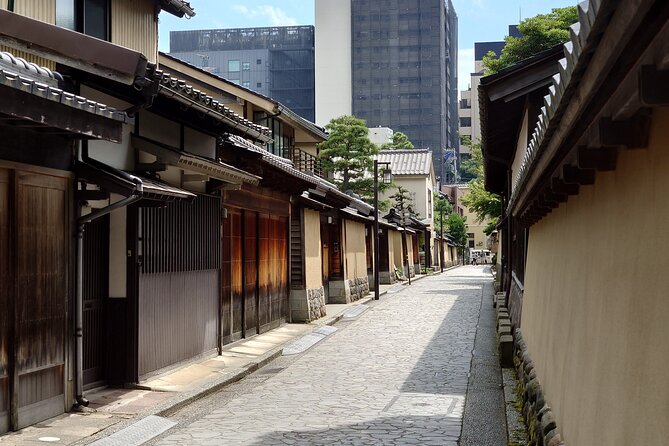
From the Ashigaru homes, the route continues into Nagamachi, Kanazawa’s former samurai district. The streets retain a handsome, traditional appearance, with walls and lanes that make the area feel quite different from the modern station district.
This is a place where walking pays off. A bus can get you nearby, but it cannot give you the same gradual change from one neighborhood to the next. As you proceed, the guide can point out how the district was arranged and how the samurai class shaped the city.
Nagamachi is also a good reminder that Kanazawa is not just a collection of isolated sights. The neighborhoods connect. The route lets you see the city’s past in sequence, from the homes of lower-ranking samurai to the larger castle center.
You will be outside for much of this portion. On wet days, Kanazawa weather can make the pavement unpleasant, and on hot days the walking begins to accumulate quickly. Take advantage of any chance to pause.
Oyama Shrine and an unusual entrance gate
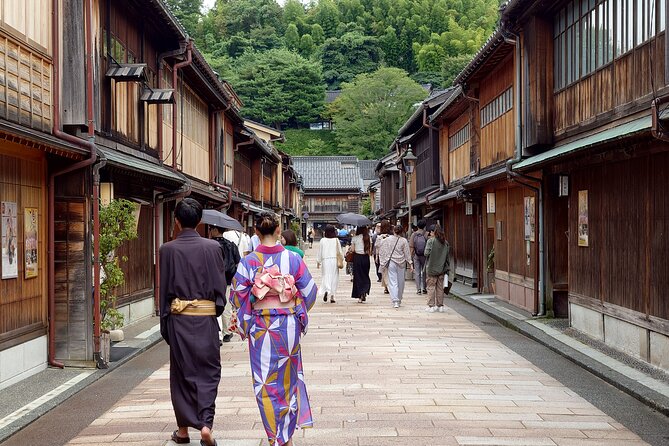
The walk then reaches Oyama Shrine, approached on the way toward Kanazawa Castle. Its gate is unusual in Japan because it uses brick, giving the shrine a look unlike the more familiar wooden and stone entrances found elsewhere.
The stop lasts about 40 minutes and is free to enter. It works well as a transition point. You leave the samurai district behind and begin moving toward the seat of regional power, while the shrine offers a different expression of Japanese religious and architectural life.
The guide’s role matters here. Without context, the gate is simply an odd-looking structure. With an explanation of its design and place in Kanazawa, it becomes a useful example of how the city combines older Japanese traditions with outside architectural influence.
More tea ceremony experiences in Kanazawa:
- Kanazawa: Kenrokuen Tea Ceremony Experience
★ 4.8 · 1,139 reviews - Kyoto: Tea Ceremony in a Traditional Tea House in Kiyomizu
★ 4.9 · 3,519 reviews - Kyoto: Tea Ceremony Ju-An at Jotokuji Temple
★ 4.9 · 3,207 reviews - Kyoto: 45-Minute Tea Ceremony Lesson Experience
★ 4.3 · 2,378 reviews
Matcha at Gyokusen-an, the day’s calmest hour
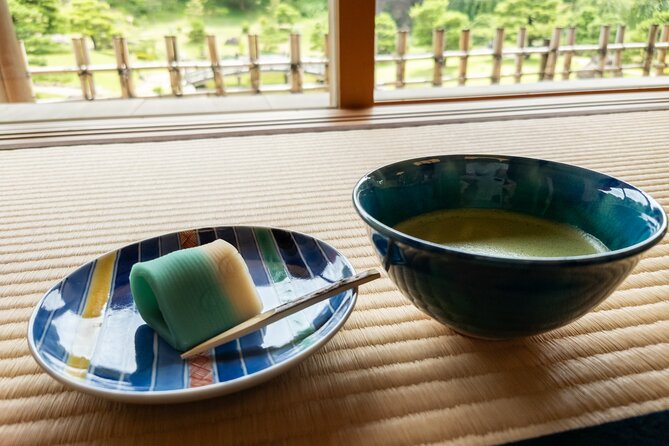
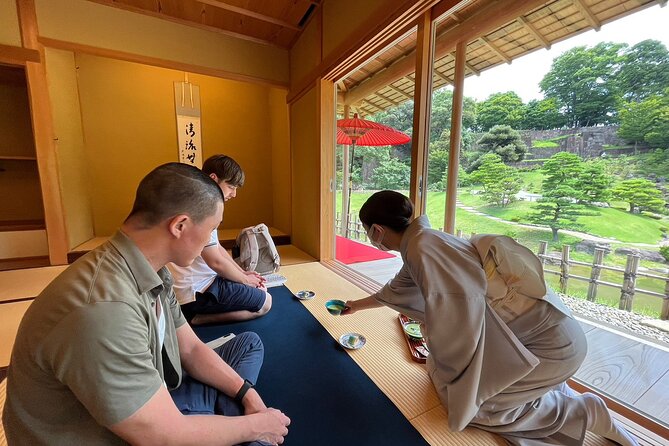
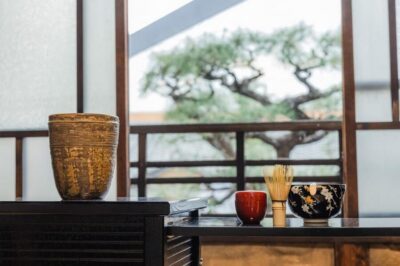
Gyokusen-an is likely to become a favorite stop for many people. Here, you sit for a matcha experience with wagashi sweets while looking toward a centuries-old garden.
The admission and refreshments are included. That makes this more than a quick sample of green tea. It is a planned pause in the middle of a long walking route, and the setting gives you time to slow down before the castle and garden visits.
Matcha can be earthy and bitter if you are used to ordinary tea, while wagashi supplies a small sweet contrast. You do not need to be a tea expert to enjoy the ritual. Simply pay attention to the setting, the bowl, the presentation, and the garden view.
I especially like that this stop is not treated as a souvenir-shop add-on. It connects food, etiquette, design, and garden viewing in one short experience. If you are hoping for an extended tea ceremony lesson, this is not described as one. Expect a focused tea experience rather than a long formal class.
Kanazawa Castle, seen as part of the route
The walk through Kanazawa Castle lasts about 20 minutes. The tour takes you through the grounds on the way to Kenrokuen, allowing you to appreciate the scale of the restored buildings and the broad lawns around them.
This is a relatively short stop, so set your expectations accordingly. You are seeing the castle grounds as one part of a larger city route, not spending half a day examining every building.
That approach works well for first-time visitors who want a broad picture of Kanazawa. You see how the castle relates to the garden and the surrounding districts. If the castle is your main interest, you may want to return independently for more time.
Kenrokuen Garden deserves the longest stop
Kenrokuen receives about 90 minutes, the longest single sightseeing period on the tour. That is sensible. This is not a garden you should rush through in ten minutes with a photograph and a nod.
The route lets you stroll past ponds, trees, teahouses, and carefully composed views over the city. Kenrokuen is designed around traditional Japanese garden principles, where borrowed scenery, changing viewpoints, water, and seasonal details all matter.
You may find that the garden feels different depending on the time of year. One account describes early cherry blossoms, but no season is guaranteed, so book this tour for the garden itself rather than for a particular bloom.
Ninety minutes gives you room to pause and look. It also gives the guide time to explain why certain features were placed where they are, instead of reducing the visit to a list of names.
The drawback is fatigue. By this point, you have already covered the Ashigaru Museum, Nagamachi, Oyama Shrine, and the matcha stop. If you walk slowly or need frequent rests, tell the guide early. The small group makes adjustments more possible, but the route remains a long one.
Higashi Chaya brings the old entertainment quarter to life
After Kenrokuen, the tour heads to Higashi Chaya, one of Kanazawa’s traditional tea districts. The streets are lined with old tea houses, eateries, and craft shops.
Here, the emphasis shifts from military and political history to entertainment and social life. Tea houses in this context were places where geisha performed for wealthy patrons. You can browse during about an hour of free time, though any food, drink, or shopping is at your own expense.
This portion gives you more freedom than the earlier stops. You can look into shops, take photographs from public streets, or simply enjoy the architecture. Keep in mind that this is still a functioning neighborhood, not a stage set. Walk respectfully, follow signs, and avoid treating private doorways as photo props.
Higashi Chaya can feel more crowded than the other areas on this route. That is part of its appeal, but it may also be the least peaceful section of the day.
Inside Ochaya Shima, a closer look at geisha culture
The tour includes entry to Ochaya Shima, a preserved tea house once connected with geisha and their wealthy customers. Inside, colorful walls and musical instruments help show how these establishments were designed and used.
This visit adds depth to the Higashi Chaya walk. From the street, you see attractive facades. Inside Shima, you get a better sense of the rooms, decoration, and performance culture behind them.
The admission is included and the visit lasts about 30 minutes. It is not a live geisha performance based on the information provided, so book it for the preserved building and its historical displays.
Kazuemachi offers a quieter final passage
The final neighborhood is Kazuemachi Chayagai, reached as the route heads back toward the station. It is less crowded than Higashi Chaya, and traditional tea houses line the area near the river.
The stop lasts about 30 minutes and is free. It makes a pleasant closing chapter because it is quieter and more atmospheric than the earlier tea district. You may see signs of the district’s continuing connection with geisha entertainment, though nothing is guaranteed.
By now, the walk has taken you across several sides of Kanazawa: working-class samurai homes, an elite military center, religious architecture, formal gardens, and entertainment quarters. That range is the tour’s strongest feature.
What the guides add to the day
The guide can make or break a route this long. The named guides associated with this experience include Mike, Garrett, Lee, Akari, Daniel, Fadir, and Mohamed, though your assigned guide will depend on the date.
The strongest guide feedback centers on clear explanations of Japanese history and culture, a good sense of humor, and the ability to adjust the pace. Garrett is noted for adapting the route for family members of different ages. Mike is praised for making the day engaging even in rain and hail. Lee is described as flexible and attentive to the group’s rhythm.
Those details matter because the tour is not difficult due to navigation. Kanazawa is walkable. The real benefit is having someone connect the buildings, districts, and customs while you move through them.
The group limit of 15 is another plus. A full group can still feel social, but it is small enough for questions. Some departures may be much smaller, which can make the pace more flexible.
Price, pace, and practical value
At $151.30 per person, this is not the cheapest way to see Kanazawa. You are paying for an English-speaking guide, entry to Kenrokuen, entry to Ochaya Shima, and the matcha and wagashi experience at Gyokusen-an. Lunch and personal purchases are extra.
The value improves if this is your first full day in Kanazawa. You cover many major sights without spending time working out bus routes, opening arrangements, or the best order. The guide also supplies the background that turns a series of attractive streets into a coherent day.
The value is weaker if you prefer slow independent sightseeing or want extended time inside Kanazawa Castle. This route aims for breadth. You see many places, but only Kenrokuen gets a long, unhurried visit.
Wear supportive shoes. Bring water, sun protection, and rain gear suited to the forecast. The experience requires good weather, and poor weather can lead to a different date or a full refund.
Free cancellation is available if you cancel at least 24 hours before the 9:00 a.m. start. Cancellations or changes made inside that window are not refunded or accepted.
Who should book this Kanazawa walking tour?
I would choose this for a first visit, especially if you want one day that covers the city’s main cultural themes. It suits people who enjoy learning while walking and who prefer a guide to handle the route.
It is also a good match for families and mixed-age groups if everyone can manage a long day on foot. The guide may adjust the pace, but you should not book this expecting regular vehicle transfers.
Older visitors can complete it, but fitness matters. One account describes people in their seventies finishing a walk of about 10 miles, while another points out that some seniors became exhausted by the second half. That is a useful warning, not a contradiction. Your pace, the weather, and the group’s walking habits will make a real difference.
Should you book it?
Book this tour if you want a well-shaped introduction to Kanazawa, value historical explanation, and can comfortably walk 10 to 12 kilometers. The samurai homes, Gyokusen-an tea stop, Kenrokuen, and Ochaya Shima give the day a strong mix of architecture, gardens, food, and culture.
Skip it if you dislike long walks, need frequent transport, or want to spend most of your day at one attraction. For everyone else, the combination of a 15-person limit, several included admissions, matcha and sweets, and a route from station to station makes the $151.30 price reasonable for a first full day.
FAQ
Where does the tour start?
It starts at Kanazawa Station at 9:00 a.m.
Where does the tour finish?
The activity ends back at the meeting point near Kanazawa Station.
How long does the tour last?
The advertised duration is approximately nine hours, including a one-hour lunch break.
Is lunch included?
No. You choose and pay for your own lunch, while the guide can provide restaurant recommendations.
How much walking is involved?
The tour is conducted on foot. Plan for roughly 10 to 12 kilometers, with one account describing a route of about 10 miles.
What is the maximum group size?
The tour has a maximum of 15 participants.
Is an English-speaking guide included?
Yes. An English-speaking guide is included.
Is the matcha experience included?
Yes. Matcha tea and wagashi sweets at Gyokusen-an are included.
Are admission fees included?
Entry to Kenrokuen Garden and the preserved Ochaya Shima geisha house is included. The Ashigaru Museum, Nagamachi area, Oyama Shrine, Kanazawa Castle grounds, and Kazuemachi Chayagai are listed without an additional admission charge.
Can I cancel for a refund?
You can cancel for a full refund up to 24 hours before the start time. If poor weather causes the tour to be canceled, you will be offered another date or a full refund.
More Full-Day in Kanazawa
- Kanazawa Full Day Tour (Private Guide)
★ 5.0 · 323 reviews - From Tokyo: Mount Fuji Full-Day Sightseeing Trip
★ 4.5 · 4,970 reviews - Mount Fuji Full-Day Private Tour from Tokyo (Customizable)
★ 4.9 · 1,470 reviews - Hiroshima / Miyajima Full-day Private Tour with Government Licensed Guide
★ 5.0 · 1,298 reviews
Just added around Kanazawa
- Shirakawa-go, Gokayama & Takayama Private Tour From Kanazawa★ 4.7 · 21 reviews
- From Kanazawa/Toyama: Shirakawago and Takayama Day Tour★ 4.7 · 82 reviews
- Kanazawa:Traditional Experience -kimono rent at wargo★ 4.7 · 30 reviews
- Kanazawa: Samurai Swordsmanship Lesson at a rented temple★ 5.0 · 21 reviews
- Kanazawa: Private Tour with Local Guide★ 4.9 · 70 reviews
- Kanazawa Historic Brewery: Fermentation Tour, Tasting, Lunch★ 4.9 · 15 reviews
- Kanazawa: Private Food Tasting Walking Tour★ 4.7 · 25 reviews
- Kanazawa: Private Custom Tour with Local Guide★ 4.9 · 20 reviews
Tea Ceremony Experiences, compared.
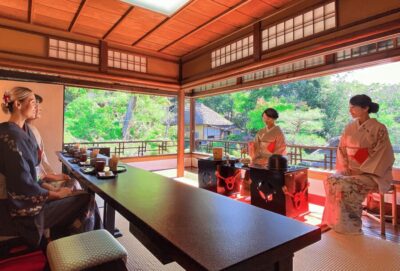
Tea Ceremony in a Traditional Tea House in Kiyomizu
Read our review →
World Heritage Kyoto & Nara Uji Authentic Matcha Experience
Read our review →

Browse the lists this tour appears in