
REVIEW · KIMONO & CULTURE EXPERIENCES
Try Mindful Calligraphy Near Kanazawa’s Ninja Temple
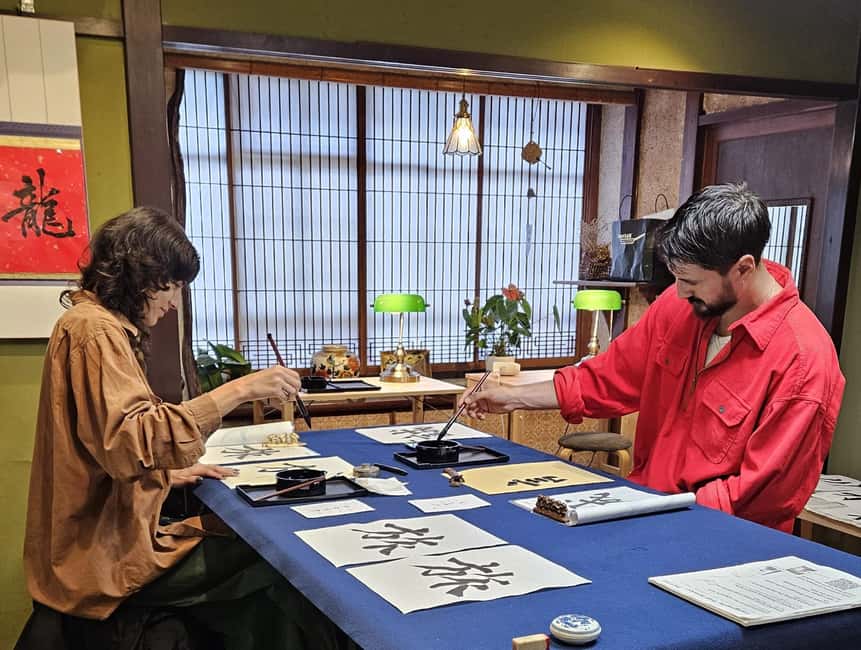
Japanese calligraphy here is not a staged performance. You sit in a real classroom, learn how the brush and ink behave, and work toward a finished piece in a traditional 100-year-old house. Naomi and Daiki guide the lesson in English and Japanese, with a patient approach that suits complete beginners.
I especially like the quiet, focused pace and the fact that you take home art you actually made. I also like the cultural side: you learn why kanji carry meaning and how hiragana and katakana developed from Chinese characters. The main drawback is time. One hour passes quickly, and several people wished they had longer to practice.
In This Review
- Key points at a glance
- A calm art lesson near Kanazawa’s Ninja Temple
- What happens during the one-hour class
- Why the real classroom setting makes a difference
- The quiet appeal of brush, ink, and repetition
- Choosing a word for your finished artwork
- English support without losing the Japanese context
- The value of $44 for one hour
- Getting there and fitting it into your Kanazawa day
- Who should book this calligraphy class
- What the strongest parts of the experience are
- Booking details worth knowing
- Should you book it?
- FAQ
- How much does the calligraphy class cost?
- How long does the experience last?
- Where is the meeting point?
- Which languages are available?
- Is the activity private?
- What do I take home?
- Are there any restrictions I should know about?
Key points at a glance
- Practice before you create: Use guide sheets to work on basic strokes before attempting your final piece.
- Choose your own word: Your finished design can express a name, idea, wish, or Japanese character that matters to you.
- A genuine classroom setting: The lesson takes place at Culture Lab Nomachi, not on a performance stage.
- Take home a usable souvenir: Your artwork goes directly onto a hanging scroll or folding fan.
- Private-group attention: The format lets the instructor adjust help to your group, including families and small parties.
- Easy Kanazawa pairing: The address is near the Ninja Temple area and close to a Kanazawa Loop Bus stop.
A calm art lesson near Kanazawa’s Ninja Temple
Kanazawa gives you plenty of grand sights, but a short craft lesson can be a welcome change from temple halls, gardens, and shopping streets. This calligraphy class gives you a chair, a brush, a pool of ink, and one hour to slow down.
The setting matters. You work inside a traditional house at 1-1-26 Nomachi, Kanazawa, Ishikawa 921-8031. Calligraphy pieces visible from outside help you spot the building, and the nearby Kanazawa Loop Bus stop makes the area simple to reach.
This is a practical cultural experience, not a lecture about Japanese writing. You handle the tools, copy strokes, make mistakes, and try again. The process gives you a better feel for calligraphy than simply watching an expert produce a perfect character.
More Kimono & Culture Experiences in Kanazawa
- Kanazawa: Samurai Residence Remains Nomura Family admission
★ 4.4 · 111 reviews - Kanazawa: Samurai, Matcha, Gardens and Geisha Full-Day Tour
★ 4.9 · 75 reviews - Full-Day Tour from Kanazawa: Samurai, Matcha, Gardens and Geisha
★ 5.0 · 68 reviews
What happens during the one-hour class
The session begins with an explanation of the main calligraphy tools. You learn how to hold and move the brush, how ink is used, and how pressure changes the line. Beginners do not need to arrive with artistic training. The early exercises are there to help you understand the brush before the finished work begins.
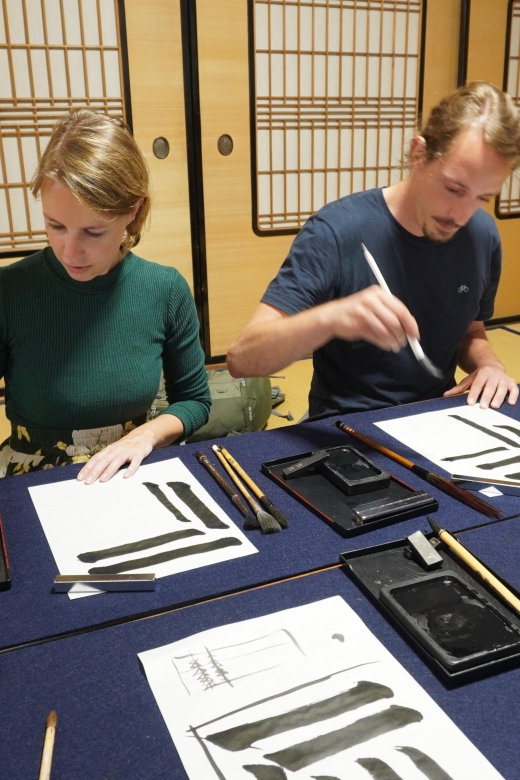
Next comes practice with guide sheets. You repeat basic strokes and work on brush control under the instructor’s direction. This part may feel modest, but it is where the lesson earns its value. A calligraphy brush does not behave like a pen, and the shape of each stroke depends on speed, angle, and pressure.
After some practice, you choose the word or character for your final artwork. The lesson also explains the three writing systems used in Japanese:
- Kanji: Meaning-based characters with roots in Chinese writing.
- Hiragana: Flowing phonetic characters used in Japanese writing.
- Katakana: Another phonetic script, often used for foreign words and names.
The instructor connects the writing systems to Japanese culture and aesthetics. You are not simply copying an attractive symbol without context. You get a basic sense of what your chosen word means and why the shape looks the way it does.
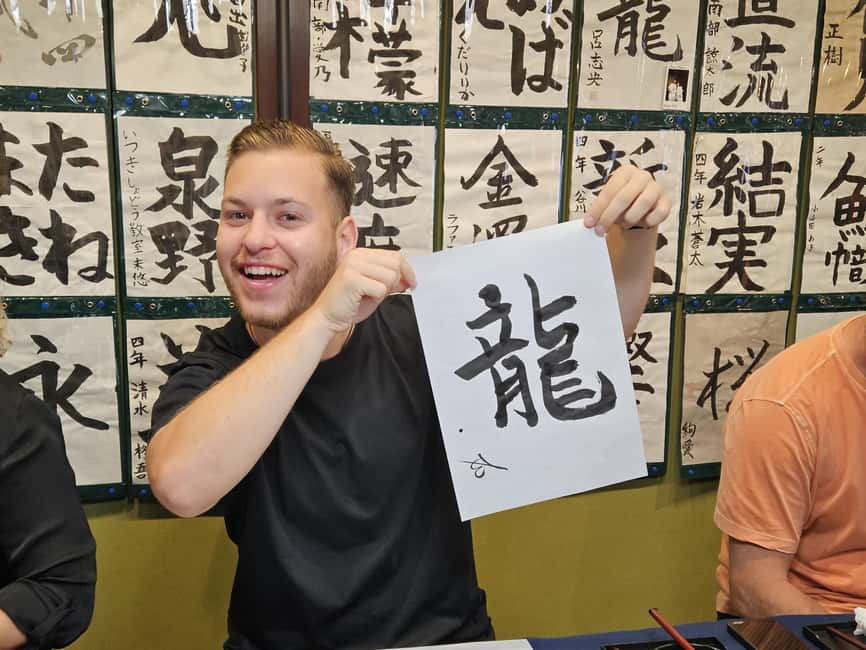
Finally, you make the finished piece. Depending on the option used in the class, your work is placed directly on a hanging scroll or folding fan. You can take it home as a souvenir, which gives the activity a satisfying finish. It is both a small artwork and a reminder of the time you spent learning how it was made.
Why the real classroom setting makes a difference
Many cultural activities are designed for watching. This one asks you to participate from the first strokes. You see the instructor demonstrate a technique, then find out for yourself how difficult it is to repeat.
That gap between seeing and doing is useful. A master calligrapher can make a brushstroke look effortless, but your own first attempt shows the control behind the craft. One person who joined the class with a husband described the experience as part history lesson, part language study, and part art class. That combination is a fair description of what makes this activity different from a quick souvenir workshop.
The school also has a family connection. Naomi teaches with warmth and patience, and Daiki is able to explain the process in English. In some sessions, Daiki’s husband, a master calligrapher, has also offered explanations. The exact teaching team may vary, but the class is built around direct instruction rather than a scripted show.
On Thursdays and Saturdays after 3:00 PM, local children may also be attending the calligraphy school. That can give you a glimpse of calligraphy as a living school subject and regular practice, rather than something created only for visitors. It may also mean a livelier classroom during those times, so choose your start time with that in mind if quiet is your priority.
The quiet appeal of brush, ink, and repetition
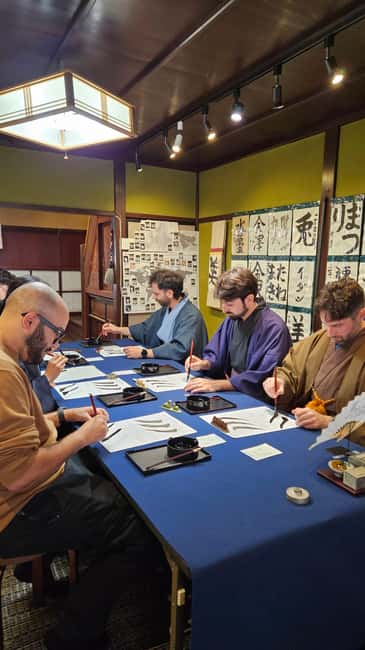
Calligraphy rewards attention. You have to watch the brush, steady your hand, and think about the beginning and end of every stroke. For an hour, that can pull your mind away from train schedules and sightseeing plans.
I like this activity after a busy morning. It is not physically demanding, and there is no need to race from one display to the next. The calm atmosphere gives you a chance to sit down and make something with your hands.
The class is encouraging rather than competitive. You practice before creating the final piece, so a crooked line is part of the learning process, not a disaster. Several participants found the teachers patient and supportive, including people who felt they were not naturally good at art. That matters because calligraphy can look intimidating when you see an expert’s finished work.
Still, the meditative quality depends partly on your group and timing. A private group usually helps, but the one-hour limit means the class must keep moving. If you want long practice sessions or detailed instruction in several scripts, this introductory lesson will feel too short.
More temple & shrine tours in Kanazawa:
- Kanazawa: Samurai Swordsmanship Lesson at a rented temple
★ 5.0 · 21 reviews - Kyoto: Fushimi Inari, Kinkakuji, Bamboo Grove 1 Day Bus Tour
★ 4.8 · 4,316 reviews - Kyoto: Tea Ceremony in a Traditional Tea House in Kiyomizu
★ 4.9 · 3,519 reviews - Kyoto: Tea Ceremony Ju-An at Jotokuji Temple
★ 4.9 · 3,207 reviews
Choosing a word for your finished artwork
Choosing the final word is one of the best parts of the class. You might select a kanji connected with a personal value, a feeling, a family name, or an idea from your trip. The information provided during the lesson helps you make a choice with some understanding behind it.
You should not expect to master Japanese writing in one hour. The goal is smaller and more useful: learn the basic movement of the brush, understand a little about the scripts, and create one piece that carries meaning for you.
The finished work also makes a better souvenir than a mass-produced item because your hand is part of it. It will not look exactly like the instructor’s version, and that is the point. Your artwork records where you were and what you tried.
A hanging scroll may suit you if you want a traditional display piece. A folding fan is lighter and easier to pack. The details may depend on the class arrangement, so check which format is available when you book if that choice matters to you.
English support without losing the Japanese context
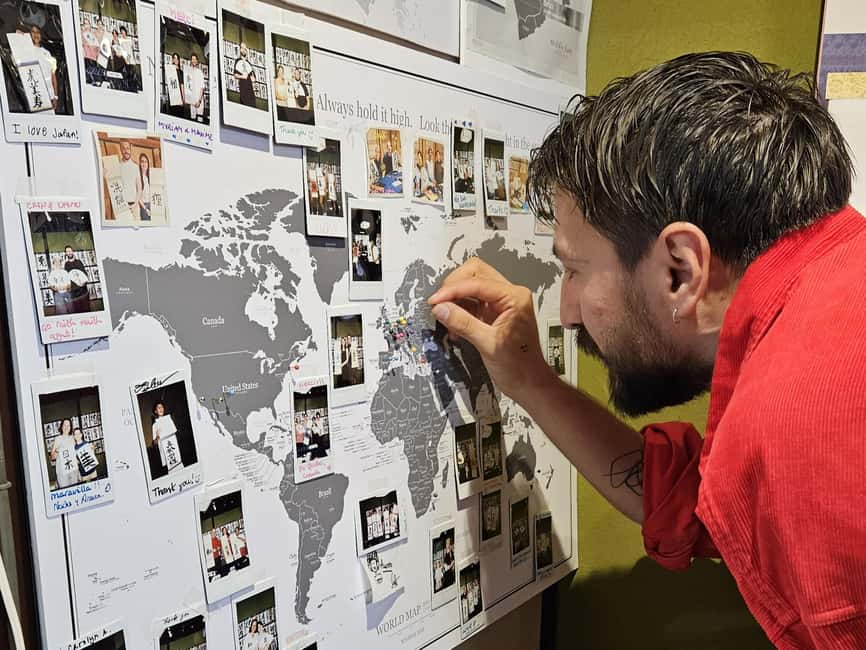
The instructors teach in English and Japanese. English-speaking participants have been able to follow explanations of the tools, practice strokes, and cultural background without needing prior Japanese.
That support is especially useful when you choose a word. Japanese characters can carry several layers of meaning, and an English explanation helps you avoid selecting a character simply because it looks attractive. The lesson gives you enough context to make a more informed choice.
The English is practical rather than academic. You learn what you need to use the brush and understand the activity. If you want a detailed course in Japanese linguistics, this is not the right format. If you want a clear introduction while making something, it fits well.
Naomi’s gentle teaching style has been particularly helpful for beginners, while Daiki’s English communication makes the technical instructions easier to follow. Small groups can receive a good amount of personal correction, and one two-person session received especially close attention.
The value of $44 for one hour
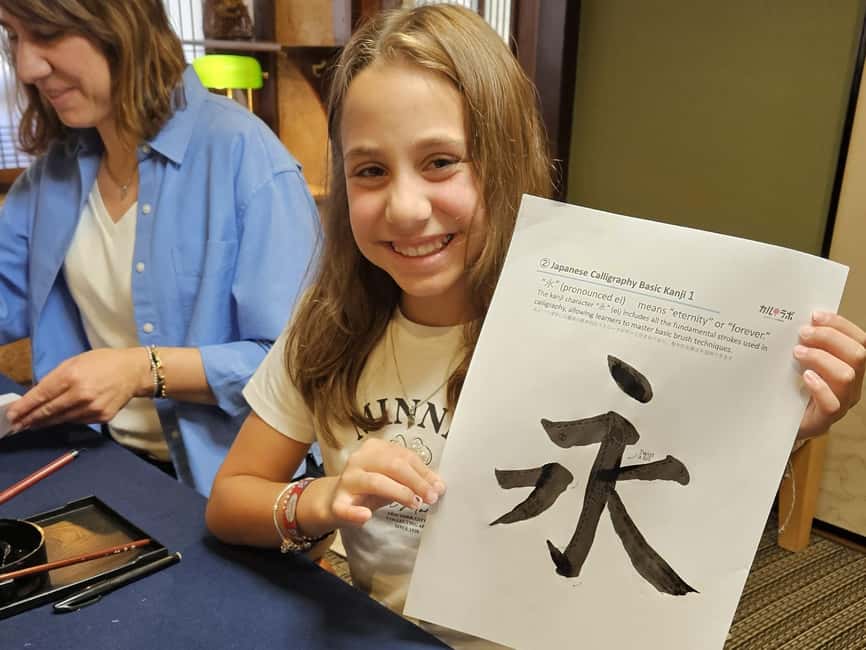
At $44 per person, this is not a cheap drop-in craft table. The price makes more sense when you count the complete experience: instruction, guided practice, cultural explanation, use of traditional tools, and a finished piece to take home.
The private-group format also affects the value. You are not simply standing in a crowded room waiting for a turn with the teacher. The instructors can watch your strokes, correct your grip, and help you prepare the final design.
The souvenir is part of the value, but it should not be the only reason to book. If you want the least expensive way to buy Japanese calligraphy, a shop will cost less. If you want to understand the process and create your own artwork, the class offers more than a purchase.
I would consider it a good use of money for couples, friends, and small families who want a creative activity in Kanazawa. It is also a sensible choice on a rainy day or after several hours of sightseeing, when another major attraction may feel like work.
Getting there and fitting it into your Kanazawa day
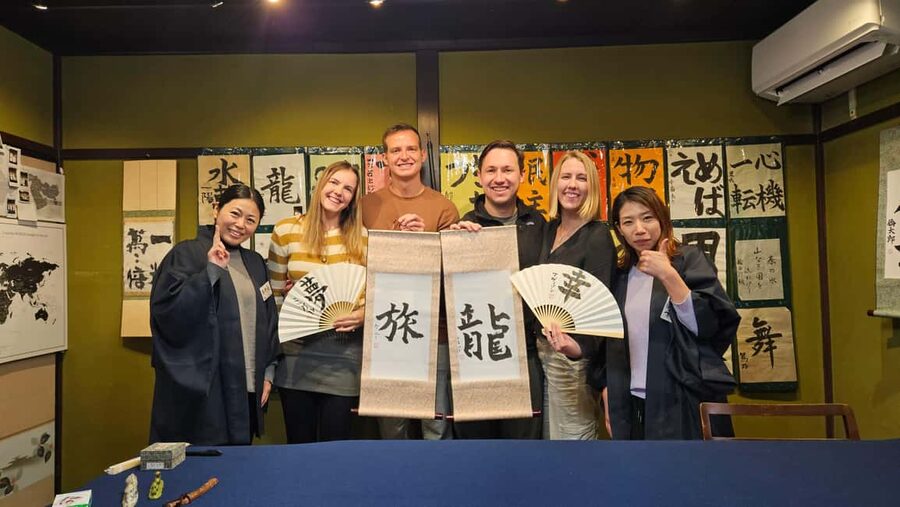
The meeting point is at Culture Lab Nomachi, 1-1-26 Nomachi. Calligraphy visible from outside helps you identify the building, and the nearby Kanazawa Loop Bus stop provides a useful public transport connection.
The location works well with a visit to Kanazawa’s Ninja Temple area. Do not assume you can wander in at any time, however. Check the class starting times and allow enough time to reach Nomachi without rushing.
Because the class lasts one hour, you can fit it between larger sights. I would avoid scheduling it directly before a timed reservation unless you have a comfortable buffer. The final artwork may need careful handling as you continue your day, especially if you choose a scroll or fan that you do not want bent or crushed in a bag.
The activity is private, but the exact number in your group still matters. A group of two can expect very personal help. A group of six can also receive guidance, but the lesson will naturally feel more shared. For the calmest experience, a smaller group and an earlier session may suit you best.
Who should book this calligraphy class
This activity is a strong match for you if you:
- Want a hands-on introduction to Japanese culture.
- Prefer making something over watching a demonstration.
- Like quiet, focused activities.
- Are traveling as a couple, family, or small private group.
- Want an English-supported lesson.
- Would value a personal souvenir with a story behind it.
- Need a one-hour activity that can fit around sightseeing.
Children under five are not accepted. Older children may enjoy the brush practice, especially if they can sit quietly and follow instructions, but the experience is still an art lesson rather than a free-play activity.
Vegans should not book this activity. Traditional calligraphy tools such as brushes and ink can contain animal-derived materials. This is an important detail to check before reserving.
The class also suits people who are not confident artists. The teachers provide guide sheets and encouragement, and the finished piece is produced only after practice. You do not need to create a perfect character to come away with something meaningful.
What the strongest parts of the experience are
The teachers are the heart of the class. Naomi is described as kind, patient, and encouraging, and Daiki provides clear English help. That combination lowers the barrier for beginners who might otherwise worry about using unfamiliar tools.
The atmosphere is another major strength. People looking for a calm hour away from sightseeing pressure will find the repeated brush movements rewarding. You still learn and make a souvenir, but the process does not feel hurried or showy.
The cultural explanation adds depth. Learning about kanji, hiragana, and katakana gives you a little more understanding of the writing you see on signs, menus, and shop fronts throughout Japan.
The main weakness is the short duration. You have enough time for an introduction and a finished piece, but not enough for serious study. If you become absorbed in the practice, you may wish the lesson continued.
Booking details worth knowing
The price is $44 per person, and the duration is one hour. Starting times vary, so check availability for your date before building the rest of your Kanazawa plans.
You can cancel up to 24 hours in advance for a full refund. A reserve-now, pay-later option is also available, which helps if your route through Japan is still changing.
The activity is offered in English and Japanese and is set up for a private group. Calligraphy tools may include animal-derived materials, so vegans should avoid the class. Children under five are also not suitable for this experience.
Should you book it?
Book this class if you want a personal, quiet souvenir and a real chance to try Japanese calligraphy rather than watch someone else perform it. The traditional house, English guidance, patient teachers, and choice of your own word give the hour a clear sense of purpose.
Skip it if you want advanced instruction, a long art session, or a fully vegan activity. For most beginners, though, $44 is reasonable because you receive both the lesson and a finished piece made by your own hand. I would place it high on a Kanazawa schedule for couples, small groups, and anyone who needs a peaceful break near the Ninja Temple area.
FAQ
How much does the calligraphy class cost?
The activity costs $44 per person.
How long does the experience last?
The calligraphy lesson lasts one hour.
Where is the meeting point?
The meeting point is Culture Lab Nomachi at 1-1-26 Nomachi, Kanazawa, Ishikawa 921-8031. Calligraphy works are visible from outside the building, and a Kanazawa Loop Bus stop is nearby.
Which languages are available?
The instructor supports the activity in English and Japanese.
Is the activity private?
Yes. The group type is private.
What do I take home?
Your completed calligraphy work is made directly on a hanging scroll or folding fan and can be taken home as a souvenir.
Are there any restrictions I should know about?
Children under five cannot join, and the activity is not suitable for vegans because traditional calligraphy brushes and ink can contain animal-derived materials.
Just added around Kanazawa
- Shirakawa-go, Gokayama & Takayama Private Tour From Kanazawa★ 4.7 · 21 reviews
- From Kanazawa/Toyama: Shirakawago and Takayama Day Tour★ 4.7 · 82 reviews
- Kanazawa:Traditional Experience -kimono rent at wargo★ 4.7 · 30 reviews
- Kanazawa: Samurai Swordsmanship Lesson at a rented temple★ 5.0 · 21 reviews
- Kanazawa: Private Tour with Local Guide★ 4.9 · 70 reviews
- Kanazawa: Private Food Tasting Walking Tour★ 4.7 · 25 reviews
- Kanazawa Historic Brewery: Fermentation Tour, Tasting, Lunch★ 4.9 · 15 reviews
- Kanazawa: Private Custom Tour with Local Guide★ 4.9 · 20 reviews
Kimono & Culture Experiences, compared.
Kyoto Geisha Walking Tour: Gion District & Hidden Gems
Read our review →
Gion Magical Night Walking Tour with Geisha Trivia
Read our review →
Gion Geisha District Walking Tour – Stories of Geisha
Read our review →
Best of Kyoto: Gion, Geisha, Pagodas & Cobblestones
Read our review →
Kyoto Gion Geisha District Walking Tour – The Stories of Geisha
Read our review →
Browse the lists this tour appears in