
REVIEW · TEMPLE & SHRINE TOURS
Full Day Tour Eiheiji Buddhist Temple and Fukui City Castle Town
Fukui’s greatest surprise is how much it packs into one day. You move from castle walls and a city moat to hilltop shrines, then out into the mountains to Eiheiji, one of Zen Buddhism’s head temples. The tour also visits Zuigenji, where former castle buildings were moved and preserved, giving you an unusual look at Japanese history.
I like the efficient transport from Kanazawa and the chance to see a part of Japan that many visitors skip. I also like the small-group feel, with a maximum of 20 people, and the personal touch that guides such as Mike and Garrett can bring. A private meeting with Eiheiji’s head monk may be possible, though it should not be treated as guaranteed.
The main drawback is the pace. Nine and a half hours is a long day, and you cover several sites with plenty of walking and stair climbing. Lunch is not included, so you need to plan for that break yourself.
In This Review
- Key points to know before booking
- Why Fukui makes a fine day trip from Kanazawa
- Zuigenji and the castle rooms moved to a temple
- Fukui Castle Ruins and a moat still used today
- Atagozaka’s stairways and Fukui from above
- Lunch in Fukui and the ride to Eiheiji
- Four hours at Daihonzan Eiheiji Temple
- The guides and the value of a small group
- Is $158.08 a fair price?
- Who will enjoy this day, and who may not
- Should you book the Eiheiji and Fukui tour?
- FAQ
- Where does the tour begin?
- Where does the tour end?
- How long does the tour last?
- Is transportation included?
- Is lunch included?
- Is admission to Eiheiji included?
- Is the tour conducted in English?
- How many people can join the tour?
- Can I cancel for a full refund?
Key points to know before booking
- Zuigenji adds an unusual castle connection: See rooms and buildings linked to Fukui’s former castle, rather than only viewing foundations outdoors.
- Fukui Castle is still part of the working city: The original walls and moat surround prefectural offices and police headquarters.
- Atagozaka brings the best city views: The stairways climb a hill with more than a thousand years of religious history.
- Eiheiji receives the most time: About four hours are set aside for the temple and the journey by direct local bus.
- Your guide shapes the day: Mike and Garrett have led highly personal tours, including one visit that featured a private meeting with the head monk.
- The price includes the important moving parts: Transport, an English-speaking guide, local bus travel, and Eiheiji admission are covered, but lunch is extra.
Why Fukui makes a fine day trip from Kanazawa
Kanazawa gets much of the attention in the Hokuriku region, and rightly so. Yet Fukui offers a different view of the area. It has been a route between the Sea of Japan coast and inland Japan, and its position made it important during wars, trade, and political change.
This day tour works because it joins two sides of Fukui. In the city, you see the remains of political power: moats, defensive stonework, old castle connections, and high ground used for worship. At Eiheiji, the mood changes. The focus shifts from rulers and battles to Zen practice, temple buildings, quiet courtyards, and mountain surroundings.
From Kanazawa Station, the day begins outside the Shinkansen ticket gate, in front of the information center sign. That is a sensible meeting point, but give yourself time to find the correct exit and sign. Once everyone is together, the guide handles the movement toward Fukui and the day’s stops.
The tour lasts about nine hours and 30 minutes, so you should treat it as a full day rather than a casual side trip. The schedule gives you a useful amount of time at Eiheiji, but it leaves little room for long detours or an unhurried meal.
More temple & shrine tours in Kanazawa:
- Try Mindful Calligraphy Near Kanazawa’s Ninja Temple
★ 5.0 · 50 reviews - Kanazawa: Samurai Swordsmanship Lesson at a rented temple
★ 5.0 · 21 reviews - Kanazawa Ninja Temple Half Day E-bike tour
★ 5.0 · 14 reviews
Zuigenji and the castle rooms moved to a temple
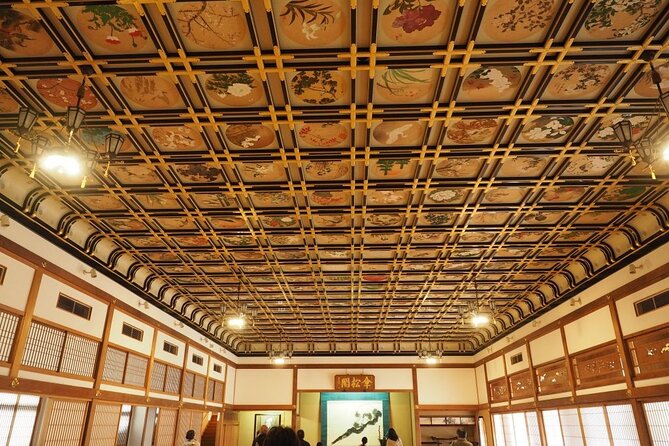
The first stop is Zuigenji Cemetery, with roughly three hours assigned to this opening section. The most interesting feature is the connection to Fukui Castle. Parts of the former castle were moved here, allowing you to see rooms and architectural details in a religious setting rather than at the original castle site.
That is valuable because Japanese castles often survive only as stone walls, gates, or reconstructed buildings. At Zuigenji, the story is more complicated. The castle’s former structures were given another life, and the guide can explain how political buildings became part of a temple and cemetery setting.
This is also where the guide’s role matters most. Without context, moved buildings can seem like attractive old rooms. With an English-speaking guide, you can follow the changes in power, use, and ownership that shaped the site.
The opening section is listed as free admission, with a guided visit to Zuigenji’s castle rooms included. You should expect walking and time spent listening as well as looking. If your main goal is polished architecture, the cemetery setting may feel less dramatic than a major castle complex. If you enjoy the way Japanese places change over time, it is an excellent beginning.
Fukui Castle Ruins and a moat still used today
Next comes Fukui Castle, reached on foot for a visit of about an hour and a half. The original walls and moat are the main attraction. They show the scale and defensive logic of the old stronghold, even though the complete castle is gone.
The unusual part is what occupies the site now. Fukui’s prefectural office and police headquarters sit inside the former castle grounds. This is not a frozen historical park. It is a working government center built into the footprint of the old seat of power.
I like this stop for precisely that reason. You see history in daily use rather than behind a perfect museum fence. The contrast may also surprise you. Stone walls and water defenses suggest feudal authority, while office buildings and police facilities point to modern civic life.
There is no admission fee listed for this stop. The walk is manageable for most people, but the full day will already be adding up. Comfortable shoes are a must, especially if you are also planning to climb Atagozaka and spend time walking around Eiheiji.
Do not expect a restored main keep. The appeal is in the walls, moat, site plan, and the odd but revealing mix of old and new. Your guide can help you read what is left, which makes this more worthwhile than a quick photo stop.
Atagozaka’s stairways and Fukui from above
Before lunch, the group climbs Atagozaka, a series of stairways leading up a broad set of hills. The visit lasts about an hour. Near the top is one of the oldest shrines in the prefecture, along with views toward the modern city skyline.
This is the most physical part of the city section. The climb may be modest for an active walker, but stairs affect everyone differently, especially after a morning of walking. Take the ascent at your own pace and use the time to look back as the city opens below you.
Atagozaka gives the day a useful change of angle. From the castle ruins, you understand Fukui as a fortified center. From the hill, you see its present-day form and the long religious use of the high ground. The view also helps explain why hills and shrines have mattered in Japanese cities for centuries.
The stop is free, and the value comes from the setting and the guide’s explanation. It is not a large attraction with many indoor exhibits. You come for the climb, the shrine, and the view. If stairs are difficult for you, ask the guide early about the walking demands of this section.
More garden & palace tours in Kanazawa:
- Osaka Castle: Museum and Tower Entry Ticket
★ 4.5 · 2,380 reviews - Tokyo: Imperial Palace and Shogun Historical Walking Tour
★ 5.0 · 2,251 reviews - Osaka: teamLab Botanical Garden Entry Ticket
★ 4.5 · 1,710 reviews - Tokyo Castle & Imperial PalaceーShogun Walking Tour
★ 4.7 · 1,068 reviews
Lunch in Fukui and the ride to Eiheiji
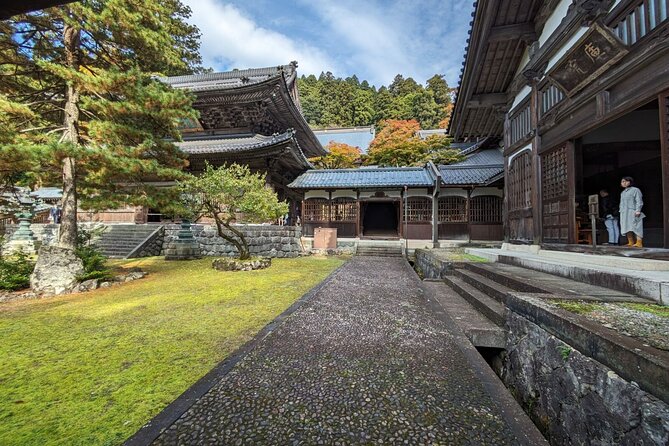
After Atagozaka, you have lunch in Fukui. The meal is not included, but the guide can recommend local Fukui specialties. That arrangement keeps the cost flexible, though it also means you should budget for food separately.
A guide’s help is useful here because Fukui food may be unfamiliar if you have stayed mainly in Kanazawa and Tokyo. Still, the tour does not promise a particular restaurant or dish, so keep your expectations open. You can ask for suggestions based on your appetite, budget, and available time.
After lunch, you meet back at Fukui Station and take the direct bus to Eiheiji. Local transport is included, which removes one of the day’s practical headaches. You do not need to work out the bus connection on your own, and the guide can keep the group moving toward the temple.
The bus segment also gives you a short break from walking. That matters on a nine-and-a-half-hour outing. At the same time, public transport can be affected by normal delays or changes, and the schedule is not as flexible as a private car.
Four hours at Daihonzan Eiheiji Temple
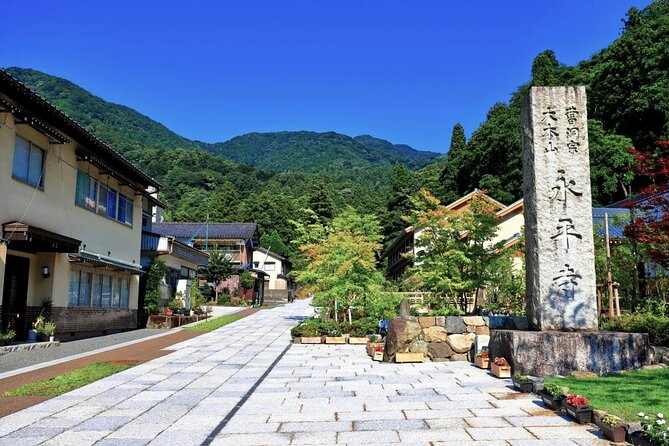
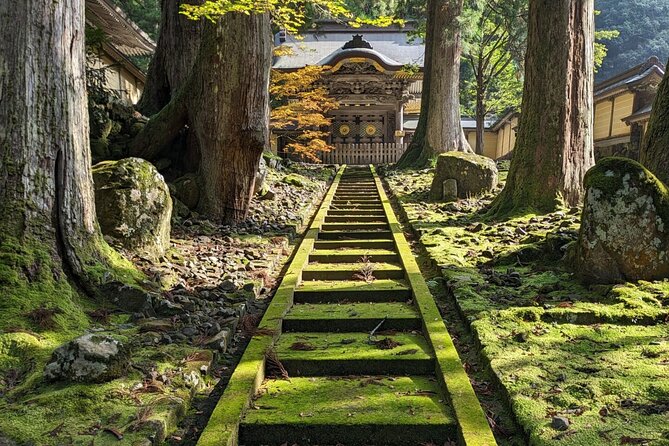
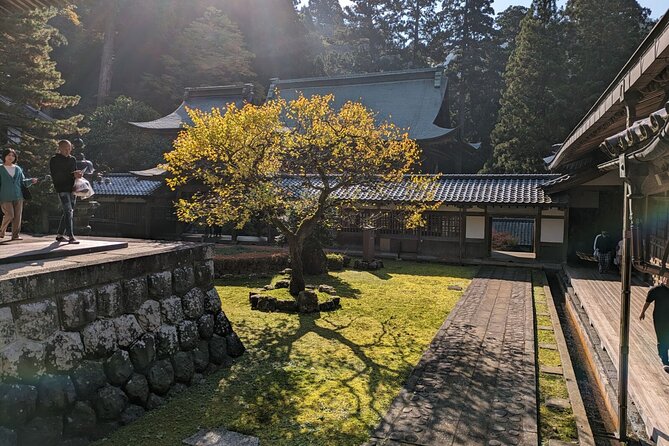
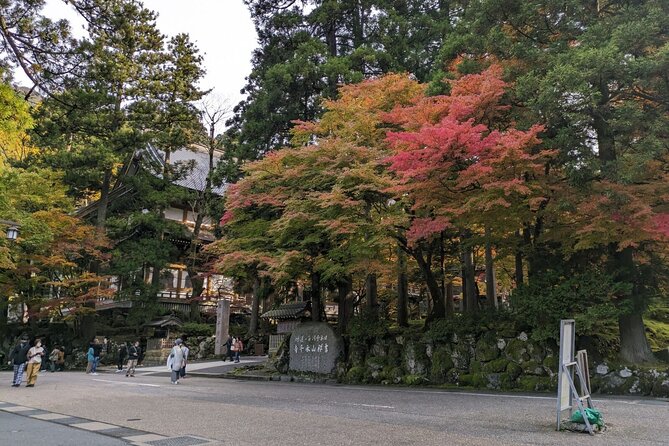
Eiheiji is the centerpiece of the tour, with about four hours assigned to the temple and this part of the journey. It is one of the head temples of Zen Buddhism, set in an idyllic mountain location away from Fukui’s city streets.
The extra time is a major strength. Many day trips reduce a temple visit to a quick circuit and a few photographs. Four hours lets you pay attention to the buildings, religious spaces, and atmosphere without racing through every hall.
Admission to Eiheiji is included. The guided visit is also included, so you get more than transport to the gate. The guide can explain what you are seeing and help you understand the temple as an active place of Zen practice, not simply an old collection of buildings.
One especially appealing possibility is a private meeting with the head monk. This was part of one highly praised visit, but it depends on availability and should not be assumed. If it happens, it can turn a strong temple visit into a far more personal encounter. Ask your guide about the day’s arrangements without expecting a promise.
Eiheiji may be the place where you most appreciate the difference between seeing and understanding. Temple architecture can look similar from one hall to the next if you do not know what matters. A guide can point out the details and customs that give the setting meaning.
The mountain setting also provides a clear contrast with the city stops. You move from government offices inside castle walls to a major Buddhist center surrounded by trees and hills. The shift is one of the pleasures of the day.
The guides and the value of a small group
The tour allows up to 20 people, though the actual group size may vary. A group this size is small enough for a guide to manage questions and keep track of everyone, but it is not a private tour.
The strongest guide feedback has focused on warmth, humor, and personal attention. Mike was praised for creating a relaxed small-group mood, while Garrett led a day described as both informative and calm. Those details matter because this experience depends on explanation and timing, not just entrance tickets.
You should also know that guide assignments can change. Book with the expectation of an English-speaking guide, not a guaranteed particular person, unless the provider confirms otherwise.
A good guide is especially helpful at Zuigenji, the castle ruins, and Eiheiji. These sites reward questions. Ask about the castle rooms, the use of the moat, the age of the shrine at Atagozaka, and the role of Eiheiji in Zen Buddhism.
Is $158.08 a fair price?
At $158.08 per person, this is not the cheapest way to reach Fukui. The price becomes easier to justify when you count what is included: transport from Kanazawa, movement between Fukui and Eiheiji, local bus travel, an English-speaking guide, guided visits, and Eiheiji admission.
You still pay for lunch, and the tour does not provide private transportation. If you prefer to explore at your own speed, you could build an independent Fukui day around trains, buses, and self-guided visits. That may cost less, but you would need to research connections, organize timing, and find explanations at each stop.
I see the tour as a reasonable value for someone based in Kanazawa who wants a managed day with historical context. The price is less attractive if you already know Fukui well, speak Japanese, and are comfortable arranging public transport yourself.
The fact that it is often booked about 82 days ahead suggests you should not leave it until the last minute, especially if your Kanazawa schedule is fixed. Confirmation is provided at booking, but all activities remain subject to availability, and the provider may need to adjust a stop if a venue cannot accept the group.
Who will enjoy this day, and who may not
I would recommend this experience to you if you want a broad introduction to Fukui in one day. It suits people who enjoy temples, old defensive sites, city views, and guided explanation more than those seeking a single slow, meditative visit.
It is also a good fit for visitors who are based in Kanazawa and do not want to solve every train and bus connection alone. The included transport lets you reach Eiheiji without turning the day into a timetable exercise.
You should think twice if you dislike stairs, long days, or a fixed schedule. The route combines several stops, walking sections, a lunch break, and a bus ride. It is not designed for spending an entire afternoon in one quiet temple hall.
The maximum group size of 20 is another practical point. You may get a friendly, personal experience, but you should not expect the silence or flexibility of a private guide.
Cancellation is free up to 24 hours before the start time for a full refund. Changes or cancellations inside that 24-hour window are not accepted for a refund, so keep your local schedule firm once the deadline passes.
Should you book the Eiheiji and Fukui tour?
Book it if you want to see Fukui beyond the obvious stops and value a guide who can connect castle remains, shrines, city views, and Zen Buddhism. The four hours at Eiheiji, included entry, and organized transport make the day especially useful from Kanazawa.
Skip it if you want a slow pace, a private vehicle, or a guaranteed meeting with the head monk. For everyone else, this is a strong way to reach a less visited part of the Hokuriku region without sacrificing the stories that make the places meaningful.
FAQ
Where does the tour begin?
The tour begins at Kanazawa Station, outside the Shinkansen ticket gate, in front of the information center sign.
Where does the tour end?
The activity ends back at the meeting point in Kanazawa.
How long does the tour last?
The tour lasts approximately nine hours and 30 minutes.
Is transportation included?
Yes. Transportation from Kanazawa to Fukui, travel between Fukui and Eiheiji, and the local Fukui bus are included.
Is lunch included?
No. Lunch is not included, although you can ask the guide for recommendations for local Fukui specialties.
Is admission to Eiheiji included?
Yes. The entry fee for Eiheiji Temple is included.
Is the tour conducted in English?
Yes. An English-speaking guide is included.
How many people can join the tour?
The tour has a maximum group size of 20 people.
Can I cancel for a full refund?
Yes. You can cancel at least 24 hours before the experience start time for a full refund. Changes or cancellations made less than 24 hours before the start time are not accepted.
More Full-Day in Kanazawa
- Kanazawa Full Day Tour (Private Guide)
★ 5.0 · 323 reviews - Kanazawa: Samurai, Matcha, Gardens and Geisha Full-Day Tour
★ 4.9 · 75 reviews - Full-Day Tour from Kanazawa: Samurai, Matcha, Gardens and Geisha
★ 5.0 · 68 reviews - Kanazawa Full Day Private Tour to Top Highlights with Local Guide
★ 5.0 · 19 reviews
Just added around Kanazawa
- Kanazawa: Sushi & Japanese Cooking Class at a Historic School★ 5.0 · 66 reviews
- Taste of Kanazawa (Food tasting in Omicho Market & Higashi Chaya)★ 5.0 · 58 reviews
- Photoshoot session by professional photographer in Kanazawa★ 5.0 · 42 reviews
- Takayama and Shirakawago/Photoshoot by professional photographer★ 5.0 · 67 reviews
- Shirakawago & Kanazawa from Kanazawa★ 5.0 · 51 reviews
- Kanazawa private 1 day/Photoshoot by professional photographer★ 5.0 · 33 reviews
- Private Tour of Shirakawago from Kanazawa (Half Day)★ 5.0 · 24 reviews
- Kanazawa private half day/Photoshoot by professional photographer★ 5.0 · 38 reviews
Temple & Shrine Tours, compared.
Tea Ceremony in a Traditional Tea House in Kiyomizu
Read our review →
Meiji Shrine, Asakusa, Skytree Bus Tour and Cruise
Read our review →
Asakusa Walking Tour with Sensoji Temple Visit
Read our review →
Kamakura & Enoshima Day Trip including Temple Tickets
Read our review →
Kyoto/Osaka: Nara, Fushimi Inari Taisha, Arashiyama Bus Tour
Read our review →
Nikko Toshogu Shrine and Kegon Waterfall Tour
Read our review →
Tokyo Panoramic 1 Day: Meiji Shrine, Asakusa, Odaiba and SKYTREE®
Read our review →Browse the lists this tour appears in