
REVIEW · JAPANESE COOKING CLASSES
Kyoto Udon and Tempura Cooking Class with Professional Chefs
Fresh udon is the star here. You start with flour and water, then knead, roll, and cut the dough under the guidance of a local udon master. Josh and Nakajima-san lead the class in English, making this a practical way to learn a few Japanese dishes instead of simply watching someone else cook.
I like the hands-on mix of four dishes, from chewy noodles to crisp tempura, and I like that you eat the finished meal with two drinks, including a sake option. The main drawback is timing: at two and a half hours, the class covers a lot, so this is more of a lively introduction than a slow, detailed cooking course.
In This Review
- Key Points
- Why This Kyoto Cooking Class Works
- Starting With Flour, Water, and Udon Dough
- Onigiri and Inari Sushi Bring Rice Into the Meal
- Frying Shrimp and Vegetables Into Tempura
- The Meal at the End Is Part of the Lesson
- Josh, Nakajima-san, and the Small Group Format
- Price, Timing, and What the $85.39 Covers
- Recipes and Photos Make the Class More Useful
- Who Should Book This Experience
- Should You Book the Kyoto Udon and Tempura Class?
- FAQ
- Where does the cooking class start?
- What time does the activity begin?
- How long does the experience last?
- What dishes will I learn to make?
- Are drinks included?
- Is transportation included?
- How many people can join the class?
- Are recipes provided after the class?
Key Points
- Hand-cut udon: Knead, roll, and slice noodles from basic flour and water.
- Four Japanese dishes: Make udon, tempura, onigiri, and inari sushi from scratch.
- Small group setting: The class accepts a maximum of eight people.
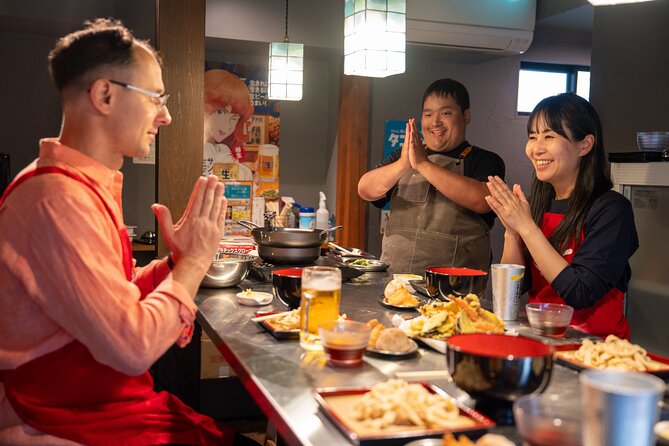
- English instruction: Spend the session with a local udon master and English-speaking guide.
- Meal and drinks included: Eat what you prepare and enjoy two alcoholic or non-alcoholic drinks.
- Useful take-home extras: Receive downloadable English recipes and photos by email after the class.
Why This Kyoto Cooking Class Works
Kyoto has plenty of beautiful temples, gardens, and old streets. Food gives you a different way into the city. In this class, you work with everyday Japanese staples that are easy to recognize once they reach the table: noodles, rice, seafood, vegetables, and fried batter.
The appeal is not fancy restaurant technique. It is the simple satisfaction of making a meal with your own hands. You get to see how a basic dough turns into udon, how rice becomes onigiri and inari sushi, and how a hot pan turns vegetables and shrimp into tempura.
I also like the balance of structure and fun. The class is guided by a local udon master, while an English-speaking guide helps keep the instructions clear. That matters when you are handling unfamiliar ingredients or trying to judge the right texture of noodle dough.
The group limit of eight is another real advantage. You are not lost in a large demonstration crowd. The format gives you a better chance to participate, ask questions, and receive help when your noodles do not look quite like the instructor’s. They may not look perfect, but that is part of the point.
More Japanese Cooking Classes in Kyoto
- Ramen Cooking Class at Ramen Factory in Kyoto
★ 5.0 · 1,937 reviews - Sushi Making in Kyoto! Same-day bookings welcome!
★ 5.0 · 713 reviews - Kyoto: Ramen Cooking Class at a Ramen Factory with Souvenir
★ 4.9 · 532 reviews
Starting With Flour, Water, and Udon Dough
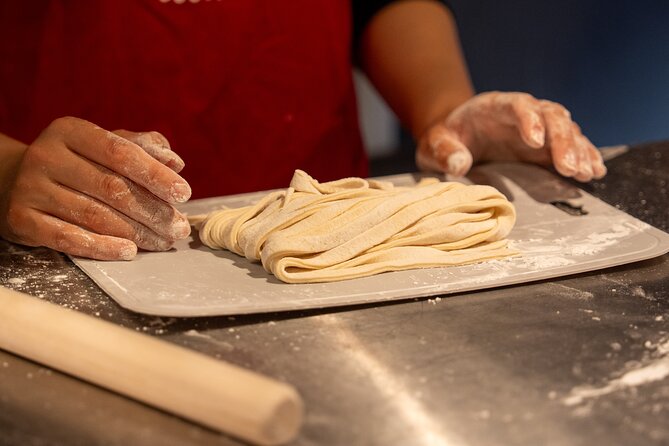
The class begins with the most memorable task: making udon from scratch. You work with flour and water, then knead the dough before rolling and cutting it into noodles.
Udon dough can feel surprisingly firm. That is useful to know before you begin, especially if you expect a soft bread-like mixture. The physical work is part of the lesson. You are not just following a recipe on paper. You are learning how the dough feels as it changes under your hands.
With Nakajima-san’s instruction, you learn the basic process used to make thick, chewy udon. The cutting stage is especially satisfying because it turns one piece of dough into a pile of individual noodles. Small differences in thickness may show in the finished bowl, but that also makes your portion feel personal.
You may have the chance to enjoy both hot and cold udon preparations. One family group specifically described making and trying hot udon and cold udon, along with shrimp and vegetable tempura. The exact serving details can depend on the class, but you should arrive ready for a substantial meal.
I would not book this expecting a formal lesson in every regional style of udon. The time is limited, and the class also includes sushi and tempura. Instead, you get a friendly introduction to the basic method and the pleasure of eating noodles made during the session.
Onigiri and Inari Sushi Bring Rice Into the Meal
After the noodles, the class moves to two familiar Japanese rice dishes: onigiri and inari sushi. This part adds variety and shows how the same basic ingredient can be shaped and served in different ways.
Onigiri is a simple rice dish, but simple does not mean unimportant. It is a common Japanese food because it is portable, flexible, and easy to adapt. In class, you learn the basic preparation rather than treating it as a mysterious specialty reserved for restaurants.
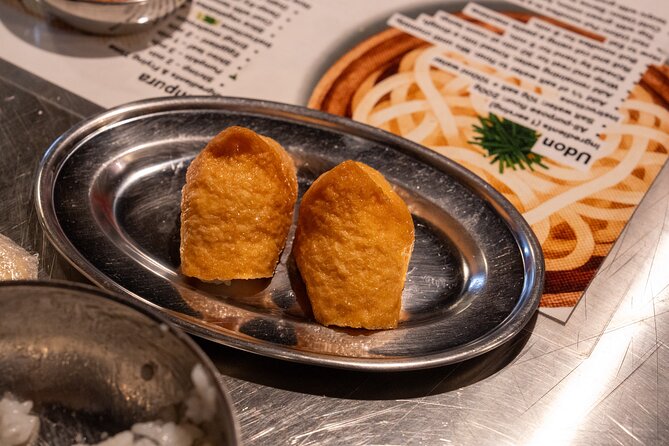
Inari sushi gives you another shape and texture. The rice is prepared for filling sweet-savory tofu pockets. Making it yourself helps explain why this dish has such a different character from rolled sushi.
The sushi portion is suited to beginners because you are not expected to arrive with knife skills or professional experience. The class is built around doing the work with guidance. You can expect instruction, practice, and a chance to taste the finished result soon after preparing it.
This is also a good part of the class for families. A parent and child can divide the tasks, and the food is familiar enough to appeal to people who are not ready for a highly unusual Japanese menu. The session is not described as a children-only activity, so adults should enjoy it just as much.
Frying Shrimp and Vegetables Into Tempura
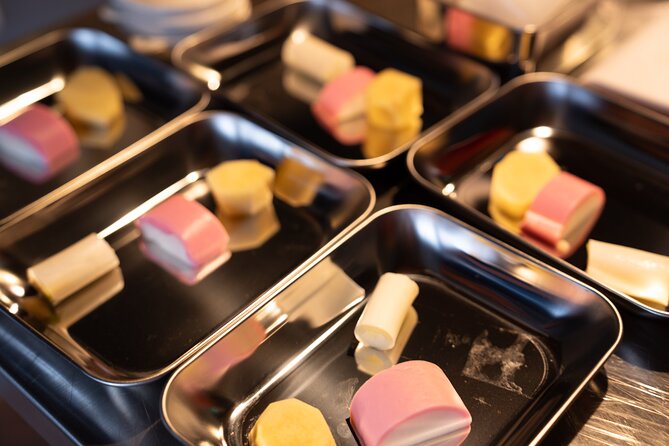
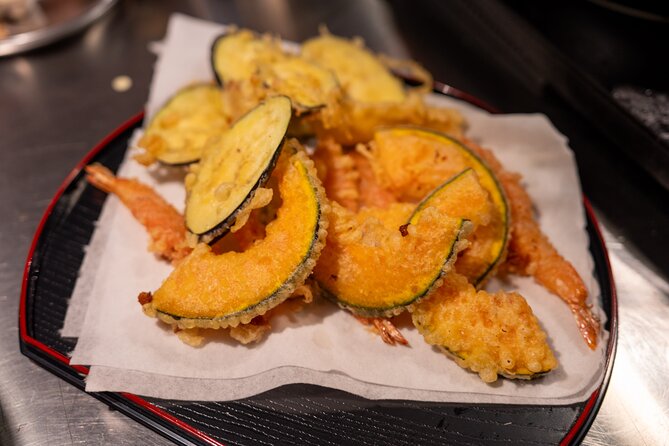
Tempura brings the hot cooking element. You prepare ingredients and fry them until the coating becomes crisp and golden.
The appeal here is clear: tempura is best when it is fresh. Eating it soon after frying gives you a better sense of the contrast between the light coating and the ingredients inside. A family participant singled out shrimp and vegetable tempura, so you can expect the class to include both seafood and produce in the cooking practice.
You should pay attention during this part because hot oil changes the pace of the class. The instructor’s guidance matters more here than during the rice preparation. You get to take part, but the activity still needs care and order around the fryer.
This portion also helps you understand why restaurant tempura can seem difficult to recreate at home. Timing, batter, and oil temperature all affect the result. The class gives you a starting point, but it will not turn you into a tempura specialist in one morning.
For many people, tempura will be the most immediately rewarding dish. It cooks quickly, looks appealing on the plate, and gives you something crisp to eat alongside the softer udon and rice dishes.
Same city, a completely different kind of day:
- PERFECT KYOTO 1-Day Bus Tour
★ 5.0 · 13,518 reviews - Kyoto: Fushimi Inari, Kinkakuji, Bamboo Grove 1 Day Bus Tour
★ 4.8 · 4,316 reviews - Kyoto: Tea Ceremony in a Traditional Tea House in Kiyomizu
★ 4.9 · 3,519 reviews - Kyoto Geisha Walking Tour: Gion District & Hidden Gems
★ 4.7 · 3,273 reviews
The Meal at the End Is Part of the Lesson
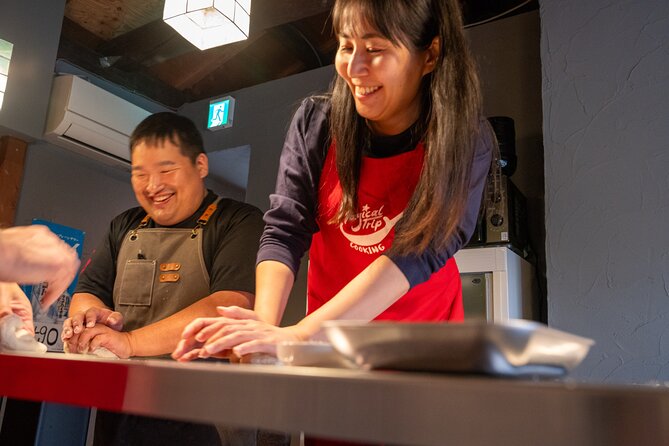
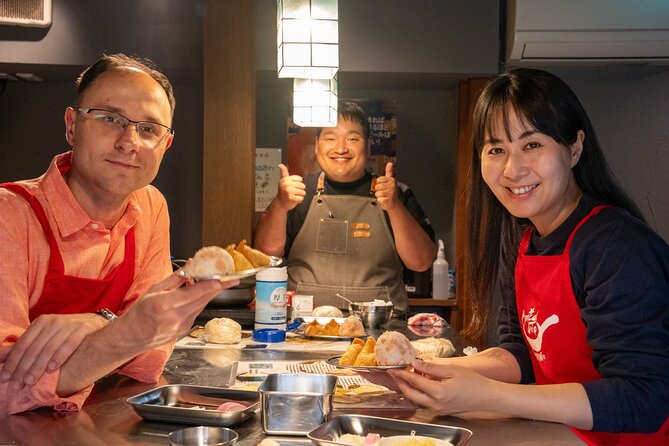
The class ends with you eating the food you prepared. That may sound obvious, but it changes the feel of the experience. You are not carrying ingredients away or waiting for a restaurant meal later. The cooking leads directly to lunch.
Your spread includes the udon, tempura, onigiri, and inari sushi made during the session. The combination is filling, which is why skipping breakfast can make sense. One family group specifically advised arriving hungry after preparing and tasting several dishes.
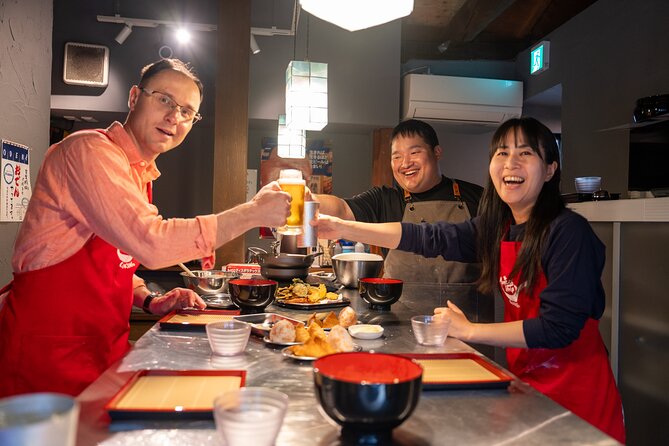
Two drinks are included. You can choose alcoholic or non-alcoholic options, with sake available as part of the experience. The sake element is modest, described as a mini tasting rather than a long specialist session. Think of it as a pleasant introduction alongside the meal, not a separate sake class.
This closing meal gives you time to compare the dishes and notice how different textures work together. The noodles are soft and chewy, the rice dishes are compact and savory or sweet-savory, and the tempura adds crunch. It is a fuller food experience than a class focused on one recipe.
If you do not drink alcohol, the inclusion of non-alcoholic choices keeps the activity accessible. If you do enjoy sake, the tasting adds a small Kyoto touch without changing the main focus, which is cooking.
Josh, Nakajima-san, and the Small Group Format
The experience includes a local udon master and an English-speaking guide. Josh and Nakajima-san are the instructors associated with the class, and their roles complement each other. Nakajima-san brings the specialist udon instruction, while Josh helps with communication and the flow of the activity.
That combination is useful for visitors who want more than a recipe demonstration. You can ask questions as you work, and you have a better chance of understanding why each step matters. Clear guidance is especially helpful with dough texture, noodle cutting, and frying.
The maximum group size is eight people. I consider that a strong number for a cooking class. It is large enough to have some social energy, but small enough that the instructor can keep an eye on the work.
The class is also designed for people without cooking experience. You do not need to know Japanese food terms or arrive with special skills. You will still need to pay attention and take part, but the point is learning by doing rather than proving what you already know.
Because the class lasts about two and a half hours, the pace may feel active. You move through several dishes in one sitting. That is good for visitors with limited time, though anyone looking for a relaxed, highly technical lesson may prefer a longer specialist course.
Price, Timing, and What the $85.39 Covers
The price is $85.39 per person. For a two-and-a-half-hour small-group activity, the value depends on what you want from it.
You are paying for instruction, ingredients, four dishes, two drinks, the meal afterward, downloadable recipes, and tour photos sent by email. You also receive the setting and guidance of a local udon master, which is more useful than simply buying a meal at a restaurant.
The class begins at 10:00 a.m. and ends back at the meeting point. The meeting location is 7-Eleven 599 Uraderacho in Nakagyo Ward, Kyoto. Transportation to and from the meeting point is not included, so you need to make your own way there.
The location is near public transportation, which helps with planning. Still, allow enough time to find the convenience store and arrive ready to start. A cooking class is not an easy activity to join late because the dough and preparation begin on schedule.
At 10:00 a.m., you may be tempted to eat breakfast first. I would keep it light. The class includes several dishes and a full tasting at the end, so arriving hungry is practical.
Free cancellation is available if you cancel at least 24 hours before the start time. Cancellations or changes made within 24 hours are not accepted for a refund. Confirmation is provided when you book.
Recipes and Photos Make the Class More Useful
The downloadable English recipes are one of the most practical extras. Without them, it is easy to enjoy a cooking class in Kyoto and then forget the proportions or order of steps once you get home.
You will not necessarily reproduce every part of the class perfectly on your first attempt. Still, the recipes give you a clear starting point for trying udon, tempura, onigiri, and inari sushi again. That makes the class more than a one-time meal.
Tour photos are also included. The guide takes pictures during the activity and sends them by email afterward. This is useful for families and couples who want a record of the cooking without asking someone else to stop and take photos constantly.
I would still keep your phone available if you want to note a texture or technique in your own words. The official recipes cover the main dishes, while your own notes may help you remember the small corrections that make your noodles or tempura work better.
Who Should Book This Experience
I would recommend this class to food-focused visitors, families, couples, and solo visitors who enjoy active activities. It is especially useful if you want a Kyoto experience that takes place around a table rather than in front of a famous building.
It suits beginners because no prior experience is required. You also get a good range of Japanese foods in one session, so it works well for someone who wants a broad introduction rather than a single-dish workshop.
The class may be less suitable if you have strict dietary restrictions, but the provided information does not specify allergy handling or ingredient substitutions. You should confirm those details before booking if they affect your plans.
It is also not the best choice if you want a quiet morning. You will be kneading, cutting, preparing, frying, and eating within a set schedule. The hands-on format is the reason to book, but it also means you need to participate.
Should You Book the Kyoto Udon and Tempura Class?
Book it if you want to make a proper meal, meet a local udon master, and learn several approachable Japanese dishes in one morning. The small group, English guidance, included drinks, recipes, and photos add real value to the $85.39 price.
Keep your expectations realistic. This is not a long professional cooking course, and the busy two-and-a-half-hour schedule leaves limited time for advanced technique. But for a first taste of Japanese home-style food preparation in Kyoto, it gives you plenty to do, plenty to eat, and recipes you can use after you return home.
FAQ
Where does the cooking class start?
The class starts at 7-Eleven 599 Uraderacho, Nakagyo Ward, Kyoto, 604-8041, Japan.
What time does the activity begin?
The cooking class starts at 10:00 a.m.
How long does the experience last?
The activity lasts approximately two hours and 30 minutes.
What dishes will I learn to make?
You will learn to make udon, tempura, onigiri, and inari sushi.
Are drinks included?
Yes. Two drinks are included, and you can choose alcoholic or non-alcoholic options. Sake is available.
Is transportation included?
No. Transportation to and from the meeting point is not included.
How many people can join the class?
The activity has a maximum of eight participants.
Are recipes provided after the class?
Yes. Downloadable English recipes are included, and photos taken during the class are sent by email afterward.
More Workshops in Kyoto
- Kyoto: 45-Minute Tea Ceremony Lesson Experience
★ 4.3 · 2,378 reviews - Kyoto : Chopsticks Making Workshop in Gion with Engraving Option
★ 5.0 · 958 reviews - Kyoto: Samurai Sword Class by Experts in Traditional Arts
★ 4.9 · 657 reviews - Ninja 1-hour Hands-on Lesson by Japanese master in Kyoto -Entry
★ 5.0 · 489 reviews
More Cooking Classes in Kyoto
- Kyoto: Ramen, Gyoza, and Onigiri Cooking Class
★ 5.0 · 445 reviews - Kyoto: Japanese Washoku Bento Small Group Cooking Class
★ 5.0 · 380 reviews - Kyoto Ramen and Gyoza Cooking Class with Professional Chefs
★ 5.0 · 282 reviews - Kyoto: Afternoon Japanese Izakaya Cooking Class
★ 4.9 · 241 reviews
Just added around Kyoto
- Private Guided Traditional Buddhist Cooking in Japan★ 5.0 · 16 reviews
- Kyoto: Gion Geisha District & Sake-in-Hand Walking Tour★ 5.0 · 37 reviews
- Your Private Vacation Photography Session In Kyoto★ 5.0 · 110 reviews
- Kyoto: Zen Meditation at a Private Temple with a Monk★ 5.0 · 25 reviews
- Traditional Japanese Washi Papermaking- Kyoto morning★ 5.0 · 77 reviews
- Kyoto Wagashi(Japanese sweets) Cooking Class near Fushimiinari★ 5.0 · 60 reviews
- Private Pewter Sake Cup Experience with a Kyoto Artisan★ 5.0 · 31 reviews
- Kyoto Private 6 hour Tour: English Speaking Driver Only, No Guide★ 5.0 · 88 reviews
Japanese Cooking Classes, compared.
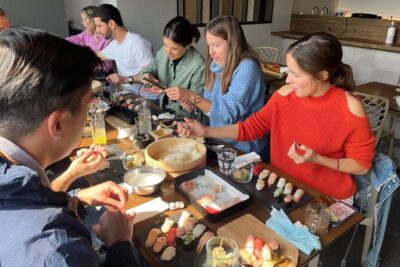
Sushi Making Tokyo Roll and Authentic Japanese Sushi Class
Read our review →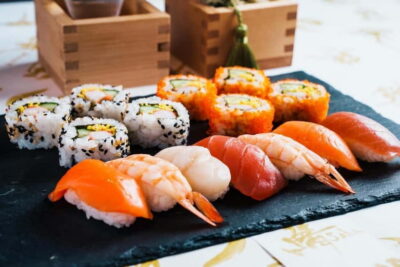
Roll and Authentic Sushi Making Class in Asakusa
Read our review →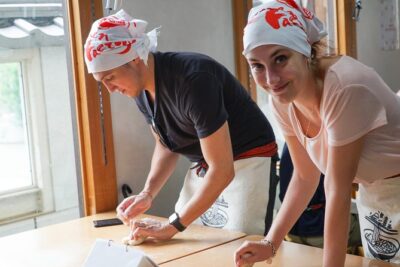
Ramen Cooking Class at Ramen Factory in Kyoto
Read our review →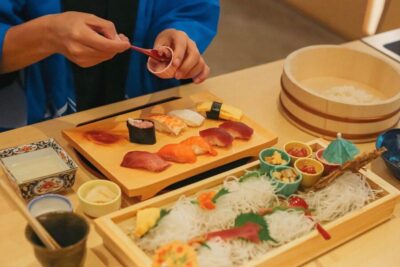
Sushi Making Class in a Happi Coat near a Famous Spot
Read our review →
Sushi Making Osaka Roll and Authentic Japanese Sushi Class
Read our review →
Tokyo Sushi Making Class in Tsukiji with Professional Chef
Read our review →
Ramen & Gyoza Cooking Class in Tokyo with Local Supermarket Visit
Read our review →
Tsukiji Fish Market Guided Tour and Sushi Making with Pro Chef
Read our review →Browse the lists this tour appears in