
REVIEW · JAPANESE COOKING CLASSES
Kyoto Ramen Spoon Painting & Michelin Cooking Class
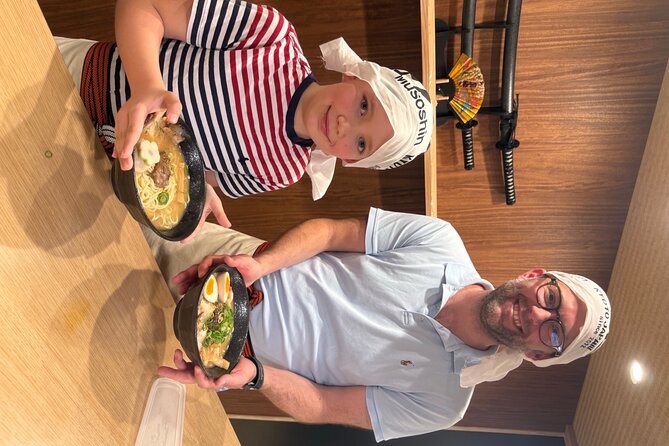
The clever part of this Kyoto class is that your souvenir and lunch come from the same idea: ramen. You paint a ceramic ramen spoon upstairs, then head into a working kitchen to prepare a bowl based on Musoshin’s restaurant recipes. The class lasts about 90 minutes, and your finished spoon is fired overnight.
I like the small-group limit of 12 people, which gives the chef and assistant room to help with cooking, painting, and food requests. I also like that this is not a pretend kitchen setup. Musoshin makes its own noodles, soup, soy sauce, and roast pork for its restaurants, then brings those ingredients to the academy for you to use.
The main point to consider is that you do not make the noodles from scratch. Most of the difficult preparation is done before class, so you are learning how to assemble and cook the ramen rather than taking part in every stage of noodle production. You also need to find the venue carefully in the narrow streets of Higashiyama.
In This Review
- Key points to know before booking
- Why this class works better than a standard ramen lunch
- From ceramic spoon to kiln-fired souvenir
- Cooking with Musoshin’s restaurant ingredients
- Meeting chef Shin and assistant Amiru
- What your ramen meal is really worth
- How the listed Kyoto temple stops fit in
- The right fit for families, food fans, and creative types
- Timing, group size, and finding the venue
- What I would clarify before you go
- Should you book the Musoshin ramen class?
- FAQ
- How long does the Kyoto ramen and spoon painting class last?
- Where does the activity begin and end?
- How many people can join the class?
- Do I take the painted spoon home immediately?
- Are vegetarian or vegan ramen options available?
- Will I make the ramen noodles during the class?
- Can I cancel for a full refund?
Key points to know before booking
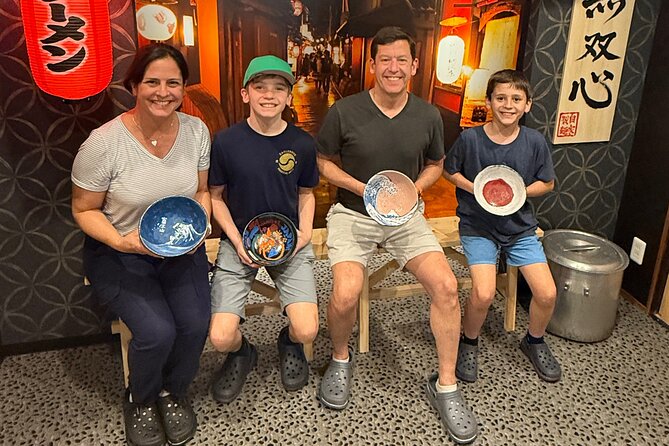
- You paint a ceramic ramen spoon first, then it is baked in a kiln overnight and kept as a souvenir.
- Chef Shin and assistant Amiru are among the instructors connected with the class, with a lively, hands-on teaching style.
- Musoshin supplies restaurant-made ingredients, including noodles, broth, soy sauce, and roast pork.
- Vegetarian and vegan ramen options are available, and allergy handling has received particular praise.
- The class is capped at 12 people, making it more personal than a large demonstration.
- The listed price is $65.89 per person, including the cooking activity, spoon painting, and ramen meal.
Why this class works better than a standard ramen lunch
A bowl of ramen can look simple when it arrives at your table. The class shows you how many separate parts go into it. Musoshin makes noodles each morning, rests them overnight, cooks its soup for 12 hours, and prepares its ramen soy sauce and roast pork in-house.
You do not perform all of that work during the class. That would take far longer than 90 minutes. Instead, you use ingredients prepared by the restaurant and learn how the pieces fit together. This gives you a useful look at ramen without turning your holiday into a full-day culinary course.
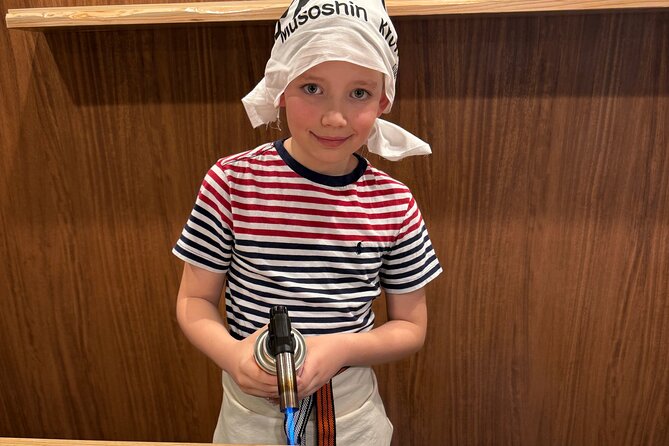
I like that balance. You get context, practical work, and a proper meal at the end. The class is not just a cooking demonstration where you watch someone else make lunch. You handle the preparation yourself, arrange your toppings, and taste the result.
That final point matters. The ramen is served after you cook it, so you are not leaving hungry after a small sample. The finished bowl also feels more personal because you have arranged it yourself.
More Japanese Cooking Classes in Kyoto
- Ramen Cooking Class at Ramen Factory in Kyoto
★ 5.0 · 1,937 reviews - Sushi Making in Kyoto! Same-day bookings welcome!
★ 5.0 · 713 reviews - Kyoto: Ramen Cooking Class at a Ramen Factory with Souvenir
★ 4.9 · 532 reviews
From ceramic spoon to kiln-fired souvenir
The class begins with spoon painting on the second floor of the venue. You decorate a ceramic ramen spoon, making a small keepsake connected directly to the food you are about to prepare.
This is a good activity for families and mixed-age groups because it gives you a quiet creative task before the kitchen work begins. You do not need to be an artist. The value is in making something specific to your day in Kyoto rather than buying another generic souvenir.
One practical detail is easy to miss: the spoon must be fired in a kiln overnight. You will not necessarily leave with it in your bag immediately after class. If you are moving on to another city the same day, ask how and when the finished spoon will be returned. One participant did not realize the overnight firing was part of the process and could not collect the finished item.
The supplied information does not spell out the delivery or collection arrangement, so I would confirm that point when booking. The spoon is a real part of the experience, but its timing may not suit someone leaving Kyoto at once.
Cooking with Musoshin’s restaurant ingredients
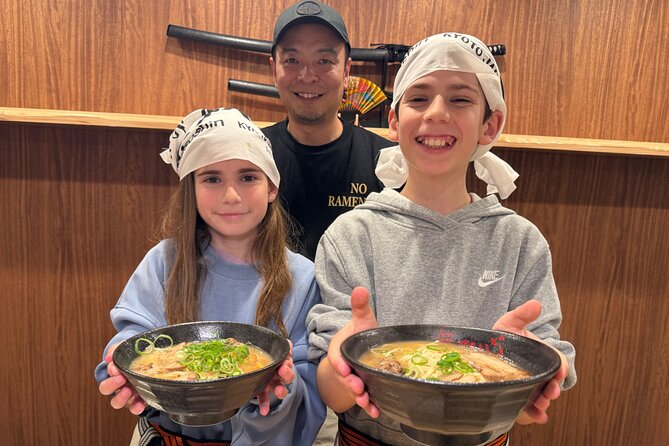
After the spoon painting, you move downstairs to prepare ramen in the professional kitchen. Musoshin Ramen began in Kyoto in 2022 and now has six restaurants in Kyoto and Toronto. Its Toronto restaurant was nominated for Michelin recognition for three consecutive years, and the class uses the same recipe.
That connection gives the lesson more substance than a generic tourist cooking class. You are working with the food program of an actual ramen business, not a simplified recipe created only for visitors.
The kitchen lesson explains the components and the method. You can expect instruction on the broth, soy-based seasoning, pork, noodles, and the way the bowl is put together. The emphasis is on understanding how the parts work together, not merely following a list of steps.
You will not make the noodles yourself. The noodles are prepared at the restaurant each morning and rested overnight for use the next day. This is the clearest limitation for serious noodle fans, especially if you hoped to learn rolling, cutting, or dough preparation.
Still, the class teaches a more useful skill for many home cooks: how to build a good bowl from prepared components. One vegetarian participant used the lesson to pick up ideas for making vegan ramen at home. That makes the class worthwhile even if you do not plan to reproduce the full restaurant process.
Meeting chef Shin and assistant Amiru
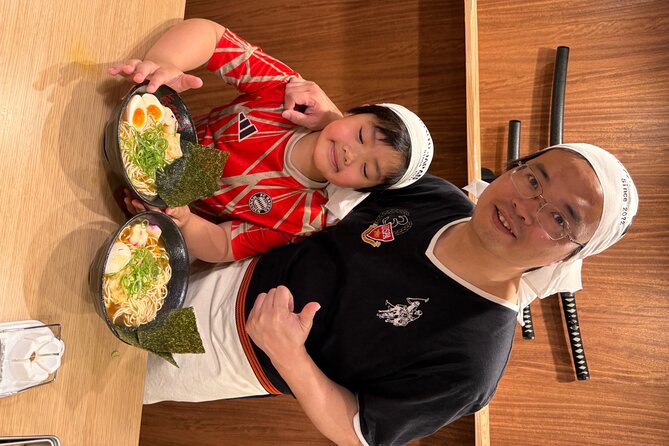
Chef Shin is closely associated with the experience, and Amiru has also led classes. The teaching style is energetic and personal. Shin is described as especially warm with children, while the instructors generally keep the mood light and help people step by step.
That matters in a short class. Ramen has several moving parts, and a rushed instructor could leave you confused. A small group of no more than 12 gives the staff a better chance to watch what you are doing and respond to questions.
The class also appears suitable for adults and children. Parents should remember that it combines painting with kitchen work, so younger children will need normal supervision around food preparation areas. The supplied details do not state a minimum age, so check before booking if you are bringing a small child.
I would also tell the staff about allergies or dietary needs at booking. Allergy handling has been praised, and vegetarian and vegan options are available. The menu details are not provided, so do not assume every ingredient can be changed without advance notice.
Same city, a completely different kind of day:
- PERFECT KYOTO 1-Day Bus Tour
★ 5.0 · 13,518 reviews - Kyoto: Fushimi Inari, Kinkakuji, Bamboo Grove 1 Day Bus Tour
★ 4.8 · 4,316 reviews - Kyoto: Tea Ceremony in a Traditional Tea House in Kiyomizu
★ 4.9 · 3,519 reviews - Kyoto Geisha Walking Tour: Gion District & Hidden Gems
★ 4.7 · 3,273 reviews
What your ramen meal is really worth
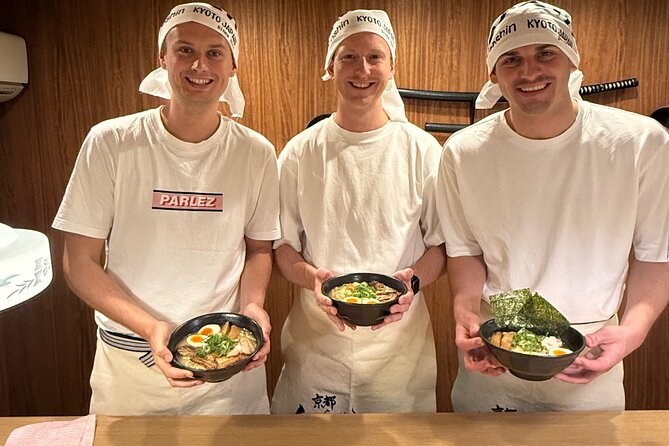
The price is $65.89 per person. In Kyoto, that is not a bargain for a simple bowl of noodles, but this is not a simple bowl of noodles. You are paying for instruction, a small-group format, spoon painting, use of a restaurant kitchen, and a meal made with Musoshin ingredients.
I see the strongest value in the combination. If you only want to eat ramen, a restaurant visit will cost less and take less time. If you want a keepsake and a story to go with the meal, this class makes better sense.
You also get access to the background behind Musoshin’s food. The restaurant makes its soup over 12 hours and prepares its soy sauce and roast pork in-house. You cannot reproduce that full production process during this class, but understanding it helps you appreciate why a bowl of ramen involves much more work than it suggests.
The class is especially good value for people who enjoy food-focused activities. You are not paying for a sightseeing lecture with a token snack. You make the meal, eat it, and leave with a handmade object, or collect it after kiln firing.
How the listed Kyoto temple stops fit in
The supplied itinerary names Kiyomizu-dera Temple, Kennin-ji Temple, and Sanjusangendo Temple. However, the activity description centers on spoon painting and ramen preparation at Musoshin Ramen Academy, with a meeting point at 440-5 Nishigomonchō in Higashiyama and the activity ending back there.
You should not assume that the class includes guided visits inside all three temples. No visit times, admission details, transport between the temples, or temple commentary are provided. The names may help place the activity within the wider Higashiyama sightseeing area, but the cooking class itself is the clearly described portion.
This location can fit nicely into a day around Kiyomizu-dera or Kennin-ji. I would plan your route separately and allow extra time to locate 440-5 Nishigomonchō. Narrow lanes and dense addresses can make Higashiyama slower to navigate than a map suggests.
Sanjusangendo is also listed, but you should not build a tight schedule around visiting it before class unless you have confirmed the timing. The class lasts about an hour and a half, and the listing does not provide a separate temple-tour schedule.
The right fit for families, food fans, and creative types
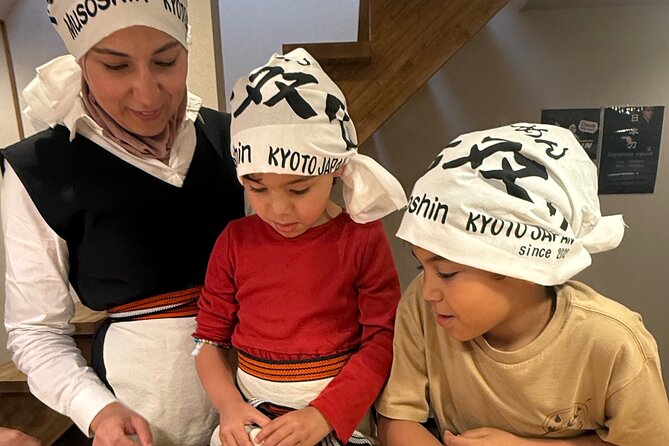
I would recommend this class to anyone who wants more than a restaurant meal but less than a full cooking school day. It suits couples, families, solo visitors who enjoy small-group activities, and anyone who likes bringing home a handmade souvenir.
Ramen fans will get the most from the explanations of broth, seasoning, noodles, and toppings. You will also gain a better sense of why restaurant ramen can taste so different from a quick bowl made at home.
Children may enjoy the spoon painting most, while adults may focus on the kitchen lesson. The two-part format keeps the experience moving and gives everyone something to do.
Vegetarians and vegans have a reasonable basis for booking because those options are available. I would still provide your requirements early, especially if you have an allergy. The kitchen can accommodate some needs, but the supplied details do not promise a separate preparation area or a complete list of substitutions.
This may not suit you if your main goal is to make noodles from flour and water. It also may not suit someone who dislikes structured group activities or wants a long, slow meal. The class is short and practical, with a set sequence from spoon painting to cooking to eating.
Timing, group size, and finding the venue
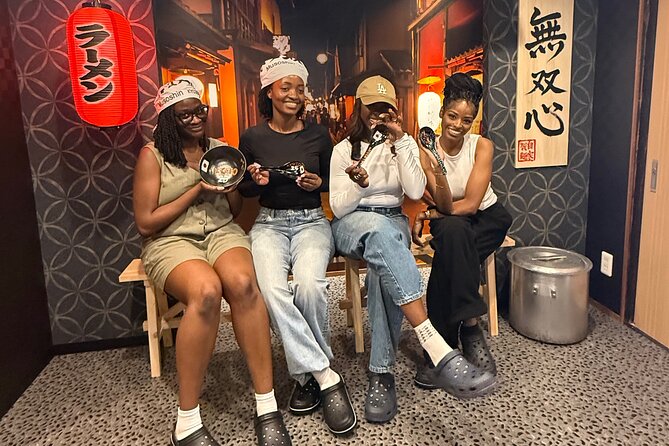
The experience lasts approximately 1 hour and 30 minutes. That is long enough for two distinct activities, but not long enough to linger over every step. Arrive ready to take part rather than expecting a leisurely restaurant lunch.
The maximum group size is 12. That is small enough for direct help, though the feel will depend on the number booked that day. A full group could make the painting and kitchen portions more active, while a smaller group may feel more conversational.
The meeting point is 440-5 Nishigomonchō, Higashiyama Ward, Kyoto, postal code 605-0816. The activity ends at the same meeting point. It is near public transportation, but the address is still worth saving in your phone before you set out.
The class offers a mobile ticket, and confirmation is received at booking. Cancellation is free if you cancel at least 24 hours before the local start time. Changes or cancellations inside that window are not accepted for a refund.
What I would clarify before you go
I would check four things before booking:
- How you receive the spoon after it is kiln-fired overnight
- Which ramen style and broth will be prepared on your date
- How vegetarian, vegan, or allergy requests are handled
- Whether the three named temples are part of the class or simply nearby itinerary references
The first question is the most important for a short Kyoto visit. A handmade spoon is a meaningful souvenir only if you know how it reaches you.
I would also avoid scheduling a major attraction immediately after the class. The official duration is approximate, and cooking activities can run a little longer when the group needs extra help. Keep the rest of your day flexible.
Should you book the Musoshin ramen class?
Book it if you want a hands-on food experience, a small handmade souvenir, and a filling meal in one compact activity. The restaurant connection, house-made ingredients, Michelin-nominated Toronto branch, and warm instruction from Shin or Amiru give the class a stronger foundation than a basic tourist cooking session.
Think twice if you specifically want to make ramen noodles from scratch, or if you need to leave Kyoto immediately after painting the spoon. The noodle production is done in advance, and the ceramic souvenir requires overnight kiln firing.
At $65.89, I consider it a fair choice for food lovers who will use the cooking lesson, enjoy the meal, and value the personal souvenir. For a quick lunch alone, it is expensive. For a memorable Kyoto activity that combines craft, cooking, and restaurant know-how, it earns its place on your schedule.
FAQ
How long does the Kyoto ramen and spoon painting class last?
The experience lasts approximately 1 hour and 30 minutes.
Where does the activity begin and end?
It begins at 440-5 Nishigomonchō, Higashiyama Ward, Kyoto, 605-0816, Japan, and ends back at the same meeting point.
How many people can join the class?
The activity has a maximum of 12 travelers.
Do I take the painted spoon home immediately?
No. The ceramic spoon is baked in a kiln overnight. Confirm the collection or delivery details before booking if you are leaving Kyoto soon after the class.
Are vegetarian or vegan ramen options available?
Yes. Vegetarian and vegan options are available.
Will I make the ramen noodles during the class?
No. Musoshin makes the noodles at its shop each morning and rests them overnight. During the class, you work with ingredients brought from the restaurant and prepare the ramen.
Can I cancel for a full refund?
Yes. You can cancel at least 24 hours before the experience start time for a full refund. Cancellations or changes made less than 24 hours before the start time are not accepted for a refund.
More Workshops in Kyoto
- Kyoto: 45-Minute Tea Ceremony Lesson Experience
★ 4.3 · 2,378 reviews - Kyoto : Chopsticks Making Workshop in Gion with Engraving Option
★ 5.0 · 958 reviews - Kyoto: Samurai Sword Class by Experts in Traditional Arts
★ 4.9 · 657 reviews - Ninja 1-hour Hands-on Lesson by Japanese master in Kyoto -Entry
★ 5.0 · 489 reviews
More Cooking Classes in Kyoto
- Kyoto: Ramen, Gyoza, and Onigiri Cooking Class
★ 5.0 · 445 reviews - Kyoto: Japanese Washoku Bento Small Group Cooking Class
★ 5.0 · 380 reviews - Kyoto Ramen and Gyoza Cooking Class with Professional Chefs
★ 5.0 · 282 reviews - Kyoto: Afternoon Japanese Izakaya Cooking Class
★ 4.9 · 241 reviews
Just added around Kyoto
- Private Guided Traditional Buddhist Cooking in Japan★ 5.0 · 16 reviews
- Kyoto: Gion Geisha District & Sake-in-Hand Walking Tour★ 5.0 · 37 reviews
- Your Private Vacation Photography Session In Kyoto★ 5.0 · 110 reviews
- Kyoto: Zen Meditation at a Private Temple with a Monk★ 5.0 · 25 reviews
- Private Pewter Sake Cup Experience with a Kyoto Artisan★ 5.0 · 31 reviews
- Traditional Japanese Washi Papermaking- Kyoto morning★ 5.0 · 77 reviews
- Kyoto Wagashi(Japanese sweets) Cooking Class near Fushimiinari★ 5.0 · 60 reviews
- Kyoto Private 6 hour Tour: English Speaking Driver Only, No Guide★ 5.0 · 88 reviews
Japanese Cooking Classes, compared.
Sushi Making Tokyo Roll and Authentic Japanese Sushi Class
Read our review →
Roll and Authentic Sushi Making Class in Asakusa
Read our review →
Ramen Cooking Class at Ramen Factory in Kyoto
Read our review →
Sushi Making Class in a Happi Coat near a Famous Spot
Read our review →
Sushi Making Osaka Roll and Authentic Japanese Sushi Class
Read our review →
Tokyo Sushi Making Class in Tsukiji with Professional Chef
Read our review →
Ramen & Gyoza Cooking Class in Tokyo with Local Supermarket Visit
Read our review →
Tsukiji Fish Market Guided Tour and Sushi Making with Pro Chef
Read our review →Browse the lists this tour appears in