
REVIEW · JAPANESE COOKING CLASSES
Kyoto Family Kitchen Cooking Class
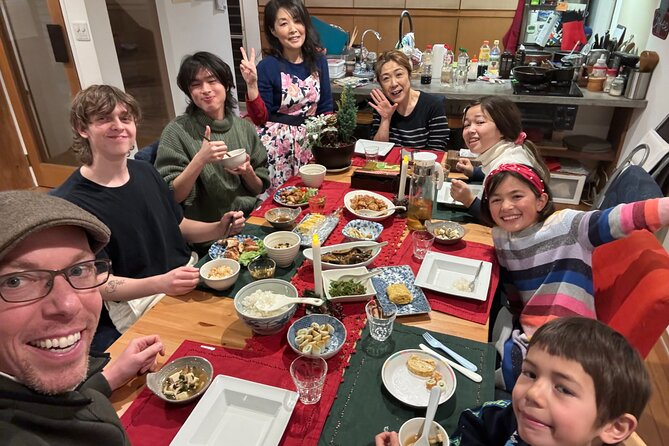
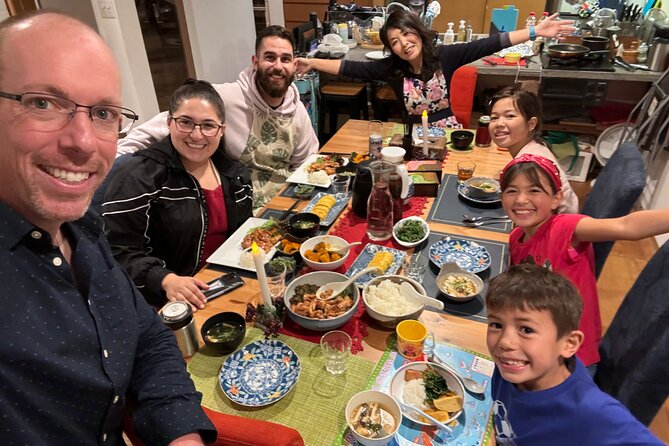
Kyoto Family Kitchen brings you past the restaurant table and into a real suburban home, where Anthony and Naomi cook with you, chat about Japan, and share dinner with their children, cat, and dog. The evening is as much a cultural visit as a cooking lesson.
I like the focus on everyday Japanese food, not restaurant showpieces, and the way children can take part without needing perfect knife skills. I also like that the meal includes time for conversation, so you can ask about Kyoto life, family routines, and food customs over dinner.
The main consideration is the informal format. If you want a polished, step-by-step culinary school with a fixed menu and lots of technical instruction, this may feel more like helping a family prepare dinner than attending a formal class.
In This Review
- Key Points
- A Kyoto Dinner Rather Than a Demonstration
- From Tea and Travel Talk to Aprons and Chopping
- The Japanese Pantry in Four Familiar Bottles
- Helping Prepare Dinner, Then Sitting Down Together
- What Makes This Different From a Standard Cooking Class
- A Good Fit for Families With Different Ages
- Getting to the House Outside Central Kyoto
- Is the $96.84 Price Worth It?
- Practical Things to Know Before You Go
- Should You Book Kyoto Family Kitchen?
- FAQ
- Where does Kyoto Family Kitchen take place?
- How long does the cooking experience last?
- Which days is the experience available?
- What food and drinks are included?
- Is transportation included?
- Is this a private activity?
- Can vegetarians take part?
- How many people are required to book?
Key Points
- Cook in Anthony and Naomi’s family home, outside Kyoto’s city center.
- Learn the basic Japanese pantry, including dashi, soy sauce, mirin, and sake.
- Eat the meal you help prepare, with coffee or tea included.
- Bring the children along, since the setting welcomes families and all ages.
- Expect a private experience, with only your own group participating.
- Plan around weekday evenings, from 6:00 to 8:30 PM.
A Kyoto Dinner Rather Than a Demonstration
The appeal here is simple: you are invited into a family home instead of being placed in a classroom or restaurant kitchen. You begin with tea, a chance to sit down, and a conversation about your trip. Food talk follows naturally, then the hosts explain what you will prepare that evening.
That opening matters. You have time to settle in before anyone hands you an apron or asks you to chop vegetables. For families, especially those arriving after a long day of temples and train rides, this slower start can be welcome.
Anthony and Naomi host with their children, and the family pets are part of the setting. The dog and cat are not a staged attraction. They are simply around the house, along with the children, which gives the evening the feel of a social visit.
You should come ready to participate in a lived-in home. The setting is relaxed, friendly, and personal. It is not designed to feel like a commercial kitchen with spotless counters, matching uniforms, and a timed demonstration.
More Japanese Cooking Classes in Kyoto
- Ramen Cooking Class at Ramen Factory in Kyoto
★ 5.0 · 1,937 reviews - Sushi Making in Kyoto! Same-day bookings welcome!
★ 5.0 · 713 reviews - Kyoto: Ramen Cooking Class at a Ramen Factory with Souvenir
★ 4.9 · 532 reviews
From Tea and Travel Talk to Aprons and Chopping
The first stage is a soft landing. You take a load off, drink tea, and talk with the hosts about your time in Japan. This can make the cooking feel less like an appointment and more like being welcomed into someone’s evening.
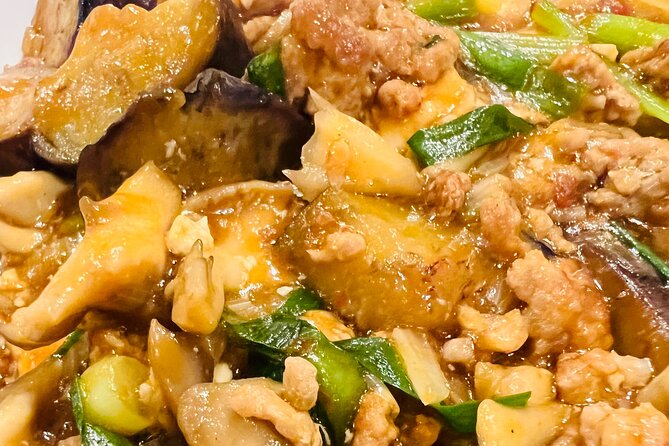
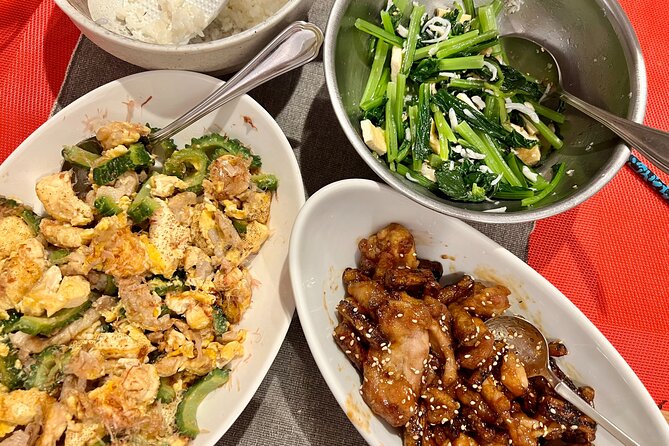
Next comes a preview of the food. The exact menu is prepared with the hosts after booking, so you should not assume that every visit follows one fixed set of recipes. Past meals have included dishes such as gyoza, tamago yaki, okonomiyaki, sautéed vegetables, teriyaki chicken, and other traditional Japanese home cooking.
That changing menu is useful for repeat visitors and larger groups, but it also means you should confirm your preferred menu and dietary needs in advance. The hosts have accommodated a vegetarian member of a group of six and made sure there was enough food to eat, which is encouraging for guests with specific requirements.
Once the plan is clear, you put on aprons and gather around the kitchen counter. You may slice, dice, mix, and help assemble the meal. The emphasis is on doing things together, not watching Anthony or Naomi perform while you stand back.
This approach works particularly well for children. They can join simple tasks, ask questions, and move between cooking, conversation, and play. A child who would lose interest in a formal lesson may enjoy this setting more because the family’s own children are nearby.
The Japanese Pantry in Four Familiar Bottles
One of the most useful parts of the evening is learning how a few basic ingredients shape much of Japanese home cooking. The hosts introduce staples including dashi, soy sauce, mirin, and sake.
Dashi is a foundation for many Japanese dishes, providing savory depth without relying on heavy sauces. Soy sauce brings salt and umami. Mirin adds sweetness and shine, while sake contributes flavor to cooking and helps build balance in sauces and marinades.
You will not leave as a trained Japanese chef after two and a half hours. You can, however, gain a practical sense of how Japanese families build flavor from a small group of pantry staples. That is more useful than memorizing one elaborate recipe you may never make again.
The class is best for curious home cooks who want to understand the logic behind familiar Japanese dishes. If your goal is to master professional knife work, learn advanced sushi technique, or receive detailed culinary instruction at every step, choose a more formal cooking course.
Helping Prepare Dinner, Then Sitting Down Together
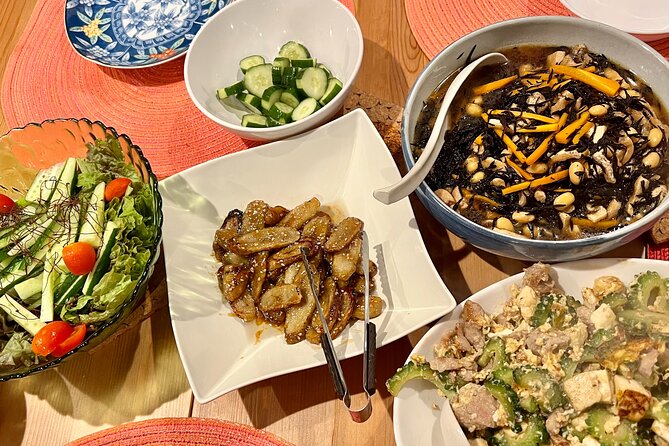
After the cooking, everyone gathers around the table. Dinner is included, along with coffee and tea, so the meal is not an extra charge after the class.
This shared table is where the experience shifts from cooking lesson to cultural exchange. You are not only eating food you helped prepare. You are also talking with a Kyoto family, comparing daily life, and sharing stories from your own home.
The family has welcomed couples, families with children, older relatives, solo visitors, and small groups. One family included a 78-year-old mother and an 11-year-old daughter, while another group included children who enjoyed playing with the hosts’ kids and pets.
That range tells you something important about the pace. The evening does not depend on everyone standing at a counter for two straight hours. It allows room for conversation and different energy levels.
You may also pick up a few Japanese phrases along the way. The hosts have helped people with language useful for getting around Japan, adding a small practical benefit to the meal.
Same city, a completely different kind of day:
- PERFECT KYOTO 1-Day Bus Tour
★ 5.0 · 13,518 reviews - Kyoto: Fushimi Inari, Kinkakuji, Bamboo Grove 1 Day Bus Tour
★ 4.8 · 4,316 reviews - Kyoto: Tea Ceremony in a Traditional Tea House in Kiyomizu
★ 4.9 · 3,519 reviews - Kyoto Geisha Walking Tour: Gion District & Hidden Gems
★ 4.7 · 3,273 reviews
What Makes This Different From a Standard Cooking Class
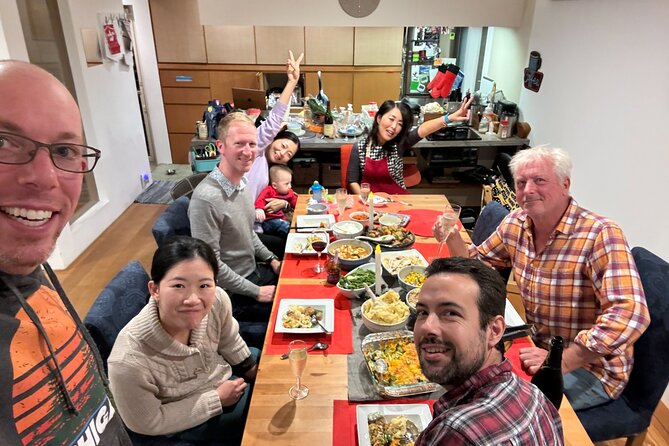
Many cooking classes are built around instruction first and social contact second. Here, the order is nearly reversed. You cook, but you also spend time in a family’s normal setting.
That is the reason some people describe the experience as more than a cooking class. The strongest part is not necessarily the number of recipes covered. It is the chance to see how a Japanese family eats, talks, and shares a home evening.
You should understand the tradeoff before booking. The experience may involve assisting the host family with dinner rather than learning every dish through a formal sequence. One participant found the format too informal and expected more direct teaching.
That criticism is fair. The name cooking class can suggest a structured lesson, written recipes, individual workstations, and a clear set of culinary outcomes. Kyoto Family Kitchen offers something looser. The hosts explain and guide, but the purpose is connection as much as technique.
I would book it if your priority is a friendly local encounter with food at its center. I would choose another class if you want precision, speed, or a certificate-like sense of accomplishment.
A Good Fit for Families With Different Ages
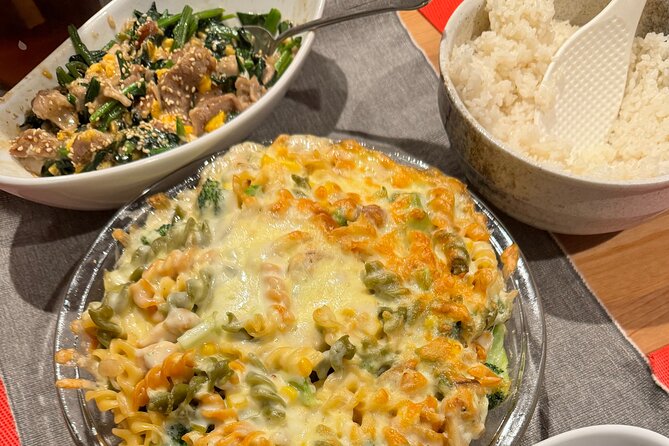
This experience is especially well suited to families. Children can participate in the cooking, meet the hosts’ children, and spend time with the pets. Parents get a chance to talk with adults in a setting that is more relaxed than a busy restaurant.
It can also work for couples and adult friends. You do not need to have children to enjoy the format. The hosts have welcomed smaller groups and couples who valued the meal and conversation as much as the cooking.
Older family members may appreciate the sit-down portions and the unhurried pace. The private format also avoids the pressure of joining a large class of strangers.
The minimum booking is two guests. Large groups and family gatherings are welcome, but you should finalize the timing, menu, and directions with the hosts after booking.
Getting to the House Outside Central Kyoto
The meeting point is 33-50 Kamitakano Saimyōjiyama, Sakyo Ward, Kyoto, postal code 606-0064. This is outside the central tourist zone, in a suburban part of Kyoto.
That location is part of the point. You leave the usual temple and shopping routes and see a quieter residential side of the city. The setting may feel more personal than a class near Nishiki Market or Kyoto Station.
Transportation to Kokusaikaikan subway station is included. The meeting point is near public transportation, but you should still pay close attention to the final directions and meeting time, since this is a private home rather than a highly visible tourist venue.
The activity ends back at the same meeting point. Do not plan a tight connection to another evening activity. The class runs about two hours and 30 minutes, from 6:00 to 8:30 PM on Monday through Friday during the stated operating period.
Alcohol is not included. All ingredients, seasonings, fees, and taxes are included, as are coffee and tea. Tips are not included.
Is the $96.84 Price Worth It?

At $96.84 per person, this costs more than buying an ordinary Japanese dinner. That comparison misses the point, since you are paying for food, instruction, private access to a home, and several hours of personal conversation.
For a family, the value comes from having an activity that can include adults and children at the same time. You do not need to arrange a separate meal afterward, and the dinner is part of the experience.
For a couple, the price is easier to justify if you care about local contact and a memorable evening rather than simply eating inexpensively. The private format means your group is not combined with strangers, which can make the conversation more natural.
The value is weaker if you are focused mainly on recipe volume. You may prepare only a handful of dishes, and some of the work may already be organized or prepared by the hosts. That is not a flaw in a family dinner setting, but it matters if you expect intensive hands-on practice.
Since the experience is often booked about 43 days ahead, it is sensible to reserve early, especially if you need a particular weekday or are traveling with a larger family group.
Practical Things to Know Before You Go
Send your dietary requirements when arranging the menu. Vegetarian needs have been accommodated, but advance notice gives the hosts time to plan a satisfying meal rather than simply removing one ingredient.
Tell the hosts the ages of children in your group. The setting is family-friendly, and the hosts’ own children may join in, but a little information about your group can help shape the evening.
Wear clothing that is comfortable for cooking. You will be working around a kitchen counter, putting on an apron, and handling ingredients. The class is informal, so you do not need to dress for a fine restaurant.
Be open to conversation. This is not the right choice if you want to remain anonymous or quietly observe. The best part comes from asking questions, sharing stories, and taking part in the household rhythm.
Service animals are allowed. If anyone in your group has concerns about pets, children, or a home setting, ask before booking so expectations are clear.
Free cancellation is available up to 24 hours before the start time for a full refund. Changes or cancellations made less than 24 hours before the activity are not accepted for a refund, and the cut-off follows local Kyoto time.
Should You Book Kyoto Family Kitchen?
Book this experience if you want to cook ordinary Japanese food with Anthony and Naomi, meet a local family, and share a home dinner away from central Kyoto’s busy sightseeing routes. It is a strong choice for families, couples, and small private groups who value conversation and a warm setting.
Think twice if you want a formal culinary workshop with a fixed menu, extensive technique training, or a polished restaurant-style lesson. Kyoto Family Kitchen is best understood as a family evening with cooking at its center.
For many visitors, that is exactly the attraction. You may remember the gyoza, tamago yaki, or teriyaki chicken, but the lasting part is likely to be sitting at the table with the family, children, and pets after the kitchen work is done.
FAQ
Where does Kyoto Family Kitchen take place?
The experience takes place at 33-50 Kamitakano Saimyōjiyama, Sakyo Ward, Kyoto, 606-0064, Japan, in a suburban family home outside the city center.
How long does the cooking experience last?
The activity lasts approximately two hours and 30 minutes, from 6:00 PM to 8:30 PM.
Which days is the experience available?
The stated operating hours are Monday through Friday, from 6:00 PM to 8:30 PM.
What food and drinks are included?
Dinner, coffee and/or tea, all cooking ingredients and seasonings, and all fees and taxes are included. Alcoholic drinks are not included.
Is transportation included?
Transportation to Kokusaikaikan subway station is included. The activity ends back at the meeting point.
Is this a private activity?
Yes. Only your own group participates in the activity.
Can vegetarians take part?
Yes. Vegetarian requirements have been accommodated, but you should provide dietary information when arranging the menu after booking.
How many people are required to book?
A minimum of two guests is required. Large groups and family gatherings are also welcome, with timing and menu finalized after booking.
More Workshops in Kyoto
- Kyoto: 45-Minute Tea Ceremony Lesson Experience
★ 4.3 · 2,378 reviews - Kyoto : Chopsticks Making Workshop in Gion with Engraving Option
★ 5.0 · 958 reviews - Kyoto: Samurai Sword Class by Experts in Traditional Arts
★ 4.9 · 657 reviews - Ninja 1-hour Hands-on Lesson by Japanese master in Kyoto -Entry
★ 5.0 · 489 reviews
More Cooking Classes in Kyoto
- Kyoto: Ramen, Gyoza, and Onigiri Cooking Class
★ 5.0 · 445 reviews - Kyoto: Japanese Washoku Bento Small Group Cooking Class
★ 5.0 · 380 reviews - Kyoto Ramen and Gyoza Cooking Class with Professional Chefs
★ 5.0 · 282 reviews - Kyoto: Afternoon Japanese Izakaya Cooking Class
★ 4.9 · 241 reviews
Just added around Kyoto
- Private Guided Traditional Buddhist Cooking in Japan★ 5.0 · 16 reviews
- Kyoto: Gion Geisha District & Sake-in-Hand Walking Tour★ 5.0 · 37 reviews
- Your Private Vacation Photography Session In Kyoto★ 5.0 · 110 reviews
- Kyoto: Zen Meditation at a Private Temple with a Monk★ 5.0 · 25 reviews
- Traditional Japanese Washi Papermaking- Kyoto morning★ 5.0 · 77 reviews
- Kyoto Wagashi(Japanese sweets) Cooking Class near Fushimiinari★ 5.0 · 60 reviews
- Private Pewter Sake Cup Experience with a Kyoto Artisan★ 5.0 · 31 reviews
- Kyoto Private 6 hour Tour: English Speaking Driver Only, No Guide★ 5.0 · 88 reviews
Japanese Cooking Classes, compared.
Sushi Making Tokyo Roll and Authentic Japanese Sushi Class
Read our review →
Roll and Authentic Sushi Making Class in Asakusa
Read our review →
Ramen Cooking Class at Ramen Factory in Kyoto
Read our review →
Sushi Making Class in a Happi Coat near a Famous Spot
Read our review →
Sushi Making Osaka Roll and Authentic Japanese Sushi Class
Read our review →
Tokyo Sushi Making Class in Tsukiji with Professional Chef
Read our review →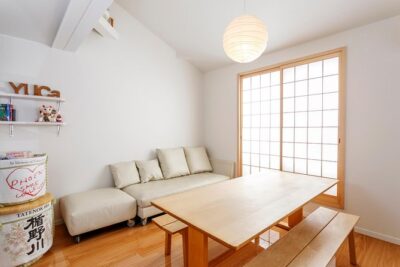
Ramen & Gyoza Cooking Class in Tokyo with Local Supermarket Visit
Read our review →
Tsukiji Fish Market Guided Tour and Sushi Making with Pro Chef
Read our review →Browse the lists this tour appears in