
REVIEW · JAPANESE COOKING CLASSES
Gyoza Cooking Class in Kyoto: Traditional Japanese Dumplings
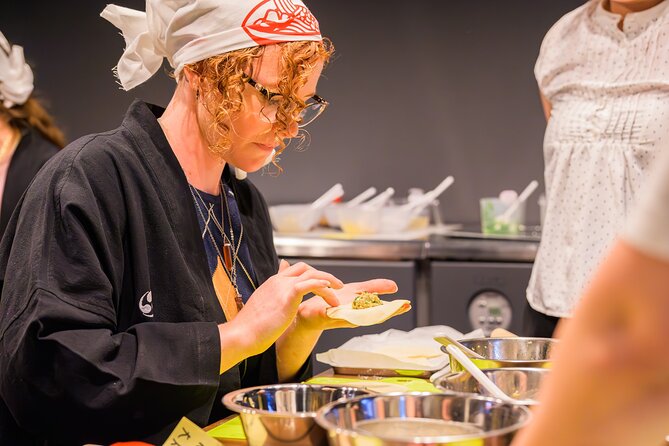
Making gyoza from scratch in a traditional Kyoto townhouse is the heart of this experience. You choose a filling, prepare the wrappers, fold the dumplings, and cook them with a professional baking machine. The class also adds Japanese history and an optional samurai armor photo session.
I like the hands-on format and the fact that you leave with a useful skill, not just pictures. I also like the friendly English-speaking instruction from teachers such as Hama, Maya, Ryo, and YO, plus the apron souvenir. The main consideration is price: at $118.19 per person, this costs more than a simple restaurant meal, though the personal instruction and cultural elements help explain the difference.
In This Review
- Key points to know
- Why a gyoza class belongs in a Kyoto itinerary
- Entering the traditional Kyoto townhouse
- Choosing a filling and preparing the dough
- Learning the fold, then cooking your batch
- The food payoff
- Samurai armor adds a memorable extra
- How much value do you get for $118.19?
- Who will enjoy this class most?
- Practical details before you book
- Should you book the Kyoto gyoza class?
- FAQ
- Where does the gyoza cooking class begin and end?
- How long does the activity last?
- Is the class taught in English?
- How many gyoza will I make?
- Is samurai armor included?
- Can I cancel for a full refund?
Key points to know
- Make 10 to 12 gyoza per person: You prepare, fold, and cook a satisfying batch rather than watching a demonstration.
- Start with homemade wrappers: The class teaches the process from the dough onward, not just the final folding trick.
- Choose your filling: Your dumplings can reflect your own taste instead of following only one fixed recipe.
- Learn in a Kyoto townhouse: The setting gives the class a more local feel than a generic commercial kitchen.
- Add samurai armor photos: Dressing up is optional, making this a fun extra for families and anyone who wants a memorable picture.
- Expect a small-group setting: The maximum group size is 20, and some scheduled sessions may be much smaller or even private.
Why a gyoza class belongs in a Kyoto itinerary
Kyoto is famous for temples, gardens, and old streets, but food is one of the best ways to understand daily Japanese life. Gyoza began in China and changed over time into a distinctly Japanese dish, with local differences in filling, size, and style. This class gives you a practical introduction to that story while putting you to work.
I like that the experience does not treat gyoza as a mysterious restaurant specialty. You learn how the dumpling comes together, step by step. That matters because the finished dish can look simple, but the wrapper, filling, folding, and cooking all affect the result.
You also get a break from sightseeing on foot. After a morning of shrines or a long afternoon in central Kyoto, sitting at a work station and making food with your hands can be a welcome change. The class lasts about 1 hour 30 minutes, although some sessions have taken closer to two hours. Plan your schedule with a little breathing room.
More Japanese Cooking Classes in Kyoto
- Ramen Cooking Class at Ramen Factory in Kyoto
★ 5.0 · 1,937 reviews - Sushi Making in Kyoto! Same-day bookings welcome!
★ 5.0 · 713 reviews - Kyoto: Ramen Cooking Class at a Ramen Factory with Souvenir
★ 4.9 · 532 reviews
Entering the traditional Kyoto townhouse
The meeting point is 230-1 Kamimyōkakujichō in Nakagyo Ward, Kyoto. The activity begins and ends there, and the location is near public transportation. Private transportation is not included, so you will need to make your own way to the townhouse.
The setting is an important part of the experience. A traditional townhouse gives you a sense of place before the cooking even begins. This is not simply a rented classroom with Japanese decorations added afterward. The house connects the food lesson with Kyoto’s older residential character.
You should allow time to locate the address, especially if you are arriving from another part of the city. Keep the mobile ticket ready on your phone. Confirmation is provided when you book, which makes the practical side simple, but the experience does not include pickup.
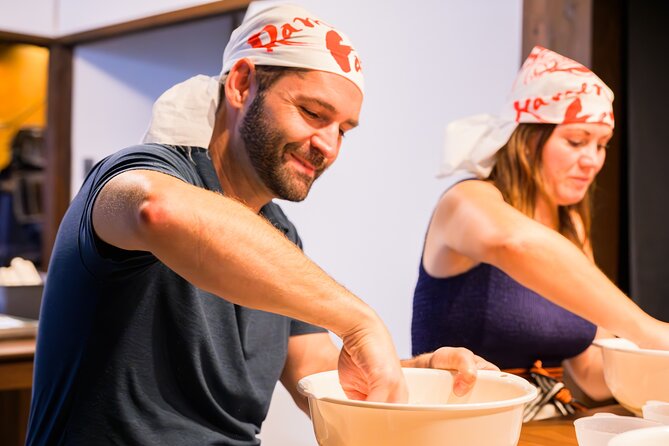
Once inside, you can expect cooking tools to be provided. Several accounts describe each person having a personal work station, a helpful arrangement when you are working with dough and filling. A personal station also makes this a better choice for beginners because you can follow each stage at your own pace.
Choosing a filling and preparing the dough
The class begins with the building blocks of the dumpling. You choose your preferred filling, then learn how the wrapper is made from scratch. That second part is what separates this activity from a quick folding lesson using premade wrappers.
Making wrappers takes more time and care, but it gives you a better feel for the food. You see how a soft piece of dough becomes the thin casing around the filling. You also learn why wrapper thickness matters. Too thick, and the dumpling can feel heavy. Too thin, and it becomes harder to handle.
The available information does not list every filling choice, so you should not book expecting a specific menu unless the provider confirms it. The important point is that you have a choice rather than receiving one fixed combination.
English-speaking instruction is included. Hama, Maya, Ryo, and YO are among the instructors associated with individual sessions. The teaching style appears to be friendly and practical, with special praise for clear explanations and an easygoing manner. That is useful in a cooking class, where a small misunderstanding can leave you with a badly sealed dumpling.
You may also hear about the background of gyoza and Japanese history as you work. These explanations add context without taking you away from the main activity. I prefer this kind of cultural lesson to a long talk at the beginning because you can connect the information to the food in front of you.
Learning the fold, then cooking your batch
The folding stage is where the class becomes playful. You shape each dumpling and learn the technique for sealing it. Your first few may look uneven. That is part of the point. By the final dumplings, your fingers should have a better sense of how much filling to use and how firmly to close the wrapper.
You make about 10 to 12 gyoza per person. That is enough for a proper tasting and gives you repeated practice rather than a single attempt. If you are attending as a family, you can compare shapes and see which folding method works best for each person.
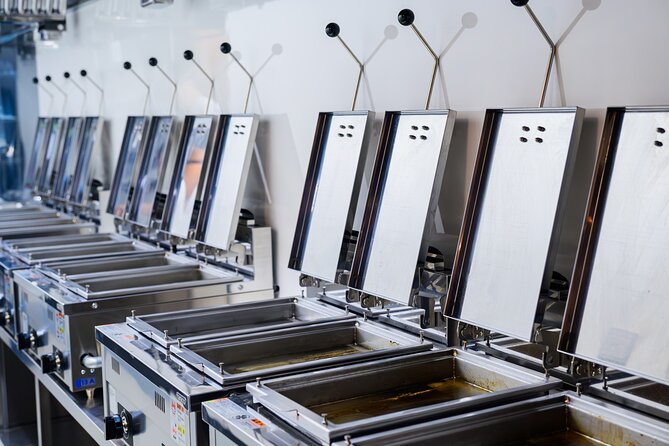
The dumplings are cooked with a professional baking machine. This helps remove some of the guesswork from the final stage. Good folding is only half the job. Heat, timing, and moisture determine whether the bottoms brown properly while the filling cooks through.
This is also where the class has real value for home cooks. You are not just told that gyoza are easy. You watch the process, try it yourself, and then taste the result. Several people leave wanting to make the dish again at home, which is a better souvenir than another disposable trinket.
One useful detail: an apron souvenir is provided, and some sessions also include a headband. If you forget to request or collect a recipe, the provider has indicated that it can be sent afterward. I would still ask for the recipe before leaving, since the whole point of the class is to repeat the dish once you return home.
Same city, a completely different kind of day:
- PERFECT KYOTO 1-Day Bus Tour
★ 5.0 · 13,518 reviews - Kyoto: Fushimi Inari, Kinkakuji, Bamboo Grove 1 Day Bus Tour
★ 4.8 · 4,316 reviews - Kyoto: Tea Ceremony in a Traditional Tea House in Kiyomizu
★ 4.9 · 3,519 reviews - Kyoto Geisha Walking Tour: Gion District & Hidden Gems
★ 4.7 · 3,273 reviews
The food payoff
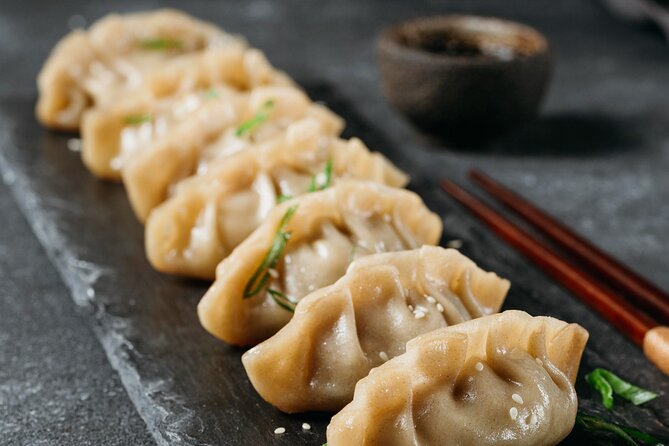
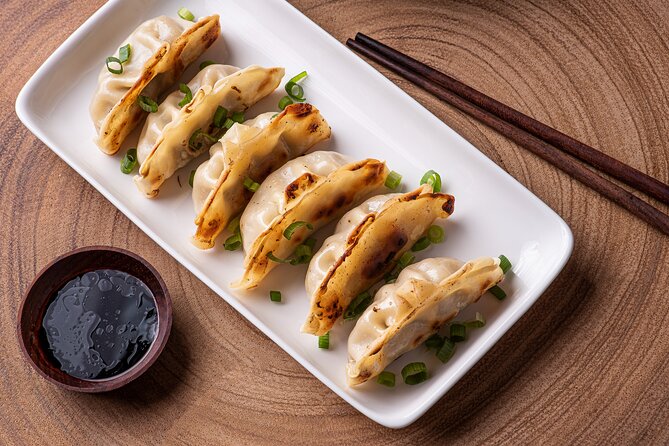
The finished gyoza are the reward for the work. You have made the wrappers, selected a filling, folded each dumpling, and watched them cook. Eating them at the end gives the lesson a clear finish.
You should arrive hungry. The batch of 10 to 12 dumplings per person makes this more than a token taste, though the exact amount you need will depend on your appetite. The class is best viewed as a substantial snack or light meal, not as a full Kyoto dinner with several courses.
I also like the social side of the meal. Cooking gives families and couples something to do together, and older children and teenagers can take part rather than sit on the sidelines. The activity has been used successfully by a family with a 10-year-old child, and the personal work stations make it easier for everyone to stay involved.
If you have little cooking experience, do not let the homemade wrappers put you off. The process is taught in stages, and the instructors are there to correct your technique. The class is designed for participation, not for people who already know Japanese cooking.
Samurai armor adds a memorable extra
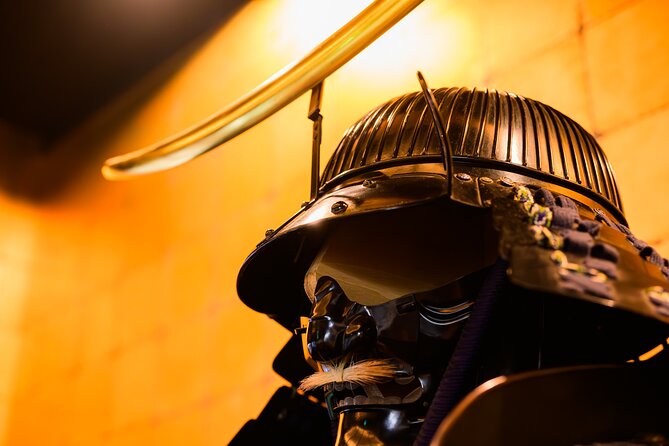
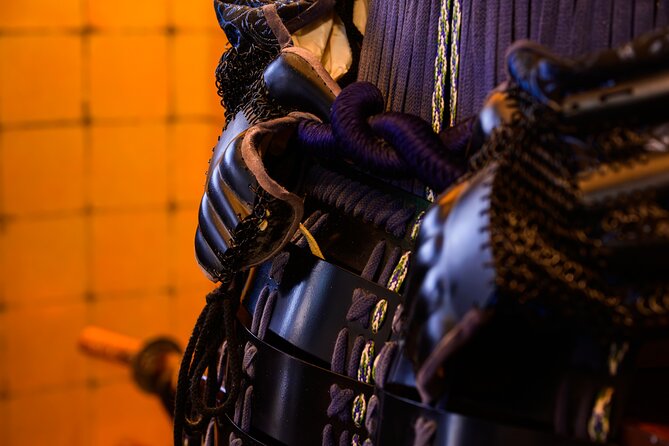
After cooking, you have the option to dress in samurai armor and take photographs. This is not required, and it is not the main reason to book the class. Still, it gives the experience a lively finish, especially for families and children.
The armor option also links the cooking lesson with the class’s attention to Japanese history and samurai culture. You get a food activity and a playful cultural photo opportunity in one visit.
I would treat the armor as a bonus rather than expect a full museum-style lesson on samurai. The supplied details promise dressing up and photographs, but they do not describe the armor collection, how long the session lasts, or how many people can dress at once. If the photos matter greatly to you, ask the provider for current details.
For adults, the option can feel a little theatrical. That is not a criticism. Kyoto offers plenty of serious historical sites, and a lighthearted activity can balance them nicely. If you prefer a strictly culinary class, you can simply skip this part.
How much value do you get for $118.19?
At $118.19 per person, this is not a bargain meal. You can eat gyoza in Japan for far less. The price pays for instruction, cooking tools, the townhouse setting, the structured activity, and the optional cultural extras.
The value improves if you care about learning a technique you can use at home. You are not paying only for food. You are paying for a guided process that covers dough, filling, folding, and cooking. You also receive an apron souvenir, and you may take home instructions for repeating the recipe.
The value is especially strong for a private or nearly private session. Some evening bookings have had only one person, turning the class into a private lesson. Another small group of two parents and a 10-year-old child had personal work stations, which made the class feel more tailored.
You cannot guarantee a private class from the published group limit. The maximum is 20 people, so the experience could feel busier on a popular date. That is the chief value question: if you want close one-on-one attention, choose a time with lower demand or ask the provider about current group sizes before booking.
For a family, the price may make sense because everyone has an active role and the activity creates a shared memory. For a solo visitor who wants a cheap meal, it probably will not. For a food-focused visitor who wants a skill to take home, the cost is easier to justify.
Who will enjoy this class most?
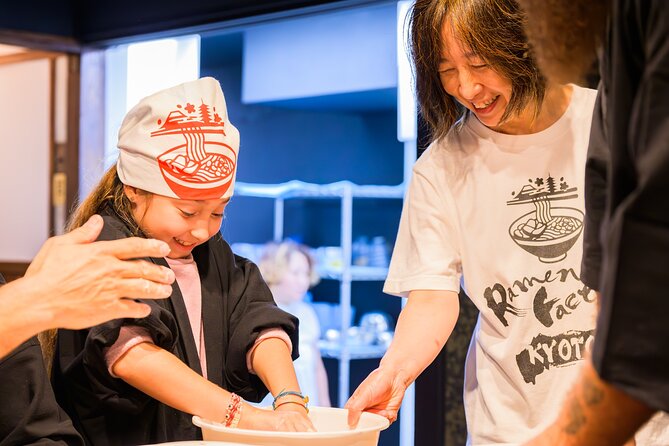
I would recommend this activity to:
- Families with older children or teenagers who enjoy hands-on activities
- Couples looking for an evening experience beyond sightseeing
- Solo visitors who like cooking and may appreciate the chance of a private session
- First-time cooks who want clear guidance
- Food lovers who want to recreate part of their Japan trip at home
- Visitors who enjoy light cultural activities and photographs
You do not need advanced cooking skills. The class is built around simple, repeatable steps, and the instructors focus on making the process approachable.
I would think twice if you have a very tight schedule. The stated duration is about 90 minutes, but some sessions run around two hours. Add travel time to and from the Kamimyōkakujichō meeting point, and you should not place this directly between two fixed reservations.
I would also think twice if you want a formal cooking-school course. This is a short cultural activity with food, conversation, and optional samurai photos. It is not designed to cover every regional style of gyoza or provide professional culinary training.
Practical details before you book
The experience is offered with a mobile ticket, so you can keep your confirmation on your phone. It begins and ends at the same meeting point, which makes it easier to plan the rest of your day than an activity with a separate drop-off.
The maximum group size is 20 people. That is not necessarily the usual class size, but it tells you the experience may range from intimate to fairly social depending on the booking. The small sessions described above suggest that quieter time slots can offer more individual attention.
Free cancellation is available if you cancel at least 24 hours before the local start time. Changes or cancellations inside that window are not accepted for a refund. Keep that deadline in mind if your Kyoto plans depend on weather or changing sightseeing hours.
The provider is Japan food entertainment Ltd. An English-speaking instructor and cooking tools are included. Private transportation is not included, and the activity does not list a separate meal, hotel pickup, or other transfer service.
Should you book the Kyoto gyoza class?
Book it if you want a practical Kyoto memory that you can repeat at home. The strongest parts are the homemade wrappers, the 10 to 12 dumplings you make yourself, the clear English instruction, and the friendly teaching style associated with instructors such as Hama, Maya, Ryo, and YO.
The $118.19 price is high for gyoza alone, but reasonable for a guided activity in a traditional townhouse with tools, instruction, a souvenir apron, cultural context, and an optional samurai photo session. I would book this for a family, a food-focused couple, or a solo visitor who values personal attention.
Skip it if you are mainly looking for the cheapest meal in Kyoto or if your schedule cannot handle a session that may run closer to two hours. For everyone else, this is a cheerful, useful break from temple visits, and one of the better ways to bring a small piece of Kyoto home with you.
FAQ
Where does the gyoza cooking class begin and end?
The class begins at 230-1 Kamimyōkakujichō, Nakagyo Ward, Kyoto, 604-0025, Japan. It ends back at the same meeting point.
How long does the activity last?
The listed duration is approximately 1 hour 30 minutes. Some sessions have taken about two hours, so you should leave extra time in your schedule.
Is the class taught in English?
Yes. An English-speaking instructor is included. Instructors associated with individual sessions include Hama, Maya, Ryo, and YO.
How many gyoza will I make?
You can expect to make about 10 to 12 gyoza per person. You choose a filling, make wrappers from scratch, fold the dumplings, and cook them.
Is samurai armor included?
Samurai armor is an optional part of the experience. After cooking, you can dress in armor and take photographs.
Can I cancel for a full refund?
Yes, if you cancel at least 24 hours before the experience start time. Cancellations or changes made less than 24 hours before the local start time are not refunded.
More Workshops in Kyoto
- Kyoto: 45-Minute Tea Ceremony Lesson Experience
★ 4.3 · 2,378 reviews - Kyoto : Chopsticks Making Workshop in Gion with Engraving Option
★ 5.0 · 958 reviews - Kyoto: Samurai Sword Class by Experts in Traditional Arts
★ 4.9 · 657 reviews - Ninja 1-hour Hands-on Lesson by Japanese master in Kyoto -Entry
★ 5.0 · 489 reviews
More Cooking Classes in Kyoto
- Kyoto: Ramen, Gyoza, and Onigiri Cooking Class
★ 5.0 · 445 reviews - Kyoto: Japanese Washoku Bento Small Group Cooking Class
★ 5.0 · 380 reviews - Kyoto Ramen and Gyoza Cooking Class with Professional Chefs
★ 5.0 · 282 reviews - Kyoto: Afternoon Japanese Izakaya Cooking Class
★ 4.9 · 241 reviews
Just added around Kyoto
- Private Guided Traditional Buddhist Cooking in Japan★ 5.0 · 16 reviews
- Kyoto: Gion Geisha District & Sake-in-Hand Walking Tour★ 5.0 · 37 reviews
- Your Private Vacation Photography Session In Kyoto★ 5.0 · 110 reviews
- Kyoto: Zen Meditation at a Private Temple with a Monk★ 5.0 · 25 reviews
- Traditional Japanese Washi Papermaking- Kyoto morning★ 5.0 · 77 reviews
- Kyoto Wagashi(Japanese sweets) Cooking Class near Fushimiinari★ 5.0 · 60 reviews
- Private Pewter Sake Cup Experience with a Kyoto Artisan★ 5.0 · 31 reviews
- Kyoto Private 6 hour Tour: English Speaking Driver Only, No Guide★ 5.0 · 88 reviews
Japanese Cooking Classes, compared.
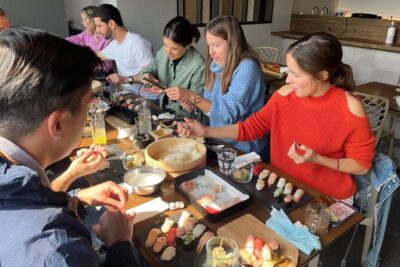
Sushi Making Tokyo Roll and Authentic Japanese Sushi Class
Read our review →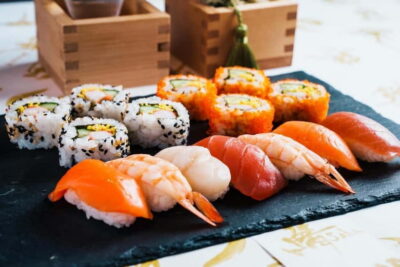
Roll and Authentic Sushi Making Class in Asakusa
Read our review →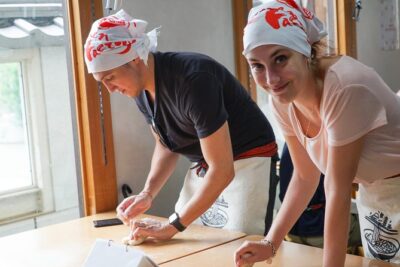
Ramen Cooking Class at Ramen Factory in Kyoto
Read our review →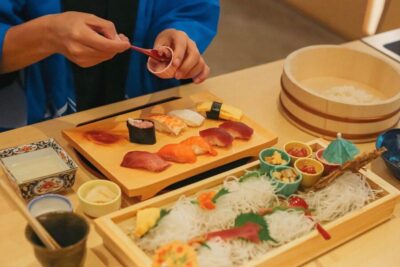
Sushi Making Class in a Happi Coat near a Famous Spot
Read our review →
Sushi Making Osaka Roll and Authentic Japanese Sushi Class
Read our review →
Tokyo Sushi Making Class in Tsukiji with Professional Chef
Read our review →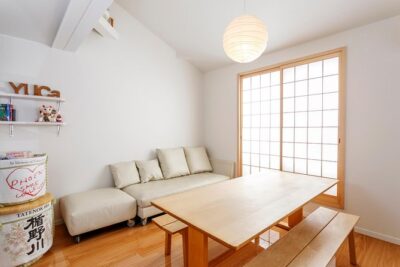
Ramen & Gyoza Cooking Class in Tokyo with Local Supermarket Visit
Read our review →
Tsukiji Fish Market Guided Tour and Sushi Making with Pro Chef
Read our review →Browse the lists this tour appears in