
REVIEW · KIMONO & CULTURE EXPERIENCES
Private Dinner with a Geisha
Meeting a maiko or geiko over dinner is the heart of this Kyoto evening. You begin near the Minamiza Kabuki Theatre, walk through Gion with an English-speaking guide, then enter a traditional restaurant or private tea house for conversation, food, music, dance, and games. This is not a stage show with a quick photo stop. It is a small window into a private tradition once reserved for elite customers.
I like the Gion walking tour, which gives you useful context before the dinner, and the chance to ask questions directly through a translator. Guides such as Mia and Mie are repeatedly praised for their warm manner, excellent English, and strong grasp of geiko and maiko life. The main caution is the fixed traditional menu. Food quality can be very good, but picky eaters, vegetarians, and anyone uneasy with seafood should sort out the menu before paying.
In This Review
- Key points to know before booking
- What this Kyoto evening is really about
- Starting at Minamiza Kabuki Theatre
- Walking through Gion before dinner
- Entering the restaurant or private tea house
- Meeting the maiko or geiko
- Dance, shamisen, songs, and traditional games
- Choosing between dinner options
- Who will enjoy this most
- Practical advice for a smoother evening
- Should you book this geisha dinner?
- FAQ
- Where does the private geisha dinner begin?
- What time does the experience start?
- How long does the experience last?
- What does the walking portion include?
- Is dinner included?
- Are drinks included?
- Can I request a special diet?
- Is the experience suitable for children?
Key points to know before booking
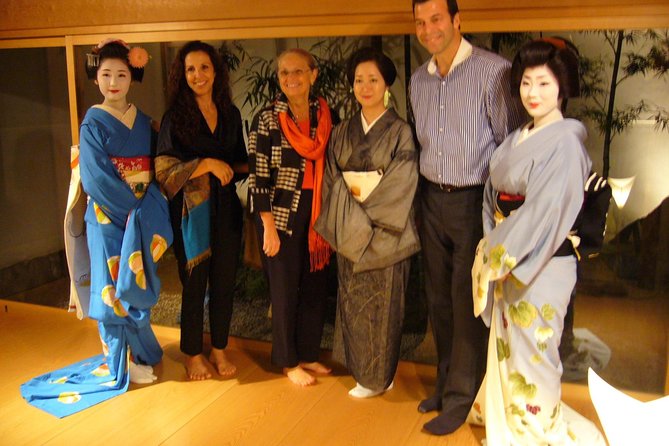
- A real maiko or geiko joins the meal: You spend time speaking with her, not simply watching from a distance.
- The evening begins in Gion: The walk explains the district, the houses, and the difference between a maiko and a geiko.
- Kaiseki is part of the experience: Expect several courses with seafood, vegetables, tempura, and other traditional Japanese dishes.
- Entertainment is personal and varied: Depending on the booking, you may see dance, shamisen music, singing, and simple party games.
- The guide matters: Mia and Mie are singled out for clear translation, humor, and thoughtful explanations.
- Food and group arrangements need care: Dietary requests are requested at booking, but some fixed menus may not allow changes.
What this Kyoto evening is really about
Kyoto’s geiko tradition is easy to misunderstand. The word geisha is widely used in English, while Kyoto generally uses geiko for a fully trained entertainer and maiko for an apprentice. A maiko is still in training, studying dance, music, speech, manners, and the formal arts needed for professional appointments.
This experience gives you a chance to meet one or both in a setting designed for conversation. The guide translates your questions and helps the evening move naturally. You can ask about training, dress, daily routines, performance, and the route from maiko to geiko.
That personal exchange is the real reason to consider the price. You are not paying only for dinner. You are paying for access to a tradition that is normally difficult for outsiders to enter, plus a guide who can explain what you are seeing without turning it into a shallow costume show.
The evening is also private in the sense that only your booked group takes part in the activity. Still, the exact setup can vary by option, and some accounts describe larger shared dinner arrangements. If privacy is important, read the option name carefully and confirm the group arrangement before booking.
More Kimono & Culture Experiences in Kyoto
- Kyoto Geisha Walking Tour: Gion District & Hidden Gems
★ 4.7 · 3,273 reviews - Kyoto: Gion Magical Night Walking Tour with Geisha Trivia
★ 4.9 · 2,393 reviews - Kyoto: Gion Geisha District Walking Tour – Stories of Geisha
★ 4.7 · 2,187 reviews
Starting at Minamiza Kabuki Theatre
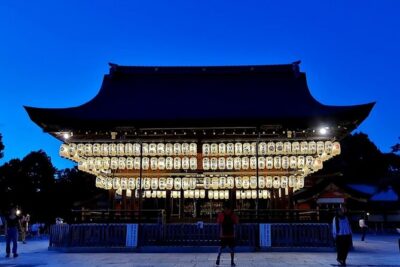
The meeting point is in front of the main gate of Minamiza Kabuki Theatre, facing Shijo Street, at 198 Nakanochō in Higashiyama Ward. The scheduled start is 5 p.m., so arrive early enough to find the theater and locate your guide.
Minamiza is a practical meeting point. It is near public transportation and sits at the edge of Gion, making it easy to combine this evening with other sightseeing in central Kyoto. Your guide should be holding the meeting for the group, but the information provided does not specify a sign, uniform, or exact waiting spot beyond the main gate.
The tour ends at the restaurant or tea house, although the meeting details describe the activity as returning to the meeting point. Because the end point may depend on the selected venue, avoid scheduling a tight train connection or another reservation immediately afterward.
Walking through Gion before dinner
For most options, the evening opens with a guided walk through Gion. The walking portion takes about 45 minutes in some arrangements, while the full walk and party are described as about three hours. The overall experience is listed at approximately three hours and 30 minutes, so allow extra time rather than treating three hours as a firm finish.
Gion is known for its traditional wooden houses and narrow lanes. Your guide explains how the district functions, the role of tea houses, and the difference between public sightseeing and private entertainment. This introduction matters because the dinner makes more sense when you understand that geiko and maiko work within a formal professional system, not as ordinary restaurant performers.
The walk also helps you prepare respectful questions. You might learn how a maiko’s makeup and hairstyle relate to her training, how many dances she studies, or what changes when she becomes a geiko. Several people found the guides especially good at explaining myths and everyday realities without making the subject feel stiff.
The walk is not a full historical tour of Kyoto. It is a focused introduction to Gion and the geiko world. If you have a large group, stay close to the guide. One account found it hard to hear during the street portion when the group became large and noisy.
Entering the restaurant or private tea house
After the walk, you go to a Japanese restaurant or tea house. The setting is likely a traditional room, and the meal is served in courses. The exact venue is not provided in advance, which is normal for an experience built around private arrangements.
The standard dinner includes a half or full kaiseki-style meal. Kaiseki is a formal sequence rather than one large plate, with careful presentation and seasonal ingredients. The supplied details mention seafood, vegetables, and tempura, while the accounts also refer to raw fish and other strongly traditional dishes.
A half kaiseki meal may be enough for many people. One account specifically found the half meal generous. Other descriptions call the full meal elaborate and satisfying. You should come hungry, but do not assume that every course will suit a cautious palate.
The food is one of the less predictable parts of the evening. Many diners found it delicious, and some praised the restaurant and the handling of complex food preferences. Others found the meal poor or had trouble with dishes they were not used to. One person became ill after eating raw fish, while another group said its seafood restrictions were not properly handled.
That contrast points to the most useful booking advice: state dietary needs clearly, then confirm that the fixed menu can actually accommodate them. The booking information asks you to provide dietary requirements, but the experience may not allow menu substitutions. Vegetarians, vegans, people with seafood allergies, and very selective eaters should not assume that a request guarantees a suitable meal.
Drinks are not included in the regular dinner options and can be bought separately. Drinks are included if you choose the private tea house option, which may make that higher-priced choice more appealing for a group that plans to drink. Japan’s minimum drinking age is 20.
Same city, a completely different kind of day:
- PERFECT KYOTO 1-Day Bus Tour
★ 5.0 · 13,518 reviews - Kyoto: Fushimi Inari, Kinkakuji, Bamboo Grove 1 Day Bus Tour
★ 4.8 · 4,316 reviews - Kyoto: Tea Ceremony in a Traditional Tea House in Kiyomizu
★ 4.9 · 3,519 reviews - Kyoto: Tea Ceremony Ju-An at Jotokuji Temple
★ 4.9 · 3,207 reviews
Meeting the maiko or geiko
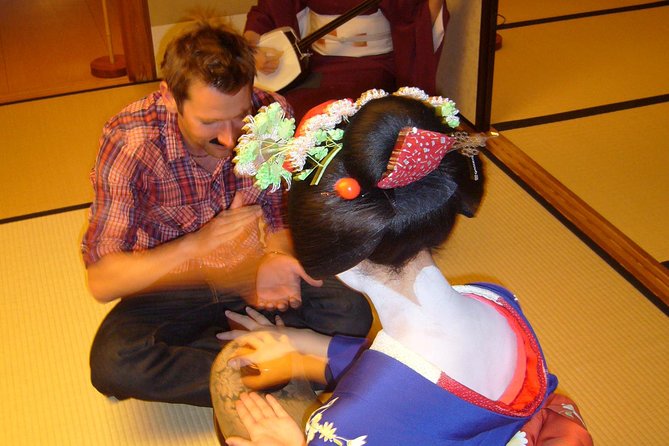
The maiko or geiko joins you during the meal. The format is conversational, with the guide interpreting questions and answers. This is where the experience becomes more than a dinner in costume.
You can ask about training, clothing, music, dance, work, and personal interests. One family asked about dressing in a kimono and sleeping while preserving the hairstyle. Another learned about a young maiko’s hopes of becoming a geiko. These details help turn an unfamiliar tradition into a human encounter.
Do not expect every performer to speak English. One account describes a maiko who spoke no English, but the guide handled the exchange. That is why the guide is so important. Mia and Mie are praised for clear English, warmth, humor, and the ability to translate without flattening the conversation.
The tone appears friendly but formal. You are being welcomed into a tradition with its own rules of conduct. The operator warns that it can refuse service to people who do not treat those traditions properly, with no refund if the experience is canceled for that reason. In plain terms, be polite, listen, avoid treating the performer like a prop, and follow the guide’s instructions about photographs and interaction.
Dance, shamisen, songs, and traditional games
At some point during dinner, the maiko or geiko performs. The entertainment may include Japanese dance, singing, and shamisen music. The dances are not improvised tourist numbers. The performers study many pieces, and one account noted that a maiko had learned 20 dances.
The room can affect the performance. In one dinner, there was little space for the maiko to move, and the dance was brief. That does not erase the value of meeting her, but it does mean you should not picture a large theater production with sweeping choreography.
The party games are often a high point. They are simple drinking or hand games that let you take part rather than sit silently through a performance. Some families played games, danced, and took pictures. The exact games and number of performers depend on the booking and the evening’s arrangements.
A rare booking produced performances by two maiko and one geiko, but that was described as unusual. You should expect a maiko or geiko, not assume several performers will attend.
The experience works best if you approach the entertainment with curiosity. It is not a chance to demand a private show on request. The performer has a professional role, and the guide helps set the pace.
Choosing between dinner options
The experience is sold in more than one format, including casual dinner, half or full kaiseki, and a private tea house option. The details supplied do not give a complete price table for each choice, so check exactly what your selected option includes.
The listed price is $381.49 per person. That is a major splurge, especially if you are booking for a family. The cost can make sense if your main goal is a rare cultural meeting with translation and a private setting. It makes less sense if you mainly want a fine meal, since a costly kaiseki dinner alone may not satisfy someone who dislikes traditional seafood or formal courses.
The private tea house option includes drinks, while drinks are extra with other choices. It may also offer a more intimate setting, but confirm the group size and what private means before paying. The activity is advertised as private, yet some arrangements can include a larger group at the venue.
The strong overall response, with a 4.8 rating and 97 percent recommendation rate, supports the idea that the cultural access is the main value. It does not guarantee perfect food or flawless organization. A few accounts describe slow service, difficulty getting water, weak communication before the tour, or confusion over group numbers.
For a once-only Kyoto trip, I can see the price being justified for someone fascinated by Japanese performance and social traditions. If your budget is tight, this is the kind of activity to compare against a less expensive cultural show or ordinary kaiseki dinner. Those alternatives may provide better food value, but not the same direct conversation.
Who will enjoy this most
I would choose this for adults, older children, and teenagers who are genuinely curious about Japanese culture. The guide can make the evening accessible to a family, and one guide reportedly kept teenagers interested with humor and clear explanations.
It can also suit a solo visitor or couple who wants more than temple visits. The private format gives you space to ask personal questions, provided you remain respectful and do not expect every answer to be available.
Young children may find the meal long and the formal setting difficult. Children must be accompanied by an adult. The stated duration can reach three and a half hours, and one account found the dinner portion two hours too long.
This is not the best pick for a vegan, a strict vegetarian, a person with serious seafood restrictions, or someone who wants complete control over the menu. It may also disappoint anyone expecting a large dance performance with a full stage and long choreography.
Practical advice for a smoother evening
Book well ahead. The average booking point is 38 days before the date, and confirmation arrives within 48 hours only if space is available. This is not an activity I would leave until the last few days of a short Kyoto visit.
Send dietary information when booking, then follow up through the booking channel if the restriction is important. The communication record has not always been prompt, so do not assume that silence means the restaurant has approved your request.
Wear something comfortable for the walk and appropriate for a formal dinner. The information does not set a dress code, but respectful, tidy clothing fits the setting better than casual beachwear.
Think about your questions before you arrive. Ask about training, dance, instruments, kimono, makeup, daily life, and the path from maiko to geiko. A written list helps because the evening can feel exciting and you may forget what you wanted to ask.
Bring patience. Restaurant service may be slow, translation takes time, and the performer may have another appointment afterward. The evening is not built for rushing.
The experience is non-refundable and cannot be changed for any reason. That makes accurate date selection and careful menu checks especially important.
Should you book this geisha dinner?
Book it if you want a rare, direct cultural encounter and can accept that the dinner is part of a fixed traditional menu. The best parts are the Gion introduction, the guide’s interpretation, the personal questions, and the chance to see dance, music, and games at close range.
I would not book it solely for the food. The meal can be excellent, but it can also be challenging for selective eaters, and a few organizational issues have affected the evening. At $381.49, the cultural access must be your priority.
For the right person, this is one of Kyoto’s most unusual evening activities. Choose the private tea house option if drinks and a more exclusive setting matter to you, confirm dietary arrangements in advance, and arrive ready to listen. That is how you get the most from an expensive but genuinely special encounter.
FAQ
Where does the private geisha dinner begin?
The meeting point is in front of the main gate of Minamiza Kabuki Theatre, facing Shijo Street, at 198 Nakanochō in Kyoto’s Higashiyama Ward.
What time does the experience start?
The stated start time is 5 p.m.
How long does the experience last?
The activity lasts approximately three hours and 30 minutes. The walking tour and private party are also described as taking about three hours, depending on the selected option.
What does the walking portion include?
The guide leads you through Gion, Kyoto’s historic geiko district, and explains the area’s traditional houses, geiko culture, and maiko traditions before dinner.
Is dinner included?
Yes. Dinner is included, with a half or full kaiseki-style meal depending on the option selected.
Are drinks included?
Drinks are included with the private tea house option. For other choices, drinks are available to purchase separately.
Can I request a special diet?
You should provide dietary requirements when booking. However, some accounts indicate that fixed menus may not accommodate every request, so confirm the arrangement before committing.
Is the experience suitable for children?
Children may participate but must be accompanied by an adult. The experience is private for the booked group, and most people can participate.
More Dining Experiences in Kyoto
- Kyoto Evening Gion Food Tour Including Kaiseki Dinner
★ 5.0 · 62 reviews - Kyoto: Maiko Dinner in Traditional Restaurant and Tour
★ 4.8 · 55 reviews - Kyoto: Lunch or Dinner with Maiko
★ 4.2 · 52 reviews - Private Dinner with Maiko and Geiko in Kyoto
★ 5.0 · 28 reviews
More Dinner Experiences in Kyoto
- Kyoto Gion Cultural Walk & Geisha Show with Dining Options
★ 5.0 · 518 reviews - Kyoto Gion Cultural Walk & Geisha Show with Dining Options
★ 5.0 · 483 reviews - Dinner with Maiko in a Traditional Kyoto Style Restaurant Tour
★ 5.0 · 175 reviews - Kyoto: Geisha Dinner & Gion Cultural Walk
★ 5.0 · 73 reviews
Just added around Kyoto
- Private Guided Traditional Buddhist Cooking in Japan★ 5.0 · 16 reviews
- Kyoto: Gion Geisha District & Sake-in-Hand Walking Tour★ 5.0 · 37 reviews
- Your Private Vacation Photography Session In Kyoto★ 5.0 · 110 reviews
- Kyoto: Zen Meditation at a Private Temple with a Monk★ 5.0 · 25 reviews
- Traditional Japanese Washi Papermaking- Kyoto morning★ 5.0 · 77 reviews
- Kyoto Wagashi(Japanese sweets) Cooking Class near Fushimiinari★ 5.0 · 60 reviews
- Private Pewter Sake Cup Experience with a Kyoto Artisan★ 5.0 · 31 reviews
- Kyoto Private 6 hour Tour: English Speaking Driver Only, No Guide★ 5.0 · 88 reviews
Kimono & Culture Experiences, compared.

Kyoto Geisha Walking Tour: Gion District & Hidden Gems
Read our review →
Gion Magical Night Walking Tour with Geisha Trivia
Read our review →
Gion Geisha District Walking Tour – Stories of Geisha
Read our review →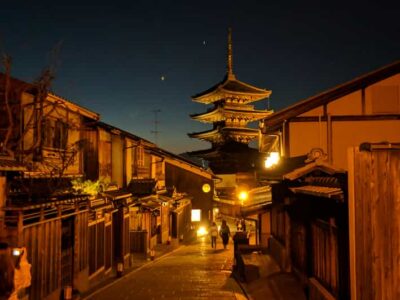
Best of Kyoto: Gion, Geisha, Pagodas & Cobblestones
Read our review →
Kyoto Gion Geisha District Walking Tour – The Stories of Geisha
Read our review →
Browse the lists this tour appears in