
REVIEW · KIMONO & CULTURE EXPERIENCES
One Hour Geisha Show in Gion Kyoto
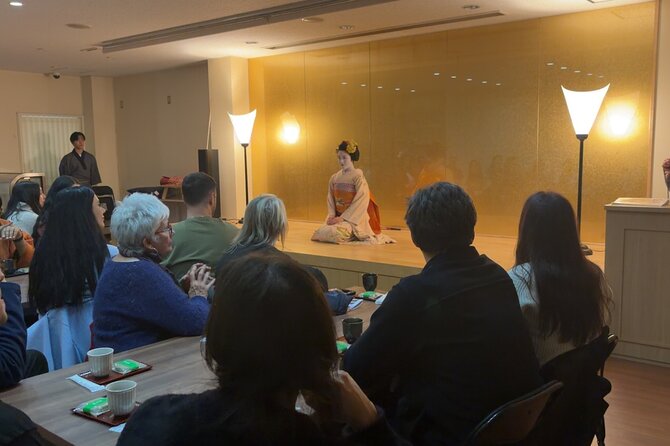
Kyoto’s geisha world is easy to glimpse and hard to understand. This one-hour show in Gion gives you a dependable meeting with a maiko, an apprentice geisha, instead of asking you to wander the lanes and hope one appears. You watch traditional dances, share tea and a snack, learn a Japanese game, and get time for questions and photos.
I like the intimate setting, which leaves room for a real Q&A rather than a quick stage performance with no context. I also like the mix of watching and doing: the dances provide the visual magic, while the game and conversation help you connect the customs to everyday life.
The main consideration is that this is a staged cultural show, not a chance encounter in Gion or a private visit inside the geisha community. At $79.26 per person, the value depends on how much you want the explanation, tea, game, and photo time alongside the performance.
In This Review
- Key details before you book
- Meeting a maiko without chasing a street sighting
- What happens during the 4:00 pm program
- Why the Q&A matters
- Tea, snack, and a Japanese game
- The final photo opportunity
- Is $79.26 good value?
- Who will enjoy this Gion experience most?
- Simple planning advice for the afternoon
- Should you book the One Hour Geisha Show?
- FAQ
- Where does the One Hour Geisha Show take place?
- What time does the show start?
- How long does the experience last?
- What is included in the ticket?
- Is additional food or drink included?
- Will I meet a real maiko?
- Can I ask questions during the experience?
- Are photos allowed?
- What is the cancellation policy?
Key details before you book
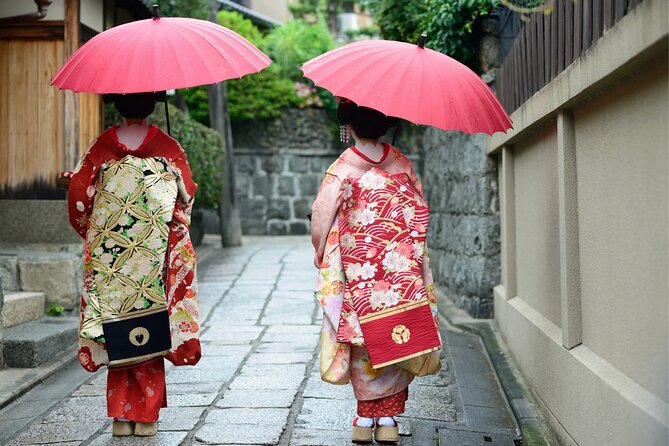
- Two dances by a maiko: The program can include a performance by a maiko such as Kosome-san, who has been praised for presenting two dances.
- A full hour in Gion: The 4:00 pm experience stays at the meeting point and ends there, keeping the outing simple to fit around other Kyoto plans.
- Tea and a light snack included: You receive a small refreshment during the program, while extra food and drinks cost more.
- Questions are part of the show: The Q&A gives you a chance to ask about geisha culture instead of only watching from a distance.
- A Japanese game adds participation: You are not sitting silently for the entire hour, and the game gives the event a relaxed social touch.
- Photos at the end: The final photo opportunity gives you a clear moment to capture the occasion without interrupting the dances.
Meeting a maiko without chasing a street sighting
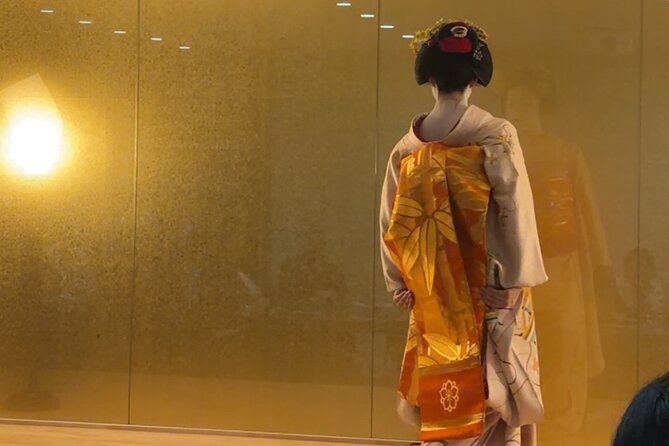
Gion is the natural setting for learning about Kyoto’s geisha traditions, but simply walking through the district offers no guarantee of seeing a maiko. Even if you spot one, you may see her only for a few seconds as she moves between appointments. This show solves that uncertainty by placing the meeting and performance into a planned one-hour program.
The experience introduces you to a maiko, the apprentice stage of Kyoto’s geisha tradition. The program notes that only about 40 maikos remain in Kyoto, which helps explain why a scheduled meeting can be valuable. You get a close, organized look at an art form that is not designed for casual public viewing.
That arrangement also calls for respectful expectations. You are attending a presentation in a staged setting, not entering the private working world of geisha entertainers. The format is useful precisely because it creates a clear line between cultural education and unwanted street attention.
If your goal is to understand what you are seeing, this is more dependable than roaming Gion with a camera. If your goal is to observe an unplanned slice of daily life, the scheduled format may feel less spontaneous.
More Kimono & Culture Experiences in Kyoto
- Kyoto Geisha Walking Tour: Gion District & Hidden Gems
★ 4.7 · 3,273 reviews - Kyoto: Gion Magical Night Walking Tour with Geisha Trivia
★ 4.9 · 2,393 reviews - Kyoto: Gion Geisha District Walking Tour – Stories of Geisha
★ 4.7 · 2,187 reviews
What happens during the 4:00 pm program
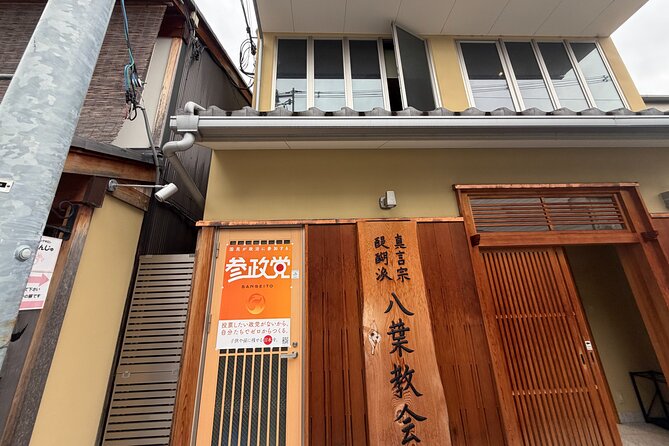
The meeting point is 302-2 Daikokucho, in Kyoto’s Higashiyama Ward. The start time is 4:00 pm, and the activity lasts about one hour. It ends back at the same meeting point, so you do not need to arrange a second pickup location or work out a complicated return plan.
The central event is the maiko show. You watch traditional dance performances at close range, with the program designed to help you notice the costume, movement, gestures, and formal presentation. The dances are not treated as a quick photo backdrop. They form the main cultural part of the hour.
Kosome-san has been singled out as a maiko who performed two dances, followed by questions and a game. That gives you a useful idea of the rhythm: performance first, then conversation and participation. The exact performer may not be stated in advance, so you should not book on the assumption that Kosome-san will appear at every session.
The show is short enough to hold your attention, but it is not a full evening of entertainment. You get a focused introduction rather than a long theatrical production. That makes it a practical choice on a Kyoto schedule packed with temples, gardens, and evening meals.
Why the Q&A matters
The Q&A is one of the most useful parts of the hour. Dance alone can be beautiful, but it leaves you guessing about the customs behind the movements, clothing, training, and role of a maiko. The question period gives you a chance to ask about the subjects that usually remain unclear from a distance.
You can use this time well by preparing a few questions before you arrive. Ask about the difference between a maiko and a geisha, the meaning of the dances, or the path into this traditional profession. The supplied details do not promise a set list of questions or a particular language arrangement, so keep your expectations practical and listen closely to the host’s explanations.
An intimate space makes a difference here. One hour passes quickly when a group is large and every question needs to be rushed. The setting has been described as private and intimate, with enough time to ask many questions. That is a strong point for anyone who wants more than a quick performance.
The host’s communication also matters. Clear explanations help bridge the gap between a visitor’s assumptions and the actual customs being presented. You are not expected to arrive already familiar with Kyoto’s entertainment traditions.
Tea, snack, and a Japanese game
Tea and a light snack are included, giving the experience a small hospitality element. Do not confuse this with a meal. Additional food and drinks are not included, so plan to eat before or after if you need something substantial.
The tea break also helps set the pace. You can shift from watching the formal dances to taking part in a more relaxed portion of the program. In a culture-focused event, those small transitions matter because they give you time to absorb what you have just seen.
The Japanese game is another welcome change of rhythm. You learn how to play rather than only receiving information. That makes the hour more suitable for families, couples, and groups who prefer an activity with some participation.
The available details do not name the game, so do not book expecting a specific title or type of play. Think of it as a cultural activity that adds a little fun and interaction. It is a bonus, not the main reason to choose the experience.
Same city, a completely different kind of day:
- PERFECT KYOTO 1-Day Bus Tour
★ 5.0 · 13,518 reviews - Kyoto: Fushimi Inari, Kinkakuji, Bamboo Grove 1 Day Bus Tour
★ 4.8 · 4,316 reviews - Kyoto: Tea Ceremony in a Traditional Tea House in Kiyomizu
★ 4.9 · 3,519 reviews - Kyoto: Tea Ceremony Ju-An at Jotokuji Temple
★ 4.9 · 3,207 reviews
The final photo opportunity
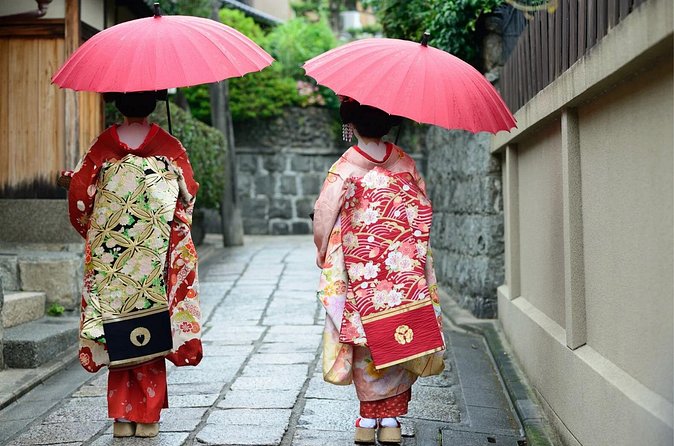
Photos are offered at the end of the program. This timing is sensible: you can watch the dances without spending the performance looking through your phone, then take pictures once the formal portion is finished.
Photo time is especially helpful because a maiko encounter on the street can be fleeting and intrusive. Here, the photo opportunity is built into the event, giving you a defined moment to record the visit. You should still follow the host’s instructions and treat the photo session as part of a cultural meeting, not a free-for-all.
The information provided does not specify the exact photo arrangements, such as how many pictures are taken or whether staff help with cameras. Bring a charged phone and keep your expectations modest. The value is having a respectful, planned opportunity at the end, not a professional portrait package.
Is $79.26 good value?
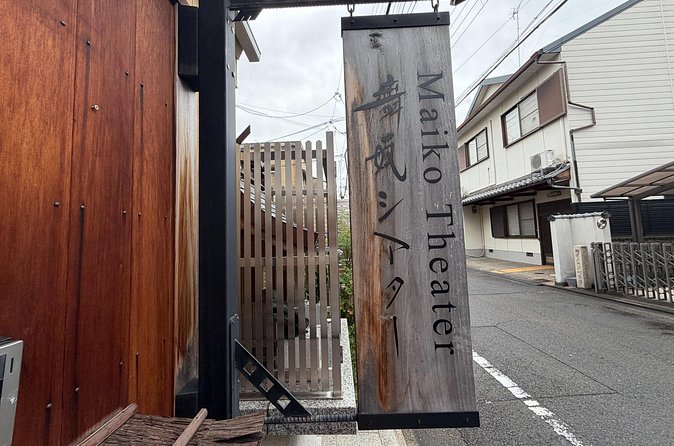
At $79.26 per person, this is not a cheap drop-in attraction. You are paying for a scheduled meeting with a maiko, live dances, tea, a snack, a Japanese game, Q&A time, and photos. The value is strongest when you want several of those elements in one compact program.
A comparable walk through Gion costs less because walking is free, but it cannot promise a performance or a conversation. A temple admission may also cost less, yet it will not offer this particular connection to Kyoto’s traditional entertainment culture. The fair comparison is not simply ticket price. It is the cost of replacing this organized hour with several uncertain attempts to see or understand the same subject.
I would consider the price reasonable for a first-time Kyoto visitor who wants a clear introduction and does not speak Japanese. The Q&A and intimate format add value beyond the dances. The calculation is less favorable if you only want a short performance and have little interest in questions, the game, or the tea service.
Group discounts may help if you are booking for several people. A mobile ticket is convenient for a day of sightseeing, and confirmation arrives when you book. Since the activity begins at 4:00 pm, it can fit after daytime sightseeing and before dinner, though you should leave enough time to reach the meeting point in Gion.
Who will enjoy this Gion experience most?
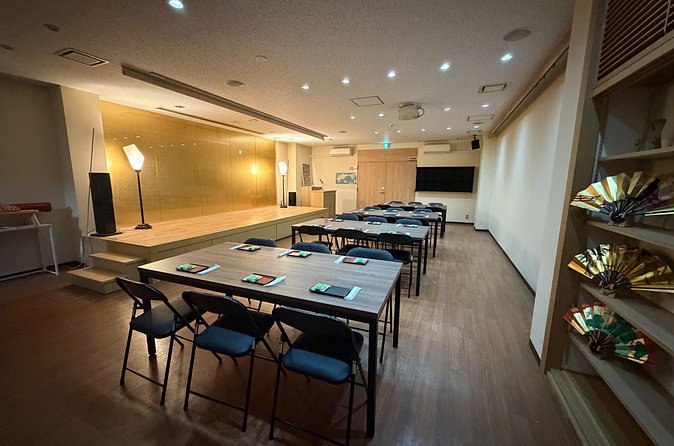
I would recommend it to you if you want cultural context without committing to a long evening event. The one-hour length is manageable, and the fixed start and end point make it easy to pair with other Kyoto plans.
It suits first-time visitors particularly well. You get an introduction to the maiko tradition, live dance, a chance to ask questions, and an activity that goes beyond taking pictures. Families may appreciate the game, while couples and small groups may enjoy the intimate setting and final photos.
It also works for visitors who have tried to spot a maiko in Gion and found the experience uncertain. This show gives you a respectful alternative to waiting on a street corner with a camera.
I would be more cautious if you expect a large-scale theatrical performance, a full meal, or an unscripted look into private geisha life. The event is short, organized, and educational. Its strength is access and explanation, not spectacle on a grand scale.
Most people can participate, according to the activity information. Specific accessibility features are not provided, so you should confirm any personal mobility or access needs before booking.
Simple planning advice for the afternoon
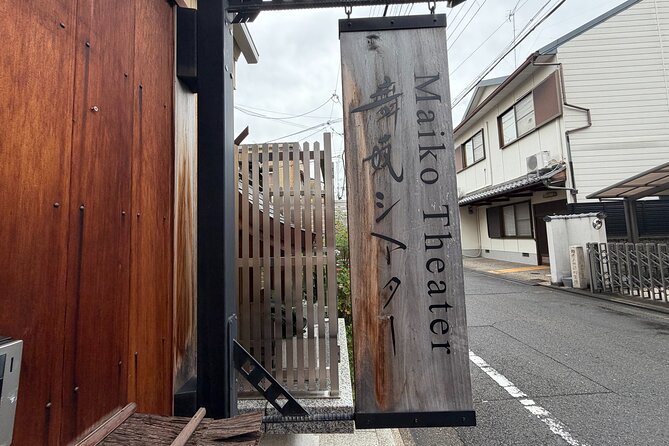
Set aside the full hour, plus time to reach 302-2 Daikokucho in Higashiyama Ward. The experience ends at the same place where it starts, which simplifies your evening plans.
Arrive ready to listen as well as watch. The Q&A is a major part of the value, and you will get more from it if you have a few questions in mind. A phone or small camera is useful for the photo period, but keep it away during the dances unless the host says otherwise.
Tea and a light snack are included, but additional food and drinks are not. If you are hungry, plan a meal before the 4:00 pm start or after the show.
The booking has free cancellation up to 24 hours before the start time. Cancellations made less than 24 hours in advance are not refunded, and late changes are not accepted. The cut-off follows Kyoto local time, so check the clock carefully if your plans are shifting.
Should you book the One Hour Geisha Show?
Book it if you want a reliable, respectful introduction to Kyoto’s maiko tradition, with enough structure to include two dances, tea, a snack, a game, questions, and photos. The close setting and Q&A are the strongest reasons to choose it, and Kosome-san’s two-dance format shows how much can fit into the hour.
Skip it if you are seeking a spontaneous street encounter or a full evening of traditional theater. At $79.26, you should want the educational and interactive parts, not only the chance to take a picture.
For most first visits to Kyoto, I see this as a useful Gion add-on. It replaces guesswork with a planned cultural meeting, while keeping the time commitment short and the program easy to fit into an afternoon.
FAQ
Where does the One Hour Geisha Show take place?
The experience takes place in Gion, Kyoto. The meeting point is 302-2 Daikokucho, Higashiyama Ward, Kyoto, 605-0832, Japan.
What time does the show start?
The show starts at 4:00 pm.
How long does the experience last?
The experience lasts approximately one hour.
What is included in the ticket?
The ticket includes the geisha or maiko show, a light snack, and tea.
Is additional food or drink included?
No. Additional food and drinks are not included.
Will I meet a real maiko?
The program includes a live meeting and performance by a maiko, described as an apprentice geisha. The specific performer is not guaranteed in the provided information.
Can I ask questions during the experience?
Yes. A Q&A session is included in the program.
Are photos allowed?
A photo opportunity is provided at the end of the experience.
What is the cancellation policy?
You can cancel up to 24 hours before the start time for a full refund. Cancellations or changes made less than 24 hours before the experience are not accepted for a refund.
More 1-Hour Experiences in Kyoto
- Ninja 1-hour Hands-on Lesson by Japanese master in Kyoto -Entry
★ 5.0 · 489 reviews - One Hour Geisha Show in Kyoto
★ 5.0 · 64 reviews - Kyoto: Hands-on Takoyaki and Okonomiyaki Cooking (1 Hour)
★ 4.7 · 25 reviews - Ring making experience Completed in about 1 hour!
★ 5.0 · 141 reviews
More Show in Kyoto
- Kyoto Gion Cultural Walk & Geisha Show with Dining Options
★ 5.0 · 518 reviews - Kyoto Gion Cultural Walk & Geisha Show with Dining Options
★ 5.0 · 483 reviews - 1 Hour Geisha Show in Kyoto
★ 5.0 · 452 reviews - Kyoto: Samurai Kenbu Traditional Sword Dancing Show
★ 4.5 · 426 reviews
Just added around Kyoto
- Private Guided Traditional Buddhist Cooking in Japan★ 5.0 · 16 reviews
- Kyoto: Gion Geisha District & Sake-in-Hand Walking Tour★ 5.0 · 37 reviews
- Your Private Vacation Photography Session In Kyoto★ 5.0 · 110 reviews
- Kyoto: Zen Meditation at a Private Temple with a Monk★ 5.0 · 25 reviews
- Traditional Japanese Washi Papermaking- Kyoto morning★ 5.0 · 77 reviews
- Kyoto Wagashi(Japanese sweets) Cooking Class near Fushimiinari★ 5.0 · 60 reviews
- Private Pewter Sake Cup Experience with a Kyoto Artisan★ 5.0 · 31 reviews
- Kyoto Private 6 hour Tour: English Speaking Driver Only, No Guide★ 5.0 · 88 reviews
Kimono & Culture Experiences, compared.

Kyoto Geisha Walking Tour: Gion District & Hidden Gems
Read our review →
Gion Magical Night Walking Tour with Geisha Trivia
Read our review →
Gion Geisha District Walking Tour – Stories of Geisha
Read our review →
Best of Kyoto: Gion, Geisha, Pagodas & Cobblestones
Read our review →
Kyoto Gion Geisha District Walking Tour – The Stories of Geisha
Read our review →
Browse the lists this tour appears in