
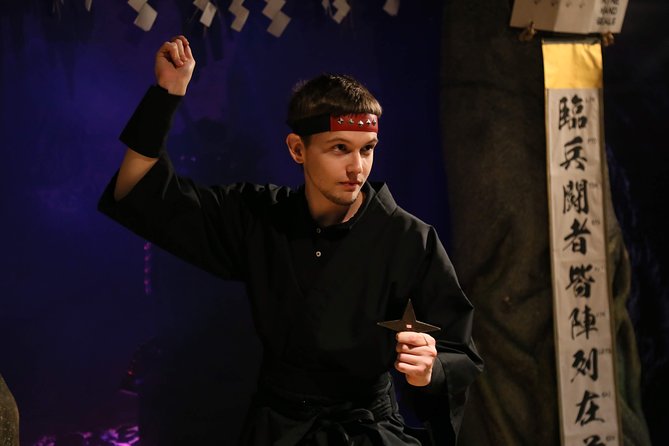
REVIEW · KIMONO & CULTURE EXPERIENCES
Ninja Samurai 2-hour hands-on lesson by Japanese master in Tokyo
The most fun part of this two-hour Tokyo class is its mix of history and hands-on practice. You do not just watch a sword routine. You learn Kuji-In meditation, handle ninja tools, throw shuriken, fire a blowgun, and work through basic sword movements with an English-speaking Japanese instructor.
I like the six-person maximum, which gives the instructor time to correct movements and keep the session lively. I also like the wide age range this activity can handle, from children around 11 to older adults in their 70s. The main drawback is practical: the Shiomi location can take a little effort to find, and you may need to climb four short flights of stairs if the elevator is not working.
In This Review
- Key points at a glance
- A hands-on look at ninja and samurai training
- Kuji-In meditation and the ninja mindset
- Ninja weapons, tools, and target practice
- Samurai sword training and the final performance
- Why the small group makes a difference
- A working dojo, not a theme-park set
- What the $86.22 price really buys
- Who should book this class
- How to prepare for the two hours
- Cancellation and booking details worth knowing
- Should you book the Ninja Samurai class?
- FAQ
- How long does the Ninja Samurai class last?
- Where does the activity take place?
- How many people can join the class?
- Is the lesson taught in English?
- What activities are included?
- Are ninja clothes provided?
- Is transportation included?
- Can I cancel for a full refund?
- What happens if the class is canceled?
Key points at a glance
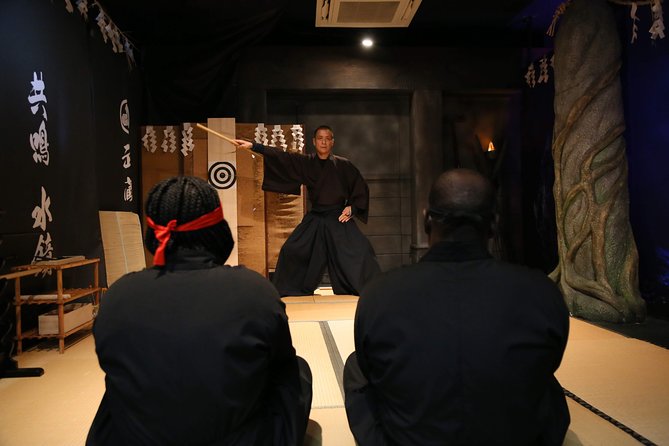
- Several skills in one class: Try Kuji-In meditation, ninja movement, shuriken, blow darts, ninja tools, and samurai sword work.
- Small group of six or fewer: You get more personal instruction than in a large stage-style demonstration.
- English instruction by a Japanese master: Instructors including Hyoga, Asami, Onel, and Buddy have been praised for clear teaching and humor.
- Ninja clothing is provided: Changing into training clothes helps mark the shift from ordinary sightseeing to role-play and practice.
- A real dojo setting in Shiomi: The room is functional rather than polished or theatrical, so set your expectations accordingly.
- Good value for active families and friends: At $86.22 per person, you receive two hours of instruction and access to several activities.
A hands-on look at ninja and samurai training
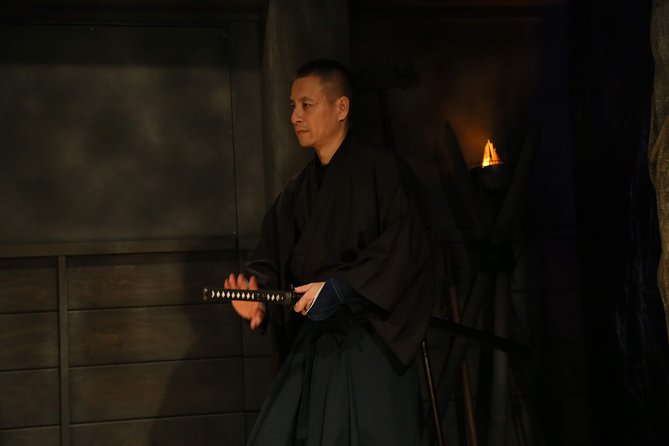
This experience is built as a lesson rather than a passive cultural show. You arrive at NINJA SAMURAI TOKYO in Shiomi, in Tokyo’s Koto City, and change into rented ninja clothing before training begins.
That change of clothes may sound like a small detail, but it matters. It gives children a clear sense that the class is different from a normal museum visit, while adults can relax and enjoy the playful side of the experience. You are not expected to arrive as an athlete or martial arts expert.
The class presents both ninja and samurai traditions, along with the ideas and discipline associated with them. The teaching also separates historical practice from popular myths, anime images, and movie stunts. I consider that one of the strongest parts of the session, since it adds substance to what could otherwise be a costume-and-photo activity.
More Kimono & Culture Experiences in Tokyo
- Tokyo: Samurai Ninja Museum Guided tour and Experience
★ 4.6 · 1,010 reviews - Tokyo: Samurai Sword & Archery Class from Samurai Descendant
★ 5.0 · 603 reviews - Best Samurai Experience in Tokyo
★ 5.0 · 458 reviews
Kuji-In meditation and the ninja mindset
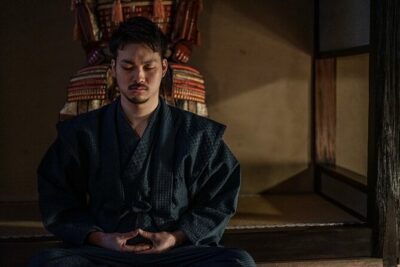
The class begins, or at least includes, ninja meditation known as Kuji-In. This introduces the mental side of ninja training before you move on to weapons and physical practice.
You can expect instruction in signs, focus, and the spirit connected with the technique. The meditation section gives the lesson a useful change of pace. After the excitement of throwing stars or using a blowgun, a quieter exercise helps explain that ninja training was not only about acrobatics and secret weapons.
The historical background is presented in English. Instructors such as Hyoga and Asami have been praised for explaining both the history and the techniques in a way that works for beginners. You should still think of this as an introduction, not a formal course in Japanese martial arts or a detailed academic lecture.
Ninja weapons, tools, and target practice
The weapons section is where the class becomes especially active. You may be introduced to a range of ninja tools and then practice with selected items under instruction.
Activities include:
- Throwing shuriken, often called ninja stars
- Using a ninja blowgun with darts
- Practicing with ninja swords
- Trying other traditional tools, including chopstick-style throwing exercises
- Learning about the purpose and use of different ninja equipment
The target work gives the lesson a clear goal. Instead of hearing a long explanation about weapons, you get to try the actions yourself, then adjust your technique. That makes the history easier to remember.
Safety and instruction matter here. The class is not a free-for-all weapons session. The instructor demonstrates the movements and guides you through them. Because the group is capped at six, there is a better chance of getting individual help than you would in a much larger class.
The blowgun and shuriken sections also make the activity appealing to mixed-age groups. A family can take part together, and you do not need to be strong or especially fit to attempt the exercises. One practical note: some parts may involve running, jumping, or active body movements, so you should be comfortable with light physical activity.
Samurai sword training and the final performance
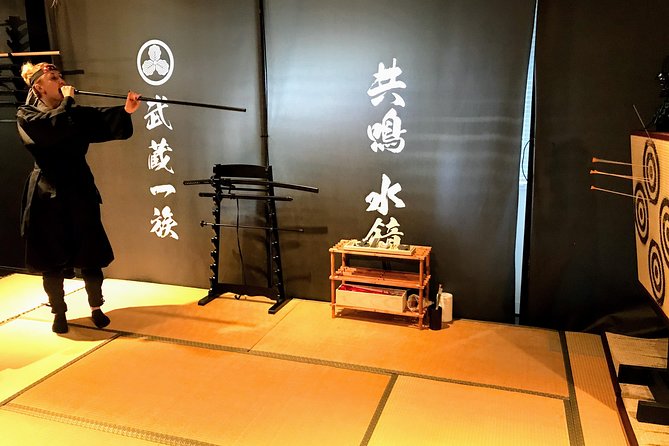
The samurai portion focuses on the Japanese sword, including how to draw it and how to use it correctly. The distinction between a ninja sword and a samurai sword is also explained, which is useful if your understanding of the two comes mainly from films or games.
You practice basic sword movements under the instructor’s direction. Some classes may use a wooden training sword, while one reported session included practice with a real metal sword. Since equipment can vary by session, it is best to follow the instructor’s instructions closely and not assume that every sword will be handled in the same way.
The training builds toward a samurai performance. You can watch the instructor demonstrate, then perform parts of what you have learned. This gives the class a satisfying finish and makes it easy to take photos or record short videos, as long as the instructor permits it during the session.
I like this structure because you are not simply handed a sword for a quick photograph. You first learn how to draw it, how to move, and how to present the technique. Even within two hours, that order adds meaning to the final routine.
Same city, a completely different kind of day:
- Mt Fuji and Hakone 1-Day Bus Tour Return by Bullet Train
★ 5.0 · 26,383 reviews - 1-Day Tokyo Bus Tour
★ 5.0 · 14,250 reviews - Tokyo: TOKYO SKYTREE® Admission ticket
★ 4.5 · 11,192 reviews - Tokyo: teamLab Planets TOKYO Digital Art Museum Entry Ticket
★ 4.6 · 9,779 reviews
Why the small group makes a difference
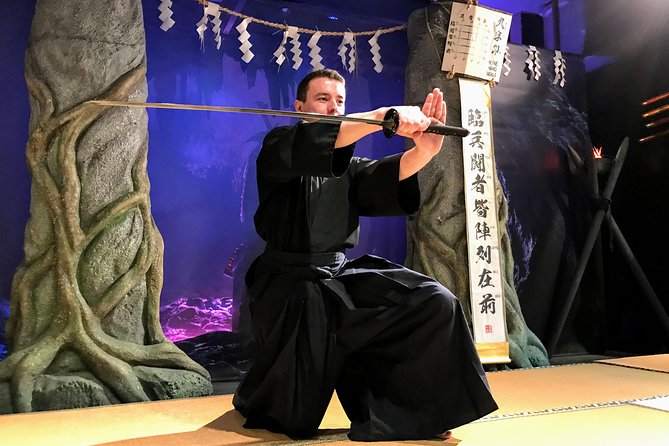
Six people is a useful ceiling for this type of activity. Weapons practice becomes less confusing when the instructor can watch each person. It also helps shy participants, since the teacher can offer correction without making the whole group stop.
Small groups also work well for families. Parents and children can share the same lesson, while friends or couples can encourage one another through the more unusual exercises. The activity has been suitable for groups with ages ranging from about 11 to 73, and the instruction is adjusted for different abilities.
Several instructors have been praised for being patient, funny, and attentive. Hyoga is described as making the class both informative and memorable. Asami has been praised for explaining the historical background and techniques. Onel has been described as a friendly instructor for family and group sessions, while Buddy has been called a master teacher.
Instructor assignments can change, so do not book solely for a particular name unless the operator confirms it. The consistent feature is English instruction from a Japanese sensei trained in ninja arts.
A working dojo, not a theme-park set
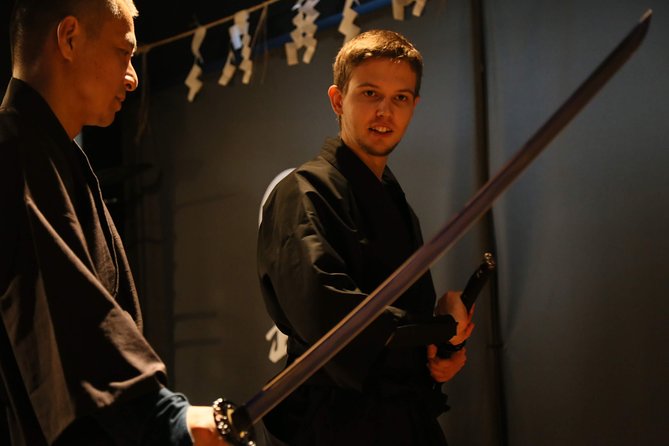
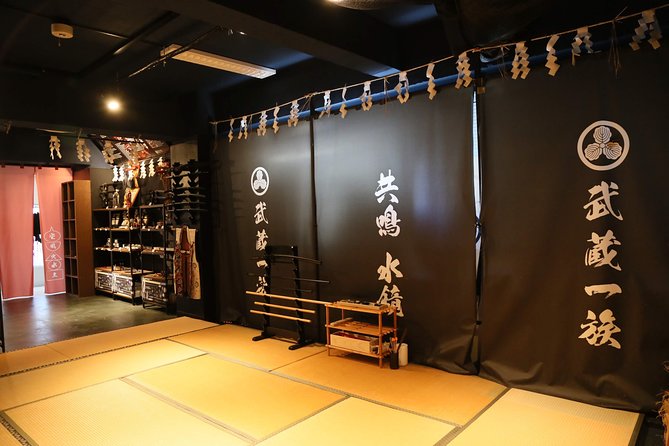
The setting is a true dojo, according to the practical descriptions of the experience. That means you should expect a training room designed for instruction rather than an elaborate period village or theatrical attraction.
This is a plus if you want a direct, active class. The plain setting keeps the focus on the teacher and the skills. It also helps explain why some promotional photos may not match the room exactly.
The address is in Shiomi, at Bayfrere Shiomi, East, fourth floor, in Koto City. It is near public transportation, and the activity ends where it begins. Give yourself time to identify the building and reach the room. One person had trouble locating the class by taxi, while most directions describe a straightforward walk from the station.
Do not count on an elevator without checking ahead. The elevator was reportedly not working during one visit, requiring four short flights of stairs. This is important for anyone with limited mobility, young children who tire easily, or heavy luggage.
What the $86.22 price really buys
At $86.22 per person, this is not the cheapest two hours you can spend in Tokyo. You are paying for a guided lesson, a small group, costume rental, admission, and access to several activities rather than one short demonstration.
The value improves if you intend to participate fully. In a single session, you receive cultural background, meditation, weapon introductions, target practice, sword instruction, and a performance element. Booking separate activities for each of those subjects would take more time and might cost more.
The small group is also part of the price. A large class could offer a lower rate, but you would likely spend more time waiting for your turn. Here, the maximum of six gives the instructor a better chance to help you with sword drawing, throwing technique, or body position.
I would consider it good value for a family, couple, or small group of friends looking for one memorable active event. It is less compelling if you want a long, serious martial arts course, a quiet cultural lecture, or a polished stage production.
Bottled water is not included, so bring your own if you need it. Private transportation is also not included. Since the activity is near public transportation, using the train may be simpler than asking a taxi driver to locate the building.
Who should book this class
I would recommend the class to you if you want a break from temples, shopping, and city viewpoints. It offers a physical activity with enough historical explanation to give the fun some context.
It is especially well suited to:
- Families with older children and teenagers
- Couples looking for a shared activity
- Friends who enjoy trying unusual skills together
- First-time visitors who want an introduction to ninja and samurai culture
- Adults who are active but not trained in martial arts
- People who enjoy photography and short performance routines
You do not need prior experience. The instruction is designed for beginners, and the age range can be broad. Still, you should be comfortable standing, moving, and taking part in exercises that may include running or jumping.
I would be more cautious about booking it for someone who cannot manage stairs, cannot take part in active movement, or wants a fully accessible venue. The available information confirms that most people can participate, but it does not promise full accessibility.
How to prepare for the two hours
Wear something that allows comfortable movement. Ninja clothing is provided, but you will still want to arrive ready for a physical lesson rather than a formal dinner or museum visit.
Keep your phone or camera ready for appropriate moments. The costume, target practice, sword routine, and final performance can produce good memories, but follow the instructor’s directions about when recording is allowed.
Plan the route before leaving. Use the listed meeting point in Shiomi rather than relying on a taxi driver to recognize the attraction by name. Near public transportation does not mean the entrance will be obvious, so a few extra minutes can prevent a rushed arrival.
If you are traveling with children, explain that the weapons are for controlled practice. That helps set the right mood. The class is playful, but the equipment still requires attention and careful listening.
Cancellation and booking details worth knowing
Confirmation is provided when you book, and the mobile ticket is convenient for a day of sightseeing. The class has a maximum of six participants, and a minimum number of participants is required for it to operate.
You can cancel for a full refund up to 24 hours before the local start time. Cancellations or changes made within 24 hours are not refunded or accepted. If poor weather or an insufficient number of participants forces cancellation, you are offered another date or experience, or a full refund.
The experience ends at the meeting point, so you can plan a meal or another Koto City activity afterward. The train is likely the more predictable option for getting there and leaving, particularly if you are staying outside Shiomi.
Should you book the Ninja Samurai class?
Book it if you want active cultural entertainment rather than a standard sightseeing stop. The mix of Kuji-In, ninja tools, shuriken, blow darts, sword work, historical explanation, and a final performance gives you plenty to do in two hours.
The strongest reason to choose it is the small class size and the instructors’ clear, humorous teaching style. The main cautions are the hard-to-spot location, possible stairs, lack of included transportation and water, and the fact that the dojo is functional rather than highly decorated.
At $86.22, I think the class earns its price for families, couples, and friends who will take part in every section. If you want a serious long-term martial arts qualification, this is too brief. If you want a memorable Tokyo activity that lets you learn, move, dress up, and laugh together, it is a strong choice.
FAQ
How long does the Ninja Samurai class last?
The class lasts approximately two hours.
Where does the activity take place?
It takes place at NINJA SAMURAI TOKYO in Shiomi, Koto City, Tokyo, at Bayfrere Shiomi, East, fourth floor.
How many people can join the class?
The maximum group size is six participants.
Is the lesson taught in English?
Yes. A Japanese sensei trained in ninja arts teaches the traditional ninja and samurai material in English.
What activities are included?
The class includes Kuji-In ninja meditation, an introduction to ninja weapons and tools, a ninja trick house introduction, ninja sword training, shuriken practice, blowgun training, and samurai sword instruction.
Are ninja clothes provided?
Yes. Ninja clothing rental during training is included.
Is transportation included?
No. Private transportation is not included, though the location is near public transportation.
Can I cancel for a full refund?
Yes. You must cancel at least 24 hours before the experience start time for a full refund. Cancellations within 24 hours are not refunded.
What happens if the class is canceled?
If poor weather or an insufficient number of participants causes cancellation, you are offered another date or experience, or a full refund.
More 2-Hour Experiences in Tokyo
- Tokyo: Flagship 2-Hour Street Go-Kart Tour by Street Kart
★ 4.9 · 94 reviews - Tokyo: 2-Hour Vegan and Vegetarian Ramen Guided Walking Tour
★ 4.8 · 33 reviews - Tokyo: 2-Hour Night Bike Tour of the City’s Hidden Gems
★ 4.9 · 25 reviews - Kyoto Gion: 2-Hour Geisha Culture & History Walking Tour
★ 5.0 · 1,186 reviews
More Workshops in Tokyo
- Sushi Making Tokyo Roll and Authentic Japanese Sushi Class
★ 5.0 · 3,971 reviews - Tokyo: Roll and Authentic Sushi Making Class in Asakusa
★ 4.9 · 1,957 reviews - Tokyo Shinjuku Chopsticks Making Class
★ 5.0 · 1,763 reviews - Tokyo: Sushi Making Class in a Happi Coat near a Famous Spot
★ 4.9 · 1,377 reviews
Just added around Tokyo
- Tokyo: Customizable Private Guided Walking Tour★ 4.5 · 129 reviews
- Private Harajuku Omotesando Architecture Tour★ 4.9 · 18 reviews
- Tokyo: Private Personalized Local Food Tour★ 4.5 · 101 reviews
- Tokyo: Guided Helicopter Ride★ 4.9 · 24 reviews
- Tokyo: Guided Walking Tour of Tsukiji Market with Lunch★ 4.4 · 24 reviews
- Tokyo GINZA: KONPARU Japanese Cabaret Show with Drink★ 4.8 · 38 reviews
- Tokyo: Guided Walking Tour of Tsukiji Market with Breakfast★ 4.4 · 134 reviews
- Tokyo: Gotokuji Cat Temple, Shinjuku Cat Cafe & 3D Cat Tour★ 4.9 · 38 reviews
Kimono & Culture Experiences, compared.
Kyoto Geisha Walking Tour: Gion District & Hidden Gems
Read our review →
Gion Magical Night Walking Tour with Geisha Trivia
Read our review →
Gion Geisha District Walking Tour – Stories of Geisha
Read our review →
Best of Kyoto: Gion, Geisha, Pagodas & Cobblestones
Read our review →
Kyoto Gion Geisha District Walking Tour – The Stories of Geisha
Read our review →
Browse the lists this tour appears in