
REVIEW · KIMONO & CULTURE EXPERIENCES
Tokyo 2-Hour Genuine Samurai Experience: Kendo in Japan
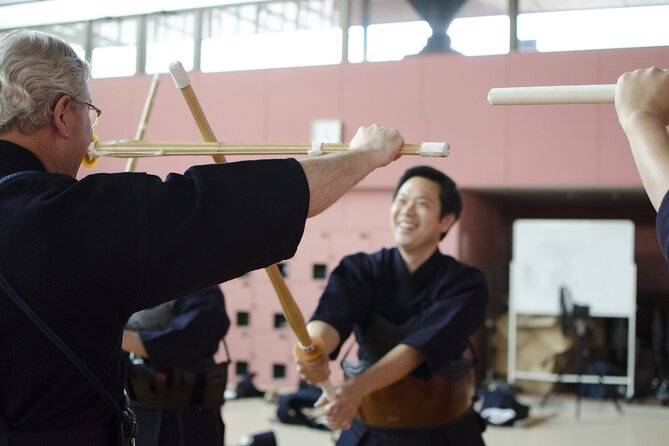
Kendo is not a costume photo with a plastic sword. It is a real martial art, complete with shouting, footwork, bamboo swords, and heavy protective armor. In this two-hour session, you learn the basics at a working dojo and then test them in a friendly tournament-style match.
I like the hands-on training and the chance to see local students practicing nearby. I also like that the instructors make the etiquette and movements understandable for first-timers, including children from age nine. The main drawback is physical: the uniform and armor are warm, the class involves kneeling and movement, and the activity calls for strong fitness.
In This Review
- Key points before you book
- What this Tokyo kendo session really offers
- Entering the dojo in northern Tokyo
- Learning etiquette before you pick up the shinai
- Getting dressed in keikogi, hakama, and bogu
- Practicing strikes, footwork, and loud kiai
- The tournament-style combat game
- What the $118.92 price gets you
- Who will enjoy this most
- Practical advice for a smoother session
- Should you book this samurai experience?
- FAQ
- Where does the kendo experience take place?
- How long does the experience last?
- What time does the class start?
- Is hotel pickup included?
- What is included in the price?
- Do I need previous kendo experience?
- What is the minimum age and group size?
Key points before you book
- Real dojo setting: You train in a northern Tokyo neighborhood rather than at a staged samurai attraction.
- Full kendo equipment included: You use the keikogi, hakama, bamboo sword, and bogu armor provided for the session.
- English-speaking instruction: The instructor explains the basic forms, etiquette, and striking techniques in clear English.
- Tournament-style finale: After practice, you face opponents in a controlled combat game.
- Two-hour format: Morning and afternoon options make this easy to fit into a Tokyo day.
- Plan for heat and effort: Wear athletic clothes underneath, hydrate first, and tell the sensei about knee problems.
What this Tokyo kendo session really offers
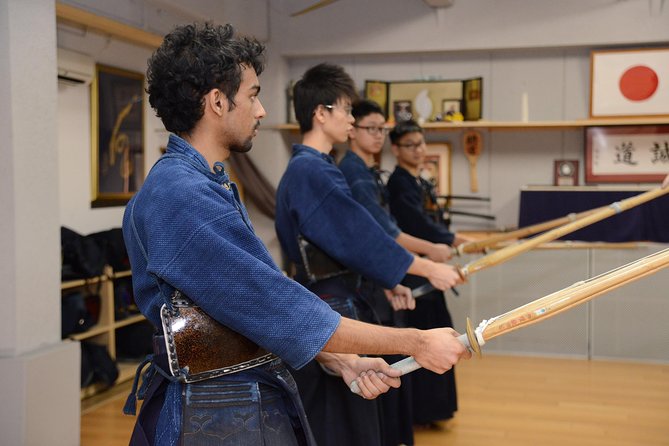
Kendo means the way of the sword. It grew from Japanese swordsmanship and samurai training, but this experience is not a lesson in historical sword fighting with sharp blades. You use a shinai, a bamboo sword designed for practice, and protective bogu armor.
That distinction matters. You are not simply dressing up for photographs. You learn how a traditional martial art is practiced today, with attention to posture, form, respect, and controlled strikes. The mood is serious enough to feel authentic, but the instructors keep it friendly and approachable.
The session lasts about two hours. That is enough time to learn the basic movements, get dressed in the equipment, and try a match without turning the activity into an all-day commitment. I see it as a good counterpoint to Tokyo sightseeing, especially if you have already spent several days visiting temples, shopping streets, and museums.
The experience welcomes beginners, and no prior kendo training is required. The minimum age is nine, making it possible for families to join, though every participant should be ready for a physically active class.
More Kimono & Culture Experiences in Tokyo
- Tokyo: Samurai Ninja Museum Guided tour and Experience
★ 4.6 · 1,010 reviews - Tokyo: Samurai Sword & Archery Class from Samurai Descendant
★ 5.0 · 603 reviews - Best Samurai Experience in Tokyo
★ 5.0 · 458 reviews
Entering the dojo in northern Tokyo
The meeting point is at 誠道館ビル4 Chome-7 Higashinippori, Arakawa City, Tokyo 116-0014. You make your own way there, and the activity finishes back at the same meeting point.
This is not in the central sightseeing core, so allow time to reach the dojo by public transportation. The location is near transit, but the listed price does not cover transportation between activities. Hotel pickup and drop-off are not included. One practical note from the experience is that a train station pickup arrangement may be available in some cases, but you should not assume that it replaces the stated meeting instructions.
The morning start is listed as 10:00 a.m. Morning and afternoon sessions are offered, so check the specific option you choose when booking. Arriving with time to spare is wise. Tokyo train stations can take longer to navigate than their maps suggest, and you will want a calm start before changing into armor.
The neighborhood setting adds to the appeal. You are heading to an active local dojo, not a large entertainment venue built around samurai imagery. That gives the session a more grounded feel, though it also means you should treat the meeting point like a real appointment and plan your route carefully.
Learning etiquette before you pick up the shinai
The class begins with an introduction to kendo culture and etiquette. This is important because kendo is built around discipline and respect as much as striking technique.
You learn how to behave in the dojo, how to handle the equipment, and how to approach practice with the right attitude. The instructor demonstrates the movements, then gives practical guidance as you copy them. Instruction is provided in understandable English, which helps when the class moves quickly from explanation to action.
The teaching style is particularly useful for people who know nothing about kendo. You do not need to arrive with the correct stance or understand Japanese commands. The point is to watch, try, correct your form, and try again.
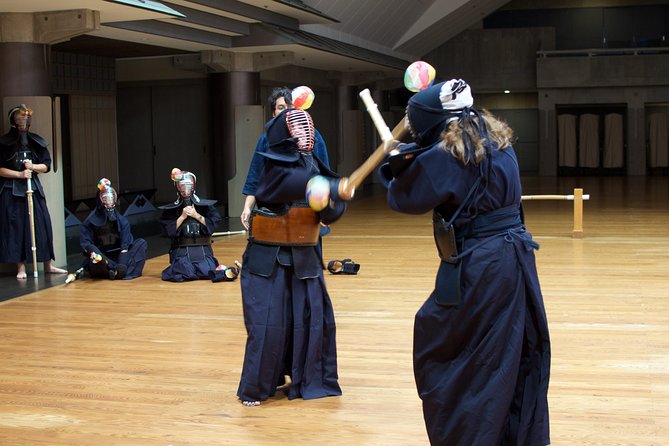
You may also see regular dojo students training during the session. That gives you a useful look at the difference between beginner practice and established skill. Their movement can make the sport look effortless, but the class keeps your own goals realistic: learn the fundamentals, make a proper strike, and enjoy the challenge.
One instructor associated with the experience is sensei Keshi, and the class also includes other trained teachers. The teaching team is patient with children and adults alike. If you are shy about making mistakes, remember that everyone starts with awkward footwork and uncertain swings.
Getting dressed in keikogi, hakama, and bogu
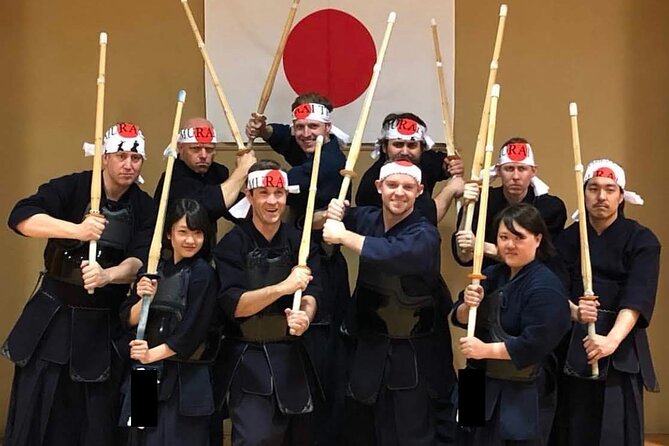
A memorable part of the session is putting on the kendo uniform. You wear a keikogi, a jacket-like top, and a hakama, the wide pleated trousers that can look like a skirt when worn. You then add bogu, the protective armor used for practice.
The equipment is included in the price, so you do not need to bring your own gear. Bottled mineral water is also provided, along with a Japanese hand towel as a souvenir.
Getting dressed is not just a photo opportunity. It helps you understand how much preparation goes into a normal practice session. The armor changes your balance, restricts some movement, and makes the activity noticeably warmer. The fabric is heavy, and once you begin moving, you can work up a sweat quickly.
Wear athletic clothing under the uniform. Avoid dressing for a polished sightseeing day. Comfortable sportswear is the sensible choice, and you should start well hydrated. There is a water break during the session, but do not count on that alone if you dislike exercising in warm clothing.
If you have bad knees, tell the sensei before practice begins. Kneeling can be uncomfortable, and the instructor can indicate which movements you may skip. The activity calls for strong physical fitness, so this is not the right pick for anyone seeking a gentle, seated cultural demonstration.
Same city, a completely different kind of day:
- Mt Fuji and Hakone 1-Day Bus Tour Return by Bullet Train
★ 5.0 · 26,383 reviews - 1-Day Tokyo Bus Tour
★ 5.0 · 14,250 reviews - Tokyo: TOKYO SKYTREE® Admission ticket
★ 4.5 · 11,192 reviews - Tokyo: teamLab Planets TOKYO Digital Art Museum Entry Ticket
★ 4.6 · 9,779 reviews
Practicing strikes, footwork, and loud kiai
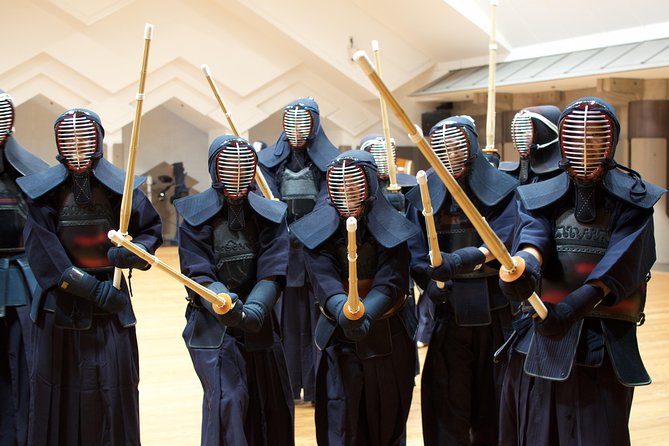
Once dressed, you learn practical kendo movements. The instruction focuses on basic forms and hitting techniques, with the sensei watching your stance and correcting your timing.
Kendo is a full-body activity. You are not simply swinging a sword with your arms. Footwork, posture, distance, and the angle of the strike all matter. The instructor may praise a properly executed hit, then ask you to repeat the movement when the form is not right.
The sound is part of the experience. You will likely call out with a kiai, the sharp shout used in kendo, as you strike. That can feel strange at first, especially if you are used to quiet museum tours. Then the class finds its rhythm, and the shouting becomes part of the fun.
You practice with a bamboo sword and learn how to target the approved areas of the armor. The emphasis is on control and correct technique. Even so, the session can feel lively and physical, especially once you begin moving at speed.
The instructors work with different ages and skill levels. Children can enjoy the clear goals and action, while adults get a real lesson in a martial art that demands concentration. If you have imagined trying kendo but worried that you would be too inexperienced, this format gives you a manageable introduction.
The tournament-style combat game
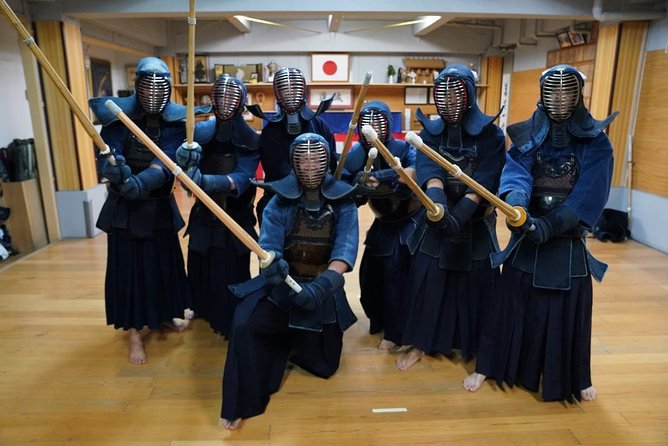
The final part puts your new skills to use in a tournament-style combat game. It is not an advanced championship, but it adds a real goal to the lesson. Instead of only repeating movements, you must watch an opponent, find an opening, and act with the form you have just practiced.
This is where the session becomes especially memorable. You may know the basic strike in theory, but using it against a moving person is different. Timing becomes more important, and you begin to understand why experienced kendo practitioners make the sport look so precise.
The match is structured as a controlled activity. The point is to practice, not to hurt one another. Still, you should expect more exertion and concentration than you would get from a simple demonstration.
I like this ending because it gives the two hours a clear arc: learn the culture, put on the uniform, practice the technique, then try the match. You leave with a better sense of what kendo demands rather than only a souvenir photograph.
The combat game may also be the most tiring section. By this point, you have been wearing warm equipment and using your legs, arms, and core. Take the water break seriously, and pace yourself if you are not accustomed to exercise.
What the $118.92 price gets you
At $118.92 per person, this is not a low-cost activity. The value depends on what you want from a samurai-themed experience.
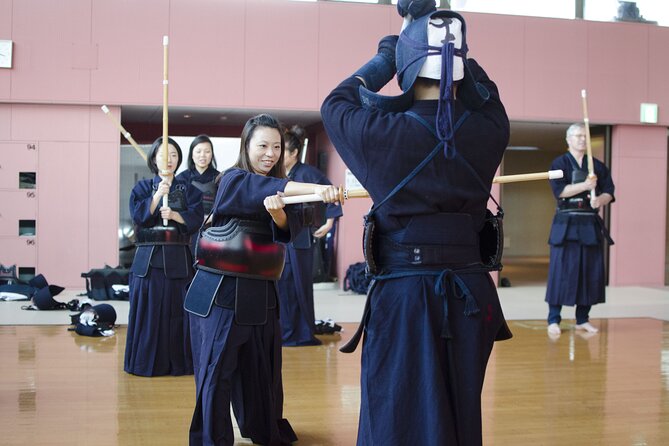
You are paying for a two-hour guided lesson, use of the uniform and armor, an English-speaking instructor, bottled water, and a souvenir hand towel. More important, you receive access to a working dojo environment and instruction in an actual martial art rather than a brief staged performance.
That makes the price easier to justify for visitors who want participation and cultural context. If you only want to wear samurai clothing for a photograph, cheaper options may exist elsewhere in Tokyo. If you want to learn how kendo practice works and test yourself in a match, this offers much more substance.
The small maximum group size, listed at 15 people, should help keep the class manageable. The exact level of personal attention depends on the group, but the format includes practical instruction rather than only a talk from the side of the room.
For families, the price can add up quickly. The minimum age is nine, and the activity can be a strong shared experience for parents and children, but make sure everyone in your party is ready for the heat, armor, and active class.
Who will enjoy this most
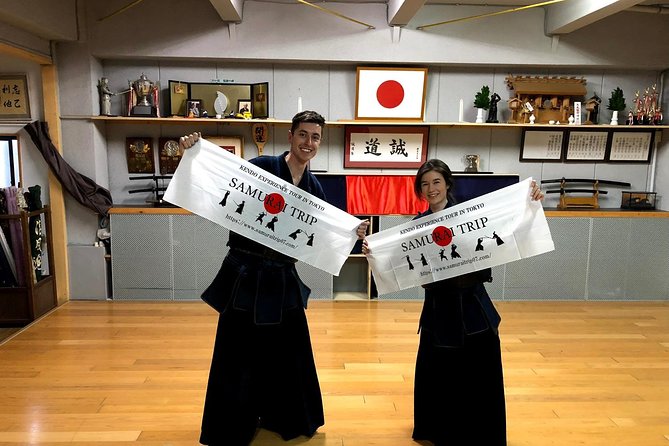
I would choose this for you if you want to do something active in Tokyo and have more than a passing interest in Japanese martial arts. It suits first-timers, families with older children, couples, and adults who want a memorable break from standard sightseeing.
It is also a good match for anyone curious about how samurai traditions connect to modern Japanese practice. You do not need to be a martial arts fan. The combination of etiquette, clothing, drills, and sparring gives you several ways into the subject.
You should think twice if you have limited mobility, serious knee trouble, or dislike heat and exertion. The class is not described as accessible, and the fitness requirement is strong. Tell the instructor about physical limits before you start, but do not book this expecting a relaxed cultural lecture.
The minimum booking requirement is two people. Groups can reach 15 participants, so solo visitors should check availability and booking conditions before making plans.
Practical advice for a smoother session
Plan your route to the Higashinippori meeting point before the day of the class. The dojo is near public transportation, but transportation costs are separate, and hotel transfers are not included.
Choose clothes you can exercise in. You will receive the kendo uniform and armor, but your clothing underneath still matters. Bring as little loose baggage as possible, and have water before the session begins.
Keep the rest of your day flexible. The class ends after about two hours, but the activity is active enough that you may want a short break afterward. The surrounding area can also work well as part of a larger northern Tokyo outing, with shrines and food stalls within a short walk according to the experience details.
The cancellation rule is practical but firm: you can receive a full refund if you cancel at least 24 hours before the local start time. Changes or cancellations inside that window are not accepted for a refund.
Should you book this samurai experience?
Book it if you want real participation, clear instruction, and a chance to try kendo in full equipment. The strongest reasons are the working dojo setting, patient English guidance, and tournament-style ending. You get a taste of discipline and technique, not just a samurai costume session.
Skip it if you want something quiet, highly polished, or easy on the knees. At $118.92, the activity makes the most sense when you value the lesson, the equipment, and the authentic training atmosphere.
For an active family, curious first-timer, or martial arts fan, I would put this high on the Tokyo list. Just arrive hydrated, wear sports clothes, and be ready to shout, sweat, and learn.
FAQ
Where does the kendo experience take place?
The meeting point is 誠道館ビル4 Chome-7 Higashinippori, Arakawa City, Tokyo 116-0014, Japan. The activity ends back at the same meeting point.
How long does the experience last?
The session lasts approximately two hours.
What time does the class start?
The listed start time is 10:00 a.m. Morning and afternoon sessions are available, so check the selected booking option for the exact time.
Is hotel pickup included?
No. Hotel pickup and drop-off are not included. You make your own way to the dojo, and transportation expenses are not included in the listed price.
What is included in the price?
The price includes a professional guide or instructor, rental kendo armor and equipment, bottled mineral water, and a Japanese hand towel.
Do I need previous kendo experience?
No. All experience levels are welcome, and the instructor teaches the basic movements, etiquette, and practical techniques.
What is the minimum age and group size?
The minimum age is nine, and at least two people are required per booking. The activity accepts a maximum of 15 participants.
More 2-Hour Experiences in Tokyo
- Ninja Samurai 2-hour hands-on lesson by Japanese master in Tokyo
★ 5.0 · 194 reviews - Tokyo: Flagship 2-Hour Street Go-Kart Tour by Street Kart
★ 4.9 · 94 reviews - Tokyo: Shinjuku Izakaya and Golden Gai Bar Hopping Tour (2h)
★ 4.9 · 67 reviews - Tokyo: 2-Hour Vegan and Vegetarian Ramen Guided Walking Tour
★ 4.8 · 33 reviews
Just added around Tokyo
- Private Memorable Tokyo Tour with English Speaking Driver★ 5.0 · 30 reviews
- Private Tokyo Custom Full-Day Tour by Chartered Vehicle★ 5.0 · 16 reviews
- Private Sightseeing to Mt Fuji and Hakone with English Driver★ 5.0 · 51 reviews
- Tokyo Photography Masterclass – Private Photography Lesson★ 5.0 · 25 reviews
- Private Mt. Fuji Day Trip from Tokyo with English-Speaking Driver★ 5.0 · 33 reviews
- 4 Day Tour – Mount. Fuji, Tokyo, Hakone, Kamakura and Yokohama★ 5.0 · 19 reviews
- Private Unforgettable Mt Fuji Tour with English Speaking Driver★ 5.0 · 142 reviews
- Private Tokyo Food Tour – A Journey Through Time Through Food★ 5.0 · 36 reviews
Kimono & Culture Experiences, compared.
Kyoto Geisha Walking Tour: Gion District & Hidden Gems
Read our review →
Gion Magical Night Walking Tour with Geisha Trivia
Read our review →
Gion Geisha District Walking Tour – Stories of Geisha
Read our review →
Best of Kyoto: Gion, Geisha, Pagodas & Cobblestones
Read our review →
Kyoto Gion Geisha District Walking Tour – The Stories of Geisha
Read our review →
Browse the lists this tour appears in