
REVIEW · GO-KARTS
Tokyo: Flagship 2-Hour Street Go-Kart Tour by Street Kart
Tokyo’s most unusual sightseeing ride puts you behind the wheel of a go-kart on public city streets, not on a closed track. In two hours, you cross Rainbow Bridge, head toward Tokyo Tower, and get a moving view of the city that feels far more playful than a standard bus tour.
I especially like the long driving time and the care guides put into keeping the group together. Guides such as Bryan, Alexis, Kinna, Riley, and Melina are praised for clear signals, steady pacing, and stopping safely for photos. The main catch is simple: you must have the right Japanese driving documents, and this is not a relaxed sightseeing ride if busy roads make you nervous.
In This Review
- Key points to know before you book
- Why this Tokyo ride feels different from sightseeing
- Checking in at the Tokyo Bay warehouse
- Choosing a costume before the engines start
- Learning the kart and joining the road
- Crossing Rainbow Bridge with Tokyo Bay below
- Heading toward Tokyo Tower
- Photos, video, and what you take home
- Is $64 a fair price for two hours?
- Who should book this street-kart tour?
- Practical tips for a smoother ride
- Should you book Street Kart Tokyo Bay?
- FAQ
- How long is the Street Kart Tokyo Bay tour?
- What landmarks does the route include?
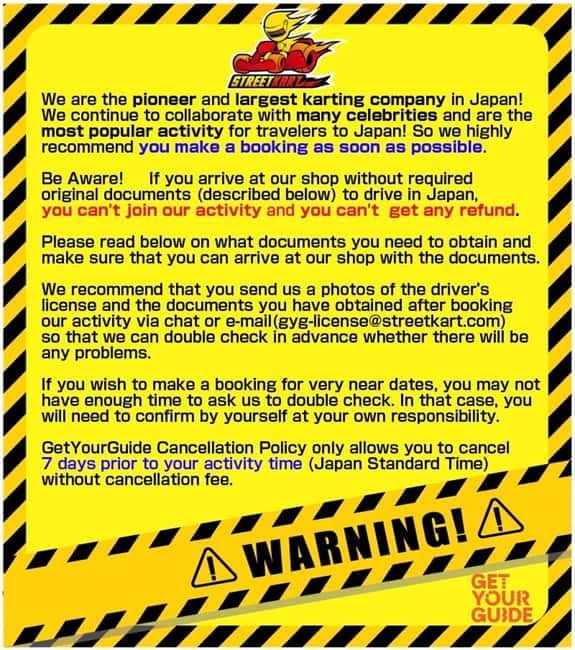
- What documents do I need to drive?
- Do drivers from France, Germany, Switzerland, Taiwan, Belgium, or Monaco need an International Driving Permit?
- Are costumes and photos included?
- Can I use my cellphone during the ride?
- Who cannot take this tour?
Key points to know before you book
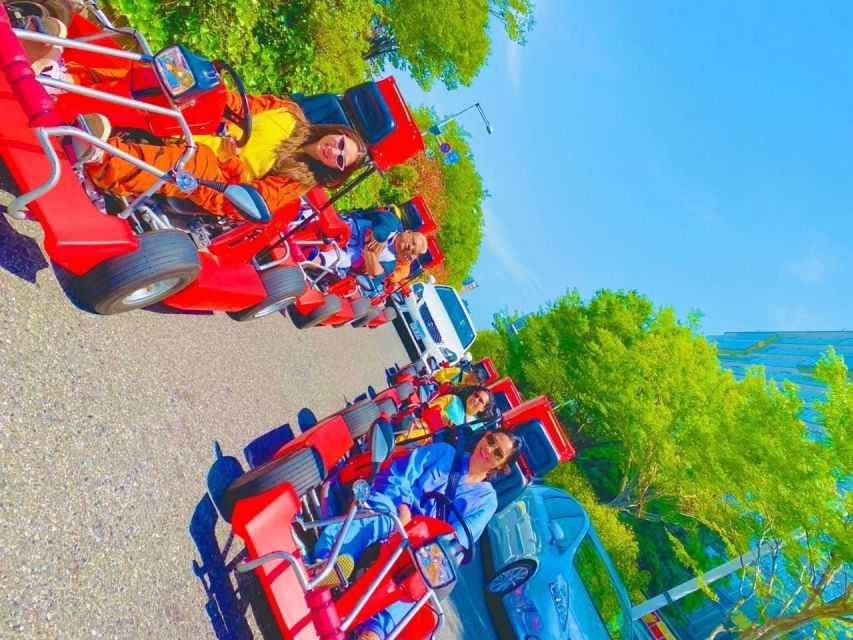
- Rainbow Bridge is the main thrill: You cross the bridge on a real road, with Tokyo Bay views and city lights around you.
- You get more than a quick lap: The two-hour tour includes more than an hour of driving time, according to one detailed account.
- Costumes add plenty of fun: Choose from action-themed outfits before setting off, though loose costume hoods may not stay in place at speed.
- Photos are included: Your guide takes pictures during the ride and provides the data afterward, with some guides capturing dozens of shots.
- Safety comes first: Guides explain the kart controls, lead the formation, rotate positions, and use hand signals to manage the group.
- The paperwork is not optional: Most drivers need a physical 1949 Geneva Convention International Driving Permit, plus their physical passport.
Why this Tokyo ride feels different from sightseeing
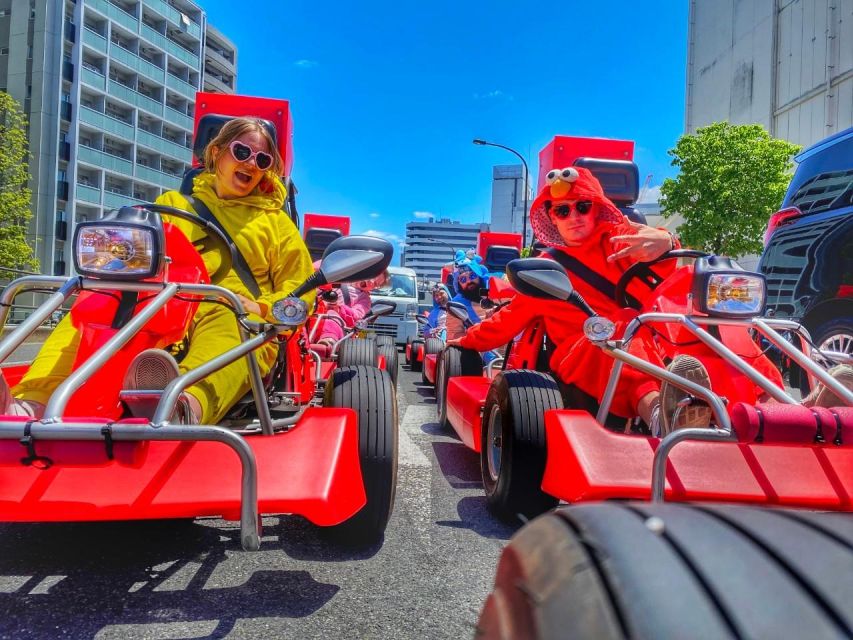
A normal Tokyo viewpoint gives you a polished city scene. Street Kart gives you the road itself, with the engine buzzing, traffic moving around you, and the guide’s kart setting the pace ahead.
That difference matters. You are not simply looking at Rainbow Bridge from below or photographing Tokyo Tower from a sidewalk. You are actively driving toward these landmarks, which makes the city feel immediate and a little wild.
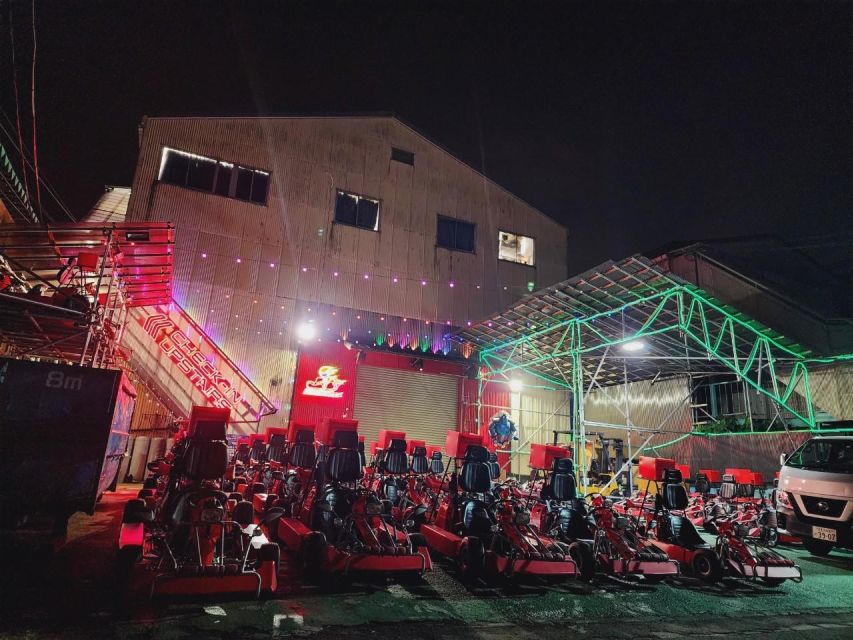
The route begins at the Tokyo Bay karting center, a warehouse with many karts parked outside. You go upstairs for check-in, complete the preparation, and choose a costume. The costume choice is part of the entertainment rather than a minor extra, especially if you are traveling with friends who want photos that look unmistakably different from ordinary Tokyo snapshots.
The ride is advertised as the only go-kart course in Tokyo that goes onto Rainbow Bridge and continues to Tokyo Tower. The important point for you is that this is not a short amusement-park circuit. You will be driving on public roads and must pay attention to traffic, signals, lane position, and the guide.
A few more Tokyo trips to weigh up
- Flagship 2-Hours Official Street Go-Kart Tour – Tokyo Bay Shop
★ 5.0 · 4,974 reviews - Official Street Go-Kart in Shibuya
★ 5.0 · 3,435 reviews - Official Street Go-Kart Tour – Akihabara
★ 5.0 · 1,578 reviews
Checking in at the Tokyo Bay warehouse
Allow enough time to arrive ready to drive. The meeting point is Street Kart Tokyo Bay, a warehouse with go-karts out front. Look for the outside stairs and go upstairs for check-in.
The staff provide the kart, fuel, goggles, and costume. A raincoat is available on wet days. Drinks and T-shirts may also be available to buy, and there is a bathroom on site.
You cannot use a cellphone during the activity, so finish any calls, messages, and last-minute photographs before departure. High heels and open-toed shoes are not allowed. Alcohol and drugs are prohibited, which is exactly what you would expect for an activity on public roads.
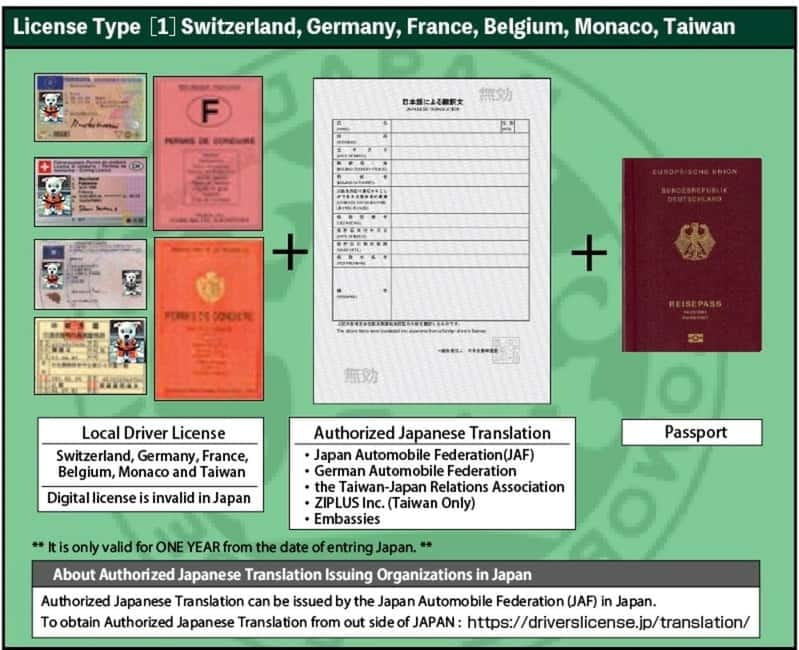
The most important preparation happens before the day of the tour. Street Kart emails instructions about the documents you need, but you should check them carefully yourself. For most nationalities, you need an International Driving Permit in the physical booklet format that follows the 1949 Geneva Convention. It must be issued by the same country that issued your domestic license, and you cannot obtain a valid one online while already traveling.
Drivers from Switzerland, Germany, France, Taiwan, Belgium, and Monaco need a Japanese translation of their license from the Japan Automobile Federation instead. In that case, bring the physical domestic license and the official translation. Licenses from countries not covered by the 1949 Geneva Convention, including China, Indonesia, Mexico, Qatar, and Saudi Arabia, are not accepted for driving in Japan.
Bring your physical passport as well as the correct permit or translation. A digital copy on your phone is not enough.
Choosing a costume before the engines start
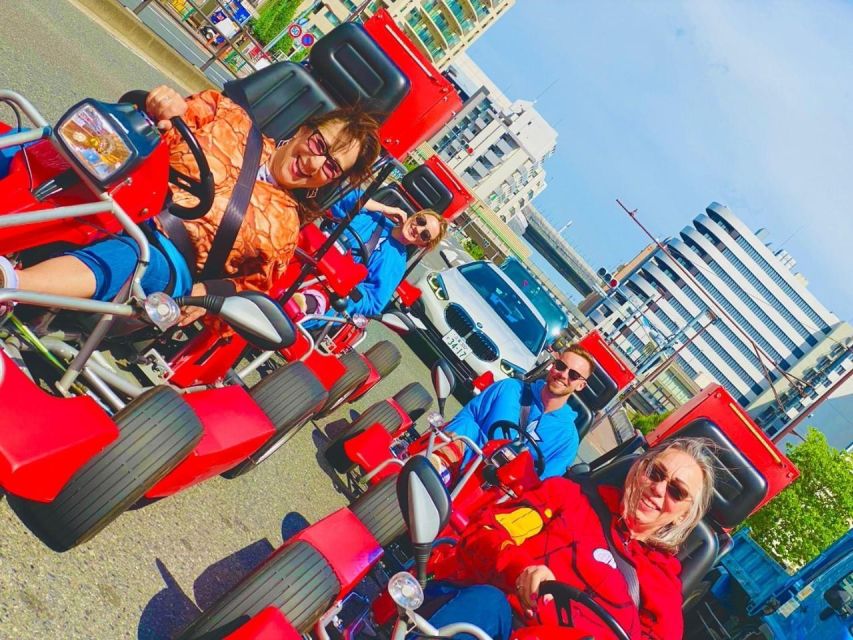
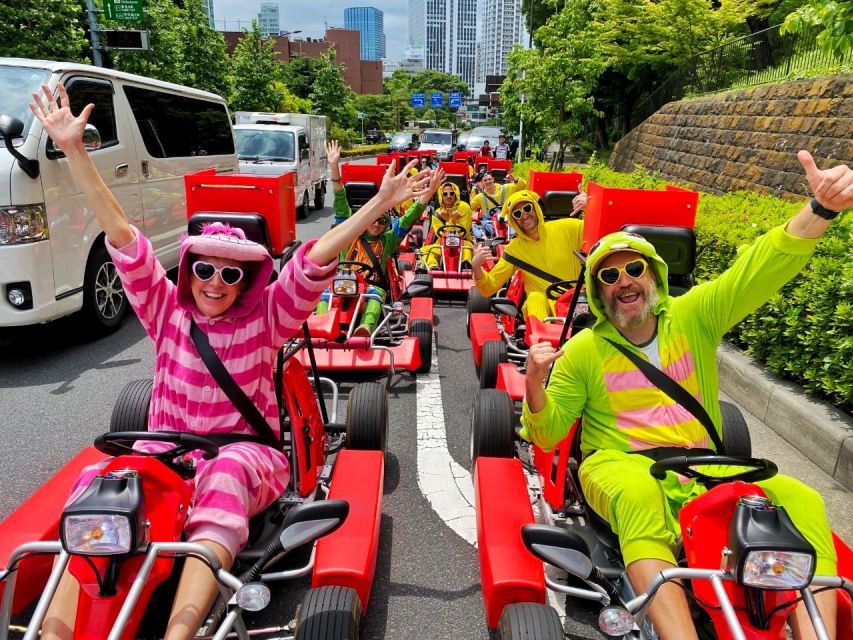
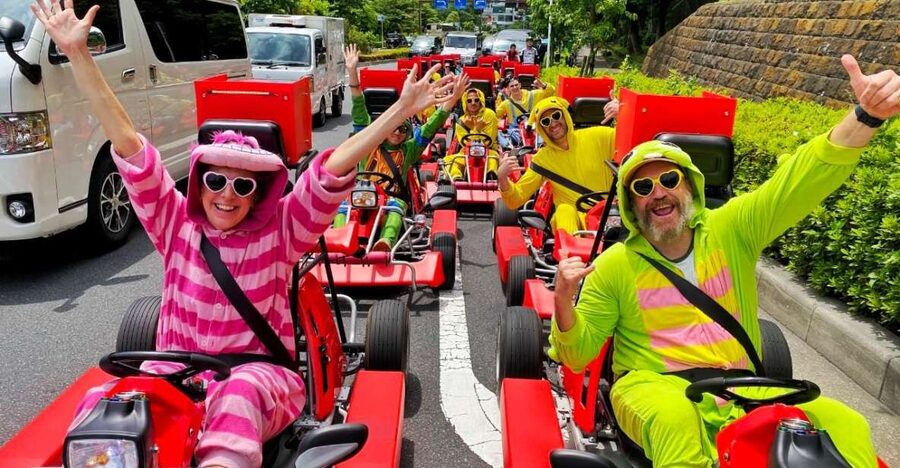
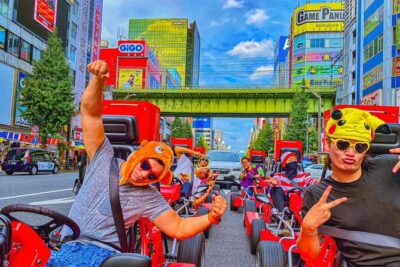
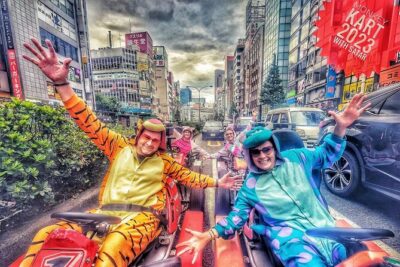
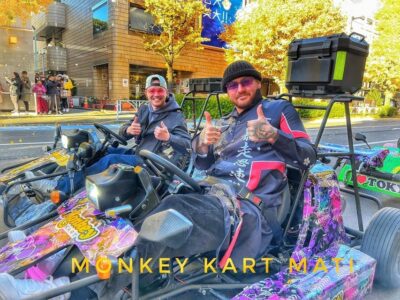
The costume selection turns the ride into a small street parade. You can dress as an action hero or another familiar character before climbing into the kart.
This is one of the tour’s most photogenic touches, but choose with driving in mind. One driver found that costume hoods did not stay up during the ride and suggested choosing a separate costume hood if available. You want something fun that does not block your view or flap around your face.
Goggles are supplied, though one participant found a pair scratched and cloudy and recommended bringing your own. Since wind, rain, and road dust are possible, clear eye protection is useful. The supplied raincoat helps on wet days, and one winter rider appreciated spare gloves, glasses, and heat packs.
Clothing matters more than you might expect. You sit in the kart for much of the two hours, and one summer driver found cotton shorts uncomfortable and soaked with sweat against the leather seat. Wear practical clothing and secure shoes. Avoid anything that could interfere with the controls.
Learning the kart and joining the road
Before departure, the guide explains the kart and what to expect on the street. This briefing is important even if you have driven a go-kart before. You are not racing friends around a private course. You are joining city traffic and following a lead driver.
The English-speaking guides are a major part of the experience. Bryan was praised for checking behind him to keep every kart aligned, giving clear signals, and choosing safe places to stop for photos. Alexis helped a driver who had not driven in a long time feel comfortable on Japanese roads. Kinna, Riley, Melina, Reece, Johnny, Jesus, and others are specifically praised for patient instruction and a strong focus on safety.
The group drives in formation behind the guide. Positions rotate, so you get a turn near the front instead of staying at the back for the whole ride. That is a smart system. The front position gives you a clearer view of the guide, while the back position can expose you to more engine fumes and traffic.
You need to stay alert. One person suggested that reflective driving gloves would make hand signals easier to see during night tours, especially from the rear. The guide’s signals are clear, but you should not treat this as a ride where you can stare at the skyline the whole time.
Same city, a completely different kind of day:
- Mt Fuji and Hakone 1-Day Bus Tour Return by Bullet Train
★ 5.0 · 26,383 reviews - 1-Day Tokyo Bus Tour
★ 5.0 · 14,250 reviews - Tokyo: TOKYO SKYTREE® Admission ticket
★ 4.5 · 11,192 reviews - Tokyo: teamLab Planets TOKYO Digital Art Museum Entry Ticket
★ 4.6 · 9,779 reviews
Crossing Rainbow Bridge with Tokyo Bay below
Rainbow Bridge is the emotional high point of the route. The road rises above Tokyo Bay, and the setting opens up as you leave the warehouse district behind.
At night, Tokyo lights up around the bridge. Tokyo Tower may be lit by the time you reach it, and the combination of bridge cables, water, and city glow makes this the best time for many people. A cool late-autumn evening can make the ride especially pleasant, although winter requires sensible layers and summer can feel hot in the seat.
The bridge does not turn the tour into a race. You still follow the guide and obey the road rules, but the open stretch makes the kart feel faster and more exciting. Several accounts describe the crossing as the moment when the ride changes from unusual to genuinely thrilling.
Some departures cross Rainbow Bridge twice. One participant found the second crossing faster and more exciting than the first. That repeat gives you a chance to settle into the kart, understand the formation, and enjoy the road with less first-run tension.
Keep your eyes on driving. The views are memorable, but the ride is not designed for extended sightseeing. One driver said focusing on the road left little time to look around. That is the fair trade: you get a much more active city experience, but you will not absorb every skyline detail.
Heading toward Tokyo Tower
Tokyo Tower gives the route a clear landmark at the other end of the adventure. Its orange and white structure is one of the city’s best-known symbols, and seeing it after the bridge creates a pleasing change of setting.
The stop is not presented as a long visit inside the tower. Think of it as a driving viewpoint and photo opportunity. The guide may arrange the karts so each person gets a good position for pictures, as Riley reportedly did by giving each kart a turn at the front.
This part of the route helps you understand Tokyo’s scale. Rainbow Bridge places you over the bay and major road network. Tokyo Tower brings you back toward the city center and its tall buildings. You experience both sides from the seat of a tiny open kart.
The ride can feel intense for a first-time city driver. One 58-year-old participant described white-knuckling the first half before relaxing and having a great time, while younger members of the same group wanted more. That is useful guidance: you do not need to be a speed enthusiast, but you should be willing to concentrate and adapt quickly.
Photos, video, and what you take home
Guide-taken photos are included in the price. The guide photographs the group during the route and gives you the data afterward. This is valuable because you cannot safely operate a phone or camera while driving, and cellphone use is not allowed during the activity.
The number of photographs can be generous. One night tour produced more than 80 pictures, while other participants praised guides for stopping at safe points and making sure each kart had a turn in front.
You can rent an action camera, but that costs extra. You may also pay for a Micro-SD card and a mount to attach the camera to your head or chest. Personal GoPros are allowed according to one account, but the camera must be fitted to the kart properly. Do not try to film by hand while driving.
I would treat the included photographs as the sensible choice. The ride itself demands your attention, and the guide’s pictures let you enjoy the road without trying to document every second. If video matters to you, arrange the camera rental and storage needs before setting off.
Is $64 a fair price for two hours?
At $64 per person, this is a good value for a two-hour activity if you want something active and unusual. The price includes the kart, gasoline, an English-speaking guide, costume use, goggles, rain protection when needed, and guide-taken photos.
The value is stronger because the ride includes substantial driving time. One detailed account estimated more than an hour behind the wheel, and other accounts describe the two hours as enough time to relax into the experience rather than feeling rushed.
You are not paying only for the kart. You are paying for the route, the guide leading a group through city traffic, the safety briefing, the costume, and the photos. The guide’s role is especially important here. A poorly managed group could make public-road driving stressful, while a careful guide who checks the formation and rotates positions adds real value.
Extra costs apply if you want action-camera equipment, a Micro-SD card, or a mounting system. Those are optional, so the advertised price remains fairly clear as long as you do not assume video is included.
The cancellation policy is also useful for planning: you can cancel up to seven days in advance for a full refund. Starting times vary, so you need to check availability when booking.
Who should book this street-kart tour?
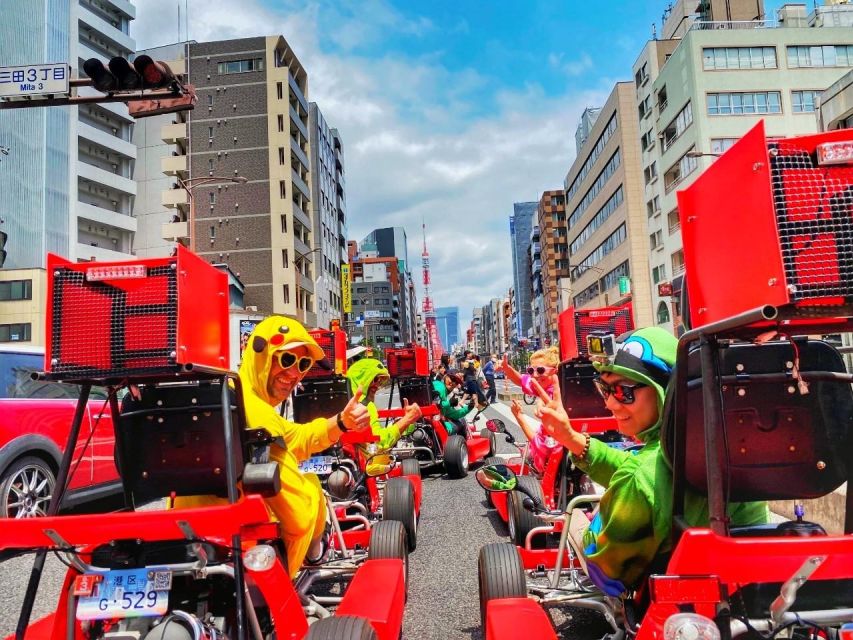
I would recommend it to adults who enjoy driving, novelty, and a little adrenaline. It suits couples, friends, and families with members aged 18 or older who want an activity that feels unlike ordinary Tokyo sightseeing.
It is especially good for someone who has already seen the major central sights and wants a fresh way to connect Tokyo Bay with Tokyo Tower. Night departures are appealing if you want illuminated city views, while summer offers clearer conditions around the bay. Each season has a tradeoff: heat in summer, cold in winter, and the possibility of rain at any time.
I would not choose it for a person who wants a quiet tour, dislikes traffic, or has not secured the required driving papers. It is not suitable for pregnant women, people with back problems, mobility impairments, wheelchair users, people with pre-existing medical conditions, or hearing-impaired participants.
A non-driving companion also needs to think ahead. One participant reported that a sister who was not driving could not wait inside the building during the two-hour tour and had to spend that time outside in the surrounding warehouse area. Bring only people who are participating, or confirm the waiting arrangement before arrival.
Practical tips for a smoother ride
- Check your permit rules before leaving home, not after reaching Japan.
- Carry the physical passport and physical driving document.
- Wear closed-toe shoes without heels.
- Choose fitted clothing that will not catch in the wind or obstruct your view.
- Bring clear personal goggles if you are particular about scratched or cloudy lenses.
- Dress for the temperature. Summer seats can feel hot, while winter riders may appreciate extra layers.
- Do not count on using your cellphone during the tour.
- If you want video, arrange the camera, mount, and Micro-SD card in advance.
- Listen for the guide’s signals and maintain your place in the formation.
- Expect driving to take priority over sightseeing. You will get photos, but you must focus on the road.
Should you book Street Kart Tokyo Bay?
Book this tour if you have the required documents, feel comfortable driving on public roads, and want a memorable Tokyo activity rather than a passive view from a platform. Rainbow Bridge is the payoff, and the guide support, costumes, and included photos make the $64 price reasonable.
Skip it if you are anxious about traffic, need a wheelchair-accessible activity, or hope to spend the whole route looking at the skyline. For the right person, this is one of Tokyo’s most playful ways to connect the bay, the bridge, and Tokyo Tower, with enough driving time to make the adventure feel substantial.
FAQ
How long is the Street Kart Tokyo Bay tour?
The tour lasts two hours. One detailed account described more than an hour of actual driving time, with the rest used for check-in, preparation, instruction, stops, and photos.
What landmarks does the route include?
The route goes across Rainbow Bridge and toward Tokyo Tower. It uses Tokyo Bay public streets rather than a closed go-kart circuit.
What documents do I need to drive?
Most drivers need a physical International Driving Permit in booklet form that complies with the 1949 Geneva Convention, along with a physical passport. The permit must be issued by the same country as your domestic license.
Do drivers from France, Germany, Switzerland, Taiwan, Belgium, or Monaco need an International Driving Permit?
No. Drivers with licenses from those countries need an official Japanese translation from the Japan Automobile Federation, plus their physical domestic license and physical passport.
Are costumes and photos included?
Yes. Costumes, the kart, gasoline, goggles, and photos taken by the guide are included. Action-camera rental, a Micro-SD card, and a camera mount cost extra.
Can I use my cellphone during the ride?
No. Cellphones are not allowed during the activity. You can receive the guide’s photo data afterward.
Who cannot take this tour?
The activity is not suitable for pregnant women, people with back problems, mobility impairments, wheelchair users, children under 18, people with pre-existing medical conditions, or hearing-impaired participants. High heels, open-toed shoes, alcohol, and drugs are also not allowed.
Just added around Tokyo
- Tokyo: Customizable Private Guided Walking Tour★ 4.5 · 129 reviews
- Private Harajuku Omotesando Architecture Tour★ 4.9 · 18 reviews
- Tokyo: Guided Helicopter Ride★ 4.9 · 24 reviews
- Tokyo: Guided Walking Tour of Tsukiji Market with Lunch★ 4.4 · 24 reviews
- Tokyo: Private Personalized Local Food Tour★ 4.5 · 101 reviews
- Tokyo GINZA: KONPARU Japanese Cabaret Show with Drink★ 4.8 · 38 reviews
- Tokyo: Guided Walking Tour of Tsukiji Market with Breakfast★ 4.4 · 134 reviews
- Tokyo: Gotokuji Cat Temple, Shinjuku Cat Cafe & 3D Cat Tour★ 4.9 · 38 reviews
Go-Karts, compared.
Flagship 2-Hours Official Street Go-Kart Tour – Tokyo Bay Shop
Read our review →
Tokyo Go Kart: Asakusa, Skytree, and Akihabara **IDP MUST**
Read our review →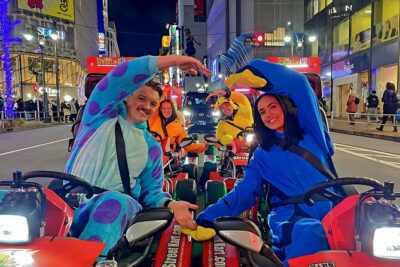
Shibuya Official Street Go-Kart in Shibuya Annex
Read our review →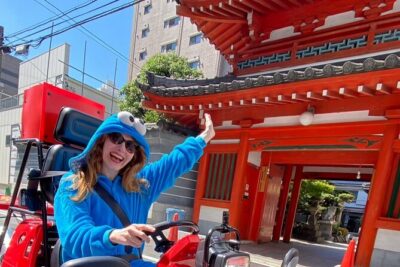
Asakusa, Skytree & Akhihabara Go-Kart City Experience
Read our review →Browse the lists this tour appears in