
REVIEW · SAKE & BAR HOPPING TOURS
Tokyo: Shinjuku Izakaya and Golden Gai Bar Hopping Tour (2h)
Shinjuku after dark is a maze of neon signs, narrow lanes, smoky pubs, karaoke rooms, and tiny bars packed into spaces barely larger than a living room. This two-hour outing gives you a local guide, three alcoholic drinks, and six to eight foods while you move through Omoide Yokocho, Kabukicho, and Golden Gai.
I like two things right away: the small group, limited to eight people, keeps the evening personal, and the route mixes food with local drinking culture rather than treating the night as a simple pub crawl. The guide is also your safety net in a confusing part of Tokyo, helping you find small places you might otherwise walk past.
The main drawback is the food policy. Vegetarian, vegan, halal, gluten-free, and allergy-related requests cannot be accommodated, and the walking can be substantial. Also, the advertised duration is two hours, while the listed stop times add up to more, so confirm the exact schedule before booking.
In This Review
- Key points at a glance
- Why Shinjuku works so well after dark
- Meeting at Tajimaya Coffee
- Omoide Yokocho and the first taste of old Shinjuku
- Kabukicho under the neon signs
- A local restaurant and the food between drinks
- Golden Gai and its tiny themed bars
- What the guides add to the night
- Drinking rules, food limits, and comfort
- Is $96 a fair price?
- Who should book this Shinjuku night?
- Should you book it?
- FAQ
- How long does the Shinjuku bar hopping tour last?
- What food and drinks are included?
- Where does the tour meet?
- Where does the tour finish?
- Is an English-speaking guide included?
- How large is the group?
- Can someone under 20 join?
- Can vegetarian or vegan food be provided?
- Can the tour handle allergies or special diets?
- Is the tour suitable for wheelchair users?
Key points at a glance
- Three distinct Shinjuku districts: Walk from the retro eateries of Omoide Yokocho to neon-lit Kabukicho and the miniature bars of Golden Gai.
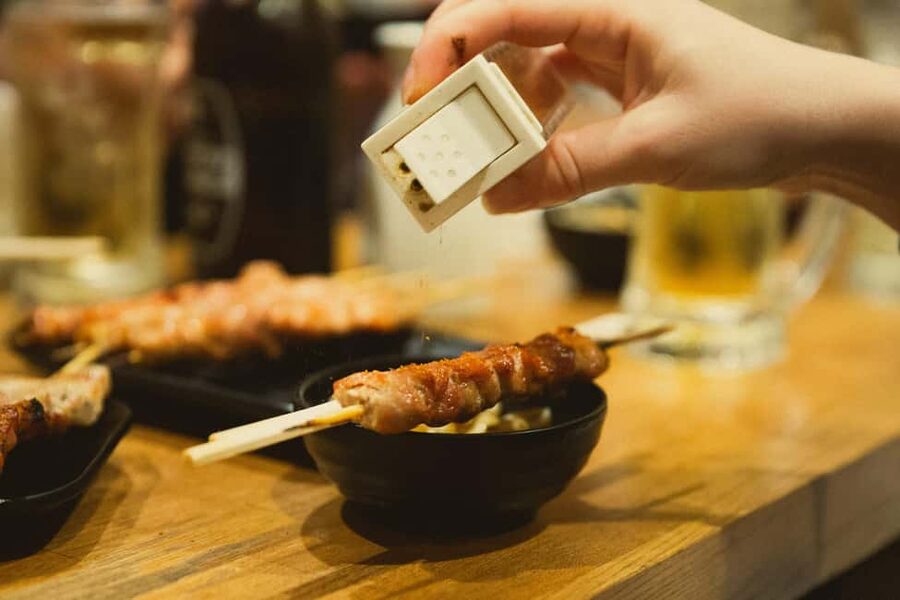
- Food is part of the price: Expect three alcoholic drinks and six to eight portions of regional food, including yakitori.
- Small groups matter: With no more than eight participants, your English-speaking guide can answer questions and adjust the pace.
- Guides shape the evening: Hiro, Ryota, Shuji, Sean, Ash, Tak, Hideo, and others have been singled out for friendly hosting and local insight.
- Plan for a real night out: You need comfortable shoes, must be at least 20 to drink alcohol, and should arrive sober enough to walk and listen.
- Best for flexible eaters: The tour is not suitable for vegans, vegetarians, wheelchair users, or people with serious food restrictions.
Why Shinjuku works so well after dark
Shinjuku is Tokyo’s largest nightlife and drinking district, but that does not mean it is easy to understand on your own. Bright signs compete for your attention, side streets change character within a few steps, and many of the most atmospheric bars are tiny, informal places with little English signage.
That is where a local guide earns the fee. You are not simply being shown a famous street. You are being led from one type of Shinjuku nightlife to another, with food, drinks, neighborhood facts, and help with the practical business of ordering and moving through narrow lanes.
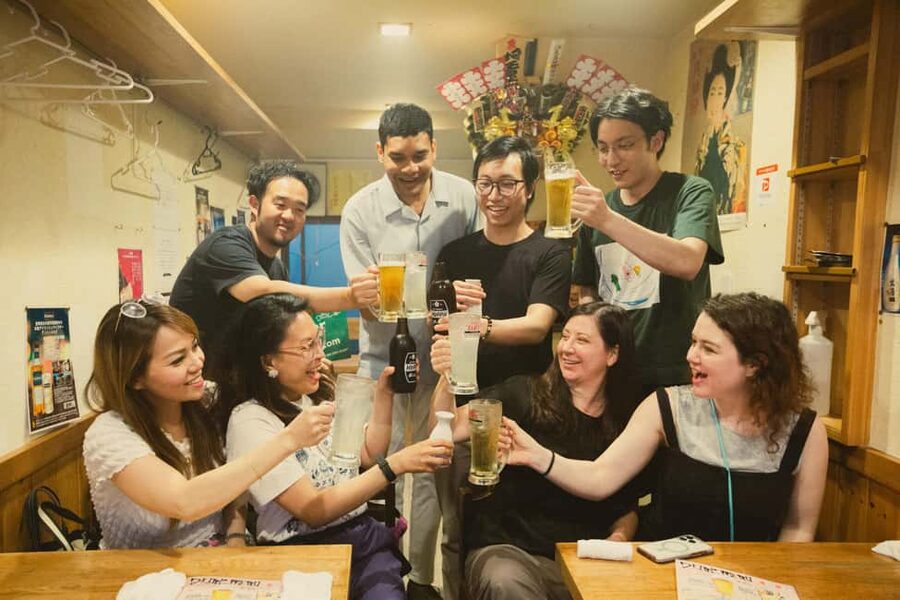
The tone is social. Several guides, including Hiro, Ryota, Shuji, Sean, and Ash, have been praised for fluent English, humor, and easy conversation. One guide even handled a booking that became a one-person group, adapting the evening without making it awkward. That tells you something useful about the format: it is designed to feel hosted, not processed.
More Sake & Bar Hopping Tours in Tokyo
- Tokyo Bar Hopping Tour in Shinjuku (All-You-Can-Drink + Dinner)
★ 5.0 · 3,587 reviews - Best of Shinjuku: Izakaya Food Tour (4 Stops, 14+ Tastings)
★ 5.0 · 1,863 reviews - Tokyo: Shinjuku Local Bar and Izakaya Guided Walking Tour
★ 4.9 · 1,794 reviews
Meeting at Tajimaya Coffee
The evening begins in front of Tajimaya Coffee, written in Japanese as 但馬屋珈琲. This is an important detail because Shinjuku has many stations, exits, and busy corners. Arrive with the meeting point saved on your phone, and give yourself enough time to locate the coffee shop before the start.
You will want comfortable shoes. The route moves through several connected nightlife areas, and much of the pleasure comes from walking the alleys rather than sitting in one restaurant. This is not a quiet, seated tasting with long explanations. It is a moving evening through crowded streets.
The group limit of eight is one of the strongest practical features. A large group would be difficult in the tiny bars of Golden Gai, while a small group allows the guide to keep everyone together and explain what you are seeing. It also makes conversation with people from other countries much easier.
Omoide Yokocho and the first taste of old Shinjuku
The first major stop is Omoide Yokocho, also called Memory Lane. This narrow historic alley is lined with small eateries and has a retro feel that contrasts sharply with the giant signs and towers elsewhere in Shinjuku.
Here, you can expect yakitori, or grilled chicken skewers, along with a drink. The food is not just a snack before the serious part of the evening. It introduces the Japanese izakaya style, where people order several small dishes, share them, and drink slowly over conversation.
I like this opening because it gives you something concrete to do while the guide explains the area. Instead of beginning with a lecture about Japanese drinking customs, you start with a skewer and a drink in a compact neighborhood setting.
The limitation is space. Omoide Yokocho is made up of small establishments, so the group may not have much room to spread out. That is part of the character, but it can feel close and noisy. If you prefer wide tables and plenty of quiet, this style of evening may test your patience.
Kabukicho under the neon signs
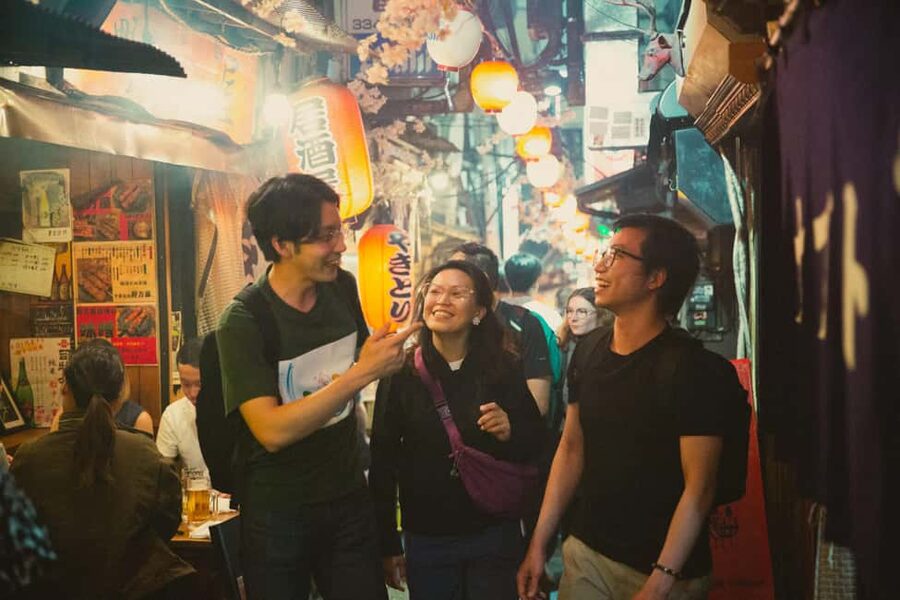
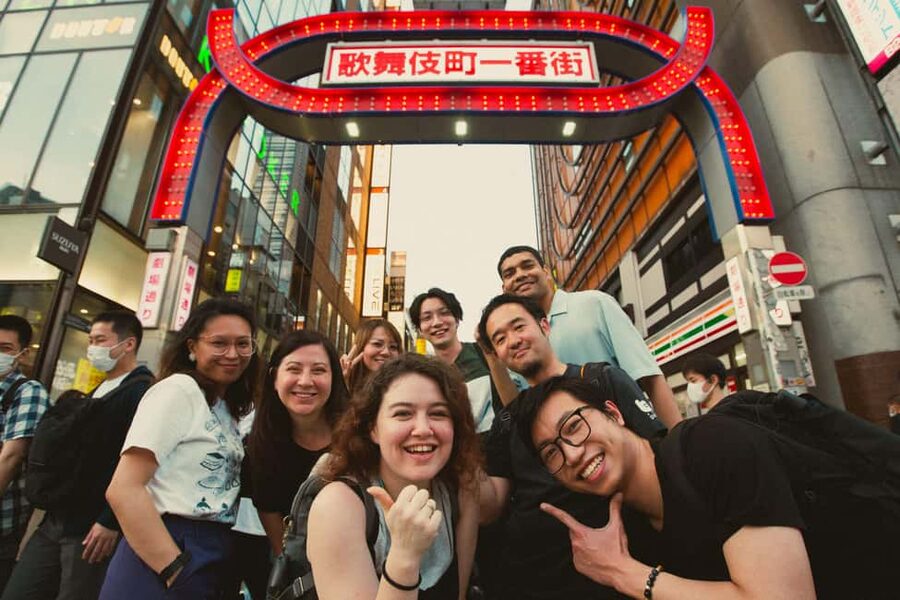
From Omoide Yokocho, the route continues into Kabukicho, Shinjuku’s famous entertainment district. You will pass neon signs, small clubs, smoky pubs, karaoke parlors, and late-night snack bars packed into narrow, lantern-lit streets.
The value here is the guide’s local point of view. Kabukicho can look like a wall of advertising when you first arrive. With someone explaining what the different types of venues are, the district becomes easier to read. You begin to see how restaurants, bars, clubs, and karaoke rooms fit into the area’s nightlife.
This section is also a chance to take photographs, although you should follow the guide’s advice about where to stop and when to keep moving. The streets are busy, and the group needs to stay together.
Do not expect a polished sightseeing district. Kabukicho is loud, crowded, and visually intense. That is precisely why a guide helps. You can enjoy the atmosphere without spending your whole evening trying to decide which doorway is welcoming and which one is not intended for casual visitors.
Same city, a completely different kind of day:
- Mt Fuji and Hakone 1-Day Bus Tour Return by Bullet Train
★ 5.0 · 26,383 reviews - 1-Day Tokyo Bus Tour
★ 5.0 · 14,250 reviews - Tokyo: TOKYO SKYTREE® Admission ticket
★ 4.5 · 11,192 reviews - Tokyo: teamLab Planets TOKYO Digital Art Museum Entry Ticket
★ 4.6 · 9,779 reviews
A local restaurant and the food between drinks
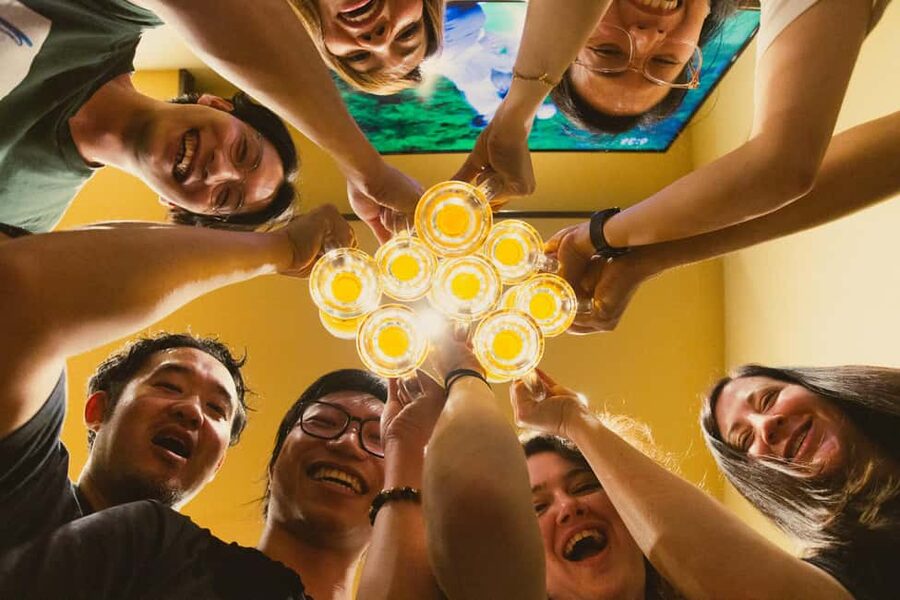
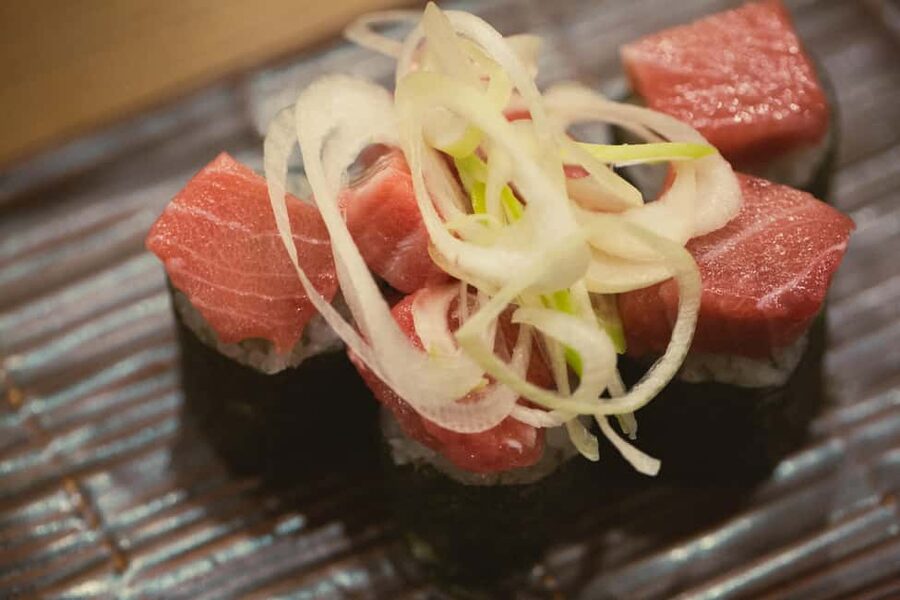
The food component deserves more attention than the phrase bar hopping might suggest. The experience includes six to eight foods in total, not just one plate of yakitori. The exact dishes can vary, but the emphasis is on regional food served in the small-plate style associated with izakaya dining.
A stop at a local restaurant gives you time for another beer and more food. This middle portion breaks up the walking and gives you a chance to ask questions about Japanese drinking habits, local customs, and the parts of Shinjuku you have just passed through.
One useful point from the published details is that the food and drink included are limited to three alcoholic drinks and six to eight foods. Additional orders are not included, so bring a payment method for anything extra. The $96 price looks high if you compare it with the cost of one meal, but that is the wrong comparison. You are paying for several tastings, a guide, local navigation, and access to small venues that can be difficult to approach alone.
Still, value depends on how much you eat and drink. If you rarely drink alcohol or prefer to choose every dish yourself, the price may feel less attractive. If you want a structured introduction to Shinjuku nightlife and would otherwise spend time guessing where to go, the package makes better sense.
Golden Gai and its tiny themed bars
Golden Gai is the evening’s signature area. More than 300 small bars are packed into a network of narrow lanes, with each place often having its own mood or theme. The scale is the point. These are not large Tokyo nightclubs. They are intimate bars where a few seats can fill the entire room.
The guide takes you through the area, points out photo spots, and brings you to a bar for the final drink. You may have a beer or cocktail, depending on the evening’s plan. The experience is less about checking off a famous attraction than about seeing how local nightlife works in a district built around small, personal spaces.
For first-time visitors, this is the part most difficult to handle alone. You might find a bar that looks inviting, but not know if it welcomes newcomers, whether a cover charge applies, or how to order in such a small setting. The guide removes much of that uncertainty.
Golden Gai also has limits. Tiny bars are not ideal for wheelchairs, and the lanes can be cramped. The tour is not suitable for wheelchair users, and the amount of walking and standing may not suit anyone looking for a relaxed, low-effort evening.
What the guides add to the night
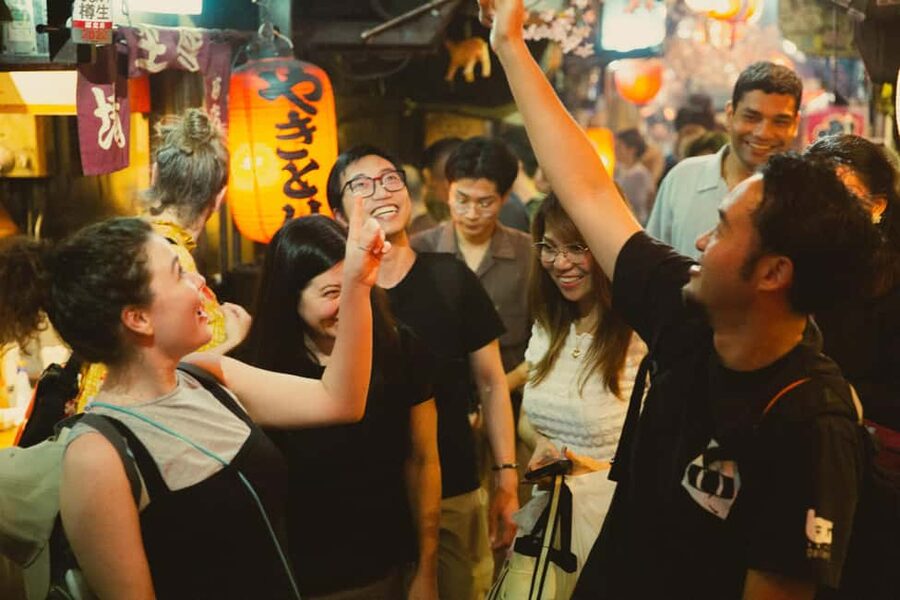
The strongest pattern in the feedback is the quality of the individual hosts. Hiro is praised for making the evening fun while sharing information about Shinjuku. Ryota is described as warm and engaging, with a talent for bringing people into conversation. Shuji receives particular praise for choosing good food and drinks, explaining the area, and making the night easygoing.
Other named guides include Sean, Ash, Tak, Hideo, Jimmy, Taka, Hiyo, and Ryota. The names matter because the guide is not an interchangeable extra. This experience depends heavily on who leads it, how well they speak English, and how confidently they manage the group in tight spaces.
You should expect a friendly host rather than a formal historian. The strongest moments are likely to come from short explanations along the way, practical help at restaurants, and conversation with the other participants. The guide may also offer local recommendations for the rest of your time in Tokyo.
The international group format is part of the appeal. One group included people from the United States, Australia, Finland, and the Netherlands. For a solo participant or a couple, this can make the first night in Tokyo feel less isolated.
Drinking rules, food limits, and comfort
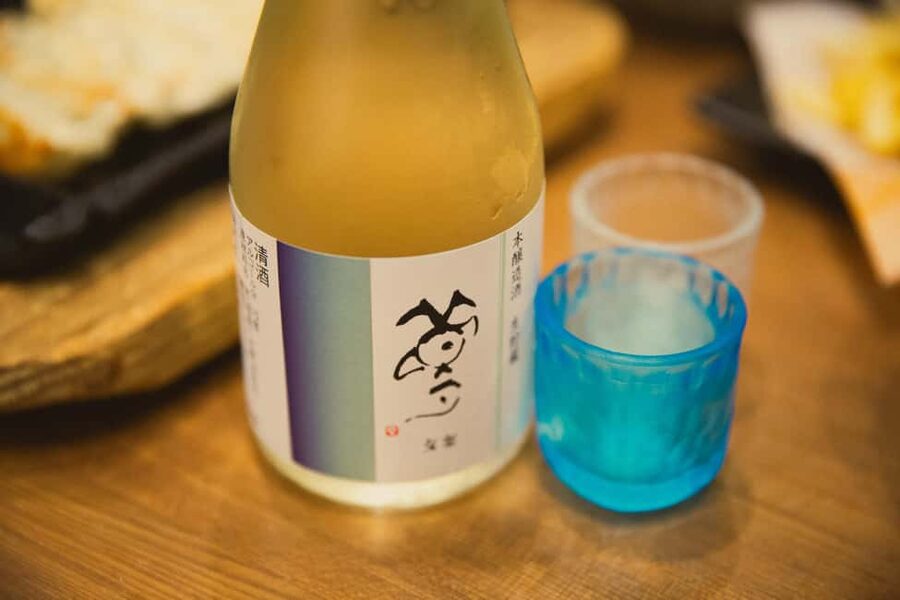
Japan’s minimum drinking age is 20. Anyone under 20 receives alternative drinks, so the activity is not restricted only to people who can consume alcohol, but the evening is still built around Japanese drinking culture.
You should not arrive already very drunk. That is basic courtesy, but it also matters for safety in crowded streets and narrow alleys. The guide needs to keep the group moving, and you need to be able to follow instructions.
The food restrictions are firm. Vegetarian, vegan, halal, gluten-free, and allergy-related requests cannot be accommodated. If you have a serious allergy or follow a strict diet, this is not the right food tour. Do not assume that you can simply skip a dish and receive a replacement.
Comfortable shoes are essential. You will walk through several nightlife areas, pause in small venues, and may spend time standing. The activity is not suitable for wheelchair users, and anyone with mobility concerns should choose a different way to see Shinjuku.
Is $96 a fair price?
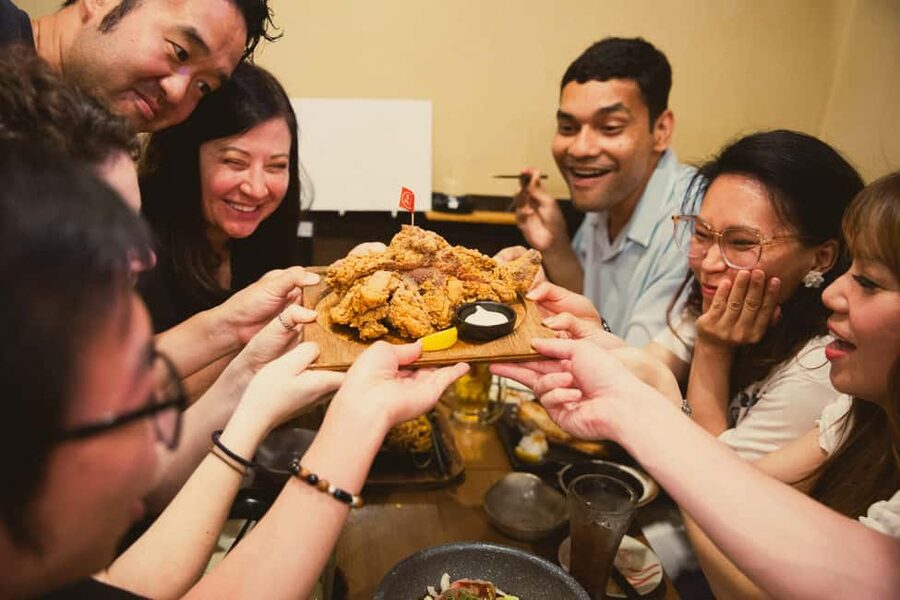
At $96 per person, this is not a bargain bar crawl. The price includes an English-speaking local guide, three alcoholic drinks, and six to eight foods, but not extra orders or hotel transfers.
I see the value in the access and structure. You receive a ready-made evening in an area where independent choices can be confusing. You also avoid the common problem of spending an hour searching for a bar, only to discover that it has no room or is not suited to first-time visitors.
The price is easiest to justify if you are new to Tokyo, want a social night, and would rather pay for guidance than experiment alone. It is less appealing if you already know Shinjuku, speak Japanese, or mainly want a cheap dinner.
Pay attention to the timing when booking. The activity is sold as two hours, but the published stop descriptions list one hour at Omoide Yokocho, 30 minutes around Golden Gai, 45 minutes at a local restaurant, and another 45 minutes in Golden Gai. Since those figures exceed two hours, check the start time and expected finish before making a tight dinner, theater, or train plan.
Who should book this Shinjuku night?
I would recommend it to first-time Tokyo visitors who want an introduction to izakaya food and nightlife without spending the evening making guesses. It also suits solo people and couples who enjoy meeting a small international group.
It is a good fit if you like walking, small portions, beer or cocktails, local stories, and atmospheric streets. You should be comfortable with close quarters, noise, and a food selection that cannot be customized for dietary restrictions.
I would skip it if you do not drink, need a vegetarian or vegan menu, use a wheelchair, or want a quiet cultural tour. I would also skip it if you expect a long, formal meal. This is a lively introduction to Shinjuku, not a restaurant reservation with a fixed menu.
Should you book it?
Book this tour if you want help making sense of Shinjuku after dark and value a guide who can lead you into small izakaya and Golden Gai bars. The combination of three drinks, six to eight foods, and a group of no more than eight gives the evening a clear structure.
Before paying, confirm the timing, accept the food limitations, and wear shoes built for walking. If those conditions work for you, this is a practical way to see Omoide Yokocho, Kabukicho, and Golden Gai in one night, with local hosts such as Hiro, Ryota, or Shuji helping you enjoy the experience without feeling lost.
FAQ
How long does the Shinjuku bar hopping tour last?
The advertised duration is two hours. The listed stop times add up to more than two hours, so confirm the exact schedule and finish time before booking other evening plans.
What food and drinks are included?
The tour includes three alcoholic drinks and six to eight foods. Yakitori is specifically included at Omoide Yokocho, and additional food and drinks cost extra.
Where does the tour meet?
The meeting point is in front of Tajimaya Coffee, also written as 但馬屋珈琲.
Where does the tour finish?
The tour finishes at Shinjuku Golden-Gai.
Is an English-speaking guide included?
Yes. A live local guide who speaks English is included.
How large is the group?
The group is limited to eight participants.
Can someone under 20 join?
People under 20 can join, but they will receive alternative drinks because the minimum drinking age in Japan is 20.
Can vegetarian or vegan food be provided?
No. Vegetarian and vegan requests cannot be accommodated, and the activity is not suitable for vegans or vegetarians.
Can the tour handle allergies or special diets?
No. The tour cannot accommodate allergy-related, halal, or gluten-free requests.
Is the tour suitable for wheelchair users?
No. The activity is not suitable for wheelchair users. Comfortable shoes are recommended because the route includes walking through several nightlife districts.
More Nightlife in Tokyo
- Tokyo: Shinjuku Nightlife & Secret Backstreets Walking Tour
★ 4.8 · 229 reviews - Shibuya Meltdown Night Tour: All-You-Can-Drink Bar Hopping
★ 4.8 · 183 reviews - Tokyo: Shinjuku Bar Hopping & Night Walking Tour
★ 4.6 · 137 reviews - Tokyo: WARP SHINJUKU Nightclub Ticket with Drink / VIP Plan
★ 4.2 · 55 reviews
More Drinking Tours in Tokyo
- Shibuya Meltdown Nightlife Tour: All-You-Can-Drink Bar Hopping
★ 5.0 · 1,058 reviews - Tokyo: Pub Crawl and Bar Tour
★ 4.5 · 951 reviews - Tokyo: Shinjuku Local Bar & Izakaya Crawl Tour
★ 5.0 · 890 reviews - Tokyo: Shinjuku Bar Hopping with All-You-Can-Drink & Dinner
★ 4.9 · 440 reviews
Just added around Tokyo
- Private Memorable Tokyo Tour with English Speaking Driver★ 5.0 · 30 reviews
- Private Tokyo Custom Full-Day Tour by Chartered Vehicle★ 5.0 · 16 reviews
- Private Sightseeing to Mt Fuji and Hakone with English Driver★ 5.0 · 51 reviews
- Tokyo Photography Masterclass – Private Photography Lesson★ 5.0 · 25 reviews
- Private Mt. Fuji Day Trip from Tokyo with English-Speaking Driver★ 5.0 · 33 reviews
- 4 Day Tour – Mount. Fuji, Tokyo, Hakone, Kamakura and Yokohama★ 5.0 · 19 reviews
- Private Unforgettable Mt Fuji Tour with English Speaking Driver★ 5.0 · 142 reviews
- Private Tokyo Food Tour – A Journey Through Time Through Food★ 5.0 · 36 reviews
Sake & Bar Hopping Tours, compared.
Tokyo Bar Hopping Tour in Shinjuku (All-You-Can-Drink + Dinner)
Read our review →
Best of Shinjuku: Izakaya Food Tour (4 Stops, 14+ Tastings)
Read our review →
Kyoto Night Foodie Tour in Gion (9+ dishes + 6 Sake tastings)
Read our review →
Shibuya Meltdown Nightlife Tour: All-You-Can-Drink Bar Hopping
Read our review →
1-Day Snow Monkeys, Zenko-ji Temple & Sake in Nagano
Read our review →
Osaka Bar Hopping Night Walking Tour in Namba (3 bars, 6 tastes)
Read our review →
3-Hour Kyoto Insider Sake Brewery Tour with Tastings & Pairings
Read our review →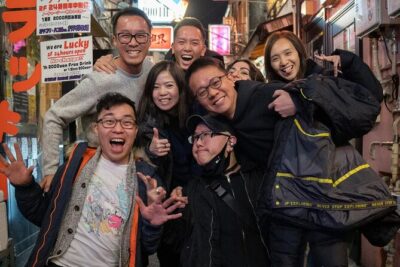
Browse the lists this tour appears in