
REVIEW · GARDEN & PALACE TOURS
Golden Pavilion, Nijo Castle, & Nishiki Market Half day tour
Kyoto’s past comes into focus on this four-hour private tour, which links a gold-covered temple, a shogun’s castle, and the city’s famous food street. Guide Roberto uses an iPad with his own images and explanations, a useful touch when architecture and Japanese history start to blur together.
I like the way the tour connects the Edo Period, samurai, and shogun power rather than treating each sight as an isolated photo stop. I also like the ending at Nishiki Market, where you receive an explanation of its origins and then choose your own lunch. The main drawback is the tight schedule: you will see three major sights in four hours, using public transport between them, so this is not a slow, lingering outing.
In This Review
- Key points at a glance
- Why this half-day route works
- Meeting Roberto at Kyoto Station
- Kinkaku-ji and the gold reflected in the pond
- Nijo Castle and the floorboards that chirp
- Public transport keeps the route moving
- Nishiki Market, Kyoto’s food street
- Roberto’s teaching style and personal attention
- What the $90 price really covers
- Who should book this tour
- Should you book it?
- FAQ
- How long does the tour last?
- Where does the tour start?
- How will I recognize the guide?
- Which attractions are included?
- Is the tour private?
- Which languages are available?
- Are entrance fees included?
- Is transportation included?
- Is lunch included?
- What should I bring?
Key points at a glance
- Three very different Kyoto sights: Kinkaku-ji, Nijo Castle, and Nishiki Market each show a separate side of the city.
- A private tour with Roberto: The Kyoto City Certified Tourist Guide leads in English or Spanish.
- Useful visual explanations: An iPad presentation helps explain people, periods, and buildings.
- Public transport is part of the experience: Expect a 35-minute bus ride, subway journeys, and walking.
- The market is your lunch launch point: The tour finishes at Nishiki Market, with food at your own expense.
- Plan for extra costs: Entry fees total about 1,800 yen, and transportation is not included.
Why this half-day route works
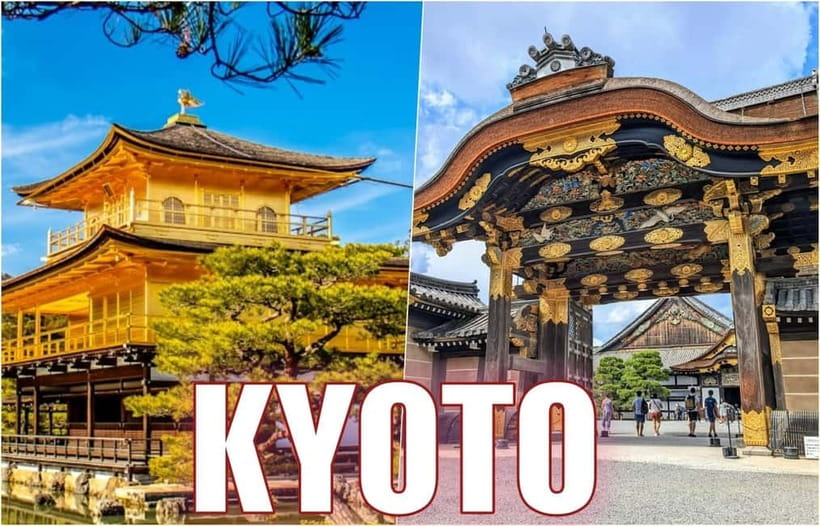
Kyoto can be hard to read at first. A temple may look beautiful, but without context you may not know why it was built, who paid for it, or how it fits into Japanese history. This tour gives you a useful framework early in your stay.
The route begins at Kyoto Station at 8:30 a.m. and finishes at the entrance to Nishiki Market at 12:30 p.m. That timing is practical if you want an afternoon for another sight, shopping, or rest. It also means you should arrive ready to keep moving.
I see the strongest value in the private format. Roberto can adjust his explanations to your questions and interests, and the supplied information allows for plenty of photographs. The tour has received a perfect 5 rating across 29 recorded bookings, with particular praise for Roberto’s friendly attention, historical explanations, and willingness to make a short video for the group.
The tradeoff is pace. Kinkaku-ji receives about 90 minutes, Nijo Castle about 95 minutes, and the rest goes to transport and walking. You will have time for the main areas, but not for every corner or a long café break.
More Food Market Tours in Kyoto
- Nishiki Market Brunch Walking Tour (7 Tastings + Brunch)
★ 5.0 · 1,355 reviews - Kimono Tea Ceremony at Kyoto Maikoya, NISHIKI
★ 5.0 · 911 reviews - Kyoto Nishiki Market Food and Culture Walking Tour
★ 5.0 · 412 reviews
Meeting Roberto at Kyoto Station
The meeting point is in front of the 7-Eleven at the JR Kyoto Station Building, on the first floor. Use the Kyoto Tower side exit. Roberto will hold an iPad and a red card marked RBRT, which should make the meeting easier in a crowded station.
Kyoto Station is large, so do not leave this detail until the last minute. The starting point is not at one of the famous temple entrances. It is at the station, where the group then boards public transport for the first stop.
The early start is sensible. Kinkaku-ji is one of Kyoto’s most sought-after sights, and beginning at 8:30 a.m. gives you a better chance of seeing it before the day becomes more crowded. No exact crowd level can be promised, but an early departure is the right instinct for this temple.
The tour is private, and the available languages are English and Spanish. That makes it a good choice for couples, families, or a small group that wants one guide rather than a large shared party.
Kinkaku-ji and the gold reflected in the pond
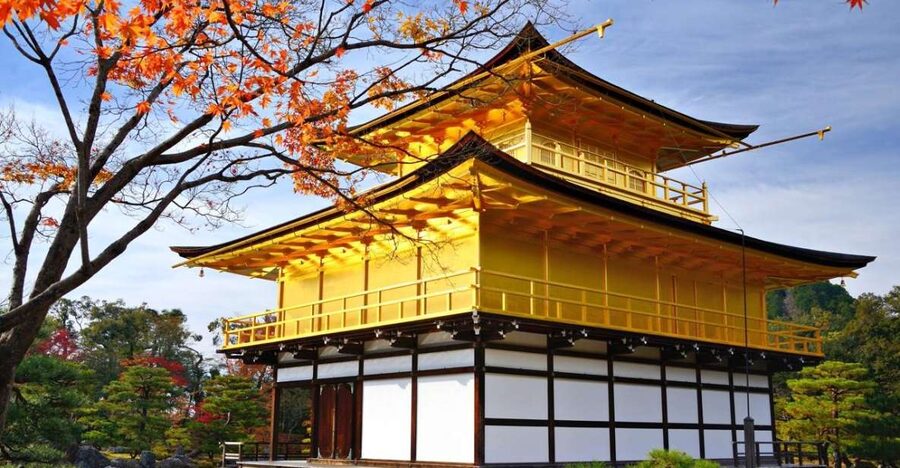
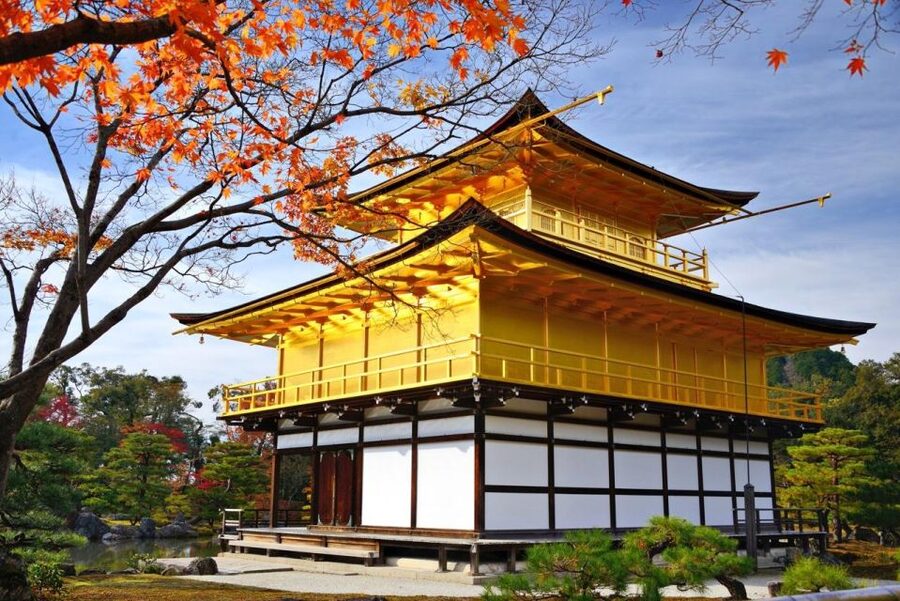
Kinkaku-ji, better known as the Golden Pavilion, sits in northwest Kyoto. The top two floors are covered in real gold leaf, and the building is reflected in the pond beside it. This is one of those sights where the famous photograph really does resemble the actual view.
The pavilion began as a villa for Ashikaga Yoshimitsu, a 14th-century shogun. After his death, it became a Zen Buddhist temple. Roberto’s role here is not just to point out the gold, but to explain what it represented: wealth, authority, and religious devotion.
That background gives the building more weight. Without it, Kinkaku-ji can seem like a very polished object beside water. With it, you begin to see the pavilion as a statement by a powerful ruler, combining political status with religious purpose.
The allotted 90 minutes should give you time to view the pavilion, follow the grounds, and hear the explanation. Photography is an important part of the stop, but you should pay attention to the rules because some temple areas do not allow pictures.
The entrance fee is 500 yen, approximately $3.10, and is not included. This is a small extra cost, but it is worth keeping a few thousand yen available for both admissions and food later.
Kinkaku-ji is highly visual, while Nijo Castle is more concerned with sound, power, and political change. That contrast makes the next stop particularly useful.
Nijo Castle and the floorboards that chirp
Nijo Castle provides the tour’s clearest lesson in the struggle between the shogun, samurai, and feudal lords. The castle is linked to the political system that placed military rulers at the center of power, and its buildings help explain how that system eventually ended.
Inside, you can see Edo Period architecture, detailed woodwork, and carefully designed interiors. The famous nightingale floors are the star feature for many people. They chirp when walked upon, creating an early warning system against unwanted movement.
That small sound carries a large idea. The castle was not only a beautiful residence. It was also a place where security and authority mattered. The floors let you sense how architecture served politics.
Roberto explains the end of the samurai era and the beginning of Japan’s modernization. This makes Nijo Castle more than a collection of rooms. You receive a simple timeline: military rule, rival feudal power, the shogun’s control, and the changes that led Japan toward a modern state.
The visit lasts about 95 minutes, the longest stop on the tour. The entrance fee is 1,300 yen, approximately $8.15, and is also paid separately. The castle has more formal spaces and historical detail than Kinkaku-ji, so the iPad material can be especially helpful here.
You should wear comfortable shoes. The tour does not involve mountain climbing or extremely long stairways, but it is still a walking tour through large historic sites. If you need frequent sitting breaks or find four hours on your feet difficult, the pace may not suit you.
More Garden & Palace Tours in Kyoto
- Kyoto: Nijo-jo Castle and Ninomaru Palace Guided Tour
★ 4.7 · 1,020 reviews - Kyoto: Nijo Castle, Kiyomizu & Fushimi Inari Guided Tour
★ 4.7 · 700 reviews - Kyoto: Imperial Palace & Nijo Castle Guided Walking Tour
★ 4.7 · 453 reviews - Kyoto Zen Meditation & Garden Tour at a Zen Temple with Lunch
★ 5.0 · 441 reviews
Public transport keeps the route moving
The tour uses regular Kyoto public transport rather than a private vehicle. From Kyoto Station, the first bus ride takes about 35 minutes. After Kinkaku-ji, you take the subway or metro for about 20 minutes, then another 15-minute subway or metro ride after Nijo Castle. The final walk to Nishiki Market takes about 10 minutes.
This arrangement has two benefits. First, you see how the three parts of Kyoto connect in daily life. Second, a private tour remains more affordable than one involving a dedicated car and driver.
The practical cost is that public transport takes time. Boarding, changing routes, and walking between stops leave less time at the sights. Transportation fees are not included, so you should budget for those separately. The guide does not need you to pay his entrance fees or transport.
The tour runs rain or shine. A compact umbrella, suitable footwear, and a willingness to keep moving will help on a wet morning. Large bags and luggage are not allowed, and baby strollers are also excluded, so this is not a good choice on a transfer day from one hotel to another.
Nishiki Market, Kyoto’s food street
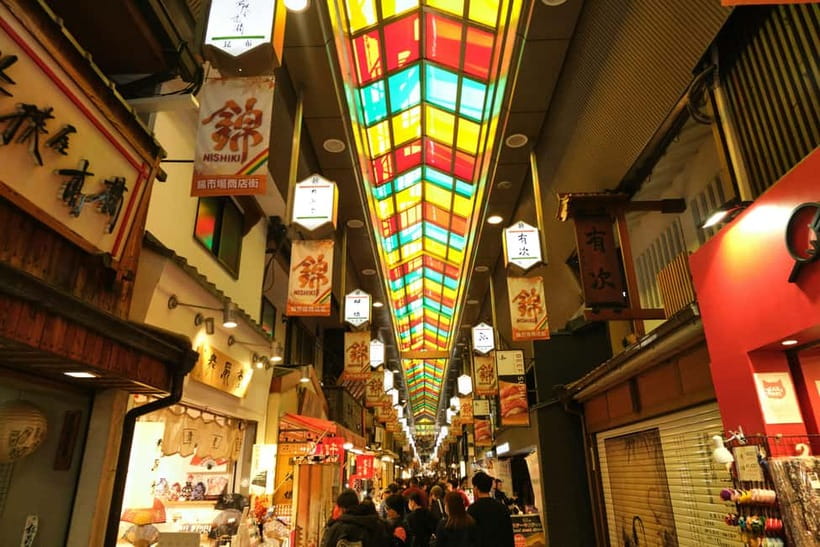
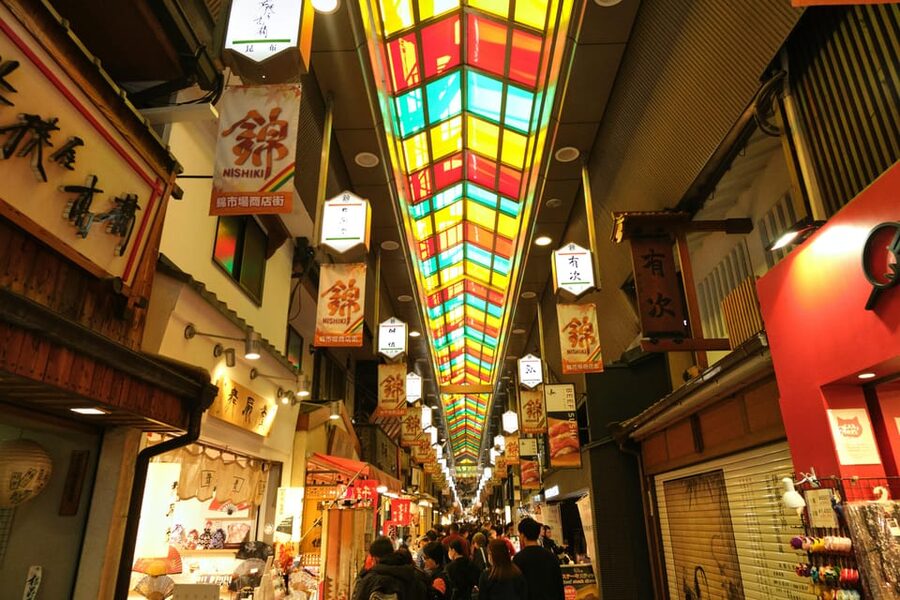
The final stop is Nishiki Market, a narrow, five-block shopping street often called Kyoto’s Kitchen. It has more than 100 shops and restaurants selling food, seafood, produce, knives, cookware, and other kitchen goods.
This is a smart place to finish because the tour ends at lunchtime. Roberto explains the market’s origins, then leaves you to choose what you want to eat from the many offers. Food and drinks are not included, so you control both the menu and the price.
Nishiki is lively and can feel crowded, especially in the narrow sections. That is part of its character, but it is worth being realistic. You will not have a quiet, seated meal automatically arranged for you. Instead, you get an introduction and the freedom to decide how much time and money to spend.
I like this ending because it turns the guide’s historical explanation into a practical recommendation for the rest of your day. You can eat at the market, continue exploring central Kyoto, or use the nearby area as a base for later plans.
Roberto’s teaching style and personal attention
The tour’s most praised feature is Roberto himself. The supplied comments repeatedly point to his kindness, professional manner, and ability to make the outing feel personal. One family particularly appreciated his attention, while other comments describe the tour as joyful, informative, and complete.
The iPad is more than a prop. Kyoto’s history includes unfamiliar names, titles, and political relationships. Images can help you connect a person such as Ashikaga Yoshimitsu with the building he commissioned, or understand the difference between a shogun and a feudal lord.
Roberto can also recommend places for the days that follow. That matters because Kyoto rewards some advance planning. If this is your first morning in the city, use the final part of the tour to ask what fits well with Nishiki Market and what can wait for another day.
Some groups have also received a short video made by Roberto. This is not described as a formal part of every tour, so you should not book solely for that extra. Still, it suggests a guide who pays attention to the personal side of the experience, not only the facts.
What the $90 price really covers
The advertised price is $90 per person. It covers the private guide, his explanations, and the structure of a four-hour route through three major places. It does not cover entry fees, food, drinks, or public transportation.
The two listed admission fees total 1,800 yen, about $11.25 using the approximate prices provided. Add your bus and subway fares, plus lunch or snacks at Nishiki Market. Your final spending will therefore be higher than the headline price.
For a solo visitor, $90 is a substantial half-day cost. For a couple or family that values a private guide and clear historical context, the value is easier to see. You are paying for transport guidance, photography help, explanations in your chosen language, and the ability to ask questions throughout the morning.
The tour is also useful at the beginning of a Kyoto stay. You learn how the city’s sights fit together, receive ideas for later visits, and avoid spending your first morning trying to decode public transport and temple history on your own.
Who should book this tour
I would choose this tour if you want a guided introduction to Kyoto’s major sights and prefer history explained in plain language. It suits first-time visitors, couples, families who can walk steadily, and anyone who wants a private group rather than a large shared tour.
It is also a good match if you speak English or Spanish and like visual teaching aids. The iPad explanations should help you remember the names and events behind the buildings.
I would be cautious if you want a slow photographic visit, dislike public transport, or need a long lunch break. The route is tightly timed, and the tour takes place in all weather.
It is not suitable for wheelchair users, pregnant women, people with back problems, people with a low level of fitness, or those prone to seasickness. The last category is unusual for a land-based Kyoto tour, but it is included in the stated restrictions.
Free cancellation is available up to 24 hours before departure, and you can reserve now and pay later. Check the available starting time before booking, since the tour is built around the 8:30 a.m. to 12:30 p.m. schedule.
Should you book it?
Book this tour if you want a focused history lesson with three strong contrasts: royal-looking religious architecture at Kinkaku-ji, military politics at Nijo Castle, and everyday food culture at Nishiki Market.
Skip it if your priority is solitude, flexible pacing, or a private car. At $90 per person before admissions, transport, and food, it is not the cheapest way to see Kyoto. Its value comes from Roberto’s personal attention, clear explanations, iPad images, and practical advice for the rest of your visit.
For many first-time visitors, that guidance is worth more than simply checking three famous places off a list.
FAQ
How long does the tour last?
The tour lasts about four hours, from 8:30 a.m. to 12:30 p.m.
Where does the tour start?
It starts at the 7-Eleven in the JR Kyoto Station Building, first floor, in front of the door. Use the Kyoto Tower side exit.
How will I recognize the guide?
Roberto will hold an iPad and a red card marked RBRT.
Which attractions are included?
The route includes Kinkaku-ji, also called the Golden Pavilion, Nijo Castle, and Nishiki Market.
Is the tour private?
Yes. The group type is private.
Which languages are available?
The live guide is available in English and Spanish.
Are entrance fees included?
No. Kinkaku-ji costs 500 yen and Nijo Castle costs 1,300 yen, based on the supplied prices.
Is transportation included?
No. Transportation fees are separate. The route uses a public bus, subway or metro, and walking.
Is lunch included?
No. The tour finishes at Nishiki Market, where you can choose and pay for your own food and drinks.
What should I bring?
Bring comfortable shoes. The tour runs rain or shine, and large bags, luggage, and baby strollers are not allowed.
More Shopping Tours in Kyoto
- Nishiki Market Food Tour with Cooking Class
★ 4.9 · 42 reviews - Kyoto: Nishiki Market Food Tour
★ 4.9 · 21 reviews - Kyoto: Enjoy Sushi & Market Tour! Best for Family & Couple!
★ 4.8 · 20 reviews - Taste of Nishiki Market Walking Food Tour with Local guide
★ 5.0 · 17 reviews
More Markets in Kyoto
- Kyoto: Nishiki Market Tea Ceremony with Koto Performance
★ 4.8 · 294 reviews - Kyoto: Local Food Tasting Tour at the Nishiki Market
★ 4.7 · 135 reviews - Kyoto: Nishiki Market and Depachika Food Tour with a Local
★ 4.7 · 76 reviews - Kyoto: Nishiki Market Tour with a Local Foodie & Tastings
★ 4.5 · 67 reviews
Just added around Kyoto
- Taste of Nishiki Market Walking Food Tour with Local guide★ 5.0 · 17 reviews
- Kyoto: Sushi Making Class with Sushi Chef★ 4.8 · 64 reviews
- Kyoto: City Secrets eBike Tour★ 4.9 · 196 reviews
- Sacred Pathways: Discover the Philosopher’s Path of Kyoto★ 4.9 · 20 reviews
- Private Tour to Monkey Park and Arashiyama Highlights★ 5.0 · 22 reviews
- Private Nara Tour from Osaka – Meet at Your Hotel★ 5.0 · 22 reviews
- Private Sake Tasting in Central Kyoto with Sake Sommelier★ 5.0 · 13 reviews
- Kyoto : Private Custom Walking Tour With A Local Guide★ 4.6 · 144 reviews
Garden & Palace Tours, compared.

Imperial Palace and Shogun Historical Walking Tour
Read our review →
Tokyo Castle & Imperial PalaceーShogun Walking Tour
Read our review →
Nijo-jo Castle and Ninomaru Palace Guided Tour
Read our review →
Ultimate Osaka Walking Tour: Castle, Dotonbori & Hidden Gems
Read our review →Tokyo Castle & Imperial PalaceーShogun Walking Tour
Read our review →Browse the lists this tour appears in