
REVIEW · FOOD MARKET TOURS
Kyoto: Nishiki Market and Depachika Food Tour with a Local
Kyoto’s best food lesson may happen below street level. This tour pairs Daimaru’s Depachika, a department-store basement packed with Japanese sweets, prepared foods, and fine ingredients, with Nishiki Market’s narrow arcade of stalls. You get a guided introduction to foods you might otherwise walk past, then finish at Nishiki-Tenmangu Shrine.
I like the small group of up to nine, which makes it easier to ask questions and keep up in crowded aisles. I also like the set tastings: yuba sashimi, soy milk donut, Nishiki gyoza, and hamo tempura give you a useful range of Kyoto flavors. The main catch is time. Two hours moves quickly, and one guest found the tasting plan unclear, so ask your guide early what you will be sampling.
In This Review
- Key points to know before you book
- What this Kyoto food walk is really about
- Meeting at Apple Kyoto
- Starting at Daimaru’s Depachika
- Tasting Kyoto specialties
- Walking through Nishiki Market
- A quiet pause at Nishiki-Tenmangu Shrine
- Ending near Kyoto-Kawaramachi Station
- How the guides shape the experience
- Timing, comfort, and practical limits
- Is $42 good value?
- Who should book this experience?
- Final verdict
- FAQ
- Where does the tour meet?
- Where does the tour finish?
- How long does the experience last?
- What food is included?
- Are extra food and drinks included?
- Is the tour conducted in English?
- How large is the group?
- What should I bring?
- Can I cancel the booking?
Key points to know before you book
- Start underground at Daimaru: The Depachika food hall shows you how Japanese department stores turn food shopping into a polished, colorful experience.
- Taste four named specialties: The included items are yuba sashimi, a soy milk donut, Nishiki gyoza, and tempura made with hamo fish.
- Walk through Kyoto’s Kitchen: Nishiki Market combines food stalls with vendors selling produce, knives, cookware, and Kyoto specialties.
- Pause at a Shinto shrine: Nishiki-Tenmangu offers a quiet change of pace, with a water fountain for ritual hand cleansing.
- Expect a personal guide: Guides including Mao, Jasmine, Boris, Ai, Richard, and Kats have been praised for food explanations, local suggestions, and friendly conversation.
- Plan for a brisk outing: Wear comfortable shoes, arrive at Apple Kyoto 10 minutes early, and carry cash for extra purchases.
What this Kyoto food walk is really about
This is not a full meal and it is not a cooking class. It is a short orientation to Kyoto’s food culture, led in English by a local guide. You move through two very different food settings, taste selected items, and learn how to make sense of what you see.
That format suits you if Nishiki Market feels exciting but confusing. Many stalls display unfamiliar fish, sweets, pickles, tofu products, and prepared foods. A guide can explain what an item is, how it is eaten, and why it matters in Kyoto cuisine.
The price is $42 per person. I consider that fair if you value the explanations and the confidence to keep exploring afterward. You are paying for a guide, four included tastings, a small group, and help navigating two food centers in a short period. It is less compelling if you mainly want to eat as much as possible, since additional food and drinks cost extra.
More Food Market Tours in Kyoto
- Nishiki Market Brunch Walking Tour (7 Tastings + Brunch)
★ 5.0 · 1,355 reviews - Kimono Tea Ceremony at Kyoto Maikoya, NISHIKI
★ 5.0 · 911 reviews - Kyoto Nishiki Market Food and Culture Walking Tour
★ 5.0 · 412 reviews
Meeting at Apple Kyoto
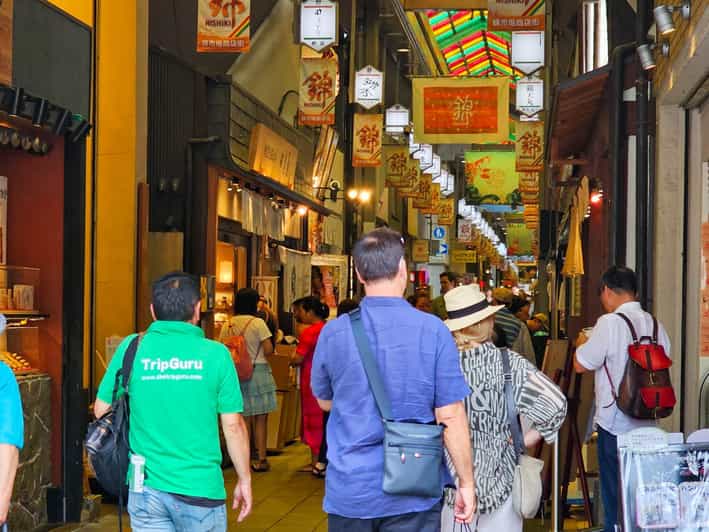
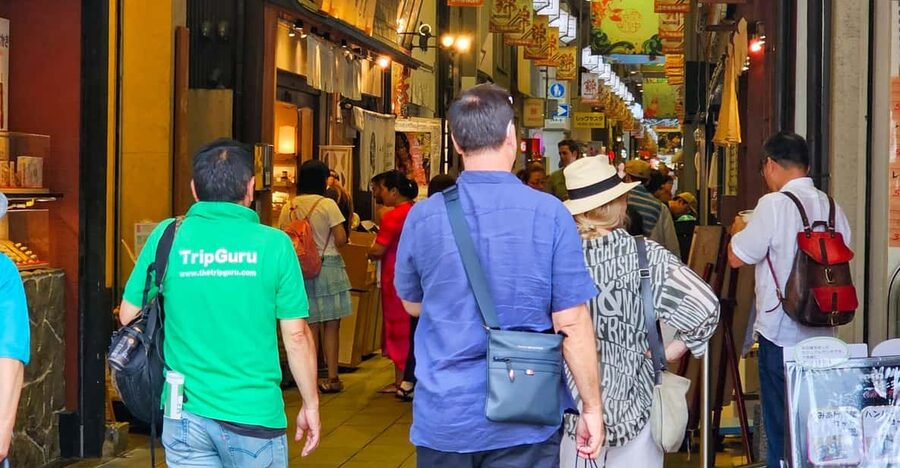
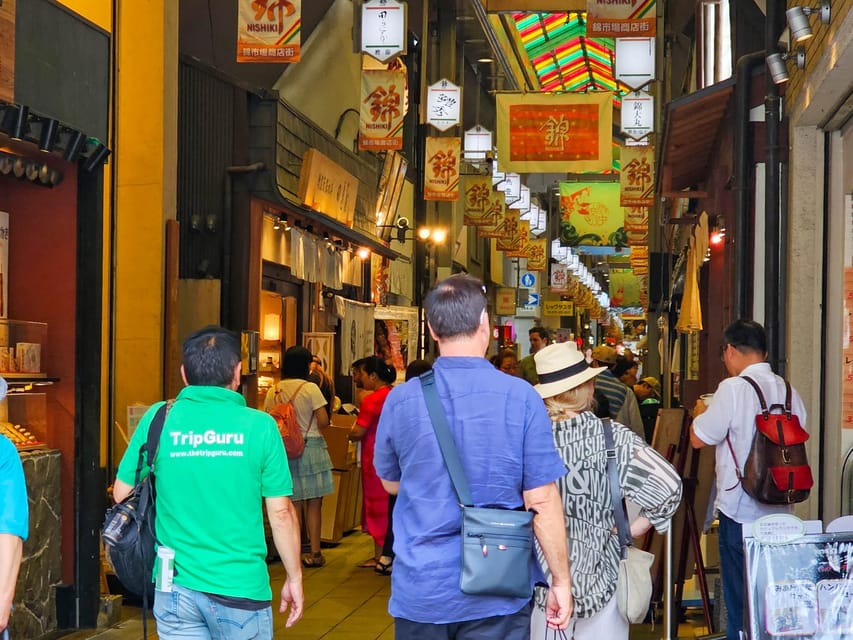
The walk begins at Apple Kyoto. Your guide will be wearing a TripGuru shirt or holding a TripGuru sign, so look for that rather than wandering around in search of a generic tour group.
Arrive at least 10 minutes before the scheduled time. The guide waits a maximum of 10 minutes before moving on, and traffic can take longer than navigation apps suggest. This matters in Kyoto, particularly if you are coming from another part of the city during a busy morning.
The tour is offered at several start times, subject to availability. That flexibility is useful when you have a temple visit, train connection, or dinner reservation already in your plans. Since this is a walking activity, wear shoes you can manage on hard floors and crowded streets.
Starting at Daimaru’s Depachika
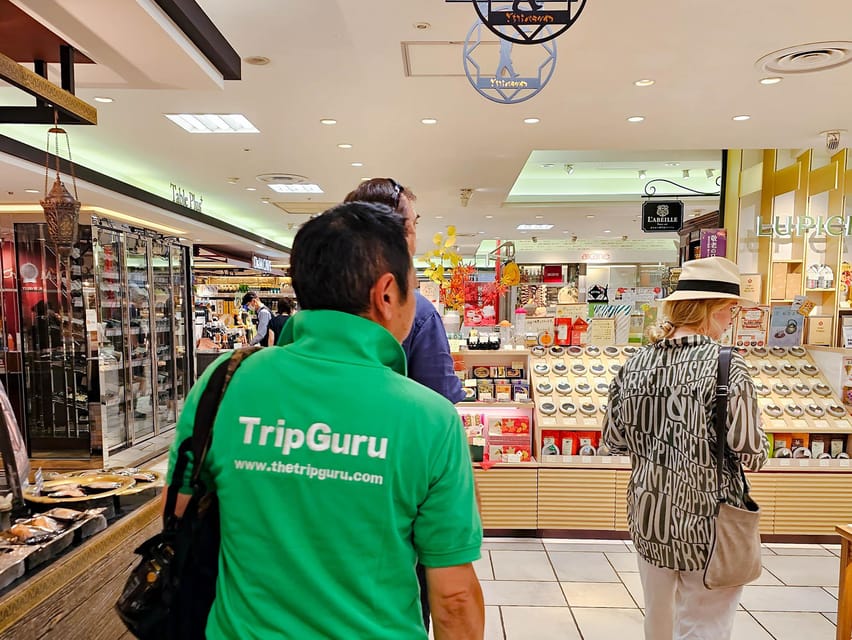
The first major stop is Daimaru Kyoto. A Depachika is an underground food hall in a Japanese department store, and it gives you a different view of local eating than a street market does.
Here, presentation and selection take center stage. You might see carefully arranged sweets, boxed meals, Japanese delicacies, international foods, and ingredients aimed at home cooks. The point is not simply to collect samples. Your guide can help you understand the difference between familiar-looking items and foods that are distinctly Japanese.
This is where guide quality matters most. Boris was praised for explaining food, culture, and history in detail, while Ai helped with practical choices, including what to look for in bento boxes and which expensive foods may not be worth the price. Those are useful lessons when you are faced with a large, attractive display and no idea what to buy.
Daimaru can also tempt you into spending more time and money than planned. One family enjoyed lingering there so much that they described losing track of time. That is a real consideration: the department-store food hall is easy to treat as a shopping stop, but the route still has Nishiki Market and the shrine ahead.
Tasting Kyoto specialties
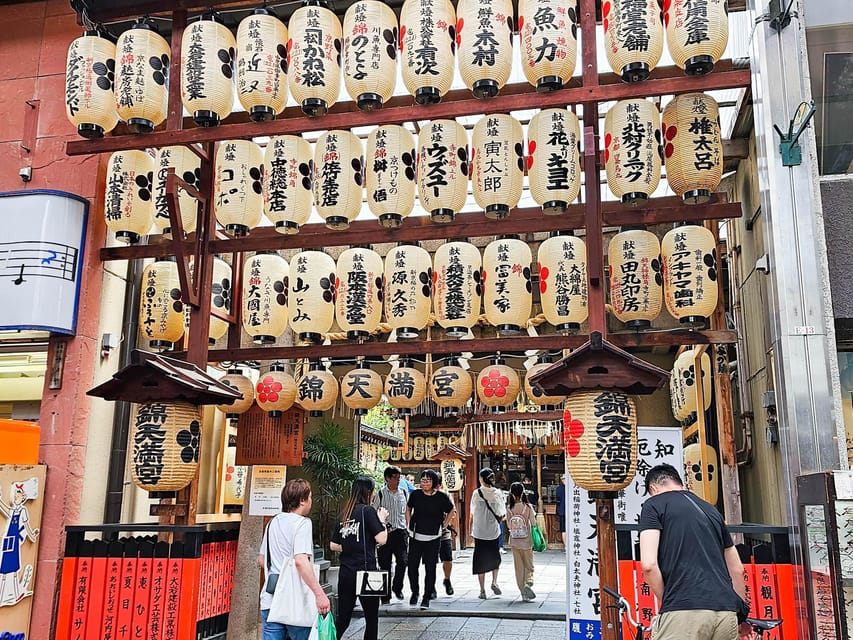
The included food is specific, which is helpful when comparing this outing with broader market walks. Your tastings are:
- Yuba sashimi, made from tofu skin
- A soy milk donut
- Nishiki gyoza
- Tempura hamo fish, also called conger pike
Yuba is especially tied to Kyoto’s tofu-making tradition. It has a delicate texture and a mild flavor, so it may be more subtle than what you expect from a market snack. The soy milk donut offers a sweeter and more familiar counterpoint.
Nishiki gyoza brings a savory, hot-food element to the tasting. Hamo tempura introduces a local fish preparation and gives you a chance to try something you may not order without guidance. Your guide chooses and explains the items, but the precise order and serving rhythm can vary.
I would ask at the start how the included tastings will work. One participant expected the guide to announce each food, while the guide was waiting for the participant to request it. That kind of small misunderstanding can leave you feeling that you missed part of the experience. A simple question at the beginning should make the plan clear.
You should also carry cash. Extra snacks, drinks, and market purchases are not included, and Nishiki is full of things you may want to take home.
Same city, a completely different kind of day:
- PERFECT KYOTO 1-Day Bus Tour
★ 5.0 · 13,518 reviews - Kyoto: Fushimi Inari, Kinkakuji, Bamboo Grove 1 Day Bus Tour
★ 4.8 · 4,316 reviews - Kyoto: Tea Ceremony in a Traditional Tea House in Kiyomizu
★ 4.9 · 3,519 reviews - Kyoto Geisha Walking Tour: Gion District & Hidden Gems
★ 4.7 · 3,273 reviews
Walking through Nishiki Market
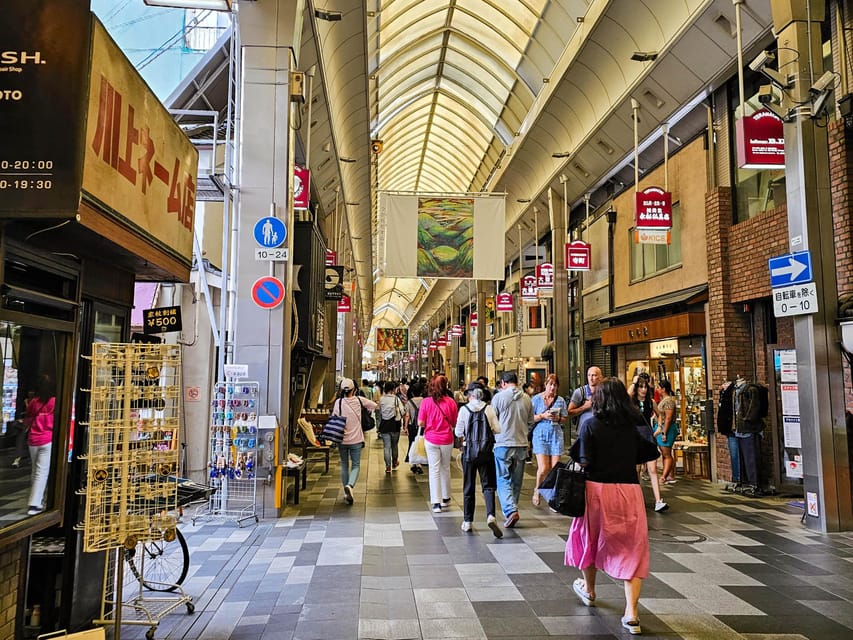
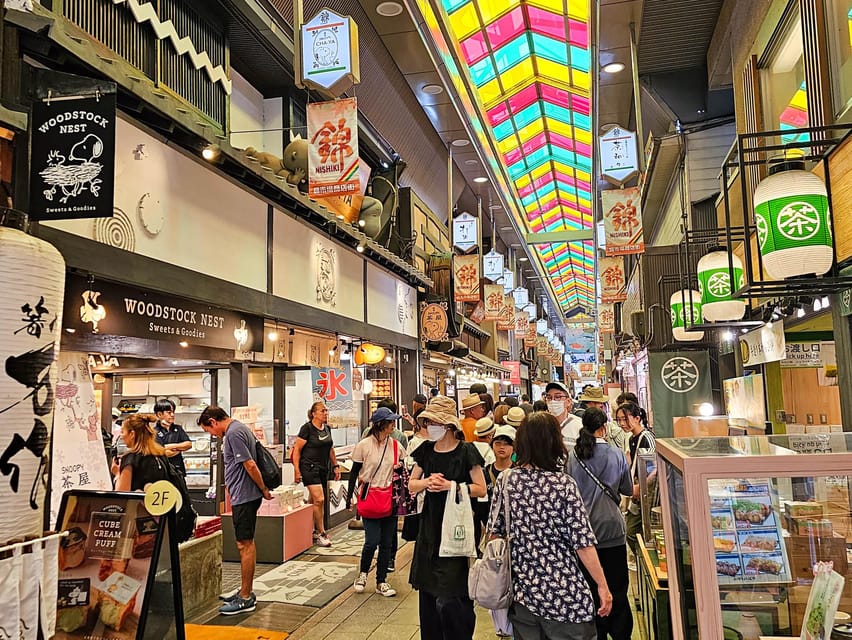
After Daimaru, the route heads to Nishiki Market, often called Kyoto’s Kitchen. The covered market runs through a busy shopping area and is lined with stalls selling seasonal foods, Kyoto specialties, produce, seafood, pickles, sweets, knives, and cookware.
The market is lively and close-packed. You may need to slow down for other shoppers, stop at the side of the walkway, and stay alert for the group. A small party helps here. With no more than nine participants, your guide has a better chance of keeping everyone together while still answering questions.
The market’s appeal is its variety. You are not only looking at ready-to-eat snacks. You are seeing the ingredients and tools behind Japanese cooking. Knives and cookware make the visit relevant even if you are not hungry, while seasonal items show how strongly Japanese food follows the calendar.
Many shops have been operated by the same families for generations. That continuity adds meaning to the stalls, but the market is still a working commercial place, not a museum. You should avoid blocking shop entrances, follow staff instructions, and ask before photographing products or people.
Your guide’s role is to turn this stream of displays into a readable story. Jasmine was praised for explaining the market’s background while arranging tastings and leaving time for shopping. Richard took participants to shops they might not have tried alone and offered suggestions for food and drinks after the tour. These details point to the tour’s strongest use: it gives you a starting map for independent eating later.
You are not pressured to buy from the stalls. That is important because market tours can sometimes feel like moving sales pitches. Here, the tastings are included, and extra shopping is your choice.
A quiet pause at Nishiki-Tenmangu Shrine
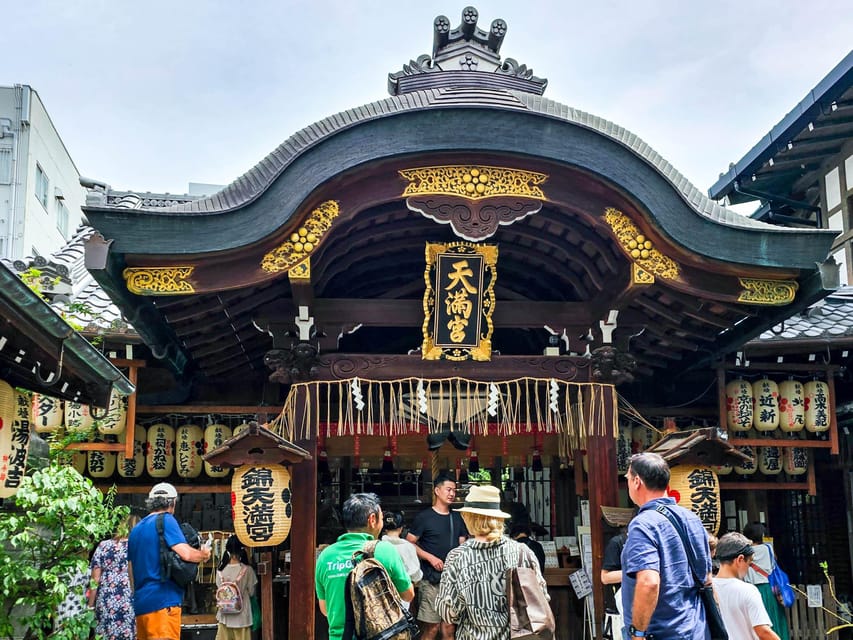
The food walk ends its sightseeing portion at Nishiki-Tenmangu Shrine, a small Shinto shrine near the market. The change is welcome. After tight aisles and food displays, you get a short pause among shrine architecture and religious customs.
The shrine is dedicated to the deity of learning. Your guide explains the meaning of the different parts, and you can cleanse your hands at the sacred water fountain. This is a simple ritual, but it helps you understand that the area is not only a shopping corridor.
The shrine visit is brief, so do not expect a long religious tour. Its value is in the contrast and context. You begin with food, move through commerce, and finish with a place of reflection that remains part of daily Kyoto life.
Ending near Kyoto-Kawaramachi Station
The experience finishes at Kyoto-Kawaramachi Station. That is convenient for continuing into central Kyoto, finding lunch, or returning to something you spotted in the market.
Your guide may also suggest places to visit afterward. Several guides have been praised for giving food and drink recommendations beyond the official route. Take notes if you are building an eating plan for the rest of your stay, because this may be one of the more useful parts of a short tour.
The route does not include hotel pickup or drop-off. You arrange your own way to Apple Kyoto and from Kawaramachi Station. This keeps the price down, but you need to allow enough time to reach the starting point.
How the guides shape the experience
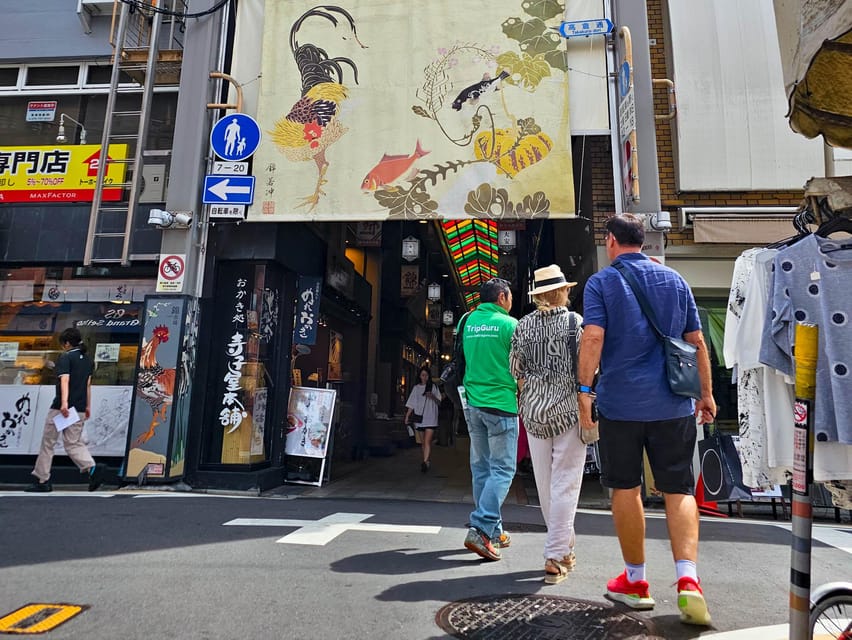
TripGuru Japan uses different English-speaking guides, so the tone may vary from one departure to another. Names associated with especially strong experiences include Mao, Jasmine, Boris, Ai, Richard, Kats, Vincent, Yoku, Miya, and Brook.
The repeated strengths are clear: food explanations, cultural background, practical recommendations, patience with questions, and a warm manner. Boris was especially good with food and cultural detail, while Ai received praise for making participants comfortable and helping them decide what to buy. Mao was described as enthusiastic about regional specialties and the shrine.
A guide can also adjust the experience to your group. One guide accommodated a child with a fussy palate while still offering more adventurous choices to the adults. Another was patient when a group spent longer than expected at Daimaru. Those examples suggest some flexibility, though you should not expect a completely private or custom itinerary.
The small group helps with conversation. You can ask what a food contains, how locals eat it, or where to find something similar later. If you want a quiet, self-directed market visit, though, a guided group may feel more structured than necessary.
Timing, comfort, and practical limits
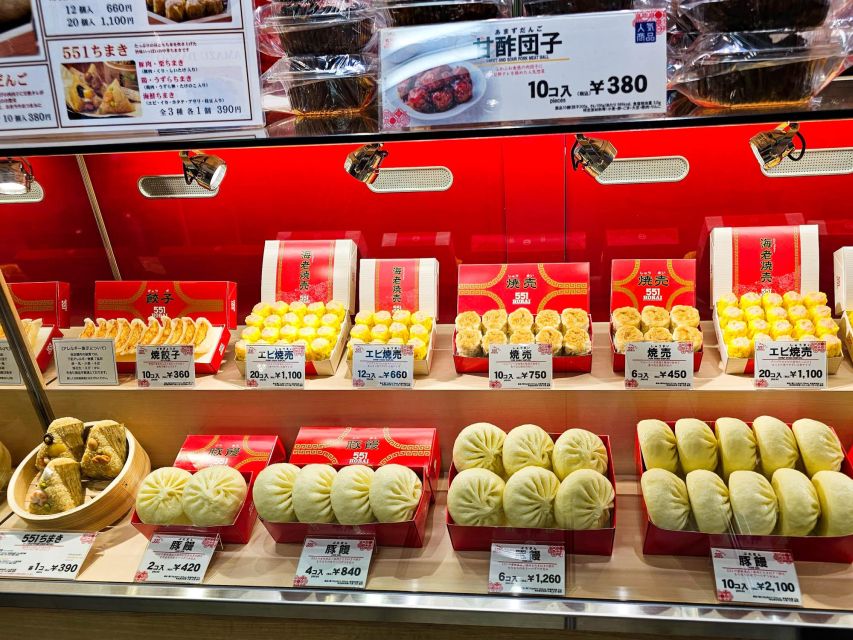
The advertised duration is two hours, making this a good fit between larger sightseeing plans. The listed stops also include approximate visit periods at Daimaru, Nishiki Market, and the shrine, and the actual pace may shift depending on the group, crowds, and tasting arrangements.
You will be walking and standing in busy commercial areas. The activity is not suitable for people with mobility impairments, heart problems, respiratory issues, or pregnant women. That is not a minor footnote: the market can be crowded, and there may be little room to sit or move at your own pace.
Bring comfortable shoes, a camera, and cash. Additional food and drinks are not included. If you have allergies or dietary limits, ask about the food before eating it, since the supplied information does not specify substitutions or a full ingredient list.
The tour operates in English. If you are traveling with children, the guide may be able to help with cautious food choices, but the experience is built around tasting unfamiliar local dishes rather than providing a separate children’s menu.
Is $42 good value?
At $42, this is a mid-priced short food activity. The included tastings alone do not tell the whole value story. You are also getting a guide who can explain foods, translate the market’s visual clutter into useful choices, and connect Nishiki to Kyoto’s customs.
I would book it early in your Kyoto stay. That way, you can return to stalls you liked, use the shopping advice, and follow restaurant or drink suggestions later. It is less useful as your final Kyoto activity, when you may not have time to act on those recommendations.
The price works best for first-time visitors who want a gentle introduction. If you already know Japanese food well, you may prefer spending $42 on independent eating. Still, even experienced eaters may enjoy the contrast between a department-store food hall and the traditional market.
Who should book this experience?
Book this walk if you want a short, guided introduction to Kyoto food and prefer tasting a few chosen items instead of making every decision alone. It is particularly useful for first-time visitors, families open to trying new foods, and anyone who feels unsure about ordering or shopping in Japanese markets.
It also suits a free morning or afternoon because you can choose among start times and finish at a central station. The small group and English guide make it easier to ask questions than on a large group excursion.
Skip it if you need a substantial meal, dislike crowded markets, have mobility concerns, or want a fully private itinerary. Also think twice if your main goal is unlimited sampling, since only four tasting items are included and extra purchases are your responsibility.
Final verdict
I would book this tour for the orientation, not just the food. The combination of Daimaru’s Depachika, Nishiki Market, and Nishiki-Tenmangu Shrine gives you three useful pieces of Kyoto: polished food retail, an old-style market, and a living religious site.
The strongest guides add real value by explaining unfamiliar foods and pointing you toward good choices without pushing you to buy. Ask at the beginning about the tasting plan, arrive early, and leave room in your schedule for a little shopping afterward. For $42, it is a practical first taste of Kyoto’s food culture, provided you are comfortable with a brisk two-hour walk.
FAQ
Where does the tour meet?
The meeting point is Apple Kyoto. Your guide will wear a TripGuru shirt or hold a TripGuru sign.
Where does the tour finish?
The tour finishes at Kyoto-Kawaramachi Station.
How long does the experience last?
The advertised duration is two hours. The route includes Daimaru Kyoto, Nishiki Market, and Nishiki-Tenmangu Shrine.
What food is included?
The included tastings are yuba sashimi made from tofu skin, a soy milk donut, Nishiki gyoza, and tempura hamo fish.
Are extra food and drinks included?
No. Additional food, drinks, and personal purchases are not included.
Is the tour conducted in English?
Yes. The activity includes an English-speaking live guide.
How large is the group?
It is a small-group experience limited to nine participants.
What should I bring?
Bring comfortable shoes, a camera, and cash.
Can I cancel the booking?
You can cancel up to 24 hours in advance for a full refund. The activity also offers a reserve-now-and-pay-later option.
More Food in Kyoto
- Kyoto: Gion Food Tour 13 Dishes at 4 Eateries
★ 5.0 · 408 reviews - Kyoto Foodie Night Tour
★ 5.0 · 376 reviews - Kyoto: Gion & Pontocho Food Tour with 13 Dishes
★ 4.9 · 235 reviews - Kyoto: Local Food Tasting Tour at the Nishiki Market
★ 4.7 · 135 reviews
More Food & Drink in Kyoto
- Kyoto Night Foodie Tour in Gion (9+ dishes + 6 Sake tastings)
★ 5.0 · 1,762 reviews - 3-Hour Kyoto Insider Sake Brewery Tour with Tastings & Pairings
★ 5.0 · 917 reviews - Arashiyama Bamboo, Temple, Monkeys, or Secret Sake Brewery
★ 4.8 · 886 reviews - Kyoto: Insider Sake Brewery Tour with Sake and Food Pairing
★ 5.0 · 704 reviews
Just added around Kyoto
- Taste of Nishiki Market Walking Food Tour with Local guide★ 5.0 · 17 reviews
- Kyoto: Sushi Making Class with Sushi Chef★ 4.8 · 64 reviews
- Kyoto: City Secrets eBike Tour★ 4.9 · 196 reviews
- Sacred Pathways: Discover the Philosopher’s Path of Kyoto★ 4.9 · 20 reviews
- Private Tour to Monkey Park and Arashiyama Highlights★ 5.0 · 22 reviews
- Private Nara Tour from Osaka – Meet at Your Hotel★ 5.0 · 22 reviews
- Private Sake Tasting in Central Kyoto with Sake Sommelier★ 5.0 · 13 reviews
- Kyoto : Private Custom Walking Tour With A Local Guide★ 4.6 · 144 reviews
Food Market Tours, compared.
Shinjuku Food Tour (13 Dishes at 4 Local Eateries)
Read our review →
Tokyo Tsukiji Fish Market Food and Culture Walking Tour
Read our review →
Shinsekai Food Tour with 13-15 Dishes at 5 Eateries
Read our review →
Osaka Food Tour: 13 Dishes at 5 Local Eateries
Read our review →
Shinjuku Food Tour (15 Dishes and 4 Eateries)
Read our review →
Best of Shinjuku: Izakaya Food Tour (4 Stops, 14+ Tastings)
Read our review →
Hungry Osaka Street Food Tour:15 Tastings & 3 Drinks with a Local
Read our review →
Browse the lists this tour appears in