
REVIEW · FOOD MARKET TOURS
Kyoto: Gion & Pontocho Food Tour with 13 Dishes
Kyoto’s evening food scene makes the most sense when you walk it, eat it, and hear the local stories along the way. This tour links Yasaka Shrine, Gion Shirakawa, and Pontocho with two sit-down stops, giving you both a night stroll and a proper meal.
I like the generous spread of up to 13 dishes, from sashimi and tempura to karaage, tofu skin, tonkatsu, and even sting ray. I also like the small group, capped at eight, since guides such as Tomoko, Takuma, Mia, and Kohtaro can answer questions and keep the evening social.
The main thing to consider is the price, $82 per person, and the tour’s food-heavy format. You get plenty to eat, but only two drinks are included, and anyone hoping to hop between many small stalls may find the two-restaurant setup more structured than expected.
In This Review
- Key points to know before booking
- What the $82 price really buys you
- Meeting at Yasaka Shrine after dark
- Walking Shirakawa Lane and old Gion
- The first food stop: a proper Gion izakaya
- Sake and the second restaurant in Pontocho
- Why the guide matters more than the menu
- A social night for solo visitors and small groups
- Food variety, allergies, and what to expect
- Three hours that feel full, not hurried
- Who will get the most from this Kyoto night
- Should you book the Gion and Pontocho food tour?
- FAQ
- Where does the Kyoto food tour meet?
- How long does the experience last?
- Which areas does the tour visit?
- How many dishes are included?
- Are drinks included?
- Is sake part of the tour?
- Is the tour conducted in English?
- How large is the group?
- Can I cancel or pay later?
Key points to know before booking
- Up to 13 dishes: Expect a substantial meal, not a few token samples.
- Two Kyoto districts in one evening: The route covers Gion and Pontocho, with scenic walks between dining stops.
- Sake is part of the experience: Two drinks are included, and the evening may include a sake tasting with explanations of different varieties.
- Geiko culture gets real attention: Your guide explains local traditions, etiquette, shrines, and the history of Kyoto’s entertainment districts.
- Small groups help: With no more than eight participants, it is easier to ask questions and meet people from other countries.
- Good for uncertain eaters: Your guide explains unfamiliar dishes and helps you try food you may not know how to order alone.
What the $82 price really buys you
At $82, this is not a cheap way to get dinner in Kyoto. You could spend less by choosing one casual restaurant yourself. The value comes from combining dinner, drinks, neighborhood orientation, cultural background, and ordering help in one evening.
The food is served at one restaurant and one izakaya, with as many as 13 dishes shared across the group. Two drinks, alcoholic or non-alcoholic, are included. That matters because sake, beer, or a cocktail can add noticeably to an evening bill in Kyoto.
I see the tour as a good buy if you want a guided introduction to Japanese food and do not want to decode a menu on your own. It is also useful early in a Kyoto stay, since your guide can point out dishes, drinks, and restaurants worth seeking later.
The value is weaker if you are a light eater, do not drink, or already feel comfortable ordering Japanese food. One person also found the price somewhat high and would have preferred more stops with smaller portions. That is a fair criticism. This is built around a full, social dinner rather than a rapid crawl from one tiny tasting to the next.
More Food Market Tours in Kyoto
- Nishiki Market Brunch Walking Tour (7 Tastings + Brunch)
★ 5.0 · 1,355 reviews - Kimono Tea Ceremony at Kyoto Maikoya, NISHIKI
★ 5.0 · 911 reviews - Kyoto Nishiki Market Food and Culture Walking Tour
★ 5.0 · 412 reviews
Meeting at Yasaka Shrine after dark
The meeting point is in front of the main entrance of FamilyMart Gion, facing the main street. From there, the evening begins around Gion and Yasaka Shrine, where the buildings and lanterns take on a different mood after sunset.
Yasaka Shrine is not just a backdrop for the first photographs. Your guide uses it to explain the shrine’s cultural role and its place in Kyoto’s history. The nighttime setting helps you notice details that can be easy to miss during a crowded daytime visit.
This first section is short, with the listed stop taking about a minute, but it sets the tone. You are not being rushed through a long lecture. Instead, you get a compact introduction before walking into the narrower streets of Gion.
If you want detailed shrine sightseeing, this tour is not a replacement for a daytime visit. The shrine portion is part of a larger food and neighborhood experience, not the main attraction.
Walking Shirakawa Lane and old Gion
The guided walk through Shirakawa Lane lasts about 30 minutes. This is one of the most appealing parts of the route because it gives your guide room to explain the area while you move through a scenic part of Gion.
Gion is closely tied to Kyoto’s traditional entertainment culture, and the tour explains geiko life, local customs, and the etiquette surrounding this district. The wording used locally may vary, with geiko and maiko referring to different stages and roles within Kyoto’s traditional arts culture. Your guide can give you context without reducing the area to a simple photo stop.
The tour also visits a shrine associated with geishas. That detail adds a useful connection between the streets you see and the people who have shaped Gion’s identity.
Keep your expectations sensible. The tour offers insight into geisha culture, but it does not promise a private meeting, performance, or guaranteed sighting. One evening group happened to spot a geisha while waiting to enter the second restaurant, but that was luck, not a scheduled feature.
The walking route is part of the meal, so wear comfortable shoes. Gion’s lanes are best appreciated at a slow pace, and the route includes outdoor walking between food stops. Rain and snow are possible in Kyoto, and guides have continued the tour in poor weather, but you will be more comfortable with suitable clothing.
The first food stop: a proper Gion izakaya
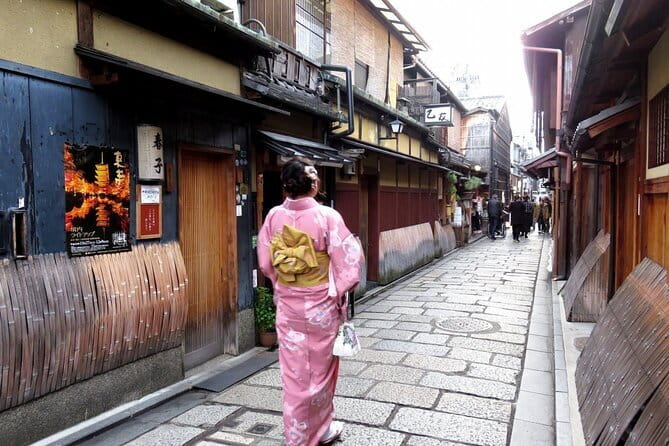
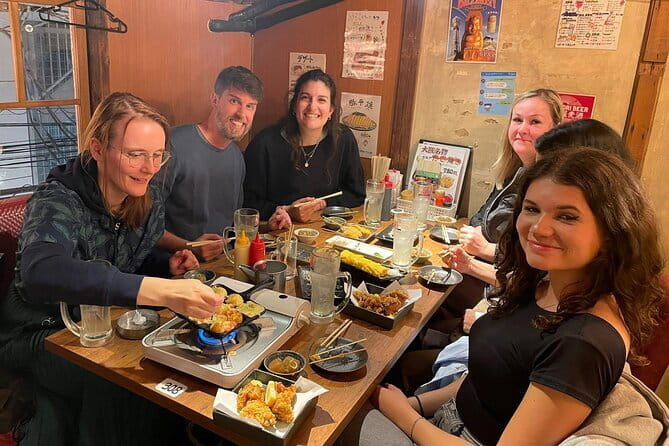
The first main dining stop is a cozy izakaya in Gion. An izakaya is a Japanese drinking and dining place where small dishes are shared with drinks. Here, the food is not treated as a quick sample. You sit down, eat several dishes, and learn what you are trying.
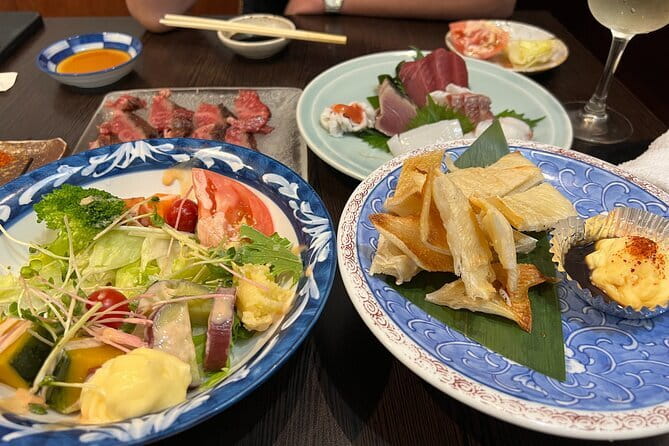
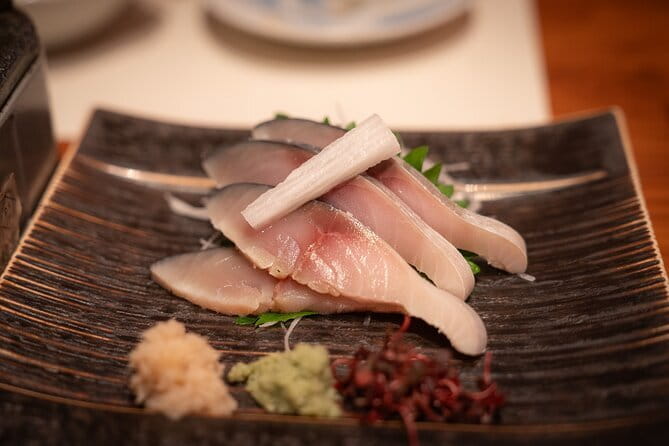
The menu can include karaage, Japanese fried chicken; tempura; sashimi; and other traditional dishes. Across the evening, food has also included tonkatsu, tofu skin, and sting ray. The exact selection may vary, but the range is the point.
I like this format for anyone who wants more than sushi. You get fried food, raw fish, tofu-based food, and regional preparations in one sitting. That variety helps you understand that Japanese cooking is not one narrow category.
The portions add up. Several people describe the food as more than expected, and one person called the meal overwhelming in quantity. Do not arrive after a large dinner. The tour is intended to replace dinner, not sit lightly on top of it.
Your guide also explains dining etiquette and the place of each dish. That help is practical. Instead of guessing how to eat an unfamiliar item or what flavor to expect, you have someone at the table who can explain it in clear English.
Same city, a completely different kind of day:
- PERFECT KYOTO 1-Day Bus Tour
★ 5.0 · 13,518 reviews - Kyoto: Fushimi Inari, Kinkakuji, Bamboo Grove 1 Day Bus Tour
★ 4.8 · 4,316 reviews - Kyoto: Tea Ceremony in a Traditional Tea House in Kiyomizu
★ 4.9 · 3,519 reviews - Kyoto Geisha Walking Tour: Gion District & Hidden Gems
★ 4.7 · 3,273 reviews
Sake and the second restaurant in Pontocho
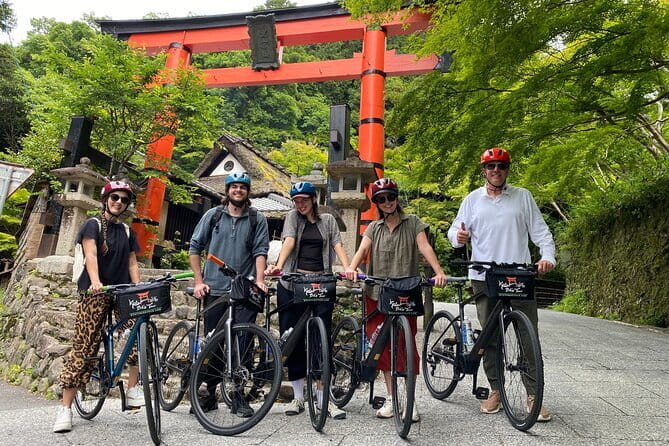
The route then moves toward Pontocho, one of Kyoto’s best-known evening dining areas. The Pontocho walk lasts about 15 minutes before the final dining stop, where you spend roughly an hour with dinner, drinks, and tastings.
The second restaurant has a different feel from the Gion izakaya. That change of setting keeps the night from becoming one long meal in the same room. It also gives your guide another chance to explain local food and drink.
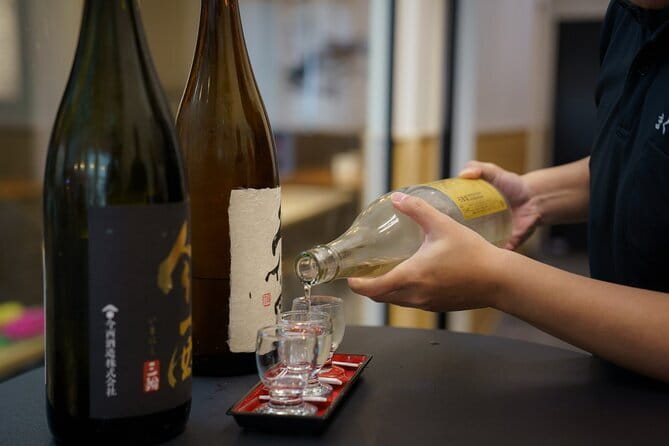
Sake is a major part of this section. Two drinks are included, and the experience may feature several sake varieties with an explanation of how they differ. This is especially useful if sake menus normally leave you guessing. You can taste rather than order blindly.
You may choose alcoholic or non-alcoholic drinks, so the tour is not limited to drinkers. Extra drinks cost more, and the included allowance is two drinks. If you know you will want several beers, cocktails, or sake pours, budget for that separately.
Pontocho itself gives the evening a strong finish. It is a narrow, atmospheric dining district, and walking there after Gion lets you compare the character of two famous Kyoto areas. Still, the tour does not promise a long independent exploration of Pontocho. The walk is about 15 minutes, followed by the final restaurant visit.
Why the guide matters more than the menu
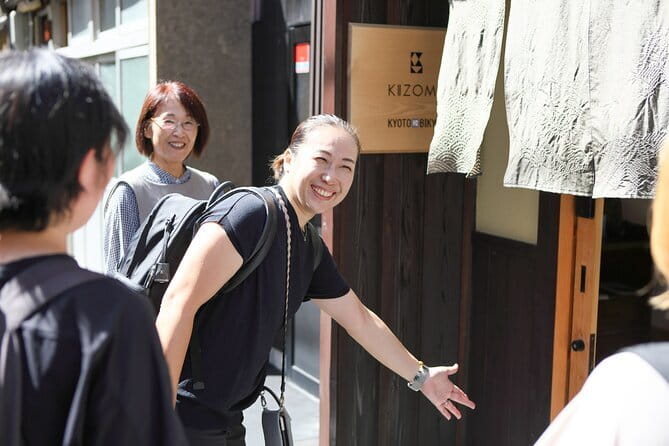
The food is the hook, but the guide can determine whether the evening feels ordinary or special. The strongest pattern in the available feedback is praise for guides who are warm, attentive, and good at explaining both food and local culture.
Tomoko is repeatedly singled out for her friendly manner, strong local explanations, food knowledge, and care with questions. She has also helped visitors understand sake, Kyoto, and geisha culture, and one group appreciated that she wrote down answers to questions for later reference.
Takuma is praised for being welcoming, well prepared, and easy to talk with. He has handled questions about Japan in general as well as food, and he has taken care with allergies. Kohtaro is noted for clear English, historical context, and detailed sake explanations.
Mia has guided groups through difficult weather while keeping the mood upbeat. Minori, Ruko, Yuna, Haruka, Taiga, Masa, Kairuko, and other guides are also named in the feedback, with similar strengths in hospitality, explanation, and conversation.
Guide assignments can change, so you should not book solely because you hope for one particular person. But the repeated emphasis on individual guides tells you something useful: this experience depends heavily on the human touch. Ask questions. Tell your guide what you cannot eat. Let the conversation develop.
A social night for solo visitors and small groups
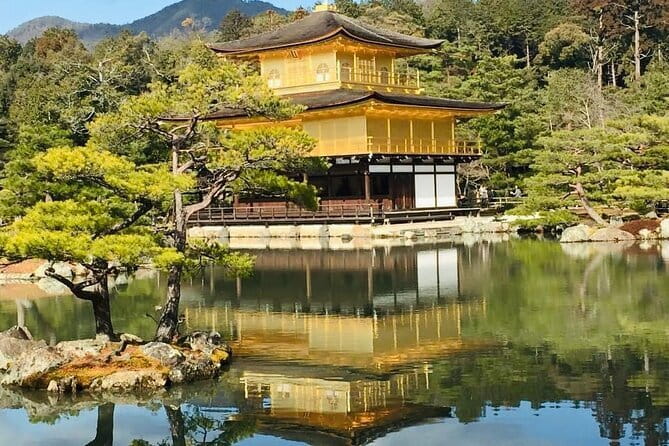
The group limit is eight people. That is small enough for everyone to sit together and speak with the guide, but large enough to create a social dinner rather than a private meal.
This works particularly well for solo visitors. You can meet people from different countries without having to organize a night out yourself. Several groups have included people from three countries, and that mix adds another layer to the evening.
Families can also fit in. One group included seven adults and two small children, and the guide accommodated them. The experience is wheelchair accessible, though the route includes walking through historic districts and dining venues, so it is sensible to confirm any specific mobility needs when booking.
The social format is not perfect for everyone. If you want a quiet, private dinner or a highly personalized food itinerary, a private guide would suit you better. The small-group setup is friendly, but you will be sharing the evening’s pace and menu with other people.
Food variety, allergies, and what to expect
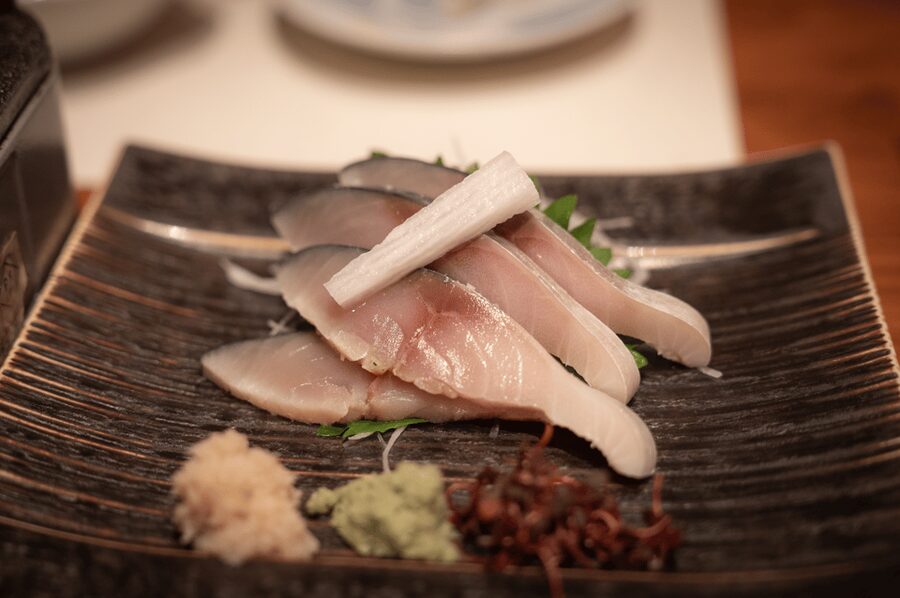
The advertised total is up to 13 dishes. That does not mean 13 full-size entrees. It means a succession of shared Japanese dishes served across the two dining stops. The result is still substantial enough to replace dinner.
The range may include:
- Sashimi
- Tempura
- Karaage
- Tonkatsu
- Tofu skin
- Sting ray
- Other traditional Kyoto and Japanese dishes
The exact menu is not fixed in the information provided, so do not book expecting one guaranteed list. That flexibility is normal for a food tour and may help the restaurants serve what is available.
This format is good for cautious eaters because your guide can explain what arrives and how it fits Japanese food culture. It is also good for adventurous eaters who want a nudge toward dishes they might not order alone.
Allergies should be raised in advance or at the start. A guide has handled allergies carefully, but the supplied details do not promise that every dietary restriction can be met. If you have a serious allergy, ask for confirmation before paying.
Three hours that feel full, not hurried
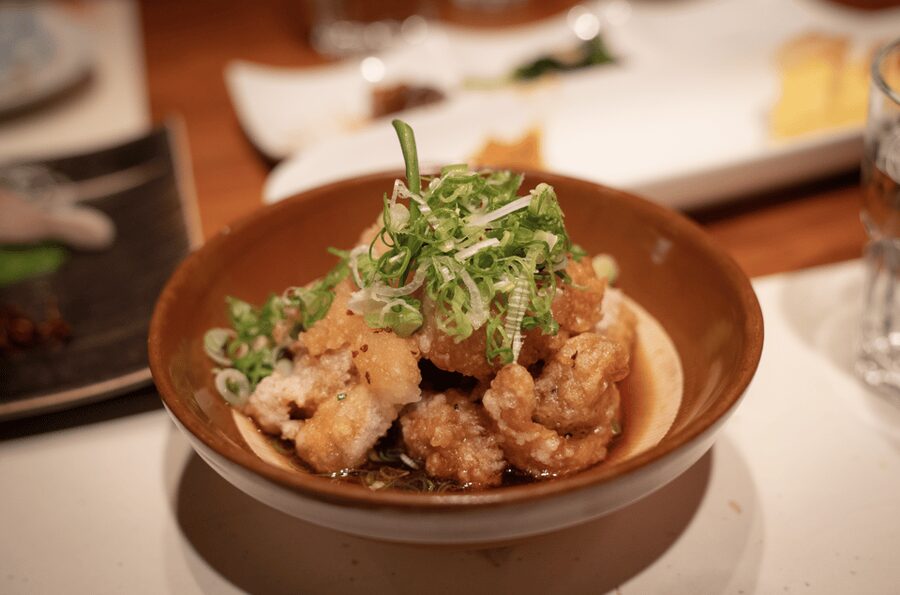
The tour lasts three hours. The rough rhythm is simple: meet in Gion, visit Yasaka Shrine, walk Shirakawa Lane for about 30 minutes, enjoy food in Gion, walk through Pontocho, then spend about an hour at the final restaurant.
The pacing sounds sensible. You get enough walking to see the districts, but most of the evening is spent eating and talking. One group specifically appreciated that the tour was not rushed.
There is a tradeoff. Since the tour includes up to 13 dishes, two drinks, two dining venues, and neighborhood explanations, the schedule is full. You will not have a long stretch for independent shopping, extended photography, or multiple extra food stalls.
The tour starts in the evening, but the exact start time depends on availability. Check the time carefully before booking, especially if you have a temple visit, theater booking, or train departure later that night.
Free cancellation is available up to 24 hours before the start time, and you can reserve now and pay later. Those terms are useful if your Kyoto schedule is still shifting.
Who will get the most from this Kyoto night
I would choose this tour if you want a guided first taste of Kyoto’s food culture, especially if Japanese menus feel unfamiliar. It is also a strong choice for solo visitors, couples, and small groups who want dinner with conversation and a little sightseeing.
It suits you especially well if you:
- Want a full dinner rather than tiny samples
- Enjoy sake or want an introduction to it
- Like history and cultural explanation alongside food
- Want to see both Gion and Pontocho at night
- Prefer a small group with an English-speaking guide
- Would like help trying unfamiliar dishes
I would hesitate if you want a cheap meal, a vegetarian-only itinerary, a private experience, or a long bar-and-street-food crawl. The $82 price is reasonable for the amount included, but it is not the right choice for every eating style.
Should you book the Gion and Pontocho food tour?
Book it if you want Kyoto’s evening districts explained as you eat them. The combination of up to 13 dishes, two drinks, sake guidance, a small group, and walks through Gion and Pontocho gives you more than dinner alone.
The best reason to choose it is access to context. Guides such as Tomoko, Takuma, Mia, and Kohtaro have made the food easier to understand and the neighborhoods more meaningful. You also get a chance to try dishes you may never identify or order by yourself.
Skip it if you are looking for many separate tasting counters or a low-cost night out. For most people who want a social, food-heavy introduction to Kyoto after dark, the format earns its strong 4.9 rating from 235 ratings.
FAQ
Where does the Kyoto food tour meet?
Meet in front of the main entrance of FamilyMart Gion, facing the main street.
How long does the experience last?
The tour lasts three hours. The exact starting time depends on availability.
Which areas does the tour visit?
The route covers Gion, Gion Shirakawa, Yasaka Shrine, and Pontocho.
How many dishes are included?
Food at one restaurant and one izakaya includes up to 13 dishes. The exact dishes may vary.
Are drinks included?
Yes. Two alcoholic or non-alcoholic drinks are included. Extra drinks are not included.
Is sake part of the tour?
Yes. Sake is included in the food and drink experience, and the second restaurant may include a tasting of different sake varieties.
Is the tour conducted in English?
Yes. The live tour guide speaks English.
How large is the group?
The group is limited to eight participants.
Can I cancel or pay later?
You can cancel up to 24 hours in advance for a full refund. You can also reserve now and pay later.
More Food in Kyoto
- Kyoto: Gion Food Tour 13 Dishes at 4 Eateries
★ 5.0 · 408 reviews - Kyoto Foodie Night Tour
★ 5.0 · 376 reviews - Kyoto: Local Food Tasting Tour at the Nishiki Market
★ 4.7 · 135 reviews - Kyoto: Nishiki Market and Depachika Food Tour with a Local
★ 4.7 · 76 reviews
More Food & Drink in Kyoto
- Kyoto Night Foodie Tour in Gion (9+ dishes + 6 Sake tastings)
★ 5.0 · 1,762 reviews - 3-Hour Kyoto Insider Sake Brewery Tour with Tastings & Pairings
★ 5.0 · 917 reviews - Arashiyama Bamboo, Temple, Monkeys, or Secret Sake Brewery
★ 4.8 · 886 reviews - Kyoto: Insider Sake Brewery Tour with Sake and Food Pairing
★ 5.0 · 704 reviews
Just added around Kyoto
- Taste of Nishiki Market Walking Food Tour with Local guide★ 5.0 · 17 reviews
- Kyoto: Sushi Making Class with Sushi Chef★ 4.8 · 64 reviews
- Kyoto: City Secrets eBike Tour★ 4.9 · 196 reviews
- Sacred Pathways: Discover the Philosopher’s Path of Kyoto★ 4.9 · 20 reviews
- Private Tour to Monkey Park and Arashiyama Highlights★ 5.0 · 22 reviews
- Private Nara Tour from Osaka – Meet at Your Hotel★ 5.0 · 22 reviews
- Private Sake Tasting in Central Kyoto with Sake Sommelier★ 5.0 · 13 reviews
- Kyoto : Private Custom Walking Tour With A Local Guide★ 4.6 · 144 reviews
Food Market Tours, compared.
Shinjuku Food Tour (13 Dishes at 4 Local Eateries)
Read our review →
Tokyo Tsukiji Fish Market Food and Culture Walking Tour
Read our review →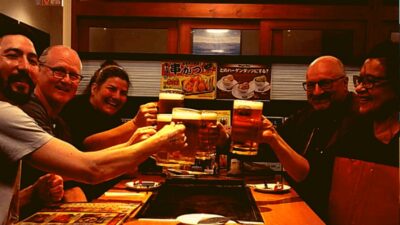
Shinsekai Food Tour with 13-15 Dishes at 5 Eateries
Read our review →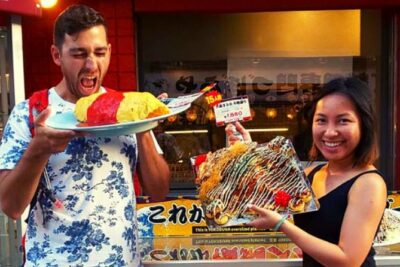
Osaka Food Tour: 13 Dishes at 5 Local Eateries
Read our review →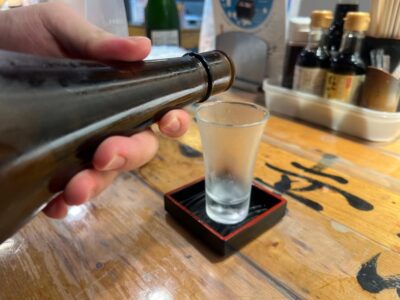
Shinjuku Food Tour (15 Dishes and 4 Eateries)
Read our review →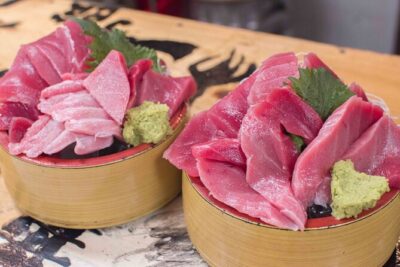
Best of Shinjuku: Izakaya Food Tour (4 Stops, 14+ Tastings)
Read our review →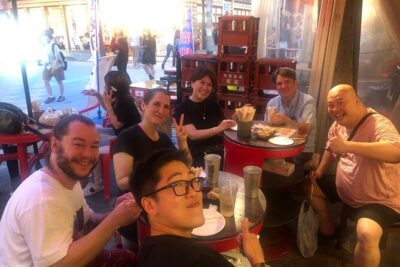
Hungry Osaka Street Food Tour:15 Tastings & 3 Drinks with a Local
Read our review →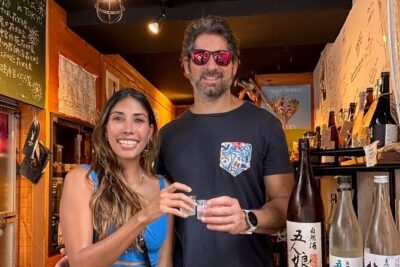
Browse the lists this tour appears in