
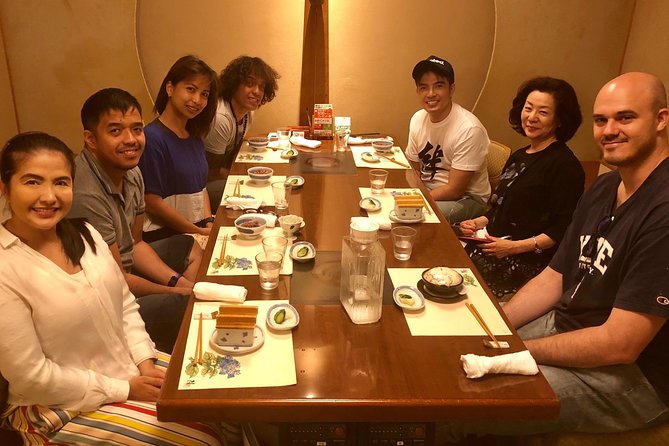
REVIEW · FOOD MARKET TOURS
Kyoto Nishiki Market Tour
Nishiki Market is Kyoto’s food cupboard, but it can feel like a narrow, noisy maze when you first arrive. This three-hour tasting tour gives you a clear path through its 400-year-old stalls, with local food at nearly every turn and a guide to explain what you are eating.
I like the chance to meet family-run vendors, some with traditions stretching back hundreds of years. I also like that the food is not limited to one famous dish: you may taste pickled mountain vegetables, smooth tofu skin, sashimi, dashi, tamagoyaki, tea, sake, and a seasonal lunch. The main drawback is the market itself. Crowds and noise can make it hard to hear the guide, and the narrow walkway leaves little room for a group to gather.
In This Review
- Key points to know before booking
- Why Nishiki Market works best with a guide
- Twelve family shops and a menu of Kyoto flavors
- A closer look at the three-hour route
- The market’s greatest strength is also its main weakness
- Guides Chie and Rosali add the human touch
- Lunch, tea, and the value of the $221 price
- Dietary needs and changing market conditions
- Who will enjoy this Nishiki Market walk?
- Should you book the Kyoto Nishiki Market Tour?
- FAQ
- How long does the Kyoto Nishiki Market Tour last?
- What time does the tour begin?
- Where does the tour start?
- Where does the tour end?
- Is lunch included?
- How many food vendors will I visit?
- Are vegetarian or pescatarian options available?
- How large is the group?
- Can I cancel for a full refund?
Key points to know before booking
- Twelve food stops in about three hours: The route visits up to 12 family-owned shops, with food tastings included according to the planned menu.
- A local guide shapes the experience: Guides such as Chie and Rosali have led groups through the market, answered many questions, and adjusted the pace for older family members.
- Lunch and tea are included: You receive a seasonal, regional lunch and Japanese tea, along with smaller tastings along the way.
- Nishiki is an active market, not a quiet museum: Expect tight spaces, loud surroundings, and occasional difficulty hearing every explanation.
- Small groups help: The maximum group size is 10, though some departures may be much smaller.
- Vegetarian and pescatarian options are available: Tell the operator your needs when booking, since market stops and restaurant arrangements can change.
Why Nishiki Market works best with a guide
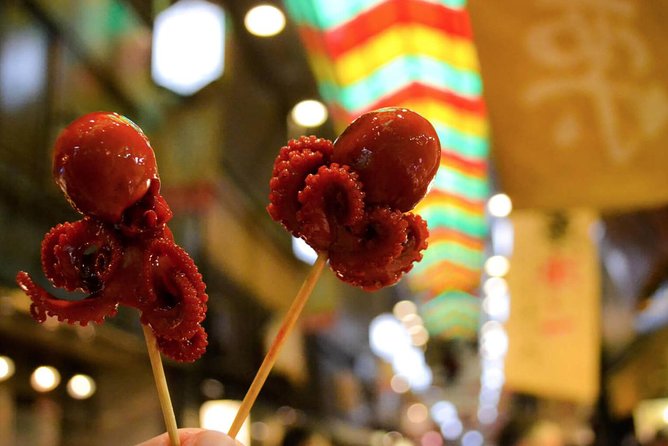
Nishiki Market stretches through central Kyoto as a long covered shopping street lined with food stalls, small shops, restaurants, and specialty vendors. It is often called the Kitchen of Kyoto for good reason. The market sells ingredients used in everyday Japanese cooking, but it also gives you a window into preservation, seasonality, and the careful presentation of food.
You could walk through on your own, but the market does not always explain itself clearly. A jar of pickles, a tray of seafood, or a sheet of pale tofu skin may be familiar to a local and puzzling to you. A guide connects the item to its source, its preparation, and the way it reaches the customer.
That context is the real value here. Instead of simply sampling food, you learn how Kyoto cooks use mountain vegetables, soybeans, rice, tea, stock, and seafood. You also get help choosing what to taste in a place where the sheer number of stalls can become tiring.
The group meets at 10:00 a.m. in central Kyoto, near the Lacoste Kyoto Store at 376 Naramonochō. From there, the route moves into Nishiki Market and finishes in the Karasuma area near Umenohana and Karasuma Station. No hotel pickup is provided, and transportation costs are not included, so you need to reach the starting point on your own.
More Food Market Tours in Kyoto
- Nishiki Market Brunch Walking Tour (7 Tastings + Brunch)
★ 5.0 · 1,355 reviews - Kimono Tea Ceremony at Kyoto Maikoya, NISHIKI
★ 5.0 · 911 reviews - Kyoto Nishiki Market Food and Culture Walking Tour
★ 5.0 · 412 reviews
Twelve family shops and a menu of Kyoto flavors
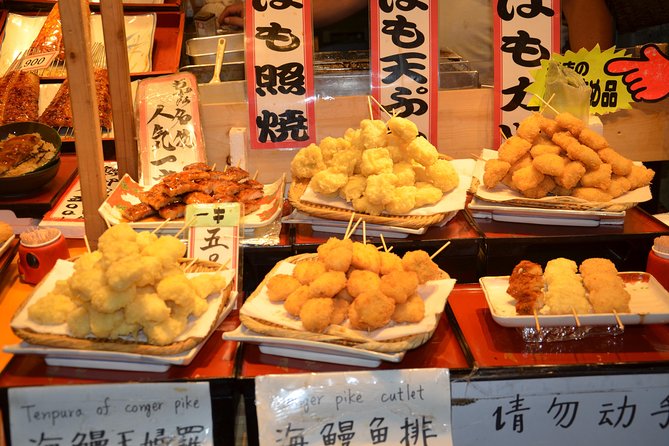
The food is the heart of this tour. The exact stops can change because of shop schedules, holidays, weather, and other conditions, but the plan is to visit around 10 to 12 market vendors and taste a broad range of Kyoto specialties.
You might begin with tsukemono, Japanese pickled vegetables. These are not simply side dishes added for color. Pickling preserves produce from the surrounding mountains and gives meals a sharp, salty, sour, or sweet counterpoint. Your guide explains how the vegetables are prepared and why preserved food matters in Japanese cooking.
Another possible tasting is yuuba, the delicate skin that forms on the surface of simmering soy milk. It is sometimes described here as sashimi tofu, a name that hints at its smooth texture and careful preparation. The dish is closely tied to Kyoto’s temple cuisine and the quality of the water used in tofu production.
Seafood may appear in several forms. You could try sashimi, fresh seafood, or a market preparation ready to eat. The tour description places particular emphasis on very smooth sashimi, though the exact fish depends on availability. This is one reason the menu is seasonal rather than fixed.
You may also sample dashi, the stock that forms the base of many Japanese dishes. A small taste can seem simple, but it helps you recognize the savory flavor behind soups, sauces, and simmered foods. Learning about dashi gives you a better understanding of Japanese meals long after the tour ends.
Tamagoyaki, the rolled Japanese omelet, offers a different lesson. Its soft layers and mild sweetness show how a familiar ingredient can become a carefully made specialty. Tea, matcha, rice crackers, sparkling sake, and other foods may round out the route.
The important point is variety. This is not a single restaurant meal with a few side samples. You move between vendors, tasting items connected to local agriculture, preservation, seafood, soy, tea, and prepared foods.
A closer look at the three-hour route
The first five minutes are set aside for meeting your guide and group. This sounds minor, but it matters in central Kyoto, where busy streets and multiple storefronts can cause confusion. Arrive with enough time to find the meeting point without rushing.
The main market visit lasts about three hours. You walk from shop to shop while the guide introduces ingredients, explains production methods, and helps the group sample the food. The pace is shaped by the market, so this is not a straight march from one fixed appointment to the next.
The guide may explain a food from harvest to sale, then discuss how it is preserved or served. That farm-to-plate approach gives the tasting more meaning. You are not just told that a pickle is traditional. You learn why it exists, where the vegetables come from, and how it fits into a meal.
The route details also name Nishiki Tenmangu Shrine and Rokkakudo Temple. These are useful cultural reference points in the market area, though the supplied schedule does not clearly promise a formal stop at each one. Fushimi Inari Taisha also appears in the broader stop information, but you should not assume this food tour includes a visit there. Fushimi Inari is a separate major sight in Kyoto and is not something that can normally be added casually to a three-hour market walk.
The advertised ending is in the Karasuma area, near Umenohana and Karasuma Station. This is practical if you want to continue sightseeing in central Kyoto, shop, or make your way back by train. Since the tour ends away from the starting point, pay attention to the final location when planning the rest of your day.
The market’s greatest strength is also its main weakness
Nishiki feels authentic because it is a working food market rather than a staged attraction. Vendors sell products for local use, and many shops are family owned. Some have been operating for hundreds of years, giving the market a strong link to Kyoto’s food traditions.
That setting also creates practical challenges. The passage is narrow, and shoppers continue moving while your group stops to listen and eat. At busy times, it may be difficult to form a neat circle around a stall. Noise can also make the guide hard to hear.
I would not choose this tour if you want a slow, silent tasting in a private room. I would choose it if you want direct contact with the market and can accept a little disorder. Wear good walking shoes, keep your belongings close, and stay near the guide when the group moves.
The maximum group size is 10, which is a reasonable limit for a tight market. A smaller group can be much easier to manage. One departure had only two participants, while another group had four, but you should treat that as a possibility rather than a promise.
Same city, a completely different kind of day:
- PERFECT KYOTO 1-Day Bus Tour
★ 5.0 · 13,518 reviews - Kyoto: Fushimi Inari, Kinkakuji, Bamboo Grove 1 Day Bus Tour
★ 4.8 · 4,316 reviews - Kyoto: Tea Ceremony in a Traditional Tea House in Kiyomizu
★ 4.9 · 3,519 reviews - Kyoto Geisha Walking Tour: Gion District & Hidden Gems
★ 4.7 · 3,273 reviews
Guides Chie and Rosali add the human touch
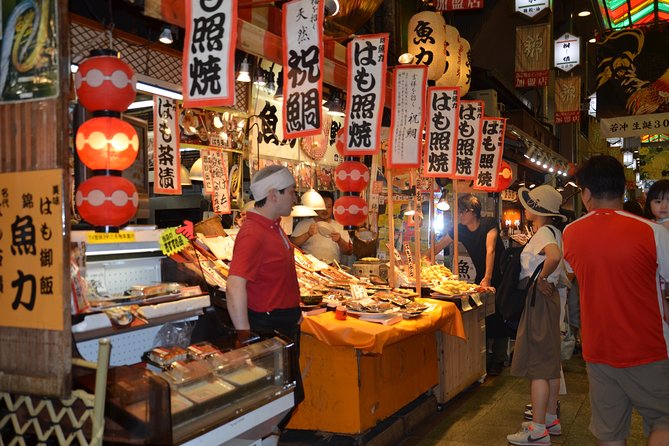
The guide can make or break a market tour. The most useful qualities here are clear English, patience, and the ability to explain unfamiliar food without turning the walk into a lecture.
Chie has led groups through the market and introduced them to the owners of several stalls. She is also associated with an easy pace that worked for a family traveling with 66-year-old parents. That matters because the tour involves standing, walking, tasting, and moving through crowded areas for roughly three hours.
Rosali has also guided this route. A small group with Rosali received a full market walk and a substantial Japanese lunch, including beef, while rice crackers became a favorite souvenir purchase. The guide assigned to your date may be different, but these examples show the kind of personal attention the small-group format can allow.
You should feel free to ask questions. The tour is designed for that. Ask about ingredients, preparation, local eating customs, or the difference between a market specialty and a national Japanese classic. The guide is there to translate not only language, but also food culture.
For a solo booking, contact the operator by email before reserving. Children must be with an adult, and a passport information copy is required for children age 10 and above. The tour is family-friendly, but the market’s narrow passage and standing time may still be tiring for very young children.
Lunch, tea, and the value of the $221 price
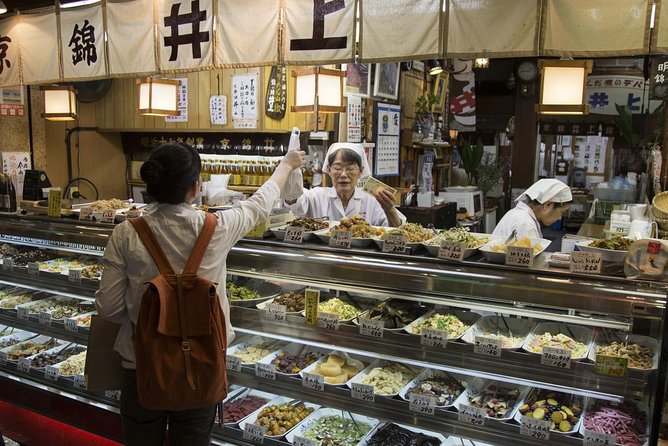
The price is $221 per person, which places this well above a casual self-guided visit to Nishiki Market. You are paying for more than the individual bites. The fee covers the guide, the planning, the introductions to multiple vendors, Japanese tea, and a seasonal regional lunch.
The included lunch is important. Without it, you might spend the afternoon buying small portions and still need to find a proper meal. Here, the tasting builds toward a more complete Japanese eating experience. The exact restaurant or menu may change, and an equivalent substitute is used if a regular restaurant is unavailable.
Is it good value? For someone who already understands Japanese food and enjoys exploring independently, probably not. You can enter Nishiki freely and choose your own snacks. You will pay less, move at your own pace, and stop whenever you like.
For a first visit to Kyoto, the price is easier to justify. You receive a guided introduction to a confusing market, a range of regional flavors, and explanations that are difficult to get from signs alone. A maximum of 10 people also keeps the experience more personal than a large coach-style food walk.
The tour is best value if you arrive hungry and treat the food tastings as a meal, not as a few token samples. The itinerary includes lunch, but you should still avoid a heavy breakfast. Bring water if you like, though drinks and food outside the stated inclusions are your own responsibility.
Dietary needs and changing market conditions
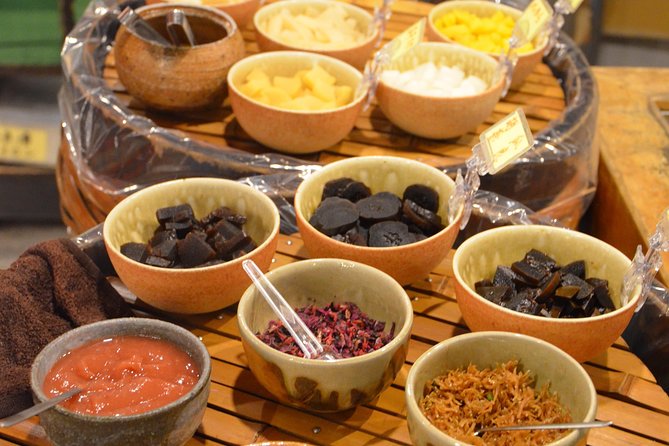
Vegetarian and pescatarian options are available. You should communicate your needs when booking because the vendors and restaurant arrangements can change. The supplied information does not promise a fully vegan menu, halal menu, kosher menu, or allergy-free kitchen, so ask the operator directly if you have strict restrictions.
The minimum drinking age is 21. Sake may be included as part of the tastings, including sparkling sake served from the tap, but alcohol is not suitable for everyone. If you do not drink, clarify your preference with the guide.
Food stops can change because of public holidays, restaurant schedules, weather, or other unforeseen conditions. That flexibility is normal for a working market tour. It also means you should focus on the overall food education rather than expecting every single named item on a fixed menu.
The activity requires good weather. If poor weather cancels it, you can receive a different date or a full refund. The same applies if the minimum number of participants is not reached and the operator cancels the departure.
Who will enjoy this Nishiki Market walk?
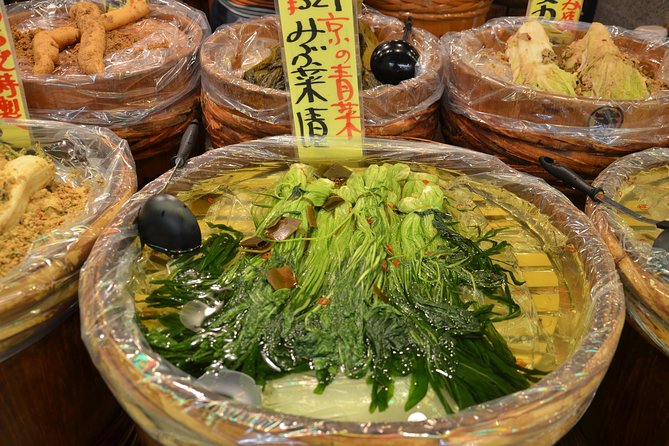
I would recommend this tour to first-time visitors who want a guided introduction to Kyoto food. It is also a good fit for people who like markets but do not want to guess what to buy, families with older children, and anyone curious about the connection between local ingredients and Japanese culture.
It works especially well for people who enjoy tasting many small portions. You will move around rather than sit in one place, and the experience depends on your willingness to try unfamiliar foods.
I would be more cautious if you dislike crowds, have difficulty standing for long periods, or prefer a precise schedule. The tour is active, and the market can be loud. A moderate level of physical fitness is recommended.
Book ahead if this is important to your Kyoto plans. It is booked, on average, about 28 days in advance, though same-day booking is available. Free cancellation applies when you cancel at least 24 hours before the start time. Changes made within 24 hours are not accepted for a refund.
Should you book the Kyoto Nishiki Market Tour?
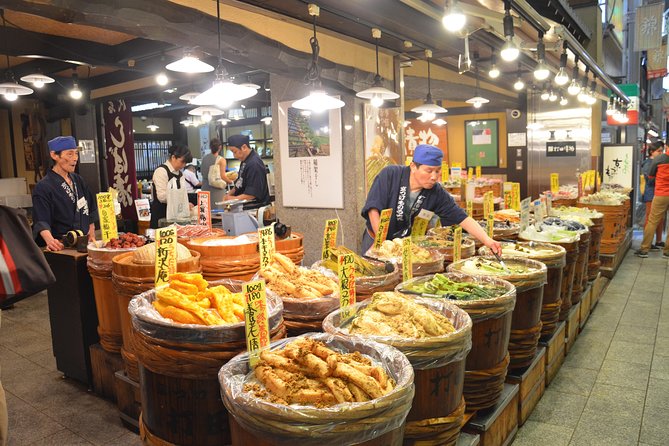
Book it if you want the market translated into food, history, and practical context, with lunch included and a guide who can handle questions. The strongest reasons are the range of tastings, access to family-run vendors, and the chance to understand foods such as yuuba, tsukemono, dashi, and tamagoyaki in their local setting.
Skip it if you want a cheap snack crawl or a quiet meal. Nishiki is free to explore, and independent visitors can spend far less. But if the $221 price fits your budget, this tour gives you a structured way to taste the Kitchen of Kyoto without having to make every choice yourself.
FAQ
How long does the Kyoto Nishiki Market Tour last?
The tour lasts approximately 3 hours and 5 minutes, with about three hours spent exploring the market and tasting food.
What time does the tour begin?
The scheduled start time is 10:00 a.m.
Where does the tour start?
The meeting point is 376 Naramonochō, Shimogyo Ward, Kyoto, 600-8004, Japan, near the Lacoste Kyoto Store.
Where does the tour end?
The tour ends in the Karasuma area, near Karasuma Station at Naginatabokocho, Shimogyo Ward, Kyoto, 600-8008, Japan.
Is lunch included?
Yes. A seasonal and regional lunch is included, along with Japanese tea and the listed market tastings.
How many food vendors will I visit?
The experience includes visits to 10 market vendors, with the wider description stating that you may visit 12 family-owned shops. The exact number can change.
Are vegetarian or pescatarian options available?
Yes. The tour is listed as vegetarian-friendly and pescatarian. Contact the operator about specific dietary needs because food stops can change.
How large is the group?
The maximum group size is 10 people. Smaller groups are possible, including departures with only a few participants.
Can I cancel for a full refund?
Yes, if you cancel at least 24 hours before the local start time. Cancellations or changes made less than 24 hours before departure are not refunded. If poor weather or insufficient bookings cause the operator to cancel, you are offered another date or a full refund.
More Shopping Tours in Kyoto
- Nishiki Market Lunch Tour
★ 5.0 · 47 reviews - Nishiki Market Food Tour with Cooking Class
★ 4.9 · 42 reviews - Nishiki Market Walking Food Tour with Local guide
★ 4.5 · 29 reviews - Golden Pavilion, Nijo Castle, & Nishiki Market Half day tour
★ 5.0 · 29 reviews
More Markets in Kyoto
- Kyoto: Nishiki Market Tea Ceremony with Koto Performance
★ 4.8 · 294 reviews - Kyoto: Local Food Tasting Tour at the Nishiki Market
★ 4.7 · 135 reviews - Kyoto: Nishiki Market and Depachika Food Tour with a Local
★ 4.7 · 76 reviews - Kyoto: Nishiki Market Tour with a Local Foodie & Tastings
★ 4.5 · 67 reviews
Just added around Kyoto
- Private Guided Traditional Buddhist Cooking in Japan★ 5.0 · 16 reviews
- Kyoto: Gion Geisha District & Sake-in-Hand Walking Tour★ 5.0 · 37 reviews
- Your Private Vacation Photography Session In Kyoto★ 5.0 · 110 reviews
- Kyoto: Zen Meditation at a Private Temple with a Monk★ 5.0 · 25 reviews
- Traditional Japanese Washi Papermaking- Kyoto morning★ 5.0 · 77 reviews
- Kyoto Wagashi(Japanese sweets) Cooking Class near Fushimiinari★ 5.0 · 60 reviews
- Private Pewter Sake Cup Experience with a Kyoto Artisan★ 5.0 · 31 reviews
- Kyoto Private 6 hour Tour: English Speaking Driver Only, No Guide★ 5.0 · 88 reviews
Food Market Tours, compared.
Shinjuku Food Tour (13 Dishes at 4 Local Eateries)
Read our review →
Tokyo Tsukiji Fish Market Food and Culture Walking Tour
Read our review →
Shinsekai Food Tour with 13-15 Dishes at 5 Eateries
Read our review →
Osaka Food Tour: 13 Dishes at 5 Local Eateries
Read our review →
Shinjuku Food Tour (15 Dishes and 4 Eateries)
Read our review →
Best of Shinjuku: Izakaya Food Tour (4 Stops, 14+ Tastings)
Read our review →
Hungry Osaka Street Food Tour:15 Tastings & 3 Drinks with a Local
Read our review →
Browse the lists this tour appears in