
REVIEW · FOOD MARKET TOURS
Kyoto: Nishiki Market Tour with a Local Foodie & Tastings
Kyoto’s Nishiki Market is easiest to enjoy when someone helps you read the stalls. This 90-minute walk begins at Nishiki Tenmangu Shrine, passes through Teramachi’s covered shopping arcade, and ends with a guided sampling of Kyoto foods, from pickles and tofu to sweets, seafood, sake, and unusual snacks.
I like two things here: you get cultural context before eating, and the guide can point out foods you might skip on your own. Guides such as Kaito and Akino have helped visitors try unfamiliar dishes, choose sake, and even find good Japanese knives.
The main limitation is the short running time. Fifty minutes in Nishiki Market goes quickly, and the tour cannot handle food restrictions caused by allergies, religion, or other dietary needs. Drinks are also not included, so the $67 price works best if you value guidance and tastings rather than a long meal.
In This Review
- Key points at a glance
- Why this Kyoto food walk works
- Meeting at Nishiki Tenmangu Shrine
- Teramachi’s 20-minute shopping stop
- Entering Nishiki Market for the main tasting session
- What the guide adds to the food
- Is $67 a fair price?
- Who should book this experience?
- Practical details that shape the day
- My call: a smart first taste of Nishiki
- FAQ
- Where does the Nishiki Market tour begin?
- Where does the tour finish?
- How long does the experience last?
- What is included in the price?
- Which languages are available?
- Can the tour accommodate food allergies or religious food restrictions?
- Is the tour wheelchair accessible?
Key points at a glance
- A shrine-to-market route: Start with 20 minutes at Nishiki Tenmangu before food takes over.
- Teramachi adds shopping context: Spend 20 minutes browsing local goods in a covered arcade beside the market.
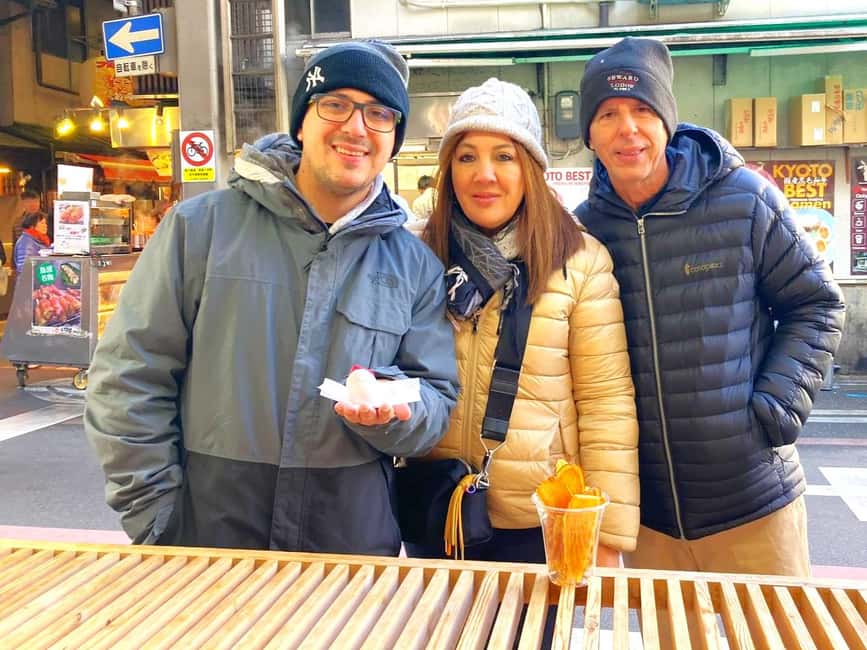
- Tastings are the heart of the tour: The final 50 minutes focus on regional snacks, seafood, sweets, pickles, tofu, and other Kyoto foods.
- The guide shapes the experience: Kaito, Akino, Hiro, Teppei, Juliette, and others have been praised for clear explanations and easy conversation.
- Good for curious eaters: You may try items such as fish pancakes with bean paste, sesame croquettes with cheese and curry, smoky tea, plum wine, and sake.
- A practical format: English and Japanese tours are available, with private and small-group options, wheelchair access, and free cancellation up to 24 hours before the start.
Why this Kyoto food walk works
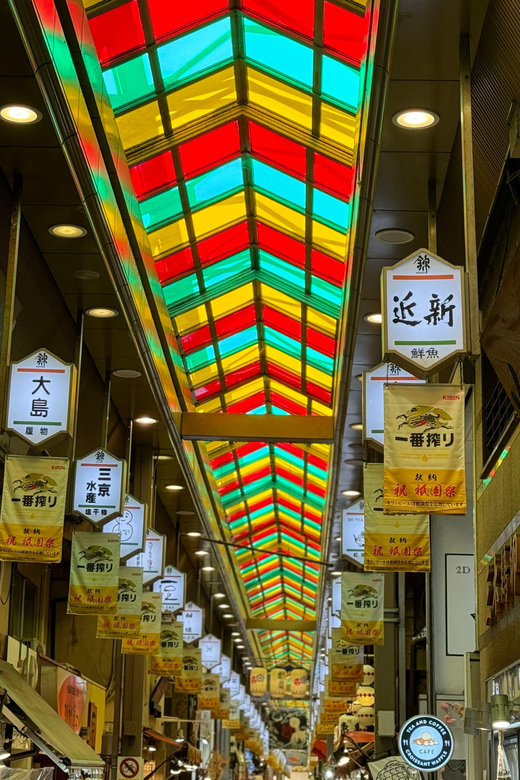
Nishiki Market is more than a row of snack counters. It is a long shopping street where food, craft, custom, and everyday Kyoto life meet. The market stretches for about 400 meters, and its narrow passage can feel like a lot to take in at once.
That is where a local guide earns the fee. You are not simply handed a list of stalls. You get help understanding what you are seeing, how ingredients are used, and which foods are worth trying during your stay. The guide also gives you a route through the nearby shrine and shopping arcade, so the tour has more shape than a quick food stop.
I especially like the order. Starting at Nishiki Tenmangu gives you a quiet cultural introduction. Teramachi then shifts the mood toward shopping and local goods. By the time you reach Nishiki Market, you have some idea of the neighborhood and its traditions rather than arriving hungry and disoriented.
The overall rating is 4.5 from 67 reviews, with repeated praise for the guides’ explanations, humor, food suggestions, and willingness to answer questions. That pattern matters more than any single comment. The food is important, but the human connection appears to be the strongest part of the experience.
More Food Market Tours in Kyoto
- Nishiki Market Brunch Walking Tour (7 Tastings + Brunch)
★ 5.0 · 1,355 reviews - Kimono Tea Ceremony at Kyoto Maikoya, NISHIKI
★ 5.0 · 911 reviews - Kyoto Nishiki Market Food and Culture Walking Tour
★ 5.0 · 412 reviews
Meeting at Nishiki Tenmangu Shrine
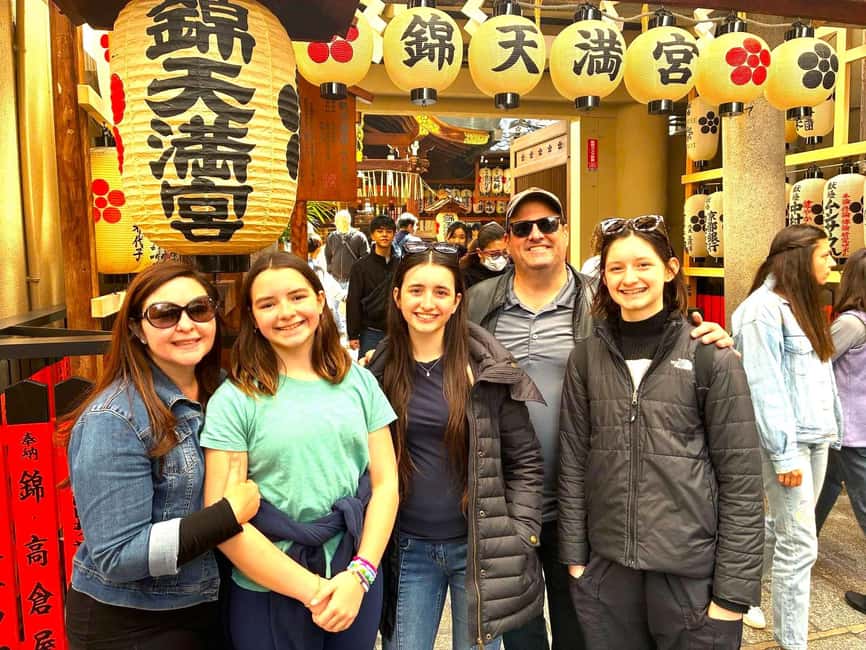
You meet in front of the torii gate at Nishiki Tenmangu Shrine. Look for a guide holding a yellow DeepExperience sign. This is a useful meeting point because it is specific and easy to identify, but give yourself enough time to find the correct entrance in the busy shopping area.
The shrine is dedicated to Tenjin, a deity associated with learning and scholarship. The first 20 minutes are set aside for a guided visit, giving you a look at a place of worship before the market portion begins.
This stop adds meaning to the neighborhood. You learn that Nishiki is not only about buying food and souvenirs. It is also part of a traditional Kyoto setting where religious sites, shops, and daily business sit close together.
Do not expect a long temple tour. Twenty minutes is enough for an introduction, a few stories, and a chance to notice the shrine’s setting. If you want an extended lesson in Shinto architecture or religious practice, this tour will feel brief. If you want a little cultural grounding before tasting food, the timing works well.
The guides bring different personalities to this opening. Akino has been praised for explaining local traditions, while Teppei was described as warm and clear when discussing Japanese culture. Kaito’s tours have included language tips and broader suggestions for other parts of Japan. The exact style depends on who leads your group, but the format allows room for questions.
Teramachi’s 20-minute shopping stop
From the shrine, the group moves into Teramachi Street Shopping District. This covered arcade sits next to Nishiki Market and gives you a look at the neighborhood beyond food.
The 20-minute stop is for guided browsing and shopping. You can expect local goods, small shops, and a more general sense of Kyoto commerce. It is a helpful bridge between the shrine and the market because it shows how the area serves both local shoppers and people looking for traditional products.
This part is also where your guide can help you think about purchases. One visitor received help choosing high-quality sake and Japanese knives. That does not mean every tour includes a dedicated shopping session, but it shows the practical value of having someone who can explain what you are looking at.
The time is limited, so I would not plan to make a major purchase that needs long comparison. Think of Teramachi as a preview. If a shop catches your eye, note its location and return later after the tour.
The arcade is especially useful if your weather is poor, since much of the route is under cover. The tour is listed as wheelchair accessible, though narrow market passages and shop layouts can still make movement slower. If mobility is a major concern, confirm the exact arrangements when booking.
Entering Nishiki Market for the main tasting session
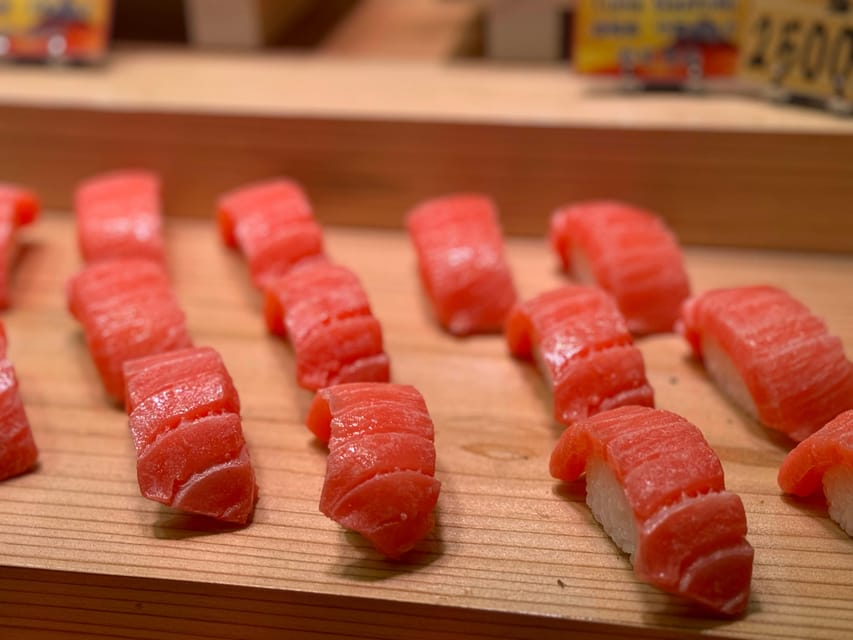
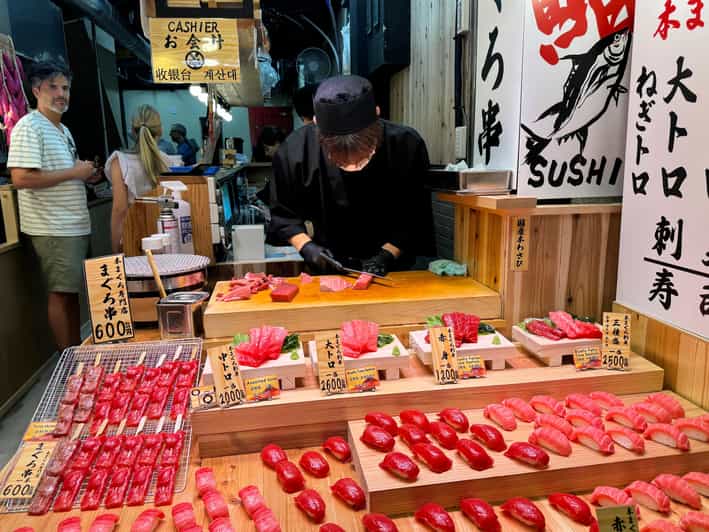
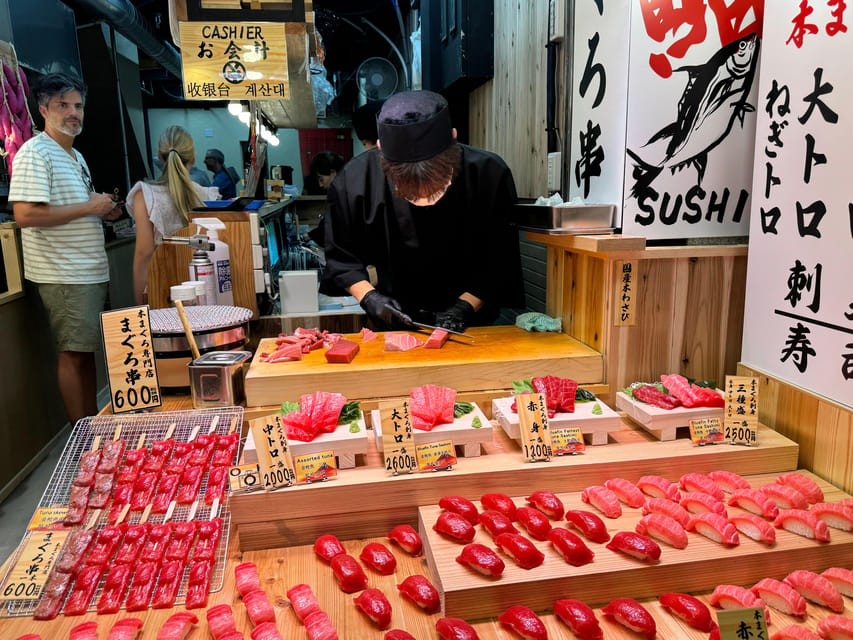
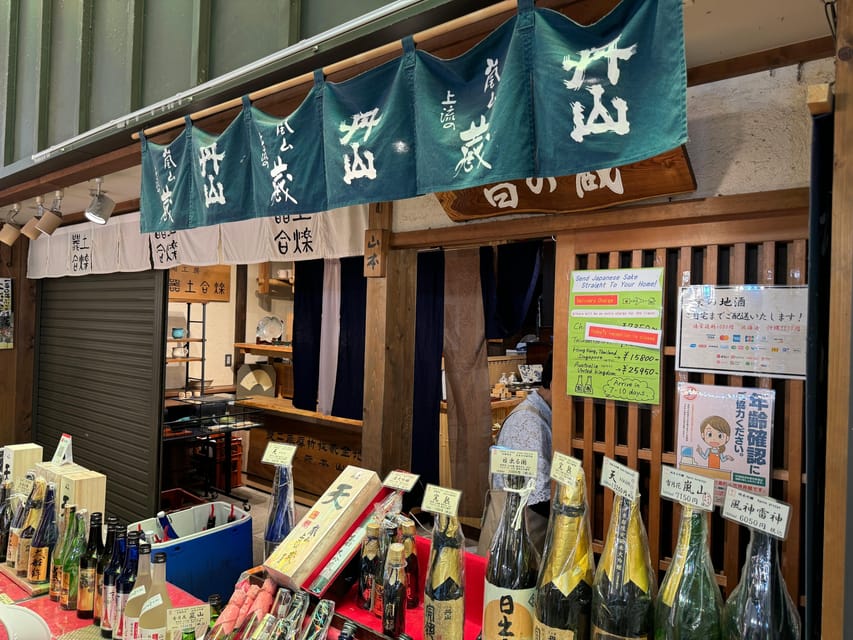
The final 50 minutes take place at Nishiki Market, where the food portion begins in earnest. The market’s long run of stalls includes fresh seafood, produce, traditional sweets, snacks, pickles, tofu, and other regional foods.
Your guide leads the way and explains what you are seeing. That assistance matters because some foods are easy to misunderstand from appearance alone. Ingredients, textures, preparation methods, and local customs may not be obvious if you cannot read Japanese or do not know how a stall works.
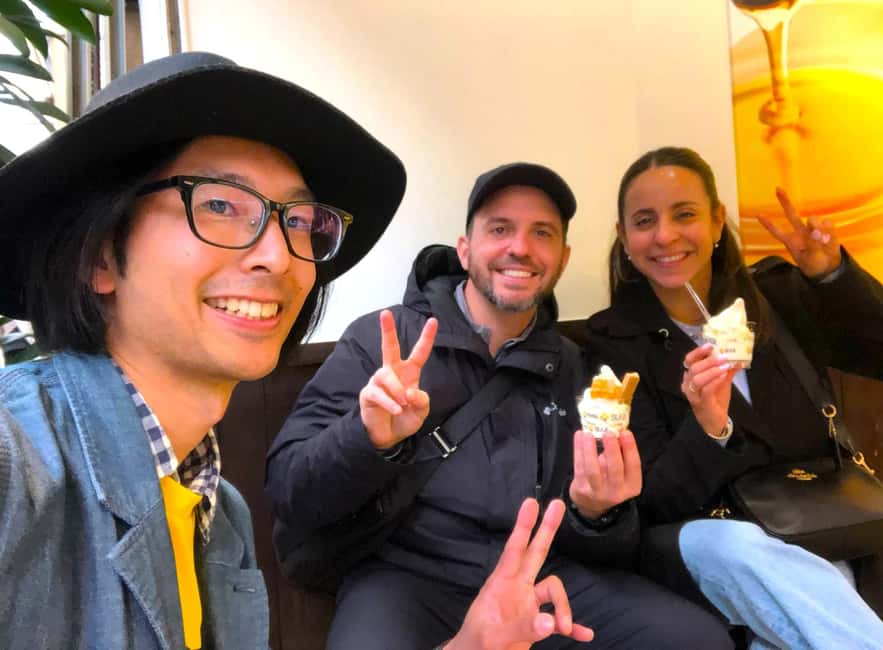
The tastings are included in the $67 price. Exact items can vary, but the reported selection has included fish pancakes with bean paste, sesame croquettes filled with cheese and curry, smoky tea, sweet plum wine, sake, sweets, tofu, pickles, and fresh fish preparations.
That range is one of the tour’s best features. You are not simply eating the same kind of snack several times. The food moves across sweet, savory, fermented, smoky, crisp, and seafood flavors. Some bites may be familiar, while others are the sort of thing you might not order without a guide nearby.
One particularly memorable stop involved a backyard kitchen attached to a fresh fish counter. That kind of setting is valuable because it gives you a glimpse of how market food is handled beyond the public-facing stall. The tour can also point you toward foods worth returning for later, once you have more time.
The food should be viewed as a tasting route, not a guaranteed full lunch. One tour included a lunch stop at a local restaurant just outside the market, but the standard details promise tastings rather than a restaurant meal. If you need a substantial lunch, plan to eat before or after, or confirm the specific arrangement for your booking.
Same city, a completely different kind of day:
- PERFECT KYOTO 1-Day Bus Tour
★ 5.0 · 13,518 reviews - Kyoto: Fushimi Inari, Kinkakuji, Bamboo Grove 1 Day Bus Tour
★ 4.8 · 4,316 reviews - Kyoto: Tea Ceremony in a Traditional Tea House in Kiyomizu
★ 4.9 · 3,519 reviews - Kyoto Geisha Walking Tour: Gion District & Hidden Gems
★ 4.7 · 3,273 reviews
What the guide adds to the food
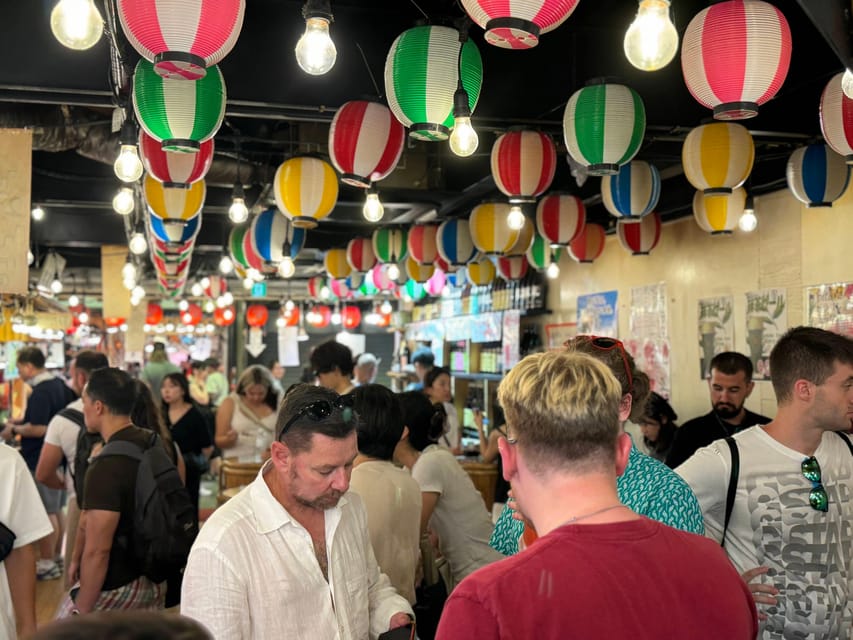
A market tour rises or falls on its guide. Here, the strongest part is the explanation that comes with each bite.
Kaito has been singled out for his humor, language skills, food suggestions, and broad understanding of Japanese cuisine. He has also helped people with plans for Osaka, which can be useful if Kyoto is only one stop on a longer trip. Akino has been praised for moving smoothly through the crowded rows and helping with both food choices and shopping.
Other guides bring their own strengths. Hiro has been described as funny and entertaining, while Juliette received praise for answering questions and giving useful food recommendations. These details point to a tour that works best when you treat it as a conversation, not a lecture.
Ask questions as you go. You can ask how an ingredient is used, what to buy for a souvenir, how to thank a food seller in Japanese, or which items are worth seeking out later. The guides have handled questions about food, language, culture, and other destinations, so you should not feel limited to a preset script.
The most useful guidance often comes in small moments. A food may look ordinary until you learn why it matters. A drink may seem expensive until you understand its quality. A snack may be easy to ignore until the guide explains how locals eat it. That interpretation is what turns a market visit into a lesson you can use for the rest of your trip.
Is $67 a fair price?
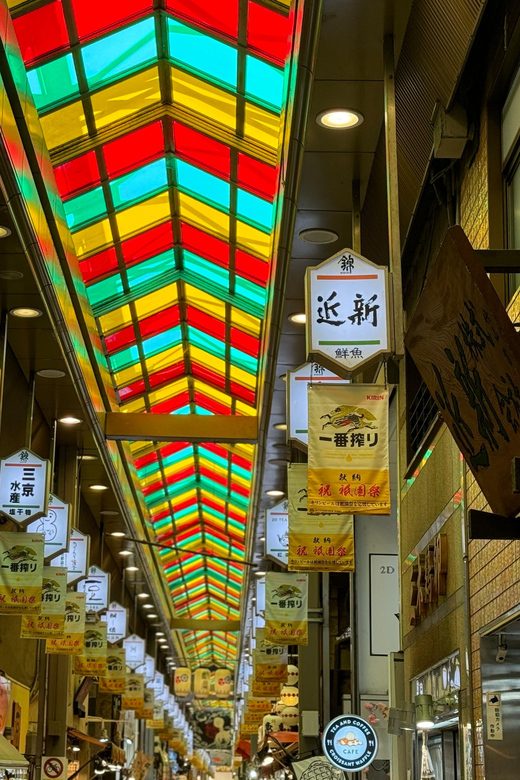
At $67 per person, this is not the cheapest way to walk through Nishiki Market. You can enter the market without a ticket, browse freely, and buy a few snacks on your own.
The value comes from the tasting costs, the guide’s time, and the filtering. Instead of spending your first visit guessing which stalls are worthwhile, you receive a planned introduction with several samples. If you are nervous about ordering unfamiliar food, that support can easily make the price feel reasonable.
The tour also covers three different experiences in 90 minutes: a shrine visit, Teramachi shopping, and Nishiki Market tastings. That makes it a good use of a first afternoon in the area, particularly if you want a quick orientation before exploring independently.
Still, the price is harder to justify if you already know Nishiki Market well, have strict food restrictions, or prefer to choose every dish yourself. Drinks are not included, and the tasting list is not fixed in the information provided. You are paying for access to local judgment and conversation, not a guaranteed set menu.
Private and small-group options are available. A smaller format may be worthwhile if you want to ask many questions, move at your own pace, or focus on particular foods. It may cost more depending on the booking setup, so check the available option before committing.
Who should book this experience?
I would recommend this tour to first-time visitors to Kyoto who want an easy introduction to Japanese food. It suits couples, families, and small groups who enjoy tasting several things without having to research every stall.
It is also a good fit if you want cultural information but do not want to spend half a day in a museum. The shrine and Teramachi sections give the walk some historical and social context, while the market keeps the pace active.
English speakers have particular reason to consider it. The listed languages are English and Japanese, and several guides have been praised for explaining food and customs clearly. That can make a real difference when labels, ingredients, and eating habits are unfamiliar.
You should think twice if you have allergies, religious food rules, or other restrictions. The experience specifically cannot accommodate those needs. You may still enjoy the shrine and shopping arcade, but the central tasting portion would be difficult to use fully.
It may also be a weak choice for someone seeking an in-depth culinary class. You will learn about foods and ingredients, but the format is a guided market walk, not a cooking lesson or a long sit-down meal.
Practical details that shape the day
The tour lasts 90 minutes and finishes at the west entrance of Nishiki Market. That ending is convenient because you can continue exploring the market afterward, return to a shop in Teramachi, or make your own lunch plans nearby.
Meet at the torii gate of Nishiki Tenmangu Shrine, with the guide identified by a yellow DeepExperience sign. Check the starting time when booking, since availability varies.
English and Japanese live guides are available. Private and small-group formats can be selected, and the activity is listed as wheelchair accessible. The market can be tight and active, so accessibility does not necessarily mean every stall will be equally easy to enter.
You can cancel up to 24 hours before the start for a full refund. The reserve-now, pay-later option also helps if your Kyoto schedule is still changing. These policies are useful for a trip with several moving parts, though you should still check the final booking terms.
Bring an appetite, but do not assume the tastings replace a full meal. Since beverages are not included, carry money for a drink or any extra food and shopping purchases. If sake, plum wine, or another drink is offered during the route, remember that the listed inclusions cover tastings, while beverages are excluded.
My call: a smart first taste of Nishiki
Book this tour if you want more than a quick look at Kyoto’s famous food street. The best reason to go is the combination of many small tastings and useful local explanation. You may try foods you would otherwise pass by, learn how the ingredients fit into Japanese eating habits, and leave with ideas for returning on your own.
The shrine and Teramachi stops also give the experience a better rhythm than a food-only walk. At $67, it is good value for curious eaters who appreciate help with ordering and cultural questions.
Skip it if you need strict dietary control, want a large restaurant meal, or prefer unstructured browsing. For everyone else, this is a friendly, compact way to get your bearings in one of Kyoto’s most rewarding food districts.
FAQ
Where does the Nishiki Market tour begin?
The tour begins in front of the torii gate at Nishiki Tenmangu Shrine. Your guide will hold a yellow sign with the DeepExperience logo.
Where does the tour finish?
The tour finishes at the west entrance of Nishiki Market.
How long does the experience last?
The tour lasts 90 minutes. The planned route includes 20 minutes at Nishiki Tenmangu Shrine, 20 minutes in Teramachi Street Shopping District, and 50 minutes at Nishiki Market.
What is included in the price?
A live guide and food tastings are included. Beverages are not included.
Which languages are available?
The live tour guide service is available in English and Japanese.
Can the tour accommodate food allergies or religious food restrictions?
No. The activity states that it cannot accommodate food restrictions due to allergies, religion, or other needs.
Is the tour wheelchair accessible?
Yes, the activity is listed as wheelchair accessible. Private and small-group options are also available.
More Markets in Kyoto
- Kyoto: Nishiki Market Tea Ceremony with Koto Performance
★ 4.8 · 294 reviews - Kyoto: Local Food Tasting Tour at the Nishiki Market
★ 4.7 · 135 reviews - Kyoto: Nishiki Market and Depachika Food Tour with a Local
★ 4.7 · 76 reviews - Nishiki Market Food Tour with Cooking Class
★ 4.9 · 42 reviews
More Food in Kyoto
- Kyoto Night Foodie Tour in Gion (9+ dishes + 6 Sake tastings)
★ 5.0 · 1,762 reviews - Kyoto: Insider Sake Brewery Tour with Sake and Food Pairing
★ 5.0 · 704 reviews - Kyoto: Gion Food Tour 13 Dishes at 4 Eateries
★ 5.0 · 408 reviews - Kyoto Foodie Night Tour
★ 5.0 · 376 reviews
Just added around Kyoto
- Taste of Nishiki Market Walking Food Tour with Local guide★ 5.0 · 17 reviews
- Kyoto: Sushi Making Class with Sushi Chef★ 4.8 · 64 reviews
- Kyoto: City Secrets eBike Tour★ 4.9 · 196 reviews
- Sacred Pathways: Discover the Philosopher’s Path of Kyoto★ 4.9 · 20 reviews
- Private Tour to Monkey Park and Arashiyama Highlights★ 5.0 · 22 reviews
- Private Nara Tour from Osaka – Meet at Your Hotel★ 5.0 · 22 reviews
- Private Sake Tasting in Central Kyoto with Sake Sommelier★ 5.0 · 13 reviews
- Kyoto : Private Custom Walking Tour With A Local Guide★ 4.6 · 144 reviews
Food Market Tours, compared.
Shinjuku Food Tour (13 Dishes at 4 Local Eateries)
Read our review →
Tokyo Tsukiji Fish Market Food and Culture Walking Tour
Read our review →
Shinsekai Food Tour with 13-15 Dishes at 5 Eateries
Read our review →
Osaka Food Tour: 13 Dishes at 5 Local Eateries
Read our review →
Shinjuku Food Tour (15 Dishes and 4 Eateries)
Read our review →
Best of Shinjuku: Izakaya Food Tour (4 Stops, 14+ Tastings)
Read our review →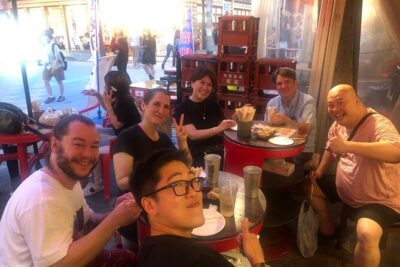
Hungry Osaka Street Food Tour:15 Tastings & 3 Drinks with a Local
Read our review →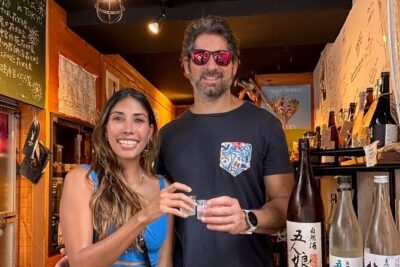
Browse the lists this tour appears in