
REVIEW · KIMONO & CULTURE EXPERIENCES
Ninja Experience (Family Friendly) at Samurai Ninja Museum KYOTO
The best part of this Kyoto activity is the chance to handle classic ninja tools instead of simply looking at them behind glass. You put on a ninja outfit, try shuriken throwing and blowgun shooting, then learn simple sword techniques and watch a sword demonstration. I like the hands-on format and the fact that samurai dress-up and a museum visit are included. The experience also works well for families, with children taking part alongside an adult.
The main thing to watch is the timing. The activity is sold as about two hours, but the practical training can feel much shorter, especially if you skip or cannot find the museum visit in its separate building. At $56.16 per person, the value depends on getting the full combination of training, costumes, demonstrations, and museum access.
In This Review
- Key points at a glance
- Putting on the ninja outfit in central Kyoto
- A short lesson in ninja work
- Simple sword skills and a live demonstration
- The Samurai and Ninja Museum is part of the deal
- How long does the experience really take?
- Is $56.16 a fair price?
- What works best for families
- What can disappoint you
- A practical plan for your visit
- Who should book this Kyoto ninja activity?
- Should you book it?
- FAQ
- Where does the ninja experience begin?
- How long does the activity last?
- Is the Samurai and Ninja Museum included?
- What activities are included?
- Can young children join?
- How many people can join the activity?
- Can I cancel for a refund?
Key points at a glance
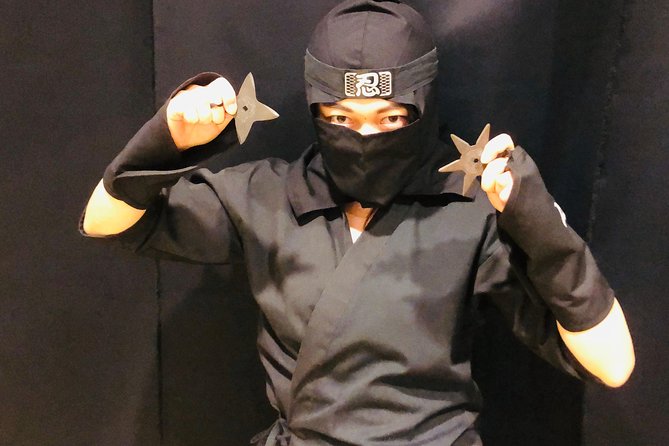
- Shuriken and blowgun practice: You throw ninja stars and fire a blowgun at a target, using safe training equipment.
- Ninja and samurai costumes: Outfit rental is included, with time for photographs and a second dress-up as a samurai.
- Museum access included: The Samurai and Ninja Museum is part of the ticket, but it is located in another building.
- A family-friendly lesson: Children under three cannot join the ninja activity, and all children must be accompanied by an adult.
- Small group size: The experience has a maximum of four participants, which should make the hands-on parts easier to manage.
- Flexible cancellation: You can receive a full refund if you cancel at least 24 hours before the start time.
Putting on the ninja outfit in central Kyoto
The experience begins at 292 Higashidaimonjicho in Nakagyo Ward, a central Kyoto location near public transportation. You make your own way there, since transportation to and from the attraction is not included. The activity also finishes back at the meeting point.
The costume is more than a quick photo prop. Changing into a ninja outfit helps set the tone for children, and adults can join in rather than stand on the sidelines. You later have the chance to dress as a samurai too, so this is a good choice if your family wants photographs with both sides of Japan’s warrior culture.
I would allow extra time to find the meeting point. One of the weaker parts of the operation has been communication about where to meet and how to reach the museum afterward. The activity and museum are not necessarily in the same building, so do not assume that walking out of the training room means the whole experience is finished.
The group limit is four people. That is useful for a family or a small private group because you should not be lost in a large crowd when it is your turn to throw or shoot. It also means the experience may feel more personal than a large theatrical show, although the exact teaching style can depend on the instructor.
More Kimono & Culture Experiences in Kyoto
- Kyoto Geisha Walking Tour: Gion District & Hidden Gems
★ 4.7 · 3,273 reviews - Kyoto: Gion Magical Night Walking Tour with Geisha Trivia
★ 4.9 · 2,393 reviews - Kyoto: Gion Geisha District Walking Tour – Stories of Geisha
★ 4.7 · 2,187 reviews
A short lesson in ninja work
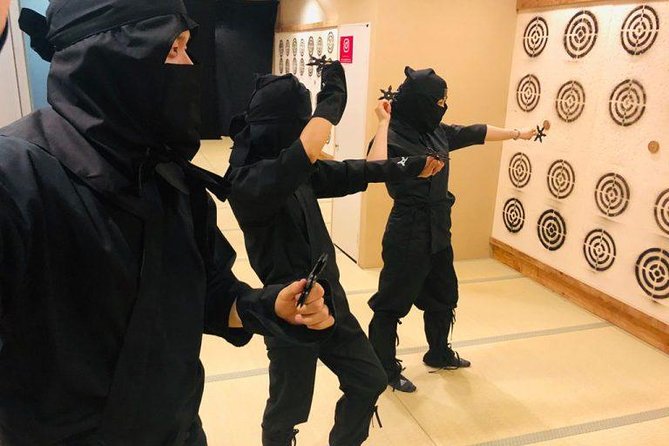
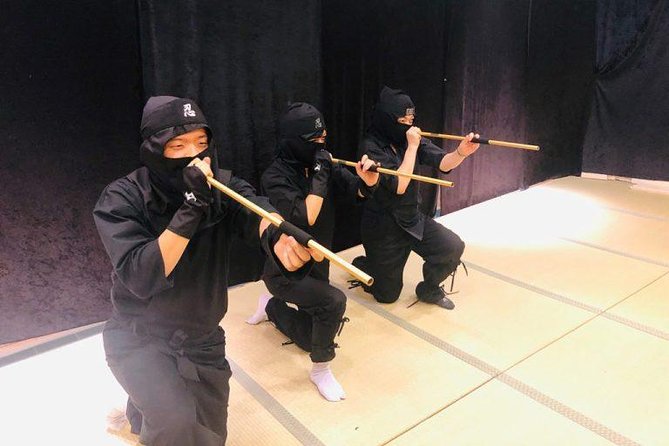
The training focuses on the popular skills most people hope to try: throwing shuriken and using a ninja blowgun. You receive instruction before taking your turn, and the targets are designed for the activity rather than for serious weapons practice.
The shuriken are the familiar star-shaped throwing tools linked with ninja stories. The blowgun offers a different challenge. Instead of throwing, you aim and blow a small dart toward a target. These two activities are simple enough for many children, but they still give you something active to do.
Keep your expectations sensible. This is an introductory entertainment experience, not a long martial arts course. You will not leave with advanced combat skills or a professional ninja qualification. The training is built around safe, memorable attempts and the fun of trying something unusual in costume.
The secret stealth techniques are presented as part of the lesson. The available details do not give a full list of exercises, so you should expect an introduction rather than a technical study of historical espionage. The lesson is best understood as a family activity with a historical theme.
That distinction matters at this price. If you want a polished, playful introduction to ninja culture, the format makes sense. If you want serious instruction in traditional martial arts, the short practice sessions may feel thin.
Simple sword skills and a live demonstration
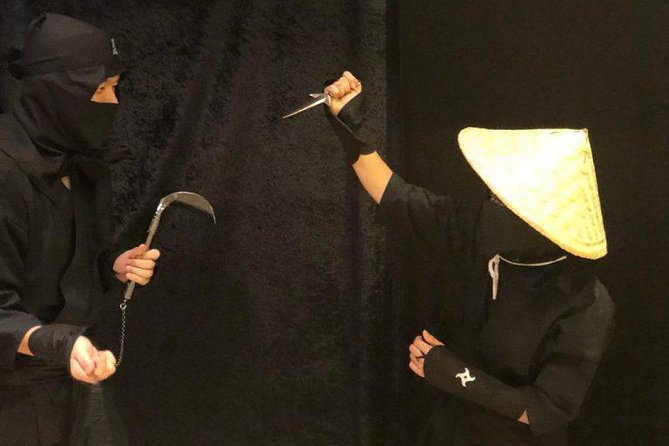
The activity also includes simple sword techniques. This adds useful variety, since you are not spending the entire session on shuriken and blowguns. The sword portion is introductory, with an emphasis on basic movements rather than a full training program.
A sword demonstration by a sword master is included in the ticket. This is one of the more valuable parts for adults who want historical context as well as costume photographs. Watching a trained performer handle the sword gives you a better sense of discipline and form than a quick souvenir-style photo alone.
The demonstration also helps broaden the activity beyond the ninja theme. Ninjas are the main attraction, but the experience places them alongside samurai culture, weapons, and feudal Japan. If your family has mixed interests, one child may prefer the blowgun while another is more interested in the samurai display and sword work.
The wording around authentic special ninja training should be read carefully. The session draws on familiar ninja skills and stories, but the practical setup is designed for visitors. One participant described the stars as plastic and the target as a styrofoam wall. That does not make the activity unsafe, but it does mean the experience is staged and recreational rather than a reconstruction of historical combat.
The Samurai and Ninja Museum is part of the deal
The museum visit is an important part of the value, especially for anyone interested in the history behind the costumes and weapons. You can learn about ninja missions, tools, and samurai life rather than simply throwing objects for a few minutes.
The museum is in another building. This detail has caused confusion, so I would ask the staff directly where to go before leaving the training area. Make sure you know whether the museum visit is self-guided or led as part of your scheduled movement through the attraction. The supplied information confirms that museum access is included, but the exact flow can vary.
The museum portion is also where the experience can become more educational. The training gives you a physical connection to the weapons, while the displays help explain why ninjas are associated with secrecy, covert missions, and specialized tools. It will not turn a short family outing into a full course on Japanese history, but it adds needed context.
Some people have found the visit hard to locate or did not realize it was included. That is a real drawback because missing the museum changes the value calculation. At the end of the training, do not simply head off to your next Kyoto sight. Confirm the museum location and make use of the included admission.
Same city, a completely different kind of day:
- PERFECT KYOTO 1-Day Bus Tour
★ 5.0 · 13,518 reviews - Kyoto: Fushimi Inari, Kinkakuji, Bamboo Grove 1 Day Bus Tour
★ 4.8 · 4,316 reviews - Kyoto: Tea Ceremony in a Traditional Tea House in Kiyomizu
★ 4.9 · 3,519 reviews - Kyoto: Tea Ceremony Ju-An at Jotokuji Temple
★ 4.9 · 3,207 reviews
How long does the experience really take?
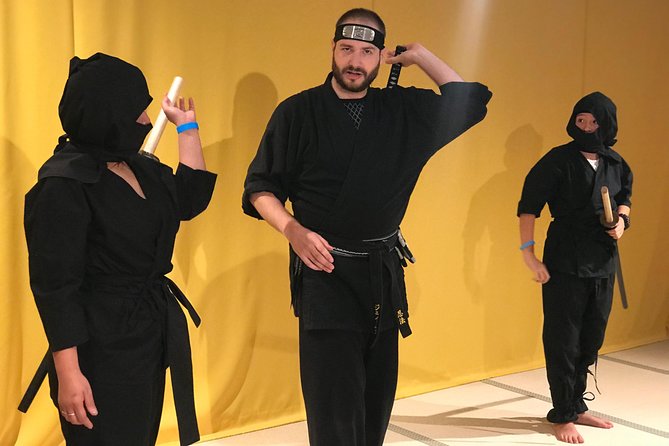
The advertised duration is approximately two hours. A typical outline can include a history introduction, costume changes and photographs, ninja practice, sword material, and the museum visit. The provider has also described a 30-minute history tour and about 15 minutes for dress-up and photos.
In practice, the hands-on part may take only 20 to 40 minutes, according to some accounts. Another description treated the program as about one hour of ninja activity followed by the museum. That difference is significant when you are paying $56.16 per person.
I would plan around the full two-hour window, but not count on two hours of continuous instruction. Think of the time as a package of separate pieces:
- A short introduction to ninja and samurai history
- Ninja costume rental and photographs
- Shuriken throwing
- Blowgun practice
- Basic sword techniques
- A sword demonstration
- Samurai dress-up
- A visit to the museum in another location
The order may not be obvious. One account describes the visit as poorly structured, with uncertainty about whether the activity had ended. You can avoid much of that problem by asking three direct questions at the start: When does the museum visit happen? Is it included in this same appointment? Where exactly should you go after the training?
The small group limit may help the session move smoothly, but it does not guarantee a fixed teaching length. Busy periods can affect timing. If you have a train, restaurant booking, or another paid tour afterward, leave a generous buffer.
Is $56.16 a fair price?
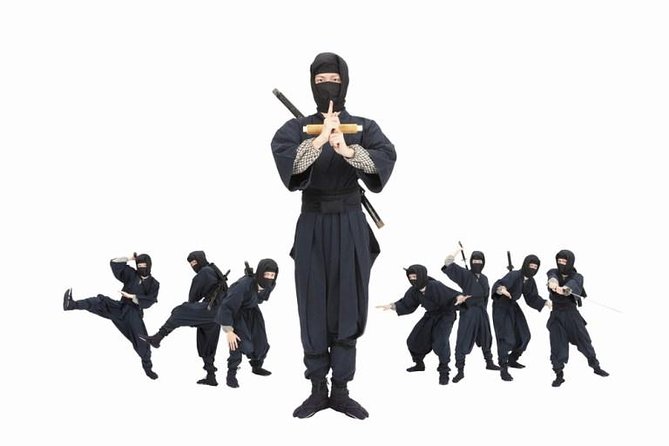
At $56.16 per person, this is not a bargain activity if you measure it only by the time spent throwing stars and firing darts. Those parts are short, and the equipment is made for supervised recreation. A family of four will pay more than $224 before transportation, so the total deserves a close look.
The price is easier to justify if you use everything included. You receive ninja clothing, samurai dress-up, the ninja lesson, simple sword material, a sword demonstration, and museum access. For a family that wants one organized activity with photographs and a bit of history, that bundle can be worthwhile.
The value drops quickly if the session ends after only the shuriken and blowgun exercises. That is why the museum is not a minor extra. It provides the historical and display-based portion that helps balance the short practical lesson.
I would book this for children who already like ninjas, samurai, or costume play. Their enthusiasm matters more than the length of each individual exercise. Adults who expect formal martial arts instruction should probably choose a different type of class.
The experience has received an overall rating of 4.5 from 132 ratings, with strong praise for family fun, friendly instructors, and the chance to try several activities. The lower scores focus on short duration, unclear communication, and the staged nature of the training. Both sides are believable, so I would not treat the headline rating as the whole story.
What works best for families
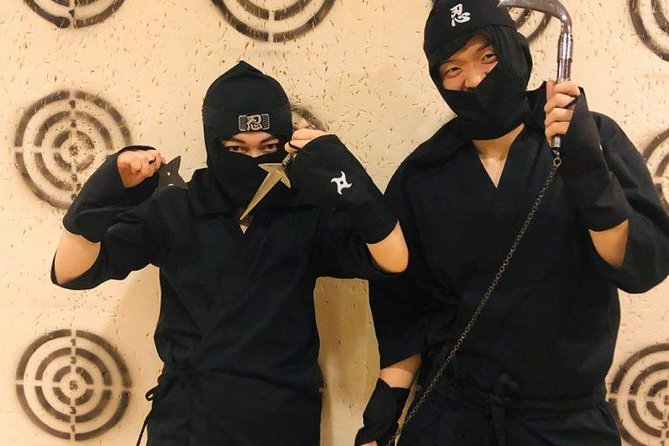
The activity has several practical strengths. Children under three cannot join the ninja experience, but they can enter the venue. Children who do participate must be accompanied by an adult. This makes the program suitable for families with school-age children, provided the youngest members meet the minimum age requirement.
The training does not require your own special clothing. That is a real convenience in Kyoto, where you may already be carrying jackets, bags, or souvenirs. The included costume also gives children a clear role in the activity, rather than leaving them to watch an adult demonstration.
The instructors have generally been described as friendly and accommodating. One account noted that a group arrived about 20 minutes late and was still allowed to join. I would not rely on that happening, but it suggests some flexibility. Arriving on time is still the smart choice, particularly with a small group and a fixed appointment.
The activity is also useful when weather ruins outdoor plans. The details identify the venue as near public transportation and say most people can participate. No special physical ability is listed, but you should still expect to stand, move around, and handle the training equipment.
What can disappoint you
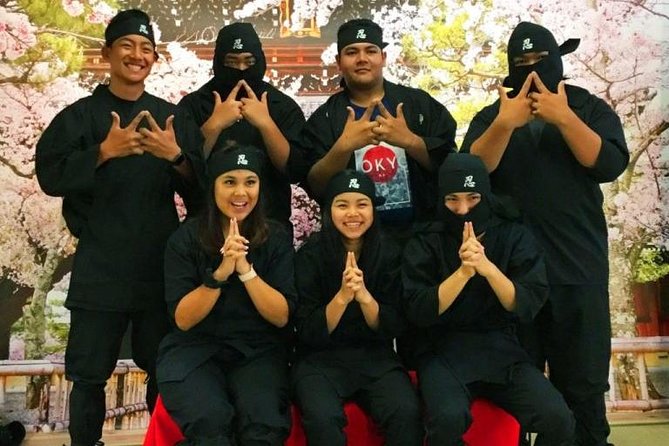
The biggest risk is expecting a serious ninja school. The word authentic appears in the description, but the actual experience is a brief visitor activity using theatrical costumes and training targets. That can be exactly right for a family afternoon and completely wrong for someone seeking traditional weapons instruction.
The second risk is unclear routing. The museum is included, yet it sits in a different building. If staff do not explain the next step clearly, you may think the program has ended and leave without seeing the part that helps support the price.
The third issue is uneven timing. The published duration is approximately two hours, but the active lesson may be much shorter. History, dress-up, photos, and the museum make up the rest. Ask for the full schedule at the start if your expectations depend on the stated duration.
There is also a temporary access notice to keep in mind. The elevator is out of service from January 24, 2026 through February 19, 2026. If anyone in your party depends on elevator access, contact the operator before booking rather than assuming normal access.
A practical plan for your visit
Meet at 292 Higashidaimonjicho in Nakagyo Ward and arrive with enough time to find the entrance. Keep the booking confirmation available on your phone, since confirmation is issued at booking and the ticket is mobile.
At the start, confirm the sequence of the session and the location of the museum. Ask when you will change into the samurai outfit, too. This small step can prevent you from leaving before the museum or missing the second costume opportunity.
Wear comfortable clothes under the rental outfit. The provided information does not specify what you should wear, but loose, simple layers are sensible for changing. You do not need to bring a ninja costume.
Plan the rest of your day around a two-hour activity, with extra time for moving between buildings. Transportation is not included, and the activity ends back at the original meeting point. Free cancellation is available until 24 hours before the local start time. Changes or cancellations inside that window are not accepted for a refund.
Who should book this Kyoto ninja activity?
I would choose it for families who want an easy, playful introduction to ninjas and samurai. It suits children who enjoy dressing up, taking photographs, and trying a few supervised skills. The small maximum group of four is another plus for families who want a more controlled session.
I would also consider it if your Kyoto schedule needs a central indoor activity with a clear theme. The museum and sword demonstration give adults something to enjoy, while the children get the most memorable moments from the costumes, shuriken, and blowgun.
I would hesitate if your main goal is a long lesson. The training may be much shorter than the two-hour headline suggests, and the equipment is for recreation rather than serious practice. I would also hesitate if $56.16 feels high for a costume activity unless you are certain you will visit the museum.
Should you book it?
Book this if you want family entertainment with a useful historical layer. The strongest version of the experience includes the ninja lesson, both costumes, sword demonstration, and the separate museum visit. Ask about the museum before you begin, and judge the price as a package rather than as a 20-minute weapons session.
Skip it if you want advanced instruction, a fully authentic combat lesson, or a tightly timed two-hour class. For the right family, the chance to dress as a ninja, throw shuriken, fire a blowgun, and learn about samurai culture can make a memorable Kyoto stop. Just keep your expectations practical and make sure you receive every included part.
FAQ
Where does the ninja experience begin?
It begins at 292 Higashidaimonjicho, Nakagyo Ward, Kyoto, 604-8043, Japan. The activity ends back at the meeting point.
How long does the activity last?
The stated duration is approximately two hours. The schedule can include history, costume changes, photographs, ninja practice, sword material, and the museum visit, but the active ninja training may be shorter.
Is the Samurai and Ninja Museum included?
Yes. Museum access is included, but the museum is located in another building. Ask for directions before leaving the training area so you do not miss it.
What activities are included?
You can wear a ninja outfit, learn basic ninja ideas, throw shuriken, use a blowgun, try simple sword techniques, watch a sword demonstration, dress as a samurai, and visit the museum.
Can young children join?
Children under three cannot join the ninja experience, although they can enter the venue. Children who participate must be accompanied by an adult.
How many people can join the activity?
The maximum group size is four participants.
Can I cancel for a refund?
Yes. You can cancel at least 24 hours before the local start time for a full refund. Cancellations and changes made less than 24 hours before the start time are not accepted for a refund.
More Museums in Kyoto
- Kyoto: Tea Museum Tickets and Matcha Grinding Experience
★ 4.9 · 739 reviews - Skip the lines Basic Ticket at SAMURAI NINJA MUSEUM KYOTO
★ 4.5 · 632 reviews - Kyoto : Geiko Maiko Dance of Kyoto & Visits of Gion Museum
★ 4.6 · 415 reviews - Kyoto Sword Experience – includes Museum Ticket/Ninja Experience
★ 4.5 · 149 reviews
Just added around Kyoto
- Private Guided Traditional Buddhist Cooking in Japan★ 5.0 · 16 reviews
- Kyoto: Gion Geisha District & Sake-in-Hand Walking Tour★ 5.0 · 37 reviews
- Your Private Vacation Photography Session In Kyoto★ 5.0 · 110 reviews
- Kyoto: Zen Meditation at a Private Temple with a Monk★ 5.0 · 25 reviews
- Traditional Japanese Washi Papermaking- Kyoto morning★ 5.0 · 77 reviews
- Kyoto Wagashi(Japanese sweets) Cooking Class near Fushimiinari★ 5.0 · 60 reviews
- Private Pewter Sake Cup Experience with a Kyoto Artisan★ 5.0 · 31 reviews
- Kyoto Private 6 hour Tour: English Speaking Driver Only, No Guide★ 5.0 · 88 reviews
Kimono & Culture Experiences, compared.
Kyoto Geisha Walking Tour: Gion District & Hidden Gems
Read our review →
Gion Magical Night Walking Tour with Geisha Trivia
Read our review →
Gion Geisha District Walking Tour – Stories of Geisha
Read our review →
Best of Kyoto: Gion, Geisha, Pagodas & Cobblestones
Read our review →
Kyoto Gion Geisha District Walking Tour – The Stories of Geisha
Read our review →
Browse the lists this tour appears in