
REVIEW · GARDEN & PALACE TOURS
Kyoto: Nijo Castle World Heritage Guided Tour with Admission
Nijo Castle is where Japan’s samurai government met the imperial court, and this 90-minute tour gives that power struggle a human shape. You’ll walk through the castle grounds, visit the palace areas, and hear why Tokugawa Ieyasu built this grand base in Kyoto.
I like the small group of up to 10, which makes it easier to ask questions, and I like the included admission because you can go straight to the experience instead of sorting out tickets. The main consideration is time: 90 minutes covers the highlights, not every corner of the castle and gardens.
In This Review
- Key points at a glance
- Why Nijo Castle matters in Kyoto
- Meeting at Nijojo-mae Station
- Entering the castle grounds and gardens
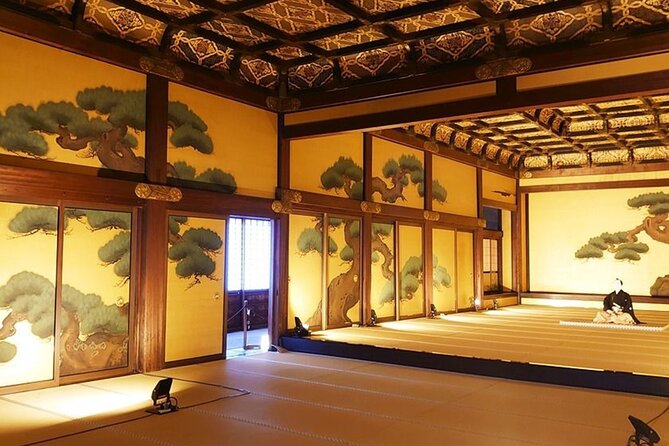
- Inside the palace, where history feels close
- The guides are the main reason to pay for a tour
- What 90 minutes really covers
- Price, group size, and what you receive
- Who should book this Nijo Castle visit
- A few smart ways to prepare
- Should you book this Nijo Castle tour?
- FAQ
- How long does the Nijo Castle tour last?
- Is admission to Nijo Castle included?
- Where does the tour begin?
- Where does the tour finish?
- How many people can join the tour?
- Is the tour near public transportation?
- Do I need to remove my shoes?
- Can I cancel for a full refund?
Key points at a glance
- See the stronghold of Tokugawa Ieyasu, the shogun who began a samurai rule lasting about 260 years.
- Learn inside the palace, where you must remove your shoes, so thick socks are a wise winter choice.
- Ask questions in a group capped at 10, with guides such as Alex, Nao, Naoya, and Benjamin praised for clear English and easy humor.
- Visit the castle gardens and gates, which offer some of the best photo opportunities on the route.
- Meet at Nijojo-mae Station, making the tour simple to reach by public transportation.
- Pay $39.24 per person, with admission included and free cancellation up to 24 hours before the start.
Why Nijo Castle matters in Kyoto
Nijo Castle is not simply a collection of walls, gates, and ornate rooms. It was built by Tokugawa Ieyasu, the shogun who established the political order that kept Japan under samurai rule for roughly 260 years.
That makes the castle a useful place to understand the division between the shogun’s military government and the emperor’s court in Kyoto. The tour focuses on this rivalry, giving you a clearer sense of why a military leader needed such an imposing residence in the imperial capital.
I find that context especially useful here. Without it, you may admire the decoration, gardens, and wooden buildings but miss the point of the place. With a guide, the castle becomes a story about authority, ceremony, and the careful display of power.
The experience is also a good match for a first visit to Kyoto. You get the main historical ideas without committing half a day to a large museum or a long walking tour. The pace is short and focused, though you should not expect an exhaustive visit to every garden path and building.
More Garden & Palace Tours in Kyoto
- Kyoto: Nijo-jo Castle and Ninomaru Palace Guided Tour
★ 4.7 · 1,020 reviews - Kyoto: Nijo Castle, Kiyomizu & Fushimi Inari Guided Tour
★ 4.7 · 700 reviews - Kyoto: Imperial Palace & Nijo Castle Guided Walking Tour
★ 4.7 · 453 reviews
Meeting at Nijojo-mae Station
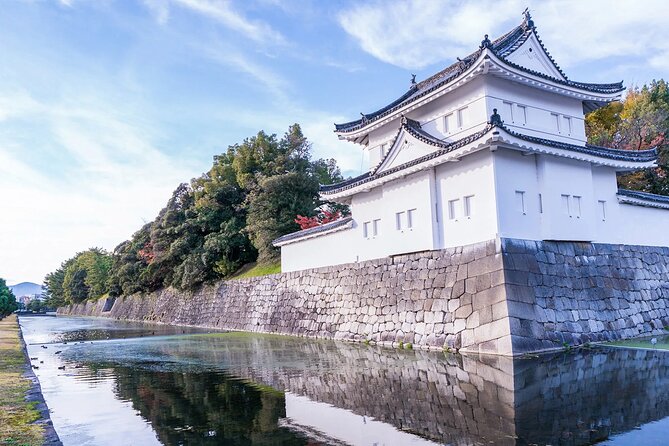
The meeting point is Nijojo-mae Station, beside Nijo Castle in Nakagyo Ward. This is a practical starting point because you do not need to navigate a distant neighborhood or search for a business office before the tour begins.
Your mobile ticket is part of the booking, and admission to the castle is included. That removes two small but common travel hassles: arranging entry separately and waiting in a ticket line. It also means your preferred date is secured in advance, which matters during a busy Kyoto sightseeing day.
The tour finishes back at the meeting point. That makes it easy to continue with another Kyoto sight afterward, return to your hotel, or pause for food nearby. The activity is close to public transportation, so it fits neatly into a day built around central Kyoto.
Be sure to allow enough time to reach the station. The supplied details do not give a separate check-in window or a precise meeting procedure, so your confirmation should be the final word on arrival instructions.
Entering the castle grounds and gardens
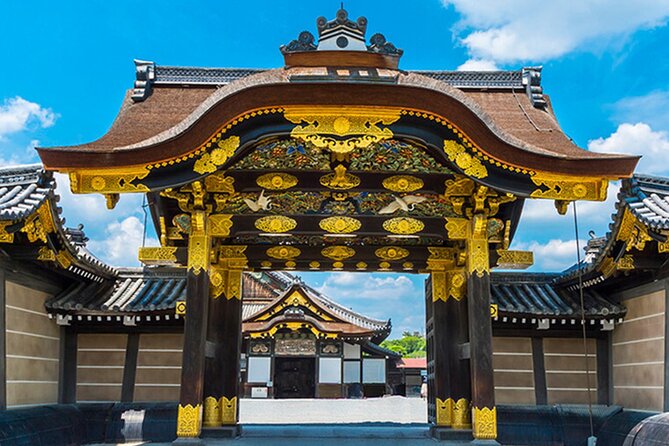
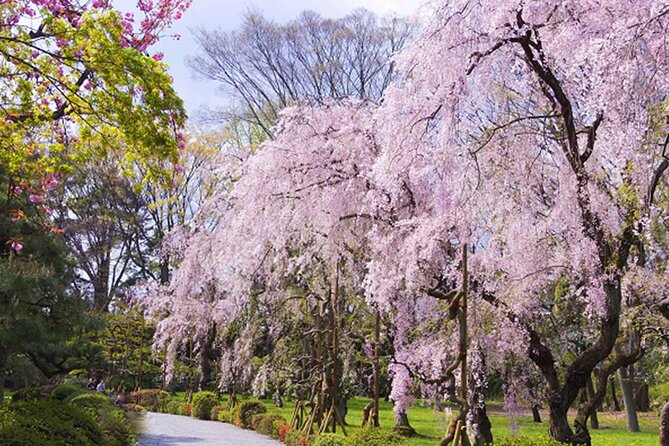
The first part of the visit takes you through Nijo Castle’s grounds, where the gates, walls, and gardens set the tone before you enter the palace areas. The gardens are one of the quieter pleasures of the tour. They give you a chance to slow down after the more formal entrance and appreciate how the castle combines military security with carefully planned beauty.
You’ll have opportunities for photographs around the gates and exterior spaces. The castle grounds are not just a route between buildings. They help show how visitors would have approached the residence and how design could signal status before anyone spoke a word.
A guide adds value here by pointing out details you might otherwise pass without noticing. The strongest feedback about the guides centers on these explanations, along with their ability to answer questions and adjust the conversation to your interests.
The tour group cannot exceed 10 people. That is small enough to keep the guide nearby and make questions realistic, but it is still a group tour rather than a private visit. If you want complete control over the pace, a private guide would offer more flexibility, but this format should feel more personal than a large coach-style group.
Inside the palace, where history feels close
The palace interior is the part of the visit where practical preparation matters most. You must remove your shoes before entering, and the floors can feel cold in winter. Wear thick socks if you are visiting during the colder months.
That simple detail can affect your comfort more than you might expect. You may spend much of the interior visit walking or standing, so socks without holes and footwear that you can remove easily are sensible choices.
Inside, the guide explains the castle’s historical role and the Tokugawa family connection. The best part of a guided visit is not just learning dates. It is having someone explain how the rooms, ceremonies, and setting fit into the wider conflict between shogun and emperor.
Guide quality is an important part of this experience. Alex is described as easygoing, humorous, and able to handle a long list of questions about the castle and its past. Nao and Naoya are also singled out for clear English, friendly manners, and explanations that add more than the signs alone.
Benjamin is praised for being informative, accommodating, and personable. You cannot choose one particular guide from the details provided, but these names give you a useful idea of the style to expect: conversational, question-friendly, and focused on making the history understandable.
The palace visit is also where the 90-minute limit becomes clear. You’ll receive a guided introduction to the key areas, but the schedule is not designed for lingering over every detail. If you are passionate about Japanese architecture or the Tokugawa period, you may want extra time after the tour to explore independently, if the castle’s current visiting rules allow it.
Same city, a completely different kind of day:
- PERFECT KYOTO 1-Day Bus Tour
★ 5.0 · 13,518 reviews - Kyoto: Fushimi Inari, Kinkakuji, Bamboo Grove 1 Day Bus Tour
★ 4.8 · 4,316 reviews - Kyoto: Tea Ceremony in a Traditional Tea House in Kiyomizu
★ 4.9 · 3,519 reviews - Kyoto Geisha Walking Tour: Gion District & Hidden Gems
★ 4.7 · 3,273 reviews
The guides are the main reason to pay for a tour
Admission alone is not the whole value here. The reason to book this experience instead of entering on your own is the guide’s interpretation.
Signs can tell you what a room is called or identify a historical figure. A guide can connect the facts: Tokugawa Ieyasu’s role, the long samurai era that followed, the imperial setting of Kyoto, and the way the castle presented the shogun’s power.
The strongest guide feedback points to four useful qualities:
- Clear English that is easy to follow.
- Good answers to detailed questions.
- Humor that keeps the history from becoming dry.
- A willingness to shape the talk around your interests.
That last quality matters. A group with questions about samurai politics may get a different emphasis from a group more interested in architecture, gardens, or the Tokugawa family. The tour is still structured, but it does not sound like a rigid speech delivered without regard for the people standing in front of the guide.
I also like that several guides are praised for making the castle easier to understand than the signs alone. That is a fair reason to spend $39.24, especially if this is your first serious look at Japan’s shogun era.
Still, value depends on your travel style. If you already know the Tokugawa period well and prefer to read at your own pace, the admission-inclusive package may feel less necessary. If you want historical meaning without doing your own research in advance, the fee is easier to justify.
What 90 minutes really covers
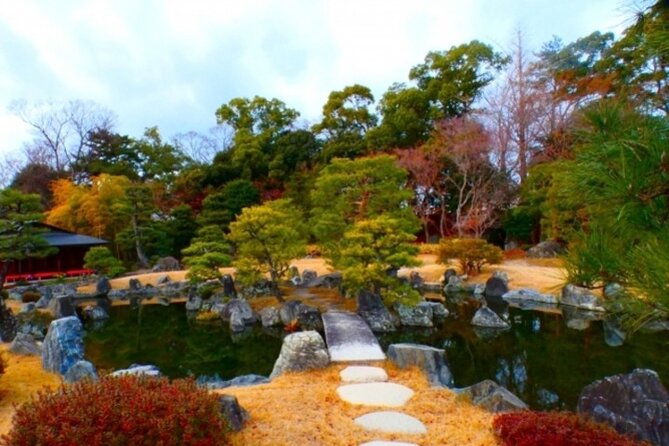
The advertised duration is about one hour and 30 minutes. That is long enough for a guided visit through the principal castle experience, including the grounds, gardens, and palace areas.
You should think of it as a focused introduction rather than a full day at Nijo Castle. The guide leads the way, helps you avoid getting lost, and keeps the visit moving. That structure is helpful when you have a packed Kyoto schedule.
The short format also makes the tour easy to combine with other sights. You might use the morning or afternoon for Nijo Castle and then continue elsewhere in the city. Since the tour returns to the starting point, you are not left at an unfamiliar endpoint.
The tradeoff is limited free time. You may not be able to stop for as many photographs as you would on your own, and the guide may need to keep the group moving to cover the main points. If you are happiest wandering without a clock, plan to treat the guided portion as your introduction and allow additional time afterward if possible.
Price, group size, and what you receive
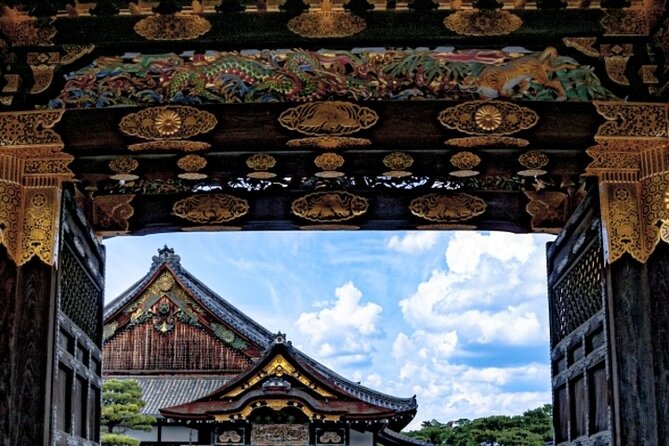
At $39.24 per person, this is not the cheapest way to enter Nijo Castle. The price includes admission, a guide, and a small-group format with no more than 10 people.
The value comes from convenience and explanation. You are paying to avoid arranging admission separately, secure a date ahead of time, and hear the castle’s story from someone who can answer questions. For a first-time visit, that package can save preparation time and prevent the castle from becoming a quick walk past buildings with little context.
The group size is a strong point. Ten people is large enough to keep the cost below a private tour, but small enough for the guide to hear questions and keep the group together. That balance suits solo visitors, couples, families, and small groups who want help without joining a crowd.
Free cancellation is available if you cancel at least 24 hours before the experience starts. Canceling later, or making changes within that 24-hour window, does not qualify for a refund. The cutoff follows local Kyoto time, so keep that in mind when changing plans.
Who should book this Nijo Castle visit
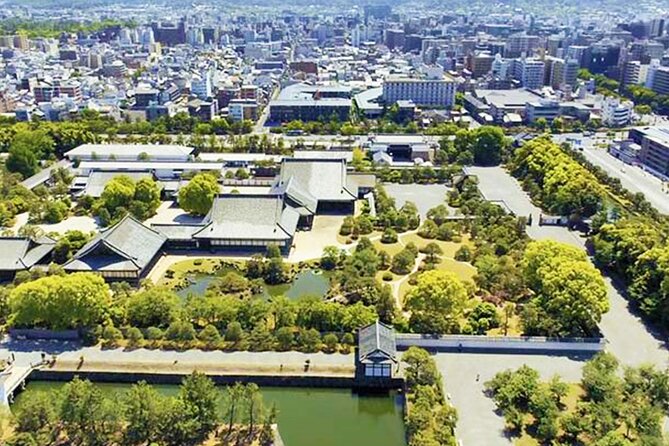
I would choose this tour if you want the castle’s story explained as you walk. It is especially useful if you are not familiar with the shogun and emperor relationship, or if you want to ask questions rather than rely on posted information.
It also suits visitors with a tight itinerary. The 90-minute schedule gives you a clear historical stop without taking over the whole day. Included admission and a station meeting point make the practical side easy.
Families and mixed-interest groups may appreciate the guide’s humor and conversational approach. A person who does not usually seek out political history can still follow the story when it is tied to the rooms, gates, gardens, and people connected with the castle.
I would hesitate if you want a private experience, complete freedom to stop, or a long architectural study. The group has a maximum of 10, not one, and the guided route is built around highlights. You also need to be comfortable removing your shoes inside the palace and walking in socks.
A few smart ways to prepare
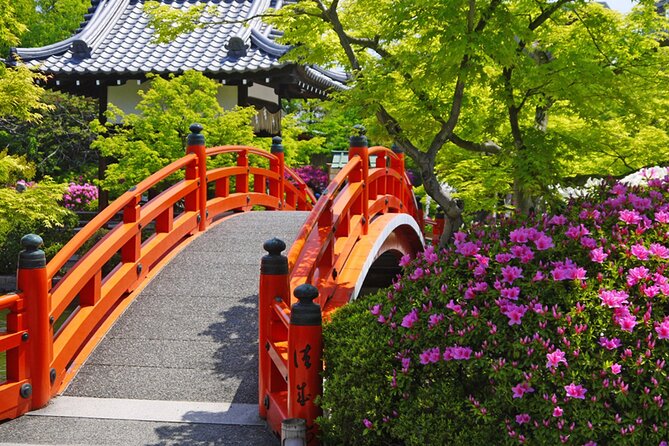
Wear shoes that come off easily. You will need to remove them for the palace interior, and thick socks are a good idea in winter.
Bring questions. The guides are praised for answering them, and the small group makes that more practical than it would be on a large tour. If you are curious about the Tokugawa family, samurai government, palace rooms, or the emperor’s role, this is the time to ask.
Keep your mobile ticket ready and meet at Nijojo-mae Station. Since the tour ends at the same place, you can plan your next stop from there without worrying about a complicated transfer.
If you have extra time after the visit, the souvenir shop is worth considering. One guide-related tip also points to red bean mochi soup afterward, a local-style treat that could make a pleasant finish, particularly on a cool day.
Should you book this Nijo Castle tour?
Book it if you want more than a quick look at a famous Kyoto site. The admission is handled, the group is limited to 10, and the guides are consistently praised for clear explanations, humor, and thoughtful answers. Alex, Nao, Naoya, and Benjamin are all associated with the friendly, personal style this tour aims for, though your assigned guide may differ.
Skip it if you prefer to explore entirely alone or need several hours for photographs and quiet garden time. At $39.24, the tour makes the most sense for you when the guide’s historical explanation is worth paying for.
For most first visits, I think the guided format earns its keep. Nijo Castle’s beauty is easy to see. Its political story is easier to understand with someone leading the way.
FAQ
How long does the Nijo Castle tour last?
The tour lasts approximately one hour and 30 minutes.
Is admission to Nijo Castle included?
Yes. The admission fee to Nijo Castle is included in the tour price.
Where does the tour begin?
The meeting point is Nijojo-mae Station, at Nijojocho in Kyoto’s Nakagyo Ward.
Where does the tour finish?
The activity ends back at the meeting point.
How many people can join the tour?
The tour has a maximum of 10 travelers.
Is the tour near public transportation?
Yes. The meeting point is near public transportation at Nijojo-mae Station.
Do I need to remove my shoes?
Yes. The palace interior requires you to remove your shoes. Thick socks are recommended during winter.
Can I cancel for a full refund?
Yes, if you cancel at least 24 hours before the experience start time. Cancellations or changes made less than 24 hours in advance are not accepted for a refund.
More Historical Tours in Kyoto
- Kyoto Gion: 2-Hour Geisha Culture & History Walking Tour
★ 5.0 · 1,186 reviews - Kyoto Gion Historical Walking Tour
★ 5.0 · 188 reviews - Historical Kyoto E-Bike Tour
★ 5.0 · 181 reviews - Kyoto: Private 2.5 Hour Historical Walking Tour
★ 4.9 · 121 reviews
Just added around Kyoto
- Private Guided Traditional Buddhist Cooking in Japan★ 5.0 · 16 reviews
- Kyoto: Gion Geisha District & Sake-in-Hand Walking Tour★ 5.0 · 37 reviews
- Your Private Vacation Photography Session In Kyoto★ 5.0 · 110 reviews
- Kyoto: Zen Meditation at a Private Temple with a Monk★ 5.0 · 25 reviews
- Private Pewter Sake Cup Experience with a Kyoto Artisan★ 5.0 · 31 reviews
- Traditional Japanese Washi Papermaking- Kyoto morning★ 5.0 · 77 reviews
- Kyoto Wagashi(Japanese sweets) Cooking Class near Fushimiinari★ 5.0 · 60 reviews
- Kyoto Private 6 hour Tour: English Speaking Driver Only, No Guide★ 5.0 · 88 reviews
Garden & Palace Tours, compared.

Imperial Palace and Shogun Historical Walking Tour
Read our review →
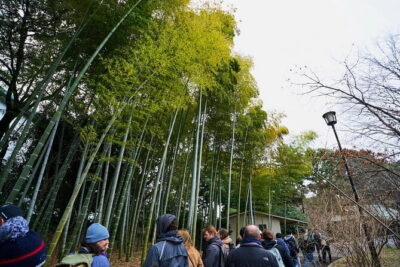
Tokyo Castle & Imperial PalaceーShogun Walking Tour
Read our review →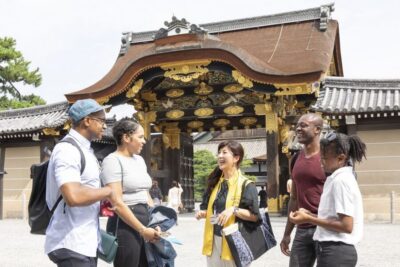
Nijo-jo Castle and Ninomaru Palace Guided Tour
Read our review →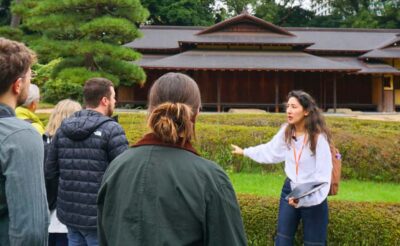

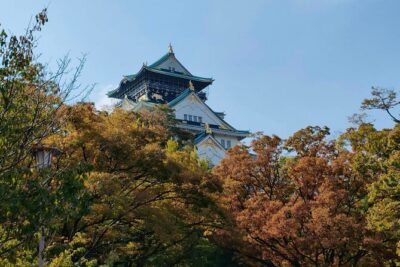
Ultimate Osaka Walking Tour: Castle, Dotonbori & Hidden Gems
Read our review →Tokyo Castle & Imperial PalaceーShogun Walking Tour
Read our review →Browse the lists this tour appears in