
REVIEW · WALKING TOURS
Kyoto Gion Historical Walking Tour
Kyoto’s eastern hills are best understood on foot, and this route gives you a useful thread through them. You’ll move from Gion’s old entertainment quarter to quiet temple grounds, then along stone lanes toward Kiyomizu-dera. I like the mix of social history and religious sites, and I like that guides such as Jay, Ben, and Ayumi add stories about geisha, samurai, theater, emperors, and everyday Kyoto life.
The main drawback is physical rather than cultural: three hours of walking includes slopes, cobblestones, and stair climbing. The group can include up to 12 people, and Kiyomizu-dera admission is extra. Eat beforehand, carry water, and wear shoes you would trust on uneven paths.
In This Review
- Key points at a glance
- Why this route works for a first look at Kyoto
- Tatsumi Bridge and Gion Shimbashi
- Chion-in’s great gate and temple grounds
- Maruyama Park and a pause among the temples
- Nene-no-Michi and the old stone lanes
- Yasaka Pagoda and the Higashiyama view
- Ninen-zaka and Sannen-zaka
- Kiyomizu-dera, the final stop
- What the guides add to the walk
- Price, pace, and practical value
- Who should book this Kyoto walk?
- Booking details worth knowing
- Should you book the Kyoto Gion Historical Walking Tour?
- FAQ
- How long does the Kyoto Gion Historical Walking Tour last?
- Where does the tour begin?
- Where does the tour end?
- What sights are included?
- Is admission to Kiyomizu-dera included?
- How many people can join the tour?
- Can I cancel for a full refund?
Key points at a glance
- A useful Gion-to-Higashiyama route: Start near Shijo and finish at Kiyomizu-dera, linking several major sights in one walk.
- Strong historical focus: Guides explain the Meiji Restoration, the relationship between emperors, monks, and samurai, and the changing role of Gion.
- Several guides are praised by name: Jay, Ben, Ayumi, Michel, and Tommy are described as engaging, clear in English, and willing to answer questions.
- A small group helps: The maximum group size is 12, with some departures becoming private tours when numbers are low.
- Bring food and water: There are bathroom breaks, but the walk is information-heavy and has few planned meal stops.
- The finish is practical: You end at Kiyomizu-dera, one of Kyoto’s most important sights, rather than returning to the starting point.
Why this route works for a first look at Kyoto
This is not just a stroll through pretty streets. It is a three-hour introduction to how Kyoto developed as a religious center, imperial capital, entertainment district, and modern Japanese city.
The route begins at Ben’s Cookies Kyoto Shijo, at 89 Shinchō in the Shimogyo Ward. From there, you walk toward Gion and the eastern hills. The ending point is in front of Kiyomizu-dera, so you can continue exploring the temple and surrounding streets after the guide leaves.
That one-way setup is useful. You do not spend the final part of the afternoon retracing your steps. You also finish near one of Kyoto’s most famous sights, which makes this tour a good early-trip orientation walk.
The guide speaks English and covers history, culture, religion, and local traditions. Several guides lead the experience, so your exact personality match will vary. Jay is noted for his history background and polished English. Ben is praised for memorable stories and practical suggestions. Ayumi brings energy and explains subjects such as geisha and samurai culture. Michel and Tommy are also described as friendly, clear, and accommodating.
The group limit of 12 is a reasonable middle ground. It is small enough for questions without requiring the price of a private guide. If a departure has very few bookings, you might end up with a private walk, but that is not something to count on.
More Walking Tours in Kyoto
- Kyoto Geisha Walking Tour: Gion District & Hidden Gems
★ 4.7 · 3,273 reviews - Kyoto: Gion Magical Night Walking Tour with Geisha Trivia
★ 4.9 · 2,393 reviews - Kyoto: Gion Geisha District Walking Tour – Stories of Geisha
★ 4.7 · 2,187 reviews
Tatsumi Bridge and Gion Shimbashi
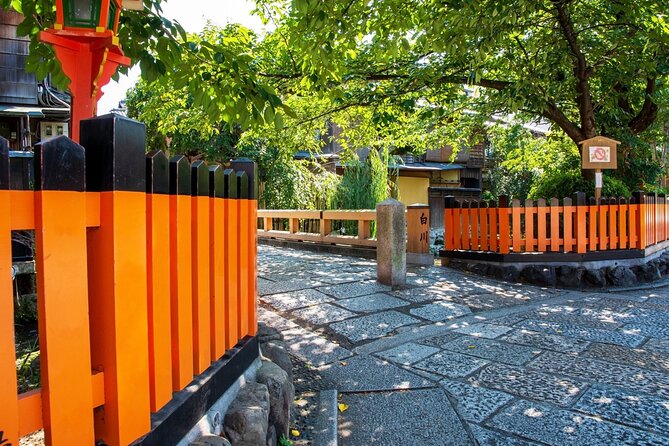
The first stop is Tatsumi Bridge, reached through the Gion Shimbashi area. This is one of the prettiest parts of Gion, with traditional buildings, narrow lanes, and the Shirakawa setting nearby.
The stop itself is listed at about 15 minutes, but the value comes from the explanation. Gion is often reduced to photographs of women in kimono, yet the district has a more complicated story. It developed around entertainment, tea houses, performance, and the social customs of old Kyoto.
A good guide helps you read what you are seeing instead of simply pointing at attractive façades. You can expect discussion of geisha culture, theater, folklore, and the way old customs fit into present-day Kyoto.
This area can be crowded, especially around the most photographed lanes. Keep the group together and avoid blocking doorways or taking close photographs of people. The tour provides context, but it does not turn Gion into a stage set. That is part of its value.
Chion-in’s great gate and temple grounds
The route continues to Chion-in Temple, beginning with the Sanmon gate. This enormous wooden gate gives you a strong visual change from Gion’s narrow lanes. The gate is one of Japan’s largest wooden temple entrances, and its scale makes a quick 10-minute stop worthwhile.
The temple was founded in the 13th century and is connected with Pure Land Buddhism. The main temple visit lasts about 20 minutes. Your guide can explain the temple’s religious role and place it within Kyoto’s wider story of monks, imperial power, and political change.
Do not expect a full, unhurried temple visit here. The tour’s purpose is to introduce the site and connect it with the larger route. You may want to return on your own if Chion-in catches your interest.
The grounds also introduce the physical demands of the afternoon. The route includes stairs and changes in level, and one person specifically noted that the listing’s walking description does not fully convey the amount of stair climbing. If your knees or balance are a concern, ask the guide about limitations at the start.
Maruyama Park and a pause among the temples
Maruyama Park offers a short change of pace after the temple gate and grounds. This old urban park is known for greenery, open space, and its connection to Kyoto’s seasonal scenery.
The planned stop is about 10 minutes. That is enough to catch your breath and hear how the park fits into the eastern temple district, but not enough for a long park walk or a leisurely picnic.
I like this section because it breaks up the monuments. A route made only of temples can begin to blur, especially during a three-hour walk. The park gives your eyes and feet a brief rest before the stone lanes begin.
If you want more time here, note the park as a place to revisit later. The guided schedule keeps moving, and the group will not wait for an extended independent wander.
Same city, a completely different kind of day:
- PERFECT KYOTO 1-Day Bus Tour
★ 5.0 · 13,518 reviews - Kyoto: Fushimi Inari, Kinkakuji, Bamboo Grove 1 Day Bus Tour
★ 4.8 · 4,316 reviews - Kyoto: Tea Ceremony in a Traditional Tea House in Kiyomizu
★ 4.9 · 3,519 reviews - Kyoto: Tea Ceremony Ju-An at Jotokuji Temple
★ 4.9 · 3,207 reviews
Nene-no-Michi and the old stone lanes
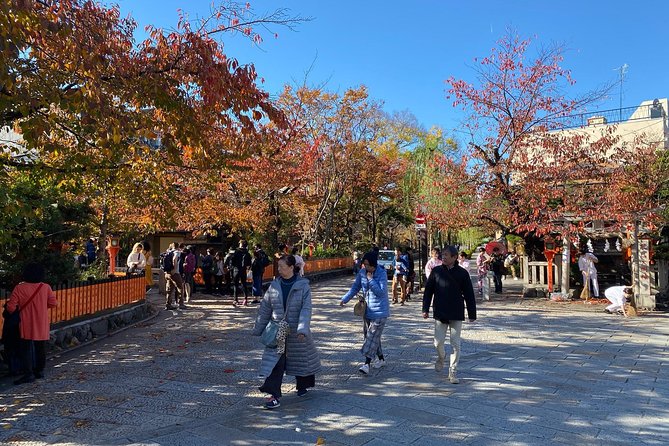
Nene-no-Michi, or the Path of Nene, is a historic stone-paved lane named for Nene, the wife of Toyotomi Hideyoshi. It winds through the Higashiyama district and feels more intimate than the broad approach roads near major temples.
This is a place where the guide’s storytelling matters. The lane connects people and places from different periods of Japanese history, and it also shows how Kyoto preserves an older street pattern within a modern city.
The path is attractive, but it is not an untouched village street. Shops, pedestrians, and sightseeing traffic are part of the scene. You will get better value from the stop if you listen for the historical details rather than treating it as only a photo break.
Because the path is paved with stone, comfortable shoes are essential. Flat, supportive footwear will serve you better than fashionable shoes with little grip.
Yasaka Pagoda and the Higashiyama view
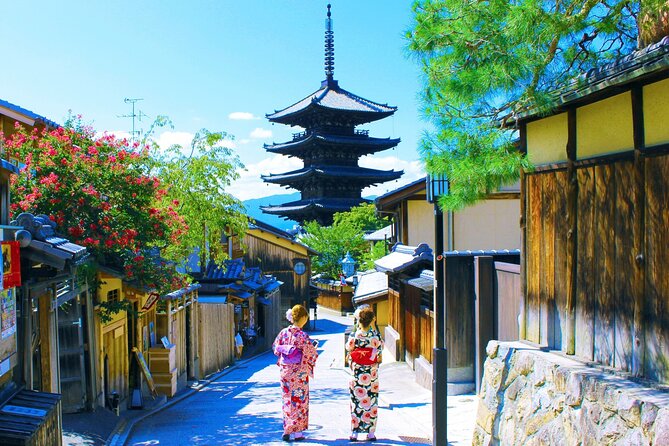
Hōkan-ji Temple, better known as Yasaka Pagoda, is one of the most recognizable sights in eastern Kyoto. Its five-story pagoda rises above the surrounding streets and gives the area one of its classic views.
The stop is listed at about 10 minutes. The guide explains the temple and the pagoda, while you get time to take photographs from the surrounding lanes.
The pagoda is especially useful as a reference point. After the tour, you can recognize where you are within Higashiyama instead of seeing the district as a maze of similar streets.
The short stop also signals an important limitation: this is a highlights walk. You will see many sites, but you will not have long interior visits at each one. The tour favors breadth and context over slow, solitary sightseeing.
Ninen-zaka and Sannen-zaka
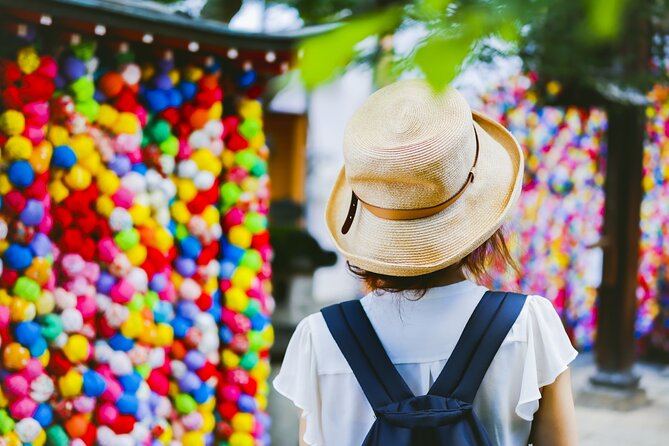
Ninen-zaka and Sannen-zaka are two of Kyoto’s best-known pedestrian slopes. Their names mean Two-Year Slope and Three-Year Slope. Both are lined with traditional-style buildings, tea shops, souvenir stores, and places to pause for a snack or browse.
The route allows about five minutes at Ninen-zaka and 10 minutes at Sannen-zaka. That is enough for orientation and a few photographs, but not enough for serious shopping.
These lanes are among the most crowded parts of the walk. The cobblestones and steps can also be slick in wet weather, which is one reason the experience requires good weather. Stay aware of other pedestrians and keep your phone away while navigating the slopes.
The guide adds value by explaining why the streets look the way they do and how they connect the temples on the hillside. You can return later for shops and food, when you are free to move at your own pace.
Kiyomizu-dera, the final stop
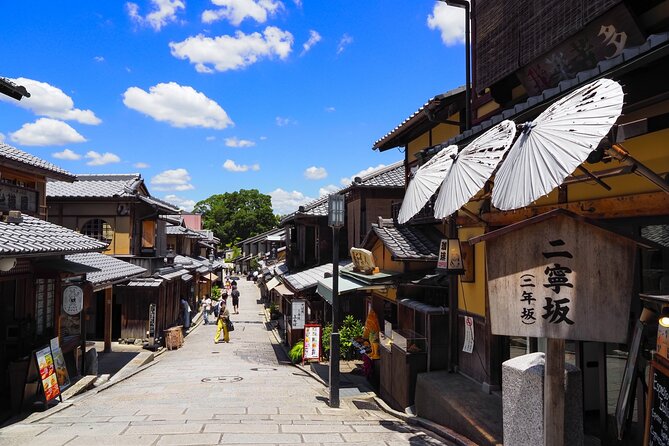
The walk ends at Kiyomizu-dera, a UNESCO World Heritage Site dating to the eighth century. Built on a hillside above Kyoto, it is one of the city’s essential sights and a fitting end to a route through eastern Kyoto.
The scheduled stop is about 10 minutes, and admission is not included. The other listed stops do not require an additional ticket according to the tour details, but you should budget separately for Kiyomizu-dera.
Ten minutes is enough for the guide to position the temple within Kyoto’s religious and architectural story. It is not enough for a complete visit. Plan to enter on your own after the tour if you want to explore the temple buildings, viewpoints, and grounds at a slower pace.
Ending here gives you flexibility. You can stay in Higashiyama, continue through the nearby lanes, or make your way elsewhere by public transportation. The tour itself does not include lunch or transportation back to the starting point.
What the guides add to the walk
The most praised part of this experience is the guide’s ability to make history understandable without turning the walk into a lecture. Jay is repeatedly described as strong on Japanese history, with clear English and a good sense of humor. He is also noted for answering questions and helping with photographs.
Ben is associated with memorable stories, useful suggestions for gardens and temples, and an easy pace. Ayumi is described as lively and engaging, with particular strength in explaining geisha and samurai subjects. Michel and Tommy receive similar praise for being friendly, flexible, and helpful.
The guide lineup means your experience will not be identical on every date. Still, the consistent aim is clear: give you the background needed to understand what you see.
One useful detail is that the tour may run slightly over three hours. Jay reportedly told the group in advance when the walk would continue longer, allowing anyone with another reservation to leave. If you have a train, restaurant booking, or evening activity, leave extra time after the scheduled finish.
Price, pace, and practical value
At $40 per person, this is a fair price for a three-hour English-language walking tour covering Gion and Higashiyama. You are paying for route planning, historical explanation, and the ability to ask questions as you go.
The value is strongest if Kyoto is new to you. On your own, you can visit the same districts, but it is easy to miss the meaning behind a bridge, gate, pagoda, or slope. The tour helps you connect the sites into one story.
The price is less compelling if you want long temple visits, shopping time, or a relaxed food stop. Lunch, gratuity, and admission to Kiyomizu-dera are not included. The walk also has few planned breaks beyond bathroom stops, so plan ahead.
A maximum of 12 people keeps the experience manageable, though it is still a group walk. It is not designed for complete silence or private pacing. If you prefer a personal schedule, a private tour would suit you better, but this option costs much less.
Who should book this Kyoto walk?
I would choose this tour early in a Kyoto visit, especially if you want a clear introduction to Gion and the eastern hills. It suits adults who enjoy history, religious sites, traditional streets, and a guide who can answer detailed questions.
It can work for families, but consider the length and subject matter. An eight-year-old has completed the route, yet the heavy historical content and repeated temple stops may test younger children. Bring water and snacks, and be realistic about the stairs.
The walk is also a good fit for visitors who want practical advice for the rest of their stay. Guides have suggested places to visit the next day, including gardens, temples, and shops. That kind of local orientation can help you use later days more wisely.
People with mobility limits should think carefully before booking. A moderate fitness level is requested, and the route includes slopes, uneven paving, and stair climbing. Service animals are allowed, and the start is near public transportation, but the tour does not promise a step-free route.
Booking details worth knowing
You receive a mobile ticket, and confirmation arrives when you book. The meeting point is in front of Ben’s Cookies Kyoto Shijo at 89 Shinchō, Shimogyo Ward.
The tour ends in front of the entrance to Kiyomizu-dera at 1-chōme-294 Kiyomizu, Higashiyama Ward. You are responsible for your own return transportation, food, and any temple admission.
Free cancellation is available up to 24 hours before the local start time. Later cancellations and changes are not refunded or accepted. The experience requires good weather and a minimum number of participants. If poor weather or low enrollment cancels the tour, you are offered another date or experience, or a full refund.
Should you book the Kyoto Gion Historical Walking Tour?
Book it if you want one efficient, story-filled walk through Gion and Higashiyama, and if you value explanation as much as photographs. The route covers major sights, finishes at Kiyomizu-dera, and costs less than a private guide.
Skip it if you want a slow temple day, plenty of food stops, or freedom to linger at every lane. For most first-time visitors with sound walking shoes and three open hours, this is a smart way to get your bearings and learn why Kyoto’s eastern districts matter.
FAQ
How long does the Kyoto Gion Historical Walking Tour last?
The tour lasts approximately three hours.
Where does the tour begin?
It begins in front of Ben’s Cookies Kyoto at 89 Shinchō, Shimogyo Ward, Kyoto.
Where does the tour end?
It ends in front of the entrance to Kiyomizu-dera in Kyoto’s Higashiyama Ward.
What sights are included?
The route includes Tatsumi Bridge, Gion Shimbashi, Chion-in Temple Sanmon, Chion-in Temple, Maruyama Park, Nene-no-Michi, Yasaka Pagoda, Ninen-zaka, Sannen-zaka, and Kiyomizu-dera.
Is admission to Kiyomizu-dera included?
No. Admission to Kiyomizu-dera is not included. Lunch and gratuity for the local guide are also excluded.
How many people can join the tour?
The tour has a maximum of 12 participants.
Can I cancel for a full refund?
Yes, if you cancel at least 24 hours before the experience’s local start time. Cancellations or changes made less than 24 hours before the start are not refunded.
More Historical Tours in Kyoto
- Kyoto Gion: 2-Hour Geisha Culture & History Walking Tour
★ 5.0 · 1,186 reviews - Historical Kyoto E-Bike Tour
★ 5.0 · 181 reviews - Kyoto: Nijo Castle World Heritage Guided Tour with Admission
★ 5.0 · 128 reviews - Kyoto: Private 2.5 Hour Historical Walking Tour
★ 4.9 · 121 reviews
Just added around Kyoto
- Private Guided Traditional Buddhist Cooking in Japan★ 5.0 · 16 reviews
- Kyoto: Gion Geisha District & Sake-in-Hand Walking Tour★ 5.0 · 37 reviews
- Your Private Vacation Photography Session In Kyoto★ 5.0 · 110 reviews
- Kyoto: Zen Meditation at a Private Temple with a Monk★ 5.0 · 25 reviews
- Traditional Japanese Washi Papermaking- Kyoto morning★ 5.0 · 77 reviews
- Kyoto Wagashi(Japanese sweets) Cooking Class near Fushimiinari★ 5.0 · 60 reviews
- Private Pewter Sake Cup Experience with a Kyoto Artisan★ 5.0 · 31 reviews
- Kyoto Private 6 hour Tour: English Speaking Driver Only, No Guide★ 5.0 · 88 reviews
Walking Tours, compared.

Kyoto Geisha Walking Tour: Gion District & Hidden Gems
Read our review →
Tokyo Tsukiji Fish Market Food and Culture Walking Tour
Read our review →
Gion Magical Night Walking Tour with Geisha Trivia
Read our review →
Imperial Palace and Shogun Historical Walking Tour
Read our review →
Gion Geisha District Walking Tour – Stories of Geisha
Read our review →
Asakusa Walking Tour with Sensoji Temple Visit
Read our review →
Kyoto Gion Geisha District Walking Tour – The Stories of Geisha
Read our review →Browse the lists this tour appears in