
REVIEW · CYCLING TOURS
Historical Kyoto E-Bike Tour
Kyoto is spread out, and its best sights rarely sit next door to one another. This small-group e-bike tour links four major stops, from Kitano Tenmangu Shrine and Kinkaku-ji in the northwest to Arashiyama’s bamboo forest and Tenryu-ji, while taking you through ordinary Kyoto streets in between.
I like the way the electric assist keeps the ride manageable, even when you have a full day of sightseeing ahead. I also like the maximum group size of eight, which gives guides such as Jody, Pohan, Diego, Jorge, George, and Benjamin room to explain local customs, answer questions, and keep an eye on the group.
The main caution is that this is not simply a five-hour bike ride. A good part of the day is spent walking around temples and the bamboo forest, plus time for lunch. You also ride on city streets shared with cars, buses, mopeds, cyclists, and pedestrians, so you should be comfortable handling a bike in traffic.
In This Review
- Key details that shape the day
- Why an e-bike works so well in Kyoto
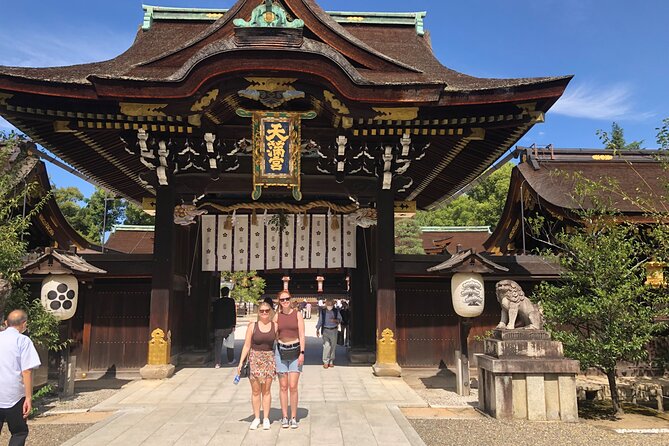
- Starting at Kitano Tenmangu Shrine
- Kinkaku-ji, Kyoto’s Golden Pavilion
- Riding toward Arashiyama and the Bamboo Forest
- Tenryu-ji and its remarkable garden
- The guides make the difference
- Lunch, water, and the practical costs
- Safety, pace, and what to wear
- Who will get the most from this tour
- Should you book the Historical Kyoto E-Bike Tour?
- FAQ
- How long does the Historical Kyoto E-Bike Tour last?
- Which sights are included?
- Is an e-bike provided?
- How many people can join the tour?
- Is lunch included in the price?
- Where does the tour begin and end?
- Can I cancel for a full refund?
Key details that shape the day
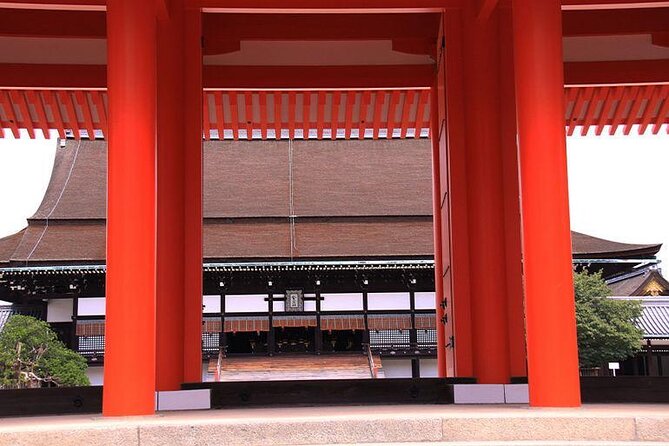
- Four major Kyoto sights in one outing: Visit Kitano Tenmangu, Kinkaku-ji, the Arashiyama Bamboo Forest, and Tenryu-ji.
- E-bikes reduce the strain: The electric bikes are designed to make the long route easier, not to remove the active part of the experience.
- A maximum of eight people: The small group helps the guide manage crossings and give more personal attention.
- The back streets are part of the attraction: You see more than the temple entrances, cycling through quieter neighborhoods and scenic city routes.
- Lunch requires your own money: The lunch stop is separate from the tour price, and several restaurants are cash only, so carry yen.
- The meeting point takes some effort to find: Memory Kyoto Bike Tour is at 8-6 Umaryo-cho, Nishikyo Nakagyo-ku, Nakagyo Ward, near public transportation, but the entrance can be tucked away on a back road.
Why an e-bike works so well in Kyoto
A walking tour can show you a neighborhood well, but Kyoto’s famous sights are scattered across a wide area. By bike, you can connect places that would otherwise require buses, trains, taxis, or a great deal of walking.
The electric assist matters most because the route lasts about five to six hours. You still pedal, but the bike takes some of the edge off the distance. That makes this a practical choice if you want to see several sights in a single morning and afternoon without spending the entire day waiting for buses.
I would not call the ride effortless. You need to stop, start, turn, and follow the guide through city streets. Some parts feel lively and a little tense, especially if you are not used to riding beside traffic. The tour is best for adults, older children, and teenagers who already ride confidently on roads.
The route also gives you a look at Kyoto beyond its postcard views. You pass through narrow streets and residential areas, where the city feels more like a place where people live than a chain of famous photo stops. That change of pace is one of the tour’s strongest features.
A few more Kyoto trips to weigh up
- Hidden Kyoto E-Biking tour
★ 5.0 · 1,843 reviews - Bike Tour Exploring North Kyoto plus Lunch
★ 5.0 · 1,087 reviews - Arashiyama Bamboo Forest & Hidden Gems Bike Tour (Early Bird)
★ 5.0 · 613 reviews
Starting at Kitano Tenmangu Shrine
The first stop is Kitano Tenmangu Shrine, a useful introduction to Kyoto’s religious traditions. The shrine is linked with Sugawara no Michizane, a historical figure honored as the deity of learning.
Your guide explains the shrine’s background and the customs connected with it. You may also have the chance to take part in traditional practices at the sites, though small offerings, prayer candles, or wishes may require low-value coins. I would bring a few coins if participating in shrine and temple rituals matters to you.
Kitano Tenmangu is also famous for its roughly 1,000 plum trees. They bloom in early spring, creating one of the day’s most attractive settings during the right season. Outside plum-blossom time, the shrine remains worthwhile for its religious importance and architecture, but the floral display will naturally vary.
The scheduled visit lasts about 30 minutes. That is enough for an explanation and a look around, but it is not a slow, detailed shrine study. The advantage is that you have several more destinations ahead.
Kinkaku-ji, Kyoto’s Golden Pavilion
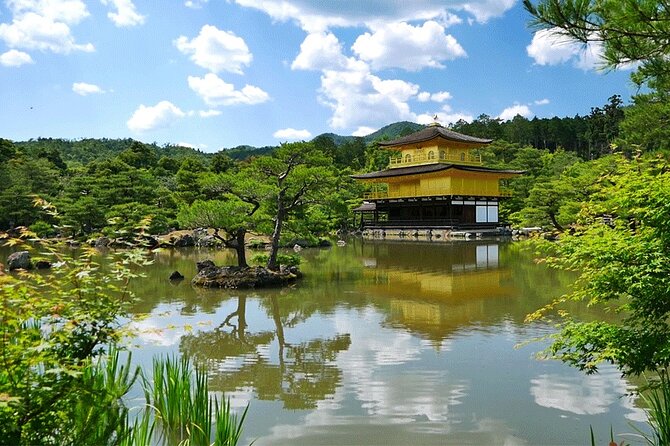
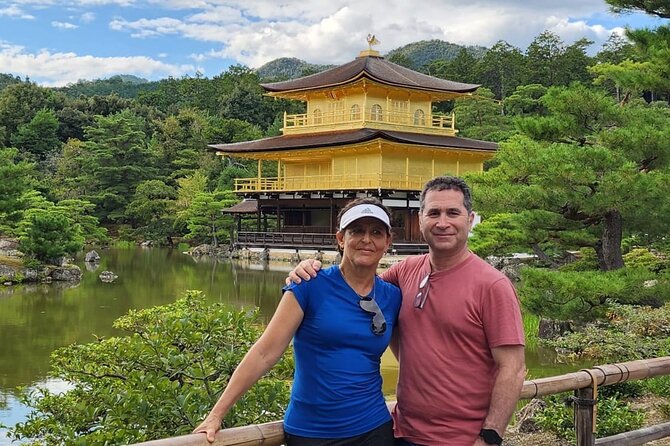
Kinkaku-ji is the visual showstopper. The upper structure is covered in gold leaf and reflects across the pond, creating the image most people associate with Kyoto.
The setting is beautiful, but expect a popular site rather than a quiet temple visit. Your guide adds context about the building’s origins and meaning, which helps turn a quick photograph into a more useful understanding of the place.
The stop lasts about 45 minutes. That gives you time to follow the route, pause at the pond, take photographs, and listen to the explanation. It does not give you unlimited freedom to wander, so keep an eye on the meeting time.
I like placing Kinkaku-ji early in the route. You see one of Kyoto’s essential sights before the day becomes too long, then move onward by bike rather than trying to work out another bus connection. The tradeoff is that the temple can be crowded, and the visit has a set schedule.
Riding toward Arashiyama and the Bamboo Forest
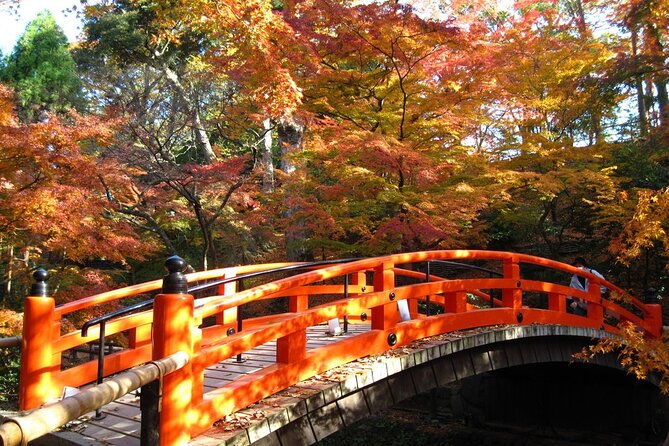
The ride to the western side of Kyoto is what makes this experience different from a standard temple tour. You are not simply dropped at Arashiyama. You travel there through city streets, with the route itself becoming part of the day.
The Bamboo Forest Trail takes about 45 minutes, including time to walk among the tall bamboo stalks. The grove has a strange, enclosed feel, with bamboo rising high above the path. It is one of those places that works best when you stop looking only for a perfect photograph and pay attention to the sound, height, and shifting light around you.
It is also a very popular stop. Do not expect to have the path to yourself. The guided format helps because you receive an explanation and a clear amount of time, but it also means you will not linger as long as you might on a private visit.
One useful touch is that the guide may help you decide where to finish your walk in the Arashiyama area. One group also added a stop at the Kimono Garden, showing that the exact flow can sometimes adjust to the day and the group. Treat that as a possible extra, not a guaranteed part of the published route.
Same city, a completely different kind of day:
- PERFECT KYOTO 1-Day Bus Tour
★ 5.0 · 13,518 reviews - Kyoto: Fushimi Inari, Kinkakuji, Bamboo Grove 1 Day Bus Tour
★ 4.8 · 4,316 reviews - Kyoto: Tea Ceremony in a Traditional Tea House in Kiyomizu
★ 4.9 · 3,519 reviews - Kyoto Geisha Walking Tour: Gion District & Hidden Gems
★ 4.7 · 3,273 reviews
Tenryu-ji and its remarkable garden
Tenryu-ji is the final named sight. It has been a UNESCO World Heritage Site since 1994, and its garden is the reason to pay attention here rather than treating the temple as one more stop on a long list.
The garden gives you a calmer contrast to Kinkaku-ji’s gold and the bamboo grove’s vertical walls. Your guide explains the temple’s place in Japanese religious and cultural life, then gives you time to walk through the garden.
This visit is scheduled for about 45 minutes. Like the other stops, it combines walking, listening, and photographs. If you prefer to study every building at length, the pace may feel brisk. If your goal is to understand Kyoto’s major sights in one day, the timing works well.
The tour ends back at the original meeting point. That matters when planning your evening, since you are not left in Arashiyama with a bicycle or expected to make your own way across the city.
The guides make the difference
The guide is central to this experience. Names associated with the tour include Jody, Pohan, Diego, Jorge, George, and Benjamin, and the strongest praise focuses on their clear explanations, patience, humor, and attention to safety.
Jody is described as having lived in Japan for more than 20 years and bringing an expat’s perspective to Japanese customs and daily life. His past teaching experience also comes through in the way he explains religion, etiquette, and history without making the day feel like a classroom.
Pohan has been praised for handling difficult weather, including snow and rain, and for adjusting the order of the day when conditions called for it. Diego is noted for fun facts, a friendly manner, and a good sense of how to keep a family engaged. George received particular credit for explaining Kyoto’s cycling rules and street crossings.
That variety matters because a six-hour tour depends on personality. You are spending much of the day with one guide and a small group. The best guide will do more than point at a temple. They will explain why people bow, how a shrine differs from a temple, and what you are seeing in everyday Kyoto.
On larger group tours, it is easy to drift to the back and miss half the explanation. With up to eight people, the guide can usually keep the group together and respond to individual questions. On some outings, two guides have ridden at the front and back, which adds reassurance on city streets, though that arrangement should not be assumed for every departure.
Lunch, water, and the practical costs
A bottle of water is included, which is a small but welcome detail during a long active outing. Lunch is part of the day’s schedule, but the food itself is not included in the $99.49 price.
The lunch location can vary. Options mentioned include a ramen restaurant, a food court with Japanese street food, and a local restaurant with many choices. One lunch stop featured robot carts delivering food, adding a bit of modern Kyoto fun to the day.
Bring yen. Some lunch places are cash only, and you may also want small coins for temple or shrine customs. If you have dietary needs, tell the guide early. Jody is specifically praised for paying attention to food requirements, but it is still wise to communicate clearly before ordering.
At $99.49 per person, the tour is not the cheapest way to see Kyoto. You are paying for the e-bike, helmet, guide, route planning, and a day that connects sights spread across the city. Compared with arranging several bus rides, entrance stops, and a self-guided cycling route, the price can be fair for a first visit.
The value is strongest if your time in Kyoto is limited. It is weaker if you prefer to spend an entire morning at one temple, choose your own lunch, or stop for photographs whenever you like.
Safety, pace, and what to wear
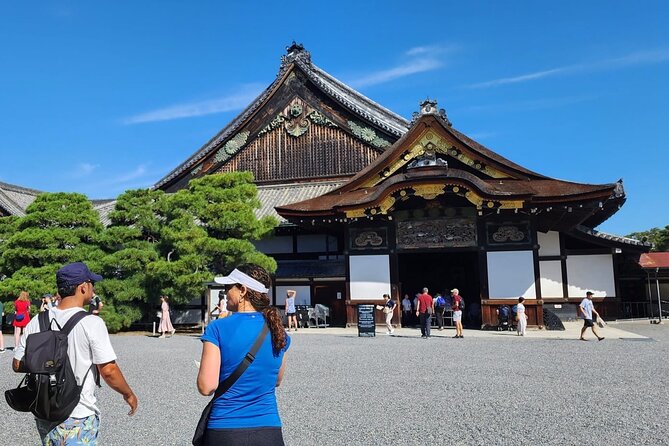
The guides explain street crossings and local cycling rules, but you remain responsible for controlling your bike. Kyoto has few dedicated bike paths in many areas, and you may share roads or paths with buses, cars, mopeds, pedestrians, and other cyclists.
I would book this only if you are comfortable riding in an urban setting. Younger children or inexperienced cyclists may find the traffic stressful. Confident teenagers can be fine, but the city environment is different from a quiet park path.
The e-bikes are described as newer, comfortable, and easy to pedal. A helmet is provided. Wear clothes suitable for both cycling and temple visits, since the day includes substantial walking at every stop.
Rain or snow does not automatically end the outing. Guides have adjusted the order and pace in difficult weather. Still, conditions can affect comfort and visibility, so check the forecast and dress accordingly. A change in the route may be sensible, but it is not a promise that every stop will feel the same in poor weather.
The meeting point is at Memory Kyoto Bike Tour, 8-6 Umaryo-cho, Nishikyo Nakagyo-ku, Kyoto city, postal code 604-8492. It is near public transportation, though the entrance can be hard to spot because it is down a back road without much signage. Allow extra time to find it.
Who will get the most from this tour
I would choose this tour for a first or second visit to Kyoto when you want a useful overview without relying on crowded buses. It suits couples, families with confident teenage riders, and people who enjoy active sightseeing but do not want a strenuous cycling challenge.
It is also a good opening activity for your Kyoto stay. The guide’s explanations about shrines, temples, customs, and food can help you understand the places you visit afterward on your own.
You may want another style of tour if you have limited cycling experience, dislike sharing roads with traffic, or want long, unhurried visits. The day moves at a practical pace, and the walking is more substantial than the word e-bike might suggest.
Free cancellation is available up to 24 hours before the start time for a full refund. Changes or cancellations made inside that window are not accepted for a refund.
Should you book the Historical Kyoto E-Bike Tour?
I would book it if you want to cover a lot of Kyoto in one day and like the idea of seeing the city between the famous sights. The strongest reasons are the e-bike assist, the small group, the mix of major temples and ordinary streets, and guides who explain both history and daily customs.
Bring yen for lunch and small offerings, allow time to find the meeting point, and be honest about your cycling ability. If you can handle city riding and accept a schedule with plenty of walking, this is a smart, active way to connect Kinkaku-ji, Arashiyama, and several important Kyoto sites without spending your day decoding bus routes.
FAQ
How long does the Historical Kyoto E-Bike Tour last?
The experience lasts approximately five to six hours. The remaining time beyond the named stops is used for cycling between locations and lunch.
Which sights are included?
The route includes Kitano Tenmangu Shrine, Kinkaku-ji Temple, the Arashiyama Bamboo Forest Trail, and Tenryu-ji Temple.
Is an e-bike provided?
Yes. An e-bike and helmet are provided for the tour, and the electric assist is intended to reduce physical effort.
How many people can join the tour?
The tour has a maximum group size of eight people.
Is lunch included in the price?
Lunch is scheduled during the day, but the food is not included in the listed price of $99.49 per person. Bring yen because some lunch locations are cash only.
Where does the tour begin and end?
The tour starts at Memory Kyoto Bike Tour, 8-6 Umaryo-cho, Nishikyo Nakagyo-ku, Kyoto city. It ends back at the same meeting point.
Can I cancel for a full refund?
Yes. You can cancel at least 24 hours before the local start time for a full refund. Cancellations or changes made less than 24 hours before the start time are not accepted for a refund.
More Historical Tours in Kyoto
- Kyoto Gion: 2-Hour Geisha Culture & History Walking Tour
★ 5.0 · 1,186 reviews - Kyoto Gion Historical Walking Tour
★ 5.0 · 188 reviews - Kyoto: Nijo Castle World Heritage Guided Tour with Admission
★ 5.0 · 128 reviews - Kyoto: Private 2.5 Hour Historical Walking Tour
★ 4.9 · 121 reviews
Just added around Kyoto
- Private Guided Traditional Buddhist Cooking in Japan★ 5.0 · 16 reviews
- Kyoto: Gion Geisha District & Sake-in-Hand Walking Tour★ 5.0 · 37 reviews
- Your Private Vacation Photography Session In Kyoto★ 5.0 · 110 reviews
- Kyoto: Zen Meditation at a Private Temple with a Monk★ 5.0 · 25 reviews
- Traditional Japanese Washi Papermaking- Kyoto morning★ 5.0 · 77 reviews
- Kyoto Wagashi(Japanese sweets) Cooking Class near Fushimiinari★ 5.0 · 60 reviews
- Private Pewter Sake Cup Experience with a Kyoto Artisan★ 5.0 · 31 reviews
- Kyoto Private 6 hour Tour: English Speaking Driver Only, No Guide★ 5.0 · 88 reviews
Cycling Tours, compared.


3h Tokyo E-Bike Tour: Hidden Gems, and Local Life with guide
Read our review →
Arashiyama Bamboo Forest & Hidden Gems Bike Tour (Early Bird)
Read our review →
Hiroshima in a Nutshell: Morning Bike Adventure
Read our review →
5 Top Highlights of Kyoto Full Day Bike Tour (E-bike option)
Read our review →Browse the lists this tour appears in