
REVIEW · TEMPLE & SHRINE TOURS
Kyoto: Fushimi Inari Shrine and Tofukuji Temple E-Bike Tour
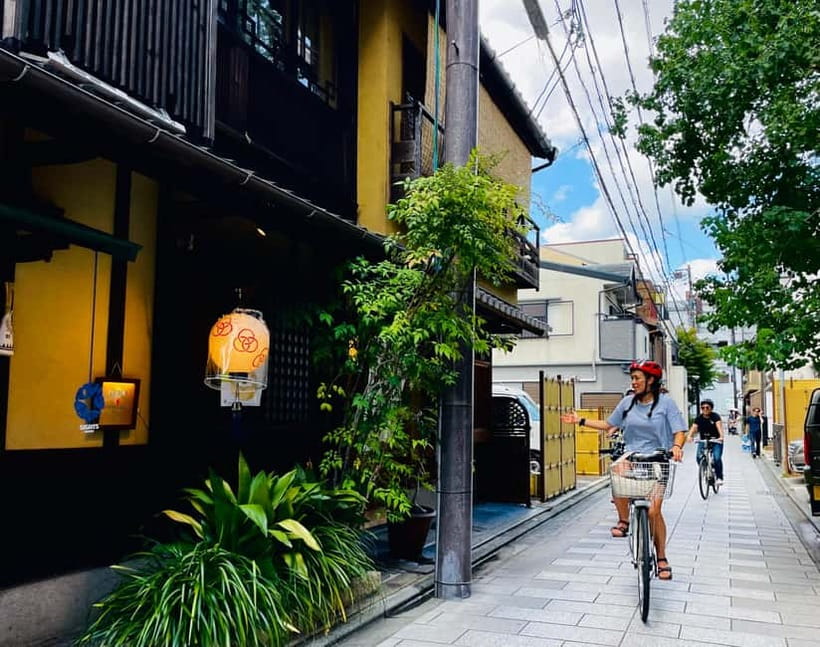
Fushimi Inari is one of Kyoto’s essential sights, but the best part of this tour may be how you reach it. You pedal from the Higashiyama-Sanjo area through Gion, quiet residential lanes, river paths, and less-visited shrines before arriving at the famous torii gates. Guide Maki gives the ride a warm, personal feel, mixing Japanese history, religion, geisha customs, and everyday life.
I like the way the e-bikes make a wide slice of southeastern Kyoto manageable in four hours. I also like the balance between major sights and calmer stops, especially the quiet pause in Tofukuji’s Zen garden. The main consideration is that this is still a cycling tour: you must be comfortable riding in traffic, walking at the temple and shrine, and keeping to a group pace. Time at Fushimi Inari can also feel short if you want to explore far up the mountain.
In This Review
- Key points at a glance
- Why an e-bike is a smart way to see southeast Kyoto
- Starting near Higashiyama-Sanjo
- Gion, geisha culture, and the quieter side of Kyoto
- Fushimi Inari Shrine and the meaning behind the torii gates
- Tofukuji Temple and a slower Zen moment
- The return route along Kyoto’s waterways
- How difficult is the four-hour ride?
- The guide can make or break the experience
- Is $83 a fair price?
- Who should book this Kyoto e-bike tour?
- Should you book it?
- FAQ
- Where does the Kyoto e-bike tour meet?
- How long does the tour last?
- What language does the guide speak?
- How many people can join the group?
- Are the electric bicycle and helmet included?
- Are entrance fees included?
- Is food included?
- Who should not join this tour?
Key points at a glance
- Gion before the crowds: Ride through Kyoto’s famous geisha district while learning about local customs and traditional neighborhoods.
- E-bikes for an easier ride: Electric assistance helps on slopes and keeps the four-hour route within reach for ordinary cyclists.
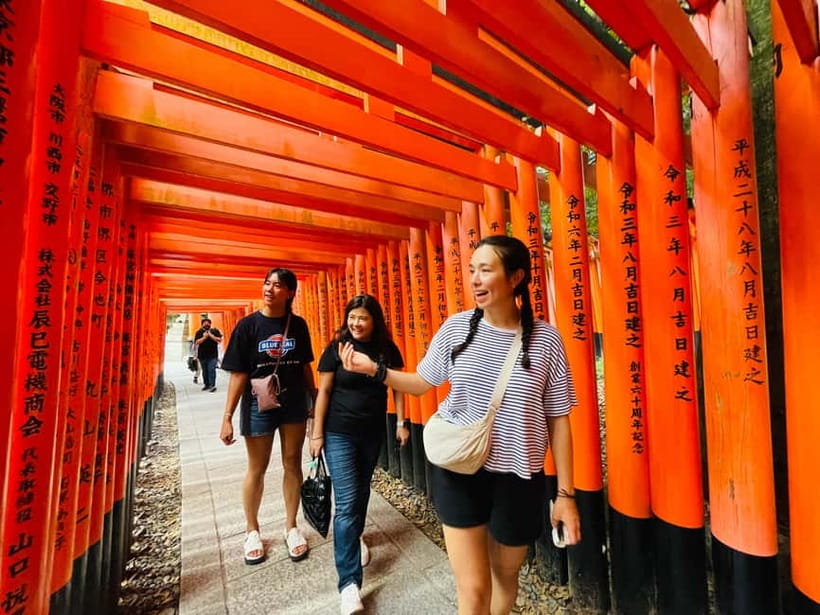
- Fushimi Inari with context: Learn how the shrine’s torii gates, worship practices, and Shinto traditions fit together.
- A quiet Tofukuji pause: Step away from the city noise and spend reflective time in a Zen garden.
- Small group, personal guide: The group is limited to eight, and Maki is praised for her humor, clear English, local stories, and care with road safety.
- More than sightseeing: The route includes side streets, rivers, smaller shrines, and glimpses of daily Kyoto life.
Why an e-bike is a smart way to see southeast Kyoto
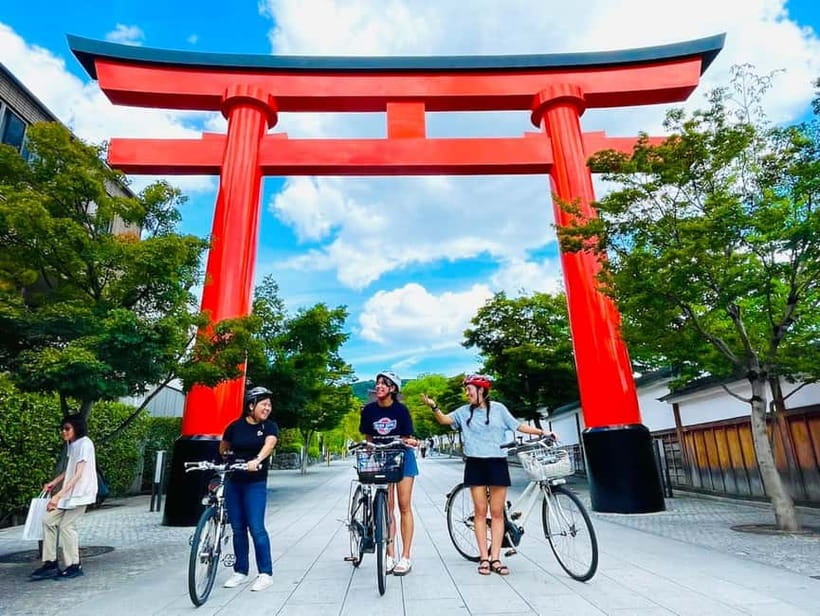
Kyoto’s famous sights are spread out, and a morning spent walking between temples can quickly become a full day of gates, gravel paths, and tired feet. This tour uses an electric bicycle to link several areas without turning the outing into an endurance test.
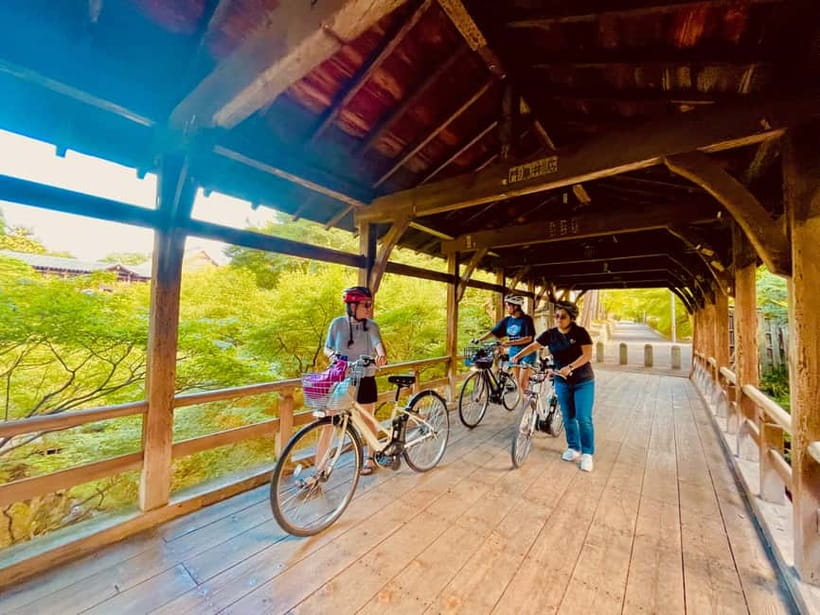
The e-bike matters most when you are slightly tired or facing a hill. You still pedal, but the motor takes the sting out of steeper sections and helps the group maintain a steady pace. Several riders describe the bicycles as clean, sturdy, easy to use, and well maintained. That is important in a small group, where one struggling cyclist can slow everyone down.
You receive a short orientation on riding in Japan before setting off. Maki explains how to handle the roads and leads the group through quieter streets where possible. The route does include some busy areas, so this is not a traffic-free cycle path from start to finish. Still, the emphasis on safety and the use of side streets make it a more relaxed introduction to Kyoto cycling than setting out alone.
The group size is capped at eight people. That gives Maki room to answer questions, check that riders are comfortable, and stop the group without creating a large moving block. It also means you need to follow the guide rather than race ahead. The ride is social, but not designed as a private tour unless your booking happens to fill the group.
More Temple & Shrine Tours in Kyoto
- Kyoto: Fushimi Inari, Kinkakuji, Bamboo Grove 1 Day Bus Tour
★ 4.8 · 4,316 reviews - Kyoto: Tea Ceremony in a Traditional Tea House in Kiyomizu
★ 4.9 · 3,519 reviews - Kyoto: Tea Ceremony Ju-An at Jotokuji Temple
★ 4.9 · 3,207 reviews
Starting near Higashiyama-Sanjo
The meeting point is Pedal Adventure Kyoto, at a temple near Higashiyama-Sanjo. The tour begins with practical preparation rather than a rushed departure. You learn how to use the electric bicycle, receive a helmet, and get guidance on riding in Japan.
Wear clothes that let you pedal freely and shoes suitable for both cycling and temple visits. Sunscreen is useful on sunny days, and the operator supplies a water bottle, with additional drink breaks included in the experience. Bring a camera if you want photographs, but keep it easy to reach without interfering with your riding.
Insurance and the bicycle rental are included, as are entrance fees for two places. Hotel pickup and drop-off are not included, so you need to make your own way to the meeting point. Lunch is also not part of the tour, though the included snack helps bridge the four-hour outing.
Gion, geisha culture, and the quieter side of Kyoto
The first major section takes you through Gion, Kyoto’s best-known traditional entertainment district. This is where your guide can explain geisha culture and the customs that shape the area. The value is not just in seeing old-looking streets. You get help understanding what you are looking at and how to behave respectfully around working neighborhoods.
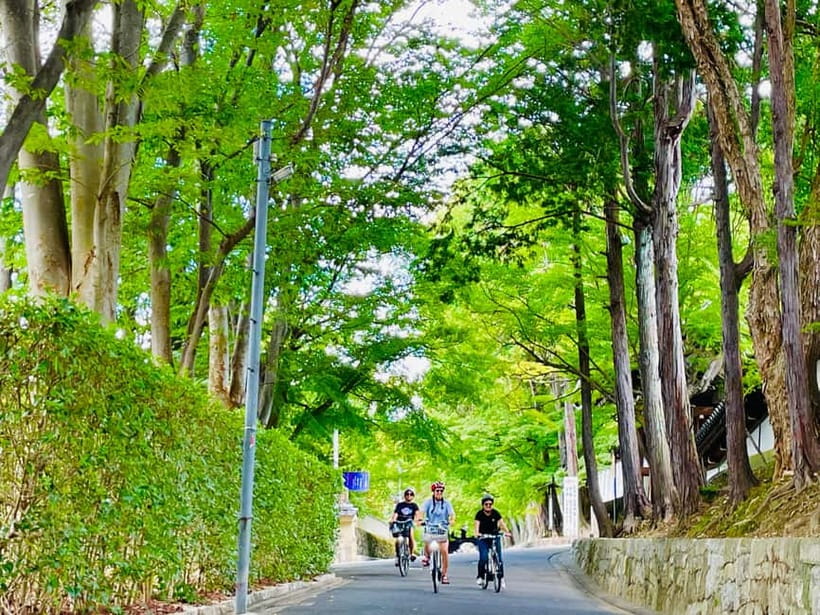
Cycling is especially useful here because you can move beyond the most photographed lanes. The route continues through suburban areas, residential streets, alleys, and waterways where daily life is more visible. You might pass places you would never put on a standard sightseeing list, but those ordinary stretches help give Kyoto a human scale.
This is one of the strongest parts of the tour for first-time visitors. A map can show you Gion, Fushimi Inari, and Tofukuji, but it cannot easily explain how the districts connect or what lies between them. Maki adds personal stories and practical cultural notes, including details about Japanese manners, traditions, and local life.
The ride also gives you a break from the stop-start pattern of temple sightseeing. You are not standing in a queue at every point of interest. Instead, you alternate between riding, listening, taking photographs, and short visits. That rhythm suits people who want culture but do not want seven or eight hours of temple interiors and shrine grounds.
Fushimi Inari Shrine and the meaning behind the torii gates
Fushimi Inari is the tour’s headline stop. Its rows of orange torii gates are among the most recognizable sights in Japan, and the shrine draws large crowds for good reason. The gates create a striking passage up Mount Inari, with smaller shrines and wooded paths extending beyond the lower grounds.
A guide makes this visit more useful than a quick photo stop. Maki explains the shrine’s place in Shinto and discusses the customs you encounter there. You can ask questions about the meaning of the shrine, Japanese religious practice, and the difference between Shinto and Buddhism.
You should set your expectations carefully. The tour includes a visit to Fushimi Inari, but four hours must also cover the cycling route and Tofukuji. You are unlikely to have unlimited time to climb the entire mountain. If hiking all the way to the upper viewpoints is a top priority, plan a separate visit on another day.
That limitation is also part of the appeal. You see the most important lower section and receive background that helps you return independently. The tour is meant to orient you to Kyoto, not replace every major sight with an exhaustive visit.
Respectful behavior matters here. Fushimi Inari is an active place of worship, not only a backdrop for photographs. Your guide can show you how to approach the shrine and explain the customs, so pay attention before wandering off with your camera.
Same city, a completely different kind of day:
- PERFECT KYOTO 1-Day Bus Tour
★ 5.0 · 13,518 reviews - Kyoto Geisha Walking Tour: Gion District & Hidden Gems
★ 4.7 · 3,273 reviews - Kyoto: Gion Magical Night Walking Tour with Geisha Trivia
★ 4.9 · 2,393 reviews - Kyoto: 45-Minute Tea Ceremony Lesson Experience
★ 4.3 · 2,378 reviews
Tofukuji Temple and a slower Zen moment
After Fushimi Inari, the route includes Tofukuji Temple. This is a welcome change of pace. Fushimi Inari is famous for movement, color, and crowds, while Tofukuji gives you room to slow down and consider the quieter side of Japanese temple culture.
The Zen garden is the key feature of the stop. You get time to sit, look, and let the setting settle instead of rushing from one explanation to the next. That pause was singled out as a valuable part of the tour, and I agree with the idea behind it. A good cultural outing needs a little silence. Otherwise, every shrine becomes another item to check off.
Maki explains the difference between Buddhist temples and Shinto shrines along the way. That distinction can be confusing at first, especially because Japanese religious life often includes both traditions. Seeing the two kinds of places during one guided ride gives you a practical framework for recognizing them during the rest of your Japan trip.
The temple stop also helps balance the physical side of the activity. You have been cycling, stopping, and listening, so a calm garden gives your legs and attention a break. Comfortable clothing and shoes are essential because the tour combines riding with walking around the sites.
The return route along Kyoto’s waterways
The final ride returns toward the city, with the riverbank route serving as a pleasant close to the afternoon. The route is described as scenic and efficient, and the riverside section gives you a different view of Kyoto after the denser streets around Gion and Fushimi.
This last stretch is not just transport back to the shop. It lets you process what you have seen while moving at an easy pace. You may also get a chance to ask follow-up questions or request local suggestions for the rest of your time in Kyoto.
Maki is especially good at turning the ride into a conversation. Her English is described as very clear, and she uses humor, visual material such as a picture binder, and personal stories to make complicated subjects easier to follow. She also takes photographs for participants, a useful touch for families and couples who want pictures together.
One practical point: the group often rides in a line, and explanations are usually given after everyone stops. One rider suggested that a microphone and earpiece might help people hear every word. If you are hard of hearing, position yourself near Maki when the group gathers and ask her to repeat anything you miss.
How difficult is the four-hour ride?
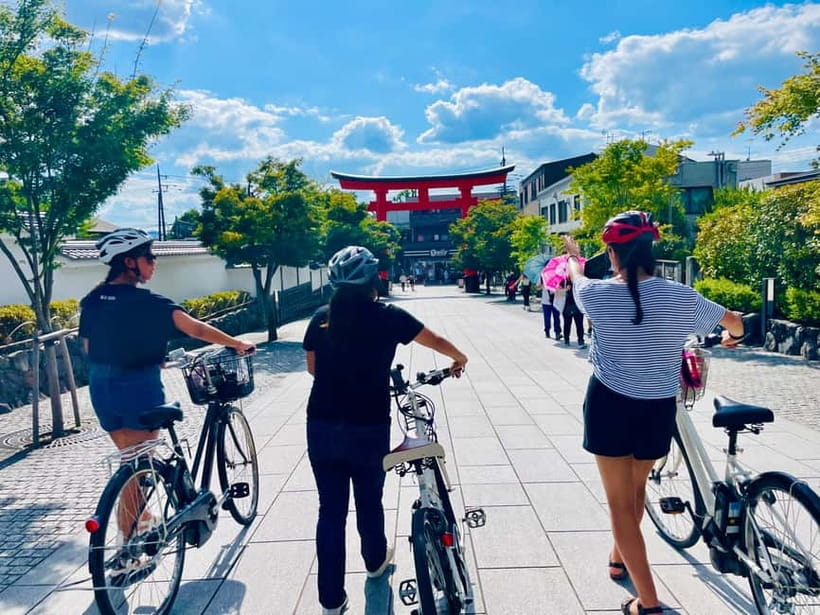
The cycling is generally described as easy, with frequent stops and electric assistance for slopes. You do not need to be a serious cyclist, but you should be able to ride a bicycle confidently and manage a mix of quiet lanes and busier roads.
The tour is not suitable for children under 12, pregnant women, or people with mobility impairments. It is also a poor fit if you dislike cycling in cities or want a purely walking-based cultural tour.
Families with teenagers can be a good match. The ride gives younger people something active to do, while the stories and site visits keep it from becoming only a bike outing. The minimum age also helps maintain a pace suited to adults and older children.
Summer heat deserves attention. The operator provides water and there are drink breaks, but you should still wear light, comfortable clothing and use sunscreen. In cooler months, layers are sensible because cycling can feel chilly at first and warmer once you are moving.
The guide can make or break the experience
The route is useful, but Maki is the strongest reason to book this particular tour. She brings humor, energy, and a clear interest in explaining Japan to people who are seeing it for the first time. Her style is lively without being limited to jokes. She covers history, samurai, religion, geisha culture, infrastructure, customs, and everyday life.
That range is helpful because Kyoto can otherwise feel like a parade of beautiful buildings without much connection between them. Maki explains why a place matters, then gives you room to look around. She is also willing to answer questions rather than deliver a fixed speech and move on.
Her personal stories add warmth, but the tour remains focused on Kyoto. That balance suits you if you want local perspective without a lecture. You should also expect a guide who pays attention to the group, gives riding instructions, and checks that people are safe on the roads.
The small group supports this approach. With no more than eight participants, it is easier to gather around a shrine, ask a question, or request a photograph. If you prefer complete independence, a private rental may suit you better. If you like having a local person manage the route and explain what you see, this format works well.
Is $83 a fair price?
At $83 per person, this is not the cheapest way to see Fushimi Inari. You can reach the shrine by train or local transport and visit many temples on your own for less. The price makes more sense when you count the bicycle, helmet, insurance, guide, snack, water, and two entrance fees.
You are also paying for the route design. The tour connects Gion, residential areas, Fushimi Inari, and Tofukuji in one half-day. Doing that independently would require planning, navigation, bicycle rental, and decisions about which smaller places are worth the detour.
The best value comes during your first days in Kyoto. You get a working orientation to the city, learn how to recognize Shinto and Buddhist sites, and receive ideas for what to see afterward. It can save you from spending the rest of your trip looking at temples without understanding their customs or setting.
The weaker value is for experienced cyclists who already know Kyoto and only want a rental bicycle. You would be paying for the guide and cultural interpretation, so book it for the explanations and route, not just the wheels.
Who should book this Kyoto e-bike tour?
I would choose this outing if you have one free half-day and want a broad introduction to southeastern Kyoto. It suits couples, families with teenagers, first-time visitors, and anyone who likes to combine sightseeing with light activity.
It is particularly useful if you find long temple days tiring. Four hours gives you a taste of several settings without consuming an entire day. You can then return to Fushimi Inari on your own if you want more time on the mountain.
I would think twice if your main goal is a long hike through every torii gate, a private guide, or a slow, detailed visit inside each temple. The route covers several places, so each stop has a set amount of time. You also need to accept city cycling and the occasional busy road.
The tour offers free cancellation up to 24 hours in advance and allows you to reserve now and pay later. Check the available starting times, then arrive ready to ride rather than dressed for a formal temple visit.
Should you book it?
Book this tour if you want Kyoto culture with movement, not a vehicle-based sightseeing loop. The combination of Gion customs, Shinto at Fushimi Inari, Zen at Tofukuji, quiet neighborhood streets, and riverside cycling gives you a useful first picture of the city.
The strongest case is the guide, Maki, whose humor, clear English, personal stories, and care on the roads shape the experience. The main tradeoff is limited time at the biggest shrine and the need to be comfortable on a bicycle. For most reasonably confident riders, the e-bike and frequent stops keep the outing manageable.
FAQ
Where does the Kyoto e-bike tour meet?
The meeting point is Pedal Adventure Kyoto, at a temple near the Higashiyama-Sanjo area. Hotel pickup and drop-off are not included.
How long does the tour last?
The tour lasts four hours. Starting times vary, so check availability when booking.
What language does the guide speak?
The live tour is conducted in English.
How many people can join the group?
The group is limited to eight participants.
Are the electric bicycle and helmet included?
Yes. The electric bicycle rental and helmet are included in the price.
Are entrance fees included?
Yes. Entrance fees for two places are included.
Is food included?
A snack and water bottle are included. Lunch is not included.
Who should not join this tour?
The activity is not suitable for children under 12, pregnant women, or people with mobility impairments. You should also be prepared for a mix of cycling and walking.
More E-Bikes in Kyoto
- E-Bike Tours of the highlights of Kyoto!!!
★ 5.0 · 291 reviews - Kyoto: City Secrets eBike Tour
★ 4.9 · 196 reviews - Kyoto: Hidden Gems E-Bike Tour with Local Japanese Guide
★ 4.9 · 189 reviews - Best of Kyoto: Ginkakuji & Path of Philosophy E-Bike Tour
★ 4.9 · 79 reviews
More Cycling Tours in Kyoto
- Hidden Kyoto E-Biking tour
★ 5.0 · 1,843 reviews - Bike Tour Exploring North Kyoto plus Lunch
★ 5.0 · 1,087 reviews - Arashiyama Bamboo Forest & Hidden Gems Bike Tour (Early Bird)
★ 5.0 · 613 reviews - 5 Top Highlights of Kyoto Full Day Bike Tour (E-bike option)
★ 5.0 · 511 reviews
Just added around Kyoto
- Taste of Nishiki Market Walking Food Tour with Local guide★ 5.0 · 17 reviews
- Kyoto: Sushi Making Class with Sushi Chef★ 4.8 · 64 reviews
- Kyoto: City Secrets eBike Tour★ 4.9 · 196 reviews
- Sacred Pathways: Discover the Philosopher’s Path of Kyoto★ 4.9 · 20 reviews
- Private Tour to Monkey Park and Arashiyama Highlights★ 5.0 · 22 reviews
- Private Nara Tour from Osaka – Meet at Your Hotel★ 5.0 · 22 reviews
- Private Sake Tasting in Central Kyoto with Sake Sommelier★ 5.0 · 13 reviews
- Kyoto : Private Custom Walking Tour With A Local Guide★ 4.6 · 144 reviews
Temple & Shrine Tours, compared.
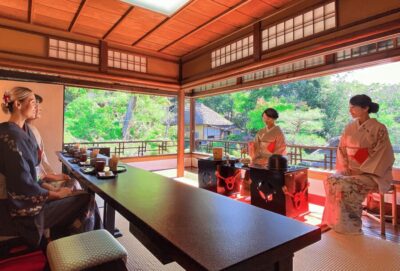
Tea Ceremony in a Traditional Tea House in Kiyomizu
Read our review →
Meiji Shrine, Asakusa, Skytree Bus Tour and Cruise
Read our review →
Asakusa Walking Tour with Sensoji Temple Visit
Read our review →
Kamakura & Enoshima Day Trip including Temple Tickets
Read our review →
Kyoto/Osaka: Nara, Fushimi Inari Taisha, Arashiyama Bus Tour
Read our review →
Nikko Toshogu Shrine and Kegon Waterfall Tour
Read our review →
Tokyo Panoramic 1 Day: Meiji Shrine, Asakusa, Odaiba and SKYTREE®
Read our review →Browse the lists this tour appears in