
REVIEW · CYCLING TOURS
Pedal Adventure Kyoto’s iconic landmarks on an e-bike tour
Kyoto’s most rewarding views often appear between the famous sights. This four-hour e-bike ride links Gion, Higashiyama, Fushimi Inari, Tofuku-ji, quiet residential lanes, and the Kamogawa River, so you see both the postcard Kyoto and the city where people actually live. Guides Maki and Mika bring local stories about geisha, Buddhism, Shinto, samurai, family customs, and everyday manners.
I like the easy electric assistance, which helps you cover far more ground without turning the day into a workout. I also like the small group limit of eight, since it gives the guide room to adjust the pace, answer questions, and point out small details you would likely pass by alone. The main consideration is weather: this is an outdoor ride, and Kyoto’s summer heat or rain can affect comfort.
In This Review
- Key points at a glance
- Why an e-bike makes sense in Kyoto
- Starting near Shogoin and reaching Gion
- Higashiyama, a temple, and the smaller details
- Fushimi Inari and the famous shrine gates
- Tofuku-ji and the ride beside the Kamogawa
- What the guide adds to the ride
- Price, group size, and what you receive
- Who should book this Kyoto e-bike tour?
- Practical details before you reserve
- Should you book it?
- FAQ
- How long does the Kyoto e-bike tour last?
- Which places does the tour visit?
- Are bicycles and helmets included?
- Is food or water included?
- How many people can join the tour?
- What happens if the weather is poor?
Key points at a glance
- A broad Kyoto route: See Gion, Higashiyama, Fushimi Inari, Tofuku-ji, neighborhood streets, and the Kamogawa River in one outing.
- Comfortable e-bikes: Electric assistance and baskets make the ride manageable and useful for carrying a jacket or small bag.
- Personal local guidance: Maki and Mika explain geisha and maiko traditions, Shinto and Buddhist practices, and customs you may not notice on your own.
- Small group size: The maximum of eight keeps the ride more personal and makes safety instructions easier to follow.
- Practical extras included: You receive a bicycle, helmet, bottled water, and snacks, with lunch left for you to arrange.
- Good value for active sightseers: At $86.22 per person, the tour combines transport, sightseeing, interpretation, and a full half-day of activity.
Why an e-bike makes sense in Kyoto
Kyoto can look compact on a map, but its major sights spread across several districts. Walking between Gion, Higashiyama, Fushimi Inari, and Tofuku-ji would take time and energy. Public transport can move you between areas, but it does not show you the narrow lanes, river paths, and residential streets between the stations.
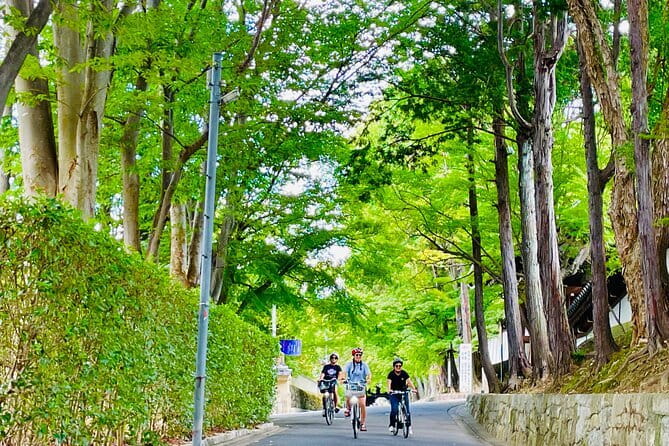
The e-bike solves that problem neatly. You still move at street level, yet the electric assistance takes the strain out of the ride. The route includes big roads, small side streets, quiet bike paths, and stretches beside the river. The city is mostly flat on this route, with few hills, so you can focus on the scenery and the guide’s commentary rather than watching the clock.
The bikes have baskets, a small but useful touch. You can place a backpack or jacket there instead of carrying it on your shoulders. Helmets and bottled water are supplied, and snacks are included during the outing. You should still dress for the season, especially in August, when the heat can be severe. One useful approach is to bring extra water or an electrolyte drink, even though water is provided.
The riding is not presented as a race. Maki is praised for using clear hand signals and checking the group’s comfort, while the route can be adjusted to suit the people riding that day. That matters if one person in your party is a confident cyclist and another has less city-riding experience.
A few more Kyoto trips to weigh up
- Hidden Kyoto E-Biking tour
★ 5.0 · 1,843 reviews - Bike Tour Exploring North Kyoto plus Lunch
★ 5.0 · 1,087 reviews - Arashiyama Bamboo Forest & Hidden Gems Bike Tour (Early Bird)
★ 5.0 · 613 reviews
Starting near Shogoin and reaching Gion
The meeting point is at 19 Shogoin Higashimachi in Sakyo Ward. After you are fitted with your e-bike and helmet, the first ride to Gion takes about 10 minutes. That short opening stretch gives you time to get used to the bike, the electric assistance, and the group riding pattern.
Gion is Kyoto’s best-known geisha district, but it is more than a backdrop for photographs. Your guide explains the difference between geisha and maiko, along with the customs and training connected to these traditional performers. This context helps you look past the surface. A quiet wooden street is not simply an attractive lane; it is part of a neighborhood shaped by tea houses, performance, hospitality, and strict social traditions.
The Gion stop itself is listed as about 10 minutes, so expect an introduction rather than a long walking tour. That is a sensible choice on a route with several stops. You get the basic cultural frame, take in the streets, and keep moving before the district becomes the whole morning.
Remember that Gion is a working neighborhood. Keep your distance from people going about their business, avoid blocking narrow lanes, and listen to local guidance about photography. The bicycle is useful here because it lets you see the area without spending a long time on foot, but you may need to dismount or slow down in crowded sections.
Higashiyama, a temple, and the smaller details
From Gion, the group cycles for around 15 minutes toward Higashiyama. This part of the route is where the tour begins to feel different from a standard point-to-point sightseeing trip. You ride through older streets and residential areas, with the guide drawing attention to objects and customs that are easy to miss.
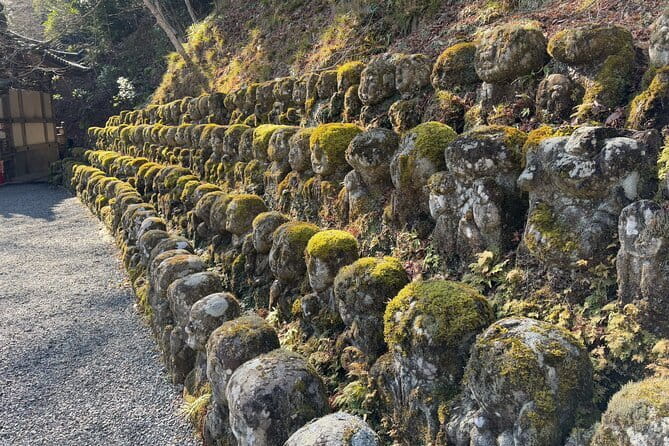
The itinerary includes a beautiful temple with lesser-known details, though the exact temple is not specified in the tour information. That means you should expect the guide to shape this portion around the day’s conditions and the group. The stop lasts about 50 minutes, including a quick snack, so there is time to look around rather than simply pause for a photograph.
The cultural explanations are a major reason to choose this tour. Guides discuss Buddhism and Shinto, including how their practices appear in daily life. You may learn why certain objects are placed outside homes, how shrine and temple customs differ, and what visitors should do when approaching a sacred site. These are the small lessons that make later independent visits easier and more respectful.
The guide’s personal connection to Kyoto also adds useful color. Mika is described as having grown up in the city, while Maki shares family stories and traditions. Personal examples can make abstract customs easier to understand, though the value here depends partly on which guide leads your departure. Both are associated with warm, lively English-language guiding.
Fushimi Inari and the famous shrine gates
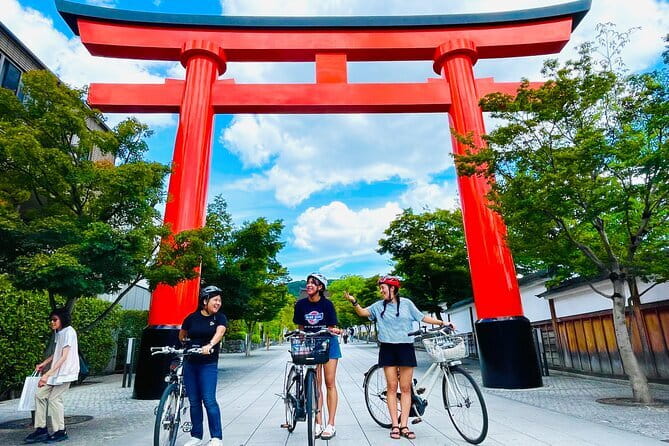
The route then reaches Fushimi Inari-taisha, one of Kyoto’s best-known sights. The stop is planned for about 40 minutes and centers on the shrine gates. This is the most immediately recognizable part of the ride, yet arriving by bicycle changes the rhythm of the visit.
Instead of spending the whole day traveling to one major attraction, you arrive with a guide who can explain what you are seeing and then continue to the next district. The red torii gates are striking, but their meaning and the shrine’s place in Shinto practice are what give the stop weight. Your guide covers shrine customs and explains how to behave at the site.
Forty minutes is enough for an introduction and a look around, but it is not enough to walk the full mountain trail at Fushimi Inari. If your main goal is to climb deep into the torii-lined paths, you will need a separate visit. This tour treats Fushimi Inari as one important chapter in a wider Kyoto route, not as an all-day shrine hike.
That tradeoff is worth considering. You get several cultural sites in one morning, but each receives limited time. I would choose this tour early in a Kyoto stay if I wanted orientation and cultural context. I would then return independently to any place that captured my interest, especially Fushimi Inari.
Same city, a completely different kind of day:
- PERFECT KYOTO 1-Day Bus Tour
★ 5.0 · 13,518 reviews - Kyoto: Fushimi Inari, Kinkakuji, Bamboo Grove 1 Day Bus Tour
★ 4.8 · 4,316 reviews - Kyoto: Tea Ceremony in a Traditional Tea House in Kiyomizu
★ 4.9 · 3,519 reviews - Kyoto Geisha Walking Tour: Gion District & Hidden Gems
★ 4.7 · 3,273 reviews
Tofuku-ji and the ride beside the Kamogawa
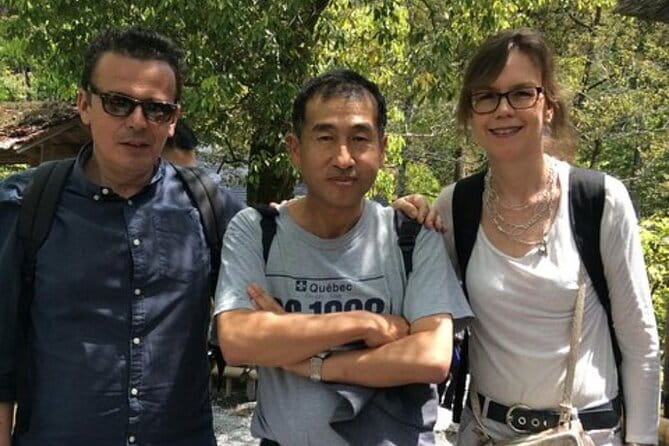
After Fushimi Inari, it is about a 10-minute cycle to the Tofuku-ji temple complex. The stop lasts roughly 20 minutes, making it shorter than the Higashiyama visit. Tofuku-ji gives the route another religious and architectural setting, while the guide explains how Buddhist traditions connect with the buildings and practices around you.
The short visit works because the tour is designed around movement. You are not lingering in one complex for hours. Instead, you see a series of places and learn how they fit into Kyoto’s spiritual and civic life. If you prefer long, quiet temple visits, this may feel rushed. If you want a varied introduction, the pace keeps the experience fresh.
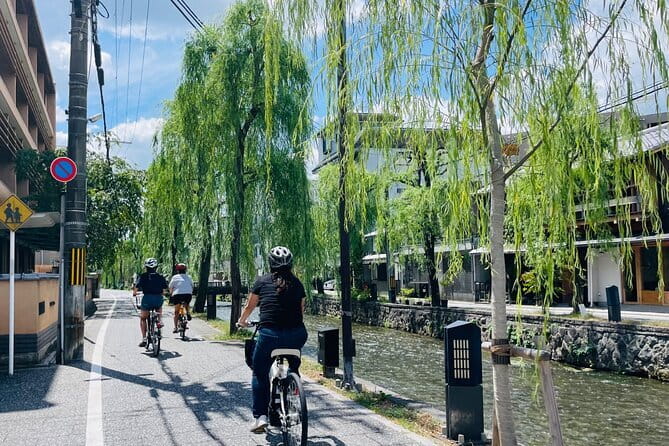
The return follows the Kamogawa River. This is one of the strongest parts of the route. The river path provides a calmer finish after the shrine and temple visits, and the flat cycling makes it easy to enjoy the views. You pass through a side of Kyoto that feels less formal than the major monuments, with water, open space, neighborhood streets, and ordinary city movement.
Several people who enjoyed this tour singled out the river ride and the quiet back streets as highlights. I understand why. The famous sites show you Kyoto’s public face, while the return route gives you a better sense of its scale and daily pace.
What the guide adds to the ride
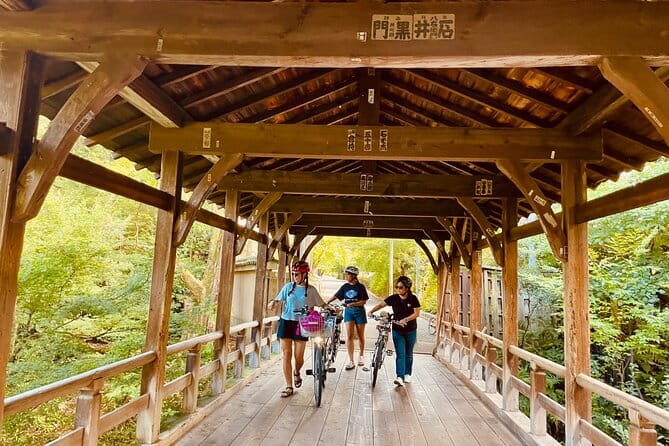
A bicycle tour can easily become a convoy between attractions. This one depends heavily on the guide’s ability to turn the route into a story. Maki is repeatedly described as energetic, funny, attentive, and generous with cultural details. Mika is also praised for clear English and for using her own Kyoto background to explain local customs.
The subject range is unusually broad for a half-day ride. You can ask about:
- Geisha and maiko training
- Buddhist and Shinto practices
- Samurai history and traditions
- Customs connected with food and chopsticks
- Everyday objects seen outside homes
- Local family celebrations
- Fortune-telling at shrines
- The meaning of structures and rituals at temples
The best part is that these topics are tied to what you see. You are not sitting through a lecture detached from the city. A doorway, shrine object, temple feature, or street custom can prompt the explanation.
The guides also appear to treat comfort as part of the service. Water, rest stops, snacks, and attention to heat or rain are built into the experience. In wet weather, the route and pace may be adjusted to keep the group as dry as possible. Still, you should not count on perfect conditions. This is an outdoor activity, so breathable clothing, sun protection, and suitable footwear are sensible choices.
Price, group size, and what you receive
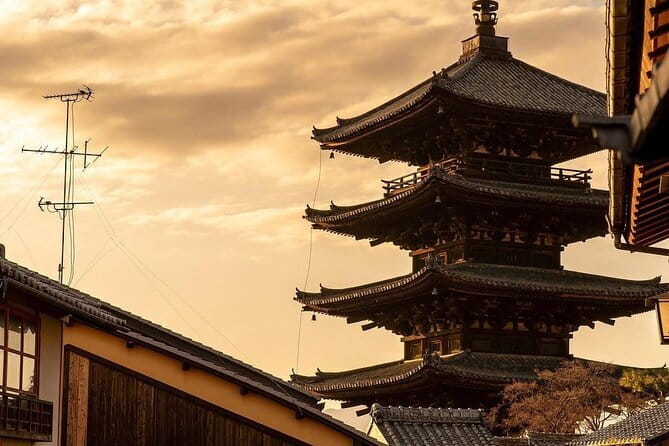
The listed price is $86.22 per person. That is not the cheapest way to see Kyoto, but it is a fair price if you value a guide and want to cover several districts in four hours. The fee includes the e-bike, helmet, bottled water, snacks, and an English-speaking route coordinator.
You are also paying for route planning. Moving from Gion to Higashiyama, Fushimi Inari, Tofuku-ji, and the river path on your own requires map work, traffic decisions, bike rental arrangements, and research at each site. The tour bundles those tasks into one morning.
The maximum group size is eight. That is small enough for direct conversation, though it is not a private tour unless your own booking fills the group. A small group also helps at crossings and on narrow lanes, where a large cycling party would be harder to manage.
Lunch is not included. Since the outing lasts about four hours and snacks are supplied, this is not a serious gap, but you should plan your meal before or after the ride. The activity ends back at the starting point, which simplifies the rest of your day but means you should account for the return journey when planning another reservation.
Who should book this Kyoto e-bike tour?
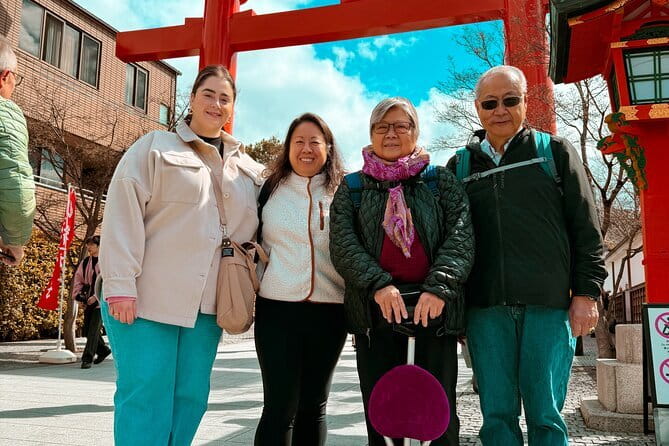
I would recommend it to first-time Kyoto visitors who want a clear introduction without spending the whole day inside buses, trains, and temple grounds. It is also a strong choice for families, couples, and small groups who enjoy being active but do not want a strenuous cycling challenge.
The e-bike assistance makes the route approachable, and the mostly flat roads reduce the physical demand. Most people can participate, according to the activity information, but you still need to be comfortable riding a bicycle in city conditions. The route includes larger streets as well as narrow lanes and bike paths.
You may want a different experience if your priority is deep, unhurried time at one shrine or temple. Fushimi Inari receives about 40 minutes, and Tofuku-ji about 20 minutes. This is a sampler with strong local interpretation, not a full study of each site.
The tour also suits curious question-askers. The guides invite discussion, and the subject matter reaches well beyond architecture. If you want to understand why people bow, how shrine and temple customs differ, or what you are seeing outside homes and along the streets, this ride gives you a useful starting point.
Practical details before you reserve
The activity uses a mobile ticket, and confirmation is provided when you book. The meeting point is 19 Shogoin Higashimachi, Sakyo Ward, Kyoto, postal code 606-8325. It is near public transportation, but you should allow enough time to reach the exact address.
The experience requires good weather. If rain or other poor conditions force cancellation, you can choose another date or receive a full refund. The tour also requires a minimum number of participants, so a cancellation for that reason brings the same choice of a new date, another experience, or a full refund.
You can cancel for a full refund up to 24 hours before the local start time. Changes or cancellations inside that 24-hour window are not accepted for a refund. Check the weather forecast before the deadline, especially during Kyoto’s rainy periods or hot summer months.
Wear clothes you can cycle in and shoes suited to pedaling and walking around temple grounds. Bring sun protection and consider extra water in hot weather. The supplied basket is handy for a small day bag, but do not treat it as a place for large luggage.
Should you book it?
Book this tour if you want to see several sides of Kyoto in one manageable morning: Gion’s traditional streets, Higashiyama’s temples, Fushimi Inari’s gates, Tofuku-ji, quiet neighborhoods, and the Kamogawa River. The strongest reasons to go are the easy e-bikes, the personal guidance from Maki or Mika, and the mix of famous sights with streets you might otherwise miss.
Skip it if you want a slow, single-site visit or dislike cycling near city traffic. For most visitors who want cultural explanation, useful local orientation, and good value from four hours in Kyoto, this is a smart way to begin exploring the city.
FAQ
How long does the Kyoto e-bike tour last?
The activity lasts approximately four hours, including cycling, sightseeing stops, cultural explanations, a snack break, and the return ride.
Which places does the tour visit?
The route includes Gion, the Higashiyama area, Fushimi Inari-taisha Shrine, Tofuku-ji Temple, Kyoto back streets, and a return ride along the Kamogawa River.
Are bicycles and helmets included?
Yes. The tour includes use of an e-bike and a helmet.
Is food or water included?
Bottled water and snacks are included. Lunch is not included.
How many people can join the tour?
The maximum group size is eight people.
What happens if the weather is poor?
The experience requires good weather. If it is canceled because of poor weather, you can choose another date or receive a full refund.
Just added around Kyoto
- Private Guided Traditional Buddhist Cooking in Japan★ 5.0 · 16 reviews
- Kyoto: Gion Geisha District & Sake-in-Hand Walking Tour★ 5.0 · 37 reviews
- Your Private Vacation Photography Session In Kyoto★ 5.0 · 110 reviews
- Kyoto: Zen Meditation at a Private Temple with a Monk★ 5.0 · 25 reviews
- Traditional Japanese Washi Papermaking- Kyoto morning★ 5.0 · 77 reviews
- Kyoto Wagashi(Japanese sweets) Cooking Class near Fushimiinari★ 5.0 · 60 reviews
- Private Pewter Sake Cup Experience with a Kyoto Artisan★ 5.0 · 31 reviews
- Kyoto Private 6 hour Tour: English Speaking Driver Only, No Guide★ 5.0 · 88 reviews
Cycling Tours, compared.


3h Tokyo E-Bike Tour: Hidden Gems, and Local Life with guide
Read our review →
Arashiyama Bamboo Forest & Hidden Gems Bike Tour (Early Bird)
Read our review →
Hiroshima in a Nutshell: Morning Bike Adventure
Read our review →
5 Top Highlights of Kyoto Full Day Bike Tour (E-bike option)
Read our review →Browse the lists this tour appears in