
REVIEW · CYCLING TOURS
Kyoto: City Secrets eBike Tour
Kyoto’s best moments often appear between the famous sights, and this 9-kilometer e-bike route is built around those quieter spaces. You ride through backstreets, old neighborhoods, temple grounds, and mountain roads, with time to stop at the Golden Pavilion, Zen gardens, shrines, and traditional cafés. It is a smart way to cover a lot of ground without spending the whole day in traffic.
I like the small group limit of eight, which lets guides such as Yuta, Henry, Michael, and Sean adjust the pace and explain what you are seeing. I also like the mix of major sights and lesser-known stops, including a 1,000-year-old mochi café and peaceful temple settings. The main caution is that this is still a real bike ride. Most of it is easy, but steep sections, quick descents, cobblestones, and tight turns require confidence on two wheels.
In This Review
- Key points
- Why an e-bike is a smart way to see Kyoto
- Starting at NORU and settling into the ride
- The Golden Pavilion, Kyoto’s famous first impression
- Through the old geisha district and backstreets
- Shrines, temples, and Kyoto’s shrine of learning
- Daitoku-ji and the quieter side of Zen
- Mountain roads, streams, and the one section that tests your handling
- Tea, mochi, and the small details that make the day memorable
- How the guides shape the experience
- Is $127 a fair price?
- Timing, weather, and what to bring
- Who should book this Kyoto e-bike tour?
- Should you book it?
- FAQ
- How long does the Kyoto City Secrets eBike Tour last?
- How far do you cycle?
- What departure times are available?
- Where is the meeting point?
- Is the tour conducted in English?
- How many people are in the group?
- Are bikes and helmets included?
- Are entrance fees included?
- Who can take part?
- What happens if the weather is unsafe?
Key points
- A 225-minute ride covers both famous and quiet Kyoto, including the Golden Pavilion, shrines, Zen temples, and old residential lanes.
- The electric bikes handle hills well, though you still need to brake carefully on descents and manage tight turns.
- Small groups of up to eight make it easier to ask questions and stay with the guide.
- The route uses quieter streets where possible, helping you avoid some of Kyoto’s heaviest traffic.
- Cultural stops add depth, from Zen philosophy and shrine customs to tea, mochi, and local history.
- The afternoon departure works well for a first-day introduction, but allow time to reach NORU and arrive 15 minutes early.
Why an e-bike is a smart way to see Kyoto
Kyoto is not huge on a map, but its best sights are spread across several districts. Walking between them takes time, while buses can be crowded and slow on busy streets. An e-bike gives you a middle path: you cover more ground than on foot, but still move slowly enough to notice tiled roofs, small shrines, streams, gardens, and quiet lanes.
The motor assistance matters most on the uphill stretches. You do not need to be an athlete, and the bikes make the ride manageable in warm weather. Still, do not confuse electric assistance with a sightseeing bus. You will pedal, steer, brake, and ride through city streets.
The route covers about 9 kilometers over three hours and 45 minutes. That is not a race. The stops, explanations, photos, and short breaks make up much of the time. You should expect a gentle outing with some bursts of effort rather than nonstop cycling.
A few more Kyoto trips to weigh up
- Hidden Kyoto E-Biking tour
★ 5.0 · 1,843 reviews - Bike Tour Exploring North Kyoto plus Lunch
★ 5.0 · 1,087 reviews - Arashiyama Bamboo Forest & Hidden Gems Bike Tour (Early Bird)
★ 5.0 · 613 reviews
Starting at NORU and settling into the ride
The meeting point is NORU, the base for NORU Kyoto City Cycling Tours. You should arrive at least 15 minutes before your chosen departure. The available start times are 9 am, 9:30 am, and 1 pm, and arriving at the exact start time is risky. If you miss the departure, the booking is treated as a no-show and you will need to rebook.
The guides provide the bikes, helmets, and entrance fees. The group size is capped at eight, a useful limit in Kyoto’s narrow streets. It also means your guide can keep an eye on the group at crossings and answer questions without trying to manage a crowd.
The English-speaking guides bring different personalities to the ride. Yuta is especially good at explaining Zen Buddhism, cultural customs, and the meaning behind temple spaces. Henry combines history with a lively style and often adds useful suggestions for the rest of your Kyoto visit. Michael has a warm, conversational manner, while Sean is known for clear explanations and careful routing. Your exact guide depends on the departure date, but the experience benefits greatly from having someone who knows the streets well.
The Golden Pavilion, Kyoto’s famous first impression
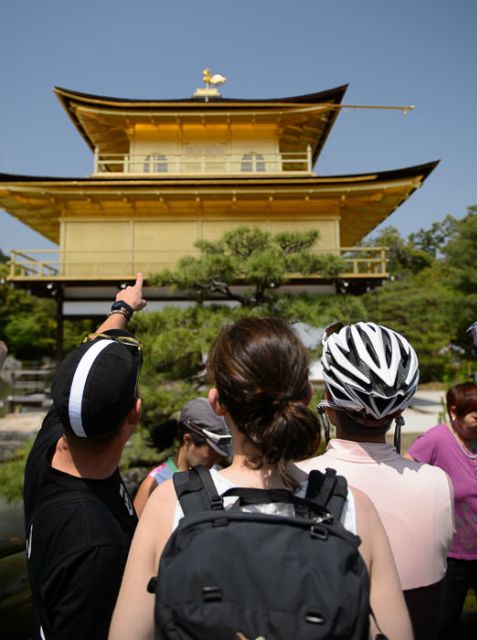
Kinkaku-ji, better known as the Golden Pavilion, provides the tour’s headline sight. Its gold-covered upper floors reflect across the pond, creating one of Kyoto’s most familiar views. It is famous for good reason, but it can also be crowded, especially during peak seasons.
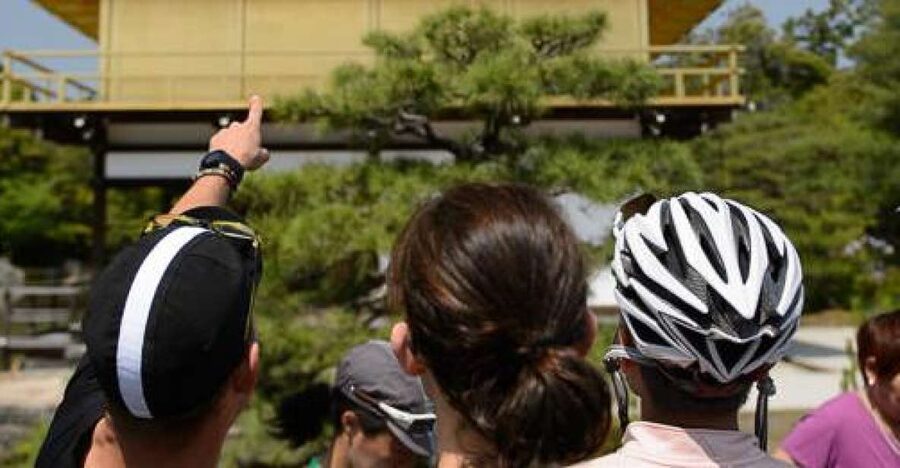
The advantage of seeing it by bicycle is not that you avoid all crowds. You do not. The advantage is that the pavilion becomes one part of a larger day rather than the entire event. Your guide can offer context, point out details, and keep the visit moving so you have time for quieter places later.
Do not expect a long private meditation here. This is a major attraction with a steady flow of people. Bring your camera, take in the view, and listen closely to the explanation, then enjoy the change of pace as the route leaves the busiest sightseeing zones.
Through the old geisha district and backstreets
One of the most appealing parts of the ride is the passage through Kyoto’s older geisha district. The streets offer a closer look at the city’s traditional buildings and local rhythm, without turning the visit into a staged performance.
You may see geisha or maiko in the area, but that is not something the tour can promise. The value is in seeing the district respectfully and learning how these neighborhoods fit into Kyoto’s cultural life. Your guide can also help you follow local road rules and avoid blocking narrow lanes.
The route favors quieter streets where possible. That does not mean traffic disappears. Kyoto remains a working city, and you need to stay alert, keep left, obey traffic lights, and follow your guide through crossings. One particularly useful reminder is to watch for red lights even when the street looks quiet.
This section suits you if you enjoy seeing how a city functions between the big attractions. You will pass through ordinary urban spaces as well as historic ones, which gives the ride a more grounded feel.
Same city, a completely different kind of day:
- PERFECT KYOTO 1-Day Bus Tour
★ 5.0 · 13,518 reviews - Kyoto: Fushimi Inari, Kinkakuji, Bamboo Grove 1 Day Bus Tour
★ 4.8 · 4,316 reviews - Kyoto: Tea Ceremony in a Traditional Tea House in Kiyomizu
★ 4.9 · 3,519 reviews - Kyoto Geisha Walking Tour: Gion District & Hidden Gems
★ 4.7 · 3,273 reviews
Shrines, temples, and Kyoto’s shrine of learning
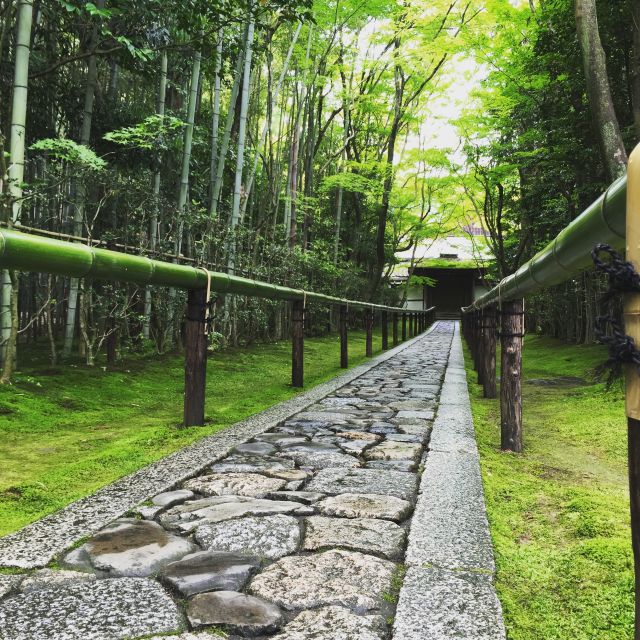
The tour includes shrine and temple visits, with stops that can include Kyoto’s shrine of knowledge, commonly associated with Kitano Tenmangu. The exact sequence can vary, but the pattern is consistent: ride, stop, listen, explore, then move on before the day becomes tiring.
A guide adds real value at religious sites. Without help, it is easy to admire a gate, lantern, pond, or roofline without understanding its purpose. Your guide can explain the difference between shrine and temple traditions, describe basic customs, and connect the buildings to Japanese history and daily life.
You will not spend hours at every stop. That is a plus if you want variety. The tour keeps moving, so you can see several places in one outing instead of giving half a day to a single complex. The tradeoff is that anyone who wants long, quiet study time at each temple may find the schedule brisk.
Daitoku-ji and the quieter side of Zen
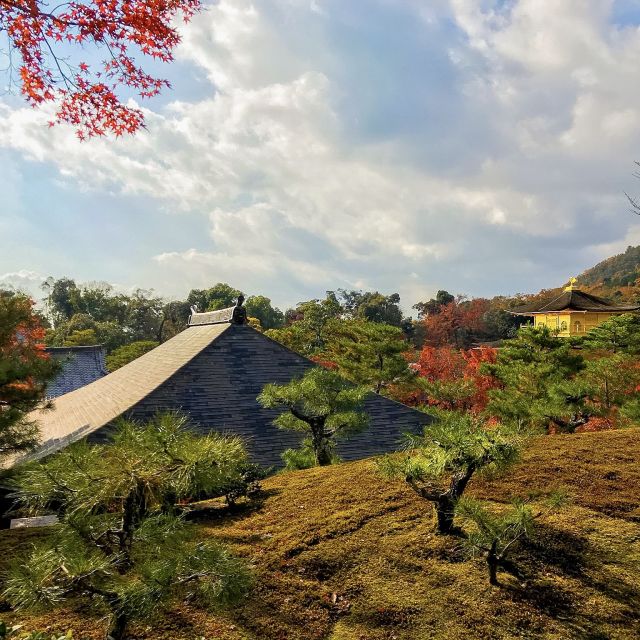
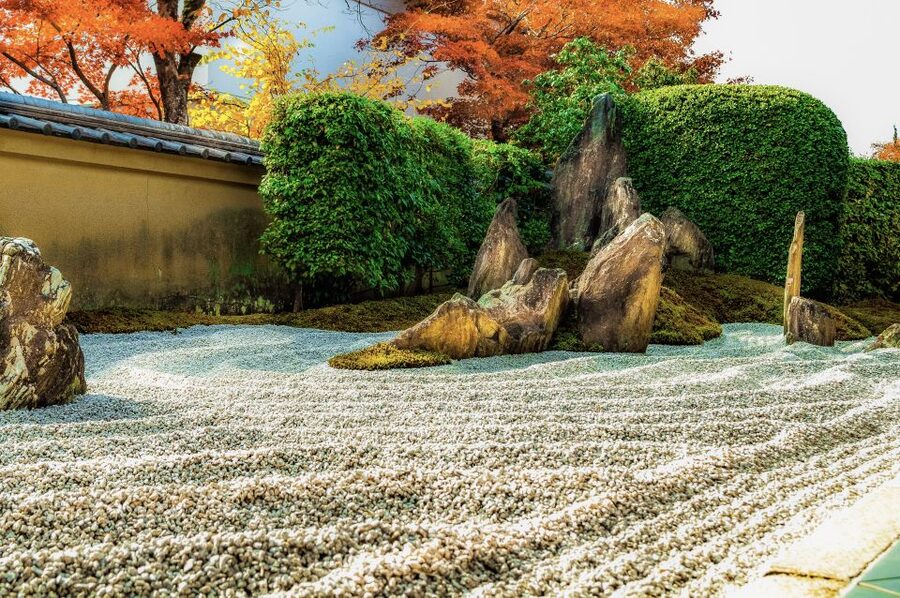
The Zen sections are where this tour earns its place beyond a standard city sightseeing loop. Daitoku-ji and related temple settings offer a calmer experience, with gardens and courtyards designed for stillness rather than spectacle.
The Zen gardens are not simply decorative rock arrangements. Their spare design encourages you to slow down and look carefully. A good guide can explain how Zen ideas shape the space, and Yuta has a particular connection to Zen Buddhism that can make this part more personal and clear.
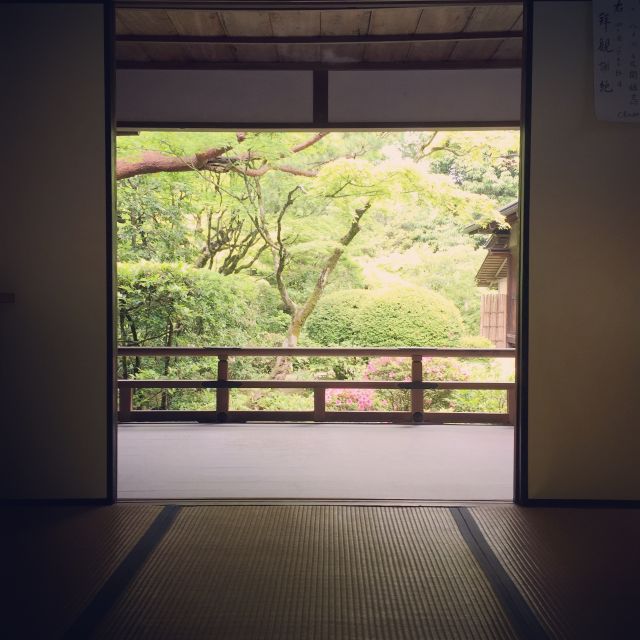
The mood changes quickly once you leave the busy roads. You may hear birds, wind, or water instead of city traffic. That quiet is a useful counterpoint to the Golden Pavilion and crowded central Kyoto.
You should remember that temple access and the exact stops may change. Religious sites have their own hours and rules, and the tour provider may adjust the route to suit conditions. The listed entrance fees are included, so you do not need to budget separately for the planned attractions.
Mountain roads, streams, and the one section that tests your handling
The route is not flat from start to finish. Previous outings have included a steep hill, a downhill section with broad views, mountain roads, and a river or stream stop where you can cool down. The electric assistance makes the climb easier, but the descent still demands care.
You do not need elite fitness. You do need to ride a bicycle confidently and feel comfortable with braking. Some parts may include cobblestone surfaces, tight turns, or a faster downhill stretch. If you are used only to flat cycle paths, this may feel more technical than expected.
The guide normally rides at the front and manages the pace, but you remain responsible for handling your bike. Ask for help adjusting the seat or using the motor assistance before setting off. Wear shoes that stay secure on the pedals, and bring water even though refreshments may be provided.
This portion is one reason the minimum height is 140 centimeters, or about 4 feet 6 inches. The tour is intended for people aged 13 and older who can ride confidently. It is not suitable for young children or anyone who is uneasy on a bicycle.
Tea, mochi, and the small details that make the day memorable
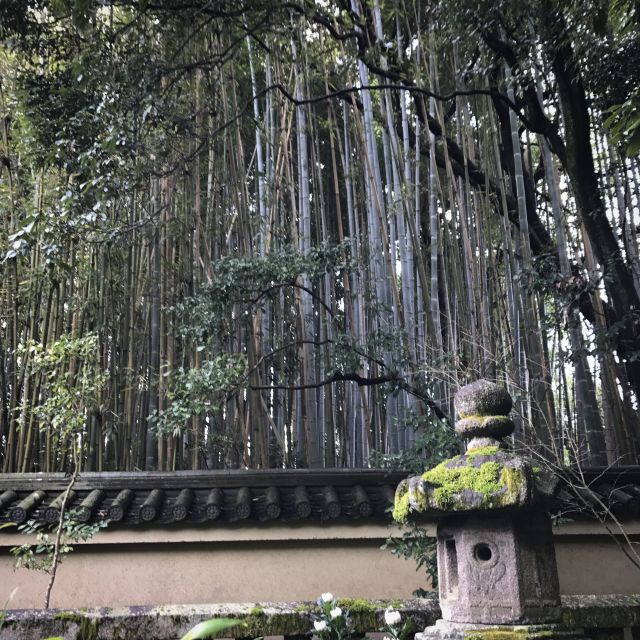
The tour can include a traditional tea stop, chilled tea, sweets, or a visit to a very old mochi café. One especially distinctive stop is a family-run mochi establishment said to be about 1,000 years old. These pauses add a taste of Kyoto that a temple-only itinerary misses.
Food is not the main purpose of the tour, and you should not book it expecting a full meal. Think of the snack or tea as a cultural pause, a chance to sit down, cool off, and ask questions.
I find these moments valuable because they connect grand religious sites to everyday traditions. A temple explains ideas and architecture. A cup of tea or a piece of mochi shows how those ideas and customs continue in ordinary life.
How the guides shape the experience
The route matters, but the guide makes the difference between a pleasant bike ride and a useful introduction to Kyoto. You will get the most from the tour if you ask questions about religion, food, local manners, history, and places to eat later.
Yuta is often praised for making the Zen and temple visits easy to understand while checking that everyone is comfortable. Henry brings energy and broad historical context. Michael adds personal stories and keeps the group relaxed. Sean is a strong choice for travelers who want both cultural detail and careful cycling guidance.
The guides also help with the practical side of Kyoto. They choose side streets when traffic is heavy, offer safety reminders, provide breaks, and may suggest restaurants or further sightseeing. If you are visiting Kyoto early in your trip, take notes or ask your guide to repeat recommendations before the tour ends.
Is $127 a fair price?
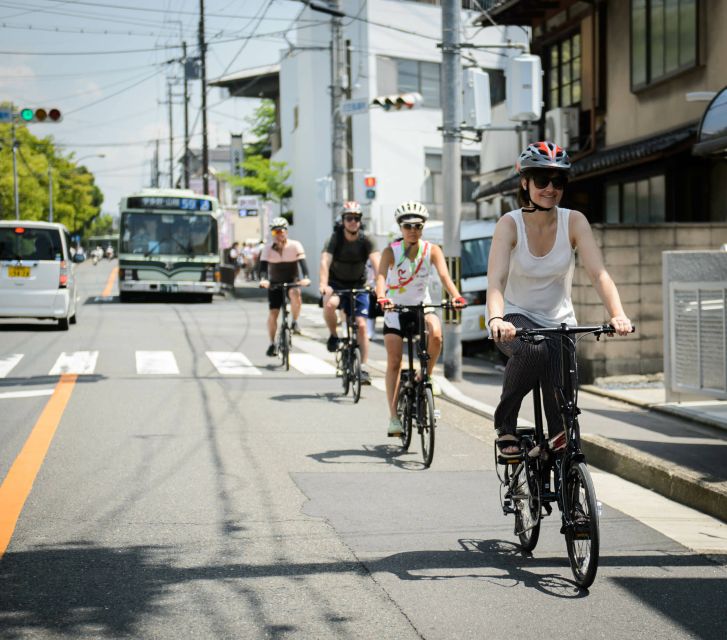
At $127 per person, this is not a budget bike rental. You are paying for 225 minutes of guided riding, an e-bike, helmet, small-group attention, and admission to the included attractions.
The value depends on how you would otherwise explore Kyoto. If you plan to rent a bicycle and visit only one or two places, a self-guided outing may cost less. But you would need to choose a workable route, find the quieter streets, manage temple admissions, handle navigation, and supply your own historical context.
For a first or second day in Kyoto, the tour can save planning time and help you understand the city’s layout. For a return visit, it works especially well because it reaches areas beyond the standard checklist. I would consider the price fair for someone who values local explanation, a small group, and a carefully planned route.
Timing, weather, and what to bring
The 9 am and 9:30 am departures suit early risers and may help you get onto the streets before the day becomes hot or crowded. The 1 pm departure gives you a relaxed morning and works well if you prefer an afternoon introduction.
Kyoto summers can be hot, so light clothing, sunscreen, and water make sense. Guides may provide water or refreshments, and rain ponchos have been available during wet conditions, but you should still check the weather before setting out.
The provider can cancel for heavy rain, storms, or other unsafe weather, with a full refund in those cases. Cancellation information is presented in two ways: the booking details state free cancellation up to 24 hours before departure, while the practical trip notes refer to 12 hours. Confirm the exact deadline when you book, especially if your plans are still moving.
Who should book this Kyoto e-bike tour?
Book it if you can ride comfortably, want to see more than the main attractions, and enjoy learning while moving through a city. It is a strong fit for couples, families with teenagers, and small groups who want an active half-day without a punishing workout.
It is also a good option for a repeat visit. One past participant felt it was better as a return-visitor experience or as a companion to a more typical Kyoto tour. That is fair advice if your top priority is checking off every major sight in detail.
I would hesitate if you dislike bicycles, have trouble with steep descents or tight turns, or want a slow temple-focused visit with long periods of silence. This is an active sightseeing tour, not a private meditation session.
Should you book it?
Yes, if you want Kyoto at street level and are happy to trade a little cycling effort for quieter temples, local lanes, Zen gardens, and useful cultural context. The Golden Pavilion gives you the famous view, but the old neighborhoods, mountain roads, tea, mochi, and calm temple spaces give the day its character.
Before booking, make sure everyone in your group meets the age and height rules and can handle a bicycle confidently. Arrive early at NORU, follow the guide’s road-safety instructions, and choose the departure time that fits your energy and the weather. At $127, it is best viewed as a guided cultural outing with transport built in, not simply a bike hire.
FAQ
How long does the Kyoto City Secrets eBike Tour last?
The tour lasts 225 minutes, or three hours and 45 minutes.
How far do you cycle?
The planned route covers about 9 kilometers.
What departure times are available?
The tour departs at 9 am, 9:30 am, and 1 pm. Availability can vary, so check the date when booking.
Where is the meeting point?
You meet at NORU.
Is the tour conducted in English?
Yes. The tour includes an English-speaking live guide.
How many people are in the group?
The group is limited to eight participants.
Are bikes and helmets included?
Yes. The price includes the e-bikes and helmets.
Are entrance fees included?
Yes. Entrance fees for the attractions visited on the tour are included.
Who can take part?
Participants should be at least 13 years old and able to ride a bicycle confidently. The minimum height is 140 centimeters, or about 4 feet 6 inches.
What happens if the weather is unsafe?
The provider may cancel because of heavy rain, storms, or other severe weather. These cancellations receive a full refund.
Just added around Kyoto
- Taste of Nishiki Market Walking Food Tour with Local guide★ 5.0 · 17 reviews
- Kyoto: Sushi Making Class with Sushi Chef★ 4.8 · 64 reviews
- Sacred Pathways: Discover the Philosopher’s Path of Kyoto★ 4.9 · 20 reviews
- Private Tour to Monkey Park and Arashiyama Highlights★ 5.0 · 22 reviews
- Private Nara Tour from Osaka – Meet at Your Hotel★ 5.0 · 22 reviews
- Private Sake Tasting in Central Kyoto with Sake Sommelier★ 5.0 · 13 reviews
- Kyoto : Private Custom Walking Tour With A Local Guide★ 4.6 · 144 reviews
- Osaka/Kyoto: Katsuoji, Kinkakuji, Arashiyama 1-Day Bus Tour★ 4.6 · 33 reviews
Cycling Tours, compared.


3h Tokyo E-Bike Tour: Hidden Gems, and Local Life with guide
Read our review →
Arashiyama Bamboo Forest & Hidden Gems Bike Tour (Early Bird)
Read our review →
Hiroshima in a Nutshell: Morning Bike Adventure
Read our review →
5 Top Highlights of Kyoto Full Day Bike Tour (E-bike option)
Read our review →Browse the lists this tour appears in