
REVIEW · KIMONO & CULTURE EXPERIENCES
Kyoto: Calligraphy class at Buddhist temple in city center
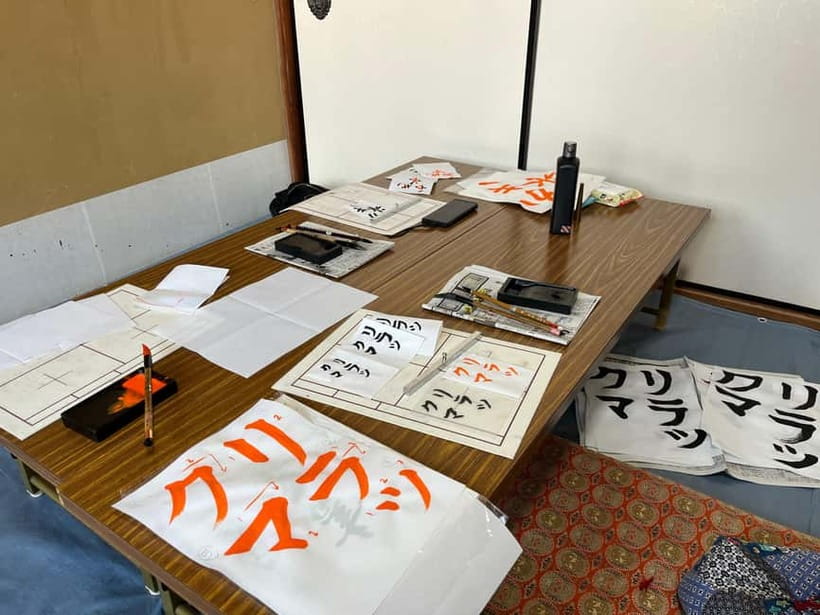
A calligraphy lesson inside a Buddhist temple gives you something most Kyoto sightseeing does not: a chance to sit quietly, handle traditional tools, and make a souvenir with your own imperfect strokes. At Seigan-ji Temple, in the heart of the Shinkyogoku shopping street, you learn beside tatami floors and Japanese sliding doors, with a Great Buddha nearby.
I like the small group of no more than six, since the teacher and translator can offer useful individual corrections. I also like that you take home a finished piece on shikishi, a decorative square board, plus a small keychain made with your chosen character. The main drawback is practical: most seating is on the floor, and 70 minutes on a zabuton can be hard on tired legs.
In This Review
- Key points to know before you book
- Why this Kyoto class feels different from a quick cultural demonstration
- Finding Seigan-ji Temple in the Shinkyogoku shopping street
- The first 10 minutes: introductions, tools, and choosing a word
- Brush, ink, and the discipline of basic lines
- Practicing your chosen kanji with personal guidance
- Creating the shikishi artwork you can display at home
- What the $55 price means for value
- Tatami seating and accessibility considerations
- Who will enjoy this 70-minute Kyoto experience
- Booking details that prevent small problems
- Should you book the temple calligraphy class?
- FAQ
- Where does the calligraphy class take place?
- How do I find the meeting point?
- Should I go up the temple stairs to meet the class?
- How long does the activity last?
- What languages are available?
- How many people can join the class?
- What materials are included?
- Can I choose the kanji I write?
- What do I take home?
- Is food or drink included?
- Can people using wheelchairs join?
- Who should not book this activity?
Key points to know before you book
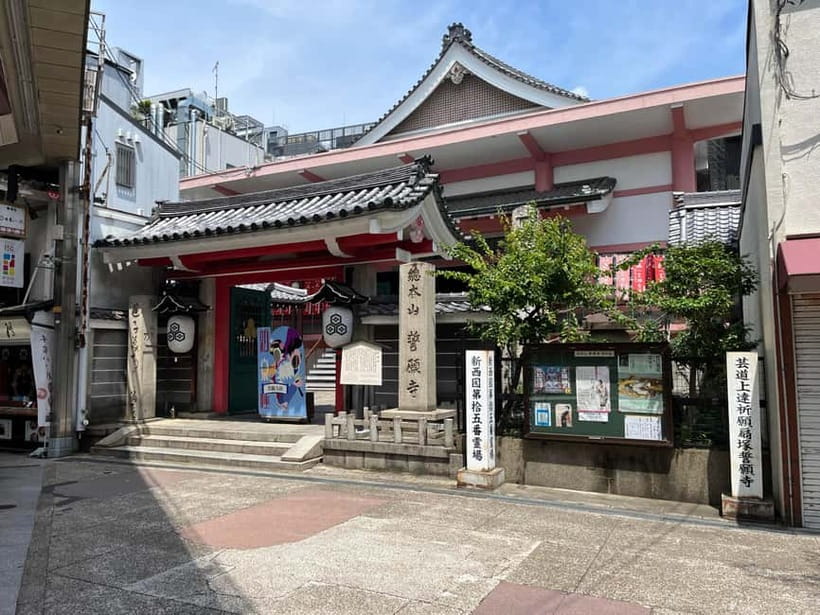
- A real hands-on lesson: You practice brush control, basic lines, and your chosen kanji before making the final artwork.
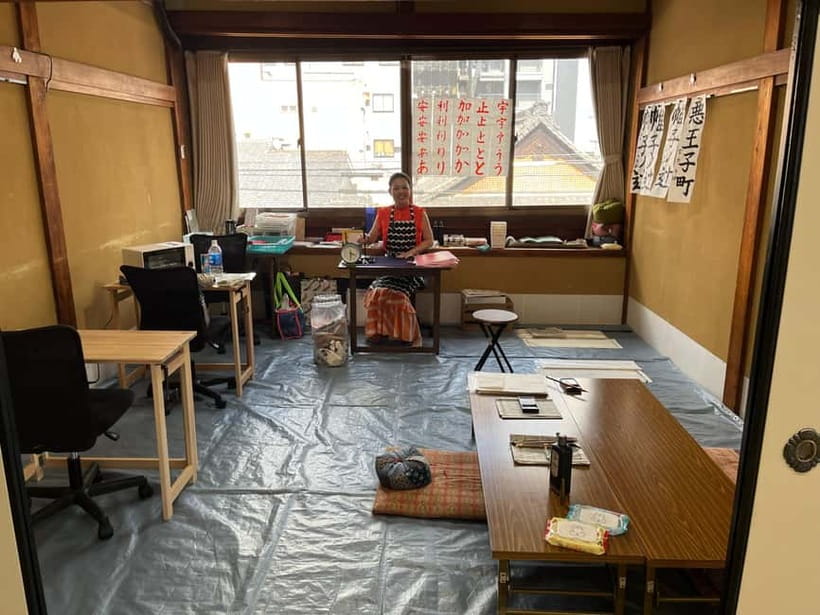
- A temple setting in central Kyoto: The class takes place inside a washitsu, a traditional Japanese room with tatami flooring.
- Small groups matter: With up to six people, the teacher has time to guide beginners one by one.
- Choose your character early: Bring a few words or kanji ideas, since deciding at the start can eat into your practice time.
- You get more than a paper souvenir: Your finished shikishi artwork and a teacher-made keychain go home with you.
- Check the meeting point carefully: Wait outside Seigan-ji Temple for the person holding a red lantern. Do not climb the temple stairs or ask the monks for directions.
Why this Kyoto class feels different from a quick cultural demonstration
Many short cultural activities let you watch someone perform a traditional art, then send you home with something prepared in advance. This class asks you to work for your souvenir. You will make mistakes, adjust your grip, repeat the strokes, and eventually put your chosen character on a finished board.
That hands-on work is the point. Japanese calligraphy, or shodo, is not simply decorative handwriting. The class introduces the structure and origins of kanji, the role of each tool, and the controlled movement behind every stroke. You do not become a calligrapher in 70 minutes, but you do learn why a brush line looks strong, light, balanced, or awkward.
The setting adds weight without making the class solemn. You enter a traditional temple room in central Kyoto, remove your shoes if required by the temple setting, and work on tatami with the tools laid out in front of you. The room is not advertised as completely silent, but it usually becomes quiet as everyone concentrates.
I see this as a good middle ground. You get a cultural activity with a real teacher, yet the mood remains friendly and approachable. The teacher has more than a decade of calligraphy experience, and the supporting guide helps turn the Japanese instruction into clear, usable advice.
More Kimono & Culture Experiences in Kyoto
- Kyoto Geisha Walking Tour: Gion District & Hidden Gems
★ 4.7 · 3,273 reviews - Kyoto: Gion Magical Night Walking Tour with Geisha Trivia
★ 4.9 · 2,393 reviews - Kyoto: Gion Geisha District Walking Tour – Stories of Geisha
★ 4.7 · 2,187 reviews
Finding Seigan-ji Temple in the Shinkyogoku shopping street
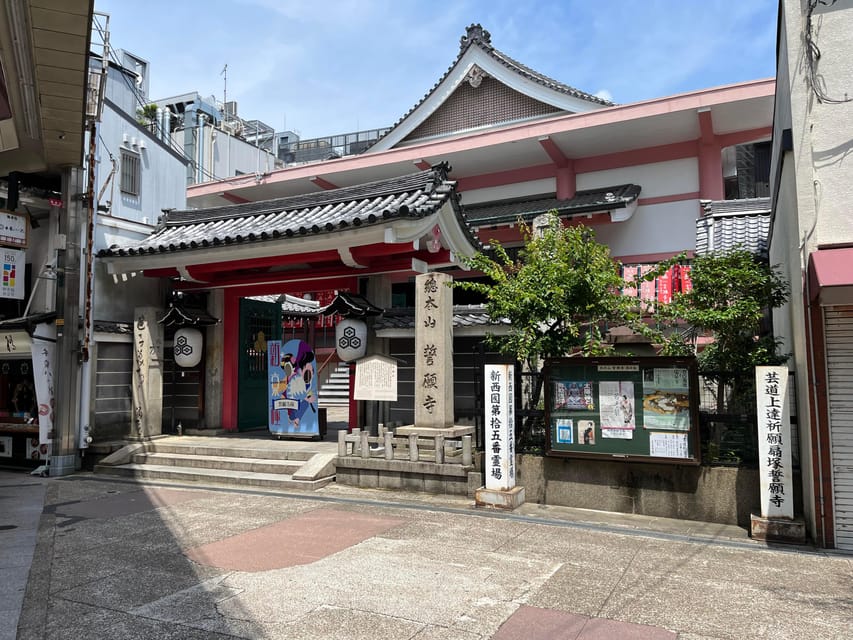
The meeting point is in front of Seigan-ji Temple under the roofed section of the Shinkyogoku shopping street. Look for the person holding a red lantern on a stick.
This detail matters. The temple sits in a busy central shopping area, and the entrance may not feel like an obvious tour meeting place. Do not go up the stairs to enter the temple on your own. Do not interrupt the monks or other temple workers to ask if you have found the calligraphy class. Wait in front for the person with the lantern.
Read the instructions on your voucher before leaving for the class. The meeting point information is essential, especially if you are moving through Kyoto’s covered arcades, where a short wrong turn can put you at a different entrance.
The location works well with a day in central Kyoto. You can pair the class with shopping in Shinkyogoku and nearby Nishiki Market, though food and drinks are not part of the activity. Vending machines outside the temple provide a practical place to buy a drink before or after class.
The first 10 minutes: introductions, tools, and choosing a word
The session begins with an introduction to the Japanese teacher and the translator or guide. Instruction is available in English, Spanish, Japanese, and Dutch, depending on the scheduled session.
The teacher leads the calligraphy work, while the guide explains the instructions and helps with questions. English-language sessions have included guides such as Jose and Saskia, whose role may also include taking photographs during the class. The Japanese teacher, identified in participant feedback as Imai Sensei, has been praised for patient, step-by-step instruction and a warm manner.
You then choose the word or kanji you want to write. The class has examples to pick from, but I strongly suggest arriving with several ideas. A single character may represent qualities such as peace, strength, love, or happiness, but the supplied examples are the safer route if you are unsure about meaning or pronunciation.
A few possible choices also help if your first idea is too difficult for your experience level. The teacher can show you the stroke order and shape before you commit. You may also choose to write a name or a short word, depending on the available guidance.
This is a small decision, but it shapes the whole class. You will spend time practicing the exact character that later appears on your final board, so choosing something meaningful makes the souvenir more personal.
Brush, ink, and the discipline of basic lines
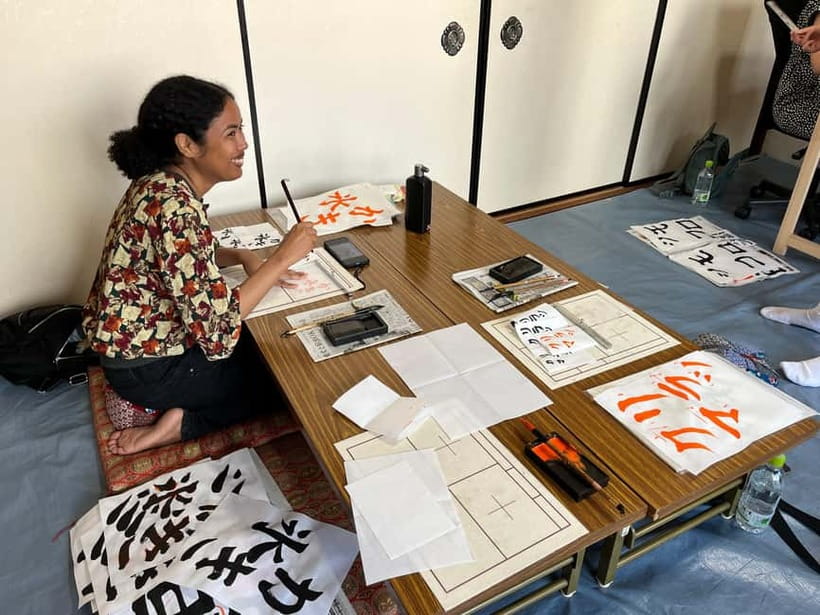
The class supplies the traditional materials: washi paper, a brush, ink, bunchi, and shitakami. You do not need to bring a kit.
The teacher first explains how to use the tools, then demonstrates basic lines. This early practice is more useful than it may sound. A brush does not behave like a pencil. Pressure, speed, angle, and the amount of ink all change the line.
You practice simple strokes before attempting your chosen kanji. The teacher demonstrates, then you copy the movement. The guide translates the explanation and offers practical corrections while you work. That gradual order helps complete beginners, since you are not expected to produce a polished character immediately.
Calligraphy looks calm, but it is not effortless. Several people describe it as harder than it looks, which is exactly the right expectation. The teacher may make a clean, balanced stroke in one smooth movement, while your first attempt may be too heavy or too thin. That contrast is part of the lesson, not a sign that you are doing badly.
One useful warning is to avoid endless practice. You need enough repetition to understand the movement, but too much writing can tire your arm. A tired hand rarely produces the best final character. Practice with purpose, then save your concentration for the shikishi board.
More Temple & Shrine Tours in Kyoto
- Kyoto: Fushimi Inari, Kinkakuji, Bamboo Grove 1 Day Bus Tour
★ 4.8 · 4,316 reviews - Kyoto: Tea Ceremony in a Traditional Tea House in Kiyomizu
★ 4.9 · 3,519 reviews - Kyoto: Tea Ceremony Ju-An at Jotokuji Temple
★ 4.9 · 3,207 reviews - Fushimi Inari Hidden Hiking Tour (Private Option Available)
★ 5.0 · 1,750 reviews
Practicing your chosen kanji with personal guidance
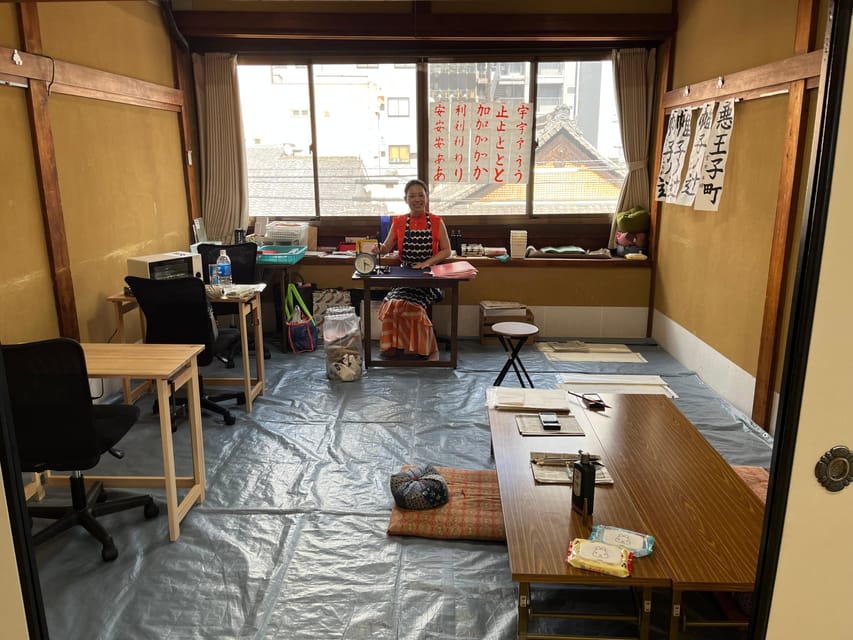
Once you understand the basic lines, you work on the word or kanji you selected. This is where the small class size earns its keep.
The teacher and guide can look at your grip, stroke direction, spacing, and overall balance. Individual attention is especially helpful if you have never used a calligraphy brush. One session may have only two or three participants, while the maximum is six, so the amount of personal help can vary with the group.
Left-handed participants should expect an extra challenge. Traditional brush work often feels more natural in the right hand, and one left-handed participant found it useful to try both hands. That does not mean left-handed people should avoid the class, but you should allow yourself patience and accept that your first approach may need adjusting.
The atmosphere is quiet rather than rigid. You can ask questions, speak with the guide, and enjoy the process. Several guides also share cultural context or conversation about life in Japan, which can make the class feel more personal than a simple craft station.
The lesson is conducted with encouragement. You are not graded, and the aim is not to produce museum-quality calligraphy. The goal is to understand the art well enough to make a considered final piece.
Creating the shikishi artwork you can display at home
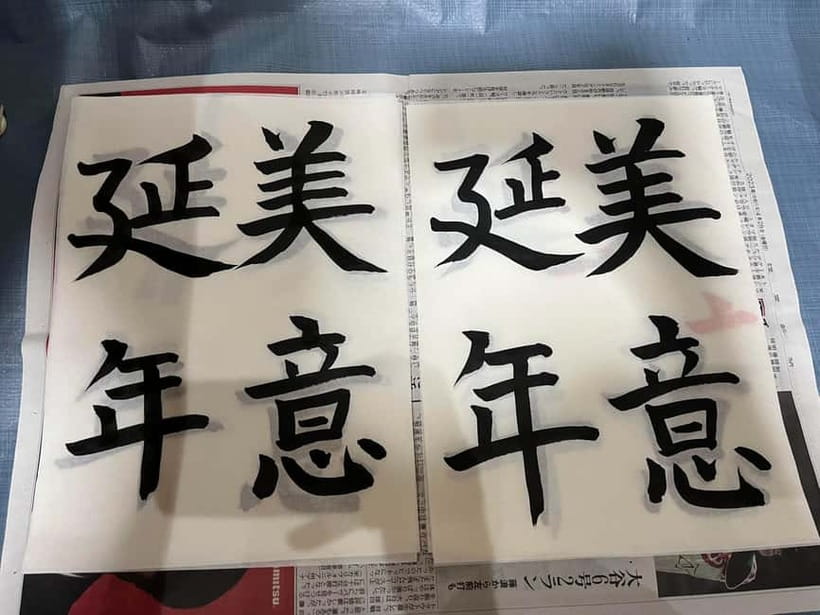
After your practice sheets, you write the chosen character on shikishi, a special square cardboard board used for display. This is the moment when the class shifts from exercise to souvenir.
You will have fewer chances on the final board, so take a breath and remember the teacher’s advice. Use the brush with control, avoid exhausting your arm, and accept that a handmade piece should look handmade. The teacher can guide your preparation, but the final mark belongs to you.
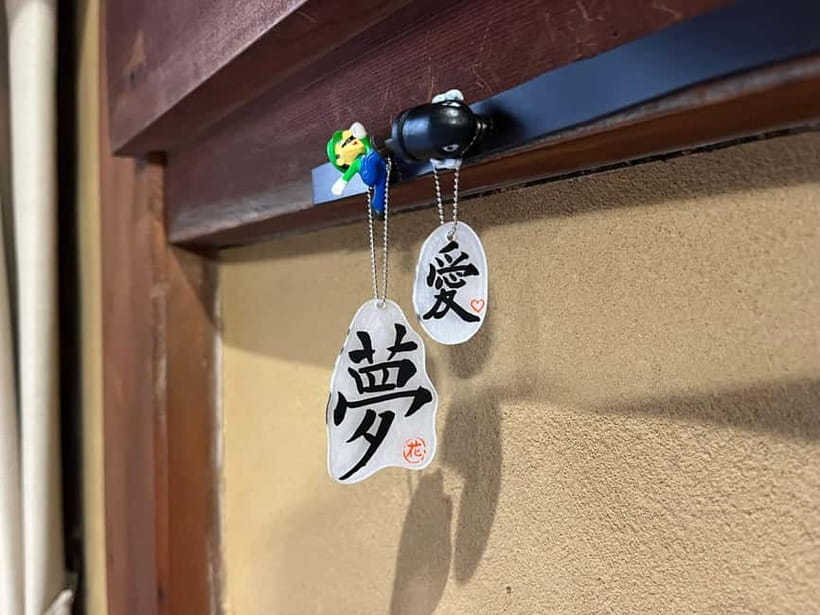
The finished shikishi is easier to display than a loose sheet of practice paper. It can sit on a shelf, mantel, or wall, and it carries a stronger memory than a mass-produced charm. You also receive a keychain with your chosen character, prepared by the teacher as a special gift.
Photography is another welcome extra. Guides such as Jose have taken pictures while participants practice and complete their boards. If you want photos, ask the guide at an appropriate moment rather than interrupting the teacher’s demonstration.
The materials are included, so you do not need to shop for washi, ink, or a brush beforehand. Food and drinks are not included, and there is no meal component hidden in the price. This is a focused art class, not a broader temple tour.
What the $55 price means for value
At $55 per person, this is not the cheapest way to spend an hour in Kyoto. You can visit many temples for little or no admission, and souvenir shops offer calligraphy-themed goods for less.
The value comes from the combination of instruction, access, materials, a finished artwork, and a small group. You are paying for a teacher to demonstrate the technique, watch your work, translate the process, and help you complete something you could not easily make by yourself.
I think the price makes the most sense if you care about personal souvenirs and cultural contact. The shikishi is not just a purchased object. You chose the character, practiced the strokes, and made the final version inside a traditional temple room. That makes it a stronger keepsake for many people than another Kyoto magnet.
The value is also good for couples, families with older children, and solo visitors who want a calm break from walking and sightseeing. Participants have described the class as affordable, memorable, and one of the favorite activities of a Japan trip. The strongest praise centers on the teacher, the guide, and the chance to take home original work.
Still, be realistic. If you want a long, advanced study of Japanese calligraphy, 70 minutes will feel short. This is an introduction with a satisfying final result, not a professional course.
Tatami seating and accessibility considerations
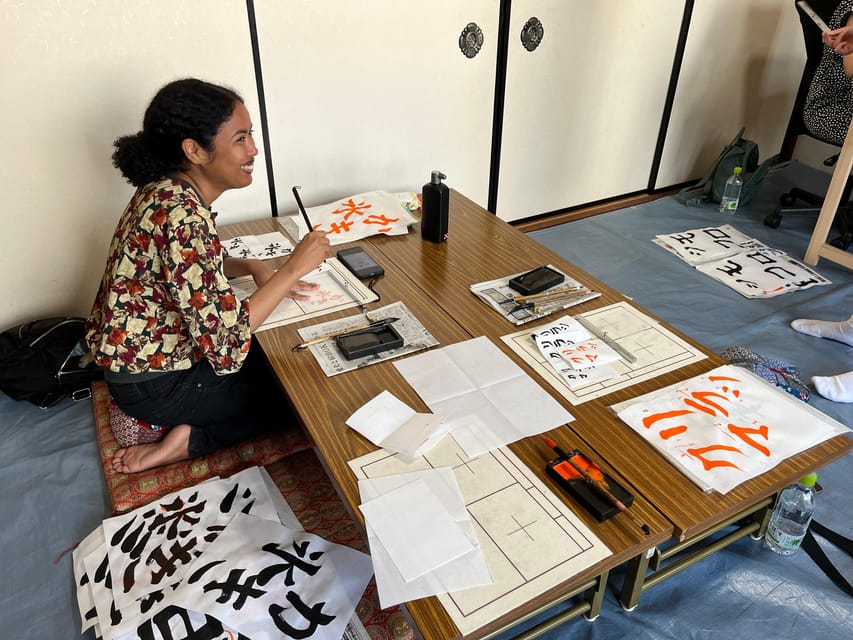
The class takes place in a washitsu with tatami flooring. Most people sit on the floor using a zabuton, a Japanese floor cushion. A limited number of desks are available, but they cannot be guaranteed for everyone.
This is the main comfort issue. If kneeling or sitting on the floor strains your hips, knees, or legs, consider the format carefully before booking. The class is wheelchair accessible according to the activity information, but the limited desk seating and traditional room setup are still worth discussing in advance if you need a specific arrangement.
Bare feet are not allowed. Smoking, vaping, alcohol, and drugs are also prohibited.
The age information is unusually strict in the booking details, which list children under 2, 3, 4, and 5 as unsuitable. In practical terms, you should not plan this class for children younger than five. Babies under one year and people with visual impairments are also listed as unsuitable.
For older children, the activity can work well if they can sit quietly, follow instructions, and treat the ink and brush with care. It is a concentration-based class, not a free-form children’s craft session.
Who will enjoy this 70-minute Kyoto experience
I would choose this class if you want to make something yourself, enjoy traditional arts, or need a quieter hour between crowded city sights. It suits beginners because the teacher builds from basic lines rather than assuming previous practice.
It is also a good fit for couples and families who want matching or related characters. Each person can select a different word, then compare the finished boards afterward. Solo visitors should feel comfortable too, since the small group and guide-led format provide an easy social setting.
You will probably enjoy it less if you dislike floor seating, want a fast photo stop, or have no interest in brush work. The class rewards patience. You need to listen, repeat, and accept a few crooked strokes before the final version comes together.
Think about your word before booking. A character connected to a value, a person, a place, or a private memory will give the finished board more meaning. If you arrive with no idea, the sample kanji help, but you may spend precious class time making a choice.
Booking details that prevent small problems
The activity costs $55 per person and lasts about 70 minutes. Groups are limited to six, and starting times vary, so you need to check availability for your date.
You can cancel up to 24 hours in advance for a full refund. The reserve-now, pay-later option allows you to hold a place without paying immediately, which is useful while arranging a Kyoto schedule.
The most important practical step is reading the voucher after booking. Use the exact meeting instructions, wait outside the temple for the red lantern, and do not enter the temple stairs looking for the class.
Since there is no food or drink service, have water before you arrive or use the vending machines outside. Wear clothing that lets you sit comfortably on the floor, and do not arrive barefoot.
Should you book the temple calligraphy class?
I would book it if you want a personal souvenir and a direct introduction to Japanese culture rather than another sightseeing stop. The teacher’s careful instruction, the translators, the small group, and the temple room work together well. You leave with a board you made yourself, not simply something bought in a shop.
I would skip it if floor seating is a serious problem or if you want advanced calligraphy training. For everyone else, $55 is a fair price for a calm, well-supported activity in central Kyoto, especially when you value the story attached to what you bring home.
Choose your kanji before you go, protect your practice arm, and arrive at the red lantern. Those three tips will help you get the most from the class.
FAQ
Where does the calligraphy class take place?
The class takes place at Seigan-ji Temple in the Shinkyogoku shopping street in central Kyoto. The lesson is held in a washitsu with tatami flooring.
How do I find the meeting point?
Wait in front of Seigan-ji Temple under the roofed shopping street for the person holding a red lantern on a stick.
Should I go up the temple stairs to meet the class?
No. Stay at the front of the temple and wait for the person with the red lantern. Do not ask the monks or other temple workers if you are in the right place.
How long does the activity last?
The calligraphy experience lasts about 70 minutes.
What languages are available?
The activity is offered in English, Spanish, Japanese, and Dutch.
How many people can join the class?
The group is limited to six participants.
What materials are included?
Washi, a brush, ink, bunchi, and shitakami are included. You also receive explanations, practice time, kanji examples, and materials for your finished souvenir.
Can I choose the kanji I write?
Yes. You can choose a word or kanji, and examples are available. It is better to arrive with a few ideas.
What do I take home?
You take home your completed calligraphy on a shikishi board. The teacher also makes a keychain with your chosen character as a special souvenir.
Is food or drink included?
No. Food and drinks are not served. Vending machines outside the temple sell drinks.
Can people using wheelchairs join?
The activity is listed as wheelchair accessible. Most seating is on the floor with a zabuton, while desk seating is available but limited, so this arrangement should be considered before booking.
Who should not book this activity?
The activity is listed as unsuitable for children under five, babies under one year, and people with visual impairments. Bare feet, smoking, vaping, alcohol, and drugs are not allowed.
More Workshops in Kyoto
- Kyoto: 45-Minute Tea Ceremony Lesson Experience
★ 4.3 · 2,378 reviews - Ramen Cooking Class at Ramen Factory in Kyoto
★ 5.0 · 1,937 reviews - Kyoto : Chopsticks Making Workshop in Gion with Engraving Option
★ 5.0 · 958 reviews - Kyoto: Samurai Sword Class by Experts in Traditional Arts
★ 4.9 · 657 reviews
Just added around Kyoto
- Taste of Nishiki Market Walking Food Tour with Local guide★ 5.0 · 17 reviews
- Kyoto: Sushi Making Class with Sushi Chef★ 4.8 · 64 reviews
- Kyoto: City Secrets eBike Tour★ 4.9 · 196 reviews
- Sacred Pathways: Discover the Philosopher’s Path of Kyoto★ 4.9 · 20 reviews
- Private Tour to Monkey Park and Arashiyama Highlights★ 5.0 · 22 reviews
- Private Nara Tour from Osaka – Meet at Your Hotel★ 5.0 · 22 reviews
- Private Sake Tasting in Central Kyoto with Sake Sommelier★ 5.0 · 13 reviews
- Kyoto : Private Custom Walking Tour With A Local Guide★ 4.6 · 144 reviews
Kimono & Culture Experiences, compared.
Kyoto Geisha Walking Tour: Gion District & Hidden Gems
Read our review →
Gion Magical Night Walking Tour with Geisha Trivia
Read our review →
Gion Geisha District Walking Tour – Stories of Geisha
Read our review →
Best of Kyoto: Gion, Geisha, Pagodas & Cobblestones
Read our review →
Kyoto Gion Geisha District Walking Tour – The Stories of Geisha
Read our review →
Browse the lists this tour appears in