
REVIEW · KIMONO & CULTURE EXPERIENCES
Kyoto: Japanese Calligraphy Workshop
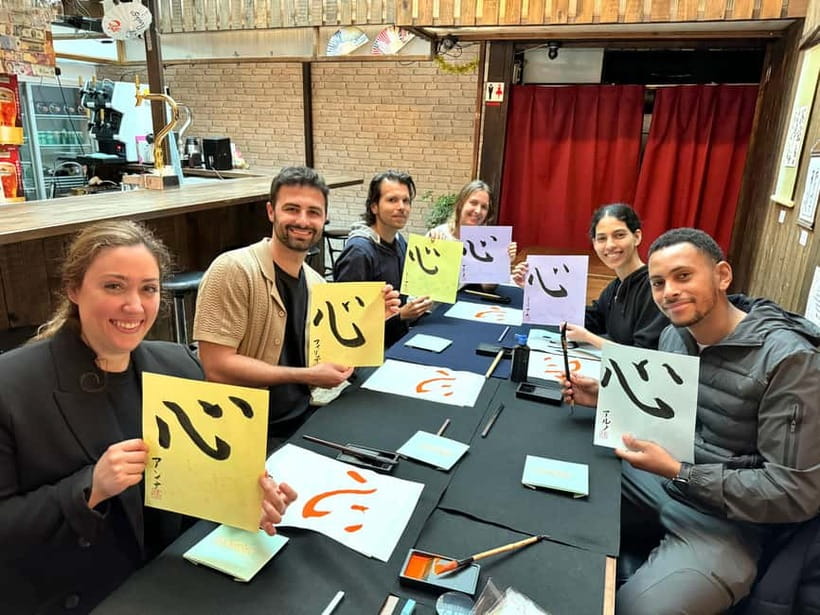
Japanese calligraphy is not just pretty writing. It is a lesson in patience, balance, and controlled movement, taught with a brush that seems determined to do its own thing. At Gojo Paradiso, teacher Takako starts with the basics and guides you toward a finished kanji artwork.
I like the small group of no more than 10 and the personal help built into the class. I also like that you leave with more than practice sheets: you create a piece on rice paper, write your name in kanji, and receive the materials needed for the work. The main consideration is time. A 1 to 2-hour session gives you a friendly introduction, not years of formal training.
In This Review
- Key Points at a Glance
- Why This Kyoto Calligraphy Class Is Worth Your Time
- Arriving at Gojo Paradiso Along the Takase River
- The First Brush Strokes
- Turning Practice Into Kanji
- Your Finished Artwork on Rice Paper
- The Gallery, Photos, and Final Moments
- How Much Value Do You Get for $32?
- Who Will Enjoy This Experience Most?
- Useful Planning Advice for Your Kyoto Day
- How This Compares With Other Cultural Activities
- Should You Book the Gojo Paradiso Workshop?
- FAQ
- Where does the Kyoto calligraphy workshop take place?
- How do I reach Gojo Paradiso?
- How long does the calligraphy class last?
- Is the workshop suitable for beginners?
- What languages does the instructor speak?
- What is included in the price?
- Can children join the activity?
- Is the workshop wheelchair accessible?
- How far in advance must I reserve?
- Can I cancel for a refund?
- Can I pay later?
Key Points at a Glance
- Takako teaches the class in English and Japanese, with clear, patient instruction for beginners.
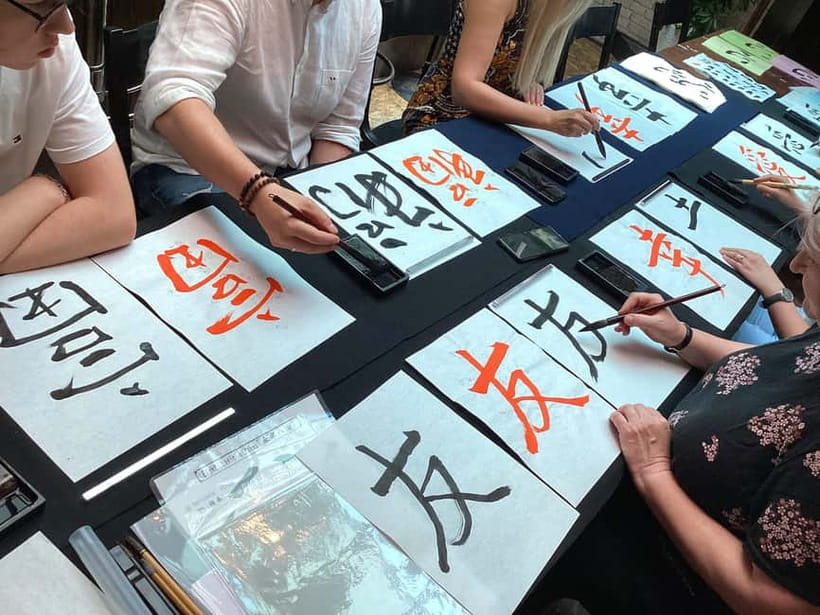
- You practice basic brush strokes first, then use them to write kanji characters.
- Your finished work goes home with you on attractive rice paper, making this more personal than a simple demonstration.
- The class takes place at Gojo Paradiso, along the Takase River on Kiyamachi Street.
- Small groups keep the lesson hands-on, with space for individual guidance.
- The $32 price includes supplies and instruction, and free cancellation is available up to 24 hours before the class.
Why This Kyoto Calligraphy Class Is Worth Your Time
Kyoto offers plenty of ways to look at Japanese culture from a distance. You visit temples, admire gardens, and watch ceremonies. This workshop asks you to pick up a brush and take part.
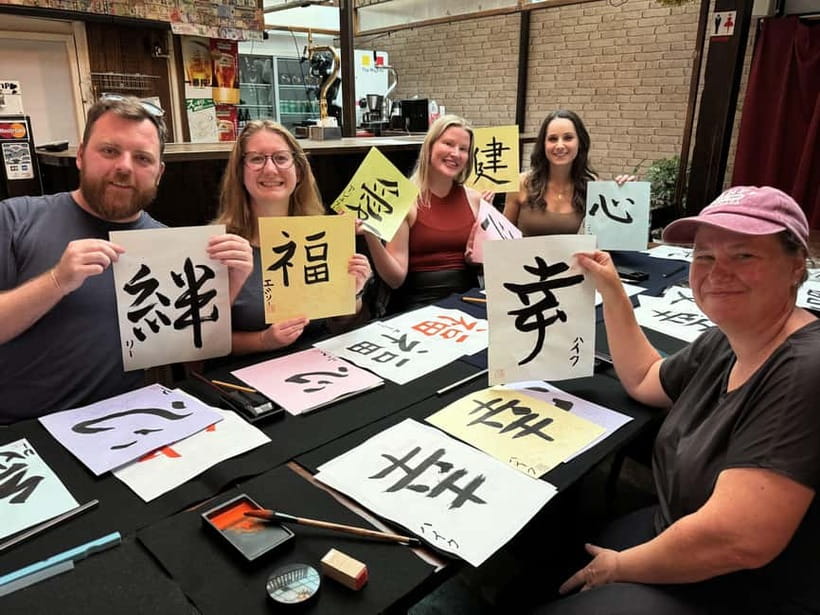
That difference matters. Japanese calligraphy, known as shodo, depends on the order, speed, and pressure of each stroke. A simple character can look awkward if your hand hesitates or the ink spreads too far. You do not need artistic talent to begin, but you do need to slow down and pay attention.
I like this kind of activity for a Kyoto itinerary because it changes pace. After crowded streets and busy sights, an hour or two with ink, paper, and a patient teacher gives you a quiet cultural break. You are not simply collecting another photograph. You are making something that carries a clear connection to the city.
The class has earned a current rating of 4.7 out of 5 from 84 ratings, and the strongest praise centers on the same points: patient teaching, clear English, good materials, and a finished piece worth keeping. That consistency is useful when you are choosing among short cultural activities.
More Kimono & Culture Experiences in Kyoto
- Kyoto Geisha Walking Tour: Gion District & Hidden Gems
★ 4.7 · 3,273 reviews - Kyoto: Gion Magical Night Walking Tour with Geisha Trivia
★ 4.9 · 2,393 reviews - Kyoto: Gion Geisha District Walking Tour – Stories of Geisha
★ 4.7 · 2,187 reviews
Arriving at Gojo Paradiso Along the Takase River
The meeting point is Gojo Paradiso, located along the Takase River on Kiyamachi Street. From Keihan Kiyomizu Gojo Station, the walk takes about five minutes. From Keihan Shichijo Station, allow about ten minutes. The location is listed as 386 meters from Kiyomizu Gojo Station.
That central setting makes the class easy to fit between other Kyoto plans. You will not need to spend half the afternoon reaching a suburban studio. Still, give yourself enough time to find the entrance, especially if you are walking from a station for the first time.
Gojo Paradiso also gives the workshop a pleasant sense of place. The activity is not set in a large tourist complex. It takes place in a gallery-like setting near the river, with time at the end to look around and take photos.
The class requires a reservation at least one day ahead. Starting times vary, so check the schedule before you build the rest of your day around it. You can reserve now and pay later, which helps if your Kyoto plans are still moving around.
The First Brush Strokes
The lesson begins with an introduction to the history and meaning of Japanese calligraphy. This part gives you useful context without asking you to arrive with any background in Japanese language or art.
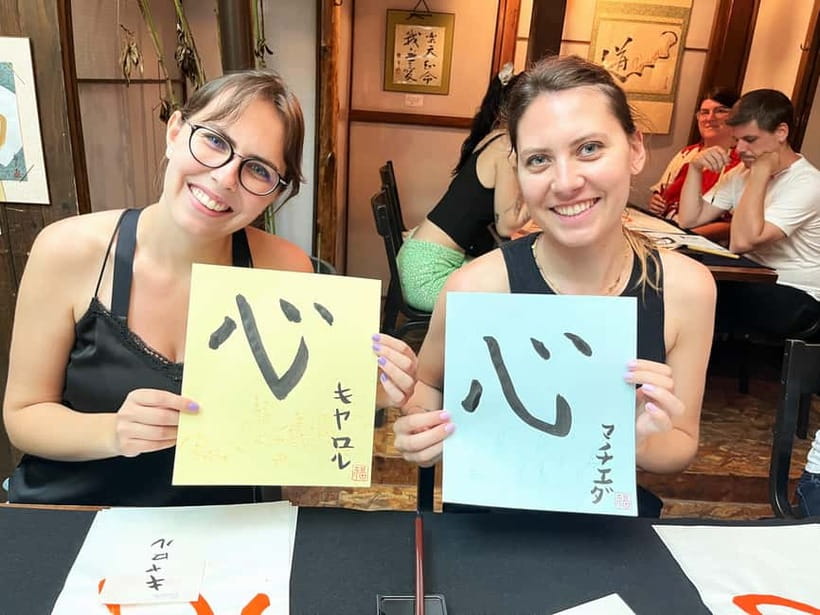
Then you move to the tools and basic strokes. The instructor shows how to hold and move the brush, and you practice the marks that form the foundation of kanji. Expect to repeat movements several times. That repetition is the point. You begin to notice how a small change in pressure affects the thickness and shape of the line.
For a complete beginner, this step is especially valuable. Kanji may look like complex symbols when you first see them. Breaking them into separate brush movements makes the task less mysterious. You can focus on one stroke at a time instead of worrying about producing a perfect character immediately.
The instructor’s patient approach is one of the best reasons to book this workshop. Takako is described as encouraging and attentive, spending time with each person during the exercises. Two helpers may also assist, which is useful in a class where every participant is holding a brush and working at a different speed.
The teaching is offered in English and Japanese. English-speaking participants have found the instructions clear, and the class is designed to keep you moving even if you have never studied Japanese before.
Turning Practice Into Kanji
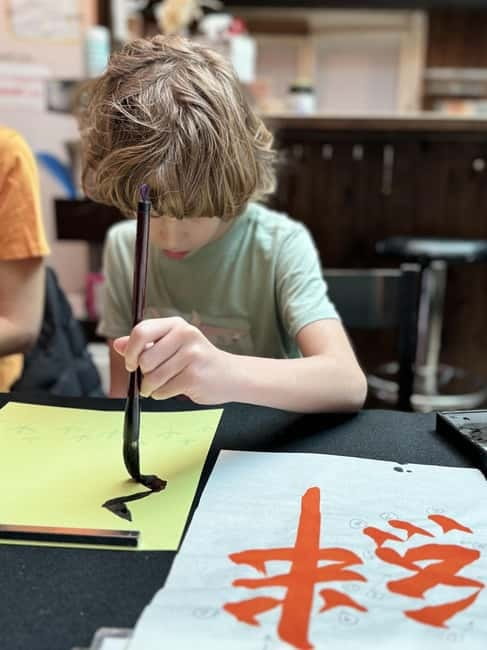
Once you have worked through the strokes, you begin writing characters. The teacher guides you through the order and shape of each one, helping you turn your practice into a more finished piece.
This is where the activity becomes more personal. You are not copying random marks onto paper. You learn something about the character you are writing, then make your own version under the teacher’s eye.
You also have the chance to write your name in kanji. That detail adds a nice personal touch, especially if you want a souvenir that feels connected to you rather than a standard item bought in a shop. The exact name treatment can vary, but the workshop includes guidance on writing participant names in Japanese.
Do not expect every line to look like a master’s work. The charm is in seeing your control improve from the first practice stroke to the final character. The instructor helps you make the most of your result, while still allowing it to remain your own work.
This is a good activity for couples and friends because you can compare results without turning the class into a competition. One person may produce a bold, heavy character. Another may create something lighter and more restrained. Both can be attractive in different ways.
Same city, a completely different kind of day:
- PERFECT KYOTO 1-Day Bus Tour
★ 5.0 · 13,518 reviews - Kyoto: Fushimi Inari, Kinkakuji, Bamboo Grove 1 Day Bus Tour
★ 4.8 · 4,316 reviews - Kyoto: Tea Ceremony in a Traditional Tea House in Kiyomizu
★ 4.9 · 3,519 reviews - Kyoto: Tea Ceremony Ju-An at Jotokuji Temple
★ 4.9 · 3,207 reviews
Your Finished Artwork on Rice Paper
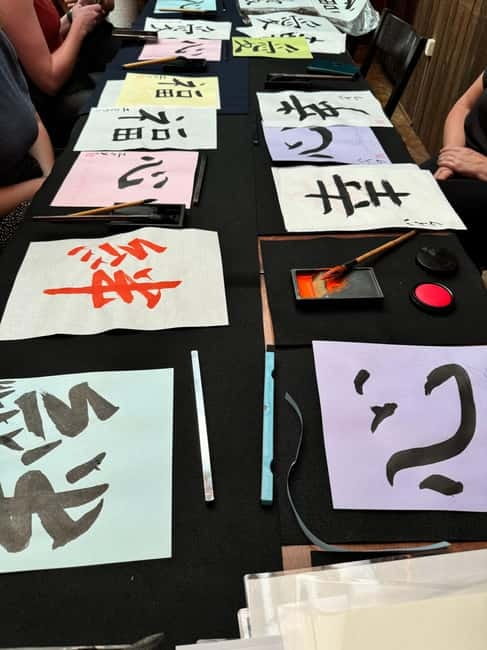
The final stage is the part that gives the $32 fee much of its value. You create a calligraphy piece to take home on rice paper, rather than leaving with only a few disposable practice sheets.
Your teacher may sign and stamp the work, adding a formal finishing touch. One especially generous version of the class also includes a handmade calligraphy gift accented with gold. The supplied experience information does not promise that extra gift for every booking, so treat it as a possible bonus rather than something to count on.
Rice paper needs a little care. It is light and can crease easily, so you will want to keep the finished piece flat and protected as you continue your trip. The workshop provides the supplies, but it does not specify a separate hard case or mailing service. If you are traveling for several more weeks, plan how you will carry the artwork.
The result is still a better memento than a mass-produced souvenir for many people. You remember the quiet concentration of making it, the character you chose, and the effort involved in getting the brush strokes right.
The Gallery, Photos, and Final Moments
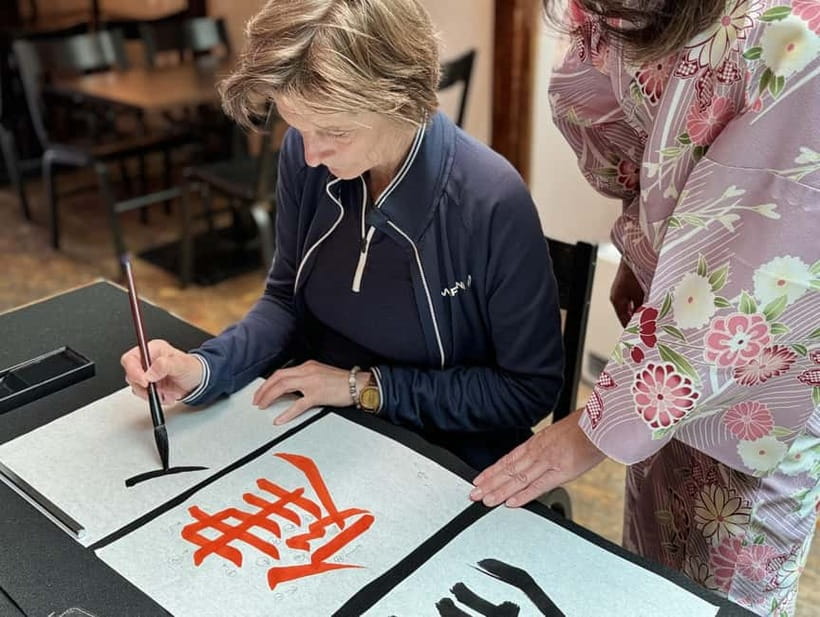
After the writing session, you have time to take photos and look around the gallery. You can also place special orders if you want additional calligraphy work.
This closing section is not the main reason to book, but it rounds out the visit. It gives you a chance to see more polished examples after producing your own beginner piece. That comparison can help you appreciate the control and training behind professional calligraphy.
The workshop is scheduled to begin and end on time according to detailed participant feedback. That is helpful if you have a restaurant booking, a train to catch, or another Kyoto sight planned afterward. Even so, keep a little breathing room in your schedule. The stated duration is 1 to 2 hours, so the exact length may depend on the session.
How Much Value Do You Get for $32?
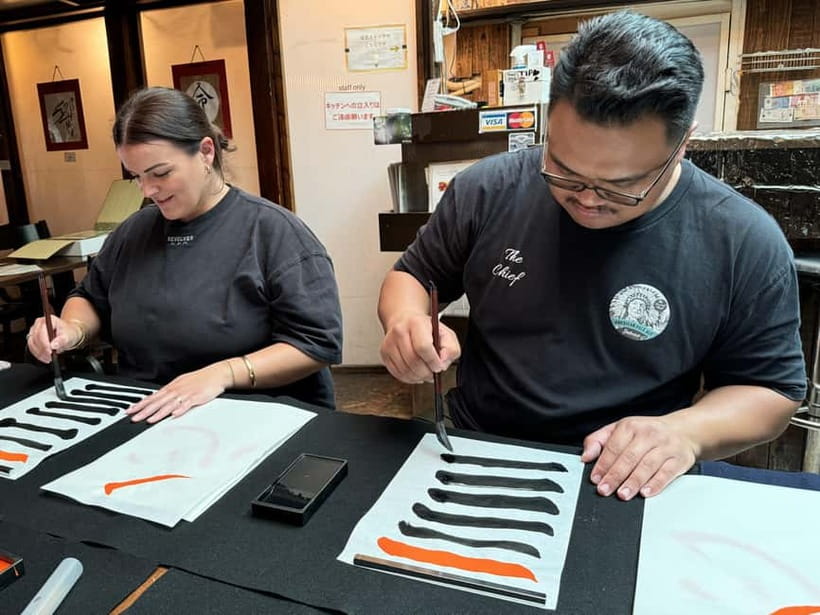
At $32 per person, this is a fair price for a short Kyoto activity. The fee covers an expert instructor, all necessary supplies, and a finished work you can take home. You are paying for direct teaching rather than simply watching someone demonstrate the art.
The value improves if you care about authentic, hands-on experiences. A museum visit may offer more historical depth, and a full art course would give you more practice time. This workshop sits between those options. It gives you a cultural introduction and a tangible result without taking over your day.
The small group matters here. A limit of 10 participants makes it more likely that the teacher can correct your grip, show you a stroke again, and answer a question before you move on. In a larger class, the same price might feel less worthwhile.
The class also seems well suited to people who want a souvenir but do not want to spend an hour shopping for one. Your artwork is inexpensive in material terms, but personal in a way a store-bought print cannot be.
If you are mainly seeking advanced instruction, the short format may feel limited. You will learn the foundations and produce a piece, but you will not become proficient in shodo in one sitting. Think of it as a first lesson with a memorable result.
Who Will Enjoy This Experience Most?
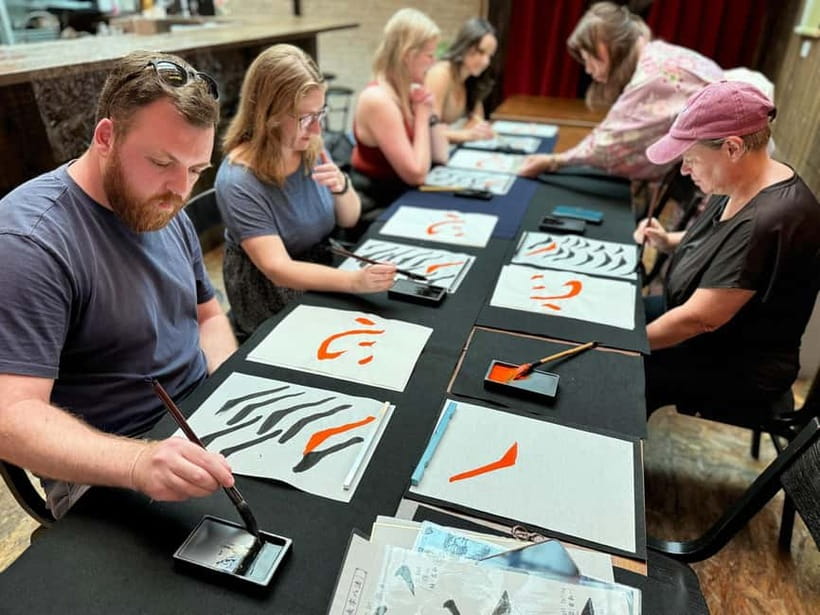
I would recommend the workshop to adults and older children who like quiet, creative activities. It works well for couples, friends, solo visitors, and families with children aged 10 or older.
It is particularly useful if:
- You want a cultural activity that takes only 1 to 2 hours.
- You are curious about Japanese writing but cannot read kanji.
- You prefer making something to simply observing a performance.
- You want an easy-to-pack Kyoto souvenir with a personal story.
- You appreciate patient, step-by-step teaching.
- You need an indoor activity in central Kyoto.
Children under 10 are not suitable for the activity. The class also requires enough patience to repeat strokes and listen to instruction. If you want a fast, lively attraction with constant movement, this may feel too calm.
The workshop is wheelchair accessible, which makes it a practical choice for visitors who need an accessible cultural activity. The supplied details do not specify the exact room layout or restroom arrangements, so contact the provider if you need those details before booking.
Useful Planning Advice for Your Kyoto Day
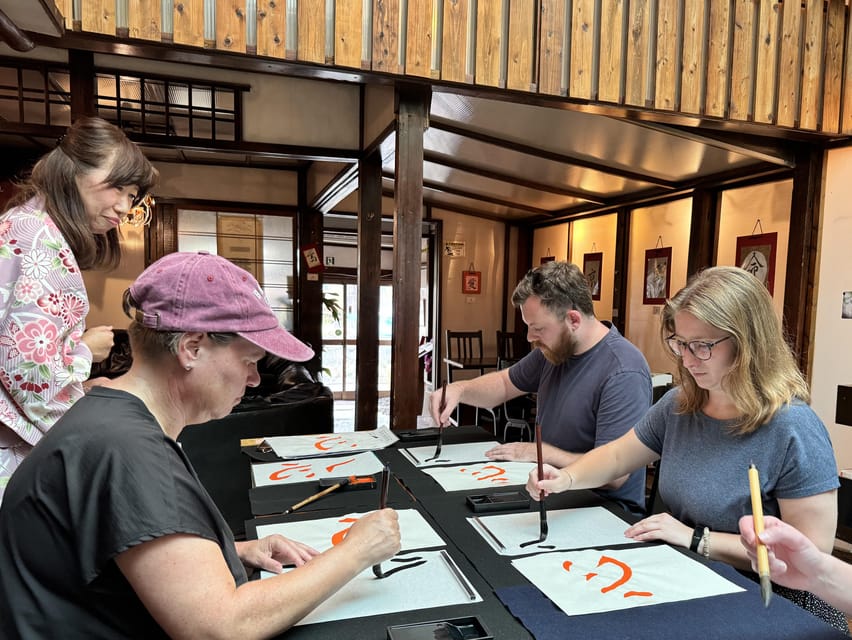
Book at least one day in advance. The class has limited space, and starting times depend on availability. The reserve-now, pay-later option lets you hold a place without paying at the time of booking.
For transport, Keihan Kiyomizu Gojo Station is the closest listed option, about a five-minute walk away. Keihan Shichijo Station is another choice at about ten minutes on foot. Use the station names carefully when planning, since Kyoto has several nearby neighborhoods with similar-sounding names.
Wear something you can relax in and keep your attention on the brush. The activity provides the necessary supplies, but ink work is still an exercise in care. The available information does not state a dress code or specific clothing restrictions.
Build the class into a day around the Kiyamachi and Gojo area if you can. The central location makes it a natural pause between sightseeing stops, though the activity itself is not presented as a guided neighborhood tour. You come for the calligraphy, not for a long walk through Kyoto.
Leave room in your luggage for the rice-paper artwork. A flat folder or firm document sleeve would be sensible, but the workshop does not state that one is provided.
Free cancellation is available up to 24 hours before the activity for a full refund. That gives you some protection if the weather, transport, or your Kyoto plans change.
How This Compares With Other Cultural Activities
A calligraphy workshop offers a different kind of contact with Japanese culture than a tea ceremony, cooking class, or temple visit. It is quieter than many food activities and more active than sightseeing. You use your hands, but the task is not physically demanding.
The class also gives you a direct connection to the written side of Japan. Even if you cannot remember every character later, you will have a better sense of how brushwork creates meaning. You begin to see kanji not only as signs on stations and menus, but as carefully formed designs.
The short format is both strength and limit. You can fit it into a packed Kyoto schedule, but the lesson cannot cover the full tradition of shodo. If you want a serious study of calligraphy, look for a longer course. If you want a calm introduction with a keepsake, this session is better matched to your needs.
Should You Book the Gojo Paradiso Workshop?
Yes, if you want a reasonably priced, hands-on Kyoto activity with an attentive teacher and a finished souvenir. The strongest features are the small group, clear English instruction, quality materials, and personal attention from Takako and her helpers.
I would book it early if you are visiting during a busy period, since reservations must be made at least one day ahead and the class is limited to 10 people. Choose it for a thoughtful cultural pause, not for advanced artistic training.
Skip it if you dislike slow, careful practice or need a fully planned activity with a fixed duration under one hour. For everyone else, this is a practical way to try shodo, learn a little about kanji, and carry home a piece of Kyoto that you made yourself.
FAQ
Where does the Kyoto calligraphy workshop take place?
The workshop takes place at Gojo Paradiso along the Takase River on Kiyamachi Street in central Kyoto.
How do I reach Gojo Paradiso?
Gojo Paradiso is about a five-minute walk from Keihan Kiyomizu Gojo Station and about a ten-minute walk from Keihan Shichijo Station. It is listed as 386 meters from Kiyomizu Gojo Station.
How long does the calligraphy class last?
The activity lasts 1 to 2 hours. Starting times vary, so check availability when booking.
Is the workshop suitable for beginners?
Yes. The teacher provides step-by-step instruction, beginning with the history and meaning of calligraphy and then moving to basic brush strokes and kanji characters.
What languages does the instructor speak?
Instruction is available in English and Japanese.
What is included in the price?
The price includes an expert calligraphy instructor and all necessary supplies. You also create a calligraphy piece to take home.
Can children join the activity?
Children under 10 are not suitable for this workshop.
Is the workshop wheelchair accessible?
Yes, the activity is listed as wheelchair accessible.
How far in advance must I reserve?
You must reserve at least one day in advance.
Can I cancel for a refund?
Yes. You can cancel up to 24 hours in advance for a full refund.
Can I pay later?
Yes. The reserve-now, pay-later option lets you book a place without paying at the time of reservation.
More Workshops in Kyoto
- Kyoto: 45-Minute Tea Ceremony Lesson Experience
★ 4.3 · 2,378 reviews - Ramen Cooking Class at Ramen Factory in Kyoto
★ 5.0 · 1,937 reviews - Kyoto : Chopsticks Making Workshop in Gion with Engraving Option
★ 5.0 · 958 reviews - Kyoto: Samurai Sword Class by Experts in Traditional Arts
★ 4.9 · 657 reviews
Just added around Kyoto
- Taste of Nishiki Market Walking Food Tour with Local guide★ 5.0 · 17 reviews
- Kyoto: Sushi Making Class with Sushi Chef★ 4.8 · 64 reviews
- Kyoto: City Secrets eBike Tour★ 4.9 · 196 reviews
- Sacred Pathways: Discover the Philosopher’s Path of Kyoto★ 4.9 · 20 reviews
- Private Tour to Monkey Park and Arashiyama Highlights★ 5.0 · 22 reviews
- Private Nara Tour from Osaka – Meet at Your Hotel★ 5.0 · 22 reviews
- Private Sake Tasting in Central Kyoto with Sake Sommelier★ 5.0 · 13 reviews
- Kyoto : Private Custom Walking Tour With A Local Guide★ 4.6 · 144 reviews
Kimono & Culture Experiences, compared.
Kyoto Geisha Walking Tour: Gion District & Hidden Gems
Read our review →
Gion Magical Night Walking Tour with Geisha Trivia
Read our review →
Gion Geisha District Walking Tour – Stories of Geisha
Read our review →
Best of Kyoto: Gion, Geisha, Pagodas & Cobblestones
Read our review →
Kyoto Gion Geisha District Walking Tour – The Stories of Geisha
Read our review →
Browse the lists this tour appears in