
REVIEW · KIMONO & CULTURE EXPERIENCES
Kyoto: Japanese Calligraphy Class
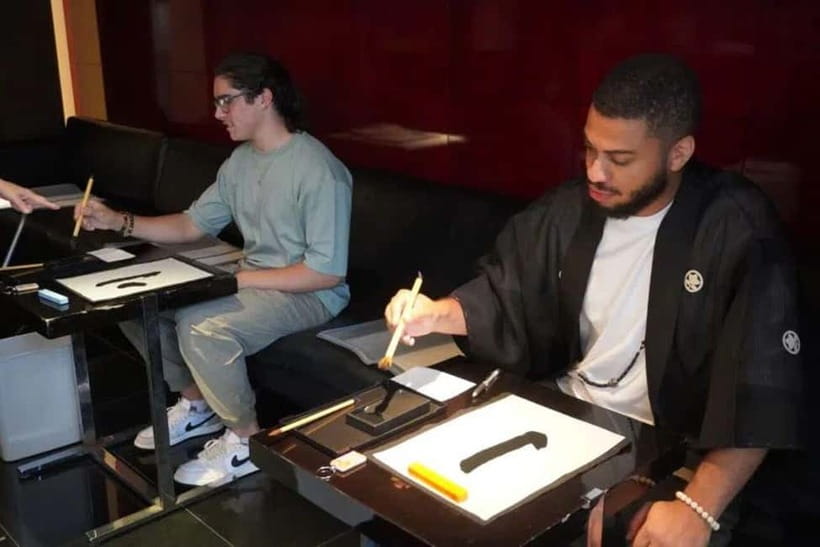
The most appealing part of this Kyoto class is that you do not merely copy a character onto scrap paper. You learn the basic brush movements, choose Kanji for your name or a favorite word, then turn your work into a personal souvenir. The studio is in front of Kyoto Station, so it is an easy cultural stop before a train or after arriving in town.
I like the patient, one-to-one help built into the lesson, especially for first-time writers. I also like the range of finished items, from scrolls to fans and picture frames. The main consideration is time: one hour goes quickly, and your class may take longer if you want to finish every activity carefully.
In This Review
- Key points at a glance
- Why this one-hour class works in Kyoto
- Arriving near Kyoto Station
- First lesson: brush, ink, and the basic strokes
- Choosing Kanji for your name
- Turning practice into a souvenir
- A calm break from Kyoto sightseeing
- Who will get the most from it
- Small groups, private sessions, and the pace of instruction
- What to know about the finished Kanji
- Is $51 a fair price?
- Should you book this Kyoto calligraphy class?
- FAQ
- Where is the Japanese calligraphy class located?
- How long does the class last?
- Is instruction available in English?
- What will I learn during the class?
- Can I take my work home?
- Is the class suitable for children?
- Can I cancel the booking for a refund?
Key points at a glance
- A short walk from Kyoto Station: The central location makes this easy to fit into a busy Kyoto schedule.
- English instruction: Staff explain brush handling, ink application, Kanji meanings, and stroke order in English.
- Personal Kanji names: You can work with the instructors to choose characters for your name and learn what they mean.
- Several souvenirs: Depending on the option, you may create a Japanese fan, postcard, stationery, picture frame, or scroll.
- Good for beginners and families: No previous calligraphy skill is required, though children under five cannot join.
- Private and small groups: The format allows for close help rather than a large classroom lecture.
Why this one-hour class works in Kyoto
Kyoto gives you plenty of grand temples, gardens, and shrines. Those are essential, but they can also leave you looking at rather than doing. This class gives you a hands-on hour with one of Japan’s most recognizable arts, without asking you to commit half a day.
At $51 per person, the value depends on what you want from a cultural activity. You are paying for an instructor, the use of brushes, ink, and washi paper, plus finished items you can take home. It is not the cheapest craft activity you might find, but the individual guidance and personal Kanji work make it more than a simple souvenir-making session.
I would especially consider it if you want something that works in rainy weather, fits between sightseeing plans, and leaves you with an object tied to your own trip. The current score is 4.8 from 89 ratings, and the repeated strengths are clear: kind staff, careful explanations, and useful help for complete beginners.
More Kimono & Culture Experiences in Kyoto
- Kyoto Geisha Walking Tour: Gion District & Hidden Gems
★ 4.7 · 3,273 reviews - Kyoto: Gion Magical Night Walking Tour with Geisha Trivia
★ 4.9 · 2,393 reviews - Kyoto: Gion Geisha District Walking Tour – Stories of Geisha
★ 4.7 · 2,187 reviews
Arriving near Kyoto Station
The location in front of Kyoto Station is one of the class’s biggest practical advantages. Kyoto Station is a major transport hub, so you can place the activity at the start or end of a sightseeing day without crossing the city for a distant workshop.
Check the exact meeting point for the option you book. The meeting point can vary, so do not rely only on the general station description. Give yourself enough time to find the right spot, particularly if you are carrying luggage or navigating the station for the first time.
The central setting also makes this a useful backup plan. If the weather turns poor or you need a quieter activity after several hours outside, calligraphy gives you a calm change of pace. The class is indoors, though the supplied information does not specify the exact room setup or whether luggage storage is available.
First lesson: brush, ink, and the basic strokes
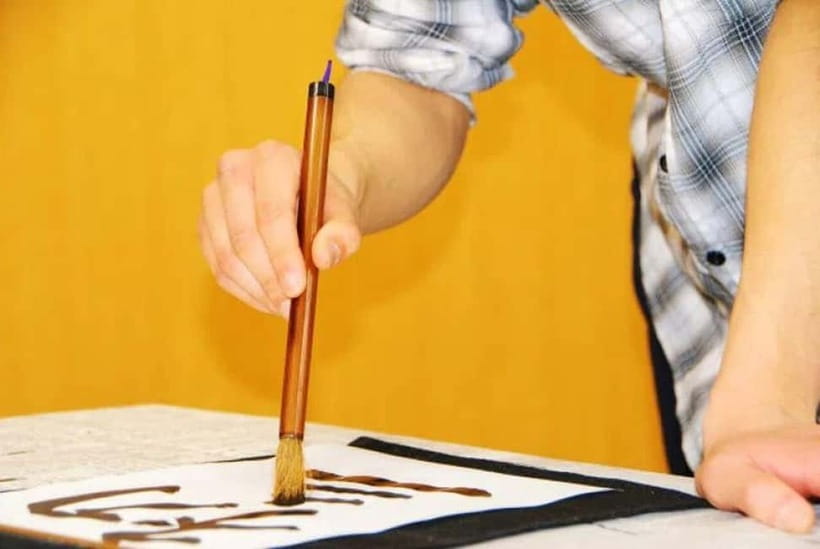
The class begins with a short explanation of how to hold and use the brush. You learn how to apply ink and how pressure affects the line. This opening matters because Japanese calligraphy is not simply handwriting with a larger brush. The movement, angle, and amount of ink all change the character on the page.
You then practice basic characters. This is the right order for a beginner: first get used to the tools, then attempt more personal work. You can expect the instructor to correct your strokes and show you how to set them down properly.
The teaching is in English, and the staff can answer questions about Japanese writing and language culture. The instructors named in the feedback include Rena, Lana, Waka, Yoshia Kobayashi, and Kou. Their roles may depend on the date and class option, so you should not assume that one particular teacher will lead your session.
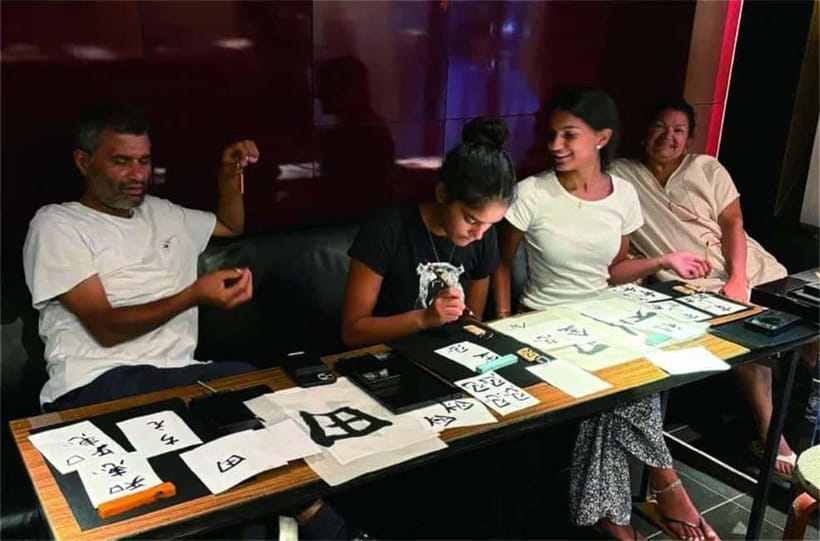
The strongest feature here is the level of encouragement. You are not left alone with an ink brush and a blank sheet. Several participants specifically praised the one-to-one help, which is valuable when you are trying to understand stroke order or control a tool that feels unfamiliar.
Choosing Kanji for your name
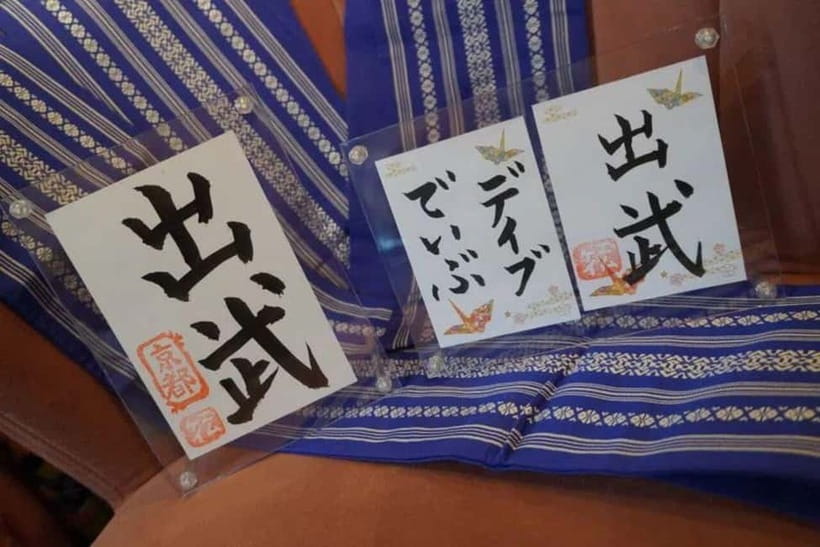
Once you have practiced the basics, the class moves to the most personal part: writing your own name and a favorite word in Kanji and alphabet letters. The instructors help suggest possible Kanji and explain their meanings.
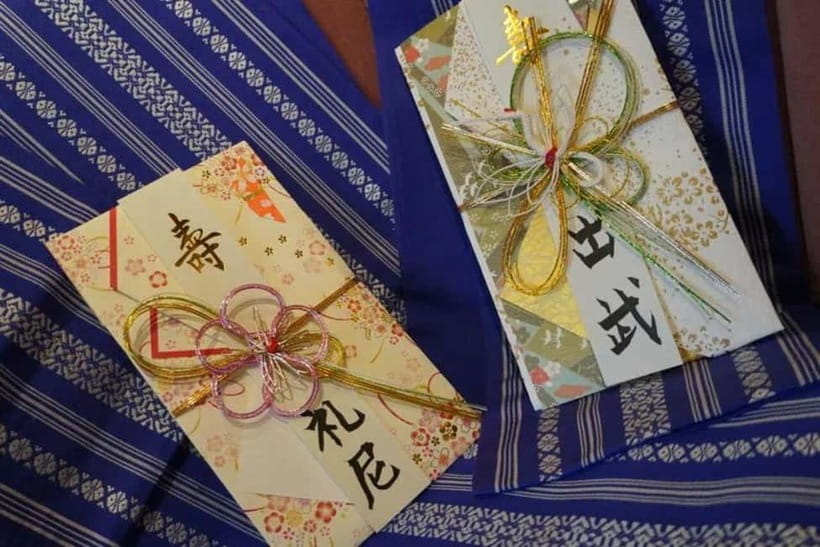
This is not a direct translation in the way you might translate a name from one language into another. Foreign names do not usually have a single standard set of Kanji, so the staff select characters based on sound, meaning, or both. The examples given include Brian becoming 武礼安, with ideas connected to bravery, courtesy, and peace, while Liz becomes 梨図, using characters linked with pear and picture.
That makes this part fun, but you should treat the result as a creative interpretation rather than an official Japanese spelling of your name. Ask the instructor why each character was chosen. The explanation is often as memorable as the finished writing, and it gives you a small lesson in how Japanese characters carry meaning.
You can also bring a favorite word into the process. A word connected to family, courage, peace, travel, or another personal idea may work well, but the exact choices depend on the staff’s suggestions and the characters available for the sound or meaning you want.
Same city, a completely different kind of day:
- PERFECT KYOTO 1-Day Bus Tour
★ 5.0 · 13,518 reviews - Kyoto: Fushimi Inari, Kinkakuji, Bamboo Grove 1 Day Bus Tour
★ 4.8 · 4,316 reviews - Kyoto: Tea Ceremony in a Traditional Tea House in Kiyomizu
★ 4.9 · 3,519 reviews - Kyoto: Tea Ceremony Ju-An at Jotokuji Temple
★ 4.9 · 3,207 reviews
Turning practice into a souvenir
The class does not end with a practice sheet. You can make a scroll from the Kanji you write and take it home. Depending on the booked option and the activities completed, souvenirs may include a Japanese fan, picture frame, postcard, or stationery.
This is where the $51 price makes more sense. The paper and materials are included, and your final piece is not a generic item bought from a shop. You have written it yourself, with help from the instructor, and can explain the meaning behind it when you show it to friends or family.
The exact combination of products may vary, so check the option details before booking if a particular item matters to you. Some people may prefer a fan, while others will want a framed piece or scroll. The supplied information confirms that some souvenirs are included, but it does not promise every listed item in every class.
Take care with your expectations. Your first calligraphy attempt may not look like the instructor’s polished example. That is part of the charm, but also the reason the class provides practice first. The goal is a personal keepsake, not professional-level Japanese calligraphy.
A calm break from Kyoto sightseeing
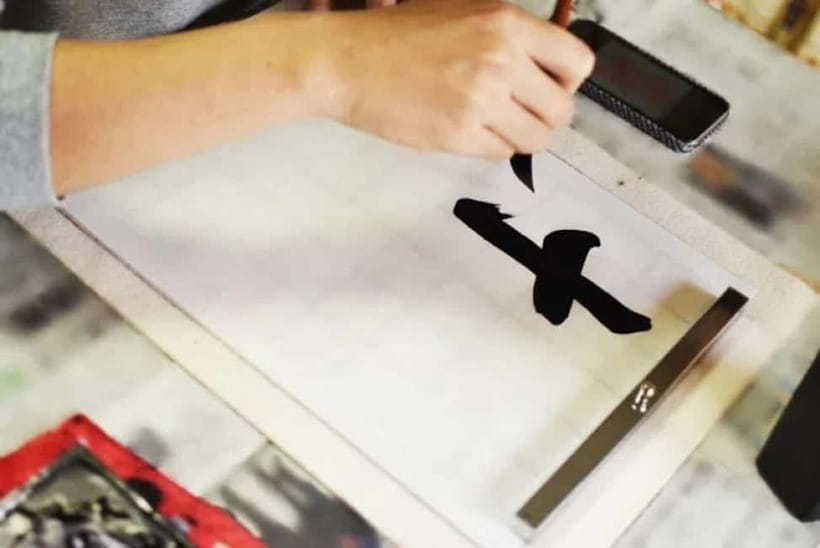
Calligraphy has a slower rhythm than many city activities. You work at your own pace, repeat the strokes, and pay attention to the ink. One participant described the quiet concentration as a welcome contrast to the rush of a busy trip, and that is a useful way to think about the class.
The staff’s manner also shapes the hour. The supplied feedback repeatedly points to friendly, patient, and encouraging instruction. That matters for adults who worry about making mistakes, and it matters even more for children who may lose interest if the lesson feels too formal.
The experience can be enjoyable for a family, but the minimum age is five. A family of four described the session as accessible and fun, and another parent found it especially good for the children. Still, younger children may struggle with brush control or the focused pace, so families should consider each child’s interest in quiet, hands-on activities.
A short mention in one account also notes matcha as part of the visit. The core activity described here is calligraphy, and matcha should not be treated as a guaranteed inclusion unless it appears in your selected option.
Who will get the most from it
This class is a strong fit for first-time visitors who want an introduction to Japanese culture without a long lecture. You get a brief explanation, practical practice, personal guidance, and something tangible to carry home.
It also suits:
- Couples looking for a shared activity that is quieter than a food tour
- Families with children aged five and older
- Solo visitors who want direct help from an English-speaking instructor
- People with limited time near Kyoto Station
- Anyone searching for a personal gift or travel memento
- Repeat visitors who have already covered the major temples and want a creative hour
It is less suitable if you want an advanced study of calligraphy styles, a long formal lesson, or a full-day art workshop. The class lasts about one hour, though the timing may change depending on how quickly you complete the activities. You will get an introduction and a finished project, not a deep course in Japanese calligraphy.
Small groups, private sessions, and the pace of instruction
Private and small-group formats are available. That is important because brush work benefits from quick corrections. An instructor can spot a stiff wrist, excess ink, or an awkward stroke before you repeat the same mistake several times.
The class appears particularly well suited to personal assistance. Several accounts describe close guidance, including one-to-one help with individual strokes. Even in a small group, ask questions as you go. The staff are there to explain the language and cultural background, not just to show you a finished sample.
The one-hour format keeps the activity manageable, but it also limits how much you can cover. You may need to choose between spending longer on practice and producing several different souvenirs. If you want the best result, focus on one or two characters rather than rushing through every possible item.
The booking system allows you to reserve now and pay later, and free cancellation is available up to 24 hours before the activity for a full refund. Those terms are useful when your Kyoto plans depend on weather or train schedules. Confirm the starting time and meeting point for your selected option before the day of the class.
What to know about the finished Kanji
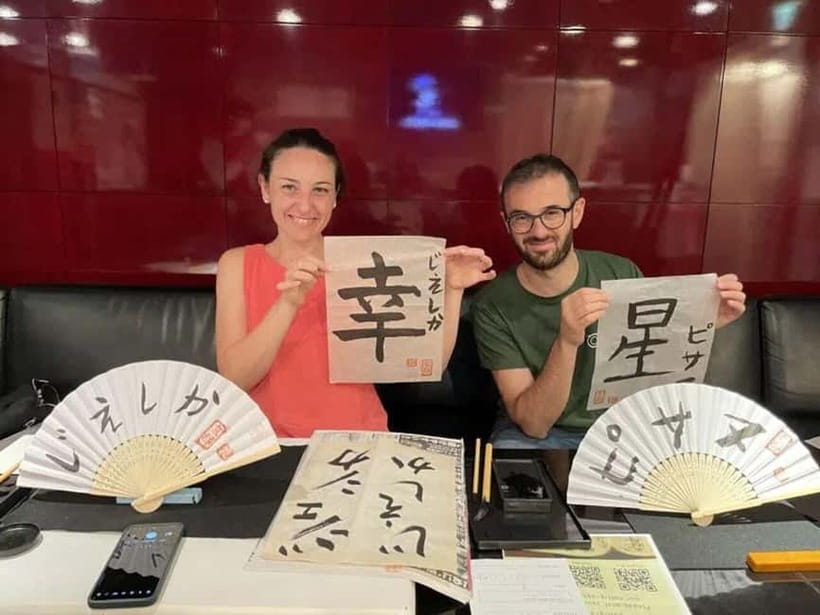
The most memorable part of the class may be the meaning behind your chosen characters. Japanese Kanji are compact symbols with layers of meaning, and the staff use your name or favorite word as a way into that subject.
Still, you should listen closely to the explanation. When a foreign name is represented in Kanji, the result may be chosen for sound, visual appeal, or a positive meaning. It is best understood as an artistic name rendering, not as a fixed linguistic rule.
That does not make it less worthwhile. In fact, the creative choice is part of the experience. You can tell people why a particular character was selected, what it suggests, and how you practiced writing it. A souvenir with a story has more value than one picked up quickly in a station shop.
Ask for the meaning of each character before you begin the final piece. If you have a preferred theme, share it with the instructor. The staff can then help you choose a word or character set that fits your idea.
Is $51 a fair price?
At $51, this is a mid-priced one-hour activity. If you measure value only by time, it may seem costly. If you include the instructor’s attention, materials, English explanations, and personal souvenirs, the price is easier to justify.
You are also paying for a low-risk introduction. You do not need to buy brushes, ink, or washi paper before you know if calligraphy suits you. The staff provide the equipment and guide you through the process, which is helpful if you are traveling light.
The best value comes when you care about the personal element. If you want a polished, inexpensive fan, you can find one elsewhere. If you want to make a fan or scroll yourself and understand the Kanji on it, this class offers something a shop cannot.
Should you book this Kyoto calligraphy class?
I would book it if you want a short, friendly cultural activity near Kyoto Station and like the idea of making your own souvenir. The English instruction, personal Kanji guidance, and patient teaching make it accessible even if you have never held a calligraphy brush.
Families with children aged five and older, couples, solo visitors, and first-time calligraphy students should find the format particularly useful. Book with realistic expectations: you will receive an enjoyable introduction and a personal keepsake, not advanced artistic training. If the $51 price fits your budget and you value an activity you can remember through something you made yourself, this is a good use of one hour in Kyoto.
FAQ
Where is the Japanese calligraphy class located?
The main location is in front of Kyoto Station in Kyoto, Japan. The exact meeting point may vary depending on the option you book, so check your booking details carefully.
How long does the class last?
The class takes about one hour. The exact length may vary depending on how quickly you complete the activities.
Is instruction available in English?
Yes. English instruction is included, and the activity lists English as its language.
What will I learn during the class?
You will learn how to use a brush, apply ink, and write basic characters. You can also write your name and a favorite word in Kanji and alphabet letters.
Can I take my work home?
Yes. You can take your finished souvenirs home. Possible items include a Kanji scroll, Japanese fan, postcard, stationery, or picture frame, depending on the option and activities completed.
Is the class suitable for children?
Children under five are not permitted to join. The activity can suit older children, and the supplied information includes positive family experiences, but each child should be comfortable with a focused, hands-on class.
Can I cancel the booking for a refund?
You can cancel up to 24 hours in advance for a full refund. The activity also offers a reserve-now, pay-later option.
More Workshops in Kyoto
- Kyoto: 45-Minute Tea Ceremony Lesson Experience
★ 4.3 · 2,378 reviews - Ramen Cooking Class at Ramen Factory in Kyoto
★ 5.0 · 1,937 reviews - Kyoto : Chopsticks Making Workshop in Gion with Engraving Option
★ 5.0 · 958 reviews - Kyoto: Samurai Sword Class by Experts in Traditional Arts
★ 4.9 · 657 reviews
Just added around Kyoto
- Taste of Nishiki Market Walking Food Tour with Local guide★ 5.0 · 17 reviews
- Kyoto: Sushi Making Class with Sushi Chef★ 4.8 · 64 reviews
- Kyoto: City Secrets eBike Tour★ 4.9 · 196 reviews
- Sacred Pathways: Discover the Philosopher’s Path of Kyoto★ 4.9 · 20 reviews
- Private Tour to Monkey Park and Arashiyama Highlights★ 5.0 · 22 reviews
- Private Nara Tour from Osaka – Meet at Your Hotel★ 5.0 · 22 reviews
- Private Sake Tasting in Central Kyoto with Sake Sommelier★ 5.0 · 13 reviews
- Kyoto : Private Custom Walking Tour With A Local Guide★ 4.6 · 144 reviews
Kimono & Culture Experiences, compared.
Kyoto Geisha Walking Tour: Gion District & Hidden Gems
Read our review →
Gion Magical Night Walking Tour with Geisha Trivia
Read our review →
Gion Geisha District Walking Tour – Stories of Geisha
Read our review →
Best of Kyoto: Gion, Geisha, Pagodas & Cobblestones
Read our review →
Kyoto Gion Geisha District Walking Tour – The Stories of Geisha
Read our review →
Browse the lists this tour appears in