
REVIEW · TEMPLE & SHRINE TOURS
Kyoto: Half-day Guided Bike Tour with Fushimi Inari
Kyoto’s great sights are spread out, and this small-group bike tour gives you a practical way to connect them without spending half the morning on trains and crowded streets. You pedal from Toji and Higashi-Honganji through canal-side routes, Gion backstreets, Tofukuji, and finally the orange gates of Fushimi Inari.
I like the mix of famous sights and quieter neighborhood riding, and I like that the pace is gentle enough for the guide to answer questions and adjust stops when possible. The main consideration is distance: you may ride more than 15 kilometers, and the tour is not suitable if you cannot ride comfortably or have back problems.
In This Review
- Key points at a glance
- Why cycling works so well in South Kyoto
- Starting near Kyoto Station and getting ready
- Toji, Kyoto’s oldest temple
- Higashi-Honganji and Kyoto’s temple tradition
- The Takase Canal and Kamo River
- Gion from the backstreets
- Tofukuji for photographs and a change of pace
- Fushimi Inari and the orange torii gates
- The pace, bikes, and physical effort
- Is $77 a fair price?
- Who will get the most from this ride?
- Should you book the Cycle Kyoto ride?
- FAQ
- How long does the Kyoto bike tour last?
- Where does the tour begin and end?
- What is included in the tour?
- Is the tour available in languages other than English?
- What is the minimum age to join?
- Are e-bikes available?
- Can I join if I do not ride a bicycle or have back problems?
- Can I cancel for a refund?
Key points at a glance
- Ride beyond the main streets: Follow the Takase Canal, Kamo River, and local lanes instead of moving between sights only by bus.
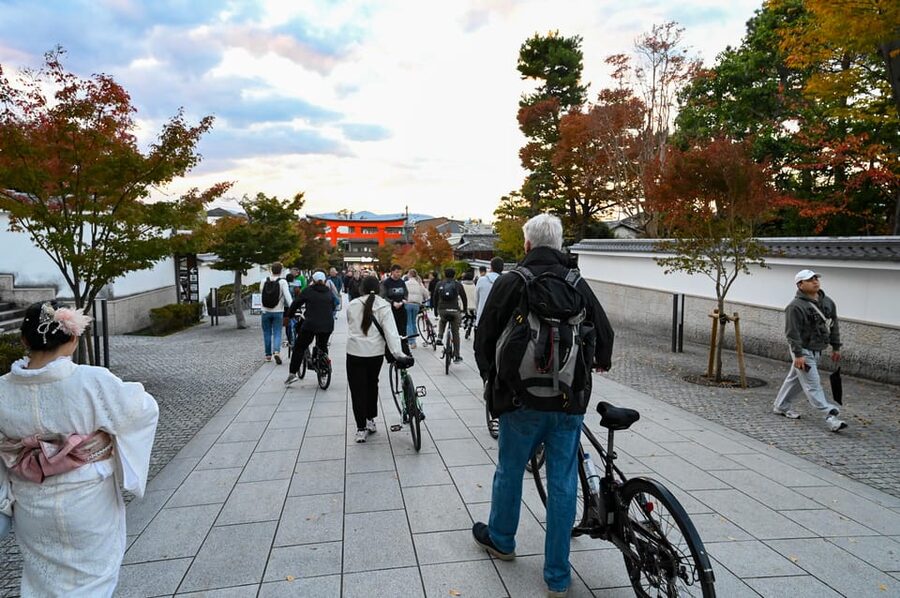
- See Fushimi Inari by bicycle: Ride into the shrine area, then leave the bike for a 45-minute walk among its famous orange torii gates.
- Visit four major religious sites: Toji, Higashi-Honganji, Tofukuji, and Fushimi Inari each show a different side of Kyoto.
- Keep the group personal: Public tours are limited to eight people, giving you more room to ask questions and stay with the guide.
- Expect a real ride: The route takes 210 minutes and can exceed 15 kilometers, though the pace is described as gentle.
- Upgrade if needed: E-bikes are available on request for an additional 3,000 yen.
Why cycling works so well in South Kyoto
South Kyoto is a good part of the city for a bike tour because its sights are not all clustered around one station. Toji is near Kyoto Station, Gion lies farther east, Tofukuji sits south of the center, and Fushimi Inari continues in the same general direction. On foot, that is a tiring chain. By bus, you lose time waiting and transferring.
A bicycle gives you a useful middle ground. You move faster than a walker but still see the small details between major attractions. The route uses backstreets, the Takase Canal, and the Kamo River, so the ride is not simply a contest to reach the next temple.
I also like the scale of the group. With no more than eight participants, the guide can usually keep track of everyone and stop for questions without turning the outing into a lecture from far away. Past guides have included Jay, Julian, Indra, Juan, Sean, and Mayco, and the strongest praise has focused on their history and culture explanations, patience, and relaxed manner.
The tour lasts three and a half hours. That sounds short for such a full route, but it is enough to get a clear feel for several parts of southern Kyoto. You should not expect long, detailed visits inside every building. Instead, you get a well-paced introduction, with extra time at the most important stops.
More Temple & Shrine Tours in Kyoto
- Kyoto: Fushimi Inari, Kinkakuji, Bamboo Grove 1 Day Bus Tour
★ 4.8 · 4,316 reviews - Kyoto: Tea Ceremony in a Traditional Tea House in Kiyomizu
★ 4.9 · 3,519 reviews - Kyoto: Tea Ceremony Ju-An at Jotokuji Temple
★ 4.9 · 3,207 reviews
Starting near Kyoto Station and getting ready
The meeting point is at Cycle Kyoto. From Kyoto JR Station, walk past Avanti, cross one set of traffic lights, pass the Daily Yamazaki convenience store, and take the next left. Give yourself enough time to find the shop, especially if you are unfamiliar with the large station area.
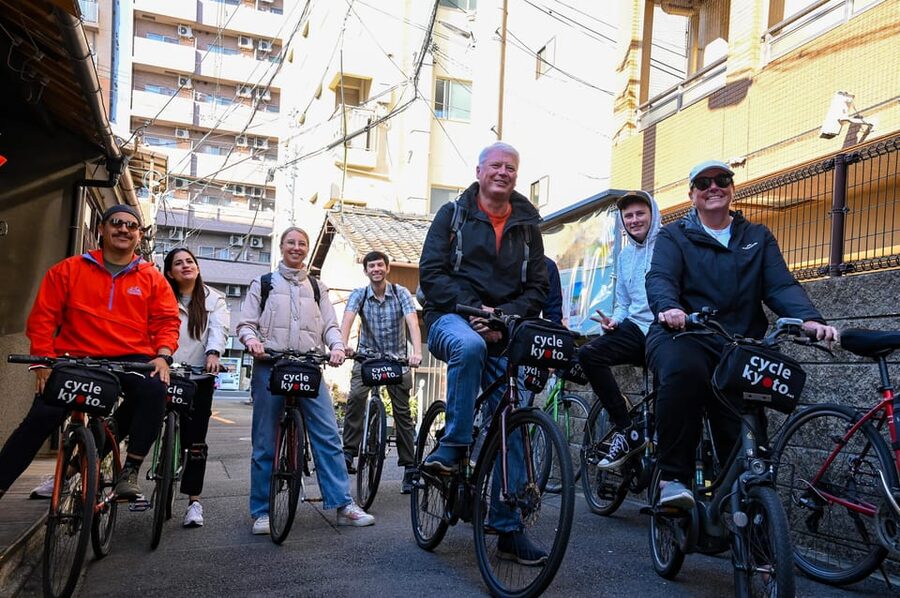
The first 15 minutes are set aside for a safety briefing. This matters in Kyoto, where bikes share space with cars, pedestrians, narrow lanes, and other cyclists. You receive a bicycle, helmet, and water, plus a small pouch on the bicycle for personal items.
Wear comfortable clothes and shoes that work for pedaling. Sunscreen is sensible in bright weather, while warm clothing helps on cool mornings. Check the forecast before you leave your hotel. The route can still work in less-than-perfect weather, but rain may make the ride less comfortable and affect how long you want to stop at outdoor sights.
The public tour requires a minimum age of 13. Children under 13 cannot join, and anyone who cannot ride a bicycle or has back problems should choose another way to see Kyoto. E-bikes are available if you request one, but the upgrade costs 3,000 yen.
Toji, Kyoto’s oldest temple
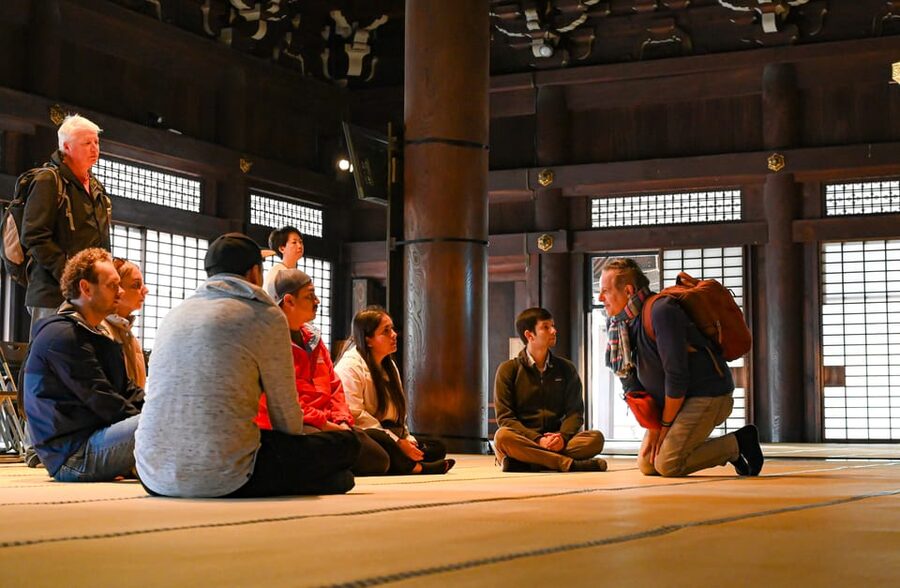
Toji is the first major stop, with about 35 minutes for a guided visit. The temple is described as Kyoto’s oldest, and it is also a UNESCO heritage site. That gives the tour a strong opening: you begin with one of the city’s major religious landmarks rather than easing in with a minor stop.
Toji is known for its impressive temple grounds and five-story pagoda, though the supplied tour details do not promise entry into every building or a particular view. Your guide provides the context that helps you understand why this site matters instead of treating it as a quick photo stop.
Thirty-five minutes is enough to walk through a portion of the grounds, hear the main points, and take photographs. It is not enough for a slow, exhaustive visit. If Toji is one of your personal priorities, make a note of what you want to see and ask the guide early.
Higashi-Honganji and Kyoto’s temple tradition
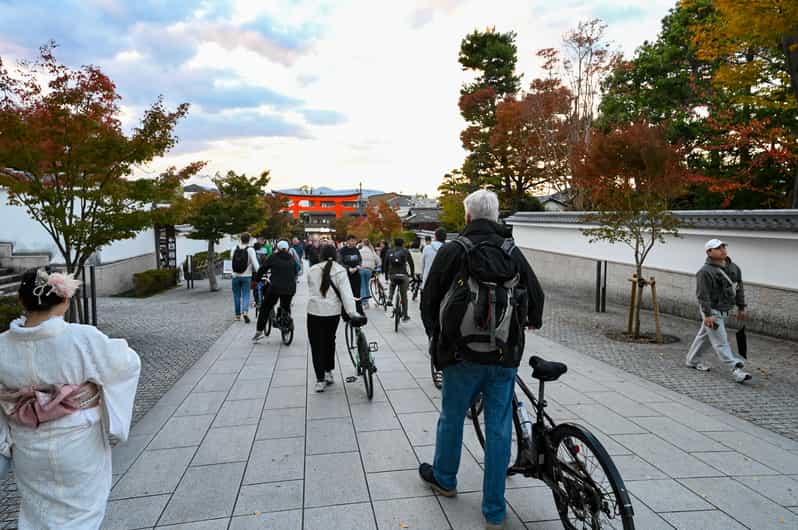
Next comes Higashi-Honganji, with another 35-minute guided visit. It is one of Japan’s largest temples, and its scale feels different from the more compact religious sites you may encounter around Kyoto.
The value here is comparison. Toji and Higashi-Honganji are not interchangeable temple stops. Seeing both lets you notice different layouts, buildings, and religious settings within the same morning. Your guide can also connect the sites to wider parts of Japanese history and culture.
The tour description places this stop among the temples of central Kyoto before the route heads east. That order makes sense by bicycle. You handle the major central sights first, then move into riverside and neighborhood riding instead of repeatedly crossing the city.
Same city, a completely different kind of day:
- PERFECT KYOTO 1-Day Bus Tour
★ 5.0 · 13,518 reviews - Kyoto Geisha Walking Tour: Gion District & Hidden Gems
★ 4.7 · 3,273 reviews - Kyoto: Gion Magical Night Walking Tour with Geisha Trivia
★ 4.9 · 2,393 reviews - Kyoto: 45-Minute Tea Ceremony Lesson Experience
★ 4.3 · 2,378 reviews
The Takase Canal and Kamo River
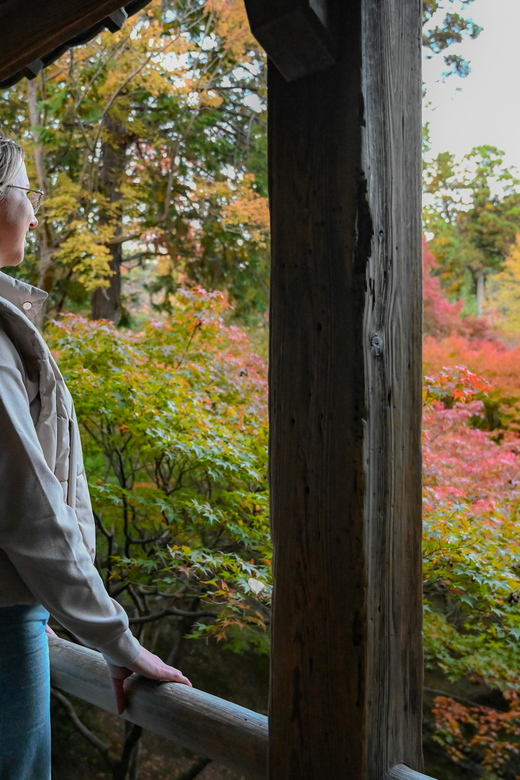
The route follows the Takase Canal for about 10 minutes, then spends roughly 15 minutes by the Kamo River. These are short visits, but they provide a welcome change from temple grounds.
The canal helps show Kyoto at street level. You are not only moving between famous buildings. You are also seeing the paths and waterways that shape the city’s neighborhoods. The Kamo River adds open space and a quieter rhythm before the tour enters Gion.
I especially like this part for anyone who has only seen Kyoto from buses and crowded station areas. The ride gives you a better sense of how close the historic districts are to ordinary city life. Do not expect a long riverside picnic or a separate nature excursion. These are brief scenic sections within a larger route.
Gion from the backstreets
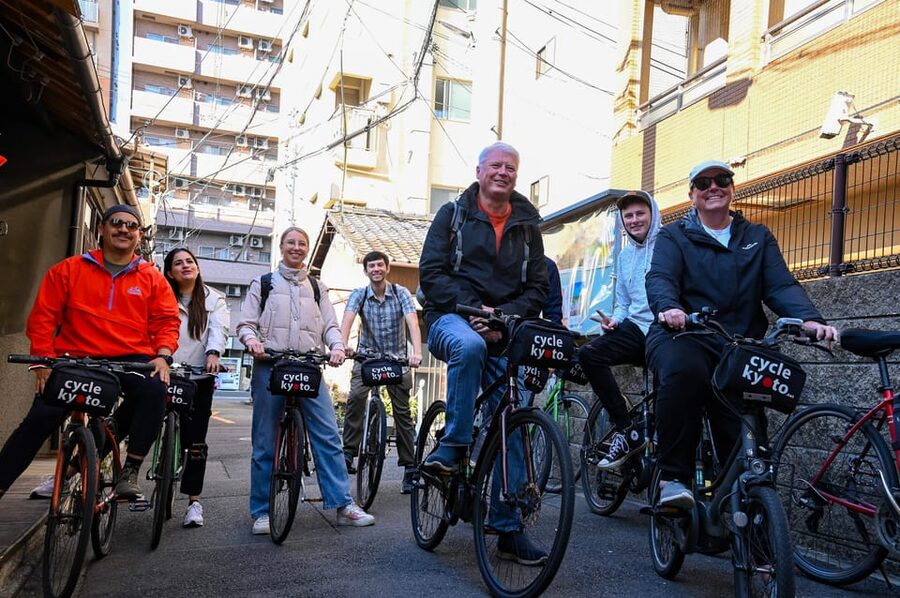
The 30-minute guided portion in Gion is one of the most appealing parts of the tour. Gion is Kyoto’s famous geisha and teahouse district, but its best atmosphere is often found away from the biggest roads and photo crowds.
Biking through the backstreets lets you cover more ground than walking while keeping the outing personal. You can see traditional-looking lanes, teahouse exteriors, and the relationship between the district’s public streets and quieter side routes. The guide’s role is important here because a short explanation can add meaning to details you might otherwise pass without noticing.
You should follow local manners carefully. Keep your voice down, do not block narrow lanes, and treat private entrances as private. The tour does not promise meetings with geisha or access to teahouses. Gion is a living neighborhood, not a stage set, and the best experience comes from observing respectfully.
Tofukuji for photographs and a change of pace
Tofukuji receives about 30 minutes as a photo stop. This is less formal than the guided temple visits earlier in the tour, which allows you to focus on the setting and take pictures without trying to absorb a long talk.
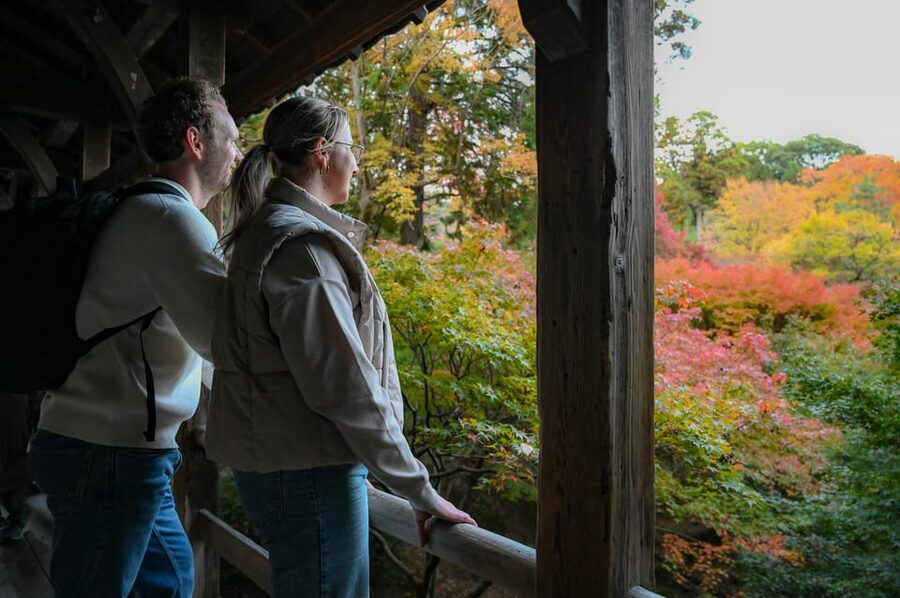
Tofukuji is one of Kyoto’s best-known temples, and the stop gives the route another architectural and visual highlight before Fushimi Inari. The timing also breaks up the ride. After the central temples, canal, river, and Gion lanes, you have a clear place to pause.
Because this is labeled a photo stop, keep your expectations realistic. You will see the temple and have time for pictures, but the tour may not provide an extended exploration of every section. If autumn scenery is your main reason for visiting Tofukuji, conditions will depend on the date and weather.
Fushimi Inari and the orange torii gates
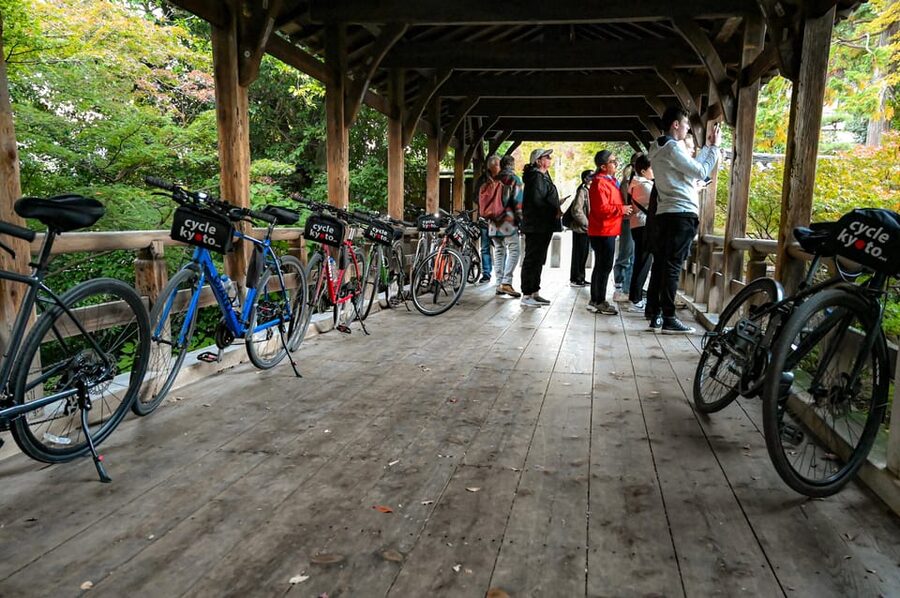
Fushimi Inari is the grand finish, with about 45 minutes for a guided visit. It is one of Japan’s most visited attractions, famous for its long rows of orange torii gates climbing through the shrine grounds.
Cycling gets you close to the shrine without using another train or taxi, but the bicycle is only part of the story here. You leave the bike and walk through the gate area with the guide. Forty-five minutes gives you time to experience the famous lower section and take photographs, though it will not take you to every point on the mountain.
This is also where crowd levels can shape your experience. The tour is designed to bring you to a major sight, not to promise an empty shrine. The small group helps, but Fushimi Inari remains a busy place. Stay aware of other people, keep your group together, and wear shoes that are comfortable for walking as well as cycling.
The route then returns to Cycle Kyoto. Since the tour ends where it begins, you do not need to arrange a separate pickup from Fushimi Inari.
The pace, bikes, and physical effort
The tour is advertised as relaxing, but relaxing does not mean effortless. You will ride for several hours, and one account put the total distance at more than 15 kilometers. That makes the outing a good choice if you want sightseeing with some exercise, but a poor fit if you are looking for a mostly seated temple tour.
The pace can be adapted to the group. One small group was able to adjust how long it spent at different stops, and the guide kept the ride gentle. That flexibility is easier with eight people or fewer than with a large coach group.
Bikes are reported to be in good condition, with a variety of sizes and helmets available. Still, tell the operator your needs when booking. If you would prefer motor assistance, request an e-bike and budget the extra 3,000 yen.
The tour includes water, but not meals. Eat before setting out or plan food for afterward. The schedule is tightly filled with riding and sightseeing, so do not count on a restaurant break during the 210 minutes.
Is $77 a fair price?
At $77 per person, this is not the cheapest way to see Kyoto’s temples. You could visit many of the same areas independently for less, especially if you already know the train and bus system and are comfortable planning a cycling route.
The price becomes easier to justify if you value route planning and local explanation. Bicycle rental, helmet, water, and an English-speaking guide are included. You also cover several districts in one outing, avoiding the time and uncertainty of arranging each transfer yourself.
The small group is another part of the value. A guide can explain why Toji, Higashi-Honganji, Gion, Tofukuji, and Fushimi Inari matter, while also pointing out the canal routes and backstreets between them. You are paying for the connections as much as for the individual sights.
I would compare this tour with the cost of renting a bike independently, then ask how much you want to research the route. If you are already an experienced cyclist and enjoy planning, self-guided riding may be better value. If you want a ready-made route with history and company, $77 is reasonable for a full half-day.
Who will get the most from this ride?
This tour suits you if you:
- Want to see several South Kyoto sights in one morning
- Enjoy light exercise while sightseeing
- Prefer small groups to large bus tours
- Want an English-speaking guide to explain history and culture
- Like backstreets, canals, riversides, and local neighborhoods as much as headline sights
- Are at least 13 and comfortable riding for several hours
It is less suitable if you want a slow indoor temple tour, have limited mobility, cannot ride a bicycle, or have back problems. It is also not ideal if you need guaranteed long visits at each temple. The route covers a lot, so each stop has a set window.
The tour is available in English only. Smoking, alcohol, and drugs are not allowed. You can cancel up to 24 hours before departure for a full refund, and the reserve-now, pay-later option lets you keep your plans flexible.
Should you book the Cycle Kyoto ride?
Book it if you want to connect Kyoto’s famous sights by bicycle rather than see them as isolated stops. The combination of Toji, Higashi-Honganji, Gion, Tofukuji, the Kamo River, and Fushimi Inari gives you a useful first look at the city’s southern districts, while the backroads keep the ride from feeling like a simple checklist.
The strongest reason to choose it is the guide-led format. Guides such as Jay, Julian, Indra, Juan, Sean, and Mayco have been praised for clear explanations, patience, and an easygoing approach. That personal element can turn a fast morning of sightseeing into a clearer picture of Kyoto.
Skip it if cycling 15 kilometers or more sounds tiring, or if you want to explore Fushimi Inari’s mountain trails at length. For an active visitor who wants a broad, well-organized introduction to South Kyoto, this is a smart use of half a day.
FAQ
How long does the Kyoto bike tour last?
The tour lasts 210 minutes, or three and a half hours.
Where does the tour begin and end?
It begins and ends at Cycle Kyoto. From Kyoto JR Station, go past Avanti, cross one set of traffic lights, pass the Daily Yamazaki convenience store, and take the next left.
What is included in the tour?
The tour includes bicycle rental, a helmet, an English-speaking guide, and water.
Is the tour available in languages other than English?
The listed tour language is English.
What is the minimum age to join?
The minimum age for the public tour is 13. Children under 13 cannot join.
Are e-bikes available?
Yes. E-bikes are available upon request for an upgrade fee of 3,000 yen.
Can I join if I do not ride a bicycle or have back problems?
No. The tour is not suitable for people who cannot ride a bike or people with back problems.
Can I cancel for a refund?
Yes. You can cancel up to 24 hours in advance for a full refund.
More Half-Day in Kyoto
- Kyoto Arashiyama Bamboo forest & Garden Half-Day Walking Tour
★ 5.0 · 413 reviews - Miyajima Half-day Trip Historical Walking Tour
★ 5.0 · 284 reviews - Half-day Tokyo Afternoon Tour by Hato Bus
★ 4.0 · 269 reviews - Naha, Okinawa: Kerama Islands Half-Day Whale Watching Tour
★ 4.4 · 241 reviews
More Cycling Tours in Kyoto
- Hidden Kyoto E-Biking tour
★ 5.0 · 1,843 reviews - Bike Tour Exploring North Kyoto plus Lunch
★ 5.0 · 1,087 reviews - Arashiyama Bamboo Forest & Hidden Gems Bike Tour (Early Bird)
★ 5.0 · 613 reviews - 5 Top Highlights of Kyoto Full Day Bike Tour (E-bike option)
★ 5.0 · 511 reviews
Just added around Kyoto
- Taste of Nishiki Market Walking Food Tour with Local guide★ 5.0 · 17 reviews
- Kyoto: Sushi Making Class with Sushi Chef★ 4.8 · 64 reviews
- Kyoto: City Secrets eBike Tour★ 4.9 · 196 reviews
- Sacred Pathways: Discover the Philosopher’s Path of Kyoto★ 4.9 · 20 reviews
- Private Tour to Monkey Park and Arashiyama Highlights★ 5.0 · 22 reviews
- Private Nara Tour from Osaka – Meet at Your Hotel★ 5.0 · 22 reviews
- Private Sake Tasting in Central Kyoto with Sake Sommelier★ 5.0 · 13 reviews
- Kyoto : Private Custom Walking Tour With A Local Guide★ 4.6 · 144 reviews
Temple & Shrine Tours, compared.
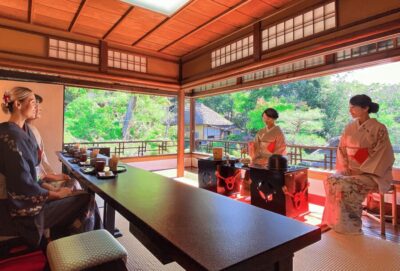
Tea Ceremony in a Traditional Tea House in Kiyomizu
Read our review →
Meiji Shrine, Asakusa, Skytree Bus Tour and Cruise
Read our review →
Asakusa Walking Tour with Sensoji Temple Visit
Read our review →
Kamakura & Enoshima Day Trip including Temple Tickets
Read our review →
Kyoto/Osaka: Nara, Fushimi Inari Taisha, Arashiyama Bus Tour
Read our review →
Nikko Toshogu Shrine and Kegon Waterfall Tour
Read our review →
Tokyo Panoramic 1 Day: Meiji Shrine, Asakusa, Odaiba and SKYTREE®
Read our review →Browse the lists this tour appears in