REVIEW · HALF-DAY
Kyoto top must-see Golden pavilion and Bamboo forest half-day Private tour
Kyoto’s famous sights are spread across the city, and this private half-day tour tackles the big western Kyoto highlights in one tidy outing. You’ll see the Golden Pavilion, a quiet temple, Tenryuji’s pond garden, and the Bamboo Forest without having to build the route yourself. I like the efficient cab-based plan, and I like that guides such as Chihiro, Fuji, Yoko, and Mutsumi add local context rather than simply pointing at buildings.
The main catch is cost clarity. The $122.20 price is per person, but taxis and temple admissions are extra. The tour also ends in Arashiyama, so you must arrange your own return unless you pay additional transport costs.
In This Review
- Key points at a glance
- Why this route works for a first Kyoto visit
- Kinkakuji: Kyoto’s gleaming opening act
- Jojakkoji offers a quieter pause
- Tenryuji and its carefully framed pond garden
- Togetsu Bridge marks the Arashiyama transition
- Kimono Forest: a quick, modern photo stop
- The Bamboo Forest, beautiful but not private
- What a private guide adds
- Taxis, extra fees, and the real price
- The Arashiyama ending is useful, with one condition
- Who should book this Kyoto half-day tour?
- Should you book it?
- FAQ
- How long does the tour last?
- Is hotel pickup included?
- Are taxi fees included in the price?
- How many people can ride in one taxi?
- Are temple admission fees included?
- Where does the tour end?
- Can I cancel for a full refund?
Key points at a glance
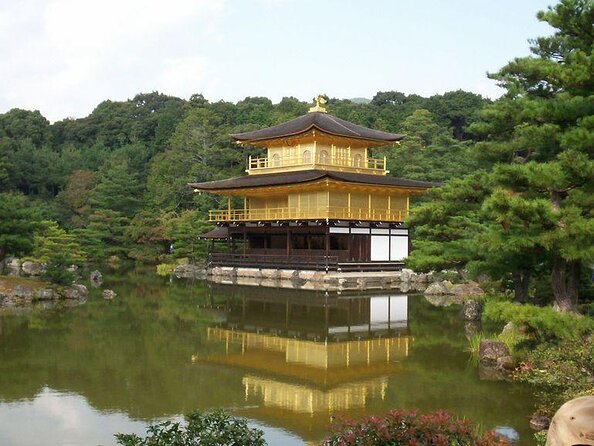
- Kinkakuji in a 50-minute visit: See Kyoto’s famous gold-leaf pavilion beside its reflective pond.
- A quieter temple stop: Jojakkoji gives you a calmer break from the busiest sights.
- Tenryuji’s famous garden: The World Heritage temple is visited for its carefully composed pond garden.
- Private guiding: Only your party joins, with guides including Chihiro, Fuji, Yoko, Mutsumi, Yumi, Kaori, Yoshi, Tammy, and Mieko.
- Arashiyama finish: Walk across the Bamboo Forest, see Togetsu Bridge, and visit the illuminated Kimono Forest.
- Extra fees matter: Allow about 6,000 yen per taxi and roughly 1,500 yen per person for temple admissions.
Why this route works for a first Kyoto visit
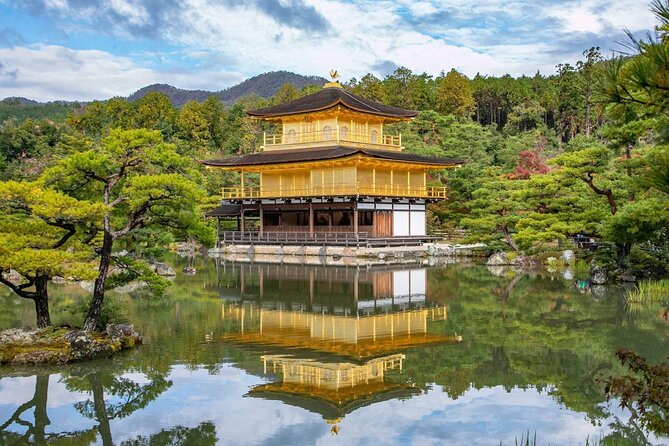
I see this tour as a useful orientation to Kyoto rather than a complete city tour. In roughly four hours, you cover two of the city’s most recognizable images, a major temple garden, and a quieter religious site. That gives you a strong first look at Kyoto’s visual identity: polished architecture, mossy temple grounds, formal gardens, wooded paths, and Arashiyama’s famous bamboo.
The private format is the real advantage. Your guide can adjust the walking pace, answer questions, and help with photos. Chihiro is noted for being attentive to children and happy to explain Japanese culture, while Fuji has helped families with lunch ideas and directions back to their hotel after the tour. Mutsumi was also praised for taking good photos, a small service that can be valuable when you are trying to fit the whole group into the frame.
You should still keep your expectations practical. This is a sightseeing circuit, not a slow meditation walk. The Golden Pavilion, Tenryuji, and Bamboo Forest are major Kyoto attractions, and they can be busy. The guide can help you move through them sensibly, but cannot make popular places empty.
A few more Kyoto trips to weigh up
- Kyoto Arashiyama Bamboo forest & Garden Half-Day Walking Tour
★ 5.0 · 413 reviews - Half-Day Private Walking Tour in Kyoto
★ 5.0 · 57 reviews - Kyoto Private & Personalized Half-Day Walking Tour with a Local
★ 4.5 · 27 reviews
Kinkakuji: Kyoto’s gleaming opening act
The tour begins at Kinkakuji, better known as the Golden Pavilion. The upper stories are covered in gold leaf, and the building is set beside a pond that often gives you the classic Kyoto photograph: gold architecture, dark water, and carefully shaped trees.
The site was once linked to the political world of the shogun, the military ruler of samurai-era Japan. Today, its importance is religious and cultural, and Kinkakuji forms part of Kyoto’s UNESCO World Heritage listing.
You have about 50 minutes here. That is enough time to walk the designated route, take photographs, and listen to your guide explain the pavilion’s place in Kyoto history. It is not enough for a long, unhurried exploration of every corner, but most first-time visitors will appreciate the focused visit.
Admission is not included. The total temple admission cost for the tour is estimated at about 1,500 yen per person across the temple stops. Bring this extra amount into your budget, along with the taxi costs.
Jojakkoji offers a quieter pause
Jojakkoji is a useful contrast to Kinkakuji. Instead of another grand, instantly recognizable monument, you visit a relatively quiet temple associated with an atmosphere like heaven. The name reflects the peaceful feeling the temple is meant to convey.
You have about 30 minutes here. That may sound brief, but it suits the role of this stop. Jojakkoji gives you time to slow down, notice the setting, and ask your guide about temple life and Japanese religious traditions without the pressure of a long formal visit.
This is one of the tour’s more appealing choices. Many Kyoto routes collect only the most famous names, while this itinerary adds a less crowded temple to the familiar sights. If you prefer calm spaces to constant landmark collecting, Jojakkoji may be the part you remember most.
Admission is extra here as well. Your guide can explain the site, but the entrance fee remains your responsibility.
Tenryuji and its carefully framed pond garden
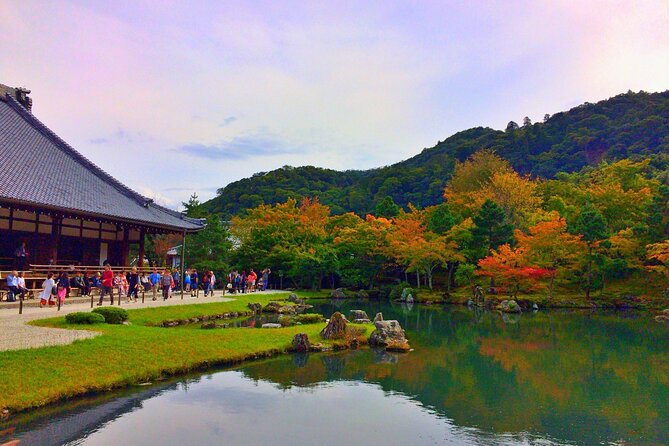
Tenryuji is one of Arashiyama’s major temples and another UNESCO World Heritage site. Its garden is the reason to visit. The pond, rocks, trees, and borrowed views of the surrounding hills are arranged with great care, creating a composed scene that changes as you walk.
You have about 20 minutes at Tenryuji. That is a short visit, especially if you like gardens and want time to study the details. Still, the stop allows you to see the main garden and understand why Tenryuji is so important to Kyoto’s tradition of garden design.
I would pay close attention here rather than rush straight to photographs. The best value comes from hearing the guide explain how the garden is arranged and what Japanese garden designers are trying to suggest through water, stone, plants, and open space.
The time limit is also worth noting. If Tenryuji is high on your personal list, you may wish you had longer. This tour is designed to give you a broad sample of western Kyoto, so each attraction receives a measured visit rather than a full morning or afternoon.
Same city, a completely different kind of day:
- PERFECT KYOTO 1-Day Bus Tour
★ 5.0 · 13,518 reviews - Kyoto: Fushimi Inari, Kinkakuji, Bamboo Grove 1 Day Bus Tour
★ 4.8 · 4,316 reviews - Kyoto: Tea Ceremony in a Traditional Tea House in Kiyomizu
★ 4.9 · 3,519 reviews - Kyoto Geisha Walking Tour: Gion District & Hidden Gems
★ 4.7 · 3,273 reviews
Togetsu Bridge marks the Arashiyama transition
Togetsu Bridge is a signature view in Arashiyama. The bridge itself is the photo stop, and the surrounding river setting gives you a clear sense that you have moved from temple grounds into one of Kyoto’s best-known scenic districts.
The schedule does not give a precise time allotment for Togetsu Bridge. Treat it as a short stop for photographs and orientation. Ask your guide where to stand for the best view, then keep your camera ready.
This is also the point where the tour’s structure becomes clear. You are not being returned to your hotel after each attraction. The route carries you through Arashiyama and finishes there, which is convenient if you want to continue exploring on your own.
Kimono Forest: a quick, modern photo stop
At Arashiyama Station, the Kimono Forest provides a sharp change from old temples and gardens. It is made from about 600 poles decorated with 36 kimono designs. The patterns turn a station area into a colorful corridor and make an easy photo stop.
You have about 10 minutes here, and admission is free. That is enough for a quick walk and a few pictures, though not enough to linger or photograph every design.
I like this inclusion because it keeps the outing from becoming a string of temples. Kyoto is not only wooden gates and stone paths. The Kimono Forest shows how traditional textile patterns can appear in a modern public space without requiring a separate ticket or a long detour.
The Bamboo Forest, beautiful but not private
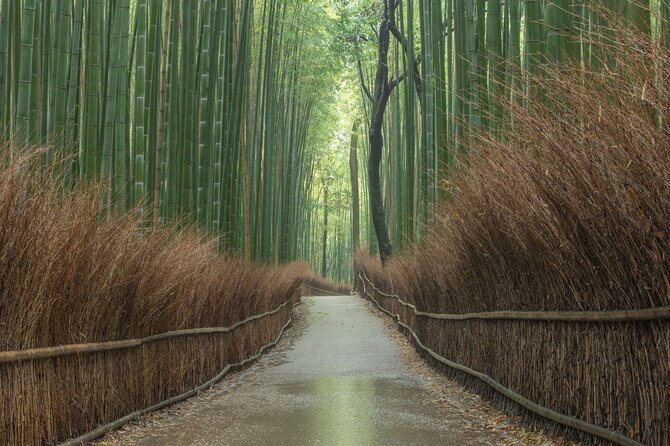
The Bamboo Forest Street is the final major stop. Tall bamboo rises on both sides of the path, creating one of Kyoto’s most recognizable scenes. The light changes as it filters through the stalks, and the narrow route has appeared in many Kyoto promotional images.
You have about 20 minutes to walk through the forest. That gives you a taste of the setting and time for photographs, but the path is not a private woodland experience. It is a famous public attraction, so you may encounter other people and have to wait for a clear photo.
A guide is helpful here because the forest route can feel simple but crowded. Your guide can keep the pace moving, point out the most useful photo opportunities, and make sure you do not lose time at the start of the walk.
The Bamboo Forest is free, but the surrounding Arashiyama area has plenty of places where you might want to stop afterward. Since the tour ends here, plan your next move before you arrive.
What a private guide adds
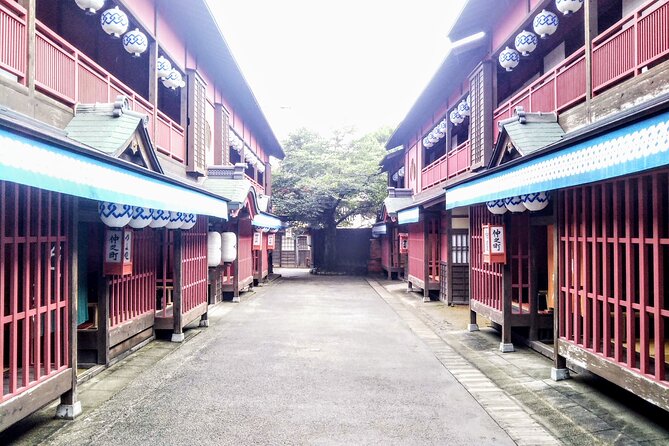
The guides are central to the experience. Names associated with the tour include Chihiro, Fuji, Yoko, Mutsumi, Yumi, Kaori, Yoshi, Tammy, and Mieko. The strongest praise focuses on their warmth, clear English, cultural explanations, humor, flexibility, and care with families.
Chihiro has been especially appreciated for answering many questions about Japanese culture, adapting the walk to a child’s pace, and drawing on years of life in the United States to explain cultural differences. Fuji has helped families with lunch suggestions and return directions, and even made origami birds for children during a rest.
Those details matter because a private tour is only as good as the person leading it. You are paying for interpretation and help with the day, not simply transport between gates. If you have specific interests, tell the guide early. The tour is a better fit when you use the private format to ask questions instead of treating it as a silent transfer service.
Taxis, extra fees, and the real price
The listed cost is $122.20 per person. Pickup is included, and the private setup means only your group participates. That can be good value for a couple or small family that wants personal attention and a fixed route.
However, the advertised price is not the full cost. Taxi transport is extra, at about 6,000 yen per taxi depending on your hotel location and traffic. A taxi carries one guide and up to three guests, so a group of four people requires two taxis. That rule can change the arithmetic considerably for a larger party.
Temple admissions are also extra, estimated at about 1,500 yen per person for all the temples. The combination of transport and admission fees means you should compare the total cost, not only the headline price.
For two people, the private format may be worthwhile because you share the guide’s time and taxi expenses without joining a large group. For a family, the price can still make sense if you value door pickup, help with children, and an easy route between distant areas. For a solo visitor, the per-person cost is harder to justify unless convenience and personal guiding are your top priorities.
The Arashiyama ending is useful, with one condition
The tour officially finishes in Arashiyama. This is not a flaw if you want to spend the rest of the day in the area. You can continue at your own pace, find lunch, visit more of Arashiyama, or use public transport from there.
The guide can provide directions to other Kyoto sights, including Nijo Castle, Fushimi Inari Shrine, Kiyomizu Temple, Gion, and movie studios. That follow-up advice is useful for first-time visitors who need help shaping the rest of their stay.
Do not assume the included pickup also includes a ride back to your hotel. One family received help getting back, but extra public transport created additional charges. Confirm your end point and any return assistance before the start of the tour.
Who should book this Kyoto half-day tour?
I would choose this experience if you are visiting Kyoto for the first time, have only part of a day available, or want a private guide to explain the basics without organizing several train and bus connections yourself.
It suits families particularly well because the guide can adjust the pace and offer personal help. It also suits couples who want private photographs and a more relaxed conversation about Japanese customs, temples, and daily life.
You may want another option if your main goal is a long visit inside each temple. The schedule is brisk, with 50 minutes at Kinkakuji, 30 at Jojakkoji, 20 at Tenryuji, and short stops at the bridge, Kimono Forest, and Bamboo Forest. It gives you a broad first look, not an exhaustive study.
The experience has a 5.0 rating from 52 ratings and a 98 percent recommendation figure, which supports the view that the guides are the tour’s strongest feature. Still, the extra taxi and admission charges deserve more attention than the headline price.
Should you book it?
Book this tour if you want a private, guided introduction to Kyoto’s western sights and like the idea of ending in Arashiyama rather than returning to your hotel. The route includes the city’s essential images, plus Jojakkoji for a quieter change of pace.
Skip it if you want to spend half a day at only one or two temples, or if you need an all-inclusive price with return transport. Before booking, calculate the extra 6,000 yen taxi charge per vehicle, add temple admissions, and plan what you will do after the Bamboo Forest.
For a first Kyoto day, this is a practical way to get your bearings fast, provided you understand exactly where the tour ends and what the base price leaves out.
FAQ
How long does the tour last?
The tour lasts approximately four hours.
Is hotel pickup included?
Yes. Pickup service is included, though the exact taxi cost depends on your hotel location and traffic conditions.
Are taxi fees included in the price?
No. Taxi transport costs about 6,000 yen per taxi and is paid separately.
How many people can ride in one taxi?
One taxi can carry one guide and up to three guests. A group of four guests therefore needs two taxis.
Are temple admission fees included?
No. Admission is separate and costs around 1,500 yen per person for all temples.
Where does the tour end?
The tour ends in the Arashiyama area. Return transfer to your hotel is not included.
Can I cancel for a full refund?
Yes. You can cancel at least 24 hours before the experience start time for a full refund. Changes or cancellations made less than 24 hours before the start time are not accepted for a refund.
Just added around Kyoto
- Private Guided Traditional Buddhist Cooking in Japan★ 5.0 · 16 reviews
- Kyoto: Gion Geisha District & Sake-in-Hand Walking Tour★ 5.0 · 37 reviews
- Your Private Vacation Photography Session In Kyoto★ 5.0 · 110 reviews
- Kyoto: Zen Meditation at a Private Temple with a Monk★ 5.0 · 25 reviews
- Traditional Japanese Washi Papermaking- Kyoto morning★ 5.0 · 77 reviews
- Kyoto Wagashi(Japanese sweets) Cooking Class near Fushimiinari★ 5.0 · 60 reviews
- Private Pewter Sake Cup Experience with a Kyoto Artisan★ 5.0 · 31 reviews
- Kyoto Private 6 hour Tour: English Speaking Driver Only, No Guide★ 5.0 · 88 reviews
Half-Day, compared.
Kyoto Arashiyama Bamboo forest & Garden Half-Day Walking Tour
Read our review →
Miyajima Half-day Trip Historical Walking Tour
Read our review →

Naha, Okinawa: Kerama Islands Half-Day Whale Watching Tour
Read our review →
Himeji Half-Day Private Tour with Government-Licensed Guide
Read our review →