
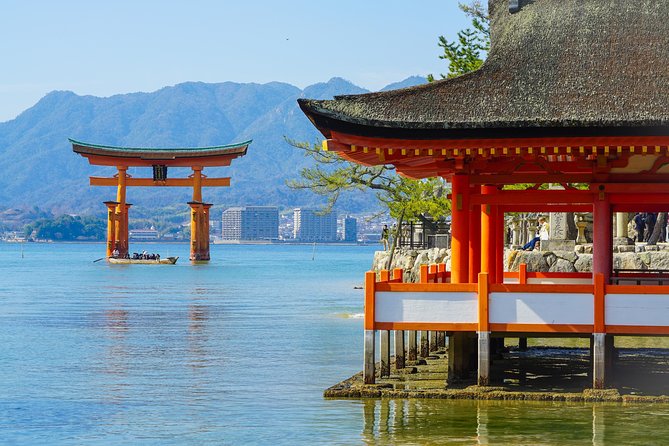
REVIEW · MIYAJIMA ISLAND TOURS
Miyajima Half-day Trip Historical Walking Tour
Miyajima is easy to visit on your own, but its sacred places make far more sense when someone explains what you’re seeing. This five-and-a-half-hour walking tour links the famous Otorii Gate and Itsukushima Shrine with quieter cultural stops, local food, and the island’s best photo spots.
I like the small group limit of six, which gives the guide room to answer questions and adjust the pace. I also like that lunch is included, with Hiroshima specialties such as oysters and momiji dumplings, so you can spend less time choosing where to eat and more time enjoying the island.
The main consideration is food. Vegetarian and vegan choices are limited, gluten-free meals are not available, and allergy-free preparation cannot be guaranteed. You’ll also need comfortable shoes, water, and stamina for a long walk with stairs and hills.
In This Review
- Key Points Before You Book
- Why Miyajima Works Best With Context
- Crossing the Seto Inland Sea to Miyajima
- Walking the Coast to the Otorii Gate
- Itsukushima Shrine and Tidal Architecture
- Daishoin Temple, the Cultural High Point
- Momijidani Park and Senjokaku
- Omotesando Street and the Best Part of Lunch
- What the Guides Add
- Is $109.43 a Fair Price?
- Who Should Book This Miyajima Walk?
- Practical Advice for a Comfortable Day
- Should You Book It?
- FAQ
- How long does the Miyajima walking tour last?
- Where does the tour start?
- Where does the tour end?
- Is the ferry to Miyajima included?
- What is included in the tour price?
- What food is served at lunch?
- Are vegetarian or vegan meals available?
- Can the tour accommodate food allergies?
- How many people can join the tour?
- What happens if I need to cancel?
Key Points Before You Book
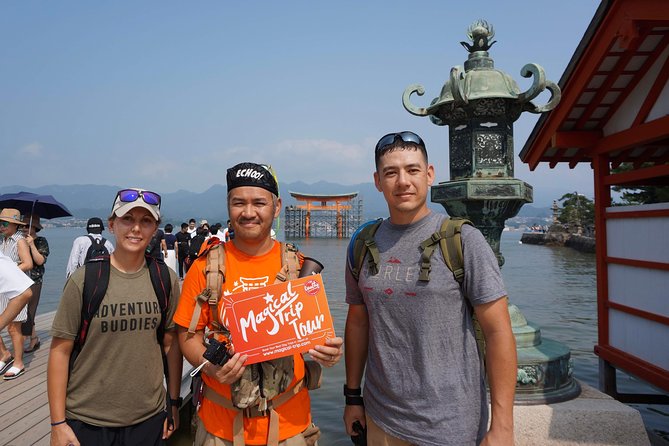
- Small groups of six or fewer: The format can feel nearly private, especially if few people book that day.
- Ferry views included in the route: You’ll cross the Seto Inland Sea and may see the Otorii Gate from the water.
- Major sights plus quieter corners: Itsukushima Shrine, Daishoin Temple, Momijidani Park, Senjokaku, and Omotesando Street all fit into one outing.
- Hiroshima food is part of the experience: Lunch includes local specialties, with oysters and momiji dumplings among the featured foods.
- Several guides receive strong praise: Hiro, Hika, Eri, Yuji, Kaori, Kiki, Shun, and others are noted for warmth, flexibility, explanations, and photo help.
- Plan for heat and walking: Summer can be extremely hot and humid, while the route includes slopes, steps, and outdoor walking.
Why Miyajima Works Best With Context
Miyajima is famous for one giant red gate in the sea. That image is worth the trip, but it is only the beginning. The island brings together Shinto worship, Buddhist practice, old shrine architecture, forested hills, waterfront views, deer, and a food street packed with regional treats.
The island’s spiritual character can be easy to miss if you rush from the ferry to the torii, take a picture, and leave. A good guide helps you understand why the shrine was built beside the water, how the tides shape the view, and how Buddhism and Shinto traditions appear side by side.
This tour is designed around that larger picture. You begin at Miyajimaguchi, cross by ferry, and then spend the day on foot. The official group limit is six people, and several bookings have turned into private or almost-private outings when only one family or a couple joined.
That small format matters here. Miyajima’s lanes and temple grounds can feel crowded, and a large group can be awkward around gates, stairs, and food stalls. With a small group, you have a better chance to hear the guide clearly and stop for questions without holding up a busload of people.
More Walking Tours in Hiroshima
- Hiroshima Historical Walking Tour – Why A-Bomb was Dropped
★ 4.8 · 893 reviews - Hiroshima Peace (Heiwa) Walking Tour at World Heritage Sites
★ 5.0 · 872 reviews - Hiroshima City 4hr Private Walking Tour with Licensed Guide
★ 5.0 · 437 reviews
Crossing the Seto Inland Sea to Miyajima
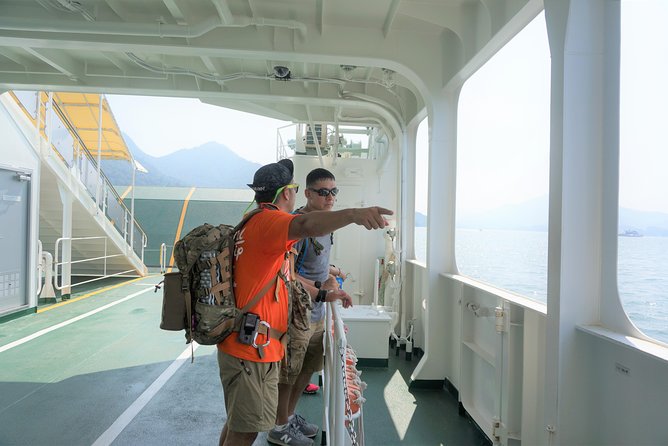
The meeting point is at 1-chōme-3-26 Miyajimaguchi in Hatsukaichi, near public transportation. From there, the group boards a ferry for the short crossing to Miyajima. The ferry ride is not just a transfer. It gives you a fine first look at the Seto Inland Sea and, depending on your position and conditions, a view toward the Otorii Gate.
The ferry fee is not included in the tour price. You pay 500 yen for the round trip, listed as about $4. Keep that small extra cost in mind when comparing the total price.
The boat is also a useful moment to get your camera ready. Miyajima’s approach is one of the most attractive parts of the day, since the island appears across the water rather than all at once from a road or station. Your guide can point out what you’ll see next and help you get oriented before the walking begins.
The route ends back at the meeting point. Since the tour lasts about five and a half hours, leave enough room in your Hiroshima plans for the complete outing and the ferry crossing back.
Walking the Coast to the Otorii Gate
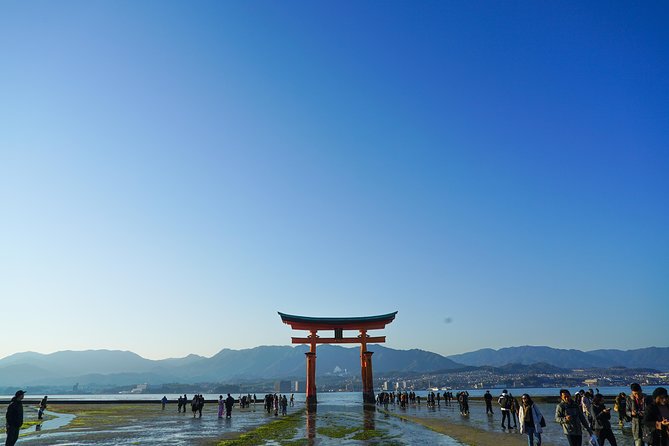
After arriving, the group walks along the coast toward the Otorii Gate. This is the island’s signature view, but it changes with the tide, weather, and light. At some times, the gate appears to float offshore. At low tide, you may be able to walk close to it from the shore.
That changing view is one reason a guide adds value. You get more than a quick stop for a photograph. You can learn why the gate is associated with the entrance to the sacred island and see how the relationship between water, shrine, and shore shapes Miyajima’s identity.
Allow time for photos here, but do not expect a long stretch of quiet. The gate is the island’s most popular sight, and people naturally gather along the coast. Rain does not ruin the stop, though it can affect visibility and make the walking surfaces slippery. Several past outings went ahead in wet weather, with the guides adjusting the pace and keeping the route enjoyable.
Itsukushima Shrine and Tidal Architecture
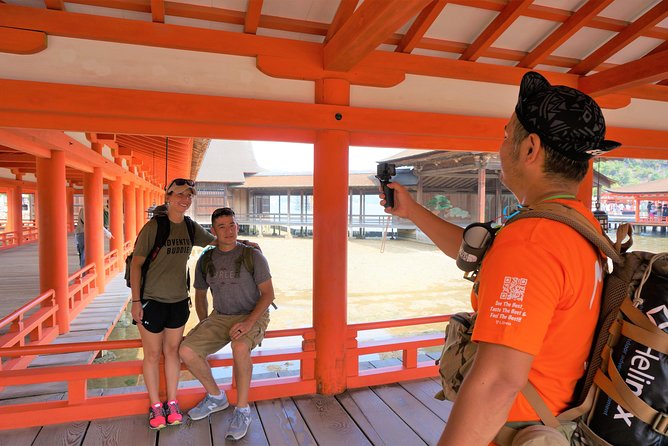
Itsukushima Shrine is the tour’s central historical stop. The shrine was constructed during the Heian period, from 794 to 1192, and its distinctive design sits close to the water. The changing tide is part of the experience, not a minor detail. The same buildings can look surrounded by water at one time and linked more closely to the shore at another.
The entrance fee to the shrine is included. Your guide explains the buildings, their role in Japanese spirituality, and the meaning behind the layout. This is where the tour shifts from scenic sightseeing to a clearer understanding of why Miyajima has been regarded as a sacred place.
You’ll have time to take photographs with the shrine as a backdrop. Still, this is not a museum-style lecture or a slow architectural study. The stop is scheduled for about an hour, which gives you a useful introduction without taking the entire afternoon.
I would pay attention to the guide’s explanation here rather than treating the shrine as a backdrop alone. Itsukushima is famous because the architecture responds so visibly to the sea. That connection is hard to grasp from a single photograph.
Same city, a completely different kind of day:
- Peaceful Hiroshima & Miyajima UNESCO 1 Day Bus Tour
★ 5.0 · 5,309 reviews - Hiroshima: Hiroshima and Miyajima UNESCO Sites 1-Day Tour
★ 4.9 · 2,330 reviews - Hiroshima / Miyajima Full-day Private Tour with Government Licensed Guide
★ 5.0 · 1,298 reviews - Hiroshima in a Nutshell: Morning Bike Adventure
★ 5.0 · 524 reviews
Daishoin Temple, the Cultural High Point
Daishoin Temple is often the most rewarding stop for people who want something beyond the island’s famous gate. It is the main temple of the Omuro school of Shingon Buddhism, and the guide explains Buddhist practice along with the statues found around the temple.
The planned visit lasts about 30 minutes, but the experience can feel substantial because the temple offers a different mood from Itsukushima Shrine. The shrine is open, ceremonial, and tied to the water. Daishoin brings you into a more contemplative Buddhist setting with religious images and a quieter sense of place.
The route includes stairs and hills, so this is the point where footwear and pacing matter. One guide was praised for allowing enough breaks on uphill sections, and that is useful advice for anyone who does not want to hurry. The tour is suitable for most people, but it is not a flat promenade.
If you have time for only one place where the guide’s explanation truly changes your understanding of Miyajima, I would choose Daishoin. The temple helps you see the island as a living religious center, not simply a scenic attraction.
Momijidani Park and Senjokaku
Momijidani Park provides a welcome outdoor pause. The scheduled stop is about 30 minutes and focuses on photographs. The park is especially appealing when you want a change from shrine buildings and busy streets, with trees and island scenery offering a calmer setting.
Weather will affect this part of the route. In summer, the combination of heat, humidity, and walking can be tiring. In rain, the park may be less comfortable, though an overcast day can still produce attractive views. Bring water and a hat, particularly during Japan’s hottest months.
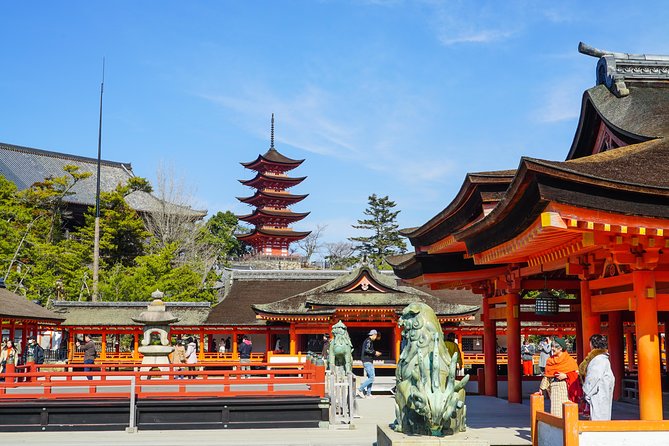
Senjokaku is the common name for the main hall of Toyokuni Shrine, the terminal shrine of Itsukushima Shrine. The tour includes an explanation of the visit and allows about 30 minutes there. It is another chance to see how religious buildings from different traditions form part of Miyajima’s cultural character.
These two stops are shorter and less famous than the torii and Itsukushima Shrine. That is precisely why they help round out the day. You get room for photographs, a quieter setting, and more context instead of spending every minute in the island’s busiest core.
Omotesando Street and the Best Part of Lunch
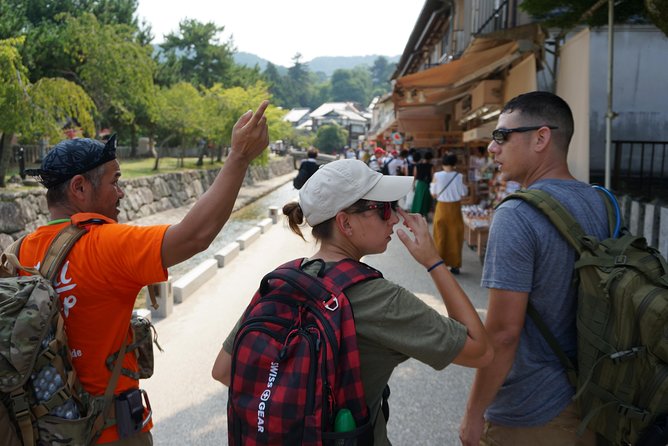
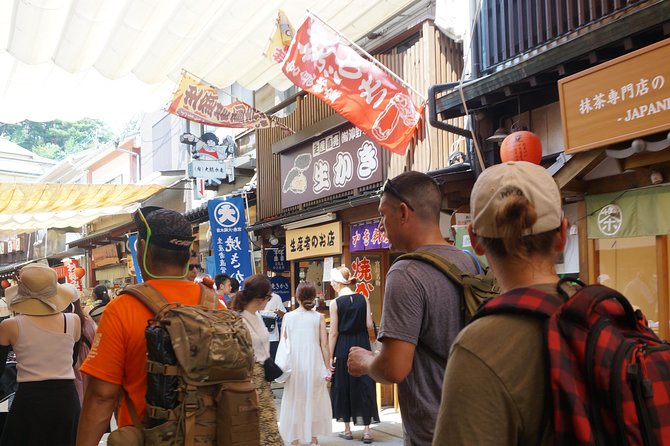
The final major stop is Miyajima Omotesando Shopping Street, a lively lane lined with souvenir shops and food stalls. It is the place to sample the island’s better-known snacks and to see how religious tourism and everyday commerce meet.
Lunch is included in the price. The advertised Hiroshima local meal features fresh or grilled oysters and momiji dumplings, a maple-leaf-shaped local sweet. Past meals have also included items such as fried oysters, unagi, and soft-serve ice cream, but the exact selection can vary by stop and availability.
This food component is more useful than it might first appear. Miyajima is not only about temples and views. Oysters connect the meal to Hiroshima’s coastal setting, while momiji dumplings give you a local sweet to try without having to research every shop.
Additional foods and drinks are available for purchase, but they are not included. If you enjoy tasting several things, carry some extra money. Your guide may also point you toward a favorite café or a particularly good momiji manju shop. Tommy, for example, was praised for recommending a spot for this local treat, while another guide finished the outing with a sweet stop at a favorite café.
Food restrictions need careful planning. Vegetarian and vegan lunch choices exist but are limited. Gluten-free lunch is not available, and the operator cannot guarantee allergy-free meals because the food is prepared in kitchens it does not control. Tell the operator at least one day before the tour if you have dietary requests or allergies. Same-day requests cannot be accommodated.
What the Guides Add
The guide is the main reason to choose this experience instead of visiting Miyajima alone. The island is easy to reach, and you can see the major sights without assistance. What you cannot easily reproduce is the steady stream of explanation, local food advice, photo help, and small adjustments that make the day feel less like a checklist.
Hiro is praised for professionalism, warmth, and a clear understanding of the island. Hika is noted for being patient, helpful with families, and good at covering the important sights without making the day feel rushed. Eri receives especially strong praise for combining local knowledge with a personal manner and for allowing breaks on hills and stairs.
Other guides bring their own strengths. Yuji is described as willing to go the extra mile. Kiki is praised for adding lesser-known areas alongside the major sights. Shun handled an overcast visit with friendly explanations, while Kaori made a private outing feel personal and relaxed.
You should not book based on a promise that one particular guide will lead your group unless that has been confirmed directly. But the pattern is clear: the tour is built around local guides who can explain the temples, help with photographs, and adapt to the group.
There was one serious service failure in the available feedback, involving a guide who did not appear at the meeting point because the reservation had not been checked. That incident is not typical of the otherwise very strong record, but it is worth taking seriously. Keep your booking confirmation and contact details handy on the day, and arrive at the stated meeting point with time to spare.
Is $109.43 a Fair Price?
The listed price is $109.43 per person, with entrance fees to the shrines, temples, and museum included, along with a certified MagicalTrip guide, tour photos, and lunch. The ferry costs another 500 yen round trip, and extra food or drinks are on your own.
That is not the cheapest way to see Miyajima. If you are comfortable navigating public transportation, reading signs, choosing a restaurant, and researching the religious sites beforehand, an independent visit will cost less.
The value improves if you want a focused half-day with the key sights arranged in a sensible order. You are paying for more than admission. You are paying for a small group, local interpretation, food guidance, included lunch, and help with the practical details of moving around a popular island.
I think the price is easiest to justify for a first visit, a family group, or anyone with limited time in Hiroshima. It is also attractive when the booking happens to produce a private or nearly private outing. For repeat visitors who already understand the shrine and temple layout, the tour may feel less necessary.
The tour’s 99 percent recommendation rate and 4.9 rating from 284 reviews indicate a very strong overall response, but I would still read the conditions closely. The food limitations, ferry surcharge, long walking route, and occasional possibility of a booking problem all belong in your decision.
Who Should Book This Miyajima Walk?
This tour suits you best if you want history and spirituality explained in plain language, rather than simply photographing the Otorii Gate and moving on. It is also a good match if local food is part of your idea of sightseeing and you want lunch built into the day.
Families can benefit from the small group format and the guide’s ability to answer questions. The outing is open to all ages, though children and older adults should be ready for several hours on foot, including stairs and hills near Daishoin.
Photography-minded visitors will appreciate the number of changing backdrops: the ferry, coast, Otorii Gate, shrine, temple, park, and old buildings. The guides are also willing to take tour photos, which means you do not have to choose between taking pictures and appearing in them.
You may prefer to go independently if you want a slow day, plan to spend many hours shopping, intend to hike beyond the listed route, or have strict dietary needs. You may also want to stay overnight on Miyajima if you are hoping to enjoy the island after the busiest part of the day, though that is not part of this tour.
Practical Advice for a Comfortable Day
Wear shoes suitable for steady walking. Daishoin includes stairs and slopes, and the full route links several sites across the island.
Bring water and sun protection in summer. Japan can reach 40°C, or 110°F, with high humidity. Winter can fall as low as -5°C, or 20°F, so dress for the season rather than assuming the coast will always be mild.
Pack a rain layer if the forecast is uncertain. The tour can still be worthwhile in wet weather, but the Otorii view, park stop, and walking surfaces will feel different.
Arrive at the listed Miyajimaguchi meeting point and remember that the ferry is extra. The activity ends back at that meeting point, not at a separate location on Miyajima.
Free cancellation is available up to 24 hours before the start time for a full refund. Changes or cancellations inside that window are not accepted or refunded.
Should You Book It?
Book this tour if you want Miyajima explained as a sacred island, not just presented as a famous photograph. The combination of ferry views, Itsukushima Shrine, Daishoin Temple, Senjokaku, a park stop, local lunch, and Omotesando food gives you a well-rounded introduction in one outing.
I would especially choose it for a first visit to Hiroshima, a family day, or a short stay when you want someone else to handle the route. Skip it if you prefer total independence, need gluten-free or tightly controlled meals, or want to linger at one place for most of the day.
For most visitors, the guide is the deciding factor. A strong guide such as Hiro, Hika, Eri, Yuji, or Kiki can turn a beautiful island into a place you understand. That is the real value here.
FAQ
How long does the Miyajima walking tour last?
The tour lasts approximately five hours and 30 minutes.
Where does the tour start?
It starts at 1-chōme-3-26 Miyajimaguchi, Hatsukaichi, Hiroshima 739-0411, Japan.
Where does the tour end?
The activity ends back at the meeting point.
Is the ferry to Miyajima included?
No. The round-trip ferry fee is 500 yen, listed as about $4, and is paid separately.
What is included in the tour price?
The price includes entrance fees to the shrines, temples, and museum on the tour, a certified MagicalTrip guide, tour photos, and a Hiroshima local lunch.
What food is served at lunch?
The local lunch features fresh or grilled oysters and momiji dumplings. Other dishes may vary, and additional foods and drinks can be purchased separately.
Are vegetarian or vegan meals available?
Vegetarian and vegan lunch options are available but limited. Gluten-free lunch is not available.
Can the tour accommodate food allergies?
Allergy-free preparation cannot be guaranteed. Tell the operator about allergies or dietary requests at least one day before the tour, since same-day requests cannot be accommodated.
How many people can join the tour?
The tour has a maximum of six people.
What happens if I need to cancel?
You can cancel up to 24 hours before the experience for a full refund. Cancellations or changes made less than 24 hours before the start time are not accepted or refunded.
More Historical Tours in Hiroshima
- Hiroshima: History of Hiroshima Group Walking Tour
★ 4.8 · 266 reviews - Hiroshima: Peace Walking Tour of World Heritage Sites
★ 4.9 · 190 reviews - Hiroshima: Miyajima Half-day Historical Walking Tour
★ 4.7 · 100 reviews - Hiroshima: History and Hidden Gems Tour
★ 4.9 · 81 reviews
More Miyajima Island Tours in Hiroshima
- From Hiroshima: Hiroshima & Miyajima 1 Day Tour with Lunch
★ 4.7 · 395 reviews - Hiroshima and Miyajima Day Trip with Itsukushima Shrine & Ferry
★ 5.0 · 378 reviews - Full Day Hiroshima and Miyajima Bus Tour from Hiroshima
★ 4.5 · 371 reviews - Hiroshima: Miyajima Peace Memorial Icons of Peace and Beauty
★ 4.9 · 361 reviews
Just added around Hiroshima
- The Journey of Hiroshima from Tragedy to Peace★ 4.8 · 44 reviews
- Miyajima: Private Rickshaw Tour to Itsukushima Shrine★ 4.9 · 45 reviews
- Hiroshima: Miyajima Half-day Historical Walking Tour★ 4.7 · 100 reviews
- Hiroshima:Guided Virtual Tour/PEACE PARK TOUR VR★ 5.0 · 29 reviews
- Hiroshima/Miyajima Private Custom Tour with Local Guide★ 5.0 · 134 reviews
- Hiroshima: Saijo Sake Tasting at 7 Breweries Guided Tour★ 4.8 · 29 reviews
- Hiroshima: Tour of Atomic Bomb Dome & Peace Memorial Museum★ 5.0 · 20 reviews
- Hiroshima: Private Walking Tour with a Local★ 4.6 · 70 reviews
Miyajima Island Tours, compared.
Peaceful Hiroshima & Miyajima UNESCO 1 Day Bus Tour
Read our review →
Hiroshima and Miyajima UNESCO Sites 1-Day Tour
Read our review →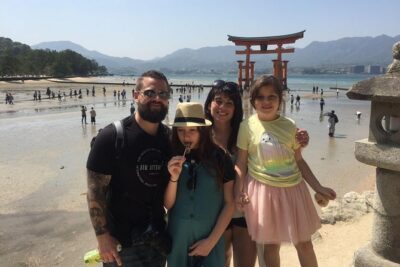
Hiroshima / Miyajima Full-day Private Tour with Government Licensed Guide
Read our review →
Osaka/Kyoto: Hiroshima Miyajima Bus Tour & Shinkansen Ticket
Read our review →
Hiroshima and Miyajima Day Trip with Itsukushima Shrine & Ferry
Read our review →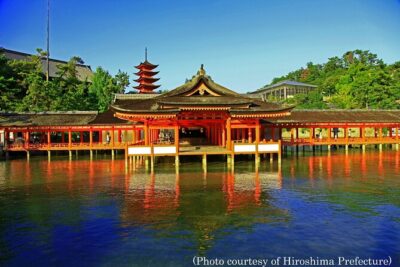
Full Day Hiroshima and Miyajima Bus Tour from Hiroshima
Read our review →
Miyajima Peace Memorial Icons of Peace and Beauty
Read our review →Browse the lists this tour appears in